GDP

Search documents
本周热点前瞻2025-07-28
Guo Tai Jun An Qi Huo· 2025-07-28 02:05
Key Points Summary 1. This Week's Key Focus - From July 27th to 30th, Vice Premier He Lifeng will hold economic and trade talks with the US in Sweden [2][3] - On July 30th at 20:30, the US Department of Commerce will release the initial value of the US Q2 GDP [2][10] - On July 31st at 02:00, the Fed will announce its interest - rate decision, expected to keep the federal funds rate unchanged [2][13] - On July 31st at 09:30, China will release July's official manufacturing PMI, non - manufacturing PMI, and composite PMI [2][14] - On July 31st at 20:30, the US will release the June PCE price index [2][18] - On August 1st at 20:30, the US Bureau of Labor Statistics will release the July non - farm payrolls report [2][23] 2. This Week's Hotspot Preview July 28th - The third round of China - US economic and trade talks is held. The outcome may impact relevant futures prices, with August 12th being the deadline for the suspension of additional tariffs [3] July 29th - The US Conference Board will release the July consumer confidence index at 22:00. An index higher than the previous value (expected 95.9, previous 93) will help non - ferrous metal futures rise but suppress gold and silver futures [4] July 30th - Germany will release the initial value of Q2 GDP at 16:00. An expected quarter - on - quarter rate of - 0.1% (previous 0.4%) may slightly suppress non - ferrous metal, crude oil, and related commodity futures but help gold and silver futures [6] - The Eurozone will release the initial value of Q2 GDP at 17:00. Expected quarter - on - quarter rate of 0% (previous 0.6%) and year - on - year rate of 1.2% (previous 1.5%) may have a similar impact as Germany's data [7] - The Eurozone will release July's economic and industrial景气指数 at 17:00, with expected values of 94.8 (previous 94) and - 11 (previous - 12) respectively [8] - The US ADP will release the change in July ADP employment at 20:15. An expected increase of 75,000 (previous - 33,000) will help non - ferrous metal, crude oil, and related commodity futures but suppress gold and silver futures [9] - The US will release the initial value of Q2 GDP at 20:30. An expected annualized quarter - on - quarter rate of 2.5% (previous - 0.5%) will have a similar impact as the ADP employment data [10] - The Bank of Canada will announce its interest - rate decision and monetary policy report at 21:45, expected to keep the overnight lending rate at 2.75% [11] - The US EIA will release the change in EIA crude oil inventories for the week ending July 25th at 22:30. A continued decline (previous 3.169 million barrels) will help crude oil and related commodity futures [12] July 31st - The Fed will announce its interest - rate decision at 02:00, and Fed Chair Powell will hold a press conference at 02:30. Focus on the press - conference content and its impact on the futures market [13] - China will release July's official manufacturing and non - manufacturing PMI at 09:30, with expected values of 49.7 (same as previous) and 50.5 (same as previous) respectively [14] - The Bank of Japan will announce its interest - rate decision and outlook report at 11:00, and Governor Ueda will hold a press conference at 14:30, expected to keep the benchmark rate at 0.5% [15] - The Eurozone will release the June unemployment rate at 17:00, expected to be 6.3% (same as previous) [16] - The US will release June's personal spending and income at 20:30. Expected monthly rates of 0.4% (previous - 0.1%) for personal consumption expenditure and 0.2% (previous - 0.4%) for personal income may suppress gold and silver futures but help industrial futures other than gold and silver [17] - The US will release the June PCE price index at 20:30, with expected annual rates of 2.5% (previous 2.3%) for PCE and 2.7% (same as previous) for core PCE [18] - The US will release the number of initial jobless claims for the week ending July 26th at 20:30. An expected number of 215,000 (previous 217,000) may suppress gold and silver futures but help non - ferrous metal, crude oil, and related commodity futures [19] August 1st - China's Caixin manufacturing PMI for July will be released at 9:45. An expected value of 50.5 (previous 50.4) slightly lower than the previous value may slightly suppress industrial product futures and stock index futures but help treasury bond futures [20] - The Eurozone will release the July CPI initial value at 17:00. Expected annual rates of 1.9% (previous 2.0%) for the harmonized CPI and 2.3% (previous 2.4%) for the core harmonized CPI [22] - The US will release the July non - farm payrolls report at 20:30. Expected seasonally - adjusted new non - farm jobs of 110,000 (previous 147,000), an unemployment rate of 4.2% (previous 4.1%), and an average hourly wage annual rate of 3.8% (previous 3.7%). Fewer new jobs than the previous value will help gold and silver futures but suppress other commodity futures [23] - The US ISM will release the July manufacturing PMI at 22:00. An expected value of 49.5 (previous 49) slightly higher than the previous value will slightly help non - ferrous metal, crude oil, and related commodity futures but suppress gold and silver futures [24]
如果汇率反转重回6.2,我们早就缩小了与美国GDP的差距
Sou Hu Cai Jing· 2025-07-27 19:50
Group 1 - The potential impact of a return to an exchange rate of 6.2 RMB to 1 USD could significantly reduce the GDP gap between China and the US, with China's GDP potentially increasing from 140 trillion RMB to 23 trillion USD, representing over 75% of the US GDP [1][3] - China's GDP gap with the US once peaked at 70% of global GDP, but the shift towards high-end manufacturing and technological advancements has changed the economic landscape, indicating a substantial accumulation of strength over recent years [3][5] - The transformation of China's economy from a low-cost manufacturing base to a global technology center is evident, particularly in sectors like high-speed rail, artificial intelligence, and semiconductors, showcasing China's competitive edge in international markets [5][7] Group 2 - Future GDP growth in China is expected to continue, especially with further integration into high-tech industries and international markets, potentially allowing China's GDP to approach or exceed that of the US [7][9] - The advancement of China's military-industrial complex, supported by technological progress, is enhancing its global standing across various sectors, including aerospace and cybersecurity, contributing to overall national strength [7][9] - The combination of military manufacturing and advanced technology is expected to significantly boost China's production capacity and technological reserves, enhancing its influence beyond just economic metrics [9]


X @Ignas | DeFi
Ignas | DeFi· 2025-07-27 19:24
RT Ignas | DeFi (@DefiIgnas)Before crypto, I couldn't comprehend the magnitude of large numbers.In my mid-20s: $1.8B market cap token? Is that a lot?"Compared to what?My anchor numbers I 'understood' were $5 meal, $300 rent, $1 ice cream.$1M felt like infinite wealth. $100M+? Just "crazy lots of money."And $500m? A billion? 10 billion?A WHOLE TRILLION?Our brains suck at magnitudes beyond lived experience.I had no scale to anchor it.The picture below visualizes the magnitude.Now, the MC of $DOGE is $36B. Wha ...
X @Ignas | DeFi
Ignas | DeFi· 2025-07-27 08:51
Before crypto, I couldn't comprehend the magnitude of large numbers.In my mid-20s: $1.8B market cap token? Is that a lot?"Compared to what?My anchor numbers I 'understood' were $5 meal, $300 rent, $1 ice cream.$1M felt like infinite wealth. $100M+? Just "crazy lots of money."And $500m? A billion? 10 billion?A WHOLE TRILLION?Our brains suck at magnitudes beyond lived experience.I had no scale to anchor it.The picture below visualizes the magnitude.Now, the MC of $DOGE is $36B. What does this number mean to y ...
GDP与就业数据公布前夕 鲍威尔面临空前压力
news flash· 2025-07-27 05:05
Core Viewpoint - The upcoming Federal Reserve meeting is under unprecedented pressure due to political tensions, changing trade policies, and conflicting economic signals, with significant data releases on GDP and employment expected to influence policy direction [1] Economic Data Summary - The U.S. GDP annualized growth rate for Q2 is projected to reach 2.4%, a significant improvement from the contraction of 0.5% in Q1, primarily driven by a sharp reduction in the trade deficit [1] - The July non-farm payroll report is anticipated to show a cautious hiring trend among businesses, with new job additions expected to slow down following a surge in the education sector in June, and the unemployment rate may slightly rise to 4.2% [1] - The June personal income and spending report is expected to indicate a slight acceleration in the core inflation metric favored by the Federal Reserve, suggesting that tariffs are gradually being passed on to consumers [1]
How the Mag 7 Are Driving the Future of AI Capex
Bloomberg Television· 2025-07-25 18:39
AI 投资与支出 - 四家公司计划今年支出超过 3000 亿美元,约六家公司支出超过 4000 亿美元,已从对股市有重要影响转变为对 GDP 有重要影响 [3] - 大型科技公司资本支出增加,固定资产占账面价值的比例从 20% 增加到 70% 以上 [4] - 企业将原本用于股票回购或特别股息的自由现金流转移到资本支出 [6][7] 债券市场影响 - 科技公司资本支出增加,导致资金从金融市场(尤其是债券市场)流出,可能导致更高的收益率 [5] - 本周期企业部门的累计现金流盈余比十年前下降了 75% [8] 集中风险 - 少数几家超大规模企业正在引领这一趋势,存在集中风险 [10] - 这些公司都在追求相同的目标,对同一未来进行集中押注,如果投资回报不佳,可能对经济产生重大影响 [12][13] 未来挑战 - 企业资本支出激增引发了产能利用率以及新资本折旧经济率的问题 [7] - 投资于新技术前沿的功能性淘汰风险以及技术更新换代的速度 [8]

成都上半年GDP达12108.2亿元 同比增长5.8%
news flash· 2025-07-24 01:27
成都上半年GDP达12108.2亿元 同比增长5.8% 智通财经7月24日电,成都市统计局、国家统计局成都调查队7月24日公布2025年上半年成都经济运行情 况。根据地区生产总值统一核算结果,上半年,全市地区生产总值12108.2亿元,按不变价格计算,同 比增长5.8%。 ...
GDP增速5.3%!中国交出上半年“成绩单”,GDP逼近美国的62%
Sou Hu Cai Jing· 2025-07-24 00:03
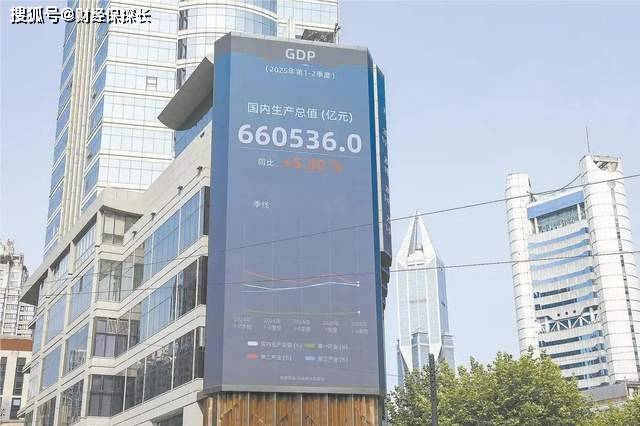
Economic Overview - China's GDP reached 66 trillion RMB, growing by 5.3% year-on-year, equivalent to approximately 9.19 trillion USD, accounting for 62% of the US GDP [1][14] - The first half of the year saw total imports and exports of 21.8 trillion RMB, with exports at 13 trillion RMB, reflecting a growth rate of 7.2% [3] Export Dynamics - Despite a significant drop in exports to the US, overall exports remained positive, driven by increased trade with ASEAN, which saw a 13% rise, making it the largest buyer [3] - Exports to the EU increased by 6.6%, while Latin America, the Middle East, and Africa experienced double-digit growth [3] Investment Trends - National fixed asset investment grew by 2.8% in the first half of the year, but excluding real estate, the growth rate surged to 6.6% [6] - Real estate development investment decreased by 11%, but the decline narrowed from 14% at the beginning of the year to 9% by June, indicating the effectiveness of policies aimed at stabilizing the housing market [8] Manufacturing Sector - The industrial growth rate for large-scale manufacturing was 6.4%, with equipment manufacturing exceeding 10% and high-tech manufacturing at 9.5%, indicating a shift of investment towards sectors capable of producing advanced technologies [8] Consumer Behavior - Retail sales totaled 24.5 trillion RMB, with a growth rate of 5%, but the Consumer Price Index (CPI) was at -0.1%, suggesting weak demand [10] - Consumer sentiment is affected by concerns over housing, education, and healthcare costs, leading to increased savings rather than spending [11][12] Future Outlook - The stability of infrastructure and manufacturing sectors is expected to continue, while the recovery of the real estate market hinges on consumer willingness to take on debt [7] - The economic landscape is characterized by a search for new markets in exports, structural adjustments in investments, and cautious consumer spending [16]
Expect the capex trajectory to remain very strong, says Joe Lavorgna
CNBC Television· 2025-07-23 13:09
Capex Boom & Economic Growth - Business equipment production rose 23% in Q1, and GDP accounts showed a 24% increase [4] - Q2 showed a near 11% increase, resulting in a 17% annualized gain over two quarters, the largest since 1997 (excluding the pandemic) [4][5] - The extension of tax policy incentivized companies to invest in capital [6] - Expects capex trajectory to remain strong, fostering upward pressure on wages [7] - Sees potential for a "blue wages boom" with non-supervisory production workers earning bigger paychecks [7] - The administration's outlook is based on 3% growth, considered doable due to productivity trends and labor force participation [18][20] - Expects AI boom to generate quicker payoffs from capital investment [20] - If growth reaches 3%, there could be an additional $4 trillion not counted by the CBO, potentially alleviating deficit concerns [21] Tariffs & Inflation - Tariffs have not had the expected effect on price data, with most of the tariff being absorbed in the margin [12] - The majority of the tariff has been absorbed in the margin [12] - The US could be collecting $300 billion in tariffs, but inflation data has been minimal [13] - Energy costs and capex tend to be disinflationary, offsetting potential lingering effects from tariffs [14] International Trade & Investment - Japan will commit over $500 billion (550 billion) to the US through an innovation fund [16]

The U.S. Latino cohort is our nation's differentiation as a competitive entity, says Sol Trujillo
CNBC Television· 2025-07-22 12:14
New report showing US Latino GDP reaching $4 trillion dollars. It's about the same size as India if ranked as a world economy. It would come in at number five.The results are based on 2023 data from the Latino Donor Collaborative. Salt Trillo is here. He's the chairman of the Latino Donor Collaborative and founder of the Trillo Group.Uh he joins us with part one of the report. More data is going to be released this fall. Let's talk about the data we know about, but I'm also curious maybe you'll tease us abo ...