自动驾驶

Search documents
专论 || 以高质量数据集推动汽车智能化发展
Zhong Guo Qi Che Bao Wang· 2026-02-09 09:51
Core Insights - The Chinese electric vehicle (EV) industry has developed into the largest and most technologically advanced supply chain globally, with a penetration rate of over 50%, marking a transition to a new phase centered on intelligence [1] - The automotive industry is undergoing a paradigm shift from traditional manufacturing to AI-driven models, with competition now focused on computing power, algorithms, and data integration [2] - The evolution of intelligent driving technology is shifting from modular to end-to-end architectures, emphasizing the importance of high-quality, large-scale datasets for training algorithms [3] Industry Trends - The automotive sector is transitioning to an AI-driven paradigm, where the core competition has shifted from mechanical performance to intelligent decision-making capabilities [2] - Intelligent driving technology is becoming a key determinant of market share and profitability in the future automotive landscape [2] - The focus of competition is moving from algorithm design to the scale and quality of training data, necessitating a significant leap in data collection and utilization [3] Current Challenges - The intelligent driving data landscape faces structural challenges, including insufficient scale, low annotation quality, and poor cross-entity data circulation, which hinder the industry's advancement [4] - Major players like Tesla have established significant data advantages, creating barriers for mid-tier companies that may struggle with high costs and low output [7][8] - The lack of standardized data and privacy protection technologies complicates data sharing and collaboration across the industry [8] Data Collection Paradigms - The centralized professional data collection model utilizes specialized fleets equipped with advanced sensors to gather high-precision training data, but high costs limit its scalability [5] - The crowdsourced data collection model leverages mass-produced vehicles to capture diverse driving scenarios at a lower cost, though it faces challenges in data quality and processing [5] - The virtual simulation and synthetic data model can generate complex scenarios without physical risks, but it risks creating discrepancies between simulated and real-world conditions [6] Data Quality Issues - High-quality dataset construction is hindered by structural challenges, with leading companies creating data monopolies that widen the gap with followers [7] - The industry must overcome technical bottlenecks and complex commercial dynamics to facilitate effective data sharing and collaboration [8] Proposed Solutions - Promoting deep collaboration among automakers and establishing high-quality data alliances can help mid-tier companies overcome technological barriers and enhance their competitive capabilities [9] - The data alliance model encourages resource integration and data sharing among companies, allowing for lower-cost access to high-quality datasets [10] - The roadside data conversion platform model utilizes existing traffic data to supplement vehicle data, providing a cost-effective means of enhancing dataset quality [12] Policy Recommendations - Strengthening top-level design and standardization efforts is essential to eliminate barriers to data flow in the intelligent driving sector [14] - Initiating pilot projects for high-quality dataset innovation platforms can systematically explore effective construction and operation paths [15] - Ensuring data security and promoting a "usable but invisible" circulation model can help mitigate privacy concerns while maximizing data value [15]
小马智行与丰田中国、广汽丰田三方合资公司在2026年将部署千台级铂智4X Robotaxi 并在中国一线城市开展运营
Cai Jing Wang· 2026-02-09 09:14
Core Insights - The first mass-produced model of the PlatSmart 4X Robotaxi has officially rolled off the production line, marking a new phase in large-scale production and operation for the company in collaboration with Toyota China and GAC Toyota [1] Group 1: Product Development - The PlatSmart 4X Robotaxi is equipped with the latest seventh-generation autonomous driving passenger vehicle system developed by the company [1] - This system integrates the company's long-validated technological capabilities in complex environments of first-tier cities such as Beijing, Shanghai, Guangzhou, and Shenzhen, and has undergone system-level optimizations for various operational scenarios [1] Group 2: Strategic Partnerships - The joint venture between the company, Toyota China, and GAC Toyota plans to deploy a fleet of thousands of PlatSmart 4X Robotaxis by 2026 [1] - The operational focus will be on first-tier cities in China, indicating a targeted market strategy for the deployment of autonomous vehicles [1]
小马智行系列四:2025年公司亏损净额约0.69~0.86亿美元,Robotaxi商业化运营持续推进【国信汽车】
车中旭霞· 2026-02-09 08:51
Core Viewpoint - Pony.ai is a global leader in the large-scale commercialization of autonomous driving, focusing on Robotaxi and Robotruck services, with significant progress in commercial operations and fleet expansion [4][8]. Financial Performance - For 2025, Pony.ai expects a net loss of approximately -$0.69 to -$0.86 billion, an improvement from a net loss of -$2.75 billion in 2024 [2][6]. - The company anticipates a net profit of about $0.66 to $0.83 billion in Q4 2025, compared to a loss of -$0.61 billion in Q3 2025 and -$1.81 billion in Q4 2024 [6][7]. Business Operations - As of the end of 2025, Pony.ai exceeded its target of 1,000 Robotaxis, achieving 1,159 units, and aims to have over 3,000 Robotaxis by the end of 2026 [4][11]. - The seventh-generation Robotaxi has achieved profitability on a per-vehicle basis in urban areas, validating the company's business model [11]. Strategic Partnerships - Pony.ai has entered a comprehensive strategic partnership with BAIC New Energy, focusing on the mass production and commercialization of L4-level Robotaxis, aiming to create a benchmark in the autonomous driving industry [15]. - A collaboration with Aitboda aims to develop a fully autonomous driving service fleet, targeting the high-end market and enhancing the travel experience for passengers [19]. Technological Advancements - The company has reduced the bill of materials (BOM) cost for the seventh-generation Robotaxi by over 20% compared to 2025 benchmarks, driven by strong AI algorithms and fleet management expertise [11]. - The seventh-generation Robotaxi has been launched in major cities like Guangzhou, Shenzhen, and Beijing, receiving positive user feedback for its enhanced performance and user experience features [11].


否决25亿欧元数据中心项目,德国这一决定被批“官僚主义”
Hua Er Jie Jian Wen· 2026-02-09 08:35
Core Insights - The decision by the city council of Groß-Gerau, Germany, to reject Vantage Data Centers' €2.5 billion investment project highlights systemic barriers in Europe regarding the development of artificial intelligence and digital infrastructure [1][2][3] - The project was intended to be a crucial part of the digital infrastructure in the Rhine-Main region, which is home to one of the world's most important internet hubs, DE-CIX [1][2] - Critics argue that the rejection reflects a conservative attitude towards digital infrastructure development in Germany, which could have brought significant investment and supported emerging technologies like AI and cloud computing [1][2] Summary by Sections Investment Project Rejection - The city council voted 18 against and 14 in favor of the project, with opposition primarily from the Social Democratic Party, the Green Party, and the Left Party [1] - Reasons for opposition included concerns over noise and environmental impact, despite the proposed site being several hundred meters from residential areas [1][2] Economic Implications - The project was expected to generate tax revenue and create jobs, but opponents claimed the anticipated benefits were insufficient [2] - The rejection is seen as indicative of a bureaucratic mindset that views private investment as a threat rather than an opportunity [2] Comparison with Other Regions - In contrast, French President Macron recently allocated €30 million to support the country's "Silicon Valley," while U.S. private investments in digital infrastructure amount to hundreds of billions [2] - This comparison underscores Europe's competitive disadvantage in the digital economy [2] Regulatory Environment - The rejection of the project is viewed as a reflection of the challenges facing AI development in Europe, where digital issues are often framed as ideological debates [3] - The centralized management approach in Europe struggles to compete with more flexible, market-oriented systems [3] - The case serves as a warning regarding regulatory and local political risks for companies looking to invest in digital infrastructure in Europe [3]
福田汽车(600166.SH):自主研发的L4级无人小巴获批北京市高级别自动驾驶示范区公交测试牌照
Ge Long Hui A P P· 2026-02-09 07:52
Core Viewpoint - The company is a leader in the commercial vehicle industry, actively advancing its intelligent strategy to provide green and smart logistics solutions, promoting the intelligent transformation and upgrading of the industry [1] Group 1: Autonomous Driving Developments - In April 2018, the company received the first domestic commercial vehicle autonomous driving road test license, successfully passing all six projects of the Chongqing autonomous driving road test [1] - In December 2023, the company obtained the first conditional autonomous driving highway test license for commercial vehicles in China, initiating regular testing of heavy-duty trucks in designated areas of Beijing's high-level autonomous driving demonstration zone [1] - By May 2024, the company's L4 hydrogen fuel autonomous heavy-duty truck will be applied in the Beijing-Tianjin-Tangshan highway autonomous driving demonstration scenario, achieving point-to-point autonomous driving based on actual logistics needs [1] Group 2: Future Plans and Innovations - In 2025, the company’s self-developed L4 autonomous minibus will be approved for public testing in Beijing's high-level autonomous driving demonstration zone, currently undergoing practical testing on open roads in Yizhuang [1] - The company is focusing on the logistics needs across multiple scenarios in the commercial vehicle sector, indicating a comprehensive layout of its intelligent strategy [1]

计算机行业“一周解码”:脑机“上天”,量子“过百”
Bank of China Securities· 2026-02-09 07:03
Investment Rating - The industry investment rating is "Outperform the Market," indicating that the industry index is expected to perform better than the benchmark index over the next 6-12 months [33]. Core Insights - Significant breakthroughs in brain-computer interface and quantum communication technologies are expected to accelerate the development of related industrial chains, with a focus on companies such as Jiayuan Technology, iFlytek, Wanda Information, Anheng Information, and Guodun Quantum [4][2]. - The first brain-controlled acupuncture rehabilitation equipment has been successfully implemented, marking a substantial advancement in the medical application of brain-computer interfaces [2][13]. - Shanghai has identified brain-computer interfaces and semiconductors as key future industries, providing strong policy support for their development [15][16]. - The University of Science and Technology of China has achieved major breakthroughs in quantum networking, paving the way for practical quantum communication [17][19]. - Waymo has completed a significant financing round of $16 billion, indicating a new phase of development in the autonomous driving industry [20][21]. Summary by Sections Brain-Computer Interface - The first brain-controlled acupuncture rehabilitation platform, "Shengong-Hua Tuo," has been launched, integrating advanced brain-computer interface technology with traditional acupuncture for personalized treatment [13][14]. - This technology has been validated through space experiments, enhancing its reliability and potential for widespread clinical application [14]. Quantum Communication - The University of Science and Technology of China has made two critical advancements in quantum networking, addressing long-standing challenges in the field and significantly extending the distance for quantum key distribution [17][19]. - These breakthroughs position China as a leader in quantum communication, with implications for national security and information protection [19]. Autonomous Driving - Waymo's recent financing of $16 billion has raised its post-money valuation to $126 billion, reflecting strong growth in its business operations [20]. - The company plans to expand its services to over 20 cities globally, indicating a shift from technology validation to large-scale commercial operations in the autonomous driving sector [21].
港股汽车ETF国泰(520720)涨超2%,行业安全标准与技术升级受关注
Mei Ri Jing Ji Xin Wen· 2026-02-09 07:01
Group 1 - The first mandatory safety standard for automotive door handles, titled "Technical Requirements for Automotive Door Handle Safety," has been officially released and will take effect on January 1, 2027. This standard introduces clear requirements for the structure, mechanical redundancy, and emergency usability of door handles, marking a shift from market-driven design to a safety-centric technical logic [1] - The Ministry of Industry and Information Technology (MIIT) emphasizes the importance of "high-quality development" and "high-level safety" as core principles, aiming to accelerate the development of key standards related to driving automation, collision safety, and control components to enhance automotive safety and quality performance [1] - The industry continues to see active technological integration and innovation, exemplified by the strategic partnership between Pony.ai and a domestic GPU company to advance autonomous driving technology, as well as Changan Automobile's collaboration with CATL to introduce sodium-ion batteries, with plans to launch multiple passenger vehicles this year [1] Group 2 - The Hong Kong Stock Exchange's automotive ETF, Cathay (520720), tracks the Hong Kong Stock Connect Automotive Index (931239), which selects representative listed companies involved in vehicle manufacturing, power batteries, and intelligent cockpits from the investable range of Hong Kong Stock Connect. This index focuses on the automotive industry, particularly in the areas of new energy and intelligence, covering the entire industry chain [1] - The index reflects the overall performance of the automotive industry chain in the Hong Kong market, demonstrating strong industry concentration and growth elasticity [1]
小马智行与丰田联合打造 首台量产版铂智4X Robotaxi下线
Di Yi Cai Jing· 2026-02-09 05:10
Core Insights - The first mass-produced model of the Pony.ai 4X Robotaxi has officially rolled off the production line on February 9 [1] - The production line for the 4X Robotaxi was jointly established by GAC Toyota and Pony.ai, featuring the latest seventh-generation autonomous driving system [1] - Pony.ai plans to deploy a fleet of over a thousand 4X Robotaxis in first-tier cities in China by 2026 [1] Company Developments - The 4X Robotaxi represents a significant milestone for Pony.ai in the autonomous vehicle market [1] - The collaboration with GAC Toyota indicates a strategic partnership aimed at enhancing the development and deployment of autonomous driving technology [1] Industry Trends - The introduction of the 4X Robotaxi aligns with the growing trend of autonomous vehicle deployment in urban environments [1] - The focus on first-tier cities suggests a targeted approach to capitalize on high-density urban areas for autonomous ride-hailing services [1]
马斯克警告:没有AI和机器人,美国1000%会破产;库克披露苹果计划50周年庆活动;马斯克、扎克伯格与爱泼斯坦聚餐照引燃舆论|极客早知道
Sou Hu Cai Jing· 2026-02-09 03:55
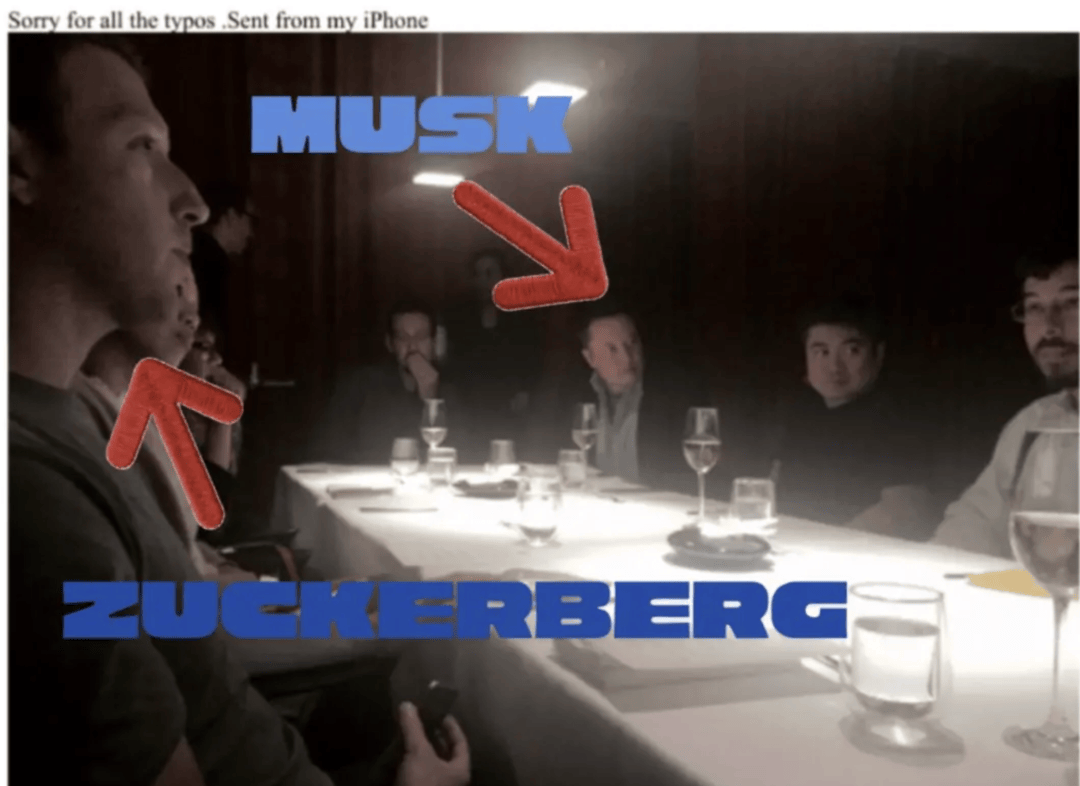
Group 1 - The latest documents from the U.S. Department of Justice reveal a photo of Elon Musk, Mark Zuckerberg, and Peter Thiel dining with Jeffrey Epstein in 2015, contradicting their previous denials of association with Epstein [1][3] - The dinner was organized by LinkedIn co-founder Reid Hoffman, and Musk reportedly introduced Zuckerberg to Epstein, raising significant trust issues for several Silicon Valley tech leaders [3] Group 2 - Elon Musk stated that Apple aggressively recruited Tesla engineers for its now-canceled electric vehicle project, with offers reportedly doubling Tesla's salaries, leading to over 300 Tesla employees leaving by 2019 [1][3] - Musk reflected on the misconception that hiring top talent from companies like Tesla would guarantee success in automotive projects [3] Group 3 - NVIDIA has deployed AI coding tools for 30,000 engineers, resulting in a threefold increase in code output while maintaining a stable bug rate due to enterprise-specific optimizations [1][4] Group 4 - Netflix's proposed $82.7 billion acquisition of Warner Bros. Discovery is under investigation by the U.S. Department of Justice for potential anti-competitive behavior, focusing on whether Netflix's actions could solidify its market position [1][4] Group 5 - Elon Musk emphasized that AI and robotics are the only solutions to the U.S. debt crisis, which has reached $38.5 trillion, with annual interest payments exceeding $1 trillion [1][5] Group 6 - The Washington Post's CEO Will Lewis resigned following significant layoffs, which sparked criticism of owner Jeff Bezos, with Jeff Donofrio appointed as the interim CEO [1][8] - The layoffs affected about one-third of the staff, including many reporters, leading to public backlash from politicians and the newspaper's union [8][9] Group 7 - Waymo acknowledged that its autonomous vehicles rely heavily on remote drivers, particularly from the Philippines, to handle unusual situations, challenging the notion of complete automation in self-driving technology [1][9] Group 8 - Alibaba launched a standalone Quark Cloud Drive app, enhancing user experience with features like 4K playback and cross-device compatibility [1][10][12] Group 9 - Samsung's Galaxy S26 will feature the world's first 2nm mobile chip, the Exynos 2600, and is expected to be released in 2026, with significant improvements in design and performance [1][14] Group 10 - Microsoft's next-generation Xbox, set to launch in 2027, will integrate Windows 11, allowing compatibility with various PC game stores and existing Xbox game libraries [1][15][17] Group 11 - Apple is planning a celebration for its 50th anniversary, with CEO Tim Cook expressing a reflective sentiment on the company's historical impact and contributions [1][18]


FSD神话褪色:当“老司机”遇上中国马路
Xin Lang Cai Jing· 2026-02-09 03:50
炒股就看金麒麟分析师研报,权威,专业,及时,全面,助您挖掘潜力主题机会! 来源:杰哥科技眼 2026年2月,特斯拉FSD自动辅助驾驶套件在中国已推送近一年,舆论却两极撕裂:一边是"遥遥领 先"的拥趸,称其"像真人开车";另一边是车主晒出的罚单合集——压线、闯红灯、误入非机动车 道,"驾照分不够扣"。 FSD到底被神化了吗?它是中国路况的最佳解吗? 一、FSD的"人味",是优势也是软肋 必须承认,FSD有其惊艳之处。 纯视觉方案下,它能在无车道线的路口靠右行驶,能丝滑变道、预判加塞,红灯前缓缓刹停如老司机 ——这种"拟人感",远超多数依赖高精地图+激光雷达的国产智驾。 其底层逻辑也足够先进:端到端神经网络+世界模型,让AI通过观看数百万小时人类驾驶视频"自学成 才",而非执行预设规则。这使其在开放道路具备强泛化能力,甚至能模仿大货车路线试探前行,展现 出某种"思考感"。 但问题恰恰出在这里:太像人,也会犯人的错。 在美国空旷高速上,FSD可零接管穿越4397公里;但在中国,它会在实线前"效率优先"强行变道,在左 转专用车道直行,在斑马线前因行人犹豫而长时间停滞。更危险的是,它对"中国特有元素"几近失明: 外卖骑 ...