自由贸易

Search documents
政策周观察第31期:深化与东盟、欧洲合作
Huachuang Securities· 2025-05-26 10:33
Macro Policy Insights - China and ASEAN countries have completed negotiations for the China-ASEAN Free Trade Area 3.0 version, enhancing regional trade cooperation[2] - The Chinese government emphasizes maintaining a reasonable proportion of manufacturing in the economy, highlighting the importance of technology empowerment in modern manufacturing[4] - The State Development and Reform Commission (SDRC) approved 27 fixed asset investment projects from January to April, totaling 573.7 billion yuan, compared to 32 projects and 320.7 billion yuan in the same period last year, indicating a significant increase in project approvals[3] Financial and Investment Strategies - In April, SDRC approved 5 fixed asset investment projects with a total investment of 377.1 billion yuan, a substantial increase from 1.15 billion yuan for 20 projects in the same month last year[3] - Nearly 500 billion yuan in ultra-long-term special bonds have been arranged for 2025 to support major projects, including infrastructure and urbanization initiatives[3] - The government plans to revise the "Encouraged Foreign Investment Industry Catalog" to include high-end manufacturing and digital economy sectors, aiming to boost foreign investment confidence[4] Risk Management and Economic Outlook - The government is focusing on addressing "involution" in competition by promoting mergers and acquisitions in inefficient industries and enhancing industry self-discipline[4] - A risk warning is issued regarding the timely update of policies, which could impact market stability and investor confidence[4]
李强总理对印尼进行正式访问 外交部介绍具体情况
news flash· 2025-05-26 07:50
Group 1 - Li Qiang, the Chinese Premier, made an official visit to Indonesia from May 24 to 26, 2023, at the invitation of President Joko Widodo [1] - The visit marks the 75th anniversary of diplomatic relations between China and Indonesia, highlighting the importance of bilateral cooperation and mutual support over the years [1] - During the visit, discussions focused on enhancing strategic alignment, deepening high-quality Belt and Road cooperation, and improving trade and investment facilitation [1] Group 2 - The year also marks the 70th anniversary of the Bandung Conference, emphasizing the relevance of the Bandung spirit in the current international context [2] - China expresses willingness to collaborate with Indonesia and other developing countries to promote the principles of peaceful coexistence and multilateralism [2] - The commitment to uphold the common interests of developing countries and to foster global peace and stability is reiterated [2]
突破垄断——广州体制的走私“虫洞”
Jing Ji Guan Cha Bao· 2025-05-26 07:47
Core Viewpoint - The article discusses the transition from a mercantilist trade system dominated by the British East India Company to a more decentralized and spontaneous free trade era characterized by "scatter merchants" in the context of global history [2][3][4]. Group 1: Historical Context - The British government utilized the East India Company to engage in the opium trade, instigating the Opium Wars to control trade with China, leading to the company's eventual dissolution and the end of the Silver Age [2][3]. - The Silver Age was marked by the British Industrial Revolution and free trade, culminating in significant historical events such as the bankruptcy of the East India Company and the destruction of the Old Summer Palace during the Second Opium War [2][3]. Group 2: The Role of "Scatter Merchants" - The book "Mr. Smith Goes to China" by Han Jiexie focuses on the activities of three Scottish merchants named George Smith, whose trade activities in India and China illustrate the rise of the British global empire [2][3]. - These merchants operated during the Qianlong period, and their trade demands prompted the Macartney Mission to China, contributing to the development of a global trade network [3][4]. Group 3: Trade Dynamics - The trade triangle formed between Britain, India, and China involved the exchange of goods such as tea, silver, cotton, and opium, shaping the economic geography of modern Asia [5][6]. - The East India Company collaborated with the Cohong (Thirteen Hongs) to create a trade and financial system known as the "Guangzhou System," which was later disrupted by the activities of the "Smiths" [5][6]. Group 4: Financial Operations - The "Smiths" provided high-risk loans to Chinese merchants at interest rates of 18%-22%, which, while lower than the legal rate of 36%, led to widespread defaults and contributed to the 1779 Guangzhou financial crisis [7][8]. - They utilized the East India Company's financial system to facilitate the flow of silver from India to Guangzhou, supporting the company's tea purchases, with significant amounts of silver injected into the system [6][7]. Group 5: Impact on Trade Policies - The actions of the "Smiths" challenged the monopoly of the East India Company, leading to a shift in British colonial policy towards more liberal trade practices, culminating in the repeal of the company's trading privileges in 1813 [9][10]. - The article highlights the inherent contradictions in the relationship between the "Smiths" and the East India Company, characterized by both dependency and a desire to undermine the company's monopoly [6][9]. Group 6: The Role of Scottish Merchants - Scottish merchants were significantly more active in trade compared to their English counterparts, driven by a historical context of conquest and subjugation, which fostered a spirit of independence and opposition to monopolistic practices [10][11]. - The "Smiths" embodied the ideals of Adam Smith's free trade philosophy, acting as practitioners of these ideas in the context of the global economy [9][10].
东西问丨谢宝剑:广交会证明开放公平的自由贸易是大势所趋
Zhong Guo Xin Wen Wang· 2025-05-26 02:58
Core Viewpoint - The Canton Fair exemplifies the trend towards open and fair free trade, demonstrating its resilience and importance in the current global trade landscape [1][9]. Group 1: Historical Context and Significance - The early archives of the Canton Fair serve as a testament to China's efforts to break through Western trade blockades and establish international communication [2]. - The establishment of the Canton Fair in 1957 was a crucial step in overcoming economic sanctions and expanding international markets, reflecting China's commitment to developing foreign trade [2][4]. - The principles of "contract respect" and "quality over quantity" highlighted in the archives underscore the importance of credibility in international trade, which remains relevant today [2][3]. Group 2: Evolution of China's Trade Environment - The development of the Canton Fair mirrors China's transition from a closed economy to a globally open economy, with significant changes occurring at key milestones such as the reform and opening-up policy and China's accession to the WTO [4][5]. - The Canton Fair has evolved through three major phases: 1. "Window-type trade" under a planned economy until 1978, where it played a key role in foreign exchange earnings [4]. 2. "Scale expansion" driven by market reforms from 1979 to 2012, marked by increased participation of private enterprises and a shift towards a more diverse range of export products [4][5]. 3. "Structural optimization" from 2013 onwards, focusing on high-quality development amidst global trade conflicts and technological advancements [5]. Group 3: Role in Global Trade and Economic Cooperation - The Canton Fair acts as a "stabilizing anchor" in the face of global trade tensions, providing an alternative trading channel that bypasses protectionist barriers [10]. - It serves as a "testing ground" for new digital trade rules and standards, enhancing procurement efficiency through innovative models like "online matching + offline transactions" [10][11]. - The fair's ability to attract over 280,000 foreign buyers from 219 countries and regions demonstrates its effectiveness in fostering international trade relationships [10]. Group 4: Future Directions and Policy Implications - The Canton Fair is positioned to further enhance trade facilitation by optimizing the trade environment and reducing barriers, while also sharing its successful practices with other countries [10][11]. - The fair's experience in market-driven rule innovation can inform global economic governance and promote dialogue on trade standards and regulations [11].

构建新型合作框架,媒体称赞“意义非凡”,三方峰会向世界提供“亚洲方案”
Huan Qiu Shi Bao· 2025-05-25 23:00
Core Points - The article discusses the upcoming ASEAN-China-GCC summit in Malaysia, highlighting China's commitment to enhancing cooperation with ASEAN and GCC countries for mutual benefits and regional stability [1][5][6] - Chinese Premier Li Qiang's visit to Indonesia emphasizes strengthening bilateral relations and strategic cooperation, particularly in areas like trade, investment, and infrastructure development [1][4][6] Group 1: ASEAN-China-GCC Summit - The summit is expected to enhance cooperation in trade, investment, security, political dialogue, education, and energy among the three parties [5] - The summit represents a shift towards a new cooperation framework that integrates ASEAN's resources, China's industrial capabilities, and GCC's capital advantages [6] - Malaysia's Prime Minister Anwar suggests establishing multi-national projects and a fund to facilitate collaboration during the summit [6] Group 2: Bilateral Relations with Indonesia - Li Qiang's discussions with Indonesian President Prabowo focus on deepening strategic partnerships and enhancing cooperation in various sectors, including high-quality Belt and Road initiatives [1][4] - Both countries aim to strengthen market connectivity and industry collaboration, particularly in finance, renewable energy, digital economy, and artificial intelligence [1][4] - The visit marks the 75th anniversary of diplomatic relations between China and Indonesia, highlighting the importance of this partnership in addressing global challenges [3][4] Group 3: Global Economic Context - The article notes the rising unilateralism and protectionism globally, which poses challenges to international trade and economic order [3] - Both China and Indonesia express a commitment to multilateralism and free trade, aiming to promote a more inclusive and equitable global economy [3][4] - The changing global power dynamics are leading countries to seek alternative partnerships, with China being viewed as an attractive collaborator compared to traditional Western powers [8]
自贸区3.0版谈判全面完成——中国与东盟经贸合作迈入新阶段
Jing Ji Ri Bao· 2025-05-25 21:48
Core Viewpoint - The completion of the China-ASEAN Free Trade Area 3.0 negotiations marks a significant milestone in economic cooperation, enhancing trade efficiency and reducing costs, which is expected to lead to a substantial increase in bilateral trade volume in the coming years [1][5][6] Group 1: Economic Impact - The bilateral trade volume between China and ASEAN reached 6.99 trillion RMB in 2024, with a growth rate of 9%, accounting for 15.9% of China's total foreign trade [1] - The successful negotiation of the Free Trade Area 3.0 is anticipated to facilitate trade processes, making them more efficient and cost-effective, potentially leading to a trade volume exceeding 1 trillion USD in the future [1][2] - The Free Trade Area 3.0 will create unified rules and standards, reducing trade barriers and investment obstacles, thus enhancing overall regional economic competitiveness [2][3] Group 2: Global Trade Context - The completion of the Free Trade Area 3.0 negotiations sends a strong signal of support for free trade and open cooperation amidst challenges to the multilateral trade system [2] - The cooperation between China and ASEAN is expected to inject certainty into global trade, boosting market confidence and contributing to global economic recovery and sustainable development [2] Group 3: Strategic Importance - The Free Trade Area 3.0 is a priority for both parties, serving as a hallmark of their commitment to free trade and providing institutional support for building a China-ASEAN community of shared destiny [3][5] - Increased trade and investment will lead to more frequent exchanges of personnel, fostering better social and cultural ties between the two regions [3] Group 4: Sectoral Focus - The negotiations emphasized digital and green economies, with plans for collaboration in digital technology innovation, e-commerce, and clean energy development [3][4] - Both parties aim to explore trade and investment rules in the digital economy, contributing to global governance in this sector [3] Group 5: Benefits for ASEAN - Small and medium-sized enterprises in ASEAN will gain more opportunities to enter the Chinese market, supported by government policies aimed at enhancing competitiveness [4] - Economic growth will promote cooperation in education, culture, and tourism, enriching cultural exchanges and improving the quality of life for citizens [4]
关键时刻,中国东盟谈妥了!美国12州结盟,开始对特朗普发难
Sou Hu Cai Jing· 2025-05-25 14:39
特朗普(资料图) 特朗普(资料图) 中国-东盟自贸区3.0版谈判自2022年11月启动,历经近两年时间,经过9轮正式谈判,于2024年10月实质性结束。谈判的圆满完成,不仅为签署升级议定书 奠定了坚实基础,也为区域和全球贸易注入了更大的确定性。中国-东盟自贸区3.0版在原有合作基础上新增了数字经济、绿色经济、供应链互联互通、标准 技术法规与合格评定程序、海关程序与贸易便利化、卫生与植物卫生措施、竞争和消费者保护、中小微企业以及经济技术合作等9大领域。这些新增内容旨 在推动双方在更宽领域、更深层次上实现区域经济一体化。 中国与东盟互为第一大贸易伙伴和重要投资伙伴,互为彼此主要市场,在反对保护主义、维护自由贸易方面有着共同立场。"在当前个别国家实行单边主 义、贸易保护主义和破坏多边贸易规则的背景下,中国—东盟自贸区3.0版谈判全面完成更显意义重大。"马建春认为,中国与东盟国家以合作的确定性应对 外部环境不确定性给国际贸易造成的不利影响,树立了经济全球化和区域经济一体化发展的合作典范。 据新华社报道,商务部对外发布,中国—东盟经贸部长特别会议以线上方式举行,双方经贸部长共同宣布全面完成中国—东盟自贸区3.0版谈判。 ...
李强同印度尼西亚总统普拉博沃会谈
证监会发布· 2025-05-25 10:33
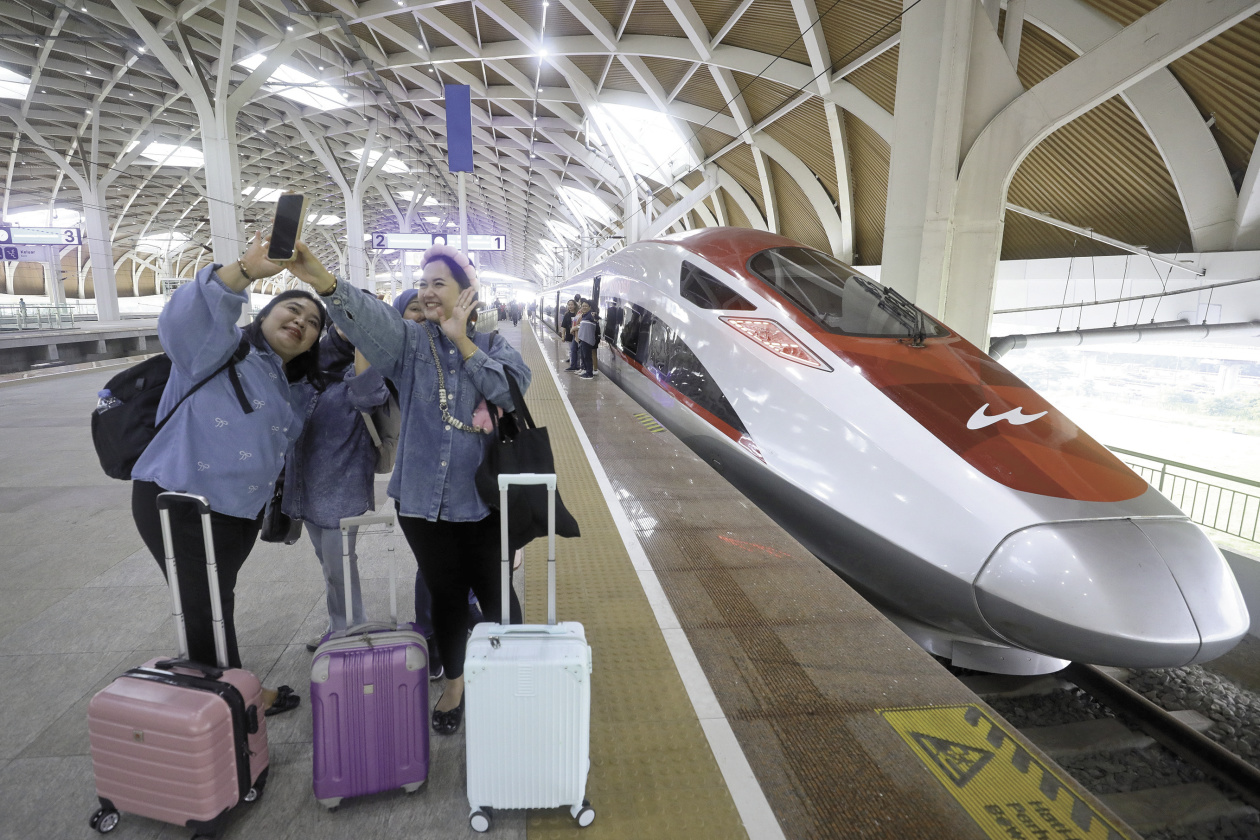
新华社雅加达5月25日电 当地时间5月25日上午,国务院总理李强在印度尼西亚总统府 同印尼总统普拉博沃举行会谈。 李强指出,中方愿同印尼加强发展战略对接,深化高质量共建"一带一路"合作,特别是 做优做强标志性项目,进一步擦亮雅万高铁"金字招牌",推进"区域综合经济走廊"和"两国 双园"建设。双方要加强市场联通和产业协作,提升贸易投资便利化水平,拓展金融、新能 源、数字经济、人工智能、航空航天、海洋等领域合作。中方愿同印尼扩大人文交流,推进 人员往来便利化,深化粮农、减贫、卫生等民生领域合作,更好造福两国人民。 李强表示,当前全球单边主义、保护主义上升,严重冲击国际经贸秩序。面对风险挑 战,团结合作才是正确出路。中方愿同印尼等广大发展中国家一道,共同弘扬和平共处五项 原则和万隆精神,积极落实三大全球倡议,坚持多边主义和自由贸易,推动平等有序的世界 多极化、普惠包容的经济全球化,坚定维护自身共同利益,共促地区和世界和平稳定发展。 普拉博沃请李强转达对习近平主席的亲切问候和美好祝愿,表示印尼与中国友好交往历 史悠久,两国人民情谊深厚。今年是两国建交75周年,也是万隆会议举行70周年。印尼愿 以此为契机,深化两国全面 ...
李强同印度尼西亚总统普拉博沃会谈
news flash· 2025-05-25 08:21
Core Points - The meeting between Chinese Premier Li Qiang and Indonesian President Prabowo focused on enhancing strategic cooperation and high-quality Belt and Road Initiative projects, particularly the Jakarta-Bandung High-Speed Railway [1] - Both sides aim to strengthen market connectivity and industrial collaboration, improving trade and investment facilitation, and expanding cooperation in finance, new energy, digital economy, artificial intelligence, aerospace, and marine sectors [1] - The leaders emphasized the importance of cultural exchanges and cooperation in agriculture, poverty alleviation, and health to benefit the people of both nations [1] - Li Qiang highlighted the rising unilateralism and protectionism globally, advocating for unity and cooperation as the correct approach to face challenges [1] Agreements and Collaborations - Following the talks, both parties witnessed the signing of cooperation documents in economic development policies, supply chain, and finance [2]
引领多边合作,维护自由贸易,中欧领导人通话深化互信
Huan Qiu Shi Bao· 2025-05-23 23:06
Group 1: China-Germany Relations - Xi Jinping emphasized the importance of mutual respect and cooperation in developing China-Germany relations, highlighting the need to enhance political trust and cooperation in traditional sectors like automotive and machinery, as well as emerging fields like AI and quantum technology [2][3] - The bilateral trade between China and Germany reached approximately 246 billion euros last year, indicating a strong economic relationship [6] - China is willing to share development opportunities arising from its high-level opening-up and hopes for more policy support from Germany for bilateral investment [2][3] Group 2: China-France Relations - Xi Jinping and Emmanuel Macron discussed the significance of China-France relations, emphasizing the need for strategic cooperation in various fields, including trade, investment, and addressing global challenges [4][5] - Macron expressed France's intention to strengthen economic ties with China and welcomed Chinese investments, indicating a positive outlook for bilateral economic relations [6][7] - The two leaders also addressed international issues such as the Ukraine crisis and the Gaza conflict, highlighting their shared goals for peace and stability [5][6] Group 3: EU-China Trade Dynamics - China is the largest source of imports for the EU, accounting for 21.3% of total imports, and the third-largest export market, representing 8.3% of total exports [8] - In 2024, EU exports to China are projected to reach 213.3 billion euros, while imports are expected to be 517.8 billion euros, showcasing the robust trade relationship [8] - Chinese direct investment in the EU and the UK saw a 47% increase in 2024, reaching 10 billion euros, marking a significant rebound in investment activity [10] Group 4: Strategic Cooperation and Global Challenges - Both China and the EU are seen as key players in addressing global challenges, particularly in climate change, with expectations for closer cooperation in this area [10][11] - The ongoing communication between China and European leaders is aimed at building strategic trust and contributing to global stability amid rising uncertainties [11]