
高端化

Search documents
“坚持用‘小米’做高端,雷军这次赌对了”
Guan Cha Zhe Wang· 2025-10-01 01:36
Core Insights - Xiaomi has undergone a significant transformation over the past five years, successfully establishing itself in the high-end market, as evidenced by the record sales of the Xiaomi 17 series [1][3][19] - The company has shifted from merely benchmarking against Apple to achieving innovative breakthroughs in technology and product design, showcasing its capabilities in various sectors including smartphones, automobiles, and home appliances [4][5][18] Group 1: High-End Market Positioning - The launch of the Xiaomi 17 series marked a milestone in the company's high-end strategy, with the Xiaomi 17 Pro Max achieving over 50% of the series' sales, indicating strong consumer support for premium products [1][4] - Xiaomi's commitment to high-end positioning is reflected in its decision to maintain the Xiaomi brand for premium products, demonstrating confidence in its ability to compete with established players like Apple and Samsung [16][19] Group 2: Innovation and Technology - The introduction of features like the "Miao Xiang Back Screen" and advancements in battery technology, such as the 16% silicon content in the Xiaomi Jinsha River battery, highlight Xiaomi's focus on innovation and user experience [5][7][18] - The company has made substantial investments in R&D, with plans to increase its annual investment to 200 billion, emphasizing the importance of self-developed technologies in sustaining its high-end strategy [12][23] Group 3: Overcoming Challenges - Xiaomi faced significant challenges during its high-end transition, including initial setbacks with the Xiaomi 11 Ultra, which led to a period of self-reflection and strategic reassessment [9][13] - The company's leadership, particularly Lei Jun, emphasized the need for a cultural shift towards a technology-driven mindset, which has been crucial in overcoming external skepticism and internal doubts [10][15] Group 4: Future Outlook - Looking ahead, Xiaomi aims to expand its high-end offerings across multiple categories, including smart home appliances and electric vehicles, with a clear goal of becoming a leading brand in these sectors by 2030 [19][23] - The company's strategy includes a focus on global expansion, particularly in Europe for its electric vehicles, indicating a shift from product export to a more integrated business model [21][23]

奇瑞汽车(09973):系列深度报告:自主车企领头羊之一新能源转型+高端化+出海带动新增长
NORTHEAST SECURITIES· 2025-09-30 03:17
Investment Rating - The report initiates coverage with a "Buy" rating for Chery Automobile [6][3]. Core Insights - Chery Automobile is positioned as a leading player among domestic car manufacturers, focusing on the transition to new energy vehicles, high-end market penetration, and international expansion to drive new growth [1][18]. - The company has established a clear brand matrix consisting of five brands: Chery, Jetour, Exeed, iCAR, and Zhijie, which cater to various market segments from mainstream to high-end and from fuel to new energy vehicles [1][18][21]. - Chery's sales are projected to grow significantly, with a compound annual growth rate (CAGR) of 36.7% for its main brand from 2022 to 2024, and a notable increase in export sales [2][3]. Financial Summary - Revenue forecasts for Chery Automobile are as follows: 2025 at 315 billion CNY, 2026 at 394.3 billion CNY, and 2027 at 485.6 billion CNY, with corresponding net profits of 16.22 billion CNY, 21.36 billion CNY, and 27.19 billion CNY [3][4]. - The company is expected to maintain a strong net profit margin, with a projected price-to-earnings (PE) ratio of 10.40 for 2025, decreasing to 6.20 by 2027 [3][4]. Sales and Market Position - In the 5-20W price segment, Chery ranks second in wholesale sales, with a significant increase in sales from 1.75 million units in 2023 to 2.375 million units in 2024, driven by its strong performance in the new energy vehicle sector [2][3]. - The overall penetration rate of new energy vehicles in the market is 44.9%, with Chery's brands showing robust growth across all segments [2][3]. Brand Performance - The main brand Chery is expected to achieve sales of 1.643 million units in 2024, while Jetour, Exeed, iCAR, and Zhijie are also projected to see substantial sales increases, reflecting the effectiveness of the company's diversified brand strategy [2][21]. - The Jetour brand is particularly noteworthy, with a projected CAGR of 77.7% from 2022 to 2024, indicating strong market demand for its offerings [2][3]. Technological Advancements - Chery has made significant investments in technology, focusing on five key areas: Mars architecture, Kunpeng power, Lion smart cockpit, Falcon intelligent driving, and Galaxy ecosystem, which are expected to enhance its competitive edge in the automotive industry [1][64].
世界最大直径竖井掘进机在郑下线 “河南造”国之重器再上新
He Nan Ri Bao· 2025-09-29 23:18
Core Insights - The world's largest diameter vertical shaft tunneling machine "Qiming" has been successfully launched in Zhengzhou, marking a significant technological breakthrough in China's tunneling equipment industry [1][2] Group 1: Technological Advancements - "Qiming" features a maximum excavation diameter of 24 meters and a maximum excavation depth of 150 meters, setting records for both categories in the field of vertical shaft tunneling [1] - The machine incorporates innovative technologies such as dual-arm structure, attitude adjustment, and settlement control, enhancing its geological adaptability and precision in guiding operations [1] Group 2: Project Significance - The successful launch of "Qiming" is crucial for the Chongtai Yangtze River Tunnel project, which is a key component of China's "Eight Vertical and Eight Horizontal" high-speed railway network [2] - The machine is designed specifically for the riverbank environment, significantly reducing the construction time for vertical shafts from one year to three months while improving quality and safety [2]
中国五矿携旗下9家上市公司亮相深交所 增强矿产资源保障能力 多维度提升投资者回报
Zhong Guo Zheng Quan Bao· 2025-09-29 22:55
Core Viewpoint - China Minmetals Corporation emphasizes "resources" as its primary strategy and aims for high-end, intelligent, and green development through technological innovation [1][2][4] Group 1: Company Overview - China Minmetals, established in 1950, is a state-owned enterprise directly managed by the central government, focusing on metal minerals and has developed a full industry chain including exploration, construction, operation, processing, trade, logistics, R&D, and financial capital [2] - As of mid-2025, China Minmetals has total assets of nearly 1.5 trillion yuan and reported revenue of 381.1 billion yuan [2] Group 2: Resource Development and Supply Chain - The company is enhancing its resource security capabilities, with significant increases in resources for copper, lead-zinc, nickel, cobalt, tungsten, tin, and antimony expected in 2024 [2] - China Minmetals has formed the China Salt Lake Group with Qinghai Province to accelerate the construction of a world-class salt lake industry base [2] Group 3: Technological Innovation and Industry Upgrading - The company is leveraging its national-level R&D platforms to foster strategic emerging industries in areas such as metal materials, special materials, equipment manufacturing, digital economy, and energy conservation [4] - China Minmetals has 10 national-level champion enterprises, 20 specialized "little giant" enterprises, and 14 "double hundred" enterprises [4] Group 4: Investment and Shareholder Relations - The company is committed to enhancing the value of its listed companies and optimizing investor return mechanisms, including sustainable profit distribution policies and encouraging cash dividends [6] - China Minmetals plans to improve investor relations management through various activities such as roadshows and open days to enhance communication and transparency [6] Group 5: Specific Company Initiatives - Minmetals Resources, a flagship platform for overseas base metal development, holds significant copper and zinc resources and is optimistic about exploration and resource expansion [3] - The Las Bambas copper mine is expected to produce 400,000 tons of copper in 2025, positioning it as Peru's largest copper mine and among the top ten globally [3]
中国五矿携旗下9家上市公司亮相深交所
Zhong Guo Zheng Quan Bao· 2025-09-29 20:46
Core Viewpoint - China Minmetals Corporation emphasizes "resources" as its primary strategy and aims for high-end, intelligent, and green development through technological innovation [1][2] Group 1: Business Overview - China Minmetals, established in 1950, is a state-owned enterprise directly managed by the central government, focusing on metal minerals and has developed a full industry chain covering exploration, construction, operation, smelting, trade, logistics, R&D, and financial capital [1] - As of mid-2025, China Minmetals has total assets of nearly 1.5 trillion yuan and reported revenue of 381.1 billion yuan [1] Group 2: Resource Assurance and Development - The company is enhancing its resource assurance capabilities, with significant increases in resources for copper, lead-zinc, nickel, cobalt, tungsten, tin, and antimony expected in 2024 [2] - China Minmetals has formed the China Salt Lake Group with Qinghai Province to accelerate the construction of a world-class salt lake industry base, with Salt Lake Co. becoming the ninth listed subsidiary [2] - Minmetals Resources, a flagship platform for overseas base metal development, holds 18.6 million tons of copper and 11.9 million tons of zinc resources, positioning it as a leading global producer [2] Group 3: Technological Innovation and Development - The company is focusing on technological innovation as a core driver, leveraging national-level R&D platforms to foster strategic emerging industries in metal materials, special materials, equipment manufacturing, digital economy, and energy conservation [3] - China Minmetals boasts 10 national-level manufacturing champions, 20 specialized "little giant" enterprises, and 14 "double hundred" enterprises [3] Group 4: Business Diversification and Upgrading - The metallurgical construction sector is aligning with new industrialization and urbanization, while trade logistics is developing a comprehensive model integrating resources, trade, logistics, and services [4] - Financial capital aims to optimize business structure with a focus on technology, green, and industrial finance [4] - Zhongtung High-tech is promoting the high-end, intelligent, and green transformation of the non-ferrous metal industry, with significant production increases expected post-technical upgrades [4] Group 5: Investor Relations and Value Creation - China Minmetals is committed to enhancing the value creation and realization of its listed companies, focusing on improving company quality, optimizing investor return mechanisms, and enhancing investor relations management [5][6] - The company plans to support listed companies in developing sustainable profit distribution policies and encourage cash dividends and share buybacks to boost investor confidence [6] - Efforts will be made to improve communication with investors through various engagement activities, enhancing information disclosure quality and market recognition [6]

沉闷十年后,智能手机的背面终于「活」了
3 6 Ke· 2025-09-29 13:57
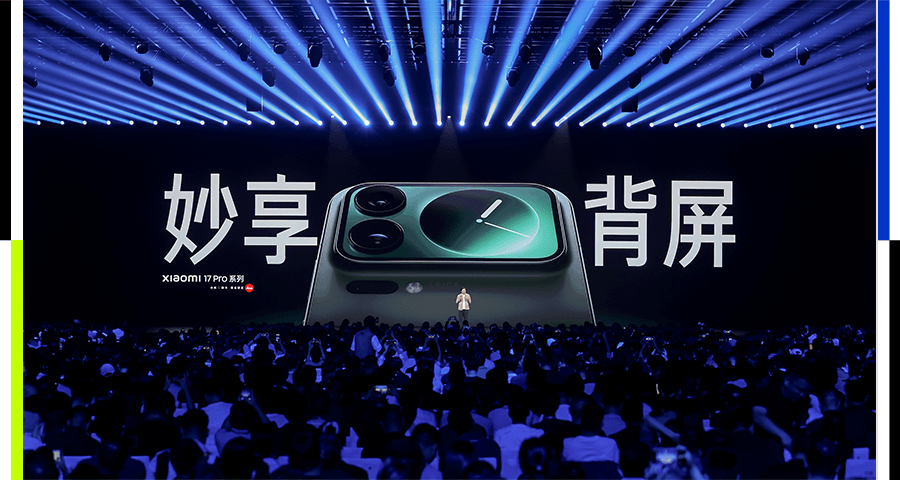
Core Viewpoint - The article discusses the "back screen revolution" initiated by Xiaomi's 17 series, which aims to redefine human-computer interaction by introducing a dual-screen interface, challenging the traditional single-screen paradigm in smartphones [3][6][11]. Group 1: Evolution of Smartphone Interaction - The evolution of smartphones over the past two decades has primarily focused on screen innovations, with each breakthrough reshaping interaction paradigms [4][6]. - The introduction of multi-touch screens and larger displays has led to a competitive landscape centered around screen real estate, yet the interaction model remained largely unchanged until now [4][8]. Group 2: Xiaomi's Back Screen Innovation - Xiaomi's 17 series introduces a functional back screen that enhances user interaction by providing dynamic notifications and personalized wallpapers, effectively utilizing the previously underutilized back of the device [8][11]. - The back screen allows for real-time previews during selfies and supports gaming, marking a significant shift towards dual-sided interaction in smartphones [8][11]. Group 3: Technological Breakthroughs - The success of the back screen revolution relies on advancements in battery technology, with Xiaomi utilizing a new battery design that achieves a density of 894Wh/L and a capacity of up to 7500mAh, enabling extended usage [14][15]. - The introduction of SuperRED display materials enhances outdoor visibility and color accuracy, positioning Xiaomi at the forefront of display technology [15][16]. Group 4: Competitive Landscape and Market Position - The smartphone market is shifting from a focus on hardware specifications to differentiated user experiences, with Xiaomi positioning itself against competitors like Apple through innovative features [12][16]. - Xiaomi's commitment to high-end market penetration is underscored by its significant R&D investments, which have increased from 75 billion to 1050 billion over five years, with plans to reach 2000 billion in the next five years [21][22]. Group 5: Broader Implications for the Industry - The back screen revolution signifies a broader trend in the smartphone industry towards innovative user experiences, moving away from mere hardware upgrades to holistic technological advancements [16][22]. - Xiaomi's transformation from an internet company to a leader in smart manufacturing reflects its strategic shift towards a comprehensive ecosystem that includes vehicles and smart home devices, enhancing its competitive edge [19][22].
手机战苹果、汽车挑特斯拉:小米「硬核」的底气来自哪里?
雷峰网· 2025-09-29 13:21
Core Viewpoint - Xiaomi has transformed into a "hardcore technology company" spanning three major fields: smartphones, automobiles, and home appliances [1] Group 1: Xiaomi's Transformation and Growth - Xiaomi has evolved from being labeled as an "assembly factory" to a hardcore technology company over 15 years, with a focus on high-end products [2][3] - The company's R&D investment has increased from 9.3 billion yuan in 2020 to 24.1 billion yuan in 2024, and the number of R&D personnel has doubled from 10,401 to 22,641 [2][19] Group 2: Product Launch and Market Performance - The Xiaomi 17 series achieved record sales, with over 800,000 units sold by September 27, 2023, and the Xiaomi 17 Pro Max accounting for over 50% of the series' sales [4][6] - The Xiaomi 17 series is positioned to compete directly with Apple's iPhone 17, showcasing significant upgrades in product capabilities [4][7] Group 3: Technological Innovations - The Xiaomi 17 features a unique "Miao Xiang Back Screen" design, enhancing user experience with practical applications such as real-time information display [5][6] - The Xiaomi 17 Pro Max boasts a battery capacity of 7,500 mAh, supporting 100W wired and 50W wireless charging, outperforming the iPhone series in terms of battery life [6][19] Group 4: Strategic Vision and Future Plans - Xiaomi's strategy includes a commitment to invest 100 billion yuan in core technology R&D over the next five years, aiming for high-end market penetration [10][19] - The company is also venturing into the automotive sector, with plans to develop high-performance electric vehicles, directly competing with brands like Tesla and Porsche [17][20] Group 5: Overall Market Positioning - Xiaomi has successfully shed its low-end label and is now recognized as a comprehensive technology company with a complete ecosystem across various sectors [20] - The company aims for breakthroughs in ultra-high-end and global markets, with a focus on providing premium services previously associated only with luxury brands [20][21]




玉柴在北京重磅“落子”,要干啥?
第一商用车网· 2025-09-29 07:36
Core Viewpoint - The establishment of the Yuchai Beijing Marketing Center marks a significant step for Yuchai Group in enhancing its market presence and supporting its global strategy, aligning with national policies and industry trends [3][4]. Group 1: Functions of Yuchai Beijing Marketing Center - The center will serve four main functions: 1. Establishing a strategic platform to support Yuchai's global strategy with decision-making based on national policies and industry trends [3]. 2. Acting as a high-end customer service center to provide rapid and professional technical support to key clients in North China and nationwide [3]. 3. Serving as a brand image window to showcase Yuchai's technological strength and corporate image on an international stage [3]. 4. Functioning as a talent and resource hub to attract high-end talent and promote innovation in high-end, intelligent, and green development [3]. Group 2: Significance of the Marketing Center - The opening of the Beijing Marketing Center is seen as a vital move for Yuchai to deepen its domestic market engagement and expand its global market reach [4]. - The center is positioned to leverage Beijing's influence as a political, economic, cultural, and information center, thereby injecting new momentum into Yuchai's sustainable high-quality development [4]. Group 3: Industry Context - The establishment of the marketing center is viewed as a practical implementation of the industry's structural adjustment and a push towards high-quality development [3]. - The center aims to enhance industry chain collaboration and deepen international cooperation, contributing to the advancement of China's power equipment industry towards the high end of the global value chain [3].

“鸟”塌房,伯希和要摆脱“平替”身份
3 6 Ke· 2025-09-29 04:47
Core Insights - The article discusses the rapid rise of the domestic outdoor brand "Bershka" as a result of the controversy surrounding the established brand "Arc'teryx," which has damaged its image. This situation has created an opportunity for Bershka, which is now pursuing an IPO in Hong Kong [1][3]. Company Overview - Founded in 2012, Bershka initially struggled to gain traction, ranking 17th in outdoor brand sales on Tmall during the 2022 "Double 11" shopping festival. However, since 2022, the brand has experienced significant growth [1][3]. - Bershka's store network expanded from 39 stores in 2022 to 146 stores in 2023. The company has also accelerated its financing, completing a Series A round of 49 million RMB in 2023 and a Series B round of 288 million RMB in 2024 [3][10]. Market Position - According to Frost & Sullivan, Bershka has become one of the top three domestic high-performance outdoor apparel brands in mainland China, achieving a market share of 5.2% by 2024 [3][10]. - The brand's rapid rise is attributed to its strategic positioning, targeting the price-sensitive consumer segment while offering high-quality products comparable to international brands [4][6]. Product Strategy - Bershka focuses on using high-quality materials similar to those used by premium brands, collaborating with top technology companies like Polartec and eVent. This approach has earned it the nickname "Domestic Material King" [4][10]. - The pricing strategy is aggressive, with classic jackets priced around 500 RMB, significantly lower than similar products from Arc'teryx [6][10]. Marketing Strategy - The brand has effectively utilized celebrity endorsements, signing popular actor Cheng Yi, which led to a significant increase in sales. After the announcement of his endorsement, the brand's GMV exceeded 60 million RMB within 14 hours [7][10]. - Bershka's marketing content emphasizes professional outdoor activities, enhancing its image as a high-end brand [9][10]. Financial Performance - Bershka's revenue has shown remarkable growth, with figures of 378 million RMB in 2022, 908 million RMB in 2023, and projected 1.766 billion RMB in 2024. Net profit also increased from 24.31 million RMB in 2022 to 283.08 million RMB in 2024 [10][11]. - The company's gross margin improved from 54.3% in 2022 to 59.6% in 2024, outperforming competitors like Arc'teryx [13][15]. Challenges and Opportunities - Despite its rapid growth, Bershka faces challenges related to brand perception and cultural identity, particularly regarding its name's association with a controversial historical figure [18][20]. - The company is actively seeking to diversify its product offerings beyond jackets, introducing new categories like trail running shoes and mountaineering boots [21][23]. Future Outlook - Bershka aims to enhance its brand image and market presence by opening flagship stores in major cities and fostering community engagement through outdoor activities [24][26]. - The brand is also focusing on vertical integration of its supply chain to improve quality control and reduce costs, which could further enhance its profitability [26][28]. - The outdoor market in China is expected to grow significantly, providing Bershka with a valuable opportunity to solidify its position as a leading domestic brand [30][31].
石化化工行业明确“十五五”发展方向
Zhong Guo Hua Gong Bao· 2025-09-29 02:34
Core Viewpoint - The petrochemical industry in China is focusing on high-end, green, and intelligent development during the 14th Five-Year Plan period, as emphasized by experts at a recent seminar organized by the Petrochemical Planning Institute [2][3]. Group 1: Industry Development Directions - High-end, green, and intelligent development will be the main themes for the petrochemical industry during the 14th Five-Year Plan [2]. - The Petrochemical Planning Institute is actively conducting industry research, optimizing production capacity, enhancing industrial parks, and validating projects to support policy formulation by national and local governments [2]. - There is a pressing need for the industry to transition towards fine chemicals and high value-added products due to rapid capacity growth of bulk organic raw materials outpacing demand and intensified homogeneous competition [2][3]. Group 2: Resource Management and Safety - China has a high dependence on foreign sources for key mineral resources such as potassium, phosphorus, and lithium, highlighting significant safety risks in the supply chain [3]. - The industry should enhance domestic resource exploration and green mining technologies, establish a stable and diversified overseas supply system, and strengthen strategic resource reserves and recycling mechanisms [3]. Group 3: Market Expansion Strategies - The petrochemical industry is actively seeking to expand into overseas markets, with China's petrochemical sector accounting for over 40% of the global market and having significant capacity advantages in refining [3]. - The industry should adopt a "dual-wheel drive" strategy to consolidate traditional market shares while exploring emerging markets for demand and profit growth [3]. Group 4: Technological Advancements - The development of a "smart management platform" for chemical parks is a key direction, which includes functions for investment management, emissions control, logistics management, safety risk diagnosis, and equipment maintenance [3]. - Establishing a carbon emission monitoring system for park enterprises is recommended to bridge data gaps and create a carbon budgeting mechanism [4]. - Future technologies such as steam collection and wastewater recycling will play a larger role in water conservation efforts [4].