
合成生物学

Search documents
华恒生物,官宣筹划赴港上市!
合成生物学与绿色生物制造· 2025-07-31 13:10
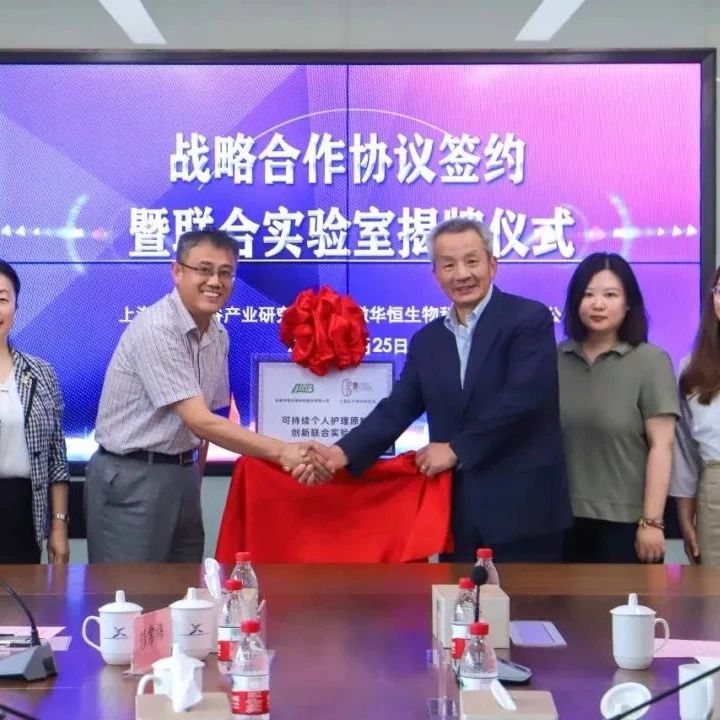
Core Viewpoint - Anhui Huaheng Biological Technology Co., Ltd. is planning to issue overseas shares (H shares) and list on the Hong Kong Stock Exchange to enhance its global development strategy and brand influence [2][3]. Group 1: Company Overview - Huaheng Biological was listed on the Shanghai Stock Exchange's Sci-Tech Innovation Board on April 22, 2021, with a current market value of approximately 8.35 billion RMB [5]. - The company specializes in the research, production, and sales of bio-based products, focusing on synthetic biology technology [6]. Group 2: Product and Market Position - Huaheng Biological is a leading producer of amino acid products, ranking first globally in the production and sales of alanine and valine [7]. - The company is expanding its product line to include bio-based chemicals such as 1,3-propanediol, succinic acid, and L-malic acid, while also investing in related startups [7]. Group 3: Recent Developments - In June 2023, Huaheng Biological planned to raise no more than 1.689 billion RMB for the construction of production bases for bio-based succinic acid and bio-based apple acid, each with an annual capacity of 50,000 tons [7]. - The company has established partnerships with various institutions, including a joint laboratory with Donghua University to advance the development of bio-based chemical fiber technology [10]. Group 4: Industry Events - The fourth Synthetic Biology and Green Bio-Manufacturing Conference (SynBioCon 2025) will be held from August 20-22, 2025, in Ningbo, focusing on AI in bio-manufacturing and green chemistry [17][19]. - The conference will include discussions on the development trends of the bio-manufacturing industry and the role of AI in driving innovation [39].

36项!工信部公示首批生物制造标志性产品名单,有哪些企业?
合成生物学与绿色生物制造· 2025-07-31 13:10
Core Viewpoint - The Ministry of Industry and Information Technology of China has officially announced the "First Batch of Iconic Products in Biological Manufacturing," which includes 36 products, marking a significant step in technological innovation and industrial upgrading in the biological manufacturing sector [1][3]. Summary by Sections Iconic Products List - The list includes 36 companies such as: - Shoulang Biotechnology - Micro元合成 - KaiLaiYing - Qinhongdao Huaheng Biotechnology - Qilu Pharmaceutical - JinSai Pharmaceutical - And others [3][5]. Product Details - Each product listed has specific applications and innovations: - **Ethanol Clostridium Protein**: Produced from industrial waste gases, beneficial for animal feed [5]. - **Alotose**: A low-calorie sweetener produced through microbial fermentation, enhancing production efficiency [5]. - **Nakiol Injection**: A CAR-T cell therapy for treating acute lymphoblastic leukemia, showing improved safety and efficacy [5]. - **Vitamin B**: Produced via fermentation, offering higher efficiency compared to traditional extraction methods [7]. - **Recombinant Human Serum Albumin**: Produced using rice cell technology, meeting clinical needs effectively [9]. Industry Significance - The announcement reflects the government's strong emphasis on the development of the biological manufacturing industry, showcasing the potential for innovation and growth in this sector [1][3]. Upcoming Events - The "SynBioCon 2025" conference will be held from August 20-22, focusing on AI in biological manufacturing, green chemistry, and future food and agriculture [11][12].

金河生物(002688):化药业务量价齐升驱动业绩高增,成本优势持续凸显
HUAXI Securities· 2025-07-31 07:26
Investment Rating - The investment rating for the company is "Buy" [1][6]. Core Views - The company reported a significant increase in revenue and net profit for the first half of 2025, with revenue reaching 1.39 billion yuan, up 30.45% year-on-year, and net profit of 138 million yuan, up 51.52% year-on-year [2]. - The veterinary pharmaceutical segment showed remarkable performance, with revenue of 860 million yuan, a year-on-year increase of 72.15%, accounting for 61.83% of total revenue [3]. - The vaccine segment maintained a stable foundation despite a slight revenue decline, with income of 155 million yuan, down 0.92% year-on-year, representing 11.12% of total revenue [4]. - The company is well-positioned to benefit from domestic and international market demand growth, cost optimization, and price increases, particularly in the veterinary pharmaceutical sector [5]. Summary by Sections Financial Performance - The company achieved a total revenue of 2.371 billion yuan in 2024, projected to grow to 2.835 billion yuan in 2025, and further to 3.030 billion yuan in 2026 [10]. - The net profit is expected to rise from 100 million yuan in 2024 to 197 million yuan in 2025, and 326 million yuan in 2026 [10]. - The gross margin is projected to be 33.5% in 2024, decreasing slightly to 31.9% in 2025, and then increasing to 36.4% in 2026 [10]. Business Segments - The veterinary pharmaceutical segment's gross margin was 38.13%, despite a slight year-on-year decrease due to lower-margin product sales [3]. - The vaccine segment's gross margin was 54.87%, down 5.50 percentage points year-on-year, influenced by increased market competition and customer cost-cutting [4]. - The company is expanding its product pipeline with over 20 products in research and registration, including new vaccines for various diseases [4]. Future Outlook - The company is expected to maintain a dual-driven strategy with its pharmaceutical and vaccine segments, supported by ongoing research and development efforts [5]. - The projected earnings per share (EPS) are expected to increase from 0.13 yuan in 2024 to 0.26 yuan in 2025, and 0.42 yuan in 2026 [10].

最新!智研咨询重磅发布《2025年中国非粮生物基材料行业研发现状及未来前景研判报告》
Chan Ye Xin Xi Wang· 2025-07-31 07:05
Group 1 - The core viewpoint of the article emphasizes the rapid development of China's non-grain bio-based materials industry driven by low-carbon transformation and dual carbon strategies, supported by policies and technological advancements [1][18][23] - In 2023, six departments jointly released the "Three-Year Action Plan for Accelerating the Innovative Development of Non-Grain Bio-Based Materials," outlining key goals for 2025 [1][32] - The industry is transitioning from laboratory-scale to large-scale production, with significant projects like the establishment of a 10,000-ton non-grain bio-based rubber production line and a 100,000-ton PLA production line [1][27][23] Group 2 - The non-grain bio-based materials industry is characterized by its use of non-food biomass, which avoids competition with food production and offers sustainable, biodegradable alternatives to traditional petroleum-based materials [7][9][18] - The industry is expected to replace over 30% of grain-based products by 2030, driven by continuous policy support and technological advancements [9][10][18] - The industry is currently in a phase of industrialization breakthroughs, with significant advancements in synthetic biology and CO₂ biomanufacturing technologies [1][27][49] Group 3 - The development of non-grain bio-based materials is crucial for achieving resource security, reducing carbon emissions, and promoting sustainable development [18][19] - The industry has a rich resource endowment, with agricultural waste and forestry residues providing a sustainable raw material supply [40][45] - Technological breakthroughs in synthetic biology and process engineering are accelerating the industrialization of non-grain bio-based materials, enhancing their competitiveness against petroleum-based products [49][50][57]

政策护航未来食品产业 生物技术推动食品工业与农业变革
Zheng Quan Ri Bao Wang· 2025-07-30 08:29
Group 1 - The core viewpoint emphasizes the importance of promoting biotechnology in the food industry to expand agricultural development space and ensure food security [1] - The "14th Five-Year Plan for Biotechnology Development" aims to transition from "solving hunger" to "diverse nutrition," focusing on modernizing agriculture and meeting higher consumer expectations for food [1] - Key areas of focus include biological breeding, bio-fertilizers, bio-feed, and bio-pesticides, with the goal of launching new agricultural bio-products and establishing a demonstration and promotion system for bio-agriculture [1] Group 2 - Recent policies from the Ministry of Industry and Information Technology and the Ministry of Agriculture and Rural Affairs support crop improvement and innovation in agricultural inputs [2] - The future of food is expected to leverage synthetic biology, artificial intelligence, and smart manufacturing, addressing global food supply and safety issues while promoting factory-based production [2] - Investment interest is growing in alternative proteins, functional ingredients, and synthetic biology foods, driven by breakthroughs in biomanufacturing technologies and rising health and sustainability demands [2]
康益美集团山东合成生物技术有限公司闪耀世界前沿科技大会
Zhong Guo Chan Ye Jing Ji Xin Xi Wang· 2025-07-30 08:03
Group 1 - The Fourth World Frontier Technology Conference will be held in September in Beijing, highlighting the importance of international scientific and technological cooperation [4][6]. - Kangyimei Group's Shandong Synthetic Biology Technology Co., Ltd. has been recognized for its innovative achievements in the probiotic industry, winning the "Frontier Technology Innovation Benchmark Case" award [1][3]. - The company showcased two milestone patent technologies: a method for preparing probiotics based on synthetic biology and a system for screening synthetic biological probiotics [1][2]. Group 2 - The patented method for preparing probiotics utilizes innovative gene editing and regulation techniques to optimize metabolic pathways, enabling efficient synthesis of specific functional substances like L-isoleucine [1][2]. - The screening method leverages advanced artificial intelligence and big data technologies to accurately select probiotic gene combinations, significantly improving efficiency and accuracy compared to traditional methods [2][3]. - The successful application of these technologies provides Kangyimei with a competitive advantage and broad market prospects, leading to high consumer trust and rapid business growth for distributors [2][3]. Group 3 - Kangyimei Group has a strong R&D team with expertise in synthetic biology, microbiology, and bioinformatics, ensuring the company maintains a leading position in technology development [3]. - The company actively collaborates with renowned research institutions and universities to integrate cutting-edge technologies and innovative ideas [3]. - Future plans include further investment in R&D, enhancing technological innovation, and expanding market reach in the probiotic industry [3].
弈柯莱生物获国投聚力4.5亿元独家战略投资
Zheng Quan Ri Bao Wang· 2025-07-30 07:47
Group 1 - Yikole Biotechnology has received a strategic investment of 450 million yuan from the national strategic investment platform Guotou Juli Investment Management Co., Ltd [1] - The company has previously secured multiple rounds of market financing from institutions such as Beijing Yuanfeng Private Equity Fund and Temasek Holdings [1] - Guotou Juli plans to collaborate with Yikole in innovation platform construction and cutting-edge technology application research, focusing on biosynthesis technology using carbon compounds [1] Group 2 - Yikole has established a platform technology system that effectively overcomes the core bottleneck of "engineering transformation" in biological manufacturing [1] - The company has designed intelligent bioreactors and flexible production bases in Taizhou and Chongqing, achieving scaling from "gram-level research" to "thousand-ton-level production" [1] - Yikole integrates AI and automation technologies to enhance enzyme screening and metabolic pathway analysis, with capabilities for daily analysis of millions of enzyme sequences [1] Group 3 - Yikole has achieved the first approvals for high-value functional raw materials such as human milk oligosaccharides (HMOs), steviol glycosides, and nestor acid in China [2] - The company has over 20 mature product lines in the fields of biomedicine, green agriculture, and life health [2] - Yikole has formed joint ventures with industry leaders, including a partnership with Mengniu Group to commercialize HMOs and the establishment of a joint venture "Yikotang" for health sweetener operations [2]
中国合成生物学行业动态规划及竞争趋势分析报告2025~2031年
Sou Hu Cai Jing· 2025-07-29 19:56
Overview - The report provides a comprehensive analysis of the synthetic biology industry in China, covering its development status, market trends, and competitive landscape from 2025 to 2031 [1][3]. Industry Definition and Structure - Synthetic biology is defined and categorized, with a detailed breakdown of the industry chain structure and ecosystem [3][4]. - The report includes a regional heat map illustrating the distribution of synthetic biology activities across different areas [3]. Global Development and Trends - The global synthetic biology industry has experienced significant growth, with a focus on policy and technology analysis, including patent applications and key players [4][5]. - Market size and structure are analyzed, highlighting the growth potential in various segments [4][5]. Chinese Market Analysis - The report details the current state of the synthetic biology industry in China, including its historical development and unique characteristics [5][6]. - It discusses the commercial models prevalent in the industry and identifies representative companies [5][6]. Investment and Financing - An analysis of investment trends in the synthetic biology sector reveals significant funding activities and the distribution of investment across different fields [6][7]. - The report summarizes key financing events and the overall investment landscape [6][7]. Competitive Landscape - The competitive dynamics of the synthetic biology industry in China are examined, including the types and numbers of competitors [7][8]. - The report assesses the competitive positioning of leading companies and their strategies for global expansion [7][8]. Technological Development - The report highlights the current state of technology standards in synthetic biology, including ongoing research and development efforts [8][9]. - Key technologies such as gene sequencing and editing are analyzed for their impact on the industry [8][9]. Future Outlook - The report predicts future growth points for the synthetic biology industry, driven by downstream application markets and supportive national policies [9][10]. - It outlines potential investment opportunities and strategic recommendations for stakeholders in the industry [10][11].

华南理工/元酉生物李爽:人源化“4D”胶原蛋白的分子设计 | SynBioCon 2025大会
合成生物学与绿色生物制造· 2025-07-29 14:01
Core Viewpoint - The article discusses the development of humanized "4D" collagen protein based on natural collagen, aiming to address the immunogenicity and pathogenic risks associated with traditional animal-derived collagen [1]. Group 1: Research and Development - The research team led by Professor Li Shuang from South China University of Technology focuses on biomimetic "honeycomb" porous structures for molecular construction, optimizing collagen triple helix sequences through gene editing [1]. - The team combines computer simulation design with cross-scale self-assembly templates to achieve a synergistic optimization of high specific surface area, strong mechanical strength, and biological activity [1]. - Techniques such as transmission electron microscopy are utilized to analyze the hierarchical structure, and in vitro cell experiments validate the biocompatibility and regenerative efficacy of the developed materials [1]. Group 2: Industry Applications - The innovative collagen material is expected to provide new biological materials for regenerative medicine, promoting upgrades in industries such as medical aesthetics and bone repair [1]. - Professor Li Shuang will present a talk titled "Molecular Design of Humanized '4D' Collagen Protein" at the SynBioCon 2025 conference, which focuses on synthetic biology and green biological manufacturing [1][14]. Group 3: Conference Details - The SynBioCon 2025 conference will be held from August 20-22 in Ningbo, Zhejiang, focusing on the intersection of AI and biological manufacturing, as well as advancements in green chemistry, new materials, future food, and agriculture [14]. - The conference will feature various activities, including a youth forum on biological manufacturing, high-level discussions on the industry, and a closed-door seminar on the "2025 Artificial Intelligence Empowering Biological Manufacturing Industry Innovation Development Blue Book" [14][15].

国内年人均奶类消费量40.5公斤 还不到膳食推荐量的一半
Mei Ri Jing Ji Xin Wen· 2025-07-29 13:21
Core Viewpoint - The Ministry of Agriculture and Rural Affairs, along with ten other departments, has introduced a plan to promote agricultural product consumption, focusing on optimizing supply, innovating circulation, and activating the market through 23 specific measures to adapt to new consumer trends and preferences [1]. Group 1: Nutritional and Health Consumption - There is a shift in consumer demand from "sufficient food" to "nutritious and healthy food," prompting the Ministry to advocate for increased consumption of soybeans and milk to help consumers form a scientific dietary structure [1][2]. - Current data indicates that the average per capita milk consumption in China is 40.5 kg, significantly below the recommended dietary intake of 110-183 kg, and lower than the 80-90 kg levels in Japan and South Korea [2]. - Soybean and soybean product consumption is also below the recommended levels by 59%, indicating substantial growth potential in these areas [2]. Group 2: Public Health and Nutrition Education - The Ministry plans to enhance public services related to nutrition and health by developing and promoting healthy dietary plans, particularly targeting student groups to optimize nutrition in school meals [3]. - There will be a focus on promoting healthy eating habits through campaigns that encourage reduced oil intake, increased consumption of soy and milk, and greater intake of fruits, vegetables, and whole grains [3]. - The Ministry will also create food maps for dairy and beef to integrate agricultural product consumption with cultural and tourism activities [3]. Group 3: Food Industry Upgrading - The Ministry of Industry and Information Technology emphasizes the need to establish a diversified food supply system and enhance the quality of the food industry to drive agricultural product consumption [4]. - The application of biotechnology in the food industry is being promoted to expand agricultural development, including the optimization of production processes for various food products [5]. - The Ministry is also focusing on developing local specialty food industries and promoting deep processing of food products to enhance agricultural product consumption quality [6].