城市更新

Search documents
步道衔玉带 活力动山城
Xin Lang Cai Jing· 2026-01-20 21:54
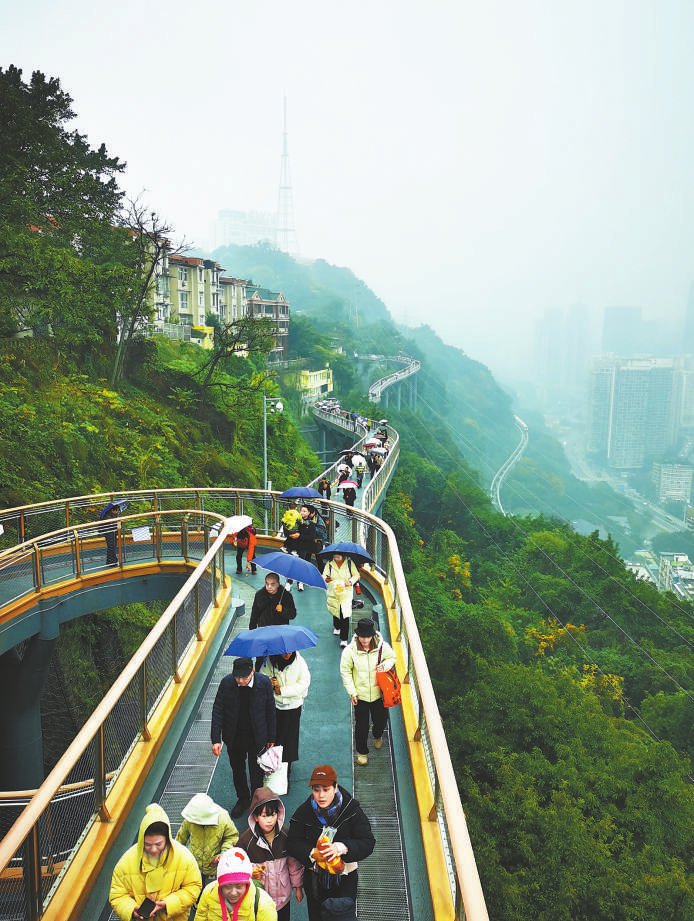
(来源:中国消费者报) IIIIII SURERSES Property STATE 9 1.2 112 HILL t a provi ip it E t THEF P TANZIE STA (8) 2 63 A 2 5 7 7 5 7 H 原面 82 木草花: 8 175 红糖本的&i 酸梅海61 TANKS 1 11 图三:山城步道带给游客别样的体验。 图四:步道沿线吸引商户入驻。 图五:黄葛古道焕发新的活力。 图六:山城步道既"通路"又"造景"。 图七:步道经济激发消费潜能。 图一:鹅岭栈桥成为重庆又一标志性打卡点。 图二:戴家巷步道既方便居民出行,也是游客的取景窗口。 图八:步道改造秉持"修旧如旧"理念。 ■本报记者 刘文新 文/摄 山城步道的魅力,在于既"通路"又"造景"。重庆市巧妙利用山城独特的"江、崖、街、洞、天"立体地 形,将步道本身及其沿线转化为极具吸引力的体验式消费空间。 渝中区的戴家巷位于魁星楼和洪崖洞之间的崖壁上,曾经商贾云集、车马喧嚣。后来沦为了破旧的棚户 街区,居民出行不便,崖壁杂草丛生。2018年,渝中区政府对戴家巷进行"微更新"改造,对720平方米 老建筑进行加固修复。在垂直落 ...

聚焦优化过渡期支持政策、存量土地和空间临时利用等方面两部门推出六大措施支持城市更新行动
Xin Lang Cai Jing· 2026-01-20 20:57
Core Viewpoint - The Ministry of Natural Resources and the Ministry of Housing and Urban-Rural Development have jointly issued a notification to further support urban renewal actions through six major measures aimed at addressing policy bottlenecks and enhancing the integration of planning and land policies [1][3]. Group 1: Key Measures - The notification includes enhancing the adaptability of detailed planning by optimizing evaluation and approval processes for urban renewal areas, allowing for flexible market adaptation while providing necessary planning basis [1][2]. - It introduces a flexible transitional policy for the use of existing land and property resources, changing the previous fixed five-year transitional period to a more adaptable approach [2][3]. - The notification encourages the temporary use of idle construction land and existing buildings without increasing their volume or height, establishing rules for their management [2][3]. Group 2: Policy Implementation and Goals - The notification aims to innovate real estate registration services, allowing for pre-registration of real estate units and simplified application processes for land with buildings [2][3]. - It emphasizes the proper handling of historical land use issues, ensuring clarity and compliance with national land survey results [2][3]. - The strategic importance of urban renewal is highlighted, with plans to elevate it to a national strategy level, integrating it into urban economic transformation and modernization processes [3][4]. Group 3: Regional Developments - Various provinces are shifting from large-scale development to a focus on enhancing urban quality, vitality, safety, and sustainability, with specific projects and investments outlined [4][5]. - Cities like Beijing and Chongqing are prioritizing the revitalization of old factories and inefficient buildings, while others like Guangzhou and Hangzhou are focusing on resource integration for functional upgrades [4][5]. - The notification indicates a growing emphasis on underground infrastructure renovation and ecological restoration as essential components of urban safety and resilience [4][5].
城市更新行动迎来进一步支持措施
Xin Lang Cai Jing· 2026-01-20 19:55
Core Viewpoint - The Ministry of Natural Resources and the Ministry of Housing and Urban-Rural Development have jointly issued a notice to support urban renewal actions, focusing on temporary utilization of existing land and space, innovative real estate registration services, and proper handling of historical legacy issues [1] Group 1: Temporary Utilization of Existing Land and Space - The notice allows local governments to establish rules for the temporary use of idle construction land, ensuring safety and not affecting long-term planning [1] - Localities are encouraged to create management rules for the temporary use of existing buildings without increasing floor area ratio and height, as exemplified by Hangzhou's implementation details [1] Group 2: Innovative Real Estate Registration Services - The notice proposes that local governments can conduct pre-registration of real estate units and allow direct first registration for self-renovation projects of old housing [1] - It suggests exploring simplified application materials for land with buildings that are to be jointly stored and supplied, as demonstrated by Yancheng's comprehensive innovative measures [1] Group 3: Handling Historical Legacy Issues - The notice emphasizes the need to classify and clarify standards and disposal policies for construction land without legal land use permits based on national land survey results [1] - It aims to ensure clear bottom-line management and closed-loop operations for historical legacy issues [1]
春节前“旧貌换新颜”
Xin Lang Cai Jing· 2026-01-20 18:52
天门片区安全隐患 整治与维修加固工程 朝 2025年计划建设项目共计10个,分别是川江航运文化园及配套建筑工程、江北嘴金融中心配套基础设施工程(二期)、潜能新天地(商业主体、广场、人行 天桥)、星光68二期-北城天街路平工程(建北一支路、兴隆路、兴塔路、洋河一路)、金融城5号、观音桥东环道2号天桥人行通道改造、五里店莺花巷片 区老旧小区改造提升项目(二期)、鲤鱼池老旧改项目、建发缦云项目、莺花巷片区老旧小区改造提升项目(三期)。目前,10个项目均已建设完工。 朝天门-解放碑展示区 以"九开八闭十七门"古城墙内区域为核心,东至朝天门,西至通远门,南至长江岸线,北至嘉陵江岸线,项目范围约326万平方米,谋划形成22个子项目。 目前,时尚文化城玻璃幕墙已完成安装,超大型城市综合体"新华中心"破"卷"而出点亮文化之光;大都会东方广场获得"可持续场地标准"(SITES)铂金级 认证,打造城市更新项目绿色新标杆;重庆2077赛博城市装饰装修工程完工投用,地王广场焕新归来,全国最大二次元主题购物公园火热运营;朝天门片区 安全隐患整治与维修加固工程由工程建设阶段转入商业运营阶段,"朝天门·城里"逐渐成为城市新客厅、消费新典范 ...

城市更新迎来精细化“操作指南”:自然资源部、住建部推出11项支持措施
Xin Lang Cai Jing· 2026-01-20 16:47
中经记者 吴静 卢志坤 北京报道 2026年1月20日,自然资源部与住房和城乡建设部(以下简称"住建部")联合发布了《关于进一步支持 城市更新行动若干措施的通知》(以下简称《通知》)。 《中国经营报》记者注意到,《通知》从增强详细规划适应性、优化过渡期支持政策、推进存量土地和 空间的临时利用、鼓励资源资产组合供应和整体运营、创新不动产登记服务、妥善处置历史遗留问题等 六个方面,提出了十一项具体措施。为"十五五"期间持续推进城市更新行动提供了具体的"操作指南"。 十一项措施细化操作路径 为提高规划响应速度,此次《通知》允许各地结合"十五五"需求,对拟更新区域的详细规划进行评估和 优化,可采取技术修正方式,并纳入国土空间规划"一张图"监督。同时,为支持新产业新业态,可制定 土地混合开发和空间复合利用的"正面清单",项目符合清单即视为符合规划。此外,针对加装电梯、增 设停车充电设施、完善无障碍设施等社区"微更新"项目,各地可制定"规划许可豁免清单",在满足公共 安全前提下简化审批。 为鼓励存量资源转型,《通知》明确,利用存量土地、房产发展国家支持产业的,可享受不超过5年的 过渡期,期内不改变用地主体和规划条件。期满 ...
晚报 | 1月21日主题前瞻
Xuan Gu Bao· 2026-01-20 14:43
Urban Renewal - The Ministry of Natural Resources and the Ministry of Housing and Urban-Rural Development issued a notice to support urban renewal actions, allowing the use of existing land and property resources for national-supported industries with a transitional policy period of up to 5 years [1] - Galaxy Securities believes that with the implementation of policies and gradual reduction of housing inventory, the real estate market supply and demand will achieve balance, leading to a narrowing of the decline in new construction and completion [1] - Urban renewal is expected to become the main theme of future urban construction, with current expansion to 35 cities and potential for further pilot expansion [1] Gold Market - International gold prices reached a historic high, with futures and spot prices exceeding $4,700 per ounce due to tensions in US-EU trade relations [2] - Global geopolitical uncertainties and continued central bank purchases of gold are expected to support long-term gold price stability [2] - Silver prices also hit record highs, driven by demand from photovoltaic and new energy sectors, indicating a solid long-term support for silver prices [2] Agricultural Modernization - The agricultural sector in China still has room for improvement, with low crop output efficiency and declining agricultural production benefits for farmers [3] - The core direction of the 15th Five-Year Plan is to accelerate agricultural modernization and enhance overall production capacity and quality [3] - Biotechnology is identified as a key technology to empower agricultural modernization and achieve the goal of becoming an agricultural powerhouse [3] Inspection and Testing Instruments - The State Administration for Market Regulation announced plans to promote the domestic verification and evaluation of inspection and testing instruments by 2026, focusing on breaking foreign market monopolies [4] - The market for inspection and testing instruments in China is projected to grow at a compound annual growth rate of 12.3%, potentially exceeding 480 billion yuan by 2030 [4] - The industry is expected to undergo a paradigm shift towards an ecological platform, driven by the integration of AI, IoT, and other advanced technologies [4] AI in Healthcare - Ant Group's AI health management application, Antifufu, has upgraded its PC version and launched the DeepSearch feature, providing professional services to medical professionals [7] - The application has over 30 million monthly active users and has established deep cooperation with 300,000 doctors and over 5,000 medical institutions [7] - The integration of AI capabilities is expected to significantly reduce the daily workload of healthcare professionals [7] Surgical Robots - The National Healthcare Security Administration issued guidelines for pricing surgical and treatment assistance services, covering various innovative medical technologies [8] - The surgical robot industry is experiencing rapid growth due to strong policy support and technological advancements, with the market expected to reach 9.59 billion yuan in 2024, a 33.8% increase [8] - The industry is projected to maintain a compound annual growth rate of over 16% from 2025 to 2030, with domestic penetration rates expected to rise from below 20% to over 40% [8]
两部门联合推出城市更新行动“新政”
Xin Hua She· 2026-01-20 14:34
新华社北京1月20日电(记者王立彬)为进一步支持城市更新行动,自然资源部与住房城乡建设部联合 发布一系列新政策,破解城市更新中的政策堵点。 ...
我国将强化“十五五”城市更新详细规划支持
Xin Hua She· 2026-01-20 14:19
新华社北京1月20日电(记者王立彬)我国将结合"十五五"城市更新行动需求,对拟实施城市更新区域 的详细规划进行评估、优化,以促进高质量发展、保障民生需求。 ...
国泰海通 · 晨报260121|宏观、地产、商业航天
国泰海通证券研究· 2026-01-20 14:03
Macro - The Chinese economy achieved its annual target for 2025, with a GDP growth of 5.0% for the year and a quarterly growth rate of 4.5% in Q4, slightly down due to base effects [3] - Economic characteristics in Q4 showed continued dual differentiation: strong industrial production but structural mismatches in capacity and demand, and a divergence between external and internal demand, with external demand supported by optimized export structures while internal demand lagged due to slow recovery in consumption and investment [3] - The production side showed bright spots, with industrial growth in December reversing previous slowdowns, driven by high-end manufacturing and green transformation, while the service sector's production index grew by 5.0% year-on-year [3] - Consumption showed structural optimization but faced year-end pressure, with rural consumption, online shopping, and upgraded goods performing well, while major consumption sectors like automobiles and real estate showed average performance [3] - Investment continued to face pressure due to funding constraints, insufficient project reserves, and weak demand, leading to a policy focus on expanding domestic demand and promoting new infrastructure and equipment updates to counter external uncertainties and internal weaknesses [3] Real Estate - The rental yield for residential properties has increased from 1.5% to 1.9% from 2020 to 2025, but remains low compared to international standards, with inflation-adjusted yields being a more effective comparison metric [7][8] - In Q4 2025, rental yields plus CPI in second-tier cities began to stabilize and improve, with projections indicating a recovery from 2.3% in 2023 to 2.6% in 2024 and maintaining that level in 2025 [9] - The proportion of residents willing to buy homes increased to about 16% by the end of December, reflecting improved market confidence, although the proportion of declining listing prices rose to about 19% [10] - Real estate investment is expected to decrease further in 2026, focusing on quality over quantity, with a shift in attention from financial risks to economic contributions from the real estate sector [15][16][17] Aerospace - The launch cadence of the Long March 12 rocket has accelerated, indicating a steady growth in China's commercial space industry, with a record 92 launches in 2025 [22][23] - The commercial space sector is expected to experience rapid development in 2026, with new rocket types set to debut and increased capabilities for satellite internet constellation deployment [23]

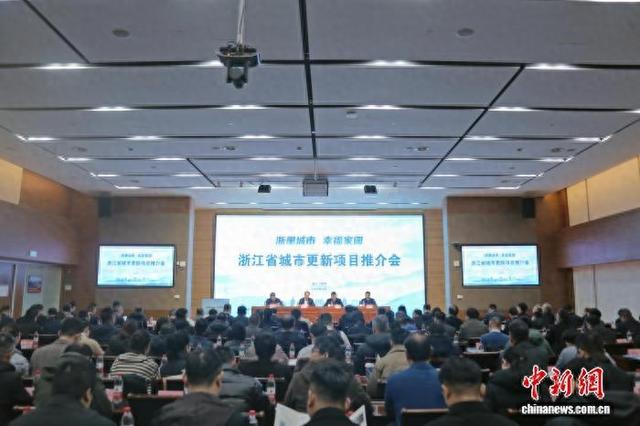
浙江发布第三批城市更新金融服务重点项目 预计总投资逾3544亿
Xin Lang Cai Jing· 2026-01-20 13:43
Group 1 - The core viewpoint of the article is that Zhejiang Province is promoting urban renewal projects as a strategic action for high-quality urban development, with a total investment of approximately 3544.81 billion yuan across 190 key projects [1][3][4] - The urban renewal financial service mechanism was established in June last year, aiming to support urban renewal actions through a collaborative platform involving government, banks, and enterprises [3] - The event showcased 21 urban renewal projects from various districts and counties, emphasizing their high maturity, strong demonstration effect, and positive prospects for enhancing urban quality and improving people's livelihoods [3][4] Group 2 - The newly formed financial service team includes four major banks: Industrial and Commercial Bank of China, Bank of China, China Construction Bank, and Zhejiang Commercial Bank, which will provide comprehensive financial services for urban renewal projects [3] - The promotion event serves as a concentrated presentation of the province's urban renewal achievements and aims to facilitate future cooperation and development [4] - The initiative is expected to optimize urban structure, transform economic dynamics, enhance quality, promote green transitions, and improve governance efficiency, contributing to the branding of "Zhejiang City, Happy Home" [4]