
新型能源体系

Search documents
20cm速递|储能政策多点开花,创业板新能源ETF华夏(159368)上涨3.59%,规模最大助力低成本布局
Mei Ri Jing Ji Xin Wen· 2025-10-29 02:54
Core Viewpoint - The A-share market opened positively on October 29, with the ChiNext New Energy ETF (Hua Xia, 159368) experiencing a significant rise, driven by strong performance from its constituent stocks, particularly Sunshine Power and Hunan Youneng, which reached historical highs [1] Group 1: Company Performance - Sunshine Power (300274) reported its Q3 2025 financial results, achieving total revenue of 66.4 billion yuan, a year-on-year increase of 33%, and a net profit of 11.9 billion yuan, up 56% year-on-year [1] - The company's core profitability indicators showed substantial improvement, with earnings per share at 5.73 yuan and the storage business revenue accounting for 45% of total revenue, surpassing inverters as the primary income source [1] - The gross profit margin remained stable at a high level of 38% to 40% [1] Group 2: Market Trends and Policies - CICC noted that the government has clearly defined the direction for wind and solar energy, accelerating the green transformation of the economy and society, and promoting pollution prevention and ecosystem optimization [1] - In terms of storage, Henan Province has introduced development measures including revenue guarantees and capacity compensation, while national-level storage policies are emerging, likely leading to sustained high demand [1] Group 3: ETF Overview - The ChiNext New Energy ETF (Hua Xia, 159368) is the largest ETF tracking the ChiNext New Energy Index, covering various sectors including batteries and photovoltaics [2] - It has the highest flexibility with a maximum increase of 20%, the lowest fee rate at a total of 0.2%, and a scale of 1.085 billion yuan as of October 16, 2025 [2] - The ETF has a significant storage component of 51% and solid-state battery content of 30%, aligning with current market trends [2]


碳中和50ETF(159861)涨超3.2%,绿色转型预期支撑板块表现
Mei Ri Jing Ji Xin Wen· 2025-10-29 02:54
Group 1 - The core viewpoint is that accelerating the green and low-carbon transition in the power equipment industry is crucial for the overall green transformation, with a focus on developing non-fossil energy and promoting the clean and efficient use of fossil energy during the 14th Five-Year Plan [1] Group 2 - In the photovoltaic equipment sector, silicon material prices have shown slight fluctuations, with overall transactions remaining cautious; silicon wafer prices have been stable despite some volatility [1] - The battery segment is experiencing a downturn, with demand for 183N continuing to weaken [1] - Module prices have seen slight fluctuations, with high demand for 210 but a decline in 210R prices; photovoltaic glass transactions are poor, with leading companies maintaining high prices while second and third-tier companies are offering discounts, leading to increased inventory and potential further price softening [1] Group 3 - Domestic offshore wind construction is progressing in an orderly manner, with expectations of gradually reaching a peak delivery period [1] Group 4 - The Carbon Neutrality 50 ETF (159861) tracks the Environmental Protection 50 Index (930614), which selects listed companies involved in environmental protection, clean energy, and energy conservation from the Shanghai and Shenzhen markets, aiming to reflect the overall performance of securities related to the green economy [1]
建信期货多晶硅日报-20251029
Jian Xin Qi Huo· 2025-10-29 02:14
Report Summary 1. Report Industry Investment Rating No relevant information provided. 2. Core View of the Report The polysilicon market is expected to operate cautiously and strongly within the range. The supply in the fourth quarter can meet the terminal demand, but the industry's internal improvement momentum is weak, and the market focus is on the policy side, which is currently in a vacuum period [4]. 3. Summary by Relevant Catalogs 3.1 Market Review and Outlook - Market Performance: The main contract price of polysilicon ran strongly within the range. The closing price of the PS2601 contract was 54,335 yuan/ton, with a daily increase of 1.58%. The trading volume was 208,200 lots, and the open interest was 114,932 lots, with a net increase of 9,055 lots [4]. - Spot Price: The transaction price range of polysilicon n-type re-feeding material was 49,000 - 55,000 yuan/ton, with an average transaction price of 53,200 yuan/ton, flat compared to the previous period. The transaction price range of n-type granular silicon was 50,000 - 51,000 yuan/ton, with an average transaction price of 50,500 yuan/ton, also flat compared to the previous period [4]. - Future Outlook: In the fourth quarter, the expected output of polysilicon is 382,000 tons, with a monthly average output of 127,300 tons. The current output level can meet the terminal demand of about 63GW. The demand for downstream silicon wafers and cells is stable, but the industry's internal improvement momentum is weak. The pressure comes from the weak terminal demand after the "rush installation" period. The market focus is expected to remain on the policy side, and the market will operate cautiously and strongly within the range [4]. 3.2 Market News - On October 28, the number of polysilicon warehouse receipts was 9,150 lots, a net decrease of 90 lots compared to the previous trading day [5]. - In September 2025, the newly installed photovoltaic capacity was 9.66GW, a month-on-month increase of 31.25%. From January to September, the cumulative newly installed photovoltaic capacity was 240.27GW [5]. - The Communique of the Fourth Plenary Session of the 20th Central Committee proposed to accelerate the construction of a new energy system, build a modern industrial system, and promote the high - quality development of the service industry [5].
聚焦“十五五”规划建议丨加快建设新型能源体系 推动绿色转型发展
Xin Hua Wang· 2025-10-29 00:40
"十五五"时期,更多绿电有望跨越山海,点亮万家灯火。10月28日发布的《中共中央关于制定国民经济 和社会发展第十五个五年规划的建议》明确提出,"加快建设新型能源体系"。 国家发展改革委主任郑栅洁介绍,到"十五五"末,新增用电需求绝大部分由新增清洁能源发电量满足。 专家认为,构建新型电力系统能够支持绿电发得出、电网接得住、终端用得好,是加快建设新型能源体 系的重要环节。 "'十五五'时期,电力消费需求仍将保持较快增长,电力供给的形态更加多元,新型电力系统构建相 较'十四五'更加迫切,也更富挑战性,要大力发展新型储能,加快源网荷储的协同布局和统一电力市场 的体系完善,不断增强对绿色电力保供和运行安全的支撑能力。"王鹏说。 (责任编辑:张紫祎) "进入'十五五'时期,应对气候变化凸显非化石能源消费占比提升的重要性,地缘政治冲突风险进一步 加速能源供应链的重构进程,加快建设新型能源体系成为'必答题'。"华北电力大学国家能源发展战略 研究院执行院长王鹏说。 《建议》提出,持续提高新能源供给比重,推进化石能源安全可靠有序替代,着力构建新型电力系统, 建设能源强国。 中国华电集团有限公司副总工程师李立新表示,加快建设新型能 ...
中国石化成立首家售电公司!
Zhong Guo Dian Li Bao· 2025-10-28 22:14
Industry News - The National Energy Administration emphasizes the acceleration of building a new energy system, increasing the proportion of renewable energy supply, and constructing a new power system as part of the 14th Five-Year Plan [4] - The Ministry of Industry and Information Technology has announced the public listing of the 2025 industrial energy-saving and carbon reduction standards research projects, aiming to enhance energy efficiency and carbon reduction in the industrial sector [4] - A significant advancement in next-generation photovoltaic technology has been achieved, with a new all-perovskite tandem solar cell reaching over 30% efficiency, published in the prestigious journal Nature [4] - The first hydrogen-powered cultural tourism train in China, "Hydrogen Spring," has been launched, marking a breakthrough in green rail transportation with zero carbon emissions [6] Company News - The Ministry of Industry and Information Technology has released a public list of national green data centers for 2025, including the Guian Data Center of State Power Investment Corporation and the Southern Power Grid Green Smart Data Center [6] - China Huaneng has made progress in establishing international standards for ion exchange resins, with a new proposal successfully initiated, indicating the formation of a standard cluster led by Chinese technology [6] - Sinopec has registered its first electricity sales company in Chongqing, marking its entry into the electricity trading market, alongside other major oil companies [7] - The Dagang Oilfield gas storage facility has exceeded its annual gas injection target, ensuring natural gas supply for the Beijing-Tianjin-Hebei region this winter, with a record daily injection of 21.16 million cubic meters [8] - Two large hydropower projects in the Yarlung Tsangpo River basin have achieved synchronized river closure, marking a significant milestone in the construction of China's first integrated wind-solar-hydro power base [10] - The world's highest pumped storage power station, the State Grid Xinyuan Jiangsu Jurong Pumped Storage Power Station, has commenced full operation, with a total installed capacity of 1.35 million kilowatts [10] - The International Energy Agency reports a significant decline in Russian natural gas exports to Europe, with liquefied natural gas exports down 10% and pipeline gas exports down 45% in the first three quarters of 2025 [11] - Google has announced plans to restart a nuclear power plant in Iowa to supply power for its AI infrastructure, indicating a shift towards diverse energy sources for tech companies [11]



聚焦“十五五”规划建议 | 加快建设新型能源体系 推动绿色转型发展
Xin Hua She· 2025-10-28 17:22
Core Viewpoint - The "15th Five-Year Plan" emphasizes the acceleration of building a new energy system, focusing on non-fossil energy as the main supply, which is crucial for achieving carbon neutrality and ensuring national energy security [1][2]. Group 1: New Energy System Development - The new energy system aims to transition to a green and low-carbon energy structure, with non-fossil energy consumption increasing significantly [1]. - By the end of the "14th Five-Year Plan," one-third of the total electricity consumption was green electricity, with non-fossil energy's share in total energy consumption increasing by 1 percentage point annually [1]. - The construction of a new power system is essential for supporting the generation, transmission, and consumption of green electricity [2]. Group 2: Changes in Energy Supply and Demand - The role of thermal power is shifting from being the main power source to a regulatory power source, with a greater reliance on renewable energy [2]. - The majority of new electricity demand by the end of the "15th Five-Year Plan" will be met by new clean energy generation [2]. - The demand for electricity is expected to grow rapidly, necessitating a more diverse supply structure and the development of new energy storage solutions [2].
聚焦“十五五”规划建议|加快建设新型能源体系 推动绿色转型发展
Xin Hua She· 2025-10-28 16:17
国家发展改革委主任郑栅洁介绍,到"十五五"末,新增用电需求绝大部分由新增清洁能源发电量满足。 "进入'十五五'时期,应对气候变化凸显非化石能源消费占比提升的重要性,地缘政治冲突风险进一步 加速能源供应链的重构进程,加快建设新型能源体系成为'必答题'。"华北电力大学国家能源发展战略 研究院执行院长王鹏说。 《建议》提出,持续提高新能源供给比重,推进化石能源安全可靠有序替代,着力构建新型电力系统, 建设能源强国。 中国华电集团有限公司副总工程师李立新表示,加快建设新型能源体系意味着能源结构将发生变 化。"在电源侧,过去作为主力电源的火电将转型为调节性电源,更多依靠新能源供电;在用户侧,能 源消费将更加绿色化低碳化。" 新华社北京10月28日电(记者王悦阳)"十五五"时期,更多绿电有望跨越山海,点亮万家灯火。10月28 日发布的《中共中央关于制定国民经济和社会发展第十五个五年规划的建议》明确提出,"加快建设新 型能源体系"。 新型能源体系以非化石能源为供应主体、化石能源为兜底保障、新型电力系统为关键支撑、绿色智慧节 约为用能导向。加快建设新型能源体系,既能够推动能源绿色低碳转型、支撑实现碳达峰碳中和,也是 保障国家 ...
2025碳达峰碳中和论坛暨深圳国家低碳城论坛启幕
Zhong Guo Xin Wen Wang· 2025-10-28 13:45
Core Viewpoint - The forum focuses on "AI Empowering Urban Green Development" and discusses new solutions for achieving carbon peak and carbon neutrality goals [1][3]. Group 1: Government Initiatives - Guangdong Province is leading carbon peak and carbon neutrality efforts, promoting ecological construction and modern industrial systems for green low-carbon development [1]. - Shenzhen is pioneering a dual control system for carbon emissions, advancing energy green low-carbon transformation, and promoting electric vehicles and green building clusters [3]. Group 2: Key Publications and Achievements - The "2025 Shenzhen Green Low-Carbon Development White Paper" showcases actions and achievements in carbon reduction, pollution reduction, green expansion, and economic growth [3]. - The release of carbon footprint certification results and white papers in the Guangdong-Hong Kong-Macao Greater Bay Area marks significant progress in international green trade compliance and regional carbon reduction collaboration [3]. Group 3: Technological Insights - The construction of a new energy system involves developing wind and solar energy, flexible coal power, hydrogen energy, and other energy collaborations [3]. - Key technologies for new energy include deep-sea wind power, carbon capture and storage (CCUS), new grid forms, and digital technologies for supply-demand interaction [3]. Group 4: Urban Carbon Neutrality - Urban carbon emissions are critical for achieving carbon neutrality, necessitating attention to renewable energy use, low-carbon industrial processes, zero-carbon buildings, and green transportation [5]. Group 5: Recognition and Awards - The forum included the awarding of "2025 Urban Green Low-Carbon Scenario Demonstration Base" and "2025 Shenzhen ESG Practice Pioneer Enterprise" to various projects and companies, highlighting successful initiatives in sustainability [5].
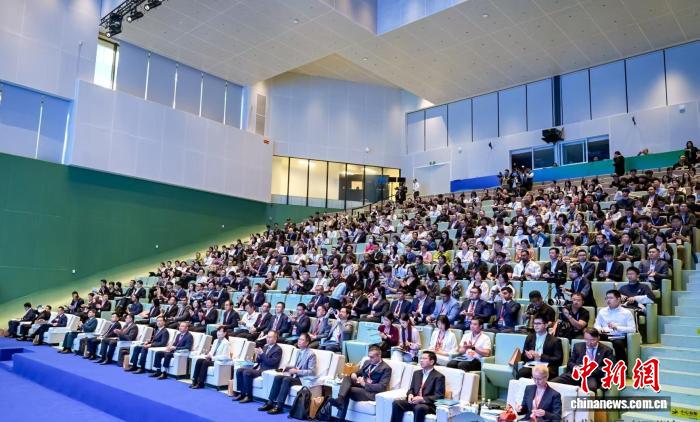
四川水电装机将破1亿千瓦 打造世界级清洁能源基地
Zhong Guo Xin Wen Wang· 2025-10-28 13:33
Core Viewpoint - Sichuan Province is set to achieve a historic milestone with its hydropower installed capacity exceeding 100 million kilowatts this year, alongside a significant increase in new energy installations, establishing itself as a world-class clean energy base [1][3]. Group 1: Hydropower Development - Sichuan is focusing on the development of hydropower in the "Three Rivers" basin, having completed and put into operation ten large hydropower stations, including Baiketan, Wudongde, and Suwalong [3]. - The installed capacity of new energy has reached 32 million kilowatts, which is five times the level at the beginning of the "14th Five-Year Plan" [3]. Group 2: Natural Gas Production - Sichuan is accelerating the establishment of a national natural gas (shale gas) production base with a capacity of 100 billion cubic meters, having increased its annual natural gas production from 43.2 billion cubic meters to 56.2 billion cubic meters, maintaining its position as the top producer in the country [3]. Group 3: Energy Infrastructure - The province has built a robust energy infrastructure network, including the "Eight Direct and Eleven Interconnected" inter-provincial transmission channels, enhancing its connectivity with various regional power grids [5]. - The completion of the first ultra-high voltage AC project in Southwest China has increased Sichuan's small "West-to-East Power Transmission" capacity to over 37 million kilowatts [5].
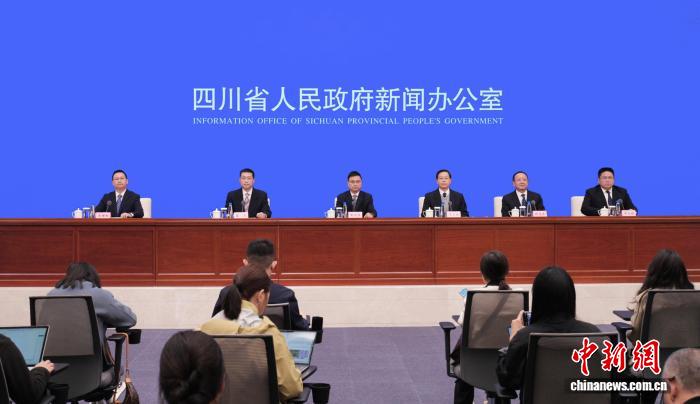
专访李琼慧:“十五五”能源转型迎两大机遇,零碳园区与市场化
2 1 Shi Ji Jing Ji Bao Dao· 2025-10-28 09:47
Core Insights - The article emphasizes the importance of accelerating the construction of a new energy system in China, focusing on increasing the share of renewable energy and ensuring a reliable transition from fossil fuels to a new power system [1][3]. Group 1: New Energy System Development - The "15th Five-Year Plan" aims to establish a new energy system with non-fossil energy as the main supply, supported by fossil energy as a backup, and a new power system as a key support [3][5]. - By 2025, the focus will be on implementing a new energy security strategy and enhancing the resilience of the power system [3][4]. Group 2: Achievements in Renewable Energy - During the "14th Five-Year Plan," China led the world in renewable energy scale, with wind and solar power installations exceeding 1.7 billion kilowatts, accounting for over 40% of global capacity [4][5]. - The renewable energy sector has contributed to a reduction of approximately 4.1 billion tons of carbon emissions globally, nearly one-tenth of the world's annual emissions [4][5]. Group 3: New Opportunities in the Energy Market - The establishment of national zero-carbon parks is expected to create new demands for distributed smart grids and carbon management platforms, requiring a 90% reduction in carbon intensity compared to current levels [2][7]. - The transition to a fully market-oriented renewable energy sector will compel companies to enhance their technological capabilities to compete effectively [2][5]. Group 4: Technological Innovations - Significant technological innovations include advancements in electric vehicles, lithium batteries, and photovoltaic products, as well as ultra-high voltage transmission technology [4][5]. - New business models such as integrated energy systems and green electricity supply are emerging, fundamentally changing the development patterns of the power grid [6][9]. Group 5: Zero-Carbon Park Standards - The core indicator for national zero-carbon parks is the carbon emissions per unit of energy consumed, with strict requirements for energy consumption and clean energy usage [7][8]. - The parks must primarily rely on green electricity, with a minimum of 50% of energy sourced from renewable sources [8][9].