GDP

Search documents
图解中国经济半年报
财联社· 2025-07-15 03:06
Economic Overview - The preliminary GDP for the first half of 2025 is 66,053.6 billion yuan, showing a year-on-year growth of 5.3% at constant prices [2] - The industrial added value for large-scale industries increased by 6.4% year-on-year in the first half, with a 6.8% growth in June [5] Investment and Consumption - National fixed asset investment (excluding rural households) reached 24,865.4 billion yuan in the first half, marking a year-on-year increase of 2.8% [8] - The total retail sales of consumer goods amounted to 24,545.8 billion yuan in the first half, reflecting a year-on-year growth of 5.0%, with a 4.8% increase in June [11] Price Indices - The Consumer Price Index (CPI) decreased by 0.1% year-on-year in the first half, with a slight increase of 0.1% in June [15] - The Producer Price Index (PPI) fell by 2.8% year-on-year in the first half, with a 3.6% decline in June [16] Financial Indicators - The total social financing scale increased by 22.83 trillion yuan in the first half, which is 4.74 trillion yuan more than the same period last year [19] - New RMB loans added up to 12.92 trillion yuan in the first half [20] - The broad money supply (M2) reached 330.29 trillion yuan at the end of June, showing a year-on-year growth of 8.3% [21] Trade Performance - The total import and export value of goods reached 21.79 trillion yuan in the first half, reflecting a year-on-year growth of 2.9% [25]


X @外汇交易员
外汇交易员· 2025-07-15 02:01
Economic Growth - China's second quarter GDP growth was 53%, exceeding expectations of 51% [1] - June's industrial added value above designated size increased by 68% year-on-year, exceeding expectations of 56% [1] Consumption - June's total retail sales of consumer goods increased by 48% year-on-year, falling short of the expected 56% [1] Employment - June's surveyed urban unemployment rate was 50%, meeting expectations [1] Investment - From January to June, urban fixed asset investment increased by 28% year-on-year, falling short of the expected 37% [1]
X @Bloomberg
Bloomberg· 2025-07-15 01:34
China to Release Q2 GDP and Key Economic Data: Live Updates https://t.co/PesbQb6PXe ...
中美差距扩大?越南较中国快?中国GDP将达140万亿,美越差越远!
Sou Hu Cai Jing· 2025-07-14 22:49
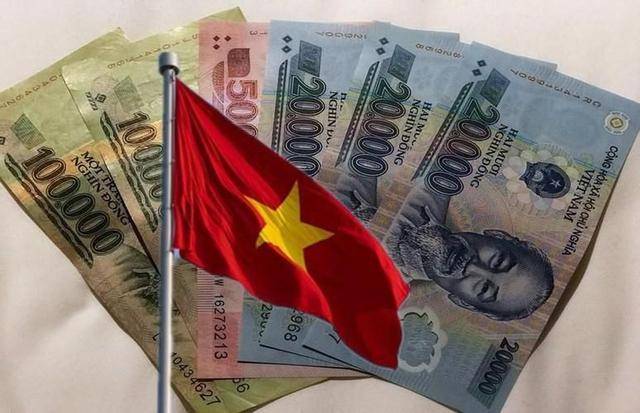
Core Insights - The article highlights the disparity between China's GDP growth and the perception of its economic standing compared to the US and Vietnam, emphasizing that the narrative of a widening gap is misleading [1][3]. Economic Growth Projections - China's GDP is projected to exceed 140 trillion yuan by 2025, representing an increase of over 10 trillion yuan from 2023, equivalent to recreating the economic scale of Shandong Province [3]. - The GDP gap between China and the US is expected to widen, with specific dollar figures indicating an increase in disparity over the year [3]. Currency and Inflation Impact - Exchange rate fluctuations significantly affect the dollar value of China's GDP, with a depreciation of the yuan leading to a reduction of approximately 160 billion USD in GDP value when converted to dollars [3]. - The difference in inflation rates distorts the perception of economic growth, with China's low inflation resulting in a lower nominal GDP growth compared to the US, which experiences higher inflation rates [5]. Vietnam's Economic Performance - Vietnam's GDP growth rate reached impressive figures in 2023, but its overall GDP remains significantly smaller than China's, with projections indicating that Vietnam's annual GDP is only a fraction of China's [6]. - Vietnam's economy is heavily reliant on the US market, making it vulnerable to changes in US policy, contrasting with China's more diversified economic structure [6]. Purchasing Power Parity (PPP) Perspective - The article argues that GDP figures based on purchasing power parity (PPP) provide a more accurate reflection of economic strength, with China surpassing the US in PPP terms since a certain year and maintaining a growing lead [7][9]. - In 2023, China's PPP GDP reached a significant figure, further illustrating its economic capabilities compared to the US [9]. Structural Economic Strength - China's manufacturing sector contributes a substantial percentage to global output, with a diverse range of industries, indicating a solid foundation for economic growth rather than short-term gains [11]. - The country is transitioning from manufacturing to innovation, with significant investments in research and development, showcasing its technological advancement [11]. Employment and Social Welfare - China has been creating millions of new jobs annually, with healthcare coverage expanding, reflecting genuine improvements in living standards rather than superficial economic growth [11]. Comparison with the US - The US experienced a decline in GDP in the first quarter, relying on inflation for growth, which raises concerns about the sustainability of its economic model [13]. - The article concludes that while short-term perceptions may suggest a widening gap, China's long-term economic resilience and competitiveness are expected to strengthen [13].
美国白宫经济委员会主任Hassett:从GDP来看,经济并未过热。
news flash· 2025-07-14 12:33
Core Viewpoint - The Director of the White House Council of Economic Advisers, Hassett, stated that the economy is not overheating when viewed through the lens of GDP [1] Group 1 - Hassett emphasized that current GDP figures indicate stable economic conditions rather than excessive growth [1]
吴说本周宏观指标与分析:美国CPI、美联储经济褐皮书
Sou Hu Cai Jing· 2025-07-13 16:30
Core Insights - The Federal Reserve's recent meeting minutes reaffirm a cautious policy stance, with market expectations for a rate cut in July being low [1] - Key upcoming economic indicators include the U.S. June CPI and PPI data, the Federal Reserve's Beige Book, and speeches from Fed officials [1] Economic Overview - The Federal Reserve noted that while inflation has eased in recent months, it remains above the long-term target of 2%, with short-term inflation expectations still high [1] - Economic growth is described as robust, with low unemployment rates and stable consumer and investment data, although risks from trade policy uncertainty, geopolitical tensions, and tariff increases persist [1] Labor Market Data - For the week ending July 5, initial jobless claims in the U.S. were reported at 227,000, slightly below the expected 235,000, with the previous value revised from 233,000 to 232,000 [1] International Economic Indicators - China's foreign exchange reserves increased to $3,317.4 billion, rising by $32.2 billion or 0.98% from the end of May [1] - China's June CPI showed a year-on-year increase of 0.1% [1] Upcoming Events - On July 14, President Trump plans to make a "major statement" regarding Russia [1] - Key economic data releases include China's Q2 GDP year-on-year on July 15 and U.S. June CPI year-on-year on the same day [1] - Additional important events include U.S. June PPI year-on-year on July 16 and the release of the Federal Reserve's Beige Book on July 17 [1]
整理:下周重要事件与数据预告——美国CPI和零售数据、中国GDP和贸易帐
news flash· 2025-07-13 12:23
2. 周二:①数据: 中国第二季度GDP、中国6月社会消费品零售总额、规模以上工业增加值。 美国6月 CPI、美国7月纽约联储制造业指数。加拿大6月CPI。②事件:1000亿元1年期中期借贷便利到期。国家 统计局公布70个大中城市住宅销售价格月度报告。 国新办就2025年上半年国民经济运行情况举行新闻 发布会。国内成品油将开启新一轮调价窗口。欧佩克月报。美联储官员柯林斯、鲍曼讲话。③财报:摩 根大通、花旗。 3. 周三:①数据: 美国6月PPI,美国API、EIA原油库存周报。英国6月CPI。欧元区5月贸易帐。②事 件: 美联储官员巴尔、柯林斯、洛根、哈玛克发表讲话。英国央行行长贝利发表讲话。③财报:摩根 士丹利、美国银行、高盛、阿斯麦。 金十数据整理:下周重要事件与数据预告——美国CPI和零售数据、中国GDP和贸易帐 1. 周一:①数据: 中国6月贸易帐、货币供应、社融、新增人民币贷款、全社会用电量。②事件: 美国 总统特朗普计划就俄罗斯问题发表"重大声明"。国新办分别就2025年上半年进出口情况、金融统计数据 情况举行新闻发布会。 5. 周五:①数据: 美国7月一年期通胀率预期初值、密歇根大学消费者信心指 ...
一周重磅日程:美国6月CPI、中国二季度GDP及6月进出口数据、国新办发布会
华尔街见闻· 2025-07-13 12:13
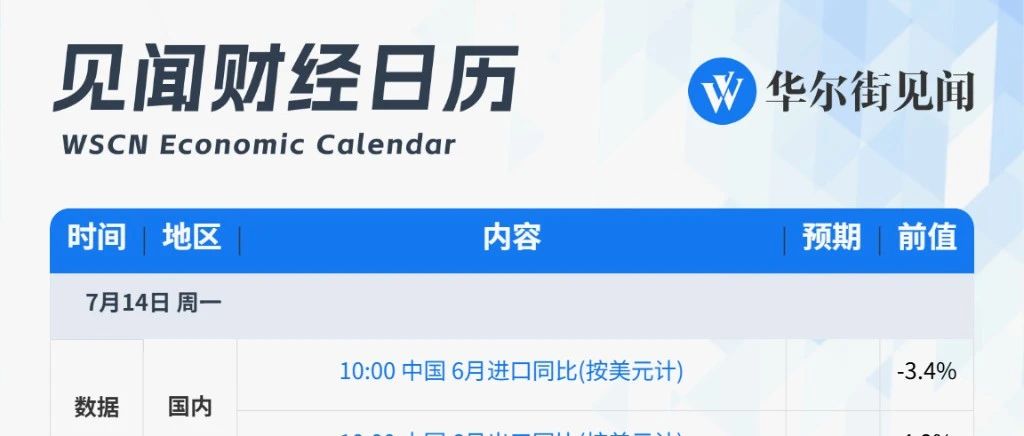
Core Viewpoint - The article highlights key economic indicators and events in China and the US, focusing on inflation data, GDP growth, and trade statistics, which are crucial for understanding market trends and potential investment opportunities [4][6][8]. Group 1: Economic Data in China - In June, China's imports decreased by 3.4% year-on-year, while exports increased by 4.8% [2]. - The GDP for the second quarter of 2023 showed a year-on-year growth of 5.4%, with a quarter-on-quarter increase of 1.2% [9]. - The social retail sales in June grew by 6.4%, marking the highest growth since December 2023, driven by policies promoting consumption [14]. - Real estate development investment in the first half of 2023 saw a significant decline of 10.7% [2]. Group 2: Economic Data in the US - The US Consumer Price Index (CPI) for June showed a year-on-year increase of 2.9%, slightly above the previous month's 2.8% [2]. - The Producer Price Index (PPI) for June increased by 2.5% year-on-year, indicating persistent inflationary pressures [3]. - Retail sales in the US experienced a decline in May, with the largest drop since March 2023, primarily due to decreased automobile purchases [21]. Group 3: Key Events and Statements - The US Federal Reserve's Beige Book indicated heightened economic uncertainty due to tariffs, affecting business and consumer decision-making [23]. - Trump's upcoming statement regarding Russia is anticipated to impact market sentiment and geopolitical dynamics [19][20]. - The European Central Bank's inflation data showed a 2% increase in June, aligning with its target and influencing future monetary policy decisions [25].