人工智能

Search documents
独家洞察 | 中东冲突下美股连跌四周,能源与政策成关键变量
慧甚FactSet· 2026-03-26 04:02
Core Viewpoint - The geopolitical tensions in the Middle East, particularly following the military strikes by the US and Israel against Iran, have led to significant volatility in global financial markets, with US stock indices experiencing their longest decline in a year [2] Market Performance - The Dow Jones index fell by 2.11% last week, with a cumulative decline of approximately 7% since February 28; the Nasdaq index dropped by 2.07%, totaling a decline of about 4.5%; the S&P 500 index decreased by 1.9%, with a cumulative drop of around 5% [4] - Financial and consumer sectors are leading the decline, while the previously strong technology sector is showing signs of weakness, with the "Tech Giants" index down 9% year-to-date [4] Driving Factors - The recent downturn in US stocks is primarily driven by decreased risk appetite due to geopolitical tensions, deteriorating corporate earnings outlooks, and tightening liquidity [4] - There has been a noticeable shift of funds from high-valuation growth stocks to defensive sectors, with technology stocks being a primary target for sell-offs [4] - The technology sector has seen significant net outflows over the past three weeks, particularly from leading companies that had previously experienced substantial gains [4] Energy Price Impact - The sharp rise in energy prices is reshaping the macroeconomic environment, pushing up inflation expectations and disrupting the previous trend of declining inflation, thereby constraining the Federal Reserve's policy options [5] - The market's optimistic expectations for interest rate cuts have diminished, with a reevaluation of the possibility of rate hikes occurring [5] - Companies are facing dual pressures from rising costs due to increased energy prices and weakened demand, which is further eroding corporate revenue growth [5] Geopolitical Developments - The Middle East conflict has expanded its focus from traditional military targets to energy infrastructure, raising concerns about global energy supply [5] - Israel's strikes on Iran's South Pars gas field and potential threats to Qatar's LNG facilities have heightened market anxiety regarding energy security [5] Market Outlook - The energy shock is obstructing the inflation trajectory, which is a significant reason for the Federal Reserve's potential policy shift [6] - In the context of cautious global central banks and ongoing geopolitical risks, US stocks may remain under pressure in the short term, with the possibility of further declines [6]

全景透视:海淀区“十五五”AI+场景新范式——第十九届中国科学仪器发展年会,四大看点曝光!
仪器信息网· 2026-03-26 03:56
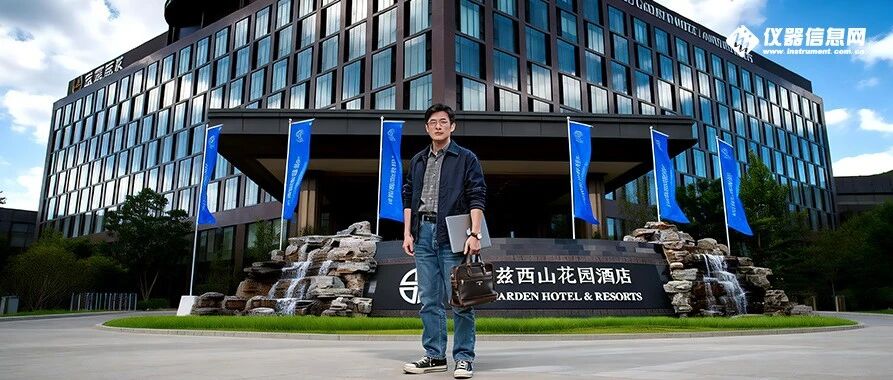
Core Viewpoint - The article highlights the upcoming 19th China Scientific Instrument Development Annual Conference (ACCSI 2026) scheduled for April 22-24 in Beijing, focusing on the theme "AI Empowerment: Smart Future" and aims to explore the new paradigm of scientific instruments empowered by artificial intelligence during the 14th Five-Year Plan period [2][3]. Group 1: Conference Overview - The conference will feature over ten forums and will be co-hosted by the Instrument Information Network and the Management Committee of Zhongguancun Science City, emphasizing the integration of AI in scientific instruments [3][4]. - The event is described as the "Davos Forum" for the scientific instrument industry, providing a platform to observe the new paradigm of "AI + Scenarios" in Haidian District [4]. Group 2: Key Actions and Themes - Haidian District will implement four major actions during the 14th Five-Year Plan, focusing on "scene-driven innovation" to create an open system for all-time application scenarios, which will be reflected in the conference's thematic forums and reports [4]. - The actions include: - Scientific paradigm leap action: Promoting AI-driven integration of research and industry [4]. - Industry quality improvement action: Accelerating the large-scale application of intelligent systems [4]. - Smart livelihood empowerment action: Promoting AI applications in healthcare and testing [4]. - Global cooperation governance action: Enhancing international collaboration [5]. Group 3: Infrastructure and Application - Haidian District is accelerating the construction of a comprehensive infrastructure for "cloud, network, computing, sensing, imaging, data, and intelligence," aiming to establish a national-level data factor ecological demonstration zone [6]. - Various sub-forums at the conference will showcase applications of AI in specific scenarios, such as multi-modal spectroscopy in photovoltaic production line testing and new pollutant governance [6]. Group 4: Conference Agenda and Highlights - The conference will include a main forum with notable speakers, including academicians from the Chinese Academy of Sciences and industry leaders discussing the challenges and opportunities presented by AI in scientific instruments [10]. - The agenda features a range of thematic forums aligned with Haidian's "1+X+1" industrial system, covering topics from semiconductor materials to environmental monitoring instruments [8][9]. Group 5: Invitation and Participation - The article invites participants to join over 1,500 elites from various sectors to explore the potential of AI in scientific instruments during the conference [11].
世贸组织预测26年全球贸易增速放缓至1.9%
日经中文网· 2026-03-26 03:37
Core Viewpoint - The ongoing conflict in the Middle East, particularly the blockade of the Strait of Hormuz, is severely impacting global trade and economic growth, with potential long-term consequences for energy prices and food security [2][5][7]. Group 1: Trade and Economic Growth Projections - The World Trade Organization (WTO) predicts a 4.6% year-on-year growth in global goods trade by 2025, driven by semiconductor and electronic device transactions related to generative AI, but growth is expected to slow to 1.9% in 2026 [4]. - In a high energy price scenario, where oil and LNG prices remain elevated, the growth rate could further decline to 1.4% [5]. - The blockade of the Strait of Hormuz has led to a near-zero level of shipping traffic, which could force a slowdown in global trade by 2026 [2][8]. Group 2: Impact on Energy and Agriculture - Approximately 20% of global oil and LNG transportation passes through the Strait of Hormuz, with Japan relying on the Middle East for about 90% of its oil imports, raising concerns about energy supply disruptions [5]. - The blockade also affects agricultural production, as about one-third of global fertilizers are transported through the Strait, with countries like India, Thailand, and Brazil heavily dependent on imports from Gulf nations [7]. - The potential for rising food prices due to supply chain disruptions is significant, as Gulf countries rely on imports for a large portion of their staple foods [7]. Group 3: Service Trade and Economic Sentiment - The growth rate for global service trade is projected to be 4.8% in 2026, but could drop to 4.1% due to disruptions in maritime and air transport [7]. - The Middle East accounts for approximately 7.4% of global transport service exports, with over 40,000 flights canceled and a surge in transportation and insurance costs [7]. - Soft data indicating deteriorating economic sentiment is emerging, with Germany's economic sentiment index dropping to -0.5, the lowest since April 2025 [8].

圈内都在聊的老牌私募,近5年业绩如何?
私募排排网· 2026-03-26 03:33
Core Viewpoint - The article discusses the performance of established private equity firms (those founded before March 1, 2016) over the past five years, highlighting their resilience through market fluctuations and identifying potential investment opportunities and risks in the current landscape [2]. Group 1: Performance of Established Private Equity Firms - As of February 2026, there are 26 established private equity firms with over 10 billion in assets, showing an average return of 93.55% over the past five years [2]. - Shanghai leads with 11 firms among the 26, while the majority of these firms employ stock strategies, with 17 firms identified [2]. - The average return for firms in the 50-100 billion category is 69.83%, with 15 firms included in this group [7]. Group 2: Notable Firms and Strategies - Focusing on specific firms, Ruisheng Asset, founded by a well-known fund manager, has shown impressive performance with an average return of ***% over nearly five years [5]. - Longqi Technology, established in 2011, has maintained a unique investment approach combining human factors and machine learning, achieving an average return of ***% [6][7]. - Xishirun Investment, managed by an experienced investment professional, has also demonstrated strong performance, with a notable product achieving a return of ***% over five years [8]. Group 3: Market Insights and Future Trends - The article notes that the current investment landscape is influenced by various factors, including geopolitical events and monetary policies, which could affect asset prices, particularly gold, with a suggested entry point around 4000 USD [9]. - The private equity firms are advised to focus on specific business models and market conditions when making investment decisions, especially in sectors like logistics that exhibit low elimination rates [5]. Group 4: Performance by Asset Size - In the 20-50 billion category, 21 firms have an average return of 59.24%, while those in the 10-20 billion range have an impressive average return of 101.70% [10][12]. - The smallest category, 0-5 billion, includes 43 firms with an average return of 62.21%, indicating a diverse performance across different asset sizes [6][19].

token,token,还是 token?以后你的工资账单可能就发 token 了~
菜鸟教程· 2026-03-26 03:30
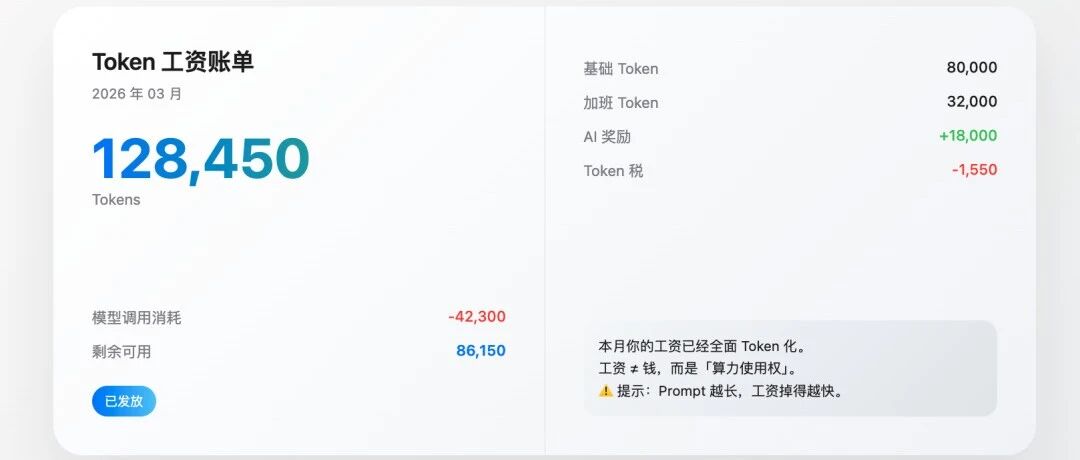
Core Viewpoint - The CEO of Nvidia, Jensen Huang, emphasizes that AI Tokens are the new fuel for productivity in the modern era, equating their usage to the essential tools of previous industrial and internet ages [1][11]. Group 1: AI Token as a Productivity Measure - A highly paid engineer earning $500,000 should ideally consume significantly more than $25,000 in AI Tokens annually, as low usage indicates a lack of engagement with modern tools [1][3]. - The consumption of AI Tokens is likened to the necessity of using EDA tools for chip design; not utilizing them is seen as a major disadvantage [3][6]. - The new metric for evaluating engineers will shift from traditional measures like lines of code to how effectively they can manage multiple AI agents [5][17]. Group 2: Changing Compensation Structures - Future salary structures may include a significant portion allocated to AI Tokens, potentially resembling the following breakdown: base salary of $200,000, stock options of $150,000, and Token allocation of $250,000 [7][8]. - The perception of AI Token consumption as a waste is challenged; instead, it is framed as a necessary investment for productivity, similar to electricity in the industrial age or server costs in the internet age [11][12][14]. - The role of engineers is evolving from code execution to orchestration, where their value is determined by their ability to coordinate AI resources effectively [16][18]. Group 3: Future Implications for Employment - In future job interviews, candidates may be asked about their AI Token usage rather than their technical skills or coding experience, indicating a shift in hiring criteria [24]. - The increasing reliance on AI Tokens may lead to a scenario where employees become dependent on them, making free resources insufficient [21].
Nature重磅:首个“AI科学家”的诞生!实现端到端自动化科研,撰写论文通过顶会同行评审
生物世界· 2026-03-26 03:23
Core Viewpoint - The article discusses the development and achievements of "AI Scientist," an AI tool designed to automate the entire scientific research process, from idea generation to paper publication, highlighting its capability to produce a fully AI-generated paper that passed peer review [2][3][4]. Group 1: AI Scientist Overview - "AI Scientist" is an end-to-end automated AI system composed of various agents built on existing large language models (LLMs) like GPT-4o or Claude Sonnet 4 [6]. - It autonomously completes the entire research lifecycle, including generating research ideas, executing experiments, writing papers, and conducting peer reviews [6][7]. Group 2: Achievements and Experiments - The AI Scientist achieved a significant milestone by submitting three AI-generated papers to the International Conference on Learning Representations (ICLR), with one paper receiving an average score of 6.33 from human reviewers, surpassing the average acceptance score for the conference [12][10]. - The paper titled "Compositional regularization: Unexpected obstacles in enhancing neural network generalization" aligns with the conference's focus on interesting negative results [12]. Group 3: Evaluation and Performance - The automatic review system of the AI Scientist demonstrated performance comparable to human reviewers, achieving a balanced accuracy rate of 66% and an F1 score of 0.49 [15][21]. - The system operates in four main stages: idea generation and filtering, experiment execution and visualization, paper writing, and automatic review [17][19]. Group 4: Implications and Limitations - The success of the AI Scientist indicates a potential paradigm shift in scientific research, suggesting that responsibly developed autonomous systems could significantly accelerate scientific discovery [4][24]. - However, the research team acknowledged limitations, such as only one of the three submitted papers being accepted and the current inability to meet the standards of top-tier papers [24]. Group 5: Future Outlook and Ethical Considerations - The capabilities of AI systems like the AI Scientist are expected to improve significantly, with potential applications in other scientific fields, such as automated chemistry labs [26]. - Ethical concerns arise regarding the impact on peer review systems, the potential for inflated research credentials, and the need for clear disclosure and evaluation standards in the scientific community [27].

和大厂“抢人”!银行春招密集开启,全面争夺这类人才
券商中国· 2026-03-26 03:10
Core Viewpoint - The banking industry is experiencing a "talent war" as major banks ramp up recruitment efforts, particularly focusing on technology roles to support digital transformation amidst ongoing pressure on net interest margins [2][3]. Recruitment Trends - Major state-owned banks, including the six largest, are leading the spring campus recruitment for 2026, with China Bank announcing nearly 4,000 positions and Construction Bank over 1,400 positions, both exceeding 1,000 [3]. - The recruitment structure is shifting, with an increasing emphasis on technology talent, while traditional roles in branches remain stable but do not see significant growth [2][4]. Technology Talent Demand - The demand for technology roles is rising, with some banks indicating that tech positions make up a significant portion of their recruitment needs [4]. - China Bank's recruitment highlights a focus on technology-related departments, while Ping An Bank has established a dedicated program for tech talent, emphasizing a "finance + technology" training model [4][5]. Differentiation in Talent Needs - Different types of banks have varying requirements for technology talent: state-owned banks prioritize robust systems and compliance, while joint-stock banks focus on AI applications and practical business scenarios [6]. - The industry is increasingly seeking hybrid talents who understand both finance and technology, particularly in AI and engineering [6][7]. Challenges in Recruitment - Attracting suitable technology talent remains challenging for banks compared to tech giants, which offer more competitive compensation and development opportunities [7]. - Experts suggest that banks should foster an innovative culture and optimize their assessment and selection processes to retain talent [7].

指数投资选“ETF嘉实”!从一站式配置到策略深度玩法
券商中国· 2026-03-26 03:10
Core Viewpoint - The article emphasizes the growing popularity and importance of ETF funds in wealth management for both institutional and retail investors, highlighting their advantages such as trading convenience, transparency, and a wide range of products [1]. Group 1: ETF Market Growth - The domestic ETF market has surpassed 5 trillion yuan in scale, with over 1,400 products available, indicating a robust development phase characterized by reallocation, strategy enhancement, and service improvement [2]. - Jiashi Fund has been a pioneer in index investment for over 21 years, focusing on fundamental research and innovative strategies to identify "super opportunities" in various industries [2]. Group 2: Product Diversity and Accessibility - Jiashi Fund's "Super ETF" offers a comprehensive range of products, allowing investors to achieve diversified allocations based on their risk preferences and investment goals, covering everything from broad-based indices to thematic ETFs [3]. - The naming convention for Jiashi Fund's 61 "Super ETF" products is standardized, making it easier for investors to understand and select appropriate investments [3]. Group 3: Core Opportunities and Research - Jiashi Fund's ability to identify and define core opportunities is rooted in its strong research capabilities and platform depth, with over 25 ETFs ranking first in scale among similar products [6]. - The fund has strategically invested in sectors like AI and rare metals, with products such as the Sci-Tech Chip ETF and Rare Earth ETF becoming market leaders in their categories [7][8]. Group 4: Enhanced Investment Experience - As the ETF market evolves, there is a shift from single product purchases to portfolio management, necessitating more active asset allocation and precise strategy services to enhance investment returns [9]. - Jiashi Fund has established a systematic service framework, including platforms for institutional empowerment and personal investment services, to meet diverse investor needs [9]. Group 5: Long-term Investment Philosophy - Jiashi Fund promotes a long-term investment philosophy, encouraging rational allocation and emphasizing the value of index investment over time [10]. - The annual "Super Index Festival" aims to engage various stakeholders in the investment ecosystem, fostering a deeper understanding of index investment as a wealth management solution [10].

速递|红杉资本三度押注,法律AI独角兽Harvey完成2亿美元融资,估值110亿美元,一年内暴涨3.5倍
Z Potentials· 2026-03-26 03:05
Core Insights - Harvey, a legal tech startup, has confirmed a new funding round, achieving a valuation of $11 billion, reflecting significant growth in the AI sector [2] - The company raised $200 million in this round, led by existing investors GIC and Sequoia Capital, with participation from other notable investors [2] - Harvey's total funding has now exceeded $1 billion, with its valuation increasing more than 3.5 times within a year [2] Funding History - In December of the previous year, Harvey's valuation was $8 billion following a funding round led by Andreessen Horowitz [2] - In June of the previous year, the valuation was $5 billion after a round led by Kleiner Perkins and Coatue [2] - In February of the previous year, the valuation was $3 billion after a funding round led by Sequoia Capital [2][3] Investor Confidence - Sequoia Capital has co-led three funding rounds for Harvey since its Series A, indicating a strong level of trust in the startup [3] - Sequoia's partner, Pat Grady, acknowledged the unusual level of confidence in this investment decision [3]

各地人均存款规模出炉,OpenAI关闭Sora相关服务 | 财经日日评
吴晓波频道· 2026-03-26 02:44
Group 1: Personal Savings Data - The average personal savings in China reached 118,900 yuan by the end of last year, with Beijing and Shanghai leading at 356,200 yuan and 290,200 yuan respectively [2] - Guangdong has the highest total savings balance at nearly 39 trillion yuan, while provinces like Jiangsu, Beijing, Zhejiang, and Shanghai form a "20 trillion" tier [2] - Despite Guangdong's high total savings, its per capita savings are around the national average, indicating a lower savings willingness among residents [2][3] Group 2: Food Delivery Industry - The State Administration for Market Regulation has called for an end to the "food delivery war," emphasizing healthy competition based on service quality rather than capital [4] - This regulatory stance has led to a significant rise in stock prices for major players like Meituan and Alibaba, indicating market optimism about reduced subsidy wars [5] - The cessation of price wars may lead to a more sustainable market environment, although the retention of users attracted by subsidies remains uncertain [5] Group 3: OpenAI and Sora - OpenAI announced the discontinuation of its video generation tool Sora, shifting focus to advanced robotics and AI models [6][7] - The decision reflects a strategic pivot as Sora struggled with user monetization and competition in the video generation space [6][7] - OpenAI's move indicates a transition from being a broad AI leader to a more commercially focused entity, seeking viable business models [7] Group 4: Xiaomi Financial Performance - Xiaomi reported a total revenue of 457.3 billion yuan for 2025, a 25% increase year-on-year, with adjusted net profit rising by 43.8% to 39.2 billion yuan [10] - The electric vehicle and AI sectors have turned profitable for the first time, contributing significantly to revenue growth [10][11] - However, Xiaomi faces challenges in its traditional business due to declining smartphone sales and rising storage chip prices, which may pressure net profits [11] Group 5: Pop Mart Financial Performance - Pop Mart's revenue surged to 37.12 billion yuan in 2025, a 184.7% increase, with net profit reaching 13.01 billion yuan, up 293.3% [12] - The LABUBU IP has become a significant revenue driver, but reliance on a single IP poses risks for future growth sustainability [12][13] - The company aims for at least 20% growth in 2026, but maintaining high growth rates may be challenging [13] Group 6: SpaceX IPO Plans - SpaceX plans to submit its IPO application soon, aiming to raise over 75 billion USD, which would set a record for the largest IPO [14][15] - The IPO is seen as a strategic move to fund its ambitious chip manufacturing project, which requires substantial capital [14][15] - The potential risks associated with the long manufacturing cycles in the chip industry could impact the company's financial stability [15] Group 7: Stock Market Overview - The stock market experienced a rebound, with the Shanghai Composite Index rising over 1% and trading volume increasing significantly [16][17] - Market sentiment remains cautious, with a lack of clear leading sectors and ongoing geopolitical uncertainties affecting investor confidence [17]