产融结合

Search documents
徽商期货成功举办江南集中区新材料企业交流座谈会
Xin Lang Cai Jing· 2025-12-26 07:43
Core Insights - The event aimed to deepen the integration of industry and finance, providing financial tools to help enterprises manage market volatility and serve the real economy [2][5]. Group 1: Event Overview - The "Exchange Symposium for Key Enterprises in New Materials" was successfully held on December 23, organized by Huishang Futures in the Jiangnan New Industrial Concentration Zone [2][5]. - The symposium included discussions on current market trends, risk management, and the integration of futures and spot markets, featuring participation from over ten key enterprises in the aluminum-based new materials sector [2][5]. Group 2: Key Presentations - Senior analyst Yin Zhihua from Fubao Information provided a market analysis and outlook for casting aluminum alloys [2][5]. - A report on "Copper and Aluminum Market Logic, Outlook, and Application of Futures Tools for Enterprises" was presented by a researcher from Huishang Futures [2][5]. Group 3: Practical Discussions - The discussion segment focused on practical issues faced by enterprises, such as price risk and inventory management [2][5]. - The event concluded with on-site visits to the production lines of An'an New Materials Technology Co., Ltd. and Anhui Pengxiang Aluminum Technology Co., Ltd. [2][5]. Group 4: Future Commitment - Huishang Futures aims to continue supporting the high-quality development of the regional economy by providing effective financial services [3][6].


河钢集团与中金资本联合成立320亿元股权投资基金
Zhong Zheng Wang· 2025-12-26 02:05
Group 1 - The establishment of the CICC Heibei Steel Development Equity Investment Fund, with a total scale of 32 billion yuan and a 15-year operation period, marks a strategic collaboration between Heibei Steel Group and CICC Capital to explore new sectors and foster new growth drivers [1] - The fund will adopt a "mother fund + direct investment" operational model, focusing on high-end materials, new energy, next-generation information technology, energy conservation and environmental protection, and high-end manufacturing [1] - Heibei Steel Group aims to leverage its advantages in the steel materials sector and integrate CICC's expertise in capital operations and financial services to create a collaborative investment platform [1] Group 2 - CICC emphasizes its commitment to serving national strategies and supporting the real economy, viewing the fund's establishment as a significant step in deepening strategic collaboration and promoting regional development [2] - BlueFive Capital, an international investment institution, expresses confidence in the long-term development potential of the Chinese market and Heibei Steel Group's opportunities in high-end manufacturing and new building materials [2] - Heibei Steel Group is recognized as one of the largest steel material manufacturers and service providers globally, having been listed in the Fortune Global 500 for 17 consecutive years [2] Group 3 - CICC is a leading investment bank in China, known for its comprehensive financial services across investment banking, equity, fixed income, asset management, private equity, and wealth management [3] - BlueFive Capital manages assets totaling 8 billion USD and offers a wide range of services in private equity, real estate, infrastructure, and financial products [3]

320亿!河钢重磅启动!
Xin Lang Cai Jing· 2025-12-25 14:41
Core Viewpoint - The establishment of the CICC Heibei Steel Development Equity Investment Fund, with a total scale of 32 billion yuan, aims to create an open, collaborative, and win-win industrial investment platform and a new model of integration between industry and finance [1][5]. Group 1: Fund Details - The fund has a total scale of 32 billion yuan and an operational period of 15 years [1][5]. - It adopts a "mother fund + direct investment" operational model, focusing on high-end materials, new energy, new generation information technology, energy conservation and environmental protection, and high-end manufacturing [5][12]. - The fund features distinct characteristics of "industry-finance collaboration, central-local cooperation, and cross-border linkage," aiming to build a new bridge for cooperation between local governments, cross-border capital, and industries [5][12]. Group 2: Strategic Importance - The collaboration between Heibei Steel Group and CICC Capital marks a milestone in their strategic partnership and is a key measure to deepen the integration of industry and finance while laying out strategic emerging industries [4][10]. - CICC aims to leverage its comprehensive financial service advantages to guide financial resources towards industrial innovation in Hebei, contributing to high-quality development [4][11]. Group 3: Key Stakeholders - Key figures present at the fund's establishment included Zhao Chenxing, the Executive Vice Governor of Hebei Province, Liu Jian, Chairman of Heibei Steel Group, and Chen Liang, Chairman of CICC [1][3]. - BlueFive Capital, an international investment institution, expressed its intention to collaborate with the fund, aiming to integrate long-term capital from the Middle East and resources from leading industries in China [4][11][14]. Group 4: Company Background - Heibei Steel Group is one of the largest steel material manufacturers globally and has been listed in the Fortune Global 500 for 17 consecutive years, focusing on high-end, intelligent, and green development [6][13]. - CICC is a leading investment bank in China, committed to serving national strategies and the real economy, with a comprehensive business structure that includes investment banking, asset management, and private equity [6][13].

320亿元产业基金成立,中金河钢联手布局新能源高端制造
Sou Hu Cai Jing· 2025-12-25 08:17
Core Viewpoint - The establishment of the CICC Hebei Steel Development Equity Investment Fund marks a significant collaboration between Hebei Steel Group and CICC Capital, aiming to enhance industrial and financial integration while focusing on strategic emerging industries [3] Group 1: Fund Details - The fund has a total scale of 32 billion RMB and an operational period of 15 years [3] - It will adopt a "mother fund + direct investment" operational model, focusing on traditional advantageous industries and strategic emerging industries of Hebei Steel Group [3] Group 2: Strategic Importance - The establishment of the fund is seen as a key measure for both parties to deepen industrial-financial integration and layout in strategic emerging industries [3] - CICC aims to leverage its comprehensive financial service advantages to support industrial innovation in Hebei [3] Group 3: International Collaboration - BlueFive Capital expresses strong confidence in the long-term development potential of the Chinese market and the overseas opportunities for Hebei Steel Group [3] - The collaboration aims to integrate long-term capital from the Middle East with China's industrial resources to uncover quality investment opportunities both domestically and internationally [3]

中金河钢(河北)发展股权投资基金成立
Zhong Guo Jin Rong Xin Xi Wang· 2025-12-25 07:55
Group 1 - The establishment of the Zhongjin HeGang (Hebei) Development Equity Investment Fund marks a strategic collaboration between HeGang Group and Zhongjin Capital, with a total fund size of 32 billion yuan and an operational period of 15 years [1] - The fund will adopt a "mother fund + direct investment" model, focusing on high-end materials, new energy, next-generation information technology, energy conservation and environmental protection, and high-end manufacturing [1] - HeGang Group's Chairman Liu Jian emphasized that this initiative is a key measure for deepening the integration of industry and finance, and for laying out strategic emerging industries [1] Group 2 - BlueFive Capital expressed its anticipation for collaboration with the Zhongjin HeGang Development mother fund, aiming to leverage various resources to enhance investment efficiency and support industrial upgrades and high-quality development [2] - The partnership is expected to integrate long-term capital from the Middle East and resources from leading industries in China, thereby discovering quality investment opportunities both domestically and internationally [2]
河钢集团与中金资本联合 中金河钢(河北)发展股权投资基金成立
Zheng Quan Shi Bao Wang· 2025-12-25 07:12
Core Viewpoint - The establishment of the CICC Heibei Steel Development Equity Investment Fund, with a total scale of 32 billion yuan and a 15-year operation period, represents a strategic collaboration between Heibei Steel Group and CICC Capital aimed at fostering new growth drivers and enhancing industrial-financial integration in the Beijing-Tianjin-Hebei region [1][2]. Group 1: Fund Details - The fund has a total scale of 32 billion yuan and operates under a "mother fund + direct investment" model, focusing on high-end materials, new energy, next-generation information technology, energy conservation and environmental protection, and high-end manufacturing [1]. - The fund aims to create a new bridge for cooperation between local governments, cross-border capital, and industries, emphasizing characteristics such as industrial-financial synergy, central-local cooperation, and cross-border linkage [1]. Group 2: Strategic Importance - The collaboration between Heibei Steel and CICC Capital is seen as a milestone in their strategic partnership, crucial for deepening industrial-financial integration and laying out strategic emerging industries [2]. - CICC Capital intends to leverage its comprehensive financial service advantages to guide financial resources towards industrial innovation in Hebei, contributing to the construction of a modern industrial system [2]. Group 3: Company Background - Heibei Steel Group is one of the largest steel material manufacturers and comprehensive service providers globally, having been listed in the Fortune Global 500 for 17 consecutive years [4]. - The company focuses on high-end, intelligent, and green development, enhancing competitiveness in its core steel business while actively cultivating emerging industry clusters in financial services, digital technology, trade logistics, and equipment manufacturing [4]. Group 4: BlueFive Capital's Perspective - BlueFive Capital, an international investment platform managing assets of 8 billion USD, sees long-term potential in the Chinese market and opportunities for Heibei Steel in high-end manufacturing and new building materials [3][5]. - The firm aims to integrate long-term capital from the Middle East with leading Chinese industry resources to discover quality investment opportunities and enhance investment efficiency [3].
财务公司融入汽车产业链
Jing Ji Ri Bao· 2025-12-24 22:04
Core Viewpoint - The automotive industry is undergoing a transformation where financial services are evolving from traditional external bank financing to integrated internal financial systems that support operational efficiency and stability in the supply chain [1][8]. Group 1: Financial Services Evolution - The number of corporate financial companies in China has increased, with 232 established by the end of November, including 75 from central enterprises and 116 from local state-owned enterprises [2]. - Guangzhou Automobile Group's financial company has shifted from static credit assessments based on financial statements to dynamic evaluations based on real-time data such as inventory turnover and order patterns [3][4]. - The "production-sales loan" product has been developed to synchronize loan issuance with sales rhythms, creating a closed-loop system that integrates finance into production and sales processes [3][4]. Group 2: Industry Stability and Support - Jiangling Motors Group focuses on stabilizing the supply chain for small and medium-sized suppliers, which are more vulnerable to market fluctuations [5][6]. - Jiangling's financial company has optimized funding structures for struggling suppliers without increasing overall risk exposure, demonstrating a supportive role rather than merely replacing external financing [6][7]. - The financial company has enhanced its digital capabilities to improve efficiency in funding operations, with over 80 billion in inventory financing and nearly 30 billion in consumer finance disbursed by November 2025 [6][7]. Group 3: Role of Financial Companies - Financial companies are becoming essential stabilizers in the automotive industry, adapting to the increasing complexity and volatility of the market [8][10]. - The shift in focus from internal financing to supporting downstream networks and overseas operations is evident, requiring enhanced risk management and compliance capabilities [9]. - The internal financing concentration is rising, leading to reduced overall funding costs and volatility, with financial companies evolving into foundational infrastructure for stable operations [10].

国建集团以融促产 深耕新时代地方国企减债融资助力产业高质量发展
Cai Fu Zai Xian· 2025-12-24 00:58
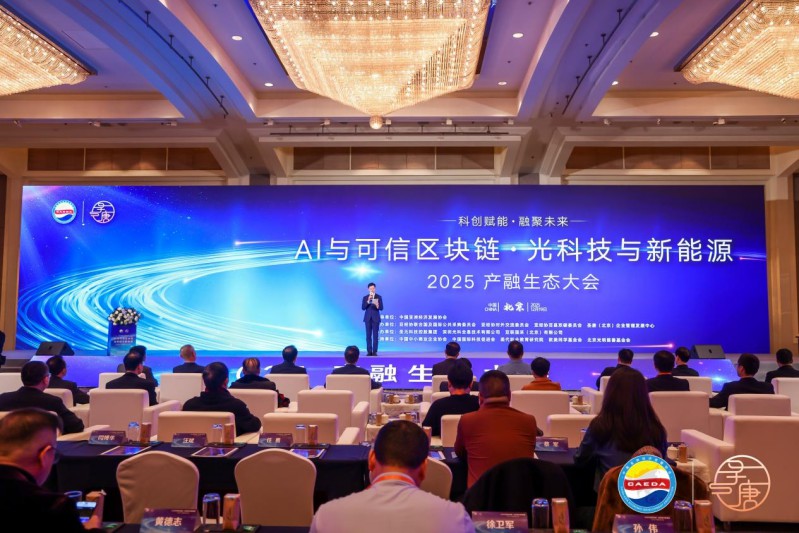
Core Viewpoint - The conference titled "AI and Trusted Blockchain, Optical Technology and New Energy - 2025 Industry-Finance Ecological Conference" aims to explore the deep integration of technology and capital to foster a new industrial ecosystem, which is significant for supporting China's "new quality productivity" and "Digital China" strategy [1][3] Group 1: Conference Overview - The conference is guided by the China Asia Economic Development Association and co-hosted by various organizations, focusing on the integration mechanisms of cutting-edge technologies like AI, trusted blockchain, optical technology, and new energy with financial capital [1][3] - Experts at the conference highlighted the need for long-term capital support to match the industrialization of technological innovations, as traditional financing models struggle to adapt to rapid technological iterations and evolving business models [3] Group 2: National Debt Reduction Financing (DRF) Initiative - The "New Era Local State-Owned Enterprise Debt Reduction Financing (DRF) to Assist High-Quality Industrial Development" initiative aims to provide a comprehensive solution for local state-owned enterprises facing financing difficulties due to weak regional economies and poor financial data [3][4] - The initiative includes systematic compliance supply chain operations to enhance revenue and positive profits for local state-owned enterprises, thereby improving their financial statements and meeting funding requirements for long-term, low-cost financing [3][4] Group 3: Investment Strategies and Outcomes - The initiative allows enterprises to use part of the DRF funds to establish equity investment funds in collaboration with the National Construction Group, with a co-investment ratio ranging from 1:1 to 1:9 [3][4] - The investment fund will focus on promising small and medium-sized enterprises across the entire industrial chain, aiming to promote collaborative development and ultimately drive these enterprises towards listing or acquisition, thereby creating greater economic benefits [3][4] Group 4: Innovation in Financing Models - The DRF initiative reflects a shift from traditional "blood transfusion" support to a systematic "blood-making" function, expanding the capital operation space for local state-owned enterprises [5] - The initiative is a practical response to national strategic deployments, providing significant support for building an open, collaborative, and sustainable high-quality industry-finance ecosystem [5]
海尔融资租赁再增资!增幅达11.66%
Sou Hu Cai Jing· 2025-12-23 12:19
Core Viewpoint - Haier Financing Leasing has increased its registered capital from 4.29 billion to 4.79 billion yuan, marking a capital increase of 500 million yuan, which is approximately 11.66% [1] Group 1: Company Overview - Haier Financing Leasing was established in 2013 and is a subsidiary of Haier Group, with its largest shareholder being Haier Group (Qingdao) Jinying Holdings Co., Ltd. [3] - The company has undergone multiple capital increases in recent years, with increases of 1 billion yuan in December 2023 and 500 million yuan in October 2024 [3] Group 2: Business Operations - Haier Financing Leasing serves as the financial service entity for Haier Jinkong, with business operations spanning intelligent manufacturing, healthcare, education, agriculture and food, and inclusive finance [3] - The company also operates a commercial factoring company, Shanghai Ruihai Chuangshi Commercial Factoring Co., Ltd. [3] Group 3: Financial Performance - As of 2024, Haier Financing Leasing reported total assets of 22.115 billion yuan, reflecting a year-on-year growth of 22.79% [3] - The company's operating income reached 1.448 billion yuan, with a year-on-year increase of 10.36%, and net profit was 598 million yuan, up 7.42% year-on-year [3] - The asset growth rate was relatively slow in 2021 at 1.29%, but accelerated significantly starting in 2022, with growth rates of 9.81% and 10.31% in 2022 and 2023, respectively [3] Group 4: Parent Company Overview - Haier Jinkong, the financial brand of Haier Group, has a registered capital of approximately 11.737 billion yuan and operates in various sectors including financing leasing, financial factoring, fintech, PE/VC investment, industrial mergers and acquisitions, and asset trading, with total assets exceeding 100 billion yuan [3] - Haier Jinkong has made external investments in several financial-related enterprises, including Peking University Founder Life Insurance Co., Ltd. and Haier Financial Factoring (Chongqing) Co., Ltd. [4]

CVC并购首例落地 鸿合科技交易案树立产融结合新标杆
Zheng Quan Shi Bao Wang· 2025-12-23 05:41
Group 1 - The core point of the article is that Honghe Technology (002955) successfully completed its third board and executive team restructuring, marking a significant milestone in the company's development and the first successful case of a corporate venture capital (CVC) platform controlling a listed company since the release of the "Merger Six Guidelines" [1][2] - The acquisition by Ruicheng Fund, a top CVC platform under Chery, reflects a deep strategic alignment based on long-term collaboration, distinguishing it from traditional financial investments [2] - This transaction serves as a practical example of how CVC-led acquisitions can clear cognitive and practical barriers for similar future transactions, validating the forward-looking and feasible nature of the policy [2] Group 2 - The transaction was implemented through Ruicheng Hongtu Fund, which gathered multiple industry-guided funds from Anhui Province and Wuhu City, enhancing the merger to a level of regional industrial planning and resource integration [3] - This arrangement creates a win-win ecosystem where industry capital leads, local government resources empower, and the listed company serves as a platform, effectively responding to regulatory expectations for capital markets to serve the real economy [3] - The introduction of industrial capital into Honghe Technology aims to optimize governance and expand collaboration, which is a core measure to enhance its long-term investment value [3]