企业数字化转型

Search documents
云南多方发力 赋能消费品促销扩产
Zhong Guo Xin Wen Wang· 2025-12-18 17:11
Group 1 - The event in Kunming focuses on promoting Yunnan's specialty consumer products and upgrading the industry through an "online + offline" integration model, aiming to enhance the market competitiveness of "Yunnan manufacturing" [1] - The initiative titled "A Lifestyle Called Yunnan: Promoting Specialty Consumer Products and Empowering New Growth" aims to expand online sales channels for high-quality Yunnan products through standard selection, marketing, and supply chain support [1] - The event featured expert speeches, the release of a promotional plan for Yunnan's specialty products, and a showcase of local agricultural products, allowing businesses and influencers to engage in product selection and negotiations [1] Group 2 - A vendor from Yunnan reported that their sales increased from 20,000 yuan in 2020 to over 200 million yuan this year, with plans to open a physical store in Kunming and expand into overseas markets [2] - The Yunnan government has been actively supporting the export of local products, with agricultural exports reaching 18.13 billion yuan in the first 11 months of this year, a 4.5% increase year-on-year, leading the central and western regions of China [2] - Yunnan plans to conduct training for enterprise transformation and e-commerce talent, aiming to help 50 large enterprises complete digital upgrades and cultivate 100 industry benchmarks to create a replicable growth model [2]
行业观察 | 为企业可持续发展注入数字动能,平安企业宝入选2025年《财经》长青企业案例
Sou Hu Cai Jing· 2025-12-18 13:09
Core Insights - The article highlights the importance of technology empowerment in reshaping corporate competitiveness amid the digital transformation wave, with Ping An Enterprise Treasure App recognized as a "Model Case of Digital Transformation" for its systematic technological practices in insurance, health, and risk control [2] Digital Empowerment in Insurance - Ping An Enterprise Treasure has developed a one-stop ecological service platform that reconstructs corporate insurance services through digital means, achieving both cost reduction and carbon emission reduction [2] - The platform's "One Code Pass" service allows for batch issuance, online customer engagement, and insurance signing, significantly enhancing the efficiency and security of business operations [2] - By 2025, the platform has provided 4.95 million policy amendment services, 300,000 claims services, and 360,000 invoice services to 450,000 enterprises, transforming traditional time-consuming processes into instant online services [2] Health Empowerment - The upgraded health service system of Ping An Enterprise Treasure offers a "one-stop" health management service, enhancing employee well-being, which is crucial for sustainable corporate development [3] - The platform allows employees to access online medical services seamlessly, significantly reducing the time and effort required for hospital visits and claims [3] - The service system has created a complete loop from health prevention to medical protection, effectively increasing employee belonging and corporate cohesion [3] Risk Control Empowerment - Ping An Enterprise Treasure has established a comprehensive risk control system that covers early warning, investigation, governance, and protection, shifting from post-compensation to proactive prevention [4] - The "AI IoT + Risk Control" model utilizes big data, AI, and blockchain technologies to monitor and intervene in 17 types of risk scenarios 24/7, significantly lowering safety management costs for enterprises [4] - As of November 2025, the system has issued 94 billion early warning messages and provided on-site services over 100,000 times, safeguarding safety production for over 16,000 enterprises [4] Future Outlook - Ping An Enterprise Treasure aims to extend its services from post-claim compensation to full lifecycle support, creating greater value for enterprises [5] - The platform has served over 4.2 million enterprises and aligns with China's "14th Five-Year Plan" for accelerating green transformation and building a beautiful China [5] - Future developments will focus on deepening the application of AI and big data to create a smarter enterprise service ecosystem, driving value through innovation and technology empowerment [5]



主流差旅报销平台深度测评:2025年企业选型指南
Sou Hu Cai Jing· 2025-12-17 09:38
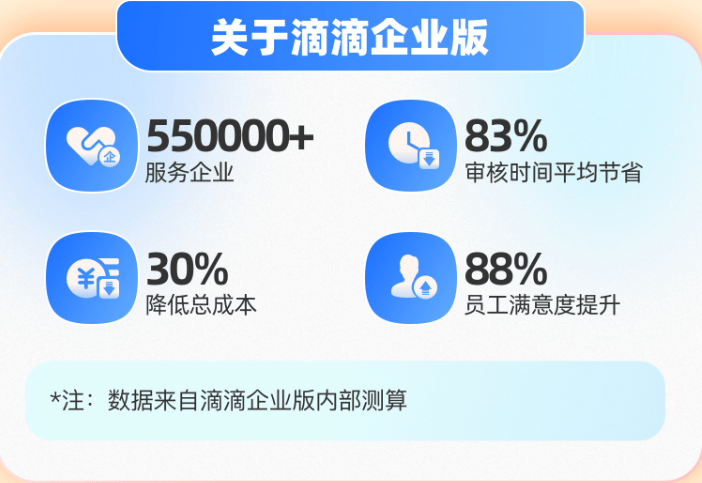
Core Insights - Over 68% of companies are using or planning to implement specialized travel expense reimbursement platforms, which can save an average of 23% on travel expenses and improve finance department efficiency by 80% [1] Group 1: Market Status and Value of Travel Reimbursement Platforms - Mainstream travel reimbursement platforms are integral to digital transformation, integrating travel booking, expense control, invoice processing, and reimbursement processes [1] - Traditional reimbursement methods are cumbersome, requiring employees to advance funds and manually fill out forms, while modern systems enable digital management, reducing reimbursement cycles from an average of 15 days to under 3 days [1] - These platforms provide data-driven decision support, allowing companies to analyze spending trends and optimize travel policies [1] Group 2: Core Features of Leading Travel Reimbursement Platforms - Didi Enterprise Edition focuses on corporate travel management, offering features like unified payment models and real-time expense monitoring [2] - Huolianyi is a cloud-based expense management platform that automates compliance checks and integrates with various management systems [4] - Meike Reimbursement enhances efficiency through OCR technology and supports multi-currency settlements [5] - SAP Concur offers comprehensive travel and expense management services, integrating with ERP systems and supporting services in over 200 countries [6] - Yue Reimbursement provides a one-stop platform for travel and expense management, integrating third-party resources and offering real-time alerts for overspending [7] Group 3: Core Values of Intelligent Travel Reimbursement Platforms - Automation significantly enhances efficiency, with companies reporting a 64% reduction in processing time and a 133% increase in financial efficiency [8] - Compliance and risk management capabilities are crucial, with platforms detecting non-compliant spending and ensuring audit trails are complete [8] - Data-driven decision-making is increasingly valued, with platforms providing detailed analytics to help optimize travel policies and identify savings opportunities [8] Group 4: Key Considerations for Platform Selection - Company size and business characteristics are primary factors in platform selection, with larger enterprises needing more complex solutions [9] - System integration capabilities are vital for effective implementation, requiring seamless connections with existing financial systems [9] - Mobile experience is critical, as employees need to submit expenses and managers need to approve requests on-the-go [9] Group 5: Future Development Trends of Travel Reimbursement Platforms - AI applications are a key development direction, enhancing budget management and fraud detection [10] - Ecosystem integration is a growing trend, moving towards a comprehensive service experience that covers booking, consumption, and reimbursement [10] - Real-time capabilities are improving, allowing for better expense control and dynamic policy adjustments [10] - Personalization and flexibility are becoming increasingly important, with platforms needing to cater to diverse industry and company needs [10] Group 6: Conclusion - Travel reimbursement platforms are evolving from simple expense tools to vital drivers of digital transformation, enhancing financial management efficiency and providing valuable business insights [11]
彩讯股份拟参设基金 投资人形机器人公司
Zheng Quan Shi Bao· 2025-12-16 22:22
Group 1 - The core point of the article is that 彩讯股份 plans to invest 5 million yuan in a venture capital fund focused on humanoid robotics, aiming to leverage professional investment resources to enhance its competitive and profit capabilities [1] - The total capital commitment from all partners in the fund amounts to 46.6 million yuan, with 彩讯股份 holding a 10.73% stake [1] - The investment is sourced from the company's own funds and is not expected to adversely affect its financial or operational status [1] Group 2 - 彩讯股份 is a provider of digital technology and services, focusing on enterprise digital transformation with products in collaborative office, smart channels, intelligent computing services, and data intelligence [2] - The company has developed various AI-based products, including Rich Mail smart email, AI office assistant, and a one-stop AI application development platform, to assist clients in sectors like telecommunications, energy, finance, and government [2] - In the field of embodied intelligence, 彩讯股份 is involved in developing applications for robotic dogs, enhancing their interactive design and control for home environments [2]


泰DEPA-BOI携手推出新措施提升产业竞争力
Shang Wu Bu Wang Zhan· 2025-12-16 16:25
Core Insights - Thailand's Digital Economy Promotion Agency (DEPA) and the Board of Investment (BOI) have launched new measures to enhance industrial competitiveness through a "Digital Service Account" mechanism [1] Group 1: Policy Overview - The new policy provides subsidies of up to 30% of the investment amount for companies adopting digital technologies developed or improved by certified Thai digital entrepreneurs [1] - The maximum subsidy for a single entity can reach 100 million Thai Baht, with projects required to be completed within one year [1] Group 2: Target Industries - The initiative aims to promote the application of digital technologies in key industries such as agriculture and biotechnology, smart electronics, high-value food, integrated medical technology, next-generation automobiles, defense, biofuels and chemicals, and robotics [1] - The support encompasses technologies including enterprise resource connection systems (requiring integration of at least three data functions), artificial intelligence, machine learning, big data, and data analytics [1] Group 3: Eligibility Criteria - For small and medium-sized enterprises (SMEs), the minimum investment amount must reach 20 million Thai Baht, while other enterprises must invest at least 50 million Thai Baht (excluding land and working capital) [1] - The new measures are expected to accelerate the digital transformation of Thai companies and enhance the country's technological competitiveness [1]

精准营销新思路:外企与民企IT运维外包采购,两张截然不同的“作战地图”。
Sou Hu Cai Jing· 2025-12-16 07:23
Core Insights - The IT outsourcing market is growing rapidly due to deepening digital transformation, but suppliers face increasing challenges in adapting their sales strategies to different types of enterprises [1][12] - Understanding the differences in procurement decision-making between foreign enterprises and domestic private enterprises is crucial for improving win rates [1][12] Decision-Making Processes - Foreign enterprises have a structured and lengthy decision-making process involving multiple departments, which requires suppliers to be patient and prepared for extensive negotiations and contract revisions [3][5] - Domestic private enterprises have a more centralized decision-making process, often led by a few key executives, allowing for quicker decisions but requiring suppliers to quickly establish trust and address core decision-makers' concerns [3][5] Focus Areas - For foreign enterprises, compliance and security are non-negotiable, with a strong emphasis on international certifications and comprehensive compliance across various domains [5][9] - Domestic private enterprises prioritize cost savings and efficiency, seeking immediate business value and a high return on investment [5][9] Relationship Management - Maintaining relationships with foreign enterprises requires demonstrating professional credibility through systematic and long-term engagement, including regular business reviews and detailed service reports [6][10] - Relationships with domestic private enterprises rely on emotional connections and value resonance, with a focus on quick problem-solving and direct communication [8][10] Proposal Strategies - Proposals for foreign enterprises should highlight security qualifications, compliance frameworks, and global service experience, while proposals for domestic private enterprises should emphasize cost efficiency and flexibility [9][10] - Companies should leverage local policies to showcase their strengths, such as high-tech certifications for foreign clients and specialized qualifications for domestic clients [10][12] Market Trends - The IT outsourcing market is shifting from broad competition to refined specialization, necessitating a dual approach to cater to both foreign and domestic clients [12]

千丁数科魏振华:企业AI落地“六步法”
Sou Hu Cai Jing· 2025-12-16 04:19
Core Insights - The article emphasizes the evolution of enterprise-level AI from being mere conversational agents to becoming integral business executors, highlighting the need for a comprehensive transformation in organizations to fully leverage AI capabilities [2][3]. Group 1: AI Implementation Strategy - The COO of Qian Ding Data Science, Wei Zhenhua, outlines a six-step methodology for implementing AI in enterprises, which includes recognition, value identification, platform establishment, knowledge construction, application, and evolution [6][8]. - The first step, "Recognition," focuses on achieving consensus on AI transformation across all organizational levels, emphasizing the importance of understanding AI's role and dispelling fears of job displacement [8][9]. - The second step, "Value," stresses the need to identify high-value scenarios for AI application, ensuring that quality data is available for effective AI training [9][10]. Group 2: AI Infrastructure and Knowledge Management - The third step, "Platform," discusses the necessity of building an AI agent platform tailored for enterprise needs, addressing issues such as business familiarity, permission management, and quantifiable outcomes [10][11]. - The fourth step, "Knowledge," highlights the importance of constructing a knowledge engineering framework to support AI learning, ensuring that AI systems are equipped with relevant internal data and context [10][11]. - The fifth step, "Application," focuses on user adoption, advocating for user-friendly interfaces and seamless integration of AI capabilities into existing business systems [10][11]. Group 3: AI Evolution and Practical Applications - The sixth step, "Evolution," involves continuous improvement of AI systems through iterative training and evaluation, utilizing a DMRE (Data, Model, Reward, Evaluation) framework to enhance agent capabilities over time [10][11]. - The article presents six practical applications of AI agents across various business domains, including remote inspection, energy management, asset operation, customer service, workflow automation, and employee training, demonstrating significant efficiency gains and cost reductions [13][14]. - For instance, the energy management AI agent has helped reduce overall energy consumption by approximately 27%, managing an annual electricity cost of 320 million yuan [14].


2026年企业数字化转型领导者“十要十不要”
3 6 Ke· 2025-12-15 06:10
Core Viewpoint - Digital transformation is often misunderstood by company leaders, leading to superficial or incomplete efforts. A deeper understanding of digitalization is essential for effective transformation [1][3]. Group 1: Misunderstandings and Issues - Many traditional company leaders equate digital transformation with merely purchasing advanced software systems, neglecting the unique aspects of their own organizations [2]. - There is a tendency to expect immediate financial returns from digital initiatives, which can lead to budget cuts or project cancellations when short-term results are not visible [4]. - Leaders often either delegate digital transformation entirely or interfere excessively in technical decisions, resulting in confusion and misalignment [4][5]. Group 2: Methodological and Cultural Challenges - Companies frequently lack a clear digital strategy and implementation roadmap, leading to ad-hoc approaches that fail to address real business needs [5]. - There is a common oversight of the human and cultural aspects of transformation, with many leaders failing to establish cross-departmental teams or address the resulting shifts in power and interests [6]. - A lack of a data-driven culture and reliance on traditional management practices hinder effective digital transformation [6]. Group 3: Recommendations for Leaders - Leaders should personally engage in learning about digitalization, lead transformation efforts, and actively participate in decision-making [7]. - It is crucial for leaders to maintain a long-term perspective, avoid rushing for quick wins, and embrace the complexities of digital transformation [7][8]. - Successful transformation requires a fundamental shift in leadership mindset, focusing on collaboration and data-driven decision-making [8].
新一代鸿蒙电脑发布 全链路自主可控 助力企业数字化转型
Xin Lang Cai Jing· 2025-12-12 14:19
Core Insights - Huawei's launch of the HarmonyOS-based commercial laptop, Huawei Qingyun HM740, marks a significant shift of the Harmony ecosystem from consumer to commercial applications, empowering various industries [1][13] - The event signifies a new beginning for China's commercial office sector, aiming to break free from dependency and achieve a leapfrog development [3][15] Product Features - The Huawei Qingyun HM740 is built on HarmonyOS 6, designed to provide a smarter, more efficient, and secure operating system for enterprise users [3][15] - The number of applications in the HarmonyOS ecosystem has rapidly increased from over 2,000 at launch to more than 12,000, indicating strong developer engagement [3][15] Innovations for Enterprises - The "Enterprise Digital Dual Space" feature allows seamless switching between work and personal environments, addressing security and efficiency concerns [3][15][16] - The "Zero-Touch Deployment" capability simplifies IT processes by automatically configuring security policies and network settings upon unboxing [6][18] AI Empowerment - The HarmonyOS 6 introduces an AI assistant, Xiaoyi, which provides access to authoritative industry knowledge without the need for manual searches or paid data, enhancing decision-making [6][18] - The system's knowledge management capabilities allow users to collect and intelligently process various types of information, transforming scattered data into organized knowledge assets [6][19] Security Features - The Huawei Qingyun HM740 emphasizes full-chain self-control to prevent information leaks, featuring a robust security architecture that operates at multiple levels [9][21] - The device includes a physical privacy switch and various connectivity options, supporting a long battery life of up to 21 hours for video playback and 15 hours for voice conferencing [12][23] Strategic Implications - The launch is part of the "Qingyun Star River Plan" aimed at accelerating the application of HarmonyOS in government and enterprise markets, fostering a virtuous cycle of innovation and user engagement [3][15] - The focus on security and self-control positions Huawei's offerings as a strong foundation for digital transformation in Chinese enterprises, promoting a new era of smart and secure commercial office solutions [12][23]

教培CEO选型指南:支撑“考试考证网校哪家好”的口碑背后,是EduSohoAI网校搭建的底层逻辑
Sou Hu Cai Jing· 2025-12-12 02:41
Core Insights - The article emphasizes the importance of underlying technology architecture in online education platforms, particularly for exam preparation institutions, highlighting that superficial features often distract decision-makers from critical aspects like system scalability and security [2][5]. Group 1: Technology Architecture - EduSohoAI employs a cloud-native architecture with auto-scaling technology, allowing real-time monitoring and dynamic resource allocation to handle traffic spikes, ensuring stability even with tens of thousands of concurrent users [2]. - The platform's disaster recovery strategy includes multi-location backup and real-time hot standby for core databases, ensuring zero data loss and uninterrupted service during unforeseen failures [5]. Group 2: Cost Efficiency - EduSohoAI integrates intelligent bitrate technology and advanced video encoding algorithms, reducing video file sizes by 30%-50%, which significantly lowers bandwidth costs for institutions with extensive video resources [5]. - The dynamic CDN strategy optimizes content delivery based on user location and network conditions, enhancing user experience while minimizing unnecessary data traffic [5]. Group 3: Security Measures - The platform incorporates a robust DRM system to protect intellectual property, utilizing video encryption, anti-screen recording measures, and anti-leeching technologies to prevent unauthorized content distribution [7]. Group 4: Integration and Flexibility - EduSohoAI offers comprehensive API documentation and SDKs, facilitating seamless integration with existing CRM, ERP, and OA systems, thus enabling efficient data flow across various operational areas [7][10]. - The platform's open architecture transforms it into a digital backbone for institutions, supporting long-term growth and adaptability to future business needs [10]. Group 5: Strategic Investment - Choosing EduSohoAI represents a strategic investment in a scalable operating system that can evolve with the institution's growth, emphasizing the significance of foundational architecture in determining the overall success of educational platforms [10].