可持续金融

Search documents
今日视点:ESG质量“重新定义”上市公司估值体系
Zheng Quan Ri Bao· 2025-11-20 23:11
Core Insights - The enhancement of ESG ratings among A-share listed companies indicates a significant shift in operational philosophy and management practices, reflecting the increasing importance of ESG quality in the capital market [1][2] Group 1: Restructuring Valuation Logic - ESG quality is becoming a key metric for assessing sustainable growth potential, moving beyond traditional financial indicators like profit and revenue [2] - Improved ESG ratings signify authoritative recognition in areas such as environmental compliance and employee rights, enhancing operational resilience and sustainable growth [2] - The focus on ESG is shifting valuation logic towards a balance between financial quality and sustainable development [2] Group 2: Risk Pricing Logic - High-quality ESG performance serves as an effective tool for reducing risk premiums, as poor ESG ratings often lead to higher perceived risks and increased discount rates [3] - Enhanced ESG ratings create a risk management framework that mitigates potential penalties and internal governance issues, thereby lowering overall risk levels [3] - This reduction in risk contributes to a decrease in valuation discount rates, ultimately increasing the company's fair valuation [3] Group 3: Capital Cost Impact - Companies with strong ESG performance are more likely to attract long-term capital from major investment institutions, leading to lower financing costs [4] - Regulatory bodies are increasingly emphasizing ESG disclosure requirements, giving companies with superior ESG performance an advantage in capital market activities [4] - The widening of financing channels and reduction in capital costs directly enhance corporate value, establishing ESG as a tangible financial competitive edge [4] Group 4: Market Consensus and Investment Narrative - A growing consensus among investors suggests that companies with high ESG ratings are better positioned for sustainable growth and regulatory compliance [5] - This consensus drives capital towards high ESG-rated companies, creating a positive cycle of quality ratings, capital inflow, and valuation enhancement [5] - The establishment of a "certainty premium" for leading ESG companies reinforces their weight in the valuation system, highlighting the importance of integrating ESG into corporate strategy and operations [5]
可持续债务——助力新兴市场气候融资规模化的关键力量
彭博Bloomberg· 2025-11-20 07:25
Core Insights - The report by Bloomberg New Energy Finance highlights that innovation and regulatory support are crucial for the growth of sustainable debt in emerging markets, which is essential for bridging the multi-trillion-dollar climate financing gap [1][10]. Group 1: Current Market Trends - In 2024, the issuance of labeled sustainable debt in the MENA and Asia-Pacific regions reached a record high, but it slowed down in 2025 due to changing perceptions regarding the advantages of labeled debt, including impacts on pricing and reporting costs [2][6]. - The pricing advantage of labeled debt is diminishing, with some issuers even paying a premium for green debt, indicating a shift in market dynamics [6]. Group 2: Regulatory Support and Innovation - Regulatory bodies can help reduce barriers faced by issuers by providing solutions such as offsetting labeling costs and creating a clear regulatory environment for labeled debt issuance [6]. - The Hong Kong government has implemented a subsidy program for green and social issuers, with over 620 sustainable debt instruments issued by mid-October 2025, totaling more than $170 billion [6]. Group 3: Growth Opportunities - Labeled debt currently represents only 2.6% of the debt market in emerging economies, highlighting significant growth opportunities [6]. - Social debt, which has only accounted for 8% of total issuance since 2020 in emerging markets, presents strong growth potential, with countries like South Korea and Japan leading the global social bond market [7]. Group 4: Innovative Structures - Issuers are exploring innovative structures beyond traditional labels and terms, such as blue bonds and sustainability-linked loans, which can attract capital to underfunded areas like marine ecosystem protection [7][9]. - The issuance of ultra-long tenor green bonds, such as the 30-year green bond by MTR Corporation, demonstrates strong investor demand for long-term debt instruments [9]. Group 5: Industry Perspectives - The collaboration between the Dubai Financial Services Authority and the Hong Kong Monetary Authority aims to enhance the sustainable debt market, reflecting growing investor confidence and the resilience of the market [10][11]. - The report emphasizes the importance of sustainable debt as a financial tool to address the climate financing gap in emerging markets, with Hong Kong positioning itself as a sustainable finance hub [10].

世界经济论坛可持续金融总负责人:ESG已从理念探讨走向资本部署
Xin Lang Cai Jing· 2025-11-19 06:42
Core Viewpoint - Climate action is not merely a cost but a crucial element in addressing multiple crises, acting as a "risk multiplier" that exacerbates various challenges faced by humanity [4][5]. Group 1: Climate Change and Its Implications - Climate change is linked to energy security, food insecurity, and geopolitical instability, necessitating a transition to clean energy and improved efficiency [4]. - Failure to address climate issues will lead to increased pressure and tensions, such as large-scale migration from agricultural decline regions [5]. Group 2: Sustainable Finance and Long-term Value - Investing in emerging sectors may reduce short-term returns but enhances risk management and creates long-term value [6]. - Transitioning to a low-carbon, resource-efficient economy is essential for economic resilience and to avoid higher financing costs [6]. Group 3: Leadership and Coordination in Climate Action - Coordinated leadership is essential for effective climate action, with the World Economic Forum playing a pivotal role in uniting various sectors to transform climate commitments into actionable plans [8]. - The Forum is also a key player in research and thought leadership, promoting clean energy investments and addressing food security and natural conservation [8][9]. Group 4: Future Trends in Climate Action - Four critical trends are identified for future climate action: 1. Infrastructure improvement is necessary to meet the increasing demand for electricity driven by various factors [11]. 2. Integration of data and technology, such as AI and satellite data, is vital for risk management and accurate climate disclosures [11]. 3. Climate adaptation and resilience should focus on infrastructure, agriculture, and water systems to prepare for future shocks [11]. 4. Strengthening regional cooperation is crucial amidst geopolitical fragmentation, requiring innovative local financial solutions [12].

搭沟通桥梁,创增长机遇——第28届欧元金融周暨第11届“中国日”活动在法兰克福举办
Xin Hua She· 2025-11-18 19:10
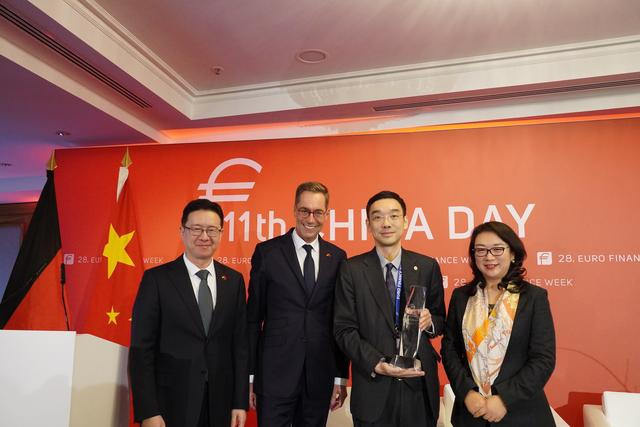
作为中德金融合作的重要参与者,中国工商银行在本届活动中受到特别关注。中国工商银行金融市场部 总经理王海璐表示,工商银行自1999年在法兰克福设立首家亚洲以外海外分行以来,已深耕德国和欧洲 市场26年,服务网络从法兰克福拓展至柏林、慕尼黑、杜塞尔多夫等德国主要城市,在欧洲16国建立综 合机构布局,业务范围延伸至公司金融、金融市场、清算结算等多元领域。 11月17 日,中国工商银行金融市场部总经理王海璐在活动现场发表致辞。 新华社发(张琪 摄) 新华社法兰克福11月18日电(记者 胡尊元)第28届欧元金融周暨第11届"中国日"活动17日在德国金融 中心法兰克福举行。中国工商银行法兰克福分行荣获"法兰克福金融中心杰出贡献奖"。 11月17 日,中国工商银行法兰克福分行荣获"法兰克福金融中心杰出贡献奖"。 新华社发(张琪 摄) 中国驻法兰克福总领事黄昳扬在致辞中表示,在国际环境波动加剧、不稳定性和不确定性显著上升的背 景下,中德关系保持稳健发展,关键在于三点:一是两国在各层级始终保持高度的沟通与相互理解意 愿;二是双方在金融等专业领域合作持续深化;三是双方长期发展理念高度契合,未来可在"创新、开 放、可持续"领域不断 ...

香港金管局&迪拜金管局研究报告:中东与北非地区以及亚太新兴地区的可持续债务市场有很大发展空间
智通财经网· 2025-11-18 08:45
Core Insights - The research report by the Hong Kong Monetary Authority and Dubai Financial Services Authority highlights the significant growth potential of the sustainable debt market in the Middle East, North Africa, and Asia-Pacific regions [1][2] - The report emphasizes the need for governments to support issuers by offsetting issuance costs and providing guidance to overcome market entry challenges [1] - The study showcases innovative sustainable finance examples, including blue bonds and sustainability-linked loans, demonstrating the evolution of sustainable debt instruments [1] Group 1 - The sustainable debt market is projected to reach $94 billion in issuance by 2024, indicating increasing investor confidence and market resilience [2] - Hong Kong aims to be a sustainable finance hub, facilitating 45% of international green bond issuance in Asia, while addressing the climate funding gap in emerging markets [2] - The report aims to identify barriers faced by issuers and explore growth opportunities in the sustainable debt sector [2] Group 2 - The collaboration between the Hong Kong Monetary Authority and Dubai Financial Services Authority is expected to enhance trust and transparency in financial markets through sustainable debt [2] - A joint climate finance conference will be held in Dubai on November 26, where key findings from the report will be discussed [2] - Bloomberg New Energy Finance serves as a knowledge partner for the report, contributing insights into the sustainable debt market's potential [1]
2025年欧元金融周“中国日”活动成功举行
人民网-国际频道 原创稿· 2025-11-18 08:42
Core Viewpoint - The "China Day" event during the 2025 Euro Finance Week in Frankfurt highlights the importance of Sino-German cooperation amidst global uncertainties, emphasizing the need for dialogue and collaboration in finance and trade [1][2]. Group 1: Event Overview - The Euro Finance Week is Germany's most significant financial conference, with over 200 representatives from various sectors attending the "China Day" event [1]. - The event aims to strengthen dialogue and cooperation in the financial sector between China and Europe, having successfully held 10 editions [3]. Group 2: Key Statements - The President of the Euro Finance Group, Scholz, welcomed Chinese representatives, noting the importance of their participation in fostering understanding and trust between Germany and China [1]. - The Chinese Consul General in Frankfurt, Huang Dingyang, emphasized China's commitment to stability and reform, making it a favored market for global enterprises [2]. - The German Vice Chancellor and Finance Minister, Lindner, highlighted the complementary advantages of the Chinese and German economies, advocating for deeper exchanges and cooperation [2]. Group 3: Economic Cooperation - The Deputy Governor of the German Federal Bank, Modler, pointed out the rising global uncertainties and the need for Germany and China to collaborate on economic resilience, green cooperation, and sustainable development [2]. - The General Manager of the Financial Markets Department of the Industrial and Commercial Bank of China, Wang Hailu, expressed the bank's commitment to expanding its services in Germany and Europe, moving from connectivity to co-creation in financial cooperation [3].

MUFG(MUFG) - 2026 Q2 - Earnings Call Presentation
2025-11-18 01:00
FY2025 1H Financial Results Summary | FX rate | End Sep | End Mar | End Sep | | --- | --- | --- | --- | | | 2024 | 2025 | 2025 | | USD/JPY | 142.73 | 149.52 | 148.88 | Financial Highlights under Japanese GAAP for 1st Half of the Fiscal Year Ending March 31, 2026 November 14, 2025 Mitsubishi UFJ Financial Group Breakdown of Changes in NOP*2 Breakdown of Changes in Net Income All references in this presentation to "KS impact" refer to the effects of notes *1 1,274.8 R&D +8.2 CWM +47.6 JCIB +10.5 AM/IS +9.4 GC ...

第四次中德高级别财金对话联合声明:中方欢迎并将继续审核包括德国机构在内的外资机构申请债券通“南向通”资质
智通财经网· 2025-11-17 12:58
Core Points - The fourth China-Germany high-level financial dialogue was held in Beijing, focusing on deepening financial cooperation and promoting bilateral investment [1][2] - Both sides emphasized the importance of multilateral trade systems and committed to opposing unilateralism and trade protectionism [2][3] - The dialogue aims to enhance macroeconomic policy coordination and support sustainable global economic recovery [2][4] Financial Cooperation - China welcomes qualified German institutional investors to participate in the interbank market and related businesses [1][6] - Both countries agreed to deepen offshore RMB market cooperation and facilitate cross-border investment between their capital markets [1][6] - The dialogue highlighted the significance of a developed derivatives market for enhancing market depth and stability [6][7] Multilateral Trade and Economic Governance - Both parties reaffirmed their commitment to a rules-based multilateral trading system centered around the World Trade Organization (WTO) [3][4] - They support reforms of the WTO and aim to create a fair, open, and transparent trade environment [3][4] - The dialogue emphasized the importance of international cooperation within the framework of the International Monetary Fund (IMF) [4][5] Debt and Development Cooperation - Both sides are committed to addressing debt vulnerabilities in low- and middle-income countries and implementing the G20 Debt Service Suspension Initiative [4][5] - They recognized the importance of the International Development Association (IDA) and expect the World Bank Group to fulfill its funding commitments [5][6] - The dialogue also focused on enhancing international development cooperation to achieve the United Nations Sustainable Development Goals [5][10] Green Finance and Sustainable Development - Both countries welcomed progress in green finance and sustainable financial infrastructure [5][10] - They agreed to deepen cooperation under the Central Banks and Supervisors Network for Greening the Financial System (NGFS) [5][10] - The dialogue encouraged innovation in green bonds and the sharing of best practices to mobilize private sector funding for climate action [10][11] Regulatory Cooperation - Both parties agreed to strengthen regulatory cooperation in the banking and insurance sectors [6][7] - They discussed the possibility of signing a memorandum of understanding to enhance communication mechanisms [6][7] - The dialogue also highlighted the importance of fair competition and timely processing of licensing applications for financial institutions [9][10]
第四次中德高级别财金对话联合声明发布
Xin Jing Bao· 2025-11-17 12:46
Core Points - The fourth high-level financial dialogue between China and Germany was held on November 17, 2025, focusing on strategic and long-term issues in the financial sector [1] - Both countries reaffirmed their commitment to multilateral cooperation and opposition to unilateralism and trade protectionism, emphasizing the importance of the G20 as a platform for international economic cooperation [2] - The dialogue resulted in agreements to enhance cooperation in various areas, including macroeconomic policy coordination, international financial institution reform, and sustainable development [2][3] Group 1: Bilateral Cooperation - Both parties committed to maintaining international and multilateral cooperation, opposing unilateralism and trade protectionism, and supporting the G20's role in international economic cooperation [2] - They emphasized the importance of a rules-based multilateral trading system centered around the World Trade Organization (WTO) and agreed to support WTO reforms [2] - Both sides agreed to continue close cooperation within the framework of the International Monetary Fund (IMF) and support a strong, resource-rich IMF [2][3] Group 2: Financial Stability and Development - The dialogue highlighted the need to address debt vulnerabilities in low- and middle-income countries and to implement the G20's debt treatment framework [3] - Both countries recognized the importance of the International Development Association (IDA) and supported its funding commitments [4] - They expressed a commitment to enhancing cooperation under the Asian Infrastructure Investment Bank (AIIB) framework to support sustainable development [4] Group 3: Financial Market Connectivity - Both parties welcomed the issuance of Global Depositary Receipts (GDRs) and Chinese Depositary Receipts (CDRs) to enhance market liquidity and connectivity [7] - They acknowledged the significance of Panda bonds for German enterprises in China and supported qualified German institutions in issuing Panda bonds [7][8] - The dialogue recognized the importance of a developed derivatives market for enhancing market depth, liquidity, and stability [7] Group 4: Regulatory Cooperation - Both sides agreed to strengthen regulatory cooperation in the banking and insurance sectors and explore the possibility of signing a memorandum of understanding [6][8] - They recognized the role of fintech in enhancing financial services and encouraged cooperation between financial technology institutions [9] - The dialogue emphasized the importance of timely and efficient processing of relevant licensing applications to facilitate market access for financial institutions [9][10]
一周要闻·阿联酋&卡塔尔|K2与华为签署合作备忘录;文远知行在阿布扎比开展无人Robotaxi商业化运营
3 6 Ke· 2025-11-17 11:55
Group 1: K2 and Huawei Collaboration - K2, a company under the Abu Dhabi government, signed a memorandum of understanding with Huawei during the DRIFTx 2025 exhibition to enhance cooperation in smart charging infrastructure, green energy innovation, and next-generation smart city technologies [2] Group 2: Robotaxi Commercialization in Abu Dhabi - WeRide announced the approval from the UAE federal government to launch a fully autonomous Robotaxi service in Abu Dhabi, marking it as the first city outside the US to receive a city-level L4 autonomous driving commercial license [2] - The service will operate without safety drivers and will initially be available through Uber and TXAI platforms [2] Group 3: Didi Autonomous Driving Partnership - Didi Autonomous Driving established a strategic partnership with the Abu Dhabi Investment Office (ADIO) to collaborate on autonomous driving technology applications, AI talent development, and industry ecosystem construction [3] Group 4: UAE Economic Growth - The UAE economy demonstrates strong resilience, with non-oil sectors contributing over 73% to GDP, driven by tourism, logistics, manufacturing, and digital economy growth [3] - The UAE is outperforming other Gulf economies and solidifying its position as a global business hub [3] Group 5: Trade Relations with Asia - Trade between the Gulf region and Asia reached a record high of $516 billion, with the UAE leading at $268 billion, reflecting a 27% increase [3] - Predictions indicate that by 2030, trade between the Gulf and Asia could reach $802 billion, driven by rising demand for energy and non-oil products [3] Group 6: Dubai Commercial City Development - Dubai Commercial City (DCC) has achieved a 98% occupancy rate, driven by strong demand from tech, AI, and e-commerce companies [4] - A new e-commerce fulfillment center is planned to be launched by Q3 2026 to meet the growing demand in digital trade [4] Group 7: Qatar Government Tender Growth - In Q3 2023, Qatar's government tenders surged by 123.8% year-on-year, totaling 15 billion Qatari riyals, with significant investments in infrastructure and construction [6] Group 8: Qatar National Bank Ship Financing - Qatar National Bank launched the first ship financing service in the country, offering customized loan solutions for vessels valued up to 2 million Qatari riyals at an interest rate of 3.45% [6]