
气候融资

Search documents
COP30倒计时:中国已提交NDC,欧盟等缔约方仍未交卷
2 1 Shi Ji Jing Ji Bao Dao· 2025-11-04 12:35
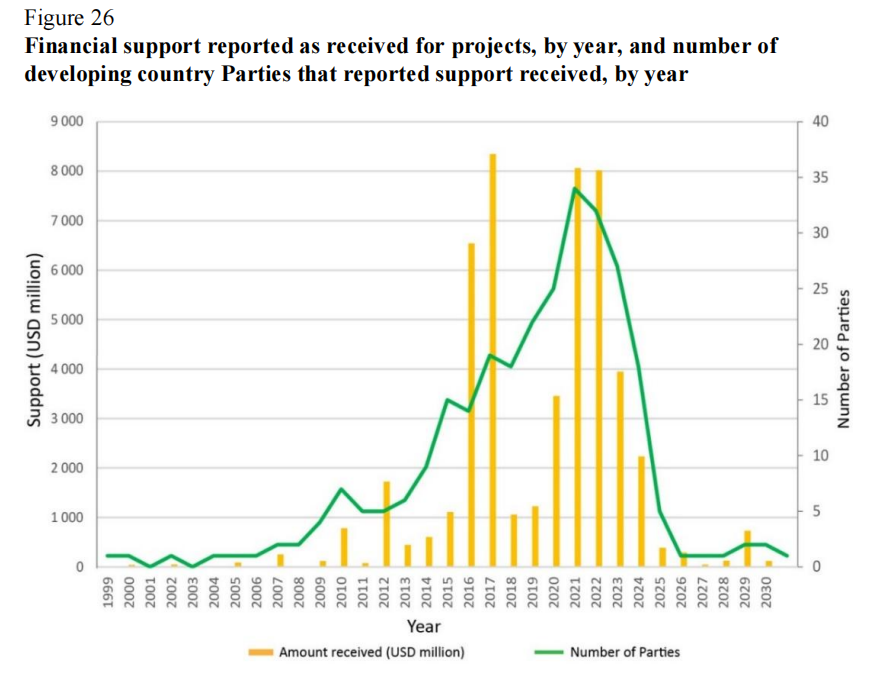
Core Viewpoint - The upcoming COP30 conference is facing significant challenges as key economic players show a lack of commitment to climate action, with only 64 out of 178 parties submitting new Nationally Determined Contributions (NDCs), covering approximately 30% of global emissions from 2019 [2][4]. Group 1: NDC Submissions and Global Commitment - A total of 64 parties have announced or submitted new NDC reports for the period from January 1, 2024, to September 30, 2025, which represents about 30% of the 2019 global emissions [2][4]. - The United States has withdrawn from the Paris Agreement again, raising doubts among developing countries about the reliability of commitments made by developed nations [2][4]. - The European Union is struggling with its NDC3.0 submission, which has not yet materialized, despite previous commitments to submit before COP30 [2][5]. Group 2: China's NDC Submission - China officially submitted its 2035 NDC report on November 3, 2023, aligning its climate action goals with national development objectives [3]. - The NDC serves as a core compliance mechanism under the Paris Agreement, allowing countries to propose climate action targets based on their national circumstances [3]. Group 3: Challenges in Climate Financing - Developing countries face a significant funding gap for climate action, with a total of approximately $3.4 trillion needed for climate actions by 2030, while only $608.4 billion has been secured [12][13]. - The COP30 aims to address the structural bottleneck of "overabundance of funds, shortage of projects," as many climate goals lack sufficient financing projects [7][8]. - The need for private capital and market mechanisms is emphasized, as the target of $1.3 trillion in climate financing highlights the importance of private investment to complement public funding [13][18]. Group 4: Public-Private Collaboration - The success of COP30 hinges on the ability to translate past commitments into concrete actions, with a focus on executing the details of climate agreements [7][14]. - Public-private partnerships (PPP) are highlighted as a viable model for attracting private investment into climate projects, where government provides policy support and infrastructure, while private sectors handle operational aspects [19]. - The Asian Development Bank aims to leverage its climate funding to attract more social capital, emphasizing the need for effective risk management and policy frameworks to encourage private investment [18][19].

净零行动国际合作与政策协调最新进展、问题及建议|国际
清华金融评论· 2025-11-04 08:59
Core Viewpoint - The global net-zero action is at a critical turning point, transitioning from framework construction to substantial implementation. Despite progress in multilateral mechanisms, issues such as funding gaps, technological barriers, geopolitical conflicts, and capacity shortcomings still hinder cooperation effectiveness. Strengthening climate finance, promoting technology sharing, building inclusive international frameworks, and enhancing governance capabilities are essential to ensure global emission reduction targets are met by 2030 and to lay a solid foundation for the 2050 net-zero vision [1][2]. Group 1: Progress in Global Net-Zero Actions - International cooperation on net-zero actions is deepening, with significant advancements in China-Europe and China-UK collaborations. Since 2015, Chinese financial institutions have issued over $12 billion in green and sustainable development bonds through the London Stock Exchange. In 2023, Bank of China issued a $600 million green bond, with funds allocated to green credit projects in the UK, France, and the Netherlands [3]. - Developing countries are enhancing climate cooperation, with China emerging as a major climate finance provider through initiatives like the Belt and Road and South-South cooperation. In 2020, China ranked 11th globally in climate funding, providing approximately $34.3 billion from 2013 to 2021 to support the transition to low-carbon economies [3]. - The Glasgow Financial Alliance for Net Zero (GFANZ) aims to encourage financial institutions to commit to net-zero targets, providing a unified framework and tools for developing scientific transition plans. By the end of 2024, 122 member banks are expected to have voluntarily disclosed their net-zero targets [3]. Group 2: Enhancing Technical Cooperation and Standard Coordination - Efforts are underway to unify carbon market standards and enhance transparency. The World Sustainable Development Standards Organization (WSSO) is working on global energy and carbon neutrality standards, while the G20 Sustainable Finance Working Group suggests establishing a universal carbon credit data model [4]. - The International Sustainability Standards Board (ISSB) has released global benchmarks for climate-related disclosures, gaining recognition from the International Organization of Securities Commissions (IOSCO) and being adopted in various regions [4]. - International cooperation through the World Bank and IMF is aimed at enhancing countries' capacities to address climate change, with multiple climate data platforms established to support scientific research and policy-making [4]. Group 3: Challenges and Issues in Global Net-Zero Actions - A significant funding gap exists, with developed countries' climate finance commitments under the Paris Agreement only being met in 2022, providing $115.9 billion, primarily in loans. The UN Climate Change Conference (COP28) anticipates a funding gap of $5.9 trillion for developing countries by 2030 [5]. - The distribution of climate financing is uneven, with regions like Africa receiving only 2% of global clean energy investments despite representing 20% of the population. This imbalance hampers the ability of developing countries to transition to clean energy [5]. - There is a credibility crisis regarding corporate net-zero commitments, with many lacking clarity and relying on low-quality carbon offset projects. Some fossil fuel companies use "net-zero" claims to mask expansion plans, raising concerns about the integrity of these commitments [5]. Group 4: Shortcomings in Awareness and Capacity Among Relevant Entities - Many net-zero targets are voluntary and lack enforceability, with surveys indicating that 28% of companies have no decarbonization plans for the next year, and 23% lack confidence in achieving 2050 targets [7]. - Local financial institutions often lack awareness and initiative regarding net-zero actions, focusing on profit growth rather than understanding national emission reduction goals [7]. - Policy transmission is obstructed, with banks having a stronger influence on small and medium enterprises, which are not major carbon emitters. This limits the effectiveness of banks in promoting net-zero actions [7].

巴西驻华大使高望:COP30的关键在于从雄心转向落实 TFFF基金是关键一步
Feng Huang Wang Cai Jing· 2025-10-24 07:15
Core Viewpoint - The "Zero Carbon Mission International Climate Summit 2025" aims to gather insights and strategies for addressing climate change, supporting China's carbon neutrality vision and global emission reduction goals [1] Group 1: COP30 Conference - The 30th Conference of the Parties (COP30) to the UN Framework Convention on Climate Change will be held in Belém, Brazil, in November 2025, viewed as a crucial summit for implementation and action following the Paris Agreement [3] - The conference will take place in a tropical forest ecological zone, emphasizing the link between climate stability and forest integrity [3] Group 2: Brazil's Priorities - Brazil has outlined three priorities for COP30: defending multilateralism, making climate issues relevant to people's lives, and promoting the implementation of commitments [4] - Brazil aims to reaffirm confidence in multilateral cooperation under the UNFCCC framework, highlighting the need for ambition, credibility, and transparency [3] Group 3: Climate Financing - Brazil plans to mobilize $1.3 trillion annually for climate financing for developing countries, focusing on practical guidelines rather than negotiation texts [4] - The "Global Forest Fund" (Tropical Forest Forever Facility, TFFF) was proposed to create a permanent mechanism for rewarding countries that protect tropical forests, with a target of raising $25 billion in sponsorship capital and $100 billion in investments [5] Group 4: Economic Incentives - The TFFF aims to reverse the economic logic that favors forest destruction over protection, making preserved forests economically valuable [5] - At least 20% of payments from the TFFF will directly benefit indigenous peoples and local communities, with Brazil committing $1 billion to the fund, marking the largest single contribution from a developing country [5]

巴中企业界携手推动绿色转型与创新合作
Xin Hua She· 2025-10-14 14:21
Core Insights - The 2025 Annual Meeting of the Brazil-China Entrepreneurs Committee was held in São Paulo, Brazil, focusing on deepening cooperation in innovation, clean energy, and climate financing [1] - The theme of the meeting was "Creating Synergy in a Changing World," emphasizing the strategic and long-term partnership between Brazil and China [1] - Since 2009, China has been Brazil's largest trading partner, with investments increasingly directed towards sustainable mining and industrial innovation [1]
香港交易所:9月10日办气候融资论坛促可持续金融
Sou Hu Cai Jing· 2025-09-10 14:25
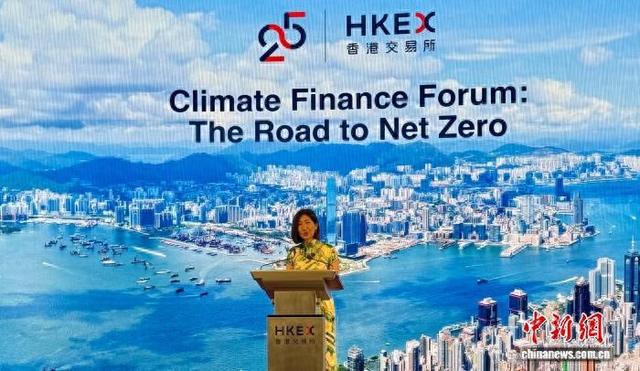
Core Viewpoint - The Hong Kong Stock Exchange emphasizes the importance of climate financing as a crucial solution to address the challenges posed by climate change, advocating for capital allocation to drive innovative technology development and accelerate the achievement of net-zero emissions goals [1] Group 1: Climate Financing Importance - Climate financing is highlighted as a vital approach to tackle the severe challenges of climate change [1] - The allocation of capital can promote the development of innovative technologies [1] - The goal of achieving net-zero emissions can be accelerated through effective climate financing [1] Group 2: Support from Hong Kong Stock Exchange - The Hong Kong Stock Exchange will provide standards, frameworks, and diverse platforms to support the development of sustainable finance [1]

香港交易所举办气候融资论坛 协助企业制定可持续发展策略
Zhong Guo Xin Wen Wang· 2025-09-10 08:17
Group 1 - The Hong Kong Stock Exchange (HKEX) hosted a climate financing forum themed "Towards a Net Zero Path," highlighting the importance of climate financing in capital allocation and accelerating the transition to net zero [1][3] - HKEX CEO Charles Li emphasized that climate financing is a crucial solution to the challenges posed by climate change, aiding in the development of innovative technologies and achieving net zero emissions [3] - The Hong Kong government is committed to enhancing its position as an international green finance hub through policy guidance, market innovation, and ecosystem building to address climate challenges [3] Group 2 - HKEX's Chief Sustainability Officer, Dr. Zhou Guanying, stated that the exchange aims to lead regional green transformation by directing funds towards impactful climate solutions [3] - The release of the "Carbon Credit: Buyer’s Guide" aims to provide more information on carbon credits, offering case studies to assist companies and investors in making sustainable development strategy decisions [3] - Mary Schapiro, Vice Chair of the Glasgow Financial Alliance for Net Zero (GFANZ), highlighted the significant potential for global carbon market development, emphasizing the need for local services to support corporate decarbonization while fostering global cooperation for sustainable development [3]
欧明刚:世界银行改革及前景|国际
清华金融评论· 2025-07-28 11:00
Core Viewpoint - The World Bank, as a multilateral development bank, is undergoing significant reforms to adapt to global challenges such as public health crises, geopolitical conflicts, climate issues, and food security, while facing potential disruptions from the return of unilateralism under the Trump administration [1][4]. Group 1: Structure and Evolution of the World Bank - The World Bank has evolved from a single institution to a multilateral development group, including IBRD, IDA, IFC, MIGA, and ICSID, and has undergone multiple reforms over the past 80 years [2]. - The leadership of the World Bank is influenced by the U.S. due to its veto power, with major reforms often initiated or approved by the U.S. government [2]. Group 2: Key Reforms and Initiatives - The World Bank's vision and mission have been expanded to address global challenges, changing its vision from "a world free of poverty" to "creating a world free of poverty on a livable planet" [5]. - The World Bank plans to increase its financing capacity by $100 billion through a reduction in its capital adequacy ratio from 20% to 19%, allowing for an annual release of $4 billion for climate-related projects [6]. - The World Bank aims to mobilize private capital and domestic resources to support sustainable development goals, with potential financing capacity increases of up to $50 billion over the next decade [7]. - A historic agreement for capital increase was reached in 2018, allowing for an increase of $75 billion in paid-in capital for IBRD, enhancing its total lending capacity by approximately $100 billion [8][10]. Group 3: Operational Changes - The World Bank is focusing on improving loan operational efficiency and enhancing coordination within its group to achieve synergies [10]. - A new framework for joint financing with the Asian Development Bank aims to streamline project processes and provide quicker results for borrowers [11]. - The World Bank has implemented a scoring method for international procurement to assess quality and sustainability, promoting environmentally and socially responsible practices [11]. Group 4: Impact of U.S. Political Changes - The return of Trump to the White House may hinder the progress of World Bank reforms, as his administration favors a reduction in funding and a focus on core functions of poverty alleviation and economic growth [12][13]. - The Trump administration's approach contrasts with the Biden administration's willingness to increase funding for the World Bank, raising concerns about the future direction of the institution [12][13].

对话世卫官员:气候变化加剧病媒疾病扩散,但全球应对资金不足
第一财经· 2025-07-26 02:32
Core Viewpoint - Climate change is rapidly reshaping disease patterns in the Western Pacific region, exacerbating the spread of vector-borne diseases and worsening non-communicable diseases due to high temperatures and air pollution [1][2]. Group 1: Climate Change and Health Risks - The WHO estimates that climate change will lead to an additional 250,000 deaths globally each year between 2030 and 2050 [1]. - The Western Pacific region, despite its minimal contribution to global emissions, faces significant public health risks due to urbanization, aging populations, and frequent extreme weather events [1][2]. - The spread of the chikungunya virus has been reported in 119 countries, with approximately 5.5 million people at risk of infection [1][2]. Group 2: Vector-Borne Diseases - The rise in chikungunya cases in non-tropical regions is attributed to climate change, environmental factors, urbanization, and population movement [2]. - Other vector-borne diseases of concern include dengue fever and malaria, which have previously seen little outbreak activity in non-tropical countries [2]. - Existing vaccines for these diseases are unevenly supplied and often lack sufficient protective efficacy, with the chikungunya vaccines currently unavailable in China [2][3]. Group 3: Monitoring and Response Systems - There is a need to improve multi-sectoral monitoring networks and early warning systems for zoonotic diseases [3]. - Reliable data from various sources is crucial for accurate disease prediction and public health response [3]. - The integration of AI and other technologies presents opportunities for enhancing climate and health monitoring systems [3]. Group 4: China's Progress and Global Implications - China has made strides in disease monitoring, including the upcoming implementation of a new Infectious Disease Prevention Law [4]. - The country has developed extreme weather warning systems and invested in green health infrastructure, providing a model for other nations [4]. - The WHO emphasizes the need for governments to prioritize health issues in climate financing, as health-related interventions currently receive less than 1% of climate funding [5][6]. Group 5: Future Directions - Future climate financing should focus on four health areas: strengthening primary health care in severely affected regions, developing integrated health and climate data monitoring systems, enhancing health workforce capacity, and accelerating clean energy transitions [6].

对话世卫官员:气候变化加剧病媒疾病扩散,但全球应对资金不足
Di Yi Cai Jing· 2025-07-26 00:53
Core Viewpoint - Climate change is expected to lead to an additional 250,000 deaths globally each year from 2030 to 2050, significantly impacting public health systems, particularly in the Western Pacific region, which includes countries like China [1][2] Group 1: Health Risks and Disease Patterns - Climate change is rapidly reshaping disease patterns in the Western Pacific, exacerbating vector-borne diseases and increasing the severity of non-communicable diseases due to high temperatures and air pollution [1] - The chikungunya virus, which has spread to 119 countries, poses a risk to approximately 5.5 million people, with symptoms including high fever and severe joint pain, potentially leading to long-term disabilities [1][2] - Other vector-borne diseases of concern include dengue fever and malaria, which have seen increased cases in non-tropical regions due to climate change, urbanization, and population movement [2] Group 2: Vaccine and Treatment Challenges - Current vaccines for chikungunya and malaria are limited in availability and effectiveness, with existing vaccines showing insufficient protection and requiring booster shots [2] - There are two chikungunya vaccines available globally, but neither is currently supplied in China, highlighting a gap in vaccine accessibility [2] Group 3: Monitoring and Response Systems - There is a need for improved multi-sectoral monitoring networks and early warning systems for zoonotic diseases, emphasizing the importance of data integration from various sources [3] - The integration of AI and data visualization technologies presents opportunities for enhancing disease prediction and response capabilities [3] Group 4: China's Progress and Global Implications - China has made strides in disease monitoring and has implemented a new Infectious Disease Prevention Law to enhance surveillance and reporting systems [4][5] - The National Climate Change Health Adaptation Action Plan (2024-2030) aims to foster interdepartmental collaboration to address health impacts of climate change, serving as a model for other countries [5] Group 5: Funding and Policy Recommendations - Health issues remain a low priority in global climate financing, with less than 1% of funds allocated for health-related interventions despite increasing evidence of climate impacts on health [6] - Future climate financing should prioritize health initiatives, including strengthening primary healthcare in climate-affected areas, developing integrated health and climate monitoring systems, and enhancing healthcare infrastructure resilience [6]
巴西总统卢拉:巴西正在提供多种气候融资的替代模式。
news flash· 2025-07-07 13:01
Core Viewpoint - Brazil is providing various alternative models for climate financing [1] Group 1 - The Brazilian government, under President Lula, is actively exploring and implementing diverse approaches to climate financing [1]