神经网络

Search documents
AI 教父辛顿最新对话:超级智能诞生之后,我们唯一的生路是当“婴儿”
AI科技大本营· 2025-08-28 08:29
Core Viewpoint - The article discusses the ongoing advancements in artificial intelligence (AI) and the potential risks associated with it, as articulated by Dr. Geoffrey Hinton, a prominent figure in AI research. Hinton expresses concerns about the possibility of AI surpassing human intelligence within the next 5 to 20 years and the implications of such a development for humanity [1][5][6]. Group 1: AI Development and Risks - Hinton warns that the AI being developed by major tech companies could potentially lead to the destruction of humanity [3]. - He emphasizes that the risk of AI becoming uncontrollable is a long-term concern, contrasting it with more immediate risks like misuse by malicious actors [4][14]. - There is a consensus among experts that AI will likely become significantly smarter than humans in the near future, which raises concerns about control and governance [5][6]. Group 2: Regulatory Challenges - Hinton believes that while regulation can help mitigate risks, it is often slow to keep pace with the rapid development of AI technologies [15]. - He suggests that international cooperation is essential to prevent AI from becoming uncontrollable, similar to the global efforts to prevent nuclear war during the Cold War [16][18]. - The article discusses the limitations of current regulations, particularly in Europe, where military applications of AI are often excluded from oversight [19][20]. Group 3: Economic Impact and Employment - Hinton warns that AI could lead to widespread job losses across various sectors, exacerbating wealth inequality [22]. - He identifies low-skill jobs, such as call center positions, as particularly vulnerable to automation, while suggesting that jobs requiring human dexterity may remain safe for a longer period [22][23]. - The discussion includes the potential for AI to outperform humans in roles requiring emotional intelligence, such as healthcare [23][24]. Group 4: Future Perspectives on AI - Hinton expresses a cautious optimism about the potential for AI to coexist with humanity, proposing that AI could be designed with a "motherly instinct" to care for humans [27][28]. - He argues that the perspective of humans as the dominant species may need to shift, envisioning a future where AI acts in the best interest of humanity [28][29]. - The article concludes with Hinton's belief that while AI poses significant challenges, there is hope for a collaborative future where AI supports human endeavors [27][29].


谷歌大脑之父首次坦白,茶水间闲聊引爆万亿帝国,AI自我突破触及门槛
3 6 Ke· 2025-08-25 03:35
Core Insights - Jeff Dean, a key figure in AI and the founder of Google Brain, shared his journey and insights on the evolution of neural networks and AI in a recent podcast interview [1][2][3] Group 1: Early Life and Career - Jeff Dean had an unusual childhood, moving frequently and attending 11 schools in 12 years, which shaped his adaptability [7] - His early interest in computers was sparked by a DIY computer kit purchased by his father, leading him to self-learn programming [9][11][13] - Dean's first significant encounter with AI was during his undergraduate studies, where he learned about neural networks and their suitability for parallel computing [15][17] Group 2: Contributions to AI - Dean proposed the concepts of "data parallelism/model parallelism" in the 1990s, laying groundwork for future developments [8] - The inception of Google Brain was a result of a casual conversation with Andrew Ng in a Google break room, highlighting the collaborative nature of innovation [22][25] - Google Brain's early achievements included training large neural networks using distributed systems, which involved 2,000 computers and 16,000 cores [26] Group 3: Breakthroughs in Neural Networks - The "average cat" image created by Google Brain marked a significant milestone, showcasing the capabilities of unsupervised learning [30] - Google Brain achieved a 60% relative error rate reduction on the Imagenet dataset and a 30% error rate reduction in speech systems, demonstrating the effectiveness of their models [30] - The development of attention mechanisms and models like word2vec and sequence-to-sequence significantly advanced natural language processing [32][34][40] Group 4: Future of AI - Dean emphasized the importance of explainability in AI, suggesting that future models could directly answer questions about their decisions [43][44] - He noted that while LLMs (Large Language Models) have surpassed average human performance in many tasks, there are still areas where they have not reached expert levels [47] - Dean's future plans involve creating more powerful and cost-effective models to serve billions, indicating ongoing innovation in AI technology [50]


应对万物互联趋势加剧和数据需求激增 “曲线球”系统可绕障传输超高频信号
Ke Ji Ri Bao· 2025-08-20 00:34
Core Viewpoint - Princeton University's research team has developed an innovative "curved wave" system capable of transmitting ultra-high frequency signals rapidly and stably, addressing the challenges posed by the increasing demand for data and the Internet of Things [1][2]. Group 1: Technology and Innovation - The new system utilizes a neural network to dynamically shape the transmission path of wireless signals, allowing them to bypass obstacles and maintain stable, high-speed communication [1]. - The technology focuses on the sub-terahertz frequency band, which has the potential to transmit ten times the data volume of current wireless systems, making it crucial for high-bandwidth applications such as virtual reality and fully autonomous vehicles [1]. - Traditional methods rely on external reflectors to navigate around obstacles, which are often unreliable or difficult to deploy in real-world scenarios [2]. Group 2: Methodology - The research team employs a special radio wave technology known as "Airy beams," which can propagate along curved trajectories rather than in straight lines, enabling effective transmission in non-line-of-sight conditions [2]. - A neural network is introduced to select and optimize the best curved path in real-time, similar to how professional basketball players make shooting decisions based on experience rather than complex calculations [2]. - A high-fidelity simulator was developed to allow the neural network to learn efficiently in a virtual environment, adapting to various obstacle layouts and dynamic changes [2]. Group 3: Future Implications - This work addresses a long-standing challenge in high-frequency wireless communication within dynamic environments, paving the way for future transmitters to intelligently navigate complex settings [2]. - The advancements in this technology are expected to support ultra-fast and highly reliable wireless connections for applications that are currently difficult to realize, such as immersive virtual reality and fully autonomous transportation [2].
实测Perplexity Pro平替模型,免费开源仅4B
量子位· 2025-08-15 04:21
Core Viewpoint - Jan-v1, an open-source model with a size of only 4 billion parameters, claims to be a free alternative to Perplexity Pro, boasting a SimpleQA accuracy rate of 91% and superior performance in local environments [1][3][33]. Group 1: Model Features and Performance - Jan-v1 is based on Qwen3-4B-Thinking and has been fine-tuned for reasoning and tool usage, making it suitable for web search and deep research [5][12]. - The model achieves a SimpleQA accuracy of 91.1%, demonstrating strong factual question-answering capabilities [9]. - Jan-v1 performs well in dialogue and instruction tasks, showcasing its versatility [10]. - The model supports a context length of up to 256k, allowing for effective long-text analysis [21][25]. Group 2: Comparison with Perplexity Pro - A comparative evaluation of Jan-v1 and Perplexity Pro was conducted using complex queries, revealing that Jan-v1 can dynamically integrate web search results to generate traceable answers, similar to Perplexity Pro [15][18]. - In a test involving summarizing a research paper, Jan-v1's performance was closer to Qwen-4B, indicating its advanced reasoning capabilities [25]. Group 3: User Experience and Accessibility - Jan-v1 can be run on platforms like Jan, llama.cpp, or vLLM, and is available for local deployment, with a straightforward installation process taking only about two minutes [8][29][32]. - The model is available in four variants, with the largest being 4GB and the smallest at 2.3GB, making it accessible for various users [30]. Group 4: Community Feedback and Future Potential - Overall, the online reception of Jan-v1 has been positive, particularly due to its free nature and high accuracy rate [33]. - Some users have expressed interest in a more comprehensive technical report to better understand the model's capabilities [34].

白大褂遇上漫画笔
Ren Min Ri Bao· 2025-08-07 22:40
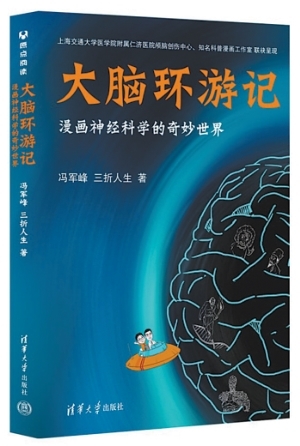
Core Insights - The book "A Journey Through the Brain: The Wonderful World of Comic Neuroscience" is a collaboration between a doctor and a comic artist, aimed at making neuroscience accessible and engaging for readers, particularly children [2][3] - The creation of the book was motivated by the communication challenges faced by neurosurgeons in explaining complex medical information to patients and their families, highlighting the need for effective educational tools [2] - The book features 11 thematic "stations" that cover various aspects of neuroscience, including clinical insights from a neurosurgeon's perspective, and discusses cutting-edge topics such as brain-computer interfaces and deep brain stimulation [3] Content Summary - The narrative follows a doctor and his son as they explore the brain, using imaginative transportation methods to make learning about neuroscience fun and engaging [3] - Chinese mythology is woven into the storytelling, with characters like Nuwa and Sun Wukong serving as guides, reflecting the cultural connection between medicine and the human experience [3] - The initial goals of the project have been achieved, including raising awareness about neurosurgical diseases, inspiring scientific curiosity in children, and providing a new approach to science communication [4]
AI教父Hinton,重新能坐下了
Hu Xiu· 2025-08-03 04:53
Group 1 - Geoffrey Hinton, the AI pioneer, recently sat down comfortably in Shanghai, marking a significant moment in his life after nearly 18 years of discomfort that prevented him from sitting for extended periods [1][6][30] - Hinton's journey in AI began in 1972 when he chose to pursue neural networks, a path that was largely dismissed by his peers at the time [12][20] - His persistence in the field led to breakthroughs in deep learning, particularly during the ImageNet competition in 2012, where his team achieved a remarkable error rate of 15.3% [30][31][32] Group 2 - Hinton's contributions to AI were recognized with the Turing Award in 2019, which he received while standing, reflecting his long-standing discomfort with sitting [59][63] - Following his resignation from Google in May 2023, Hinton expressed concerns about the risks associated with AI, stating that he regretted his role in its development [67][68] - In recent interviews, Hinton has been able to sit for longer periods, indicating a potential improvement in his health, and he has been vocal about the dangers of AI, suggesting a 10%-20% chance of human extinction due to AI in the next 30 years [70][76]


为什么Thor芯片要保留GPU,又有NPU?
理想TOP2· 2025-08-02 14:46
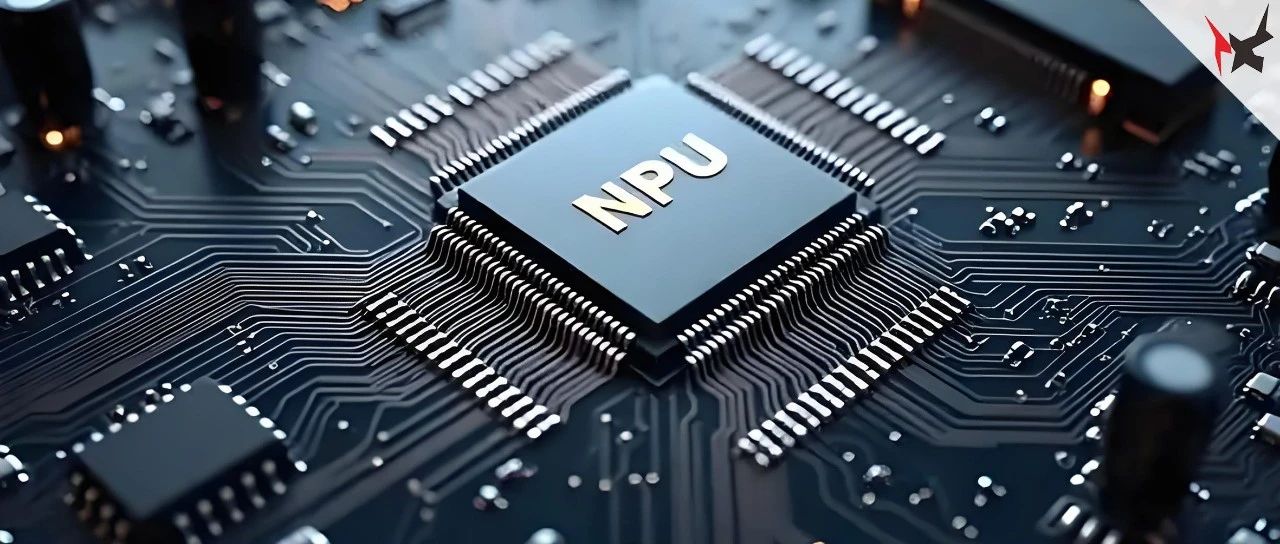
Core Viewpoint - Pure GPU can achieve basic functions for low-level autonomous driving but has significant shortcomings in processing speed and energy consumption, making it unsuitable for higher-level autonomous driving needs [4][40]. Group 1: GPU Limitations - Pure GPU can handle certain parallel computing tasks required for autonomous driving, such as sensor data fusion and image recognition, but is primarily designed for graphics rendering, leading to limitations [4][6]. - Early autonomous driving tests using pure GPU solutions, like the NVIDIA GTX 1080, showed a detection delay of approximately 80 milliseconds, which poses safety risks at high speeds [5]. - The data processing capacity for L4 autonomous vehicles generates about 5-10GB of data per second, requiring multiple GPUs to work together, which increases power consumption significantly [6][9]. Group 2: NPU and TPU Advantages - NPU is specifically designed for neural network computations, featuring a large number of MAC (Multiply-Accumulate) units, which optimize matrix multiplication and accumulation operations [10][19]. - TPU, developed by Google, utilizes a pulsed array architecture that enhances data reuse and reduces external memory access, achieving higher efficiency in large matrix operations compared to GPU [12][19]. - NPU and TPU architectures are more efficient for neural network inference, with NPU showing a significant reduction in energy consumption compared to GPU [36][40]. Group 3: Cost and Efficiency Comparison - In terms of energy efficiency, NPU's performance is 2.5 to 5 times better than that of GPU, with lower power consumption for equivalent AI computing power [36][40]. - The cost of NPU solutions is significantly lower than pure GPU solutions, with NPU hardware costs being only 12.5% to 40% of those for pure GPU setups [37][40]. - For example, achieving 144 TOPS of AI computing power with a pure GPU solution requires multiple GPUs, leading to a total cost of around $4000, while a solution with NPU can cost about $500 [37][40]. Group 4: Hybrid Solutions - NVIDIA's Thor chip integrates both GPU and NPU to leverage their strengths, allowing for efficient task division and compatibility with existing software, thus reducing development time and costs [33][40]. - The collaboration between GPU and NPU in autonomous driving systems enhances overall efficiency by avoiding frequent data transfers between different chips, resulting in a 40% efficiency improvement [33][40]. - The future trend in autonomous driving technology is expected to favor hybrid solutions that combine NPU and GPU capabilities to meet the demands of high-level autonomous driving while maintaining cost-effectiveness [40].


自动驾驶为什么需要NPU?GPU不够吗?
自动驾驶之心· 2025-07-26 13:30
Core Viewpoint - Pure GPU can achieve basic functions of low-level autonomous driving but has significant shortcomings in processing speed, energy consumption, and efficiency, making it unsuitable for meeting the requirements of high-level autonomous driving [39][41]. Group 1: GPU Limitations - Pure GPU can handle certain parallel computing tasks required for autonomous driving, such as sensor data fusion and image recognition, but it was originally designed for graphics rendering, leading to limitations in performance [5][10]. - Early tests with pure GPU solutions showed significant latency issues, such as an 80 ms delay in target detection while driving at 60 km/h, which poses safety risks [5][6]. - The data processing capacity of L4 autonomous vehicles generates approximately 5-10GB of data per second, requiring multiple GPUs to work together, which increases power consumption and reduces vehicle range by about 30% [6][7]. Group 2: NPU and TPU Advantages - NPU is specifically designed for neural network computations, featuring a large number of MAC (Multiply-Accumulate) units that optimize matrix multiplication and accumulation operations, significantly improving efficiency compared to GPU [12][15]. - TPU, developed by Google, utilizes a pulsed array architecture that enhances data reuse and reduces external memory access, achieving a data reuse rate three times higher than that of GPU [14][19]. - In terms of energy efficiency, NPU can achieve an energy efficiency ratio that is 2.5 to 5 times better than GPU, with lower power consumption for the same AI computing power [34][41]. Group 3: Cost and Performance Comparison - The cost of high-end GPUs can be significantly higher than that of NPUs; for instance, the NVIDIA Jetson AGX Xavier costs around $800 per unit, while the Huawei Ascend 310B is approximately $300 [35][36]. - To achieve similar AI computing power, a pure GPU solution may require multiple units, leading to a total cost that is 12.5% of that of a Tesla FSD chip that includes NPU [35][36]. - In practical scenarios, a pure GPU solution consumes significantly more energy compared to a mixed NPU+GPU solution, resulting in a reduction of vehicle range by approximately 53 km per 100 km driven [34][41]. Group 4: Future Trends - The future of autonomous driving technology is likely to favor a hybrid approach that combines NPU and GPU, leveraging the strengths of both to enhance processing efficiency while maintaining software compatibility and reducing costs [40][41].
从人文视角为青少年解读AI
Ren Min Ri Bao Hai Wai Ban· 2025-07-10 02:22
Core Viewpoint - The development of artificial intelligence (AI) is accelerating and integrating into various aspects of life, with the "Artificial Intelligence Trilogy" by Tu Zi Pei providing insightful and warm explanations for discussing complex technological concepts with the next generation [2][3]. Group 1: Book Overview - The trilogy consists of three books: "Explaining Artificial Intelligence to Kids," "Explaining Big Data to Kids," and "Explaining Large Models to Kids," aimed at helping young readers understand the history and foundational knowledge of AI, big data, and large models [2]. - The author uses engaging stories to make abstract concepts relatable, highlighting the contributions of scientists in the field of AI [2]. Group 2: Educational Approach - The author established a clear direction for the writing, focusing on using humorous language, vivid stories, and relatable scenarios to build a macro understanding of AI among youth [3]. - The trilogy balances scientific rigor, entertainment, and cultural insights, emphasizing that technology should be understood and examined rather than blindly worshipped [3]. Group 3: Future Implications - As deep learning technology evolves, future AI will synthesize vast amounts of new data, expanding its cognitive boundaries, making the ability to effectively use AI tools an essential skill [4]. - The trilogy aims to plant seeds of knowledge and critical thinking in young readers, preparing them to become future designers, managers, or critics of large models [4].
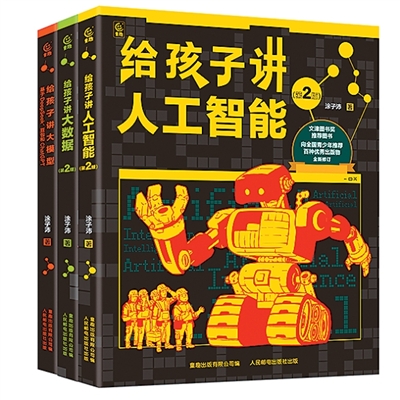
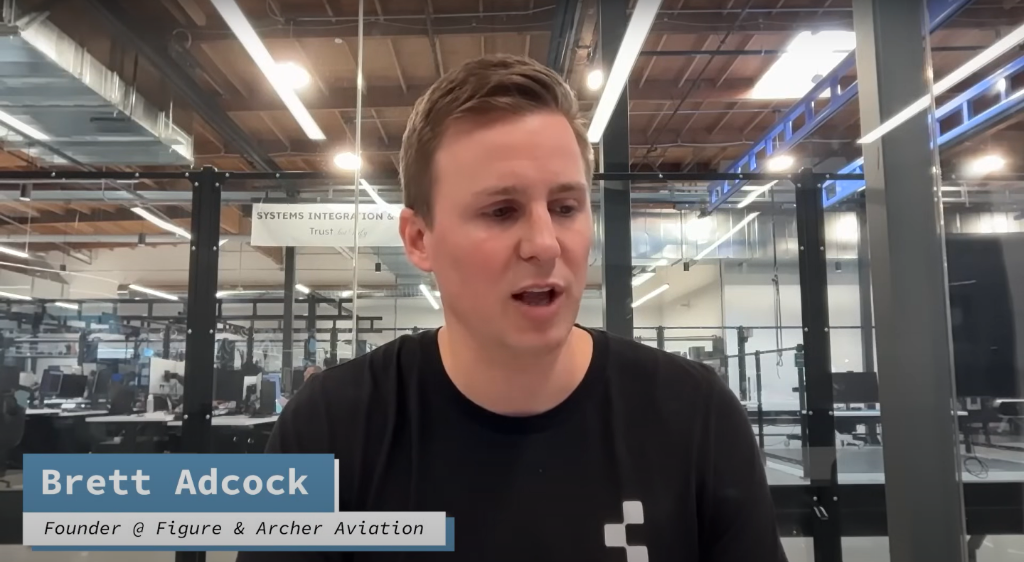
Figure CEO:人形机器人是AGI的关键物理形态,已进入工程化验证期,将在四年内部署10万台
Hua Er Jie Jian Wen· 2025-07-07 10:14
Core Insights - The exponential growth in robotics is driven by two breakthroughs: unprecedented hardware reliability and the superior performance of neural networks in robotic technology [1][9][10] - The company aims to create a general-purpose robotic platform that learns rather than being pre-programmed, with prototypes already capable of executing tasks autonomously in logistics, manufacturing, and healthcare [1][21] - The cost of the latest robot design has been reduced by approximately 90%, with plans for mass deployment of humanoid robots capable of producing 100,000 units annually within four years, ultimately targeting the delivery of hundreds of millions of robots globally [1][43] Robotics Technology Growth - The current environment indicates that humanoid robots will become the ultimate deployment vehicle for artificial general intelligence (AGI) [5][15] - The company has designed humanoid robots from scratch within a year, emphasizing the importance of addressing the humanoid robotics challenge directly [5][12] - The reliability of hardware has significantly improved compared to ten years ago, with the current systems being as reliable as those used in aerospace applications [8][9] Market Focus and Applications - The company is focusing on two main areas: delivery robots for home environments and robots for labor markets in logistics, manufacturing, healthcare, and construction [21][22] - The labor market represents a significant opportunity, accounting for half of the GDP, and is less variable than home environments, making it easier to integrate autonomous systems [21][22] - The company is actively working to develop a universal robot that can perform most tasks that humans can do, given sufficient mobility, load capacity, and speed [21][22] Future Directions and Challenges - The next major goal is to launch 100,000 robots in the next four years, with a new manufacturing facility capable of achieving this output [43] - The company is currently in a learning bottleneck phase, needing to scale up production while ensuring reliability and effective human-robot interaction [26][42] - The integration of robots into everyday life is expected to evolve, with humanoid robots performing various tasks, potentially leading to a future where work becomes optional for humans [48][49] Privacy and Security Considerations - The company is prioritizing privacy and cybersecurity, establishing a dedicated team to address these issues as robots become more integrated into homes and workplaces [35][36] - Ensuring that robots operate safely and securely in domestic environments is a critical challenge, requiring advanced detection and operational protocols [32][36] Conclusion - The company envisions a future where humanoid robots significantly contribute to GDP and perform tasks traditionally done by humans, allowing people to focus on activities they enjoy [48][49]