
电动垂直起降飞行器(eVTOL)

Search documents
东莞产业研究之低空经济产业报告:政策促进落地生花
Dongguan Securities· 2026-03-31 11:29
Investment Rating - The report indicates a positive investment outlook for the low-altitude economy industry, highlighting its potential for significant growth driven by policy support and technological advancements [4]. Core Insights - The low-altitude economy in China is projected to expand rapidly, with market size estimates reaching approximately 670.25 billion yuan in 2024, a year-on-year growth of 32.5%, and expected to reach 1.5 trillion yuan by 2025, representing a 123.8% increase [4][18]. - The central government has been actively promoting the low-altitude economy through a series of policies and regulations, establishing a comprehensive regulatory framework and recognizing it as a strategic emerging industry [4][22]. - Local governments are also implementing supportive policies, with 31 provinces incorporating low-altitude economy initiatives into their development plans, focusing on various aspects such as infrastructure, application scenarios, and technological innovation [4][24]. Summary by Sections 1. Low-Altitude Economy Development Prospects - The low-altitude economy is defined as a new economic form driven by low-altitude flight activities, encompassing various industries and characterized by a long industrial chain and strong growth potential [11][14]. - The industry is segmented into four main categories: low-altitude manufacturing, low-altitude operations, low-altitude infrastructure and information services, and supporting industries [14][16]. - The market is expected to grow significantly, with forecasts indicating a market size of 3.5 trillion yuan by 2035 [18]. 2. Dongguan's Low-Altitude Economy Implementation - Dongguan aims to become a model for high-quality development in the low-altitude economy, leveraging its manufacturing strengths and establishing multiple industrial clusters [4][32]. - The city has introduced comprehensive policies to support the low-altitude economy, focusing on infrastructure, application scenarios, and industry collaboration [32][33]. 3. Creating Low-Altitude Economy Industrial Cluster Effects - Dongguan is prioritizing the development of the low-altitude economy as part of its strategic emerging industries, with a focus on technologies such as drones and eVTOL aircraft [39]. - The city is actively promoting the establishment of industrial clusters and bases to enhance the low-altitude economy's growth and integration with other sectors [39].
亿航智能:付量提升推动收入多元化;电动垂直起降飞行器(eVTOL)应用场景拓展;买入评级
2026-03-09 05:18
EHang (EH) Conference Call Summary Company Overview - **Company**: EHang - **Industry**: eVTOL (Electric Vertical Takeoff and Landing) Aircraft Key Points 1. eVTOL Deployment in Scenic Areas - EHang is focusing on deploying eVTOLs in scenic areas as the earliest application - The company supports clients' deployment through expertise in eVTOL regulations and by dispatching professional operators to customer sites - Management believes eVTOLs have advantages over helicopters, including autonomous flying, lower noise, and more eco-friendly propulsion systems [2][4] 2. Diversified Application Scenarios - Long-term target applications for eVTOLs include airport shuttles and air taxis, which aim to connect airports and hotels, alleviating traffic congestion - eVTOLs can also be utilized in logistics and emergency services to enhance overall efficiency - EHang plans to collaborate closely with local governments and clients to promote the commercialization of eVTOLs across various application scenarios [3][4] 3. Revenue Source Diversification - EHang is focusing on commercial operations of eVTOLs in both China and international markets - As eVTOL shipments increase, the company expects to diversify its revenue sources, including air mobility operations, eVTOL management systems, and after-sales services [4][8] 4. Financial Projections and Valuation - EHang is rated as a "Buy" with a 12-month target price of **US$22.80**, indicating an upside potential of **101.1%** from the current price of **US$11.34** - Revenue projections for the next few years are as follows: - 2026: **RMB 456.2 million** - 2027: **RMB 482.6 million** - 2028: **RMB 972.1 million** - 2029: **RMB 1,516.9 million** - EBITDA is projected to improve from a loss of **RMB 270.3 million** in 2026 to a profit of **RMB 323.0 million** by 2029 [10][8] 5. Key Risks - Potential risks include: - Slower-than-expected regulatory progress regarding airworthiness of AAVs in China - Weaker customer adoption of passenger-grade AAVs and aerial transportation - Delays in fulfilling AAV pre-orders - Slower expansion of sightseeing and operational services - Increased competition in the AAV market, which could negatively impact earnings estimates [9][4] 6. Management's Positive Outlook - EHang's management is optimistic about the company's focus on eVTOL commercialization and its strong design and manufacturing capabilities - The company is well-positioned to expand into air mobility operations and related services as the market for eVTOLs grows [1][4] Conclusion EHang is strategically positioning itself in the eVTOL market with a focus on diverse applications and revenue sources. The company's positive outlook, combined with its innovative capabilities, presents a compelling investment opportunity, albeit with certain regulatory and market risks to consider.

读懂经济大省新春第一会里的“政绩观”
Jing Ji Guan Cha Wang· 2026-02-26 00:59
Core Viewpoint - The New Year meetings of major economic provinces emphasize the establishment and practice of a correct performance outlook, focusing on manufacturing and private enterprises as key themes for economic growth in 2026 [1][2][4]. Group 1: Performance Outlook - Economic provinces are shifting from a singular focus on GDP growth to a balanced approach that includes growth quality, livelihood, innovation, and ecological sustainability [2][6]. - The Central Economic Work Conference in December 2025 highlighted the need for a pragmatic goal orientation to address existing challenges and enhance the quality of economic growth [1][2]. - The emphasis on a correct performance outlook aims to overcome current demand deficiencies and promote comprehensive economic recovery [1][2][4]. Group 2: GDP Growth Targets - Six major economic provinces have lowered their GDP growth targets for 2026 compared to 2025, indicating a more flexible approach to growth expectations [6]. - The adjustments in growth targets reflect a shift towards prioritizing structural adjustments, innovation, and debt resolution over mere numerical targets [6][7]. - The new performance evaluation mechanisms will focus on multiple dimensions, including green development and social welfare, rather than solely on GDP growth [7]. Group 3: Manufacturing Sector - The meetings highlighted the importance of maintaining a reasonable proportion of the manufacturing sector, with a focus on upgrading traditional industries and fostering new emerging industries [9][10]. - Hubei province aims to enhance its advanced manufacturing industry clusters and promote the integration of modern services with manufacturing [8][9]. - The manufacturing sector is seen as a critical component of China's growth model, with ongoing efforts to improve its competitiveness and contribution to the global supply chain [8][10]. Group 4: Private Enterprises - Private enterprises are increasingly recognized as vital to economic development, with several provinces emphasizing their role in driving growth and innovation [11]. - In Fujian, the government has engaged with private entrepreneurs to discuss their contributions and future prospects, highlighting the importance of a supportive policy environment [11]. - Hunan province has shifted its focus from attracting investment to promoting the growth of the private economy, indicating a long-term strategic commitment to this sector [11].
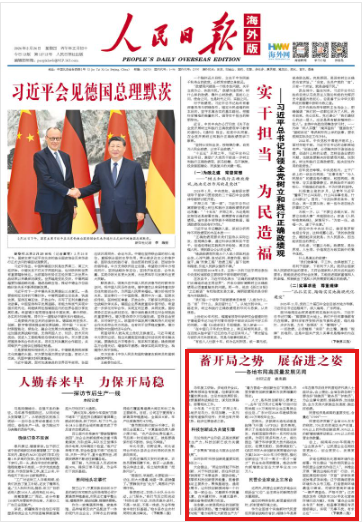
蓄开局之势 展奋进之姿
Ren Min Ri Bao Hai Wai Ban· 2026-02-25 23:09
Group 1 - The core theme of the articles is the emphasis on high-quality development across various regions in China, with local governments focusing on their unique development stages, resource endowments, and strategic positioning to plan their growth paths and deploy relevant work [1] - Technological innovation is highlighted as a key engine for both upgrading traditional industries and developing new productive forces, with Guangdong focusing on the synergy between manufacturing and service industries [2] - In Hubei, the introduction of electric vertical takeoff and landing aircraft (eVTOL) showcases local advancements in the low-altitude economy, with initiatives to attract more scientific talent through enhanced decision-making and resource allocation powers for scientists [3] Group 2 - The presence of private entrepreneurs in prominent positions at meetings reflects a shift in the business environment, with Fujian emphasizing support for private enterprises through various initiatives [4][5] - The private economy is a significant pillar in Hunan, contributing approximately 50% of tax revenue, 70% of regional GDP, and over 90% of technological innovation outcomes, with plans for 2026 to be designated as "Enterprise Service Year" [6] - Multiple regions are implementing measures to optimize the business environment, such as Hebei's commitment to treating private enterprises as integral partners and Jiangsu's introduction of a dedicated service officer system for key enterprises [6] Group 3 - The articles emphasize the importance of establishing and practicing a correct performance outlook, with local governments aligning their development plans with national strategic goals [7] - There is a focus on enhancing the capabilities of officials, with regions like Shandong and Guangxi stressing the need for accountability and practical action from government personnel [8] - The collective efforts of various regions are expected to contribute significantly to China's high-quality development, symbolizing a unified drive towards progress [8]

eVTOL领域,最新一笔Pre-A+++轮融资完成
Sou Hu Cai Jing· 2026-02-25 01:53
Group 1 - Skyla's parent company, Blue Vector, successfully completed a Pre-A+++ round of financing totaling several tens of millions of yuan, led by Honghui Fund, with continued investment from existing shareholder Houxue Capital [1] - This Pre-A+++ round marks the third financing round completed by the company in the past six months, indicating strong recognition from VC/PE institutions regarding Skyla's technical strength, engineering execution, and commercialization prospects [1] - Prior to this, Blue Vector completed multiple rounds of Pre-A financing, with the most recent being a Pre-A+ round in late October 2025 and a Pre-A++ round in late January 2026, both led by Houxue Capital [1] Group 2 - Skyla adheres to the SIENS aircraft design philosophy, focusing on key eVTOL technologies and aiming to innovate in low-altitude economic manned aviation equipment [2] - The company is concentrating on critical technology areas such as tilt-rotor systems, software-defined aircraft system architecture, core flight control systems, battery management systems, and structural design [2] - Recently, the team successfully completed the full-modal transition flight of the SKYLA V30 scale verification aircraft, demonstrating stable and controllable performance throughout the flight phases, which supports the engineering foundation for airworthiness certification [2] - With the acceleration of national low-altitude airspace reforms, eVTOL is entering a critical commercialization window, prompting Skyla to advance the development of the S-V30 full-size prototype and prepare for airworthiness certification [2]

万丰奥威未来关注点:eVTOL认证、政策落地与机型研发
Jing Ji Guan Cha Wang· 2026-02-12 05:20
Company Developments - The company is actively advancing the certification process for its electric vertical takeoff and landing aircraft (eVTOL), aiming for a type certificate (TC) within 12-18 months after obtaining a special flight permit from the East China Bureau in November 2025, with potential mass production approval by the end of 2026 [2] - The company continues to develop new models such as the eDA40 pure electric fixed-wing aircraft and the DART series, emphasizing a strong order backlog for general aviation aircraft, with key developments in test flights and global market deliveries expected in 2026 [4] - As of September 30, 2025, the number of shareholders has decreased, indicating a concentration of shares, but future management strategies may be influenced by potential capital increases from the controlling shareholder and the introduction of a new actual controller [5] Industry Policy Environment - The company has established a multi-scenario product matrix of "general aviation fixed-wing-eVTOL-drone" through the acquisition of Volocopter GmbH assets, in line with the implementation of policies such as the "General Aviation Equipment Innovation Application Implementation Plan (2024-2030)," necessitating attention to the refinement of related industrial policies and the landing of commercial demonstration projects [3]

五部门:低空公共航路通信网络 到2027年覆盖率不低于90%
Xin Lang Cai Jing· 2026-02-10 16:59
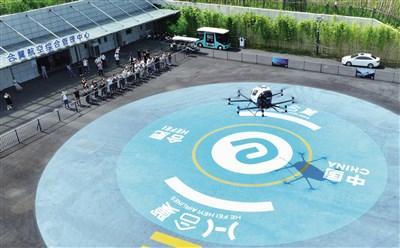
Group 1 - The core viewpoint of the article is the release of implementation opinions by five departments, including the Ministry of Industry and Information Technology, aimed at strengthening the capacity building of the information and communication industry to support low-altitude infrastructure development [2] - By 2027, the national ground mobile communication network coverage rate for low-altitude public air routes is expected to reach no less than 90% [2] - The plan includes the development of at least 10 information infrastructure standards and aims to create typical low-altitude application scenarios in urban governance, logistics transportation, and cultural tourism [2] Group 2 - The initiative emphasizes the improvement and maturity of multi-dimensional integrated perception solutions for low-altitude navigation services [2] - The article highlights the demonstration of an electric vertical takeoff and landing aircraft (eVTOL) in Hefei, showcasing advancements in low-altitude flight technology [2]
低空经济产业链研究专题一:从产品到生态、从试点到常态,低空经济的发展潜力与机遇
Guoxin Securities· 2026-02-09 00:50
Investment Rating - The report rates the low-altitude economy industry as "Outperform the Market" [1] Core Insights - The low-altitude economy is defined as a comprehensive economic form driven by low-altitude aviation activities, encompassing four main sectors: low-altitude manufacturing, low-altitude operations, low-altitude infrastructure and information services, and low-altitude supporting industries [1][15] - The development of the low-altitude economy is supported by breakthroughs in technology and increased policy support, leading to rapid growth in the sector [1][15] - The domestic general aviation industry has reached new highs, with 760 companies holding operational licenses and a total of 5,224 registered general aviation aircraft by the end of 2024, marking a year-on-year increase of 10.1% [1] Summary by Sections 1. Low-altitude Manufacturing Opportunities - Low-altitude manufacturing accounts for nearly 60% of the total value in the industry chain, with domestic companies accelerating the localization of high-strength carbon fiber products [2] - The electric propulsion systems for aircraft require higher performance parameters, with companies like Wolong Electric and Inbol accelerating the development of high-performance motors [2] - The industry is expected to transition towards a primarily electric and hybrid model, with solid-state batteries showing promise for future applications in low-altitude aircraft [2] 2. Low-altitude Operations Opportunities - Key catalysts in low-altitude operations include the progress of airworthiness certification for electric vertical takeoff and landing (eVTOL) aircraft and the transition of application scenarios from pilot projects to normalization [3] - By the third quarter of 2025, approximately 17 products are expected to enter the airworthiness acceptance or certification stage, with most manned eVTOL models anticipated to be approved by 2028 [3] - The commercialization of low-altitude logistics operations is progressing rapidly, with companies like Fengfei Aviation achieving successful pilot results in intercity and inter-island transport [3] 3. Low-altitude Infrastructure Opportunities - The low-altitude infrastructure includes both physical facilities and technical systems, with an estimated construction cost of 599.6 billion yuan for low-altitude economic infrastructure (general airports + takeoff and landing sites) from 2025 to 2030 [3] - The planning and consulting costs for this infrastructure are projected to be 35.97 billion yuan during the same period [3] 4. Low-altitude Supporting Industries Opportunities - The demand for low-altitude aircraft testing is expected to realize commercial viability first, as it is closely tied to the entire lifecycle of aircraft development, certification, and commercial operation [4] - Third-party testing institutions with aerospace experience and robust testing capabilities are likely to benefit from this demand [4]
国内首款,首飞成功!空中、陆上无缝切换
Zhong Guo Ji Jin Bao· 2026-02-06 16:21
Core Insights - The first domestically developed electric vertical takeoff and landing aircraft (eVTOL) by China Aerospace Science and Technology Corporation's Ninth Academy successfully completed its maiden flight, validating its performance [1] Group 1: Product Features - The eVTOL features an innovative design that combines aircraft and automobile capabilities, allowing seamless transition between land and air travel [1] - The product consists of a modular design with a flying body and a land body, which includes wings, cockpit, and chassis [1] - The flying body can carry two passengers at speeds of 150 kilometers per hour below 3000 meters, while the land body has a range exceeding 300 kilometers [1] Group 2: Technological Innovations - The aircraft utilizes a self-developed automatic alignment and separation coupling mechanism, enabling program-controlled connection and disconnection of its components [1] - Customizable cockpit and various types of chassis and wing modules significantly enhance adaptability and flexibility for different scenarios [1] Group 3: Future Applications - This product is designed to meet airworthiness standards and is expected to play a role in transportation, logistics, and emergency support sectors in the future [1]
中国工业的2026: 大省如何挑大梁
Xin Lang Cai Jing· 2026-02-01 17:16
Group 1: Industrial Growth Targets and Strategies - The core objective for China's industrial sector is to achieve a medium to high-speed growth rate of around 5% in industrial added value by 2026, supported by new production capacities and policy measures [1][2] - Various provinces have set specific growth targets for 2026, such as Zhejiang aiming for a 6% increase in industrial added value and 8% growth in digital economy core industries [3] - The Ministry of Industry and Information Technology emphasizes the importance of major industrial provinces like Guangdong, Jiangsu, and Shandong in stabilizing the industrial economy, as they collectively account for over 60% of the national industrial added value [2][3] Group 2: Investment and Project Initiatives - Shanghai plans to initiate 133 industrial projects with a total investment of 110 billion yuan in 2026, focusing on large-scale projects to support the "14th Five-Year Plan" [4] - Hebei is set to implement a "Project Construction Year" in 2026, emphasizing the completion and effectiveness of key projects while promoting the development of emerging industries [3] - The overall manufacturing investment growth is expected to improve to between 3% and 5% in 2026, compared to a low of 0.6% in the previous year [5] Group 3: Emerging Industries and Future Development - The "14th Five-Year Plan" prioritizes the establishment of a modern industrial system and the strengthening of the real economy, with a focus on developing emerging industries and future industries [6] - Various regions are actively deploying strategies to foster new growth points in industries such as 6G, quantum technology, and biomanufacturing, with Guangdong and Beijing leading initiatives in these areas [7][8] - The integration of technology and industry is expected to accelerate, with significant government support for artificial intelligence, advanced manufacturing, and renewable energy sectors [8]