
绿色化

Search documents
燕山脚下这个市场有点不一样
Xin Lang Cai Jing· 2026-02-07 22:52
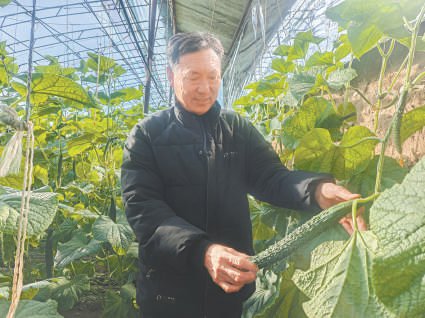
Core Insights - The article highlights the thriving cucumber market in Yushulinzi Town, where a single variety of cucumber dominates the wholesale market, showcasing its unique bargaining power and quality [2][5]. Group 1: Market Dynamics - Yushulinzi Town has established itself as a renowned cucumber trading market, with farmers and buyers preparing for increased demand as the Spring Festival approaches [2]. - The local vegetable and fruit wholesale market spans 85 acres, with an annual transaction volume of 400,000 tons and a transaction value of 1.2 billion yuan [5]. - The market has created a pricing system centered around Yushulinzi for winter cucumber sales, influencing a new industrial pattern that extends to Inner Mongolia and Liaoning [5]. Group 2: Agricultural Practices - Farmers in the region utilize greenhouses to cultivate cucumbers, benefiting from the area's temperate continental monsoon climate, which provides ample sunlight and fertile soil [3]. - The average yield from a greenhouse is between 200 to 300 kilograms of cucumbers per harvest, with farmers like Liu Lifeng earning approximately 1,500 yuan per sale [4]. - The local agricultural model, which integrates leading enterprises, production bases, and farmers, aims to enhance guidance, security, and profitability for growers [5]. Group 3: Economic Impact - The cucumber cultivation in Yushulinzi has significantly improved the income of local households, with an average annual increase of 50,000 to 80,000 yuan per household [4]. - The region's cucumbers are well-received in major cities like Beijing and Tianjin, with fresh cucumbers reaching supermarket shelves within hours of harvest [5]. - The establishment of 19 vegetable production bases around Beijing has further strengthened the supply chain, ensuring a steady supply of high-quality vegetables [5].

能耗降下来 环境好起来
Jing Ji Ri Bao· 2026-02-07 22:17
Group 1 - The company has launched a new production line for vinyl monomer with an annual capacity of 3,600 tons, utilizing an intelligent control system that reduces overall energy consumption by over 15% [1] - The product quality has improved significantly, with a good product rate exceeding 98%, thanks to the integration of data management replacing traditional methods [1] - The company collaborates with universities to develop low-temperature catalytic processes, which have notably reduced production costs and facilitated the transition from laboratory to production line [1] Group 2 - The project has been recognized as a key initiative in Henan Province, completed in just over a year, demonstrating rapid industrial development [2] - Local government support mechanisms, such as "Ten Thousand People Helping Ten Thousand Enterprises," have effectively facilitated the project's swift progress [2] - The company is expanding its market reach, with approximately 30% of its products being exported to countries along the Belt and Road Initiative, including Vietnam [1][2]
瞄准新赛道,上海将再造万亿级产业新增量
Xin Lang Cai Jing· 2026-02-07 11:29
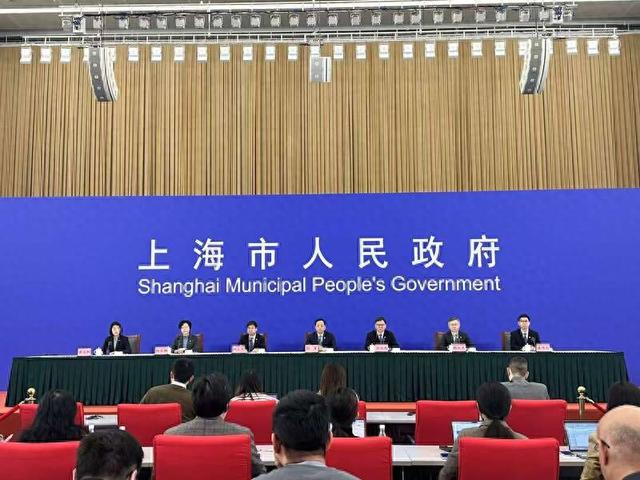
Group 1 - Shanghai aims to expand its industrial economy by focusing on six emerging pillar industries, including new-generation electronic information and intelligent connected vehicles, targeting a trillion-level industrial increment [1][3] - By 2025, Shanghai's industrial added value is projected to grow by 5.1%, with total output reaching 4.07 trillion yuan, marking a historical high [3] - The city will maintain its advantages in leading industries such as integrated circuits and artificial intelligence, accelerating breakthroughs across the entire industrial chain with double-digit growth in manufacturing output [3] Group 2 - Shanghai plans to promote the transformation and upgrading of traditional industries like petrochemicals and steel towards digitalization and greening, aiming to establish 500 advanced intelligent factories during the 14th Five-Year Plan [3] - The city will create 200 green manufacturing enterprises at the municipal level and enhance the business environment to support outstanding companies [3] - Shanghai will guide districts to cultivate leading industries based on an industrial map, aiming to develop 25 billion-level niche markets [3]
大飞机、大邮轮接连取得突破,上海如何进一步提升产业核心竞争力?
Xin Lang Cai Jing· 2026-02-07 05:15
Core Insights - Shanghai aims to achieve an industrial output value exceeding 4 trillion yuan by 2025, marking a historical high, with significant advancements in key sectors such as large aircraft and cruise ships [1] Group 1: Industrial Growth and Achievements - In the past year, Shanghai's industrial added value grew by 5.1%, reaching a total output value of 4.07 trillion yuan, a record high [1] - The proportion of strategic emerging manufacturing industries increased from 40% at the beginning of the 14th Five-Year Plan to 45%, while the share of the three leading industries in manufacturing rose from 7.8% to 12.4% [1] Group 2: Future Development Strategies - Shanghai will focus on four key areas: 1. Implementing national strategies to maintain advantages in integrated circuits and artificial intelligence, aiming for double-digit growth in manufacturing output [2] 2. Accelerating industrial transformation towards digital and green development, with plans to establish 500 advanced intelligent factories and achieve an industrial robot application density of 600 units per 10,000 people [2] 3. Expanding the industrial economy by developing six emerging pillar industries, targeting new sectors such as smart terminals and commercial aerospace [2] 4. Enhancing the industrial ecosystem by guiding districts to cultivate leading industries and creating 25 billion-yuan-level niche markets [2] Group 3: Leadership and Contribution - Shanghai will leverage its leading role to contribute to the construction of a manufacturing powerhouse, embodying a commitment to national responsibilities and innovation [3]
新华指数丨工程机械板块景气度上升 新华出海消费指数同步飘红
Xin Hua Cai Jing· 2026-02-06 13:36
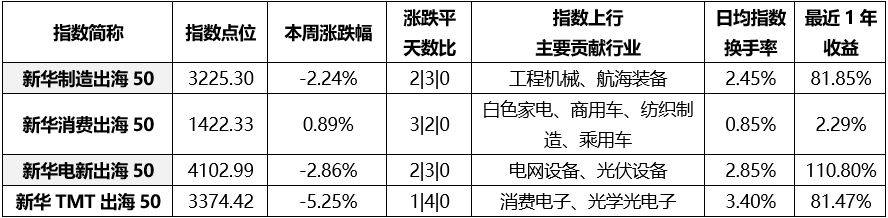
Core Viewpoint - The A-share market is experiencing a structural trend, with the engineering machinery sector showing strong resilience supported by solid fundamentals, indicating a dual development opportunity of "domestic demand recovery + export breakthrough" [1] Industry Overview - The engineering machinery industry is closely tied to infrastructure investment and the overall economic climate, encompassing various machinery used in large projects such as construction, road building, and mining [1] - The industry is expected to see a market size of $23.4 billion in 2024, accounting for 11.0% of the global market, with projections to grow to $57.0 billion by 2030, reflecting a compound annual growth rate (CAGR) of approximately 16% [3] Sales and Demand - Excavator sales, a core product in the engineering machinery market, are projected to reach 235,257 units in 2025, marking a 17% year-on-year increase, with December 2025 sales expected to hit 23,095 units, a 19.2% increase [2] - The domestic market is expected to see excavator sales of 118,518 units in 2025, up 17.9%, while overseas sales are projected to exceed 116,739 units, a 16.1% increase, indicating a "dual-wheel drive" growth pattern [2] Export Performance - Excavator exports are anticipated to reach 76.64 billion yuan in 2025, a significant increase of 31.1%, highlighting the global competitiveness of Chinese excavator products [3] - Emerging markets and traditional markets are both contributing to export growth, with regions like Asia, Europe, and Africa maintaining high growth rates, while Latin America and Oceania markets are seeing growth rates around 30% [3] Company Performance - Leading companies in the sector, such as Sany Heavy Industry, XCMG, and Zoomlion, have shown robust performance with significant revenue and profit growth in 2025 [5] - Sany Heavy Industry reported a revenue of 66.104 billion yuan, a 13.27% increase, and a net profit of 7.136 billion yuan, up 46.58% [5] - XCMG achieved a revenue of 78.157 billion yuan, an 11.61% increase, and a net profit of 5.977 billion yuan, up 11.67% [5] - Zoomlion reported a revenue of 37.156 billion yuan, an 8.06% increase, and a net profit of 3.920 billion yuan, up 24.89% [5] Market Dynamics - The engineering machinery sector is undergoing a technological innovation wave focused on "intelligent, high-end, and green" development, with leading firms increasing R&D investments to drive industry upgrades [4] - The overall recovery in the industry is reflected in the performance of A-share engineering machinery stocks, with significant market capitalization growth among leading companies [4]
东风汽车:2026年加速迈向智能化、绿色化、融合化
Zheng Quan Ri Bao Wang· 2026-02-06 07:15
Group 1 - Dongfeng Motor's new energy vehicle sales reached 1.05 million units in 2025, a year-on-year increase of 21%, with self-owned brand sales exceeding 1.5 million units, accounting for over 60% of total sales, marking a transition from the "investment phase" to the "harvest phase" [1] - The company's R&D investment intensity reached 7.9%, with the number of invention patents granted ranking first among Chinese independent vehicle manufacturers for four consecutive years; the DF30 automotive-grade high-end MCU chip has entered mass production, achieving full-stack domestic control [1] - Dongfeng's Mahle hybrid engine has achieved a thermal efficiency of over 48%, setting a new industry record, and the largest 16,000-ton integrated die-casting production line has been completed and put into operation [1] Group 2 - Dongfeng Motor aims to achieve overall annual sales of 3.25 million units, 1.7 million new energy vehicles, and 600,000 exports by 2026, focusing on "intelligent, green, and integrated" transformation [2] - The company plans to transition from "technical realization" to "value resonance," with the new generation Mahle power system and high-performance DF30 chip set for large-scale deployment [2] - The "Yijing" brand, co-created with Huawei, will make its global debut in March 2026, while various new models across different segments are set to launch, including the Dongfeng Mengshi U series and Dongfeng Lantu's high-end offerings [3]
东风今年喊出325万辆销量目标,新能源车要超一半!
Nan Fang Du Shi Bao· 2026-02-06 05:40
Core Insights - Dongfeng Motor Group has unveiled its latest strategic planning and product layout at the "New Starting Point, New Journey - 2026 Dongfeng Motor Media Sharing Conference" [1] Group 1: Sales and Production Goals - Dongfeng aims for a total sales target of 3.25 million vehicles in 2026, including 1.7 million electric vehicles and 600,000 exports [2] - In 2025, Dongfeng's electric vehicle sales are projected to reach 1.05 million, a year-on-year increase of 21%, with total self-owned brand sales exceeding 1.5 million, accounting for over 60% of total sales [1] Group 2: Technological Advancements - Dongfeng's R&D investment intensity reached 7.9%, with a continuous lead in the number of invention patent authorizations among Chinese independent vehicle manufacturers for four consecutive years [1] - The company has successfully mass-produced the vehicle-grade high-end MCU chip DF30, achieving full-stack domestic control, and the domestic chip rate for self-owned brand vehicles has reached 67% [1] Group 3: New Product Launches - The new brand "Yijing," co-created with Huawei, will be globally launched in March, focusing on high-end intelligent vehicles [3] - Dongfeng's various sub-brands plan to release multiple new models, including the "true seven-seat SUV" Fengshen L9 and the first L3-level SUV, the Lantu Taishan Ultra, which will begin deliveries in March [4][3] Group 4: Market Strategy and Reforms - Dongfeng aims to create popular models in every market segment, emphasizing user satisfaction and brand reputation [5] - The company plans to deepen institutional reforms by granting greater autonomy to frontline business units to enhance operational efficiency [5] Group 5: Recent Sales Performance - In January, Dongfeng sold 185,000 vehicles, a year-on-year increase of 29.5%, with electric vehicle sales reaching 83,000, up 112% [5]

江苏2025年全社会用电量近9000亿千瓦时 用电结构改变见证新质生产力崛起
Zhong Guo Dian Li Bao· 2026-02-06 01:33
Group 1: Energy Consumption Growth - In 2025, Jiangsu's total electricity consumption reached 889.5 billion kilowatt-hours, representing a year-on-year growth of 4.8% [1] - The growth reflects the vitality of Jiangsu as an economic powerhouse and indicates a new landscape of productivity driven by energy transformation [1] Group 2: Transition to Green Energy - 2025 marks a critical year for Jiangsu's energy transition, with total installed capacity of renewable energy generation exceeding 100 million kilowatts, making it the first province in the Yangtze River Delta to achieve this milestone [2] - New energy sources contributed 94% of the total new electricity generation of 37.9 billion kilowatt-hours in 2025, highlighting the shift towards a greener and low-carbon energy structure [2] - The number of enterprises consuming green electricity in Jiangsu increased by 210.28% year-on-year, indicating a growing trend among companies to enhance international competitiveness through green energy [2] Group 3: Electric Vehicle Infrastructure - The first integrated "wind-solar-storage-charging-swapping" highway service area in the country was fully operational before New Year's Day, enhancing green transportation infrastructure [3] - The charging volume from Jiangsu Electric Power's charging stations reached 1.03 billion kilowatt-hours in 2025, a year-on-year increase of 15.5%, making it one of the fastest-growing segments in provincial electricity consumption [3] Group 4: Industrial Transformation and Upgrading - During the 14th Five-Year Plan period, Jiangsu's strategic emerging industries grew significantly, with their output value increasing from 36.8% in 2020 to 41.8% in 2024 of the total industrial output [4] - In 2025, electricity consumption in related manufacturing industries grew by 11.2%, outpacing the overall growth rate of the manufacturing sector by 7.6 percentage points [4] - The electricity consumption of the computer, communication, and other electronic device manufacturing sector surpassed 50 billion kilowatt-hours for the first time, indicating a structural shift towards high-end and intelligent industries [4]
我国与APEC其他经济体进出口总值达26.29万亿元
Ren Min Ri Bao· 2026-02-06 00:40
Core Insights - In 2025, China's total import and export value with APEC economies is projected to reach 26.29 trillion yuan, accounting for 57.82% of the total foreign trade value during the same period [1] - China has transitioned from "processing and manufacturing" to "R&D + manufacturing + services" within the regional supply chain, enhancing bilateral trade with APEC economies [1] - High-tech product exports are expected to reach 4.63 trillion yuan, reflecting a year-on-year growth of 8.1%, while imports in key sectors such as energy, agricultural products, semiconductor equipment, and precision instruments are also experiencing rapid growth [1] Trade Dynamics - New business models and formats are thriving, with cross-border e-commerce witnessing rapid growth [1] - Digital trade, represented by data flow and electronic documents, along with green trade in new energy and low-carbon products, are emerging as new highlights in foreign trade growth [1] Economic Context - The Asia-Pacific region's economic total has surpassed 60% of the global economy, with trade volume approaching half of the world's total, positioning it as an engine for global economic growth [1] - The Deputy Director of the General Administration of Customs, Zhao Zenglian, emphasized a focus on inclusive development, aiming to continuously release more open dividends and share opportunities in digitalization, intelligence, and green development with all parties [1]
八部门提出到2030年 中药工业全产业链协同发展体系初步形成
Xin Lang Cai Jing· 2026-02-05 19:12
Core Viewpoint - The Ministry of Industry and Information Technology and seven other departments have jointly issued the "Implementation Plan for the High-Quality Development of Traditional Chinese Medicine Industry (2026-2030)", aiming to establish a collaborative development system for the entire traditional Chinese medicine industry chain by 2030 [1][2] Group 1: Goals and Objectives - By 2030, the plan aims to enhance the stable supply capacity of key traditional Chinese medicine raw materials and significantly improve the levels of digitalization and greening [1] - The plan includes cultivating a number of leading enterprises in the traditional Chinese medicine industry and establishing 60 high-standard raw material production bases [1] - It targets the approval and market launch of a batch of innovative traditional Chinese medicine products, including the cultivation of 10 major traditional Chinese medicine varieties [1][2] Group 2: Implementation Strategies - The plan outlines six key areas with 15 tasks, focusing on stabilizing supply, collaborative innovation, intelligent manufacturing, product promotion, and service system construction [1] - It emphasizes the need to revise production technology specifications and quality standards for key processing links in traditional Chinese medicine [2] - The use of artificial intelligence and big data to construct knowledge graphs for classic formulas and experiences from renowned traditional Chinese medicine practitioners is highlighted [1][2] Group 3: Quality Control and International Cooperation - The plan includes the establishment of a comprehensive quality control system and the development of new products from advantageous ethnic medicines [2] - It aims to enhance the clinical and market value of traditional Chinese medicine products and encourages international registration of advantageous traditional Chinese medicine products [2] - The plan calls for integrating related tasks into the high-quality development action system of key manufacturing industry chains [2]