
绿色循环经济

Search documents
刘煜辉:巨大的阿尔法在形成中,大胆想象,5年后,人民币抢下美元20%的地盘
Sou Hu Cai Jing· 2025-10-11 12:11
Group 1: Economic Strategy and Investment Focus - The core focus for China in the next five years will be on three key sectors: circular economy, AI computing power chips with advanced processes, and new materials such as solid-state batteries and rare earths [3][14][16] - A significant amount of capital will be invested in AI computing, emphasizing the need for breakthroughs in the processing system to achieve independence in the entire semiconductor industry [3][14] - China has a strategic advantage in the supply chain, particularly in rare earths, which are critical for modern industrial systems [16][18] Group 2: Currency and Financial Strategy - The competition between the Renminbi and the US Dollar is inevitable, with a focus on establishing a new financial ecosystem that could potentially allow the Renminbi to capture 20% of the Dollar's market share in five years [5][21][30] - The establishment of a stablecoin based on the Renminbi is seen as crucial for creating a new financial cycle, leveraging China's trade and supply chain strengths [26][29] - The transformation of data into a new economic factor is essential for restructuring China's fiscal foundation and tax base, moving away from reliance on land as a production factor [31][34] Group 3: Circular Economy and Resource Management - China aims to develop a circular economy to reduce dependency on non-renewable resources, particularly oil, by finding technologies that can convert waste back into usable resources [10][12][13] - The focus on circular economy is not just an environmental strategy but also a means to overcome geopolitical vulnerabilities related to resource supply [12][13] Group 4: Market Dynamics and Future Outlook - The upcoming five years will see a systematic approach to understanding and capitalizing on the strategic initiatives outlined in the "15th Five-Year Plan," which will influence market sentiment and investment opportunities [9][36] - The shift towards a digital economy and the capitalizing of data as a new production factor will create significant opportunities in the market [34][36]

加强海湾经济发展规划研究
Jing Ji Ri Bao· 2025-09-26 21:52
Core Insights - The Gulf economy is a crucial and forward-looking area of modern marine economic development, requiring systematic research, top-level design, and planning guidance to support high-quality development of the marine economy [1] Group 1: Geographic and Economic Significance - China's coastline, including mainland and islands, exceeds 32,000 kilometers, with over 160 bays covering more than 10 square kilometers, including 11 large bays with favorable transportation and resource endowments [1] - Bays serve multiple functions such as economic engines, ecological barriers, and strategic points, with 70% of major global ports and 60% of international trade concentrated in these areas [1] Group 2: Lessons from Global Bay Areas - The development of world-class bay areas has historically benefited from the rise of maritime trade, with each bay area leveraging its unique advantages and industrial trends [2] - Examples include the Tokyo Bay area focusing on high-end manufacturing, the New York Bay area integrating finance and creative economy, and the San Francisco Bay area centered on technology and innovation [2] Group 3: Strategic Recommendations for Gulf Economic Development - Conduct comprehensive surveys and assessments to establish a dynamic database covering resource endowments, carrying capacity, and development potential, guiding the direction of different types of bay economic development [3] - Prioritize ecological safety and green development by establishing mechanisms for ecological protection compensation and promoting green industries such as clean energy and marine biotechnology [3] Group 4: Infrastructure and Innovation - Enhance integrated transportation and logistics networks to improve the economic carrying capacity of key bay areas, promoting coordinated development between land and sea [4] - Foster innovation-driven development by focusing on key industrial applications in marine ranching, offshore wind energy, and tidal energy, while exploring integration paths among various industries [5]
政企协同推动绿色转型!香港施政报告明确推动晋景新能电池回收项目
Zhi Tong Cai Jing· 2025-09-17 05:25
Core Insights - The Hong Kong government is focusing on building a new energy industry chain and promoting the development of the electric vehicle battery recycling industry, with a large-scale battery recycling facility expected to be operational in the first half of 2026 [1] Group 1: Government Initiatives - The Chief Executive of Hong Kong, John Lee, announced plans to construct the first large-scale electric vehicle battery recycling facility in Hong Kong, which will convert retired batteries into regenerated black powder for supply to mainland China and surrounding regions [1] - The facility is being developed by Jin Jing New Energy (01783) and is designed to meet the battery processing needs outlined in Hong Kong's 2035 plan [1] Group 2: Company Developments - Jin Jing New Energy's facility will not only serve the local market but also extend its services to the Guangdong-Hong Kong-Macao Greater Bay Area and Southeast Asia, positioning it as a core hub in the company's global battery recycling service system [1] - The company has signed strategic agreements with leading firms such as Guoxuan High-Tech (002074) and JinkoSolar (688223), securing a future battery disposal value exceeding 30 billion RMB [1] Group 3: Industry Outlook - With the global peak of battery retirements approaching, Jin Jing New Energy's business layout is expected to experience multiple catalysts, indicating a high degree of certainty for performance growth in the coming years [1] - The company is also involved in launching a "Global Lithium Battery Recycling Network Platform," aiming for a recycling capacity of 120,000 tons per year by 2030 through global layout, digital traceability, and open cooperation [1] Group 4: Competitive Advantage - Jin Jing New Energy is recognized as a model for successful transformation from traditional industries to green technology in Hong Kong, leveraging its advanced recycling technology and deep partnerships with mainstream global new energy companies [1] - The company is positioned to become a key infrastructure for Hong Kong's green circular economy, providing stable and reliable closed-loop solutions for battery materials in the regional new energy industry chain [1]
政企协同推动绿色转型!香港施政报告明确推动晋景新能(01783)电池回收项目
智通财经网· 2025-09-17 05:13
Core Viewpoint - The Hong Kong government is focusing on building a new energy industry chain and promoting the development of the electric vehicle battery recycling industry, with plans for a large-scale battery recycling facility to be operational by mid-2026 [1] Group 1: Government Initiatives - The Hong Kong government is pushing for the establishment of its first large electric vehicle battery recycling facility, expected to be operational in the Environmental Park by the first half of 2026 [1] - This facility aims to convert retired batteries into regenerated black powder, supplying the Chinese mainland and surrounding regions, thereby promoting the development of the battery recycling industry [1] Group 2: Company Developments - The facility is being constructed by Jin Jing New Energy (01783), designed to meet Hong Kong's battery processing needs as outlined in the 2035 plan [1] - Jin Jing New Energy's facility will not only serve the local market but also extend its services to the Guangdong-Hong Kong-Macao Greater Bay Area and Southeast Asia, becoming a core hub in the company's global battery recycling service system [1] Group 3: Market Opportunities - With the global peak of battery retirements approaching, Jin Jing New Energy's business layout is expected to experience multiple catalysts, indicating a high degree of certainty for performance growth in the coming years [1] - The company has signed strategic agreements with leading firms such as Guoxuan High-Tech (002074.SZ) and JinkoSolar (688223.SH), securing future battery disposal values exceeding 30 billion RMB [1] - The company is also involved in launching a "Global Lithium Battery Recycling Network Platform," aiming for a recovery capacity of 120,000 tons per year by 2030 through global layout, digital traceability, and open cooperation [1] Group 4: Competitive Advantages - Jin Jing New Energy is positioned as a model for successful transformation from traditional industries to green technology in Hong Kong, leveraging its advanced recycling technology and deep partnerships with leading global new energy companies [1] - The company is expected to play a crucial role in Hong Kong's green circular economy and provide stable and reliable closed-loop solutions for battery materials in the regional new energy industry chain [1]
家庭出游、年轻人主导……汽车租赁市场需求旺 点燃假日消费新引擎
Yang Shi Wang· 2025-09-16 09:23
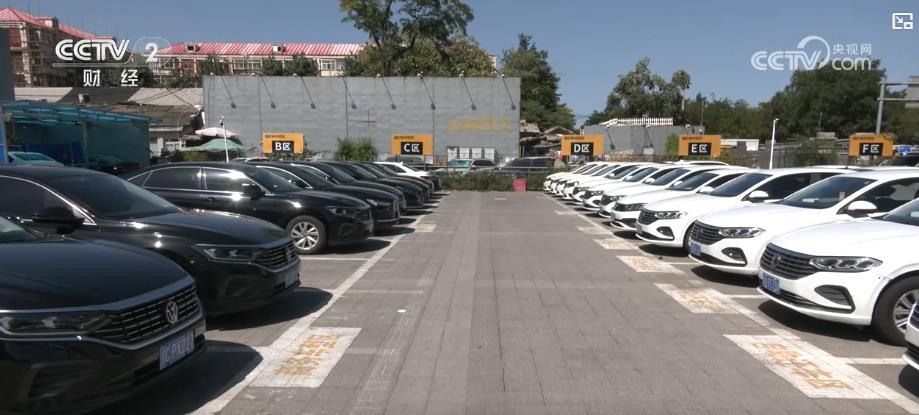
Core Insights - The car rental market is experiencing significant growth in bookings ahead of the National Day and Mid-Autumn Festival holidays, with a notable increase in demand from young consumers and families [3][5][12] - The penetration of electric vehicles (EVs) in the rental market is rising, driven by environmental policies and consumer preferences, with EVs now accounting for 30% of the rental market [9][14] - The overall car rental market in China is projected to reach a scale of 1,448 billion yuan in 2024, with EV rentals expected to exceed 25% of the market share [14] Market Trends - There is a marked increase in the number of first-time renters, with nearly 40% of users booking rentals for the first time during the holiday period [12] - The preference for SUVs and business vehicles is growing, with a significant rise in the booking of new energy vehicles compared to traditional models [9][10] - The rental market is shifting towards more personalized and diversified services, influenced by the preferences of the younger demographic [12] Future Outlook - The car rental industry is expected to exhibit characteristics of scale expansion, technology-driven growth, and service upgrades in the coming years [14] - The market is anticipated to grow to 3,000 billion yuan by 2030, indicating a robust upward trend [14] - Experts emphasize the importance of establishing rental standards to enhance market health and consumer rights [14]
西北首架空客A330飞机拆解工程正式启动
Zhong Guo Min Hang Wang· 2025-08-29 05:25
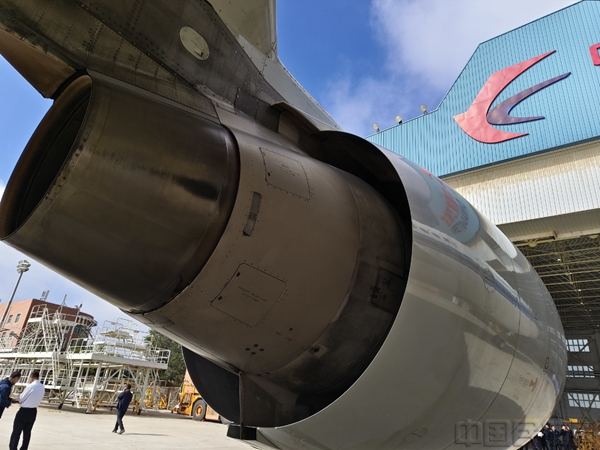
Group 1 - The milestone of Eastern Airlines' technical development is marked by the initiation of the first Airbus A330 aircraft dismantling project on August 29, 2025, at the Gansu company hangar [1] - The dismantling project is a significant step in the full lifecycle management of Eastern Airlines' aircraft and indicates the practical phase of aircraft maintenance base construction [2] - The project focuses on a green circular economy by recycling aircraft components, extending the value of the aviation industry chain, and providing a sustainable development solution for the industry [2] Group 2 - As the first Airbus A330 dismantling practice for Eastern Airlines, the Gansu branch will leverage its professional capabilities to explore efficient dismantling standards [2] - The initiative aims to assist the Chinese civil aviation industry in achieving breakthroughs in aircraft asset management and green transformation [2]

新技术赋能传统产业+零碳方程式:马可波罗打造瓷砖界“新质生产力灯塔”
Di Yi Cai Jing· 2025-08-27 09:00
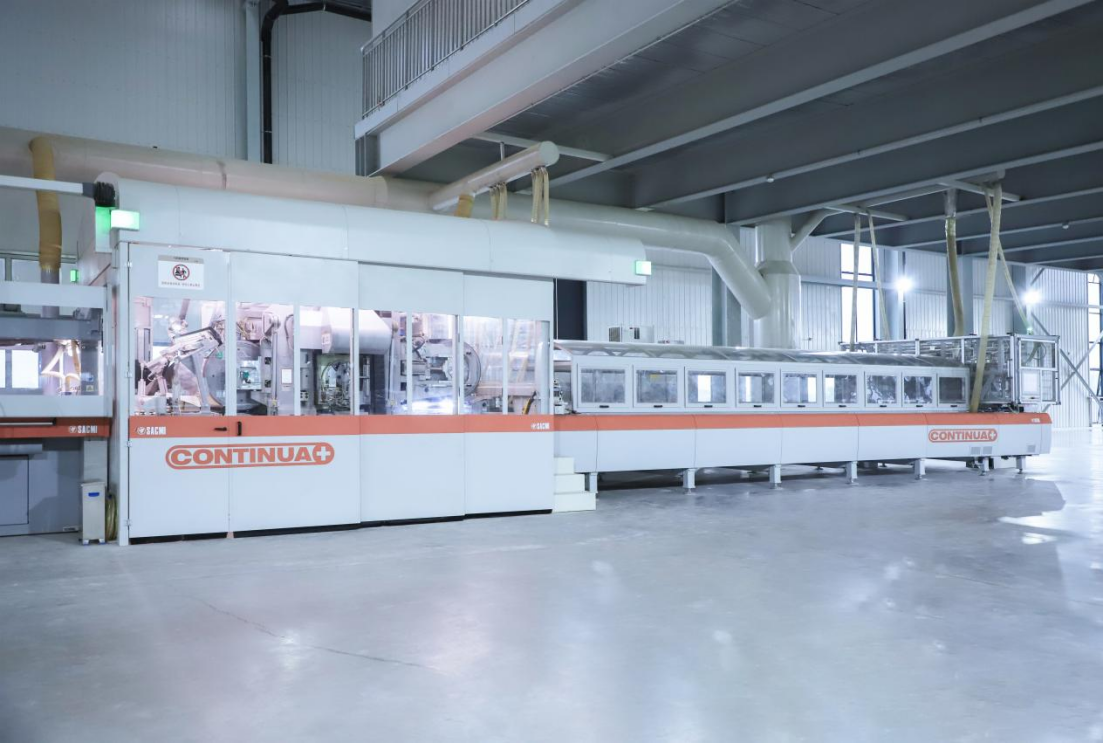
Core Viewpoint - Marco Polo Holdings Co., Ltd. is embracing the transition to Industry 4.0 through the establishment of a smart factory in Dongguan, which integrates traditional manufacturing with advanced technologies and renewable energy sources [1][10]. Group 1: Industry Transformation - The ceramic industry is undergoing a significant transformation driven by new national standards and environmental policies, leading to a reduction in the number of enterprises from 1,402 to 993, a decrease of 29.17% from 2017 to 2024 [2][3]. - The new national standard for ceramic tiles, effective May 30, 2025, categorizes products into three quality levels, thereby increasing compliance costs and entry barriers for the industry [3][4]. - The industry is shifting towards green, high-end, and intelligent production, with a focus on reducing carbon emissions and energy consumption [2][3]. Group 2: Marco Polo's Innovations - Marco Polo's smart factory incorporates advanced technologies such as high-speed continuous forming machines and intelligent control systems, enabling flexible and personalized production [6][8]. - The factory operates with minimal human intervention, utilizing a fully automated system for monitoring and controlling production processes [8][9]. - The company is committed to green production, utilizing clean and renewable energy sources, including a photovoltaic power station and wind energy systems, aiming for a significant reduction in carbon emissions [10][12]. Group 3: Sustainable Practices - Marco Polo emphasizes a circular economy by recycling production waste and utilizing local resources, which helps in reducing raw material costs and promoting sustainability [12]. - The company has received multiple accolades for its green initiatives, including national recognition as a "Green Factory" and a "Clean Production Enterprise" [12]. - The ongoing efforts in sustainable practices are aligned with the company's strategy to enhance production efficiency while contributing to environmental conservation [10][12].
青山纸业: 2025年半年度报告
Zheng Quan Zhi Xing· 2025-08-25 16:30
Core Viewpoint - The report highlights the financial performance and operational challenges faced by Fujian Qingshan Paper Industry Co., Ltd. during the first half of 2025, indicating a decline in revenue and the need for strategic adjustments in response to market pressures [1][3]. Company Overview and Financial Indicators - Fujian Qingshan Paper Industry Co., Ltd. reported a total revenue of CNY 1,210,150,542.18, a decrease of 15.27% compared to the same period last year [7][8]. - The total profit amounted to CNY 73,160,101.55, reflecting a slight increase of 0.51% year-on-year [7][8]. - The net profit attributable to shareholders was CNY 56,078,994.23, up by 1.74% from the previous year [7][8]. - The company's total assets decreased by 5.38% to CNY 6,026,759,396.69 compared to the end of the previous year [7][8]. Industry Context - The paper industry in China faced significant challenges in the first half of 2025, with a reported revenue decline of 2.3% and a profit drop of 21.4% [3][6]. - Factors contributing to the industry's struggles include weak demand recovery, oversupply in certain paper types, and persistent cost pressures from raw materials and operational expenses [3][6]. - The report indicates that the market for packaging paper, particularly for cement and construction materials, remains weak due to the downturn in the real estate sector [3][6]. Business Operations - The company operates in the pulp and paper industry, producing a range of products including bamboo pulp, dissolving pulp, and various paper products [3][6]. - The main products include "Qingshan" brand paper bags, which hold a leading market share in China, and bamboo dissolving pulp, which is unique in its use of bamboo as a raw material [3][6]. - The company has implemented measures to enhance production efficiency and reduce costs, including optimizing procurement strategies and improving energy management [10][11]. Financial Performance Analysis - The decline in revenue is attributed to lower sales volumes and prices of pulp and paper products, with significant impacts on the company's overall financial performance [8][19]. - Operating cash flow showed a negative net amount of CNY -66,164,902.79, indicating challenges in cash generation from core operations [8][19]. - The company has increased its R&D expenditure by 10.84% to CNY 25,786,144.03, reflecting a commitment to innovation despite financial pressures [8][19]. Strategic Initiatives - The company is focusing on enhancing its product structure and expanding into high-end applications for bamboo pulp and other sustainable materials [10][11]. - Efforts are being made to strengthen marketing management and explore new market opportunities, particularly in food packaging [10][11]. - The company aims to leverage its unique bamboo resources and technological advancements to maintain a competitive edge in the evolving market landscape [14][16].

构建绿色环保资源综合利用新模式 江盐集团上半年实现净利润1.48亿元
Zheng Quan Ri Bao Wang· 2025-08-25 13:38
Core Viewpoint - Jiangxi Salt Industry Group Co., Ltd. reported a steady operational performance in the first half of the year, achieving a revenue of 1.142 billion yuan and a net profit of 148 million yuan [1] Group 1: Financial Performance - The company achieved a revenue of 1.142 billion yuan and a net profit of 148 million yuan in the first half of the year, indicating stable growth [1] - The company completed the production of 2.1488 million tons of various products, with salt product production reaching 1.6148 million tons, a year-on-year increase of 13.68% [3] Group 2: Market Trends - The export volume increased by 22.9% year-on-year, with products sold to over 30 countries and regions, maintaining a leading position in the industry [3] - The overall market for salt products is experiencing a decline in prices due to excess supply, while consumer preferences are shifting towards functional and health-oriented salt products [2] Group 3: Innovation and Sustainability - The company is actively developing a green circular economy model, focusing on comprehensive utilization of salt resources and integrating various processes within the salt chemical industry [4] - Innovative technologies such as two-phase flow circulation injection wells have been developed to address environmental challenges and improve economic efficiency [4][5] - The company has launched eight new salt products in April, enhancing its product structure and meeting diverse consumer demands [6]

千年邯郸向“绿”生
Jin Rong Shi Bao· 2025-08-19 02:39
Group 1 - The core idea of the articles revolves around the green transformation efforts in Handan, a city in Hebei Province, emphasizing the shift from a heavy industrial base to a more sustainable, eco-friendly economy [1][2][6] - Handan has implemented a "green account" service model to help enterprises realize the value of their green assets, with 57 companies in the steel, coking, and carbon industries assessed, totaling 11.18 billion yuan in green assets [2][3] - The People's Bank of China in Handan has introduced various financial support measures for carbon reduction, including a comprehensive evaluation of enterprises' green accounts to facilitate credit loans [3][4] Group 2 - Zhongchi New Materials Co., Ltd. is a pilot enterprise for the "green account" initiative, focusing on technological innovation and green development, and has established a project for producing 650,000 tons of calcined coke annually [3][6] - The bank provided a 10 million yuan credit loan to Zhongchi New Materials with a reduced interest rate of 3.25%, showcasing the innovative application of the "green account" in financing [3][4] - The wind power project by Jizhou County Hongze Wind Power Co., Ltd. received significant financial support, including a 241 million yuan credit facility with a 15-year term and a one-year grace period, aimed at promoting clean energy development [5][6] Group 3 - Hebei Longhai Bioenergy Co., Ltd. specializes in producing biodiesel from waste oils and has faced financing challenges due to a lack of traditional collateral [6][7] - The bank successfully facilitated a 20 million yuan equity pledge loan for Longhai Bioenergy, addressing its funding issues and enabling further expansion [6][7] - The financial support provided to these enterprises illustrates the effectiveness of green finance initiatives in promoting sustainable economic growth in Handan [6][7]