集成电路

Search documents
长江经济带十年奔腾动能澎湃 撑起全国经济总量“半壁江山”
Chang Jiang Shang Bao· 2026-02-09 01:58
Core Viewpoint - The Yangtze River Economic Belt has become a crucial national development strategy, contributing nearly 50% of the national economic output and serving as a key ecological protection barrier in China [1][2][4]. Group 1: Economic Contribution - The Yangtze River Economic Belt covers about one-fifth of China's land area and contributes nearly 50% of the national economic total, solidifying its role as a vital economic corridor [2][4]. - By 2025, the economic output of the Yangtze River Economic Belt is projected to reach approximately 66.8 trillion yuan, more than doubling over the past decade with an average growth rate of 5.4%, surpassing the national average by 0.4 percentage points [4]. Group 2: Ecological and Environmental Initiatives - The concept of "grasping major protection without large-scale development" has taken root in the Yangtze River Economic Belt, leading to significant ecological improvements, including the enhancement of water quality from class V to class II along the main river [6][7]. - The region has implemented pollution control measures across various sectors, including industrial and agricultural pollution, resulting in the closure or transformation of nearly 10,000 chemical enterprises and the elimination of 1,361 illegal docks [6][7]. Group 3: Industrial Transformation and Innovation - The Yangtze River Economic Belt has fostered industrial transformation by nurturing 41 national-level advanced manufacturing clusters and 30 strategic emerging industry clusters, accounting for 51% and 45% of the national totals, respectively [6][7]. - The region is actively promoting the green transformation of traditional industries, establishing 24 national carbon peak pilot cities and parks, and supporting the scrapping and updating of approximately 10,000 old operating vessels [7]. Group 4: Future Development Plans - The next phase of development will focus on high-level ecological protection, enhancing innovation support systems, and strengthening regional collaboration, with an emphasis on building a "Five Great Yangtze" framework encompassing ecological, innovative, open, cultural, and happy aspects [8].
科技股“退热”消费股“接棒”
Xin Lang Cai Jing· 2026-02-08 07:08
Core Viewpoint - The A-share market experienced significant fluctuations this week, primarily influenced by international gold and silver prices, leading to a shift in market hotspots from technology stocks to consumer stocks [1][3][4] Market Performance - On Monday, the Shanghai Composite Index opened at 4079.71 points, dropping to a low of 4015.75 points, marking a decline of 102.2 points or 2.48%, which is a rare occurrence of a hundred-point drop in over a year [1] - The index reached its lowest point of the week at 4002.78 on Tuesday but rebounded to a high of 4104.62 on Wednesday, ultimately closing at 4065.58 points on Friday, resulting in a weekly decline of 52 points or 1.27% [2] - The Shenzhen Composite Index also showed similar trends, with a weekly decline of 2.11%, while the ChiNext Index fell by 3.28% [2] Sector Performance - The technology sector, which had been a market favorite, showed signs of retreat, with significant declines in indices related to integrated circuits and artificial intelligence, both dropping over 9% [3] - Conversely, the consumer sector saw a resurgence, with the Consumer Index rising by 2.46% after hitting a one-year low, and other consumer-related indices, such as food and beverage, increasing by 3% [4] - The tourism index also performed well, with a rise of over 3%, indicating a potential shift in investor interest from technology to consumer stocks [4]
上海,书写新一页传奇|上海两会
Guo Ji Jin Rong Bao· 2026-02-08 03:46
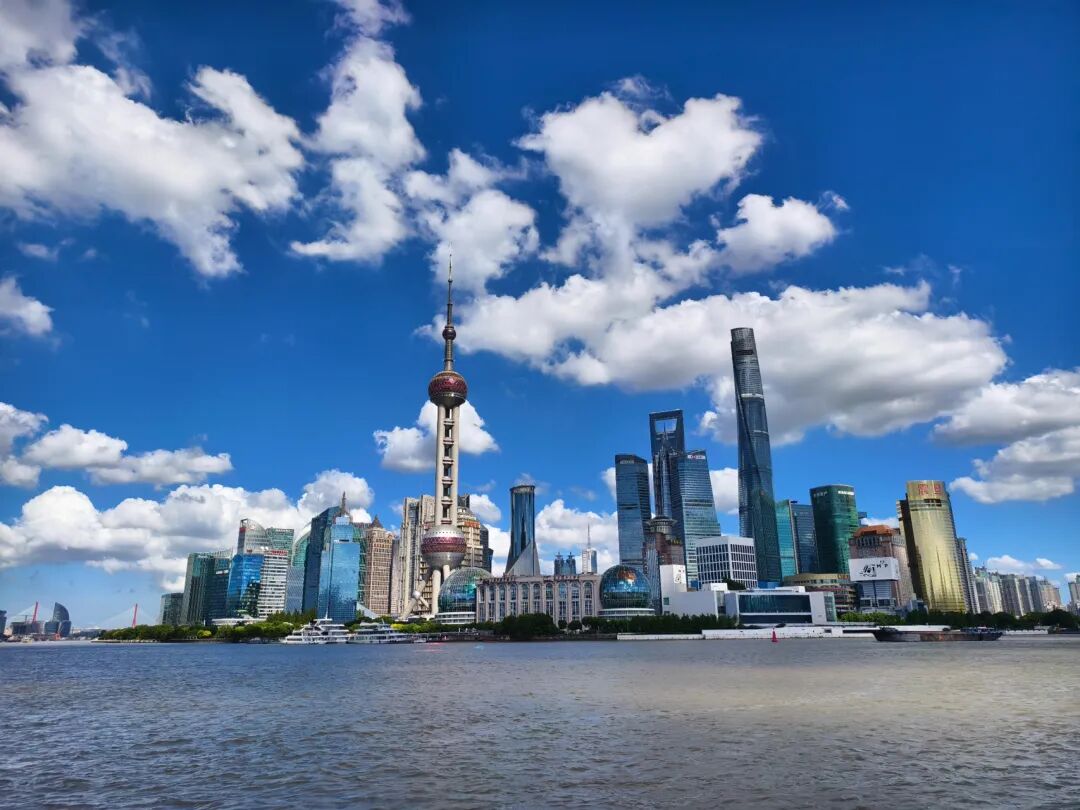
Core Insights - Shanghai aims for a GDP of 5.67 trillion yuan by 2025, with a growth rate of 5.4%, exceeding expectations [3] - The "15th Five-Year Plan" outlines a target of approximately 5% annual GDP growth over the next five years [13] Economic Performance - Shanghai's GDP increased from 4.16 trillion yuan to 5.67 trillion yuan during the "14th Five-Year Plan," marking a significant milestone as the first city in China to surpass a GDP of 5 trillion yuan [3] - The city's public budget revenue reached 850 billion yuan, with a growth of 1.5% [3] - The average urban unemployment rate was 4.2%, and consumer prices rose by only 0.1% [3] Industrial Development - R&D expenditure reached 4.5% of GDP, nearing levels of major innovative countries [4] - The output of strategic emerging industries grew by 6.5%, accounting for 45% of industrial output [4] - Key industries such as integrated circuits, biomedicine, and artificial intelligence surpassed a combined scale of 2 trillion yuan [4] Trade and Investment - Total foreign trade volume reached 4.51 trillion yuan, with exports growing by 10.8% [4] - Actual foreign investment amounted to 16.06 billion USD, equivalent to 114.8 billion yuan [4] Social Welfare - Per capita disposable income for residents reached 92,000 yuan, growing by 4.1% [6] - PM2.5 concentration averaged 26.3 micrograms per cubic meter, a decrease of 7.4% [6] - The city added 127 parks, achieving a total of 1,100 parks, with 89.4% open 24 hours [6] Strategic Initiatives - The construction of the "Five Centers" (international economic, financial, trade, shipping, and technological innovation centers) is a key strategic mission for Shanghai [7] - The eighth China International Import Expo achieved record participation and transaction amounts, with intent sales reaching 83.49 billion USD, a 4.4% increase [7] Future Outlook - The "15th Five-Year Plan" emphasizes the importance of technological innovation as a driving force for development [10] - Representatives expressed a strong desire for advancements in sectors like biomedicine, integrated circuits, and artificial intelligence [13] - The focus on enhancing the financial system to support innovation and industry integration is crucial for future growth [12]

投资合肥 | 一文看懂合肥市集成电路发展现状与投资机会前瞻(附集成电路产业现状、空间布局、投资机会分析等)
Qian Zhan Wang· 2026-02-08 02:09
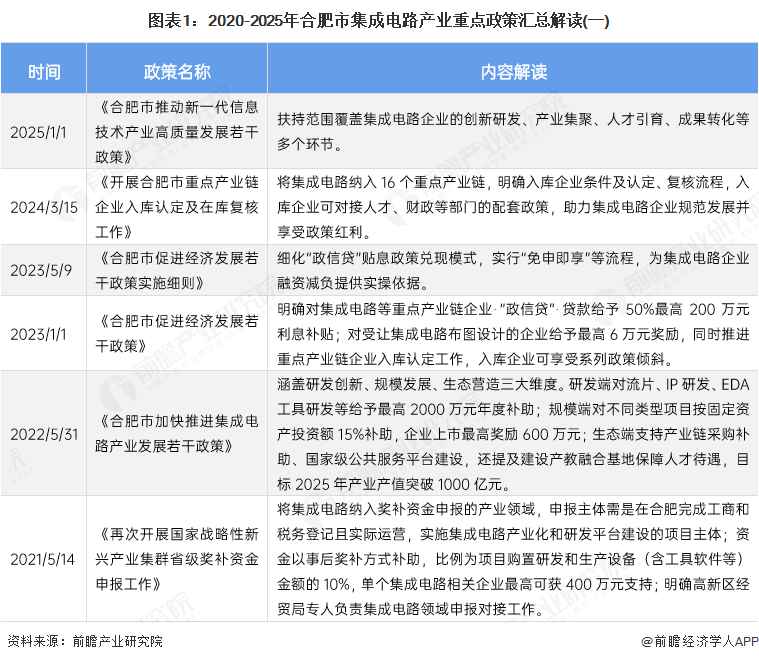
Group 1 - Hefei has transformed its integrated circuit industry from non-existent to a strong presence in ten years, focusing on a four-dimensional development path: leading enterprises, talent foundation, innovation breakthroughs, and ecological empowerment [1] - The city positions the integrated circuit industry as a strategic pillar, aiming to create a world-class industrial cluster by integrating it with new displays and enhancing electronic manufacturing capabilities [1] - Policies support the entire integrated circuit value chain, including R&D subsidies, project investment grants, and market procurement assistance [1] Group 2 - By 2025, only key industrial areas like the High-tech Zone and Economic Development Zone have issued multiple integrated circuit policies, focusing on design innovation and wafer manufacturing [2] - As of Q3 2025, Hefei has gathered over 450 integrated circuit companies and 33,000 professionals, with the High-tech Zone having the most companies and a well-structured industrial chain [9] Group 3 - Hefei's integrated circuit industry has achieved significant growth, with a scale exceeding 50 billion RMB and an annual growth rate of over 20% as of the end of 2024 [11] - The production of integrated circuits reached 2.081 billion units in 2024, with dynamic memory chips and display driver chips holding leading global market shares [12] Group 4 - During the 14th Five-Year Plan (2021-2025), Hefei aims to ensure comprehensive support across all stages of the integrated circuit industry, with a focus on collaborative development [17] - By November 2025, Hefei has attracted 7 listed companies, 6 unicorns, and 20 national-level "specialized and innovative" small giants in the integrated circuit sector [19] Group 5 - The integrated circuit industry in Hefei is characterized by a "leading enterprise" model, with over 200 key companies concentrated in the High-tech Zone, accounting for over 60% of the total [21] - The industrial layout is centered around the High-tech Zone, Economic Development Zone, and New Station High-tech Zone, with a balanced distribution and strong agglomeration effects [22] Group 6 - Hefei's integrated circuit industry financing is robust, with numerous financing events indicating strong capital interest in semiconductor manufacturers and design/testing companies [26] - Recent financing events include several rounds with amounts reaching tens of millions of RMB, reflecting a healthy investment climate [27] Group 7 - Hefei's differentiated layout includes "high-tech design, economic development manufacturing, new station testing, and county-level support," aiming for a collaborative industrial ecosystem [30] - The city has been approved as the first cross-strait integrated circuit industry cooperation pilot zone and has established a provincial investment fund of 30 billion RMB [33]
扬帆2026!首都发展改革工作再启新程~
Bei Jing Ri Bao Ke Hu Duan· 2026-02-07 07:26
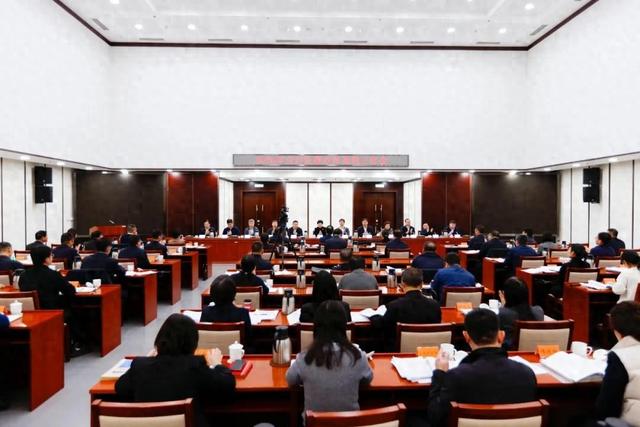
Core Insights - The Beijing Development and Reform Commission held a meeting to summarize the achievements of 2025 and set priorities for 2026, emphasizing the importance of high-quality development and effective governance [1][3][6]. Group 1: Economic Performance - In 2025, Beijing's GDP reached 5.2 trillion, growing by 5.4%, with fixed asset investment increasing by 5.5% [8]. - The city aims to enhance its economic stability and growth through various measures, including the implementation of the "3 100" key projects and the promotion of private investment [18][17]. Group 2: Innovation and Technology - The establishment of mechanisms for technological innovation and industry integration is a priority, with significant advancements in integrated circuits and artificial intelligence [9][22]. - The city plans to expand its green economy initiatives, including the construction of a carbon emission control system and the promotion of electric vehicles, with over 1.3 million units in use [9][22]. Group 3: Urban Development and Infrastructure - The meeting highlighted the importance of coordinated urban and regional development, with specific plans for the Xiong'an New Area and the construction of the urban sub-center [10][19]. - Infrastructure projects, including the completion of the Jing-Tang intercity railway, are part of the strategy to enhance connectivity and support economic growth [10][19]. Group 4: Social Welfare and Public Services - The city is focusing on improving public services to adapt to demographic changes, including the construction of youth apartments and child-friendly city initiatives [11][25]. - Efforts to enhance urban resilience and disaster recovery plans are underway, with a focus on food security and essential supplies [11][25]. Group 5: Policy and Governance - The meeting emphasized the need for high-quality governance and the integration of planning, resources, and policies to achieve development goals [15][16]. - Continuous reforms and high-level openness are essential for fostering a favorable business environment and supporting private enterprises [24][23].
上海市经信委:聚焦智能终端、商业航天等,再造万亿级产业新增量
Di Yi Cai Jing· 2026-02-07 06:21
Group 1 - Shanghai aims to create 25 billion-level segmented tracks tailored to local conditions as part of its "14th Five-Year Plan" and the establishment of a modern industrial system [1] - The city will focus on four main areas: implementing national strategies, accelerating industrial transformation, expanding industrial economic scale, and optimizing the industrial ecosystem [1] - Key industries such as integrated circuits and artificial intelligence will continue to maintain advantages, with manufacturing output expected to sustain double-digit growth [1] Group 2 - In the past year, Shanghai's industrial added value increased by 5.1%, with total output reaching 4.07 trillion yuan, marking a historical high [2] - The proportion of advanced manufacturing in Shanghai rose from 40% to 45%, while the share of three leading industries in manufacturing increased from 7.8% to 12.4% [2] - A new action plan aims to add 100 manufacturing enterprises with annual output value exceeding 1 billion yuan by 2028, contributing to the growth of the industrial chain [2]
今年上海“五个中心”建设在哪些领域发力?会有哪些重大项目?
Xin Lang Cai Jing· 2026-02-07 05:15
Core Insights - Shanghai aims to enhance its status as a global economic, financial, trade, shipping, and technology innovation center during the 14th Five-Year Plan period, focusing on strategic initiatives and major projects to boost urban capabilities and competitiveness [1][2][3] Economic Center Development - Shanghai will focus on elevating its international economic center status by constructing a modern industrial system characterized by advanced manufacturing, with key projects in integrated circuits, biomedicine, and artificial intelligence [1][2] - The city plans to enhance service quality and capacity, support enterprises in expanding internationally, and stimulate consumer potential to facilitate economic circulation [1] Financial Center Development - The strategy includes strengthening Shanghai's international financial center competitiveness by establishing a global RMB asset allocation center and risk management center, while expanding cross-border and offshore financial services [2] - Emphasis will be placed on financial reforms in technology innovation and the development of investment, mergers, and fintech clusters [2] Trade Center Development - Shanghai aims to upgrade its international trade center by attracting companies to set up global supply chain management centers and enhancing the allocation of bulk commodity resources [2] - The city will support the growth of new trade formats such as cross-border e-commerce and promote innovations in service trade, digital trade, and offshore trade [2] Shipping Center Development - The focus will be on establishing a leading global shipping center, with major projects including the construction of the Xiaoyangshan North Operation Area and the expansion of Pudong International Airport [2] - Efforts will be made to enhance high-end shipping services and establish a green fuel supply center for international shipping [2] Technology Innovation Center Development - Shanghai will strengthen its role as an international technology innovation center by supporting national laboratories and promoting research in key areas and the efficient application of major technological achievements [2] - The city aims to foster a positive cycle of education and technology talent [2] Overall Strategy - The approach will involve comprehensive planning, collaborative advancement, and targeted breakthroughs to enhance the overall, platform, amplification, and radiation effects of the "Five Centers" construction [3]
【财经分析】从产业重镇到科创高地 无锡集成电路产业集群崛起
Zhong Guo Jin Rong Xin Xi Wang· 2026-02-07 02:38
转自:新华财经 新华财经南京2月7日电(记者张磊、刘桃熊、陈碧琪)作为国家集成电路产业的重要布局点和创新策源地,无锡正以环太湖科创圈建设为契机,锚定集成 电路这一战略性新兴产业,构建起从源头创新到产业突破的完整生态链。江南大学科技园的高校创新活力、无锡(国家)集成电路设计中心的平台聚合效 能、无锡中微亿芯等企业的科研攻坚力量,三个点位串联起创新链、产业链、资金链、人才链深度融合的独特路径,让太湖之畔的"芯"力量持续迸发,为 区域产业高质量发展注入强劲动能。 环太湖科创圈的核心竞争力源于源头创新,坐落于山水东路科创谷的江南大学作为创新载体,依托江南大学在材料科学、物联网、集成电路技术等领域的 学科优势,深耕应用场景创新,打通从实验室到产业园的成果转化快车道,努力将高校智力资源转化为产业发展势能。 江南大学研究生院院长、国家卓越工程师学院执行院长吴小俊说,江南大学入选国家卓越工程师学院建设单位,标志着学校在服务国家战略急需、深化产 教融合方面实现重大突破。无锡大力推动校地合作,探索产教融合新路径。学校一直谋划将学生分散到企业培养后的管理模式,同时高度重视并前置招生 选拔工作,严把师、生、企入口关,全力做好高层次工 ...

盛阅春熊征宇会见中国船舶集团董事长徐鹏总经理王国强
Chang Jiang Ri Bao· 2026-02-07 01:09
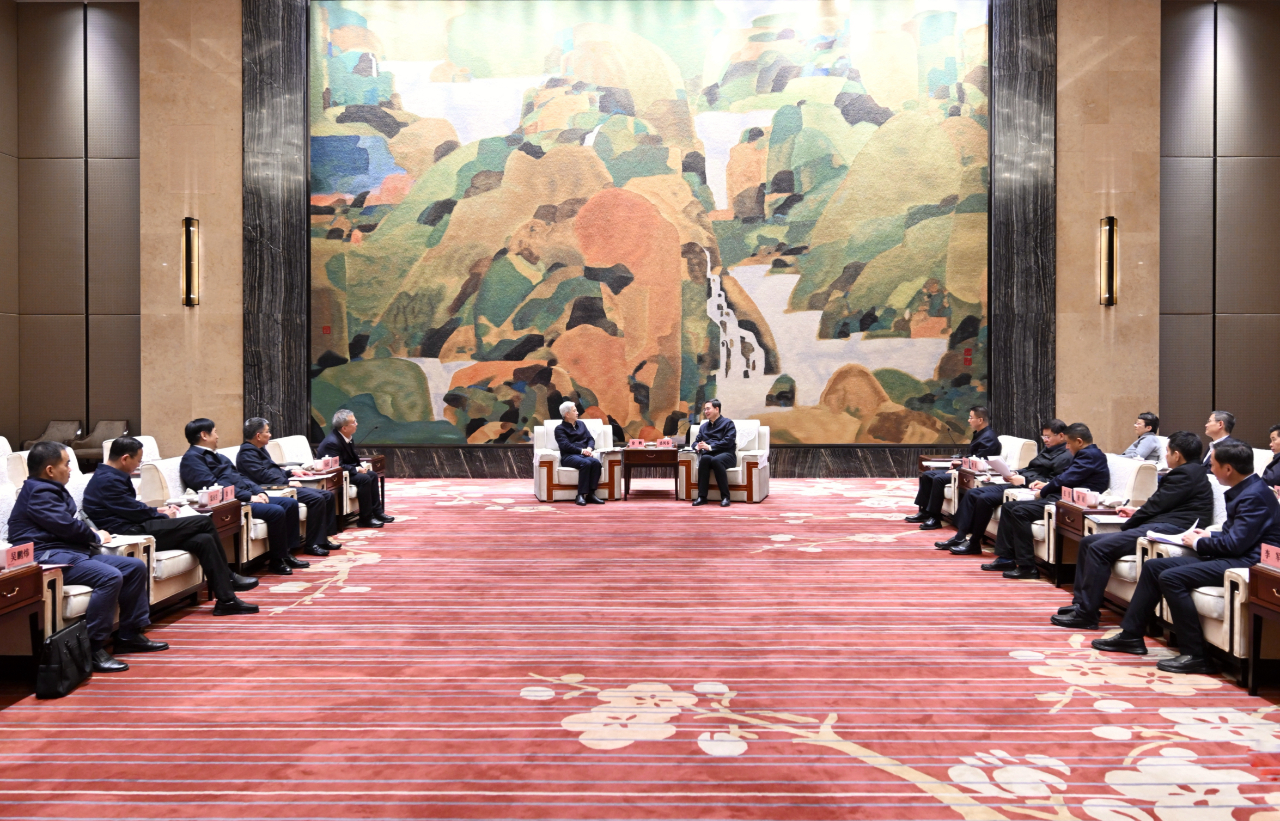
Group 1 - Wuhan is experiencing a golden period of development, characterized by a combination of strategic advantages, high technology, good guarantees, low costs, broad markets, and excellent support systems [2][3] - The city aims to leverage urban renewal to drive technological innovation, industrial revitalization, and governance reform, with a focus on becoming a national central city and building a modernized Wuhan [2] - The collaboration between China Shipbuilding Group and Wuhan is expected to deepen in areas such as green intelligent ships, integrated circuits, low-altitude economy, quantum technology, and new energy storage [3] Group 2 - China Shipbuilding Group views Wuhan as a significant research and manufacturing base due to its strategic advantages, rich talent resources, innovative vitality, and solid industrial foundation [6] - The group plans to increase investment in Wuhan and enhance cooperation to contribute to the construction of a modernized Wuhan [6] - Key leaders from both China Shipbuilding Group and Wuhan city participated in the meeting, indicating strong support for the partnership [6]

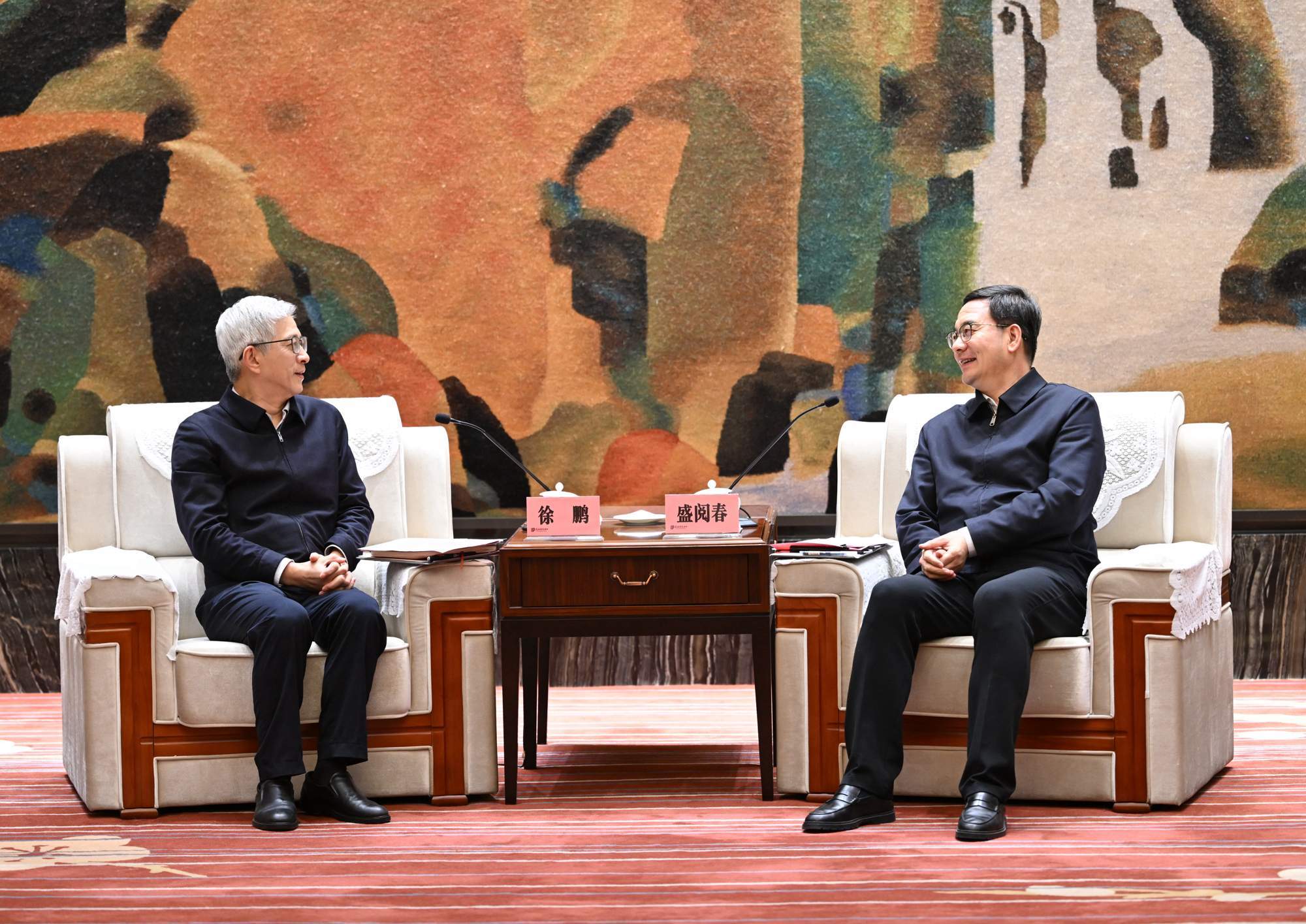
徐鹏王国强拜访武汉市委书记盛阅春、市长熊征宇
Xin Lang Cai Jing· 2026-02-07 00:06
Group 1 - The core viewpoint of the meeting is to enhance collaboration between China Shipbuilding Group and Wuhan to support national strategies and promote high-quality economic and social development in the region [2][3][4] - China Shipbuilding Group is committed to becoming a world-class shipbuilding enterprise and recognizes Wuhan as a key area for investment and innovation development [3][4] - The meeting emphasized the importance of deepening cooperation in various fields, including green intelligent ships, integrated circuits, low-altitude economy, quantum technology, and new energy storage [4] Group 2 - The leadership of China Shipbuilding Group expressed gratitude for the support from Wuhan's municipal government and highlighted the company's ongoing projects and business development in the city [3] - Wuhan is focused on becoming a national central city and aims to create a modernized urban environment, which aligns with the strategic goals of China Shipbuilding Group [4] - Both parties agreed to enhance the sharing of innovation platforms and accelerate the transformation of technological achievements to foster high-quality project construction [3][4]