风险投资

Search documents
高盛(GS.US)斥资高达9.65亿美元收购VC公司Industry Ventures 大举切...
Xin Lang Cai Jing· 2025-10-14 00:13
Group 1 - Goldman Sachs (GS.US) has agreed to acquire venture capital firm Industry Ventures for up to $965 million, with an initial payment of $665 million in cash and equity, and potential additional payments of up to $300 million based on performance by 2030 [1][2] - Industry Ventures, founded in 2000 and based in San Francisco, manages approximately $7 billion in assets, primarily through secondary market investments, co-investments, and providing capital to external venture funds [1][2] - The acquisition is expected to enhance Goldman Sachs' presence in the venture capital space, which is a key growth area in the U.S. economy, particularly as many companies remain private and benefit from trends in artificial intelligence and infrastructure development [2] Group 2 - Industry Ventures' founder Hans Swildens and two senior colleagues will join Goldman Sachs as partners, with Swildens reporting to Michael Brandmeyer, a senior executive in Goldman’s external investment division [2] - Swildens noted that Industry Ventures has been involved in about 20% of the U.S. venture capital market through approximately 10,000 underlying investment companies and over 325 partner firms, achieving a capital return rate of 2.2 times for investors since its inception [2] - Goldman Sachs' asset and wealth management head, Marc Nachmann, emphasized the stability of investment returns as a key factor for the acquisition, highlighting the challenge of maintaining such performance over 20 years [2]

天使投资人肖庆平意外离世 曾勉励创业者“早日毕业,IPO喝酒”
Jing Ji Guan Cha Bao· 2025-10-09 05:07
Core Insights - The article discusses the unexpected passing of Xiao Qingping, a prominent angel investor and chairman of Beijing Zhangshangtong Network Co., Ltd, who died in a car accident in Tibet [1][2] - Xiao was known for his significant contributions to the IT industry in China and his role in supporting numerous startups and entrepreneurs [4][6] Investment Journey - After graduating with a master's degree, Xiao Qingping ventured into the business world in Hainan, eventually investing in the IT sector after a trip to the United States in 1995 [2][3] - He was instrumental in the establishment of Zhongba Trust Investment Company and played a key role in the success of Lianbang Software, which became a leading brand in the software industry during the 1990s [2][3] - Xiao's investment in 8848, China's first B2C e-commerce company, showcased his early involvement in the internet sector, although the company ultimately faced challenges leading to its downfall [3][4] Contributions to the Industry - Xiao Qingping transitioned to a professional investor, deeply engaging in the domestic internet industry and advising companies like Sina and Lianzhong Games [4][5] - He invested in various companies, including China Travel Information Network and Zhangshangtong, which he led to a successful listing on the New Third Board in 2011 [5] - Xiao was a founding member of the Angel Hundred Association, aimed at supporting entrepreneurs and fostering innovation in the startup ecosystem [5][6] Investment Philosophy - Xiao's investment approach was characterized by a non-financially driven philosophy, focusing on helping young entrepreneurs succeed rather than purely seeking financial returns [6] - He encouraged grassroots entrepreneurs to actively participate in internet and IT ventures, famously advising them to "graduate early and celebrate with an IPO" [6]

一级市场变形记:各方都在“渡劫”
母基金研究中心· 2025-10-05 09:03
Core Insights - The article discusses the systemic challenges faced by the venture capital industry in China, highlighting the paradox of a seemingly recovering macro environment contrasted with the harsh realities experienced by individual entrepreneurs and investors [12][22]. Group 1: Industry Challenges - The case of an entrepreneur, referred to as Mr. Li, illustrates the personal and professional consequences of unfavorable investment agreements, particularly the "redemption rights" clause that imposes personal liability [8][21]. - There is a significant shift in the operational model of General Partners (GPs) from "raising, investing, managing, and exiting" to "raising, investing, managing, returning," indicating a focus on returning capital rather than generating returns [14][20]. - The management fees for funds have drastically decreased, with some funds now charging between 0.5% to 1.5%, reflecting a challenging fundraising environment [16][18]. Group 2: Structural Issues - The dominance of government-led funds, which account for 81.2% of total Limited Partner (LP) commitments, has fundamentally altered the investment landscape, shifting GPs' focus from maximizing returns for LPs to ensuring the preservation of state assets [20][21]. - The requirement for personal guarantees from founders has become commonplace, with over 80% of domestic venture capital agreements including such clauses, which undermines the principle of shared risk in venture capital [21][22]. - The investment decision-making process has shifted from market-driven logic to government-influenced criteria, emphasizing return on investment in specific regions rather than the inherent value of projects [26][27]. Group 3: Market Adaptation - Dollar funds are struggling to adapt to the new environment, facing challenges in fundraising and communication with local LPs due to language barriers and differing expectations [24]. - Renminbi funds have shifted their focus from traditional investment questions to those centered around return on investment and project viability in specific locations, reflecting a broader change in investment logic [26][27]. - State-owned investment institutions face unique pressures, including mandatory co-investment requirements and the burden of accountability for both losses and gains, complicating their operational landscape [28][29]. Group 4: Systemic Deficiencies - The reliance on management fees rather than performance-based compensation has created a misalignment of incentives, leading GPs to prioritize fundraising over effective investment [30][31]. - The risk-sharing model is skewed, with GPs benefiting from successful investments while founders bear the brunt of failures, creating a high-risk environment for entrepreneurs [31][32]. - The contradiction between the need for certainty in government policies and the inherent uncertainty of innovation hampers the growth of truly innovative enterprises [35][36]. Group 5: Opportunities for Transformation - The current challenges may present opportunities for capable participants to emerge, as the industry shifts back to its core purpose of value creation and supporting innovative companies [38][39]. - The trend of Chinese companies expanding overseas is gaining momentum, with a 25% year-on-year increase in the number of companies going abroad in the first half of 2025, offering new investment avenues [40]. - The rise of AI and other technological advancements presents structural investment opportunities, requiring GPs to possess strong technical and industry insights to identify valuable projects [41][42]. Group 6: Future Directions - The article emphasizes the need for a shift from a focus on financial returns to a commitment to fostering innovation and supporting the growth of promising enterprises [45][46]. - The narrative suggests that the future of the venture capital market will belong to those who can create genuine value and adapt to the evolving landscape, moving away from purely financial motivations [49].


风险债务巨头Stride进军沙特 计划两年内投放2亿美元
智通财经网· 2025-09-22 07:04
Group 1 - Stride Ventures is entering the Saudi Arabian market with plans to invest $200 million over the next two years to capitalize on new financing opportunities [1] - The company has previously invested over $1 billion in credit across India, Southeast Asia, and the UK, and recently led a funding round for Saudi fintech company Erad [1] - Stride aims to provide loans to companies of various sizes and industries in Saudi Arabia, having recently completed its first fund focused on the Gulf region [1] Group 2 - The company plans to invest $500 million in the region over the next four years, reflecting the growing importance of venture capital and private credit in Saudi Arabia [2] - Stride led a $33 million funding round for Erad, which provides financing to small and medium-sized enterprises, supporting its expansion in Saudi Arabia and the UAE [2] - Erad, founded in 2022, aims to deploy over $100 million for SMEs within the next year [2]
锤子科技成老赖?内部人士回应
Guan Cha Zhe Wang· 2025-09-18 13:43
Core Points - On September 17, 2025, Smartisan Technology (Chengdu) Co., Ltd. was listed as a "discredited person" due to failure to fulfill legal obligations related to a loan dispute with Suzhou Zihui Shengwang Venture Capital [1][2] - The company has not fulfilled a total of 21.42 million yuan in obligations, and its legal representative, Guan Zhiliang, has been restricted from high consumption [2][3] Company Background - Smartisan Technology (Chengdu) Co., Ltd. was established in May 2012, with a registered capital of approximately 31.498 million yuan, and its business scope includes software services and cultural activities [3] - Luo Yonghao is the chairman and actual controller of the company, holding 22.67% of its shares [3] Debt and Dispute - The company borrowed a total of 15 million yuan from Zihui Venture Capital, which is classified as company debt rather than personal debt of Luo Yonghao [3] - Luo Yonghao expressed willingness to repay the debt personally, but due to conflicts with Zihui Venture Capital's head, Zheng Gang, he decided to delay addressing the debt [3][4] Relationship Dynamics - Zheng Gang and Luo Yonghao had a long-standing friendship, but public disputes began in January 2023, with Zheng criticizing Luo for mismanaging Smartisan [4][5] - Luo announced plans to sue Zheng in August 2024, indicating ongoing tensions and a complicated relationship between the investor and the entrepreneur [5][6]
全球创新指数公布:中国首次跻身前十,这一指标超过瑞士
Di Yi Cai Jing Zi Xun· 2025-09-16 14:00
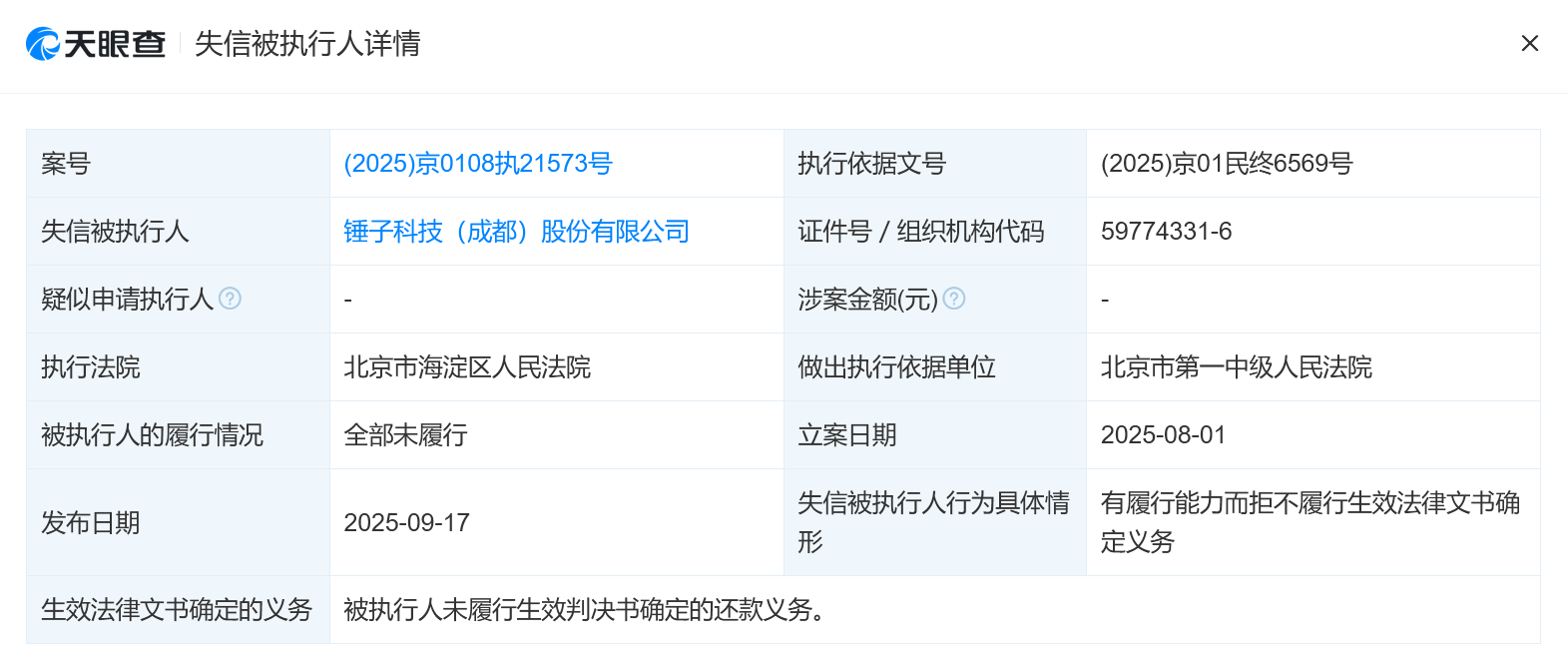
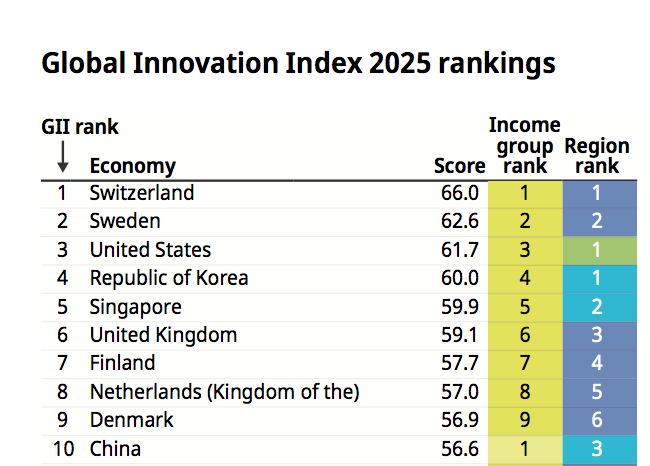
Core Insights - The Global Innovation Index (GII) ranks Switzerland, Sweden, the United States, South Korea, and Singapore as the top five innovative economies, with China making its debut in the top ten at the tenth position [1][2][3] - China has the highest number of innovation clusters in the top 100, totaling 24, with the Shenzhen-Hong Kong-Guangzhou cluster surpassing the Tokyo-Yokohama cluster to claim the top spot [1][4] - The GII report highlights the need for thoughtful policies, meaningful investments, and cross-sector collaboration to support and nurture innovation ecosystems [1][3] GII Rankings - The top ten economies in the GII are as follows: 1. Switzerland (Score: 66.0) 2. Sweden (Score: 62.6) 3. United States (Score: 61.7) 4. South Korea (Score: 60.0) 5. Singapore (Score: 59.9) 6. United Kingdom (Score: 59.1) 7. Finland (Score: 57.7) 8. Netherlands (Score: 57.0) 9. Denmark (Score: 56.9) 10. China (Score: 56.6) [2] China's Performance - China ranks first in knowledge and technology output, second in R&D expenditure, and leads globally in patent applications [3][4] - The country has seen a steady rise in its GII ranking, now being the highest-ranked middle-income economy [4] - China's R&D investment intensity has increased to 2.68%, nearing the OECD average of 2.73% [5] Regional Innovation Clusters - The Shenzhen-Hong Kong-Guangzhou cluster is ranked first, followed by Tokyo-Yokohama, San Jose, Beijing, and Seoul [7] - The Yangtze River Delta region shows significant growth in R&D investment and patent cooperation, with a projected R&D intensity of 3.33% by the end of 2024 [9] Global R&D Trends - Global R&D investment growth is slowing, with a projected increase of only 2.9% in 2024, further declining to 2.3% in 2025 [10] - The software and ICT services sector has seen an increase in R&D spending share from 14% in 2018 to over 20% in 2024, while the automotive sector's share has decreased from over 18% to about 14% [11]
乔布斯:从被逐到王者归来,创业投资的不朽启示
Sou Hu Cai Jing· 2025-09-16 12:06
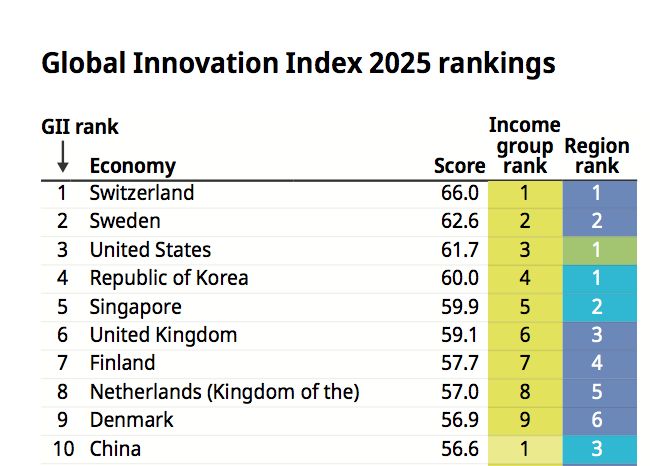
Core Insights - Steve Jobs' journey exemplifies resilience and vision in the face of adversity, transforming setbacks into opportunities for innovation and growth [2][3][5] Group 1: Early Career and Setbacks - In 1985, Steve Jobs was ousted from Apple, marking a significant setback in his career, which he later transformed into a chance for reinvention [2] - Jobs recruited John Sculley from PepsiCo with a compelling vision, but internal conflicts led to his removal from Apple [2][3] Group 2: Second Ventures - After leaving Apple, Jobs invested millions in Pixar and NeXT, despite initial failures, demonstrating a long-term investment strategy focused on future value [3][4] - Pixar's success with "Toy Story," which grossed $373 million, marked a turning point for both the company and the animation industry [3] Group 3: Return to Apple - Upon returning to Apple in 1997, Jobs implemented the Pareto principle, cutting 70% of the product line to focus on core offerings, leading to a profitable turnaround [4] - The launch of the iMac in 1998 sold 800,000 units in five months, contributing to Apple's profitability of $309 million that year [4] Group 4: Innovation and Growth - Under Jobs' leadership, Apple introduced groundbreaking products like the iPod, iPhone, and iPad, significantly increasing its market value to $350 billion by 2010 [4] - By the time of Jobs' passing in 2011, Apple's market capitalization reached $2.9 trillion, solidifying its status as the most valuable company in history [5] Group 5: Lessons for Entrepreneurs and Investors - Entrepreneurs should maintain unwavering belief in their vision and prioritize innovation to meet evolving consumer demands [5][6] - Investors are encouraged to adopt a long-term perspective, recognizing potential in emerging sectors and diversifying investments to mitigate risks [5]

全球创新指数中国首次跻身前十,拥有最多百强创新集群
Di Yi Cai Jing· 2025-09-16 09:21
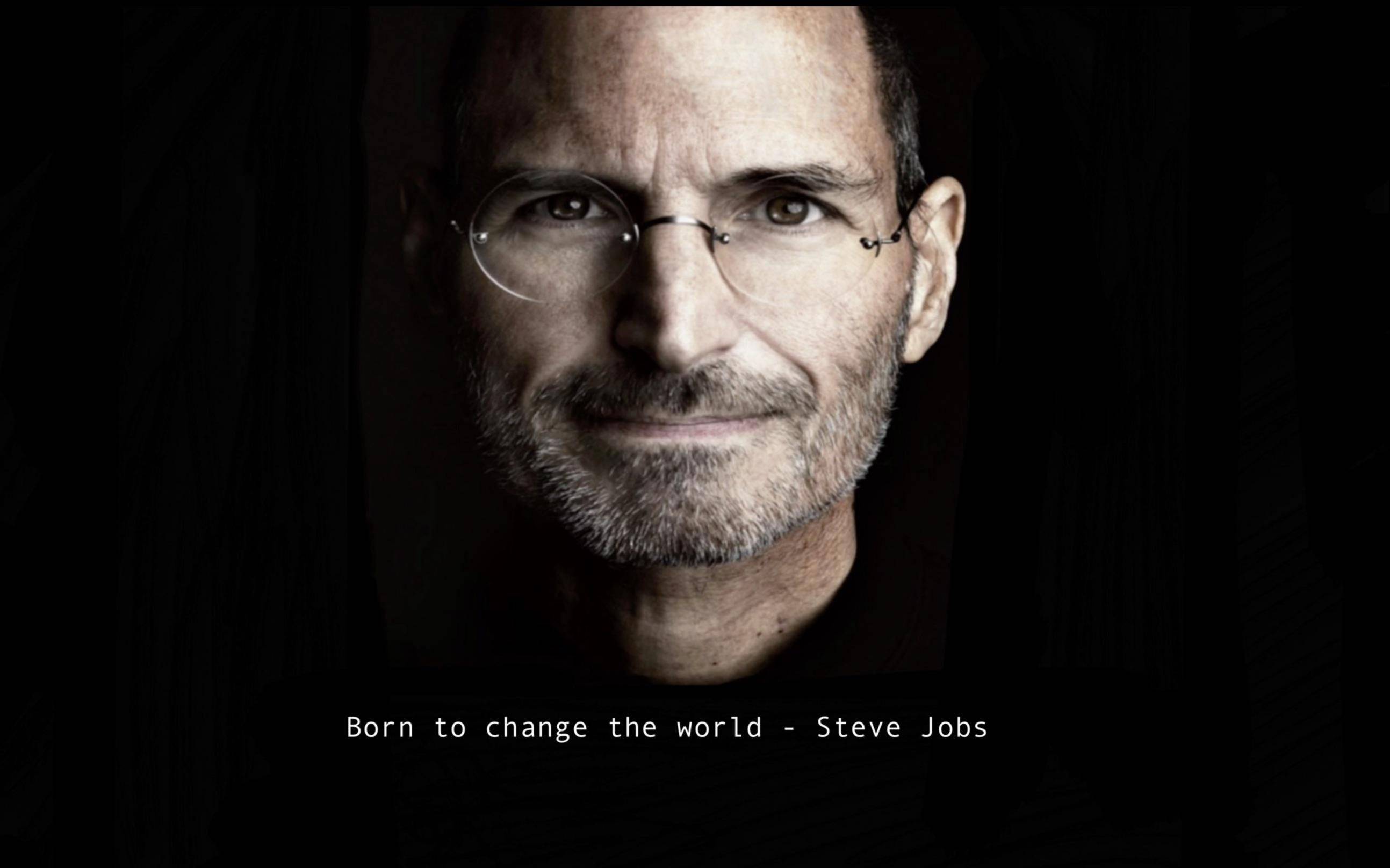
Group 1 - The Global Innovation Index (GII) ranks Switzerland, Sweden, the United States, South Korea, and Singapore as the top five economies for innovation [1][2] - China has entered the top ten for the first time, ranking 10th, and has the most innovation clusters in the global top 100, with 24 clusters [1][2] - The GII evaluates nearly 140 economies using around 80 indicators, including R&D expenditure, venture capital transactions, high-tech exports, and intellectual property applications [4] Group 2 - The report indicates that R&D growth is expected to slow down to 2.9% in 2024, the lowest since the 2010 financial crisis, with a further decline to 2.3% projected for 2025 [4] - Due to persistent high inflation, corporate R&D spending has only increased by 1%, significantly lower than the average of 4.6% over the past decade [5] - Venture capital (VC) investment is projected to grow by 7.7% in 2024, driven by large transactions in the U.S. and investments in generative AI, although overall VC activity is contracting when excluding these projects [5]
2025中国风险投资论坛在上海举行
Jie Fang Ri Bao· 2025-09-15 01:44
Group 1 - The 25th China Venture Capital Forum was held in Shanghai with the theme "New Venture Capital, New Industry, New Model" [1] - The forum emphasized the importance of high-quality financial development and its role in supporting the real economy and building a strong financial nation, as highlighted by the Chairman of the Central Committee of the China Democratic League, Hao Mingjin [2] - Keynote speaker Qin Boyong stressed the significance of integrating venture capital with technological and industrial innovation, and the need to seize opportunities presented by national policies and capital market development [2] Group 2 - The forum released the "China Venture Capital Development Annual Report (2025)" and the list of "Top 50 Pioneer Technology Investment Institutions in 2025" [3]
朱总瘦了
投中网· 2025-09-11 02:45
Core Viewpoint - The article reflects on the 20th anniversary of金沙江创投, highlighting its evolution, key figures, and investment strategies over the years, particularly focusing on朱啸虎's role and the firm's adaptability in the changing investment landscape [2][9]. Group 1: History and Formation - 金沙江创投 was initially named "中国新产业基金" and focused on "hard technology," later rebranding to signify its role in nurturing Chinese technology [3][4]. - The founding team included experienced professionals from various sectors, establishing a strategic partnership with Mayfield, a prominent Silicon Valley fund, to connect Chinese projects with global resources [4][3]. - The first fund raised $75 million in 2005, marking a significant milestone in China's VC landscape, with subsequent funds showing substantial growth [4][3]. Group 2: Investment Strategy and Key Projects - 朱啸虎 joined 金沙江创投 in 2007, becoming the youngest partner, and was involved in notable projects like 百姓网 and 拉手网, which later faced challenges [7][9]. - The firm experienced a shift in investment focus during the mobile internet boom, leading to successful investments in companies like 饿了么, 滴滴, and 小红书, which contributed to its reputation [9][10]. - In 2016, internal disagreements led to the departure of key partners, resulting in the establishment of separate entities, but 金沙江创投 continued to thrive under 朱啸虎's leadership [8][9]. Group 3: Recent Developments and Future Outlook - As of 2021, 金沙江创投 has not announced new fundraising, reflecting a period of consolidation and strategic planning for future investments [10][11]. - The firm has adapted to geopolitical risks by rebranding its U.S. operations and maintaining a focus on relevant investment opportunities without overextending [9][10]. - 朱啸虎's approach emphasizes quick returns and strategic exits, showcasing a balance between risk and opportunity in the current investment climate [10][11].