即时零售

Search documents
全国社会物流总额同比增长5.1%
Ren Min Ri Bao· 2025-12-02 21:52
Core Insights - The total social logistics volume in China reached 293.7 trillion yuan from January to October this year, reflecting a year-on-year growth of 5.1%, with a monthly growth of 4.8% in October [1] Group 1: Logistics Demand Trends - The logistics demand scale is showing stable growth, with structural adjustments and optimization characteristics becoming more prominent [1] - The logistics volume of industrial products grew by 5.3% year-on-year from January to October [1] - In October, logistics demand related to automobile manufacturing saw a significant year-on-year increase of 16.8%, indicating strong growth momentum [1] Group 2: Consumer Goods Logistics - The logistics volume for units and residential goods maintained a rapid growth rate, with a year-on-year increase of 6.4% from January to October [1] - Online consumption logistics remains active, with new business models such as instant retail and live e-commerce experiencing robust growth, leading to double-digit increases in related logistics demand [1] Group 3: New Energy Sector Logistics - The logistics demand for the new energy industry chain continues to grow at a high speed, with logistics volumes for new energy vehicles and lithium-ion batteries for automobiles increasing by 19.3% and 30.4% year-on-year in October, respectively, surpassing the average growth rate of social logistics [1]
半年超700亿元的资本灰烬里,外卖大战无人获胜:一场核心防御、生态进攻与效率实验的残酷对决
Mei Ri Jing Ji Xin Wen· 2025-12-02 16:25
进入12月,上海的外卖骑手李明(化名)明显感觉单量变"凉"了。午高峰时期,曾经被来自不同平台的 骑手挤得水泄不通的奶茶店门口,如今恢复了秩序。他的收入从夏季巅峰时月入1.5万元左右,回落到 眼下1.2万元左右,"补贴少了,每天要比最火的时候少跑近二十单"。 几乎同一时间,一家连锁茶饮品牌的创始人李察(化名)看着刚刚出炉的11月账本,松了一口气。他再 也不用面对那些让自己"白忙活"的订单——今年8月,外卖平台一度将一杯14元的饮品压价至1.9元售 卖,订单如潮水般涌来,过量的订单让他焦头烂额。 这一冷一热的切身体验,精准勾勒出2025年下半年那场席卷中国本地生活市场的百亿元级补贴大战从狂 热顶点迅速退潮的轨迹。 近日,随着美团、阿里、京东三季度财报密集发布,一场持续半年、消耗超700亿元的搏杀,背后的代 价被摊在阳光下:平台利润骤降,商家困于"增量不增利"。阿里高管直接表态,将在下个季度"显著收 缩"相关投入。美团CEO(首席执行官)王兴在财报电话会上更是直言,这种竞争"无法创造真实价 值"。 从街头骑手、品牌商家到平台巨头,所有参与方在这个冬天都感受到了深刻的转折。这场似乎没有赢家 的消耗战逐渐偃旗息鼓,但一 ...


零售业上市公司积极构建差异化竞争优势
Zheng Quan Ri Bao· 2025-12-02 16:15
Core Insights - Retail companies are actively adapting to consumer upgrade trends and focusing on building differentiated competitive advantages [1] Group 1: Digital Transformation - Digitalization is a key focus for most retail companies, with gradual improvements in store operations, reducing display workload, and significantly lowering stockout rates [2] - Chongqing Department Store is integrating digitalization with instant retail, aiming for a "store + warehouse" model to enhance regional penetration and provide fast delivery services [2] Group 2: Consumer Technology - Consumer technology is a closely monitored area for retail companies, with a focus on projects that have strong market validation and commercialization capabilities [3] - Companies are leveraging high-end member resources and regional advantages to invest in sectors like pet care and specialized medical chains [3] Group 3: Supply Chain Transformation - The retail industry is undergoing supply chain changes to enhance operational efficiency and product competitiveness, with a consumer-centric approach [4]


互联网巨头烧掉770亿,拼多多意外逆袭成赢家,行业格局大洗牌
Sou Hu Cai Jing· 2025-12-02 13:12
短短几个月,烧掉的资金比想象中更多,热闹的表象下,其实不少商家和平台都陷入了进退两难的处 境。 而让人没想到的是,因为这场烧钱大比拼,让一旁观战的拼多多以4238亿的现金,打败阿里,成了当前 中国互联网企业"现金王" 巨头押注新赛道 这次的烧钱大战,起因很直接:电商老业务吃不准了。淘宝和京东这些老牌平台,这几年用户增长基本 见顶,甚至偶尔下滑。可新玩家没闲着,抖音、拼多多仍是一路高歌猛进。 眼看老路堵死,各家必须找出路,所以纷纷盯上"即时零售"——也就是现在点个外卖,不只是点饭,超 市、药店甚至花店,都能立刻送到,饭菜杂货通通抢着做。 如此庞大的市场,谁也舍不得放手。 大家好,我是乔叔,这期咱们一起聊聊即时零售烧钱大战,看几家互联网巨头砸下七百多亿,最后到底 谁赢谁亏,谁才是这场转型中的真正赢家。 今年夏天,很多人发现点外卖时优惠券比菜还多,奶茶外卖价格低得像不要钱一样。看似外卖平台各家 撒红包,大家薅得热火朝天,但背后其实是几个互联网巨头拼命砸钱抢市场。 所有人逐渐明白,这么补下去根本吃不消。三大平台"烧"了七百多个亿,只有没下场的大公司像拼多 多、腾讯追着数钱,各大巨头不砸广告不补贴的,都成了真正的赢家, ...



阿里巴巴-W(09988):FY26Q2业绩点评:云业务加速增长,即时零售有望迎来UE改善
Huaan Securities· 2025-12-02 12:26
Investment Rating - The investment rating for Alibaba is maintained as "Buy" [1] Core Views - Alibaba's FY2026 Q2 revenue reached 247.8 billion yuan, a year-on-year increase of 5%, exceeding Bloomberg's expectations by 1%. Excluding disposed businesses, the revenue growth is 15% year-on-year [5] - Adjusted EBITA was 9.1 billion yuan, down 78% year-on-year, and Non-GAAP net profit was 10.4 billion yuan, down 72% year-on-year, both lower than Bloomberg's expectations [5] - The core e-commerce segment saw a 10% increase in CMR to 78.9 billion yuan, driven by an increase in take rate [5] - The cloud business experienced accelerated growth with a revenue increase of 34% year-on-year, driven by AI-related products [6] - AIDC achieved its first EBITA profit, with a revenue increase of 10% year-on-year to 34.8 billion yuan [6] Financial Summary - FY2026 revenue is projected at 1,041.4 billion yuan, with a year-on-year growth of 4.5%. Non-GAAP net profit is expected to be 100.1 billion yuan, a decrease of 36.6% year-on-year [7] - The projected revenue for FY2027 and FY2028 is 1,160.2 billion yuan and 1,286.1 billion yuan, respectively, with year-on-year growth rates of 11.4% and 10.9% [7] - The projected Non-GAAP net profit for FY2027 and FY2028 is 149.9 billion yuan and 190.5 billion yuan, with year-on-year growth rates of 49.8% and 27.1% [7] - The P/E ratio is expected to be 27 for FY2026, decreasing to 17 and 13 for FY2027 and FY2028, respectively [9]
钟睒睒,杀入600亿新赛道
创业家· 2025-12-02 10:38
Core Viewpoint - Nongfu Spring is expanding its business into the edible ice market, investing 28.42 million yuan to build a production line with an annual capacity of 7,000 tons, capitalizing on the growing popularity of ice cups among consumers, particularly the younger demographic [6][8][15]. Group 1: Business Expansion - Nongfu Spring plans to invest 28.42 million yuan to expand its edible ice production capacity, utilizing existing facilities in Hangzhou [6][8]. - The new production line will focus on producing 160g ice cups, with an expected output of 5,600 tons, and 2kg bags of high-transparency ice, with an output of 1,400 tons [8]. - The ice cup category has seen a sales growth of over 300% for two consecutive years, indicating a strong market demand [6][13]. Group 2: Market Trends - The ice cup market is experiencing rapid growth, with a significant increase in orders for ice cup combinations with alcoholic and non-alcoholic beverages, showing year-on-year growth rates of 267% and 261% respectively [13][15]. - The edible ice market is projected to reach a sales scale of over 63 billion yuan by 2026, with an expected growth rate of 39% in the next three years [14]. Group 3: Competitive Landscape - Major players like Mengniu and Yili have entered the ice cup market, intensifying competition and potentially leading to price reductions [17][20]. - The production cost of ice cups is relatively low, but the profit margins are tight, with production costs around 0.6 to 0.7 yuan per cup and wholesale prices around 1 yuan [18][20]. - The entry of large beverage companies into the ice cup market may lead to a price war, with predictions of further price reductions in the coming years [21].


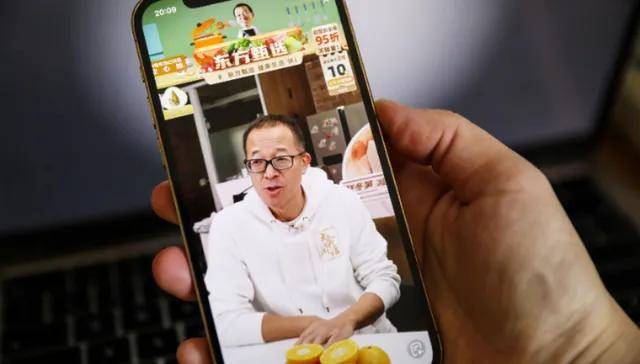
俞敏洪接任孙东旭,东方甄选或进军外卖业务
Sou Hu Cai Jing· 2025-12-02 05:53
Group 1 - The core point of the news is the significant management change at Dongfang Zhenxuan, with Sun Dongxu resigning and Yu Minhong taking over as the legal representative, manager, and executive director [2][3] - Following the management change announcement, the capital market reacted positively, with Dongfang Zhenxuan's stock price rising over 8% [4] - Yu Minhong announced on social media that Sun Dongxu left for personal reasons, and the current main management team includes Yu Minhong, Hu Xiaozhe, and Li Wei [2][4] Group 2 - Dongfang Zhenxuan has expanded its business scope to include restaurant management, delivery services, and catering, indicating a strategic move towards the food consumption sector [6][8] - The company has a strong foundation in self-operated products and supply chain management, having successfully launched popular food items, which supports its entry into the food delivery market [8] - The collaboration with JD.com for the "hourly delivery" service demonstrates Dongfang Zhenxuan's approach to entering the instant retail market without heavy investment in logistics [15][8] Group 3 - The instant retail market is projected to exceed 1 trillion yuan by 2026 and reach 2 trillion yuan by 2030, indicating significant growth potential [15] - However, the competition in the food delivery sector is intense, with established platforms like Meituan and JD.com engaging in price wars, posing challenges for Dongfang Zhenxuan [15][17] - The operational complexity of entering the food delivery and restaurant service sectors presents new challenges for the company's overall operational capabilities [17][16]
马云又一预言应验了?传统电商遇冷,新购物模式已在全国兴起
Sou Hu Cai Jing· 2025-12-01 20:08
前阵子逛商场,看到有人在服装店用手机扫码比价,最后线上下单等即时配送。这场景让人想起马云多年前说的:"未来零售不是线上线下竞争,是线上线 下加物流的新零售。"如今传统电商用户增长率首现负增长,新购物模式却涨势迅猛,这是否意味着电商真要被淘汰了? 传统电商不香了? 我们先看一组数据,据《2025年中国零售市场趋势报告》,传统电商平台用户增长率同比下降3.7%,而社区团购、直播电商等新模式用户量增长46.8%。 再看GMV(商品交易总额),2025年上半年传统电商GMV增长率仅4.3%,创下近十年新低。以前热闹的"双十一""618"大促,现在增长也明显放缓,2025 年"618"期间,传统电商平台整体成交额同比仅涨5.6%,远低于2020年的26.7%。 更让商家头疼的是利润问题,某电商从业者联盟调研显示,2025年传统电商中小商家平均净利润率从2022年的8.5%降到了4.2%,有近18%的中小商家选择暂 时关闭店铺。 为啥会这样?先是获客成本太高,2025年电商平台获客成本平均320元/人,比2022年涨了87%。有个卖家居用品的商家算过账,以前花500元推广能带来20 个订单,现在花2000元推广,订单量还 ...
“财政贴息+以旧换新”红利释放 消费主引擎马力足
Shang Hai Zheng Quan Bao· 2025-12-01 19:25
Core Viewpoint - Consumption is identified as the "main engine" of economic growth and a "barometer" of public well-being, with various initiatives and policies being implemented to stimulate consumer activity as the year-end shopping season approaches [1] Group 1: New Consumption Trends - The integration of artificial intelligence (AI) and augmented reality (AR) in consumer experiences is expanding, with applications in fitness, travel, and hospitality [1] - The user base for generative AI products in China reached 515 million by mid-2023, indicating a growing trend in AI-driven consumer applications [1] Group 2: Online and Offline Consumption - Instant retail has emerged as a popular online consumption model, with significant growth in the sales of antiviral medications during flu season, exemplified by a 4.5-fold increase in oseltamivir sales on JD.com from November 17 to November 23 [2] - The instant retail sector is approaching a trillion-yuan scale, with increasing consumer acceptance transforming it into a regular part of daily life [2] Group 3: Policy Support for Consumption - The Chinese government is encouraging the development of smart home appliances and AI products to enhance consumer services, as outlined in a recent implementation plan [3] - The service sector, particularly in areas like dining and tourism, is experiencing faster growth compared to goods consumption, with a reported 3.8% year-on-year increase in restaurant revenue in October [5] Group 4: Service Consumption and Market Potential - Policies aimed at stimulating service consumption are being implemented, including a 500 billion yuan loan facility for service and elderly care sectors, which is expected to leverage additional social capital [6] - The potential for service consumption is significant, particularly in healthcare and elder care, driven by the largest middle-income group globally [7] Group 5: Innovative Consumption Models - New consumption models are emerging, such as the collaboration between traditional brands and popular IPs to attract younger consumers, as seen in the partnership between Huatian and the animated series "Journey to the West" [4] - The integration of various activities, such as ice and snow tourism with cultural and sports events, is creating new consumer experiences and products [8] Group 6: Future Directions for Consumption - The focus for future consumption growth will be on systematic policy combinations that enhance domestic demand while improving public welfare, ensuring that consumer benefits are directly linked to policy initiatives [9]
外卖大战成绩单出炉,三巨头多烧了614亿
2 1 Shi Ji Jing Ji Bao Dao· 2025-12-01 16:10
作者丨周慧 编辑丨巫燕玲 "烧"了多少钱? 外卖大战从今年4月份京东的加入开局,二季度末,阿里淘宝闪购加入。 到了三季度,以美团、阿里、京东为代表的"外卖三国杀"进入了最疯狂的竞争补贴阶段,行业一度出 现"零元购"的补贴力度。 由于行业竞争进一步加剧,三季度美团核心本地商业经营利润转负,亏损141亿元。 2025年夏天,美团、阿里、京东三家平台,在利润率不高且并不时髦的外卖行业,贡献了一场全民参与 的商战。 从外卖"零元购",奶茶店挤满等单的外卖骑手,再到监管点名和行业呼吁"反内卷",三家外卖平台 的"参战"成绩如何? 从财务数据来看,外卖业务补贴都给平台带来了亏损,公司整体盈利水平下降。三季报显示,仅三季 度,美团、阿里、京东三家平台的销售和市场费用就分别增加了163亿元、111亿元和340亿元,一共多 花了614亿,而增加的原因多与外卖业务有关。 而对于参与的商家而言,外卖大战对堂食产生了不利影响,导致外卖行业利润变薄。事实上,即便一些 以外卖为主的快餐品类订单量大涨,利润也在变薄,有些商家还会出现"订单越多,亏得也越多"的情 况。 平台已在反思。美团CEO王兴在财报电话会上表示,"过去六个月已证明这种竞 ...