
碳达峰碳中和

Search documents
以主要排放企业为重点,钢铁水泥铝冶炼行业配额方案将出炉
Di Yi Cai Jing· 2025-10-06 02:27
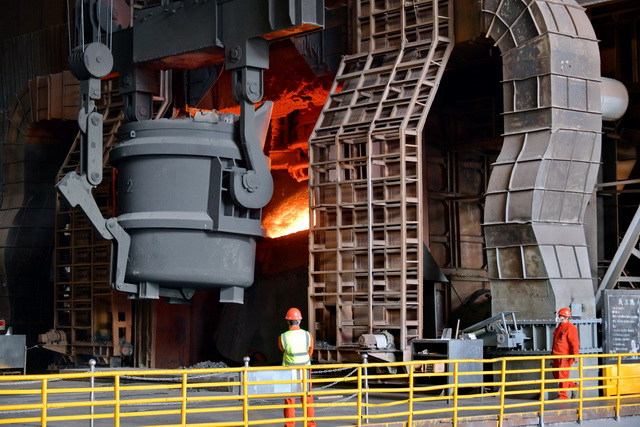
Core Viewpoint - The allocation of carbon emission quotas for the steel, cement, and aluminum smelting industries in the national carbon trading market for 2024 and 2025 is being developed, linking the quota amount to actual production levels in 2025 [1][5] Group 1: Quota Allocation Plan - The "Quota Plan" considers factors such as national greenhouse gas emission control targets, economic and social development, industry development stages, historical emission data, market regulation needs, technological innovation, and carbon emission data management to scientifically formulate the total quota and distribution plan [2] - The quota distribution will be implemented gradually, focusing on major emitting enterprises and processes, with free allocation based on carbon emissions per unit of output for 2024 and 2025 [2][5] Group 2: Industry Emission Characteristics - The steel industry accounts for 15% of the national total carbon emissions, making it the highest-emitting sector in manufacturing [4] - The allocation of quotas will be based on specific industry characteristics: steel based on enterprises, cement based on clinker production lines, and aluminum smelting based on aluminum electrolysis processes [5] Group 3: Market Environment and Management - The plan aims to create a fair, competitive, and open market environment, encouraging companies to improve carbon emission management and adopt green low-carbon technologies [4] - The carbon market has been established as the largest globally, covering over 60% of national carbon emissions, with a cumulative transaction volume of 714 million tons and a transaction value of 48.961 billion yuan as of September 2025 [6]

让碳市场更好助力绿色低碳转型(生态论苑)
Ren Min Ri Bao· 2025-10-03 21:42
Core Insights - The national carbon emissions trading market in China is a significant policy tool aimed at achieving carbon peak and carbon neutrality goals, transforming emission reduction pressure into internal motivation for economic growth [1][2] - The market has successfully integrated major industries such as steel, cement, and aluminum, covering over 60% of the country's carbon dioxide emissions [1][2] - The trading market's activity is increasing, with a record transaction volume of 18.114 billion yuan in 2024, marking the highest level since its inception in 2021 [2] Group 1 - The carbon market encourages companies to sell excess carbon emission allowances and reinvest the proceeds into energy-saving projects, creating a positive feedback loop [1] - The national carbon market operates independently from the voluntary greenhouse gas reduction trading market, yet they are interconnected through a quota clearing mechanism [2] - The carbon market has fostered a low-carbon development awareness across society, emphasizing that carbon emissions incur costs while reductions yield benefits [2] Group 2 - The establishment of the carbon market is a complex system requiring effective management, regulatory frameworks, reliable trading systems, and accurate emission data [3] - There is a need to expand the coverage of the national carbon emissions trading market and develop a comprehensive methodology to support voluntary emission reductions [3] - Recent government opinions aim to enhance the effectiveness and international influence of the national carbon market, promoting green and low-carbon transitions [3]
全国碳市场价格9月下跌16.35% 10月碳价预计仍下行
Zheng Quan Shi Bao Wang· 2025-09-30 14:37
Core Insights - The national carbon market in China experienced a significant price drop, with the closing price on September 30 at 57.97 yuan/ton, down 16.35% from the last trading day of the previous month [1] - The total trading volume of carbon emission allowances (CEA) in September reached 32.7 million tons, with a total transaction value of 2.004 billion yuan [1] - The average daily closing price of CEA in September was 62.94 yuan/ton, a substantial decrease of 11.5% compared to August's average of 71.12 yuan/ton [1] - The average daily trading volume in September was 1.3678 million tons, an increase of approximately 90% from August's 719,500 tons [1] - The carbon market's trading activity significantly increased, with three-quarters of trading days in September seeing volumes exceeding one million tons [1] - Industry expectations indicate that carbon prices are likely to continue declining, with forecasts for October 2025 showing a buy price of 55.39 yuan/ton and a sell price of 60.63 yuan/ton [1] Industry Developments - The national carbon market serves as a crucial policy tool for China to address climate change and achieve carbon peak and neutrality goals [2] - The recently released "National Carbon Market Development Report (2025)" highlights that the carbon trading market offers greater flexibility and autonomy for companies compared to mandatory production and emission limits [2] - By 2024, the carbon emission intensity of the national power sector is expected to decrease by 10.8% compared to 2018 levels [2] - Future plans include enhancing the carbon market's role in controlling greenhouse gas emissions, expanding the coverage of the carbon trading market, and enriching trading varieties and methods [2] - China aims to deepen climate cooperation across various fields and strengthen international collaboration in carbon market standards and methods [2]
全国首个污水尾水回用碳普惠方法学发布,助力全运“碳中和赛事”
2 1 Shi Ji Jing Ji Bao Dao· 2025-09-30 14:16
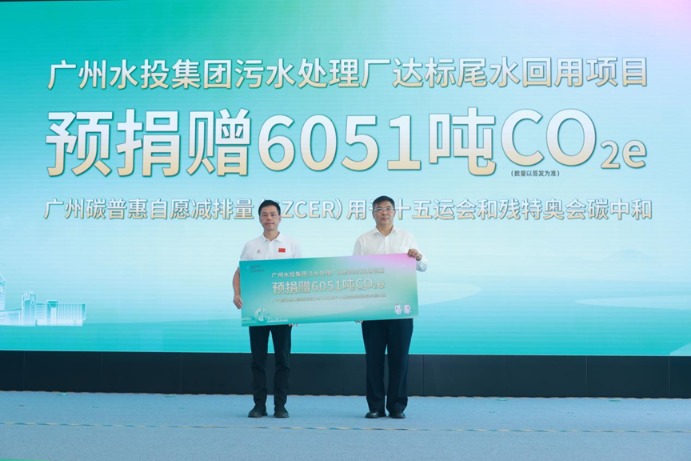
Core Insights - The establishment of the "Carbon Benefit Methodology" for wastewater treatment in Guangzhou marks a significant advancement in linking wastewater reuse with carbon reduction, making Guangzhou the first city in China to achieve this in the sewage treatment sector [1][2][3] Group 1: Methodology and Implementation - The "Methodology" serves as a technical guideline that directly connects "qualified wastewater reuse" with "carbon reduction," providing a unified standard for carbon reduction projects in the wastewater industry [2][3] - The methodology employs a "differential method" to calculate emission reductions by comparing carbon emissions from conventional water supply processes with those from reused wastewater systems, allowing for precise quantification of greenhouse gas reduction benefits [2][3] Group 2: Impact and Significance - The methodology transforms the "low-carbon value" of wastewater from being invisible to being measurable, reportable, and verifiable, thus providing essential technical support for future carbon asset development in urban water management [3][4] - The initiative aligns with the goals of the 15th National Games and the Special Olympics, promoting a transparent and traceable carbon reduction framework that integrates green outcomes into the event's organization [3][4] Group 3: Industry Standards and Practices - The methodology fills a gap in the standards for carbon reduction accounting in wastewater reuse, offering a clear path for wastewater treatment enterprises across the country to quantify their carbon reduction achievements [3][4] - Guangzhou Water Investment Group has successfully developed 6,051 tons of CO2e reduction and donated it to the organizing committee, demonstrating a commitment to supporting the carbon-neutral goals of the upcoming sports events [5][6] Group 4: Technological Advancements - Guangzhou Water Investment Group has implemented a comprehensive carbon management system covering water, sludge, gas, electricity, and carbon, showcasing its commitment to green and low-carbon technology innovation [6][7] - The company has established nine provincial and municipal technology innovation platforms, holds 165 patents, and has achieved several international leading standards in its technological advancements [6][7]
全国首个污水尾水回用碳普惠方法学发布 助力全运“碳中和赛事”
2 1 Shi Ji Jing Ji Bao Dao· 2025-09-30 14:13
Core Viewpoint - Guangzhou has become the first city in China to establish a carbon benefit methodology linking wastewater treatment plant effluent reuse with carbon reduction, marking a significant advancement in the wastewater industry and supporting the city's low-carbon development goals [1][2][3]. Group 1: Carbon Benefit Methodology - The methodology, titled "Guangzhou's Carbon Benefit Methodology for Wastewater Treatment Plant Effluent Reuse," is the first of its kind in the country, directly linking effluent reuse with carbon reduction [2][3]. - It employs a "differential method" to calculate carbon reduction by comparing the carbon emissions from conventional water supply processes with those from effluent reuse systems, allowing for precise quantification of greenhouse gas reduction benefits [2][4]. - This methodology transforms the "invisible" low-carbon value of wastewater effluent into a "measurable, reportable, and verifiable" asset, providing essential technical support for future carbon asset development in urban water management [1][2]. Group 2: Contribution to Events and Industry Standards - Guangzhou Water Investment Group has donated 6,051 tons of carbon reduction credits to support the green goals of the 15th National Games and the Special Olympics, showcasing the integration of carbon reduction efforts into major city events [1][6]. - The methodology fills a gap in the standards for carbon reduction accounting in the wastewater sector, offering a clear path for wastewater treatment enterprises across the country to quantify their carbon reduction achievements [3][4]. - The establishment of this methodology is seen as a practical demonstration of state-owned enterprises leading industry standard development and contributing to low-carbon transitions [3][4]. Group 3: Technological Innovations and Achievements - Guangzhou Water Investment Group has developed a comprehensive carbon management system covering water, sludge, gas, electricity, and carbon, enhancing its capabilities in green and low-carbon technology [6][7]. - The company has established nine provincial and municipal technology innovation platforms, holds 165 patents, and has achieved several international leading standards in technology, contributing to significant advancements in wastewater treatment [7][8]. - Future plans include further integration of green low-carbon technology research with voluntary carbon reduction credit development, aiming for breakthroughs in smart wastewater treatment and real-time carbon footprint accounting [8].
生态环境部公开征求《2024、2025年度全国碳排放权交易市场钢铁、水泥、铝冶炼行业配额总量和分配方案》意见
智通财经网· 2025-09-30 12:01
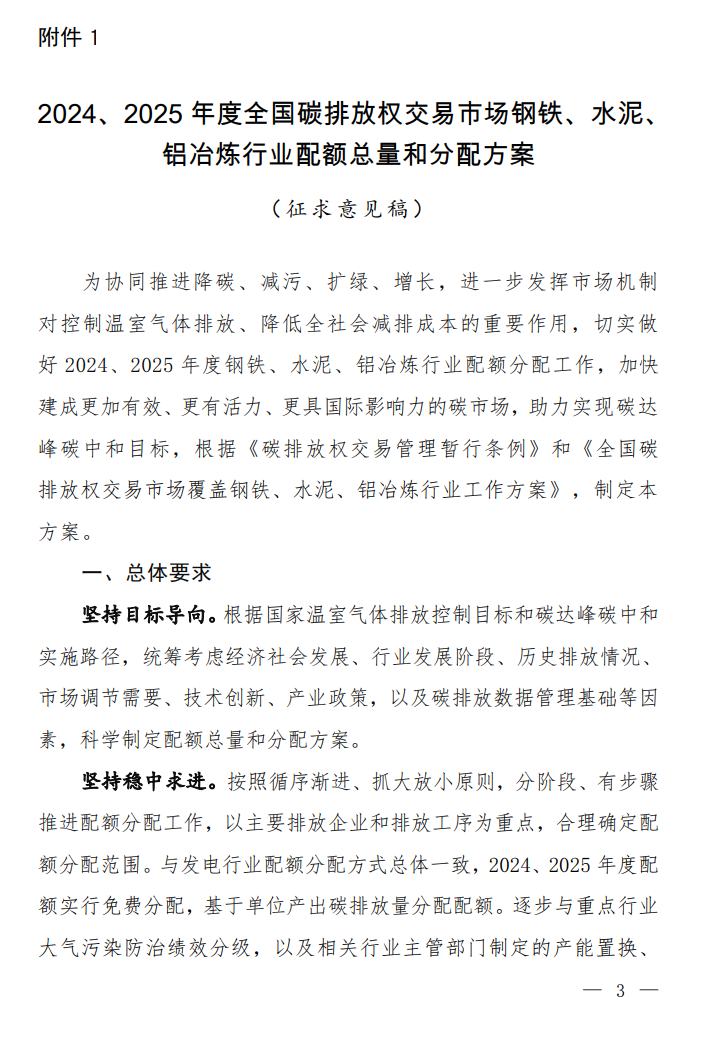
Core Viewpoint - The Ministry of Ecology and Environment has included the steel, cement, and aluminum smelting industries in the national carbon emissions trading market management, aiming to enhance carbon reduction efforts and achieve carbon peak and carbon neutrality goals [1][3]. Group 1: Overall Requirements - The allocation plan for carbon emission quotas is based on national greenhouse gas emission control targets and considers various factors such as economic development, industry development stages, historical emissions, and technological innovation [3][4]. - The quota distribution will be conducted gradually, focusing on major emitting enterprises and processes, with free allocation based on carbon emissions per unit of output for the years 2024 and 2025 [3][4]. Group 2: Quota Distribution Scope - The plan applies to key emission units in the steel, cement, and aluminum smelting industries for the years 2024 and 2025, excluding newly established units and those that have ceased operations before quota determination [5]. - The greenhouse gases covered include CO2 for steel and cement, and CO2, CF4, and C2F6 for aluminum smelting, with specific calculations for global warming potential [5]. Group 3: Quota Calculation Method - For 2024, the quotas for key emission units will equal their verified actual carbon emissions, while specific conditions apply for the cement industry in 2025 [6][7]. - The calculation method for quotas involves determining the carbon emissions of steel enterprises, cement production lines, and aluminum electrolysis processes, with a focus on balancing industry profits and losses [8][9]. Group 4: Quota Issuance - The pre-allocation of quotas for 2025 will be based on 70% of the verified emissions from the previous year, with specific procedures for reporting and issuing quotas to key emission units [22][23]. - The quota issuance will be managed by provincial ecological environment authorities, with adjustments made based on compliance and verification results [25][26]. Group 5: Quota Compliance - Key emission units must clear their quotas by December 31 each year based on their verified emissions, with provisions for using certified voluntary emission reductions (CCER) to offset their obligations [27][28]. - The compliance process includes support for units facing difficulties in purchasing quotas, ensuring they can meet their obligations [28].
政策解读︱国家能源局等部门《关于推进能源装备高质量发展的指导意见》解读
国家能源局· 2025-09-30 10:35
Core Viewpoint - The article emphasizes the significance of the "Guiding Opinions" issued by the National Energy Administration and other governmental bodies, which aims to promote high-quality development in the energy equipment sector, addressing both opportunities and challenges in the evolving international energy landscape [2][3]. Group 1: Blueprint for Energy Equipment Innovation System - The "Guiding Opinions" adopts a high-quality development approach to encompass the entire energy strategy, focusing on energy transition and security as central tasks [3]. - It aims to enhance the resilience and security of the supply chain while promoting technological breakthroughs and the development of key equipment [3]. - The principles of "innovation-driven, self-controllable, classified policies, and integrated empowerment" are outlined to guide the development of energy exploration, conversion, storage, and transportation [3]. Group 2: Comprehensive Breakthrough with Six Major Tasks - The "Guiding Opinions" outlines six strategic tasks for the entire energy industry chain, including upgrading exploration and development equipment, enhancing conversion equipment efficiency, and promoting large-scale application of energy storage equipment [4]. - It emphasizes the need for technological advancements in energy transportation equipment and the digitalization and intelligent upgrading of energy equipment [4]. - The document also highlights the importance of green and high-end development in energy equipment, including breakthroughs in carbon capture and recycling systems [4]. Group 3: Ecological Empowerment and Innovation Activation - The "Guiding Opinions" proposes four measures to optimize the innovation ecosystem in the energy equipment industry, including strengthening the role of enterprises in innovation and enhancing quality and standards [5][6]. - It advocates for the establishment of platforms that integrate production, education, and research, and encourages international cooperation and policy support for energy projects [6]. - The overall aim is to enhance the independent innovation capability and international competitiveness of the energy equipment sector, supporting the construction of a new energy system and ensuring national energy security [6].

投资1.9亿!枣庄高新区建成智能蒸汽管网,故障率远低自备锅炉
Qi Lu Wan Bao Wang· 2025-09-30 10:20
Core Viewpoint - The construction of the industrial steam pipeline network in Zaozhuang High-tech Zone is a significant infrastructure project aimed at promoting high-quality development and optimizing the business environment, which is essential for industrial transformation and upgrading [1][3]. Group 1: Project Overview - The industrial steam pipeline network project is a key initiative to enhance municipal infrastructure and is crucial for the high-quality development of the high-tech zone [4]. - The project aims to address issues such as insufficient heating capacity, unstable operation, and high operational costs, thereby establishing a safe and reliable industrial steam supply system across the zone [3][4]. Group 2: Economic and Environmental Impact - The project will significantly improve the infrastructure capacity of the park, providing a solid guarantee for industrial development and enabling centralized heating to achieve economies of scale [4]. - By replacing decentralized gas-fired small boilers with a centralized steam supply, the project will improve local environmental quality, enhance energy utilization efficiency, and effectively reduce pollutant emissions, contributing to carbon peak and carbon neutrality goals [4]. Group 3: Project Specifications - The project has a total investment of approximately 190 million yuan, with a steam main pipeline length of about 15 kilometers and a designed supply capacity of 150 tons per hour [5]. - The pipeline system will utilize advanced insulation materials and construction techniques to minimize heat loss during steam transmission, and it will be equipped with intelligent monitoring and adjustment devices for real-time monitoring of steam parameters [5].
绿色创新发展研究院-再生能源行业:我国30省“十五五”可再生能源装机目标提升潜力分析-250930
Xin Lang Cai Jing· 2025-09-30 04:35
Core Insights - The high-quality development of renewable energy is crucial for China's energy transition and achieving carbon peak and carbon neutrality goals, with significant support from both domestic policies and international agreements [1][2] - As of March 2025, China's renewable energy generation capacity is expected to reach 1.966 billion kilowatts, with wind and solar installations exceeding 1.4 billion kilowatts, ahead of the 2030 target [1][3] - Despite rapid growth in renewable energy installations, challenges remain in resource endowment, existing energy structure, electricity demand, market mechanisms, and consumption capacity [1][3] Provincial Development and Policy Support - By mid-2025, 26 provincial-level regions in China have set renewable energy development targets for 2030, with 18 regions specifying quantitative goals for wind and solar installations totaling 1.256 billion kilowatts [2][3] - Several provinces, including Fujian, Zhejiang, Chongqing, and Anhui, have already exceeded their "14th Five-Year Plan" targets, indicating strong progress [3] Future Projections and Potential - Predictions for renewable energy installations by 2030 range from 2.382 to 4.493 billion kilowatts, with wind and solar capacity expected to be between 1.825 and 2.820 billion kilowatts [3] - The potential for increasing 2030 renewable energy targets is significant, with the capacity possibly reaching over 2.7 times the 2020 levels, and wind and solar installations could exceed 3.7 times the 2020 figures [3] Recommendations for Development - Regions with high electricity demand growth and slow renewable energy generation should enhance their renewable installation and consumption targets [4][5] - Accelerating the construction of new power systems and promoting the deployment of storage and flexible resources are essential for ensuring high proportions of renewable energy consumption [4][5] - Further advancement of a unified national electricity market is recommended to reduce inter-provincial barriers and optimize the planning and management of cross-province electricity transmission [4][5]
全国碳市场建设迈出新步伐
Ren Min Ri Bao· 2025-09-29 19:48
Core Viewpoint - The report released by the Ministry of Ecology and Environment highlights the progress and future direction of China's carbon market, emphasizing its importance in achieving national climate goals and enhancing the carbon pricing mechanism [1][3]. Group 1: Market Development - The national carbon emissions trading market has shown increased vitality, with a 43.55% rise in average daily trading volume compared to the previous compliance cycle, totaling 1.89 million tons for the year [2]. - The annual trading value of carbon emission allowances reached 18.114 billion yuan, marking a new high since the market's launch in 2021 [2]. - As of August 2025, the cumulative trading volume of carbon emission allowances reached 69.6 million tons, with a total transaction value of 47.826 billion yuan [2]. Group 2: Compliance and Performance - The compliance rate for the 2023 carbon allowance was 99.98%, achieving a historical high, with 28 provincial regions completing their compliance work at 100% [2]. - This represents a significant improvement compared to the previous compliance cycles [2]. Group 3: Future Directions - The Chinese government aims to enhance the carbon market as a key policy tool for controlling greenhouse gas emissions, with plans to gradually expand the market's coverage and improve related policies [3]. - There is a focus on diversifying trading products, participants, and methods to create a more equitable and transparent market environment [3].