
自主创新

Search documents
在新征程上锻造“中国工业关节”——习近平总书记在洛阳轴承集团股份有限公司考察回访记
He Nan Ri Bao· 2025-05-21 00:06
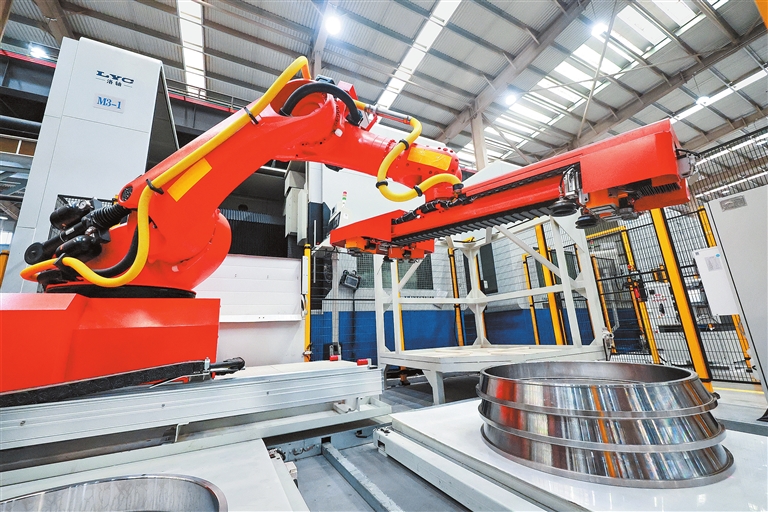
Core Viewpoint - The manufacturing industry is a crucial pillar of the national economy, and advancing modernization in China requires maintaining a reasonable proportion of manufacturing. The industry must leverage technological empowerment and focus on independent innovation [1]. Company Overview - Luoyang Bearing Group Co., Ltd. (referred to as "Luoyang Bearing Group") was established in 1954 and has developed a product range covering nine categories and over 30,000 types, widely used in various sectors including wind power, rail transportation, automotive, mining metallurgy, engineering machinery, and marine [1][3]. Technological Innovation - The company has made significant strides in technological innovation, with high-end bearing products accounting for 70% of total output value. During the 14th Five-Year Plan period, 13 technological achievements have reached international standards, and the domestic market share for wind power main bearings exceeds 40% [4][5]. - The company has developed the first domestic 16-megawatt wind power main bearing, addressing critical industry challenges and marking a transition from following to leading in innovation [5]. Production Capabilities - The intelligent factory of Luoyang Bearing Group showcases advanced manufacturing capabilities, featuring a fully automated production line that enhances efficiency and product quality. The factory is recognized as having a leading level of intelligence both domestically and internationally [7][8]. Financial Performance - In 2024, Luoyang Bearing Group achieved a revenue of 4.699 billion yuan, with aspirations to reach 15 billion yuan by 2030. The company is also planning to leverage capital markets to enhance its technological innovation capabilities and market share [8]. Talent Development - The company emphasizes the importance of talent cultivation, with a mentorship system in place where experienced workers guide new employees. This approach fosters a culture of continuous learning and skill enhancement [10][11].

科创芯片50ETF(588750)连续反弹,冲击两连阳!腾讯资本开支激增91%,算力需求持续爆发!
Xin Lang Cai Jing· 2025-05-20 06:11
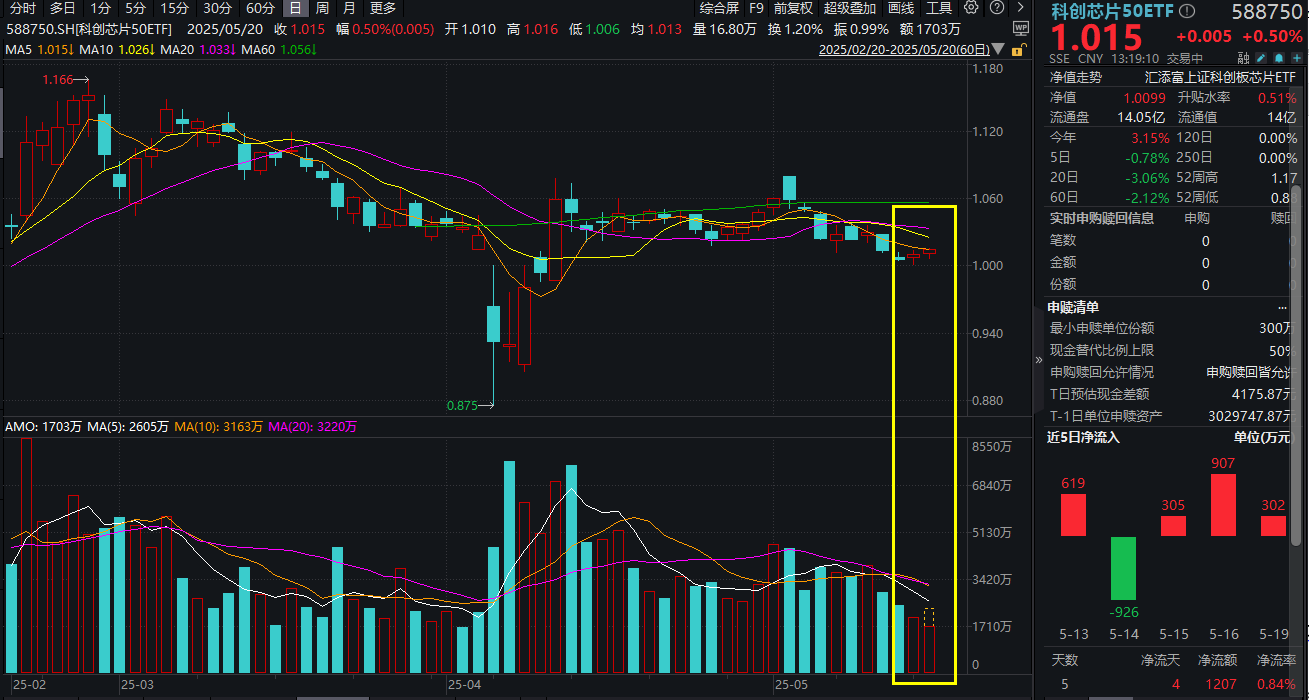
Core Viewpoint - The semiconductor sector in China is experiencing a recovery, driven by domestic innovation and increasing demand for AI capabilities, with significant growth expected in the coming years [3][4][6]. Group 1: Market Performance - On May 20, the A-share market saw a rise, with the semiconductor sector continuing its recovery, as evidenced by the slight increase of 0.5% in the Sci-Tech Innovation Chip 50 ETF (588750) [1]. - The Sci-Tech Innovation Chip 50 ETF has recorded a cumulative net inflow of over 15 million yuan in the past three days, indicating strong investor interest [1]. Group 2: Company Developments - Xiaomi's chairman Lei Jun announced that the company's self-developed 3nm flagship chip, Xiaomi Xuanjie O1, has begun mass production, which will power the upcoming high-end smartphone Xiaomi 15s Pro and the ultra-high-end OLED tablet Xiaomi Tablet 7 Ultra [3]. - The trend of self-developed chips among Chinese smartphone manufacturers is expected to enhance competitiveness and reduce reliance on supply chains [3]. Group 3: Financial Performance - The semiconductor sector is projected to see a net profit growth rate of 70% in Q1 2025, significantly outperforming peers [4][7]. - The overall semiconductor sector reported a net profit increase of 15.1% year-on-year in Q1 2025, with total revenue reaching 128.1 billion yuan, a slight increase of 0.2% [8]. Group 4: AI and Computing Demand - The emergence of large AI models has accelerated the demand for computing power, with domestic cloud companies investing heavily in AI infrastructure, as seen in Tencent's capital expenditure of 27.48 billion yuan in Q1 2025, a 91% increase year-on-year [6]. - The need for domestic AI chips is expected to surge due to uncertainties surrounding the export of NVIDIA's AI chips to China, prompting downstream AI computing firms to adopt domestic solutions [5][6]. Group 5: Sector Outlook - The semiconductor sector is anticipated to maintain an upward trend, with the valuation center expected to rise as AI innovations mature and domestic computing power demands increase [3][5]. - The performance of the semiconductor sector is expected to benefit from the recovery in the simulation chip and storage module markets, with optimistic price increase expectations [8].
苏州浒墅关民营企业加快培育“智”“创”新动能
Zhong Guo Jin Rong Xin Xi Wang· 2025-05-20 01:55
Core Insights - The article highlights the proactive embrace of intelligent and digital transformation by private enterprises in the Hushuguan area, enhancing their core competitiveness in the industry [1][2][3] Group 1: Industry Overview - As of the end of 2024, there are 184 private industrial enterprises in Hushuguan, accounting for over 70% of the total industrial enterprises in the region, with an expected output value of 26.187 billion yuan [1] - Hushuguan has established 36 intelligent manufacturing demonstration factories (workshops), including 1 provincial-level intelligent factory and 1 provincial-level internet development demonstration factory [2] Group 2: Company Innovations - Suzhou Ruima Precision Industrial Group focuses on precision intelligent manufacturing, developing key components for intelligent cockpits and air suspension systems, utilizing cloud computing and big data to create an industrial internet platform [1] - Suzhou Kemi Keku Food Co., Ltd. achieved an industrial output value of 123 million yuan in 2024, a year-on-year increase of 43.04%, by implementing AI and IoT technologies for quality control and visualization [2] - Suzhou Bozhi Jinduan Technology Co., Ltd. has developed its own PVD technology, producing semiconductor packaging materials that match international brands in performance but are 30% cheaper [3] Group 3: Talent and Collaboration - Hushuguan has established 17 postdoctoral research stations, attracting 13 postdoctoral researchers, fostering collaboration between enterprises, universities, and research talents [3] - Local authorities are committed to optimizing policy support and enhancing the "government-industry-university-research application" collaborative mechanism to empower regional industrial upgrades [3]
鸿蒙电脑下了“双黄蛋” 将如何“给世界多一个选择”?
Guang Zhou Ri Bao· 2025-05-19 16:14
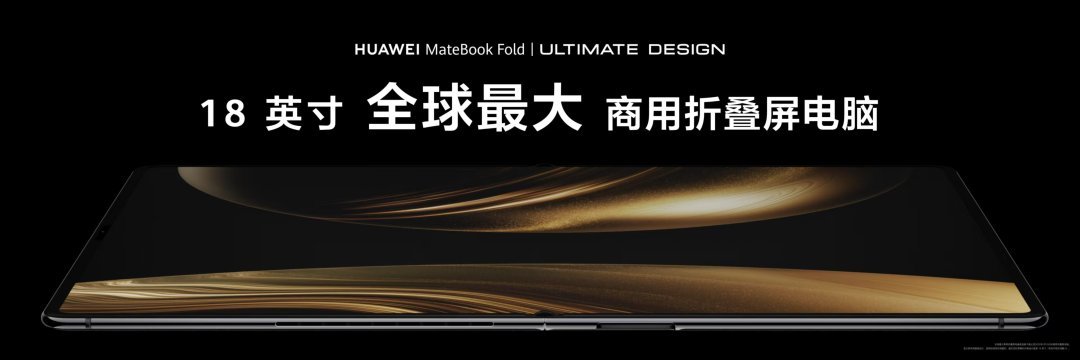
Core Viewpoint - Huawei's launch of the nova 14 series and HarmonyOS computers marks a significant step in breaking the dominance of Windows and macOS in the PC operating system market, introducing innovative products like the world's first HarmonyOS foldable computer, the Huawei MateBook Fold [1][5] Group 1: Product Innovation - The Huawei MateBook Fold is the world's lightest and largest commercial foldable screen computer, offering a new experience with its dual-screen functionality and innovative design [2][5] - The MateBook Pro also showcases advancements in lightweight design, weighing only 970 grams, and provides a smoother user experience with HarmonyOS 5 [2][3] Group 2: Strategic Importance - The introduction of HarmonyOS on PCs signifies a breakthrough for domestic operating systems in China, aiming to reshape the global operating system ecosystem [1][5] - Huawei emphasizes the need for a self-controlled domestic operating system in the PC sector, which has been a long-standing goal for China's electronic information industry [5][7] Group 3: Market Context - As of April 2023, Windows holds a 71.06% market share, while macOS accounts for 15.64%, indicating a highly concentrated global PC operating system market [5][7] - The launch of HarmonyOS computers is seen as a strategic move to disrupt this concentration and promote a more diverse software ecosystem [5][7] Group 4: Ecosystem Development - Over 1,000 applications have been adapted for HarmonyOS computers, with a target of over 2,000 by the end of the year, but this is still insufficient for a mature ecosystem [7] - Huawei aims to have 100,000 applications by 2025 as a key milestone for ecosystem maturity, highlighting the need for ongoing developer engagement and user habit formation [7]
“争气机”为何再次牵动世界的目光
Huan Qiu Shi Bao· 2025-05-19 00:14
Core Viewpoint - The successful combat achievement of China's J-10CE fighter jet marks a significant milestone in the country's aviation industry, showcasing its technological self-reliance and innovation capabilities [1][2]. Group 1: Development and Innovation - The J-10 series fighter jets are characterized by excellent maneuverability, strong stealth capabilities, long radar detection range, and advanced missile systems, allowing for superior combat effectiveness [1]. - The J-10's development reflects a history of self-innovation, overcoming challenges such as weak industrial foundations and funding shortages, and rejecting reliance on foreign technology [1][2]. - The J-10 achieved a new technology rate exceeding 60%, significantly higher than the international norm of 30%, and recorded a "zero casualty" milestone during test flights, highlighting its high level of indigenous development [2]. Group 2: National Pride and Historical Context - The J-10 is seen as a symbol of national pride, embodying the spirit of resilience and determination in the face of historical challenges, including past humiliations and tragedies [2]. - The development of the J-10 has transformed China's military aviation capabilities from being far behind to being on par with global standards, demonstrating the country's commitment to overcoming difficulties through innovation [2]. Group 3: Broader Technological Advancements - China's advancements extend beyond aviation, with breakthroughs in foundational research and cutting-edge technologies, including quantum computing and supercomputing, enhancing its global technological competitiveness [3]. - The country is actively engaging in international collaborations, particularly with developing nations, to promote sustainable development and share technological benefits [3]. Group 4: Future Outlook - The evolution of China's aviation industry from a state of poverty to a leading global position is attributed to unwavering commitment to self-innovation and continuous effort [4]. - Looking ahead, China's technological development is expected to expand further, with a focus on open collaboration and contributions to global technological progress and peace [4].
科创100ETF基金(588220)盘中上涨,深化科创板一揽子政策措施有望加速出台
Sou Hu Cai Jing· 2025-05-16 02:56
Group 1 - The core viewpoint is that the China Securities Regulatory Commission (CSRC) is expediting a comprehensive policy package to deepen reforms in the Sci-Tech Innovation Board and the Growth Enterprise Market, aiming to enhance the scale and proportion of medium to long-term capital entering the market [1] - The People's Bank of China and four other departments are implementing policies to support technological innovation, encouraging financial institutions to expand first-time financing and equipment renewal loans for tech companies [1] - Guoyuan Securities believes that under high global technological barriers, companies on the Sci-Tech Innovation Board are pursuing independent innovation across various sectors, including chip design, biomedicine, high-end equipment, and new energy, positioning themselves as pioneers in the international value chain [1] Group 2 - As of April 30, 2025, the top ten weighted stocks in the Sci-Tech Innovation Board 100 Index account for 25.04% of the index, with companies like Hengxuan Technology and BeiGene among the leaders [2] - The Sci-Tech 100 ETF fund has shown a positive performance, with notable increases in the stock prices of several constituent companies, indicating a favorable market sentiment [1]


骑虎难下!美国人突然发现,费了七八年的时间,中国仍旧势不可挡
Sou Hu Cai Jing· 2025-05-15 10:21
美国总统特朗普的对华"围剿战"非但没有取得预期的效果,反而还把美国自身的经济越高越差,特朗普的 支持率也逐渐走低,甚至威胁到自身的政权稳固。特朗普的这一招反华牌究竟错在哪?东方大国和美国在 瑞士的谈判刚刚告一段落。从两国发表的声明来看,美国决定将对华关税降到合理区间,东方大国也表 示,对美国的反制举措将慎重考虑。相比四月初到现在,特朗普对华一路飙升的关税税率,此番与东方大 国的谈判,美国还是低头了。 事实上,从第一任任期,到第二任任期,特朗普就从各方面对东方大国形成围堵。在关税上,特朗普在第 一任任期,突然对东方大国的高科技产品加收关税。在台海问题上,特朗普大打台湾牌,向台湾输送大量 军事武器,伙同台湾当局,就台海问题向东方大国挑衅。在南海问题上,特朗普则拉拢菲律宾,持续就南 海主权问题,展开军事演习,向菲律宾输送导弹,威胁东方大国安全。在科技问题上,特朗普则把一众科 技公司纳入所谓实体清单,威胁荷兰、日本等国,以及台湾,不再向东方大国提供芯片,一度让东方大国 的科技企业出现缺芯少片的状况。 特朗普(资料图) 贝森特(资料图) 不仅如此,在台海问题、南海问题、中日关系上,特朗普派出得力干将,不断开展军事演习, ...

生命科学仪器公司战略调整进入深水区,新增长极在哪里?
仪器信息网· 2025-05-15 09:13
Core Insights - The life sciences industry is undergoing strategic adjustments, with key themes such as "going global," "localization," "frontier tracks," "independent innovation," and "laboratory automation" being discussed at a recent forum [1][2]. Group 1: Industry Challenges and Opportunities - The life sciences instrument industry is facing significant challenges due to the ongoing US-China geopolitical tensions, which have implications for high-end instruments like sequencing devices [2][3]. - The market for life sciences instruments in China is projected to reach nearly $2.4 billion in 2023, with over 42% of demand coming from universities and research institutions, presenting both challenges and opportunities for domestic manufacturers [10]. Group 2: Innovation and Technology Development - Autonomous innovation in high-end life sciences instruments is deemed essential for survival, with companies like Qitan Technology leading the way in developing domestically produced sequencing devices [4][5]. - The development of advanced biosensors is crucial for enhancing the performance of various life sciences instruments, with companies like Liangzhun achieving significant market presence through innovative sensor technology [7]. Group 3: Market Trends and Future Outlook - The future of life sciences is seen in three key areas: new drug development, biobreeding, and organoids, with the market for organoid applications expected to reach $12 billion [10][11]. - The integration of AI and robotics is driving laboratories towards a new 5.0 stage, characterized by fully automated and intelligent systems that enhance experimental efficiency and data management [20][23]. Group 4: Global Expansion Strategies - Companies are encouraged to prioritize product certification and intellectual property protection when expanding into international markets, as demonstrated by Dalong's successful overseas strategy [14][15]. - Agilent's commitment to localization and innovation in China has resulted in over 20% of its global revenue coming from the Chinese market, highlighting the importance of adapting to local needs [18][19].

工信部:推动工业母机产业高质量发展
news flash· 2025-05-15 07:13
Core Viewpoint - The Ministry of Industry and Information Technology emphasizes the need to accelerate the high-quality development of the industrial mother machine industry through enhanced responsibility, innovation, and collaboration among enterprises [1] Group 1: Industry Development Strategies - The meeting focused on enhancing the work mechanism and policy support system to promote high-quality development in the industrial mother machine sector [1] - There is a call to leverage the advantages of a new type of national system to focus on key core technologies and common technologies, emphasizing independent innovation [1] - The importance of building a robust pilot verification platform to address weaknesses in the industrial chain is highlighted [1] Group 2: Product and Service Innovation - The industry is encouraged to deeply explore niche areas to create unique products and services, improving product consistency, stability, and reliability [1] - There is a strong emphasis on avoiding "involution" competition and homogenization in development [1] Group 3: Collaboration and Ecosystem Building - Leading enterprises are urged to play a driving role in establishing closer cooperation between industry, academia, research, and application [1] - The need for stronger demand-supply connections and promoting the integrated development of large, medium, and small enterprises is stressed [1] - An open and integrated approach is recommended to explore new products, services, and solutions, as well as to deepen the application of new-generation information technology [1]
高德红外一季度净利大增896% 坚持创新驱动年投7.46亿研发
Chang Jiang Shang Bao· 2025-05-14 23:51
Core Viewpoint - Gaode Infrared is a leading company in the infrared technology sector in China, focusing on independent innovation and the development of core infrared chips to meet national defense and civilian market needs [1][5]. Group 1: Company Overview - Gaode Infrared, founded in 1999, specializes in infrared core chips, thermal imaging products, and advanced optical systems, and was listed on the Shenzhen Stock Exchange in 2010 [2]. - The company has established three fully autonomous production lines for infrared detector chips, which are widely used in defense, industrial inspection, security monitoring, and consumer electronics [2][5]. Group 2: Financial Performance - In Q1 2025, Gaode Infrared achieved a revenue of 680 million yuan, a year-on-year increase of 45.47%, and a net profit of 83.55 million yuan, up 896.56% [1][3]. - For the year 2024, the company reported a revenue of 2.678 billion yuan, an increase of 10.87%, but incurred a net loss of 447 million yuan, marking its first annual loss since its listing [2][3]. Group 3: Research and Development - In 2024, Gaode Infrared's R&D expenses reached 746 million yuan, a 37.51% increase from the previous year, reflecting the company's commitment to innovation [5]. - The company launched 21 series and 62 models of thermal imaging products, covering key industries such as power, metallurgy, petrochemicals, and intelligent manufacturing [5]. Group 4: Market Strategy and Future Outlook - Gaode Infrared is focusing on the low-altitude economy, leveraging its expertise in intelligent perception and artificial intelligence to develop core products and solutions [6]. - The company aims to drive growth through a dual strategy of military and civilian innovation, enhancing product structure and operational efficiency [6].
