
AI大模型

Search documents
新股消息 | 卡诺普机器人拟港股上市 中国证监会要求补充说明业务涉及AI大模型的具体情况等
智通财经网· 2025-12-26 12:51
智通财经APP获悉,12月26日,中国证监会发布《境外发行上市备案补充材料要求(2025年12月22日— 2025年12月26日)》。中国证监会国际司共对19家企业出具补充材料要求,其中,要求卡诺普机器人补 充说明业务涉及AI大模型的具体情况等事项。据港交所11月17日披露,成都卡诺普机器人技术股份有 限公司递表港交所主板,国泰君安融资有限公司为其独家保荐人。 证监会请卡诺普机器人补充说明以下事项,请律师核查并出具明确的法律意见: 一、请补充说明你公司及下属公司是否涉及开发、运营网站、小程序、APP、公众号等产品,同时应包 括你公司及下属公司通过授权旗舰店、其他品牌商城、第三方平台店铺、电商店铺营运服务等业务,收 集、储存、接触、处理的个人信息或订单规模。是否涉及向第三方提供信息内容,提供信息内容的类型 以及信息内容安全保护措施;同时说明收集及储存的用户信息规模、数据收集使用情况,上市前后个人 信息保护和数据安全的安排或措施。 四、请补充说明你公司主要股东上层投资人中"境外企业"及中国境内主体的穿透情况,是否存在法律法 规规定禁止持股的主体。 五、请按照《监管规则适用指引——境外发行上市类第2号》完善你公司股 ...

告别“伪智能”:华为Vision智慧屏 5 Pro用鸿蒙AI重塑家庭影音体验
Cai Jing Wang· 2025-12-26 11:10
Core Viewpoint - The article highlights the distinction between "true intelligence" and "pseudo-intelligence" in AI televisions, emphasizing the need for a genuinely smart home entertainment partner that understands user needs and enhances the viewing experience [1] Group 1: Product Features - Huawei Vision Smart Screen 5 Pro is positioned as a benchmark in the AI television market, offering Super MiniLED technology and HarmonyOS AI capabilities to meet core family entertainment and smart interaction needs [3] - The Super MiniLED technology provides cinema-level picture quality by allowing precise control of brightness and darkness across the screen, addressing issues of uneven backlighting found in traditional LCD TVs [4] - The audio experience is enhanced with a 7-engine design and patented technologies for voice clarity and expansive sound fields, ensuring a professional cinema-like experience at home [5] Group 2: AI Capabilities - The device integrates Huawei's Pangu large model and the Xiaoyi voice assistant, enabling it to understand and respond accurately to user commands, thus enhancing the overall user experience [8] - The AI search function allows users to find content using vague descriptions or quotes, making it easier to access desired shows or movies [11] Group 3: User Interaction - The Huawei Lingxi pointing remote control revolutionizes traditional TV operation by allowing precise navigation and gesture controls, making the interaction feel more intuitive and user-friendly [12] - The screen supports seamless 4K casting from mobile devices, enhancing the sharing experience for various activities, from watching shows to remote meetings [13] Group 4: Content Ecosystem - Huawei Vision Smart Screen 5 Pro offers a comprehensive content service ecosystem, aggregating popular video platforms to provide users with easy access to a wide range of films and shows without switching applications [14] - The product aims to redefine the standards for flagship AI televisions, promoting a warm and memorable family viewing experience [14]


这家老牌硬盘巨头,正在中国为海量数据造「家」
36氪· 2025-12-26 09:55
Core Viewpoint - The article emphasizes the critical role of Hard Disk Drives (HDD) in the era of AI, highlighting their importance in data storage despite the rise of Solid State Drives (SSD) and the increasing demand for large-scale, low-cost, and reliable storage solutions in China [1][5]. Group 1: HDD's Role in AI and Data Storage - HDD remains irreplaceable due to its unique characteristics such as data recoverability, durability against data erasure, and cost advantages for large-scale data storage, especially in enterprise scenarios [9]. - Toshiba's core value lies in supporting big data and AI development, focusing on large-capacity technology research while maintaining stable performance and reducing total cost of ownership (TCO) for users [9][10]. Group 2: Toshiba's Manufacturing Strategy in China - Toshiba has established a nearline HDD production line in mainland China, successfully achieving mass production, which is crucial for meeting local customer demands [19]. - The collaboration with SAE (New Science Electronics) allows for a unique manufacturing model where core components and HDD assembly occur in the same physical space, enhancing responsiveness to market needs [3][15]. Group 3: Technological Innovations and Future Plans - Toshiba has validated a 12-platter stacking technology, aiming for HDD capacities exceeding 40TB, with challenges in physical space compression being a significant hurdle [10]. - The transition from traditional PMR to energy-assisted recording technologies like MAMR and HAMR is underway, with plans to produce MAMR HDDs at scale and prepare for HAMR production by 2027 [16][25]. Group 4: Market Dynamics and Customer Insights - Chinese customers are rapidly migrating to large-capacity HDDs (20TB+) and prioritize performance stability over cost, contrasting with global trends where cost sensitivity is more pronounced [12]. - The local production strategy significantly enhances service efficiency and response speed for domestic data center clients, fostering closer interactions and skill development among engineers [20][19]. Group 5: Long-term Value of HDD - The long-term value of HDDs lies in their ability to provide economical and reliable data storage solutions, essential for meeting the growing demands of big data and AI applications [24]. - Continuous development of advanced recording technologies is necessary to match increasing areal density requirements and achieve cost savings for customers [24].

山东举办“政企同台”绿色低碳专题培训 共探先行区建设路径
Qi Lu Wan Bao· 2025-12-26 08:12
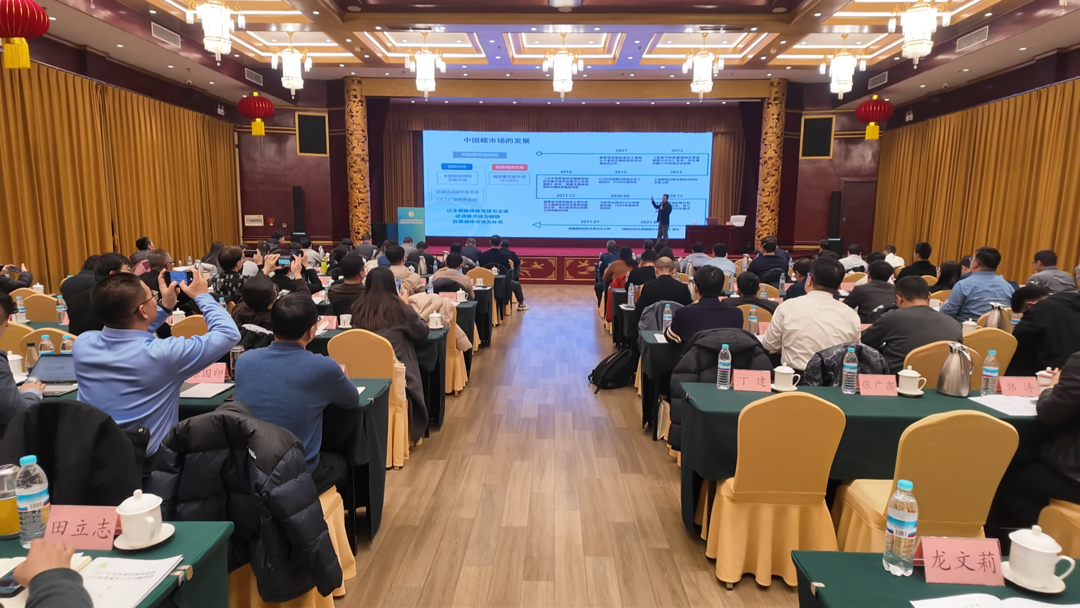
Group 1 - The training session aimed to support the construction of a green low-carbon high-quality development pilot zone in Shandong Province, aligning with national strategies for green development [2] - The event gathered over a hundred representatives from government departments, leading enterprises, financial institutions, and research institutes to foster collaboration and knowledge sharing [2] - Keynote speaker Wang Xiangdong emphasized the need for participants to break away from traditional development paths and engage in collaborative innovation within an open "green community" [2] Group 2 - The training curriculum was designed with a "cognition-practice-foresight" progression, covering macro policy opportunities and strategic planning for high-level projects [3] - Experts from various fields provided insights on challenges and opportunities in the context of the "dual carbon" strategy, including the green transformation of traditional high-energy-consuming industries [3] - The training highlighted the importance of financial support and international alignment, with discussions on green finance practices and ESG evaluation strategies [3] Group 3 - A notable feature of the training was the "government-enterprise co-learning" approach, facilitating direct communication between policymakers and industry practitioners [4] - Participants engaged in constructive discussions on policy implementation challenges, technology application difficulties, and market mechanism development [4] - Feedback from attendees indicated that the training improved their political awareness and provided practical tools for advancing local green low-carbon initiatives [4] Group 4 - The Shandong Green Low-Carbon Industry Development Association plays a crucial role in connecting government, industry, and market, and this training is part of its efforts to empower industry transformation [5] - The successful execution of the training signifies a collective effort towards building a green low-carbon development community in Shandong, aiming for a harmonious balance between ecological and economic growth [5] - The association plans to continue promoting cross-sector collaboration and knowledge sharing to facilitate technological advancements and project connections [5]

“好房子”东风下,箭牌家居引领智能卫浴进入“场景互联”新阶段
2 1 Shi Ji Jing Ji Bao Dao· 2025-12-26 07:43
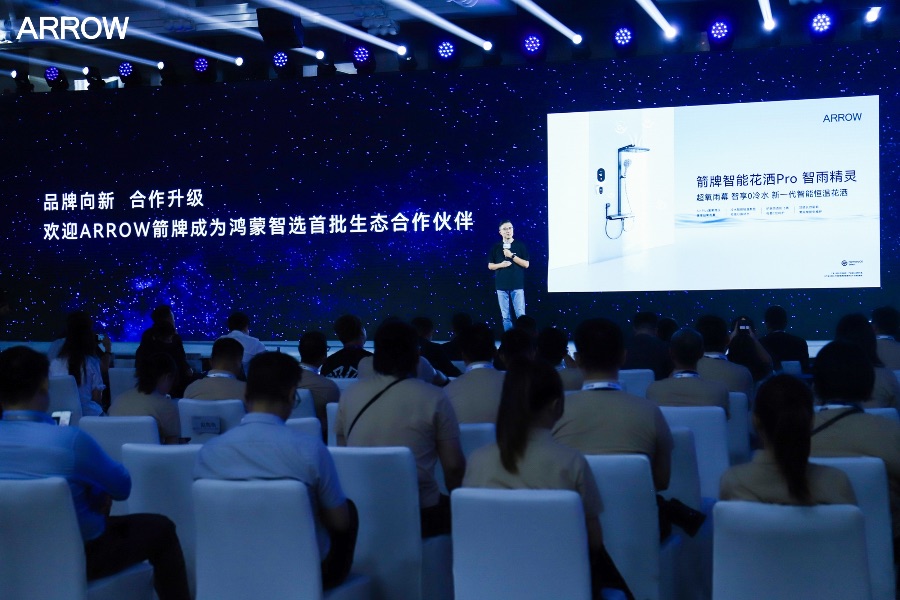
Core Insights - The article highlights the transformation of the Chinese bathroom industry from imitation to innovation, emphasizing the integration of AI technology in smart home solutions, particularly in the bathroom sector [1][3][10] Group 1: Industry Trends - The Chinese smart home market is projected to ship 281 million units by 2025, reflecting a year-on-year growth of 7.8% [3] - The collaboration between Arrow Home and Hongmeng Smart Selection signifies a shift in the smart home competition from product functionality to ecosystem collaboration [1][2][10] - The industry is moving towards high-quality development, focusing on smart, healthy, and green home solutions, driven by government policies [2][3] Group 2: Company Collaboration - Arrow Home has become the first ecological partner in the bathroom industry for Hongmeng Smart Selection, indicating a strategic alliance aimed at enhancing user experience through integrated technology [4][6] - The partnership aims to combine Arrow's manufacturing expertise with Hongmeng's open technology ecosystem, facilitating a seamless user experience in smart bathrooms [1][6][10] - The "Smart Rain Spirit" series of shower products exemplifies this collaboration, offering features like remote temperature control and integration with other smart devices [6][8] Group 3: Consumer Experience - Current smart bathroom products often lack integration, leading to a fragmented user experience where multiple devices require manual operation [5][9] - The collaboration aims to redefine the bathroom space as a holistic environment for relaxation and health, moving beyond mere functionality [8][13] - The focus is on creating a seamless, user-friendly experience that prioritizes comfort and convenience, addressing the pain points of existing smart products [9][13] Group 4: Future Outlook - The future of competition in the smart home industry will hinge on the ability to provide complete scene solutions rather than isolated product features [11][13] - Arrow Home's approach combines professional manufacturing with ecosystem collaboration, positioning the company to thrive in a scenario-driven market [13][14] - The evolution of the home as a nurturing space emphasizes the importance of smart technology in enhancing emotional well-being and comfort [11][14]
国安部:违规使用开源AI,敏感资料被境外IP非法访问下载
Xin Lang Cai Jing· 2025-12-26 02:21
Core Insights - The rapid development of AI large models is transforming various industries and daily life, but it also brings challenges such as data privacy and algorithmic bias that need to be addressed to ensure a secure future [1] Group 1: Challenges in AI Development - Data privacy and security boundaries are becoming blurred, with instances of unauthorized access to internal networks leading to data leaks [2] - The misuse of AI technology, particularly deepfake, poses risks to individual rights, social stability, and national security, as seen in attempts to spread false information [2] - Algorithmic bias can amplify discrimination, with AI models showing systematic bias based on the training data, leading to misleading historical interpretations [2] Group 2: Safety Guidelines for AI Usage - Establish clear boundaries for AI activities, ensuring minimal permissions and restricting access to sensitive data [3] - Regularly check digital footprints by cleaning AI chat records and being cautious with unknown AI programs [3] - Optimize human-AI collaboration by critically evaluating AI responses, especially on sensitive topics, and verifying information across platforms [3] Group 3: National Security Agency Recommendations - Emphasizing that safety is a prerequisite for development, users should enhance their security awareness and be cautious in granting permissions to AI models [4] - Users are encouraged to report any suspicious activities related to AI models that may compromise personal information or network security [4]
聚焦智能化 推动差异化 各地推进“十五五”汽车产业新跃迁
Xin Hua Wang· 2025-12-26 02:16
Core Insights - The article discusses the evolving landscape of China's automotive industry during the "15th Five-Year Plan" period, emphasizing the shift towards smart and connected vehicles, as well as differentiated competition among regions [1][3][4]. Group 1: Regional Strategies - Various regions are focusing on their unique strengths to enhance competitiveness, with Zhejiang aiming to build a leading core industry cluster in smart driving, while Chongqing targets becoming a global hub for smart connected new energy vehicles [1][2]. - Inner Mongolia plans to accelerate the application of new energy heavy trucks and autonomous electric mining trucks, while Jiangxi is concentrating on solid-state batteries and smart infrastructure [3]. Group 2: Industry Goals and Trends - The core objective for China's automotive industry during the "15th Five-Year Plan" is to transition from a "big automotive country" to a "strong automotive country," with projections indicating that the number of vehicles in China could reach 420 million to 450 million by 2030 [3][4]. - Key technological breakthroughs are expected in areas such as solid-state batteries, AI models, and distributed drive systems, which will provide significant development opportunities for local industries [3]. Group 3: Policy and Market Dynamics - The shift in automotive industry planning reflects a broader trend of moving from scale expansion to quality enhancement, driven by policy guidance and local practices [4]. - The focus is shifting from universal subsidies to strategic guidance, with an emphasis on technological innovation and market activation policies to support the industry's transformation [4].
星云股份20251225
2025-12-26 02:12
Summary of Key Points from the Conference Call Company and Industry Overview - **Company**: 星云股份 (Xingyun Co., Ltd.) - **Industry**: Battery testing and insurance for electric vehicles and energy storage systems Core Insights and Arguments - **Strategic Partnership**: Xingyun Co., Ltd. has established a strategic partnership with China Ping An, marking the commercialization of its AI model for battery testing, which spans various sectors including new energy vehicles, energy storage devices, two-wheeled vehicles, drones, and robots [2][3] - **Data Accumulation**: The company has over 20 years of experience in battery testing and possesses more than 90% of the market's battery testing data, providing a competitive edge in the industry [2][6] - **Preemptive Testing Model**: Xingyun proposes a preemptive testing model that collects battery status data during charging or at 4S shops, using AI to analyze this data to optimize insurance premiums and reduce claims for high-risk vehicles [2][8] - **Insurance Product Expansion**: New insurance products include battery degradation insurance, battery value insurance, and extended insurance, aimed at covering all brands and models, which is expected to significantly enhance market acceptance [4][12] Additional Important Content - **AI Laboratory**: The partnership includes the establishment of an AI laboratory to explore data deeply and create a new insurance ecosystem covering the entire lifecycle of vehicles, including second-hand car transactions and battery recycling [2][11] - **Insurance Revenue Model**: The collaboration involves various revenue streams, including DTA service fees for car insurance and personalized analysis for energy storage property insurance, which helps insurance companies achieve excess returns [2][9] - **Solid-State Battery Development**: The company is closely working with major clients on solid-state battery equipment, currently in the pilot testing phase, with expectations for more progress by 2026 [4][14] - **Data Collection Mechanism**: Data is primarily collected through 4S shops and charging stations, which are crucial for accumulating data for insurance premium pricing [10] - **Commercial Vehicle Applications**: Progress has been made in exploring applications for commercial vehicles, with ongoing discussions and developments in collaboration with major insurance companies [16] This summary encapsulates the key points discussed in the conference call, highlighting the strategic initiatives, competitive advantages, and future directions of Xingyun Co., Ltd. in the battery testing and insurance industry.


国家安全机关提示:使用智能设备,牢记这三条守则!
Xin Lang Cai Jing· 2025-12-25 23:32
本文转自【央视新闻客户端】; 国家安全部今天发布安全提示文章,初中教师小李自从使用AI备课后,能在五分钟内生成一份生动有 趣的教案,包括图片、视频和互动问答。"以前备课要两小时,现在可以省下更多时间关注学生个人情 况,还能一对一定制专属练习题。" 某独居老人陈爷爷,通过子女赠送的智能音箱,找到了新乐趣。"小智不仅能陪我听戏、聊天,还会在 我忘记吃药时主动提醒,它居然还记住了我所有孙辈的生日。" 29岁的小王原本是文案策划,因擅长与AI"对话",现已成功转型为提示词工程师。"关键是要把指令说 得足够清晰。"从智能客服到AI绘图师,大模型正创造着一个个前所未见的新岗位。 当前,AI大模型加速赋能千行百业,推动人们生活日新月异,这位能干又贴心的"数字伙伴"正加速融入 我们日常生活。然而每一次技术跃迁必然伴随着新的挑战,当AI的触角延伸越广、嵌入越深,随之而 来也暴露出数据隐私、算法偏见等潜在风险,亟需我们构筑安全防线,助推这场深刻的智能变革,安全 赋能美好未来。 ——守则二:检查"数字足迹"。养成定期清理AI聊天记录、修改AI工具密码、更新防病毒软件、查看账 号登录设备等习惯。同时避免随意下载使用来源不明的大模型程 ...
国家安全部:某境外反华敌对势力通过深度伪造技术生成虚假视频,并企图向境内传播,以误导舆论、制造恐慌
Xin Lang Cai Jing· 2025-12-25 23:32
Core Insights - The article discusses the rapid integration of AI into daily life, highlighting its benefits and the emergence of new job roles while also addressing the associated risks such as data privacy and algorithmic bias [1][2][3]. Group 1: AI Integration and Benefits - AI models are enhancing productivity across various sectors, allowing educators to create lesson plans in minutes and enabling elderly individuals to engage with technology for companionship and reminders [1]. - New job roles are emerging, such as prompt engineers, due to the increasing demand for clear communication with AI systems [1]. Group 2: Risks Associated with AI - Data privacy concerns arise from the use of open-source frameworks, leading to unauthorized access and potential data breaches [2]. - The misuse of deepfake technology poses risks to personal rights, social stability, and national security, as evidenced by attempts to spread misinformation [2]. - Algorithmic bias can result in skewed outputs from AI systems, particularly when training data reflects societal biases, leading to inaccuracies in historical interpretations [3]. Group 3: Safety Guidelines for AI Usage - Establish clear boundaries for AI activities, ensuring minimal permissions and avoiding the handling of sensitive data [4]. - Regularly check and clean digital footprints, including AI chat histories and passwords, to maintain security [4]. - Optimize human-AI collaboration by demanding transparency in AI responses and verifying critical information across platforms [4]. Group 4: National Security Recommendations - Emphasizing the importance of understanding and safely using technology to harness AI's potential for societal progress [5]. - Users are encouraged to report any suspicious activities related to AI models that may compromise personal information or network security [6].