
产业转型升级

Search documents
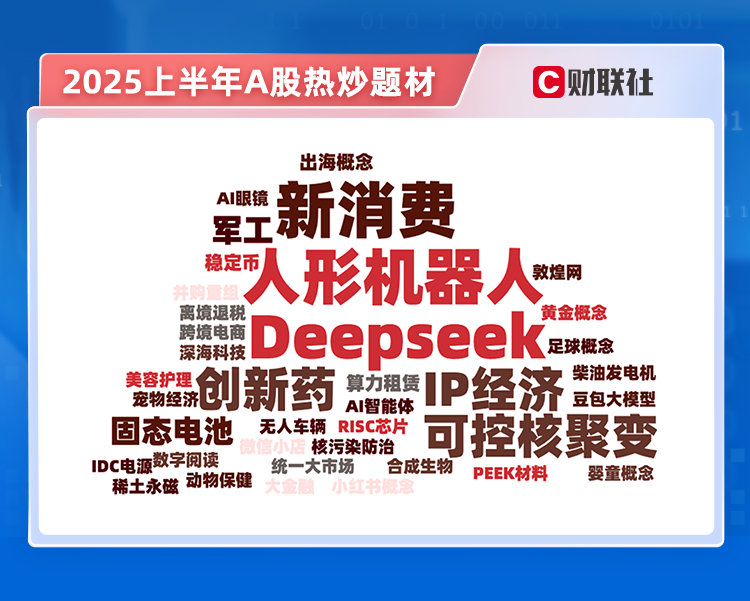
年中盘点|一图看懂2025年上半年A股热炒题材
news flash· 2025-06-27 09:28
Group 1 - The core viewpoint of the article highlights that despite a modest performance of the A-share market in 2025, with the Shanghai Composite Index showing a cumulative increase of only 2% and a maximum fluctuation of less than 500 points, the enthusiasm for thematic investments remains high [1] - The article notes a shift in investment style from last year's value-driven approach to a focus on growth themes, indicating a resurgence of growth-oriented investment strategies [1] - It emphasizes the increasing role of quantitative funds in daily trading volumes, leading to rapid rotation of thematic hotspots, showcasing a vibrant market environment similar to previous years [1] Group 2 - The article outlines various hot investment themes that have emerged in the first half of 2025, including technology trends such as Deepseek and humanoid robots, as well as sectors like new consumption and innovative pharmaceuticals that are experiencing significant upward trends [1] - It points out that the A-share market is influenced by cross-market interactions with Hong Kong and US stocks, along with resonance from news events, marking a new characteristic of the market in the first half of the year [1] - The article serves as a recap of the various hot topics and investment themes that have been prevalent in the A-share market during the first half of 2025 [1]

营商沃土长出新动能
Qi Lu Wan Bao· 2025-06-27 06:44
Economic Performance - As of May this year, the number of industrial enterprises above designated size in Fulaishan Street reached 29 [1] - From January to May, the total industrial output value was 989 million yuan, a year-on-year increase of 36.6% [1] - The high-tech output value was 508 million yuan, with a year-on-year growth of 32.1% [1] - Retail sales above designated size totaled 10.33 million yuan, reflecting a year-on-year increase of 17.8% [1] - Fixed asset investment reached 470 million yuan, with domestic investment and technological transformation investment growing by 34.4%, 65.1%, and 164.3% respectively [1] Innovation and Entrepreneurship - The Rizhounong Chuanggu Technology Incubator in Fulaishan Street is fostering a strong atmosphere for innovation and entrepreneurship [2] - Shandong Rongchuang Industrial Technology Co., Ltd. has rapidly grown by developing an intelligent warehousing and distribution system [2] - The company successfully completed a project for LG's refrigerator door delivery, utilizing innovative pre-queue technology and real-time synchronization with Korean servers [2] - The system optimizes AGV delivery routes, maximizing space utilization [2] Industrial Development - The Zuanji Industrial Park, with a total investment of 1 billion yuan and covering 300 acres, has established high-standard smart workshops [3] - The park has attracted over 70 drilling enterprises, creating more than 2,000 jobs [3] - The incubator has maintained an 88% utilization rate and has successfully incubated 71 companies with an 85% success rate [3] - The park has nurtured 6 technology-based SMEs and 2 high-tech enterprises [3] Traditional Industry Transformation - Shandong Muyang New Energy Co., Ltd. has expanded its production line for clean energy products, responding to increasing market demand [4] - The company faced challenges in upgrading its traditional solar products but successfully completed an air energy intelligent production line upgrade with local government support [5] - The transformation of traditional industries is exemplified by Rizhao Xiaolongtai Paper Co., Ltd., which revived its operations through resource integration and capital empowerment [5][6] Service and Support - Fulaishan Street has implemented a "two-step" support solution for companies facing production challenges, coordinating resources and facilitating land procedures [7][8] - The street has optimized its business environment, focusing on a service model that includes dedicated teams for enterprise support [8][9] - The area has successfully attracted several high-quality projects with a total investment exceeding 2 billion yuan [9]
举全区之力化债!广西第二城怎么了?
Sou Hu Cai Jing· 2025-06-27 01:12
Group 1 - Liuzhou has attracted significant attention due to its debt crisis and economic challenges, prompting a high-level meeting in Guangxi to address these issues [2][3][4] - The total government debt of Liuzhou is reported at 104.27 billion yuan, with general debt at 27.10 billion yuan and special debt at 77.17 billion yuan, indicating a serious financial situation despite being within the debt limit [4][5][6] - Liuzhou's GDP has been stagnant, with a nominal decrease of 1.62 billion yuan year-on-year, and it is projected to fall below 300 billion yuan for the first time in seven years [7][11][12] Group 2 - The industrial sector, particularly automotive and steel, has entered a downturn, significantly impacting Liuzhou's economic performance [16][22][30] - Liuzhou's industrial output has declined, with total industrial output dropping by nearly 100 billion yuan from 2017 to 2020, highlighting the need for transformation and upgrading [23][27] - The local government is focusing on revitalizing the industrial base by promoting new energy vehicles and enhancing traditional industries [28][29] Group 3 - The "Strong Capital" strategy in Guangxi has raised questions about its effectiveness, as Nanning's economic dominance has not improved as expected [39][45] - There are indications that the "Strong Capital" strategy may be cooling down, with a shift towards a more balanced approach that supports both Nanning and Liuzhou [48][50] - The need for a collaborative strategy that leverages the strengths of various cities, including Liuzhou and Guilin, is emphasized for the overall development of Guangxi [49][50]

城市24小时 | 举全区之力,这个沿海省份不只为“化债”
Mei Ri Jing Ji Xin Wen· 2025-06-26 16:08
Core Viewpoint - The meeting emphasized the importance of addressing debt issues in Liuzhou while focusing on high-quality economic development, aligning with national strategies and policies [1][2]. Debt Resolution and Economic Development - Liuzhou is tasked with resolving its debt issues while simultaneously promoting high-quality development, leveraging a package of support policies from the autonomous region [1][2]. - The city has a clear timeline for reducing non-standard debt by 50 billion yuan and 272 billion yuan by 2024, with a goal to eliminate non-standard debt by mid-2025 [2]. Industrial Focus and Challenges - Liuzhou, as the largest industrial city in Guangxi, contributes approximately one-sixth of the region's industrial output, with over 1,000 large-scale industrial enterprises [3]. - The city's GDP for 2024 is projected at 2,950.67 billion yuan, with a year-on-year growth of 1.5%, indicating a continuous decline compared to national and regional averages [3]. - The city faces challenges in industrial transformation and upgrading, particularly in integrating traditional industries with new information technologies [3]. Technological Innovation and Industry Development - The meeting highlighted the need for deep integration of technological and industrial innovation, aiming to transform traditional industries towards high-end, intelligent, and green development [3]. - Liuzhou has initiated measures to support the development of intelligent terminals and robotics, aiming to enhance the quality and quantity of strategic emerging industries [4].
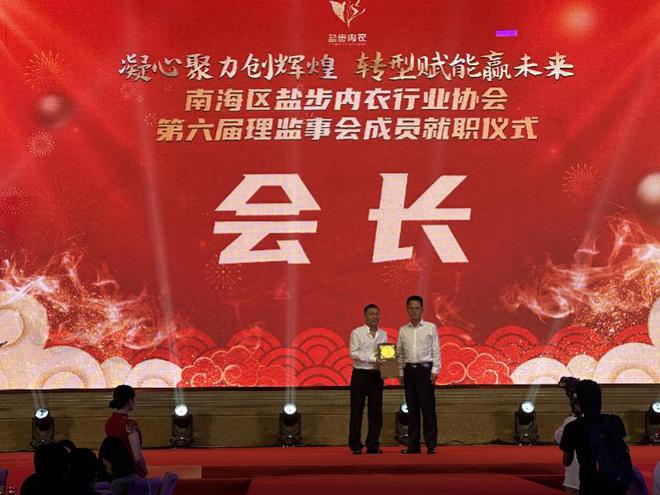
他当选会长!佛山南海盐步内衣行业协会产生新一届理监事会
Nan Fang Du Shi Bao· 2025-06-26 10:28
Core Points - The sixth member congress of the Nanhai District Yanbu Underwear Industry Association was held on June 25, where a new leadership team was elected [1][3] - He Bingxiang, Chairman of Guangdong Aolinen Underwear Group Co., Ltd., was elected as the new president, with other key positions filled by leaders from various companies [1][3] - The association aims to enhance industry standards, promote technological innovation, and cultivate professional talent for sustainable development in the Yanbu underwear industry [3] Industry Overview - The Nanhai Dali area is home to over 900 related enterprises and more than 300 independent brands, with a projected output value exceeding 9 billion yuan for regulated enterprises in 2024 [3] - The Yanbu Underwear Industry Association was established in November 1999 and has been recognized as a 4A social organization in 2024, previously awarded as an advanced collective in the national textile industry [3] Strategic Initiatives - The Guangdong Province Underwear Industry E-commerce Ecological Alliance was launched to enhance the international recognition of the "Guangdong Underwear" brand and promote high-quality development in the industry [5] - A strategic cooperation agreement was signed between the Yanbu Underwear Association and Guangdong Kuangdun Technology Co., Ltd. to jointly develop sewing automation equipment, aiming to drive technological innovation in the industry [7] - Financial institutions, including Nanhai Rural Commercial Bank and Agricultural Bank of China, signed strategic credit agreements to provide comprehensive financial support for key areas such as technological transformation and market expansion [7]
黄金产业锻造资源保障“金钟罩”
Jing Ji Ri Bao· 2025-06-25 21:52
Core Viewpoint - The "Implementation Plan for High-Quality Development of the Gold Industry (2025-2027)" aims to enhance resource security and innovation in the gold industry, targeting a 5% to 10% increase in gold resources and over 5% growth in gold and silver production by 2027, with a comprehensive high-quality development framework established by 2035 [1][2]. Resource Security and Supply Stability - Gold is a strategic mineral resource with significant implications for national industrial and financial security, with China maintaining its position as the world's largest producer and consumer of gold [2][3]. - In 2024, China's gold production is projected to be 377 tons, and consumption is expected to reach 985 tons, continuing its global leadership [2]. - The industry faces challenges such as insufficient resource security, declining ore grades, and rising costs, which hinder competitiveness [2][3]. Technological Innovation and Development - The gold industry requires breakthroughs in key technologies and equipment, particularly for deep mining and high-purity materials, to meet the demands of sectors like electronics and aerospace [4][5]. - The plan emphasizes the need for collaboration between academia and industry to accelerate technological advancements and establish a robust standard system [4][5]. Industry Transformation and Upgrading - The integration of digital technologies such as AI, big data, and cloud computing is essential for the sustainable development and transformation of the gold industry [6][7]. - By 2027, the plan aims for 70% of gold mines to process over 500 tons of ore per day, fostering the growth of quality enterprises and optimizing the industry structure [6][7]. Green and Intelligent Development - The plan outlines measures to enhance resource efficiency, promote green mining practices, and implement digital transformation in operations [7]. - Safety management and risk control are prioritized to improve production safety and ensure compliance with safety regulations [7].
投资于人,推动老龄社会经济持续增长
Xin Hua Ri Bao· 2025-06-24 05:39
Group 1 - The core viewpoint emphasizes the need for macro policies to focus on "investing in people," which aims to transform financial resources into opportunities for human development and quality of life improvement [1] - The aging population is reshaping economic structures, leading to a decline in material needs and an increase in cultural and spiritual demands, which will drive systemic changes in existing economic forms [1][2] - The shift towards an aging society will accelerate the decline of labor-intensive industries and promote a transition towards sectors that utilize age-appreciating skills, presenting opportunities for industrial transformation and trade structure adjustment [2] Group 2 - A continuous industry structure based on individual life cycles is emerging, emphasizing the importance of family factors in the economy related to aging services, which will address intergenerational benefit conflicts [3] - The economic activities related to aging services extend beyond just the elderly phase, highlighting the need for a comprehensive approach that includes family dynamics and social support across all age groups [3] - The historical shift in macro and microeconomic patterns necessitates that "investing in people" becomes a guiding policy to sustain long-term economic growth in an aging society [4]
科技引领 江西瑞昌着力推动产业提质升级
Zhong Guo Xin Wen Wang· 2025-06-23 16:15
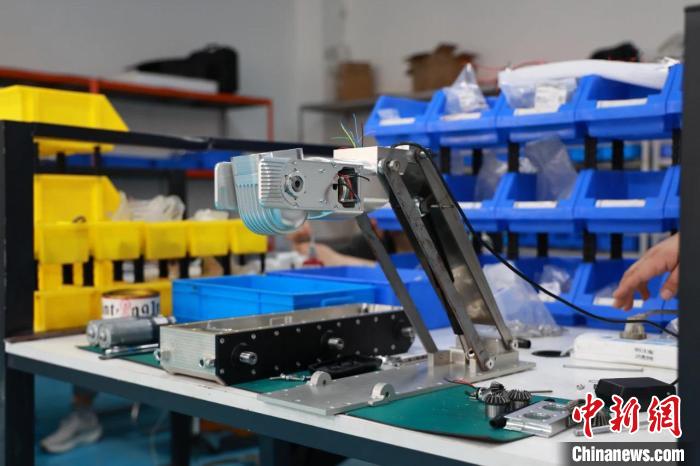
Group 1 - Jiangxi Zhiku Robot Co., Ltd. received over 80 orders for robotic production in the first half of the year, with orders extending to August [1] - The company specializes in intelligent pipeline cleaning robots and has developed new models including automatic cleaning robots and pipeline inspection robots, which have been well received in the market [3] - The company has increased its R&D investment to enhance market expansion and improve product intelligence by reducing robot size and adjusting the gimbal height [3] Group 2 - Jiangxi Kaiyao Lighting Co., Ltd. invested 2.8 billion yuan to establish the Xinnuo Fei·Kaiyao Industrial Park, featuring over 200 automated production lines for LED lighting products [5] - Since 2021, the company has invested approximately 30 million yuan in digital transformation of production lines and logistics systems, resulting in a 15% increase in on-time delivery rates and a 30% improvement in logistics efficiency [5] - The industrial park can produce 1 million bulb lamps daily, with a product qualification rate of 99% [5] Group 3 - The city of Ruichang is focusing on high-tech manufacturing as a key driver for high-quality development and industrial transformation, emphasizing innovation and the cultivation of new productive forces [3][5] - The local government is implementing strategies to strengthen key industrial chains, including new energy materials, optoelectronics, smart home, and green shipping [5]
银企携手谱新篇 金融“活水”润产业
Jiang Nan Shi Bao· 2025-06-23 13:03
Core Viewpoint - The strategic cooperation between Yizheng Rural Commercial Bank and the Yizheng Nonwoven Industry Association aims to enhance the financial support for the nonwoven industry, facilitating its transformation and high-quality development [1][2]. Group 1: Strategic Cooperation - The strategic signing event was held to strengthen the linkage between banks and enterprises, injecting financial "vitality" into the nonwoven industry [1]. - The cooperation is seen as an innovative exploration of "bank-enterprise" collaboration and a significant step towards promoting high-quality development in the nonwoven industry [1][2]. Group 2: Financial Support Initiatives - Yizheng Rural Commercial Bank plans to provide customized financial services tailored to the characteristics of nonwoven enterprises, including optimizing credit processes and innovating supply chain finance [1]. - The bank aims to establish a nonwoven-themed branch and an industry exhibition hall to showcase industry culture and create a regular communication mechanism to accurately meet enterprise financing needs [1]. Group 3: Collaborative Development - The cooperation will involve collaboration with local government to build a tripartite platform, integrating policies and resources to create an ecosystem that benefits the nonwoven industry [1]. - The bank emphasizes its understanding of the local industry, market, and enterprises, aiming to continuously optimize product offerings and innovate service methods to support the transformation and high-quality development of the nonwoven industry [2].
家纺产业带加速“出海” 跨境电商打造外贸新通路
Xin Hua Cai Jing· 2025-06-22 12:30
Core Viewpoint - The rapid development of cross-border e-commerce is providing new opportunities for China's traditional home textile industry to expand internationally, driving the transformation and upgrading of the industry through enhanced technological innovation and product upgrades to better meet overseas consumer demands [1][2]. Group 1: Industry Overview - Shaoxing Keqiao is a core textile industry cluster in China, with over 8,000 textile enterprises and an annual output value exceeding 100 billion yuan, covering trade with 206 countries and regions globally [2]. - The textile industry in Shaoxing, traditionally labeled as "labor-intensive, high energy consumption, and low added value," is now exploring new paths for transformation through digital production and creative design, extending from pure manufacturing to design, research and development, and brand building [2][3]. - In 2024, Shaoxing's foreign trade exports are projected to exceed 160 billion yuan, with a year-on-year growth of 10% [2]. Group 2: Cross-Border E-Commerce Growth - The number of cross-border e-commerce enterprises in Shaoxing Keqiao is expected to surpass 2,000 in 2024, accounting for one-third of the city's total, with 16 companies achieving annual transaction volumes exceeding 10 million USD [2]. - The cross-border e-commerce export value for the region reached 6.799 billion yuan in 2024, representing a year-on-year increase of 176.3% [2]. - Online transaction volume for curtain enterprises in major cross-border e-commerce platforms reached 1.539 billion USD in 2024, marking a year-on-year growth of 66.43% [3]. Group 3: Company Innovations and Strategies - Companies like Shaoxing Yintong Network Technology Co., Ltd. have successfully entered the U.S. market through Amazon, achieving a monthly sales volume of 60,000 USD within two months of entry [4]. - Shaoxing Younai Textile Co., Ltd. has shifted to direct service for global consumers by leveraging Amazon to enhance its brand and product offerings, focusing on innovative products that meet overseas consumer demands [5][6]. - Shaoxing Yagu Home Co., Ltd. has seen significant sales growth after entering the cross-border e-commerce space, with daily sales exceeding 200 units shortly after launching on Amazon [6]. Group 4: Challenges and Future Directions - Traditional home textile enterprises face challenges in the cross-border e-commerce transition, including intense online competition and fluctuations in international raw material prices [7]. - Companies need to adapt to different market dynamics, such as longer product launch cycles in overseas markets compared to domestic ones, and varying consumer preferences [7]. - The global curtain industry is evolving towards smart, green, personalized, high-frequency, branded, and globalized trends, necessitating increased technological and design innovation from home textile enterprises [8].
