
智能制造

Search documents
调研速递|鸿路钢构接待华源证券等19家机构 2025年产量突破500万吨 3000台焊接机器人规模化应用
Xin Lang Cai Jing· 2026-01-12 08:43
Core Viewpoint - Anhui Honglu Steel Structure (Group) Co., Ltd. is actively engaging with institutional investors, showcasing its production capabilities and advancements in intelligent manufacturing, with a focus on future growth and market expansion [1][3][4]. Group 1: Investor Engagement - The company recently hosted a specific investor survey from January 8 to 9, 2026, attended by 19 institutions including Huayuan Securities and Shanghai Ningquan Asset Management [1][2]. - The discussions covered key topics such as production operations, intelligent upgrades, and capacity planning [1][2]. Group 2: Production and Technological Advancements - The company reported a production output of 502.07 million tons in 2025, marking an 11.30% year-on-year increase, with new sales contracts amounting to approximately 29.102 billion yuan, a 2.84% increase [3]. - The company has implemented significant intelligent manufacturing technologies, including 3,000 welding robots and various advanced cutting machines, enhancing operational efficiency [3][4]. Group 3: Cost Control and Future Planning - While the application of intelligent equipment has improved production capacity and quality, the immediate impact on cost reduction has been limited [4]. - The company plans to optimize its existing production capacity without disclosing new capacity plans for 2026, focusing on enhancing core competitiveness and customer satisfaction [4]. - Future overseas market expansion will be considered based on market conditions, and the company is committed to improving its debt repayment capacity and risk management [4].

伟星股份(002003) - 2026年1月9日投资者关系活动记录表
2026-01-12 07:14
Group 1: Impact of Raw Material Prices - Recent increases in copper and other metal prices have affected the company's raw material costs, but the company employs a cost-plus pricing model to adjust prices based on customer requirements and production factors [1] - The company is actively pursuing new materials and processes to meet customer demands while managing procurement based on order volume and price trends [1] Group 2: Market Position and Competition - The company's market share in the zipper business is relatively small due to a lack of comprehensive industry statistics [1] - The apparel accessories industry is characterized by low concentration and intense competition, particularly in the mid-to-low-end product segments, with increasing challenges for small and medium enterprises [2] - As consumer demand shifts towards mid-to-high-end brands, larger companies with strong competitive advantages are likely to benefit, leading to further industry consolidation [2] Group 3: Company Operations and Future Outlook - The company established a wholly-owned subsidiary, SAB AMERICA INC., in the U.S. in 2024 to better serve local customer needs, with normal operational status [3] - The company maintains a cautious outlook on short-term industry recovery due to current international trade conditions and consumer sentiment, but is optimistic about long-term growth in the apparel accessories sector [4] - Future capital expenditures will focus on smart manufacturing improvements and overseas capacity expansion, with a commitment to risk control [6] Group 4: Financial Guidance and Dividend Policy - Detailed performance guidance for 2026 will be provided in future announcements, with a focus on long-term development goals outlined in the company's sixth equity incentive plan [5] - The company adheres to a sustainable development philosophy, considering annual profits, future needs, and shareholder interests when formulating profit distribution plans [7]

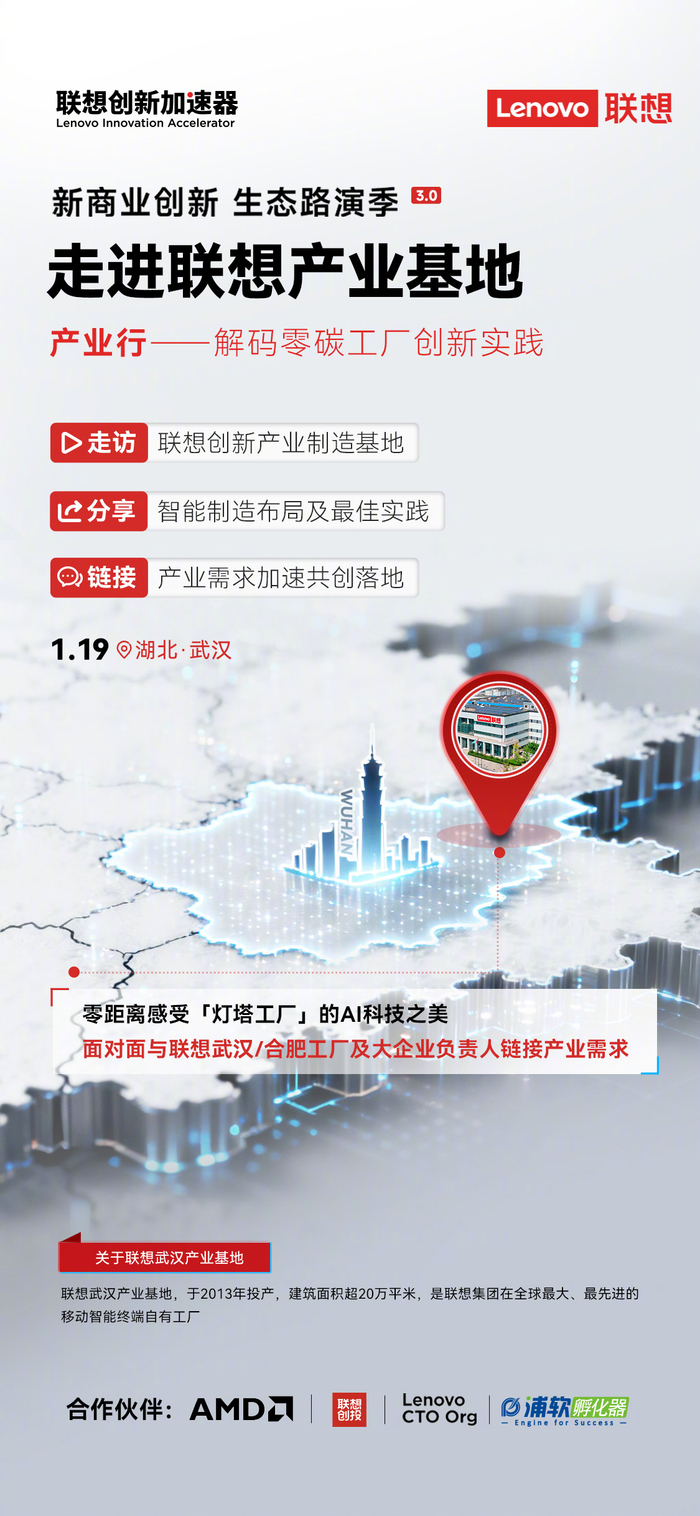
联想武汉产业基地开放走访,探秘全球领先零碳工厂
3 6 Ke· 2026-01-12 06:34
Group 1 - The core viewpoint of the news highlights Lenovo's advanced manufacturing capabilities at its Wuhan industrial base, showcasing it as a leading "zero-carbon factory" with a production capacity exceeding 140,000 units per day, producing one device every 0.6 seconds [1] - The facility features the industry's first 5G+IoT automated production line, named "Quantum Line," which allows for flexible manufacturing processes that can be restructured in just four hours [1] - The Wuhan industrial base, operational since 2013, spans over 200,000 square meters, making it Lenovo's largest and most advanced self-owned factory for mobile smart terminals globally [4] Group 2 - The event provides opportunities for industry stakeholders to connect with Lenovo's experts from the Wuhan and Hefei bases to explore smart manufacturing solutions [3] - The initiative aims to link Lenovo's global market resources across 160 countries, facilitating the acceleration of product and technology deployment for participating enterprises [1]


二手车价大跳水,小米SU7半年跌5万;宁德时代旗下宁家服务打造中东最大新能源后市场体验中心丨智能制造日报
创业邦· 2026-01-12 03:27
Group 1 - Xiaomi's used car prices have significantly dropped, with the SU7 model now priced as low as 150,000 yuan, experiencing a depreciation of 50,000 yuan over six months [2] - The SU7 Ultra has seen the largest decline, with a current average price of 412,000 yuan, down over 100,000 yuan from its original price of 530,000 yuan [2] - The YU7 model has a relatively smaller depreciation, with used cars generally dropping by less than 10,000 yuan [2] Group 2 - CATL's NING Service has opened the largest new energy after-market service center in the Middle East, located in Riyadh, Saudi Arabia, offering comprehensive services including battery diagnostics and recycling [2] - BAIC New Energy and Pony.ai have announced a strategic partnership entering phase 2.0, with the launch of the L3 version of the ARCFOX Alpha S for trial operations [2] - Infosys faces a potential annual revenue loss of 150 million USD due to Daimler's search for new suppliers, as it risks losing over one-third of its 400 million USD revenue from the automaker [2]



“三智”战略集大成之作,华境S让高端智能科技普惠于民
Zhong Guo Qi Che Bao Wang· 2026-01-12 03:23
Core Viewpoint - China's manufacturing is transitioning from "following and running" to "leading in innovation," with a focus on "Artificial Intelligence +" as a core strategy during the 14th Five-Year Plan period [1][3]. Group 1: Intelligent Manufacturing System (I²MS) - SAIC-GM-Wuling has invested over 10 billion in the globally pioneering Intelligent Island Manufacturing System (I²MS), which has been recognized as a "leading-level intelligent factory" by multiple government ministries [3][5]. - The I²MS represents a significant shift from traditional assembly lines, enabling flexible production that meets the growing demand for personalized vehicles while maintaining efficiency [6][9]. Group 2: Efficiency and Cost Reduction - The I²MS allows for the efficient production of over 20 vehicle models on the same line, achieving a 30% increase in production efficiency, an 80% improvement in logistics efficiency, and a 31% reduction in manufacturing costs [9][11]. - The system ensures high precision with assembly accuracy of 0.1mm and zero-error assembly, providing full lifecycle quality traceability for products [9]. Group 3: Strategic Collaboration with Huawei - In September 2025, SAIC-GM-Wuling entered a strategic partnership with Huawei, focusing on "intelligent manufacturing, assisted driving, and smart cockpits," enhancing collaborative innovation in the industry [13]. - The first product of this collaboration, the Huajing S, integrates Huawei's advanced technologies, making high-end features accessible to ordinary consumers while ensuring safety and quality [13]. Group 4: Future Development and Global Expansion - Moving into the 15th Five-Year Plan, SAIC-GM-Wuling aims to further iterate the I²MS, increase the application of artificial intelligence, and promote this model across the entire industry chain, including overseas factories [15]. - The company is committed to exporting advanced manufacturing standards and management systems globally, contributing to China's transition from a major automotive nation to a strong automotive nation [15].
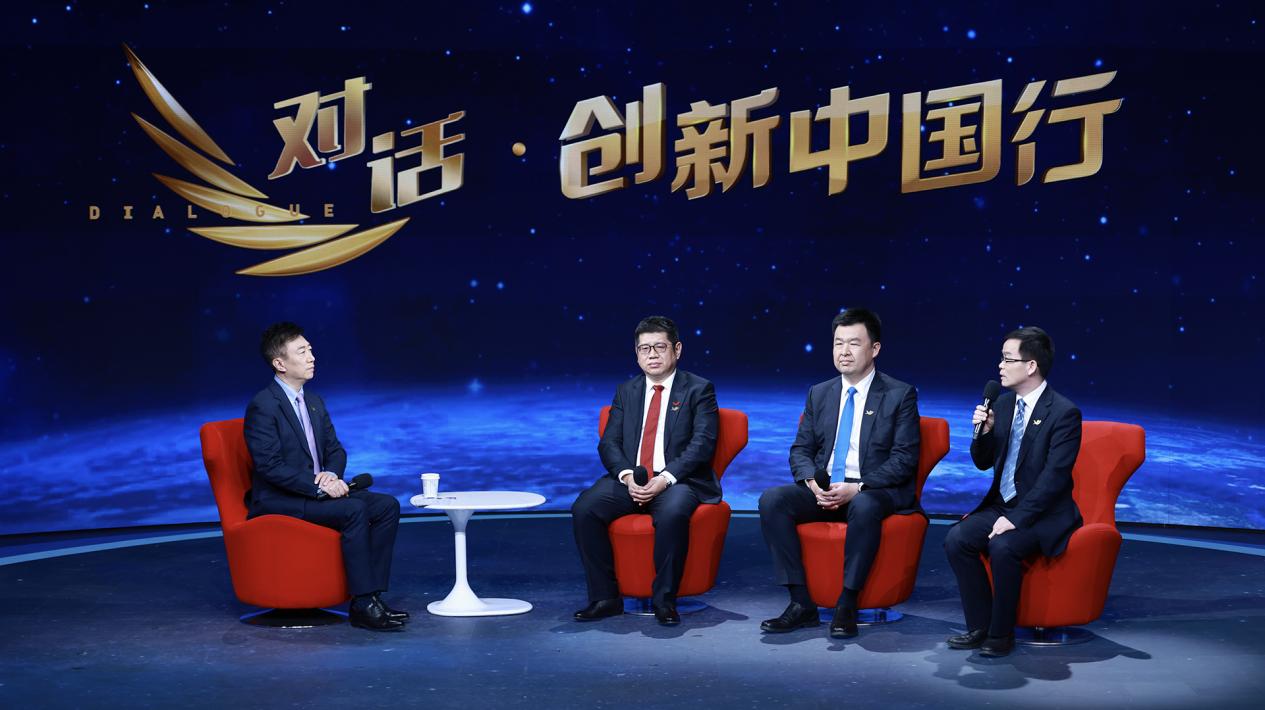
工信部部长李乐成:2026年将着重抓好“稳”“扩”“创”“增”四方面工作 保持工业经济平稳增长
Xin Hua She· 2026-01-12 03:10
Core Viewpoint - The "14th Five-Year Plan" emphasizes the construction of a modern industrial system and the strengthening of the real economy as a strategic priority, with recent central economic meetings focusing on promoting new industrialization and a series of deployments for 2026 [1] Group 1: Measures for Industrial Economic Stability - The industrial and information systems will focus on four areas: "stability," "expansion," "innovation," and "growth" to ensure steady industrial economic growth [2] - In the first 11 months of 2025, the industrial added value above designated size grew by 6% year-on-year, with high-tech manufacturing and equipment manufacturing increasing by 9.2% and 9.3% respectively [2] - Key industries and regions account for 80% of the total industrial output, and targeted support will be provided to stabilize growth in these areas [2] Group 2: Enhancing Industrial Structure - The focus will be on revitalizing traditional industries and accelerating the development of emerging industries, with actions to implement AI and create zero-carbon factories [4] - A modern industrial system will be built with advanced manufacturing as the backbone, emphasizing intelligent, green, and integrated development [4] - Future industries will be prioritized, with investments in quantum technology, humanoid robots, and 6G technology [4] Group 3: Promoting Technological Innovation - The integration of technology and industry will be deepened, with a focus on enhancing the capacity for technological innovation in manufacturing [6] - A national manufacturing innovation center will be established to support high-quality technological supply and promote collaboration between enterprises and research institutions [6] - The government will implement policies to support small and medium-sized enterprises in improving cash flow and reducing overdue accounts [3][6] Group 4: Digital Transformation in Manufacturing - The "14th Five-Year Plan" aims to accelerate the digital, networked, and intelligent transformation of manufacturing, with significant achievements in integrating 5G applications across various sectors [8] - The plan includes building high-quality industry data sets and promoting digital transformation for large and small enterprises [8][9] - The focus will be on enhancing network technology and developing industrial internet platforms to facilitate the integration of digital and intelligent manufacturing [9][10]
好评中国·“经”彩开局|锚定转型升级 走稳制造强国之路
Zhong Guo Jing Ji Wang· 2026-01-12 02:00
推动制造业转型升级,是加快发展新质生产力的现实需要。新质生产力的培育壮大,离不开科技创新与 产业创新的深度融合。具体到制造业领域,这意味着发展模式要从传统的"规模扩张"转向"质量跃升", 从"要素驱动"转向"创新驱动"。可以看到,近年来,众多企业纷纷布局自动化生产线、打造智能工厂, 智能制造场景不断涌现。例如,河南郑州某煤机企业工厂内,自动生产线有序运转;又如,江西九江某 金属制品企业生产车间里,机械臂精准抓取、装配零部件。随着越来越多的先进制造企业向"新"而行, 必将带动生产力水平大幅提升,为经济高质量发展释放澎湃动能。 推动制造业转型升级,有利于夯实扩大内需的根基。制造业转型升级与内需扩容之间存在着相互促进、 协同发展的关系。一方面,强大的国内市场为技术创新提供了"最佳试验场"和"最大孵化器";另一方 面,制造业从"生产更多"转向"生产更对、更好",能够提供更优质、更多样的产品和服务,持续激发消 费者潜在需求,从而实现制造优势与消费动能的双向奔赴。 当然,制造业的这场深刻转型绝非坦途,仍面临多重制约:一是"创新瓶颈",一些关键核心技术仍然受 制于人;二是"转型鸿沟",部分企业的数字化转型仅停留在技术单点应 ...
旧改政策+智能制造概念联动6连板!快意电梯9:25再度涨停,背后逻辑揭晓
Sou Hu Cai Jing· 2026-01-12 01:41
Group 1 - The core viewpoint of the article highlights that Kuaiji Elevator has achieved a six-day consecutive limit-up in trading, indicating strong market interest and performance [1] - The stock reached a trading limit at 9:25 AM with a transaction volume of 0.22 billion yuan and a turnover rate of 0.47% [1] - The acceleration of the renovation of old residential communities in China is driving demand for the replacement and installation of old elevators, with over 2 million old elevators nationwide awaiting updates, presenting a significant market opportunity [1] Group 2 - Kuaiji Elevator is actively engaged in the old elevator renovation and installation sector and has won bids for central state-owned enterprise procurement projects [1] - The company is pursuing a business transformation by establishing a 5 billion yuan industrial merger and acquisition fund to invest in the smart manufacturing sector, collaborating with professional investment institutions to explore new growth points [1] - The company's headquarters is located in the Guangdong-Hong Kong-Macao Greater Bay Area, allowing it to leverage regional advantages for participation in infrastructure construction; its products are exported to multiple countries along the Belt and Road Initiative, benefiting from related policy incentives [1]
鼎捷数智1月9日获融资买入3.37亿元,融资余额9.75亿元
Xin Lang Cai Jing· 2026-01-12 01:41
Core Viewpoint - Dingjie Smart's stock price increased by 6.61% on January 9, with a trading volume of 2.253 billion yuan, indicating strong market interest and activity in the company's shares [1]. Financing and Margin Trading - On January 9, Dingjie Smart had a financing buy-in amount of 337 million yuan and a financing repayment of 289 million yuan, resulting in a net financing buy of 48.136 million yuan [1]. - As of January 9, the total margin trading balance for Dingjie Smart was 978 million yuan, with the financing balance accounting for 6.69% of the circulating market value, which is above the 70th percentile of the past year [1]. - In terms of securities lending, Dingjie Smart had a securities repayment of 10,400 shares and a securities sell-out of 2,900 shares, with a sell-out amount of 155,700 yuan calculated at the closing price [1]. Company Overview - Dingjie Smart, established on December 26, 2001, and listed on January 27, 2014, is located in Shanghai and specializes in providing digital transformation, smart manufacturing, and industrial internet solutions for the manufacturing and circulation industries, as well as small and micro enterprises [1]. - The company's revenue composition includes 47.89% from smart technology services, 28.11% from self-developed smart software products, and 23.99% from integrated smart hardware and software solutions [1]. Shareholder Information - As of December 31, Dingjie Smart had 54,000 shareholders, an increase of 3.85% from the previous period, with an average of 4,991 circulating shares per person, a decrease of 3.70% [2]. - For the period from January to September 2025, Dingjie Smart achieved a revenue of 1.614 billion yuan, a year-on-year increase of 2.63%, and a net profit attributable to shareholders of 51.088 million yuan, reflecting a year-on-year growth of 2.40% [2]. - The company has distributed a total of 311 million yuan in dividends since its A-share listing, with cumulative distributions of 65.588 million yuan over the past three years [2].

专家热议以AI赋能制造业 推动数字经济发展
Xin Lang Cai Jing· 2026-01-11 21:22
与会嘉宾指出,"十五五"时期,数字经济的核心使命与主攻方向,是深度服务强大国内市场建设;而数 据要素作为关键引擎,必须精准赋能内需主导、消费拉动、内生增长的经济发展新模式。这既是数字经 济锚定实体经济的必然选择,也是激活国内大循环活力、筑牢经济增长内生动力的核心路径。 (来源:经济参考报) 与会嘉宾认为,人工智能赋能工业制造,绝非简单叠加一两套应用系统的"表层改造",而是一场触及生 产全链条、管理全流程的"深层革命"。唯有立足顶层设计、锚定系统工程思维,方能穿透技术表象,真 正把握AI重塑工业制造的核心逻辑与未来机遇。 与会嘉宾表示,数字经济既是培育新质生产力的核心支点,也是推动高质量发展的重要引擎,更通过优 化资源配置、惠及民生福祉,为中国式现代化注入了强劲数字动能。数字经济应用场景不仅是撬动数字 技术与实体经济深度融合的核心杠杆,更是催生新产业新业态新模式的动力源泉。数字经济绝非单一主 体的独角戏,而是政产学研用多元化主体与社会公众协同发力的大合唱。 近日,在2025中数联盟会员代表大会暨数字经济高质量发展论坛上,与会嘉宾就数字经济的发展和数智 化的未来发表了看法。 与会嘉宾表示,人工智能是影响未来发展的 ...