
大模型

Search documents
天溯计量(301449.SZ):基于大模型的计量检测智能机器人研发按计划稳步推进中
Ge Long Hui· 2026-02-03 07:58
Group 1 - The company Tian Su Measurement (301449.SZ) is steadily advancing the research and development of its intelligent robot for measurement detection based on a large model [1]

科创芯片设计ETF天弘(589070)标的指数强势收涨超2%,昨日净流入超6500万元
Sou Hu Cai Jing· 2026-02-03 07:56
Core Insights - The Tianhong Sci-Tech Chip Design ETF (589070) has shown active trading with a turnover of 10.23% and a transaction volume of 63.04 million yuan as of February 3, 2026, indicating strong market interest [1] - The underlying index, the Shanghai Sci-Tech Board Chip Design Theme Index (950162), increased by 2.19%, with notable gains from constituent stocks such as Xinxiang Microelectronics (up 9.49%), Chipone Technology (up 9.11%), and Puran Technology (up 8.24%) [1] - The ETF experienced a net inflow of 66.71 million yuan on February 2, 2026, reflecting positive investor sentiment [1] Product Highlights - Domestic GPU is a key area for semiconductor localization, with market share increasing from 5% to 12% over the past three years, indicating significant potential for further growth [2] - The national big fund's third phase focuses on supporting high-end chip design, providing R&D funding and market resources for domestic GPU companies [2] - The demand for self-controlled computing power in sectors such as government, finance, and energy is expected to accelerate market share capture by domestic GPU firms, presenting opportunities for excess returns for the Tianhong Sci-Tech Chip Design ETF [2] Hot Events - On February 2, 2026, Jieyue Star released the Step 3.5 Flash model, which utilizes a sparse MoE architecture, activating approximately 11 billion parameters per token out of a total of 196 billion parameters, enhancing inference efficiency [2] - Multiple domestic chip manufacturers, including Huawei Ascend and Alibaba Pingtouge, have completed adaptations for the Step 3.5 Flash model, improving model adaptability and computing efficiency through collaborative innovation [2] Institutional Views - China Galaxy Securities noted a revival in the analog chip design sector, with companies like Analog Devices and Texas Instruments announcing price increases, suggesting a shift in supply-demand dynamics [3] - In the digital chip domain, advanced design areas represented by AI computing power and domestic CPUs are performing strongly, with a long-term focus on self-controlled domestic digital chips [3]

亚太股市集体反弹,芯片股大爆发,三星电子飙涨11%,A股超4800股飘红
21世纪经济报道· 2026-02-03 07:44
Group 1 - The Asia-Pacific stock markets experienced a significant rebound, with the Nikkei 225 index closing at 54,720.66 points, marking a historical high. The Korean Composite Index rose by 6.84% to 5,288.08 points, driven largely by semiconductor manufacturers Samsung Electronics and SK Hynix, with Samsung's stock soaring by 11%, the largest single-day increase since March 2020 [1] - The A-share market also saw a collective rise, with the Shanghai Composite Index up by 1.29%, the Shenzhen Component Index up by 2.19%, and the ChiNext Index up by 1.86%. Over 4,800 stocks increased in value, with more than 80 stocks hitting the daily limit [1] - In the afternoon session, the space photovoltaic concept stocks surged, with companies like Guosheng Technology, Jinjing Technology, and Zairun New Energy hitting the daily limit. Other stocks such as Dike Co., Jingcheng Machinery, and Liancheng CNC also saw gains exceeding 10% [3] Group 2 - The precious metals sector rebounded strongly, with Xiaocheng Technology rising over 18% and Hunan Gold hitting the daily limit. The price of gold surged past $4,890, leading to a significant increase in A-share precious metal stocks, including Zijin Mining, which rose by 6% [3] - CPO and other computing hardware stocks performed well, with Robotech hitting the daily limit and Tianfu Communication rising over 10%, both reaching historical highs [3] - In the Hong Kong stock market, the Hang Seng Index turned positive in the afternoon, while the Hang Seng Technology Index narrowed its decline to 0.9%, having previously dropped by 3.4%. This marked a technical bear market, with a cumulative decline of over 20% from the October 2024 peak [3][4] Group 3 - Major tech stocks in Hong Kong saw a reduction in their declines, with Tencent's drop narrowing to 3% from over 6%, Baidu's decline reducing to 4% from nearly 7%, and Kuaishou's drop narrowing to 4.5% from almost 8% [4] - The large model concept stocks showed resilience, with Zhiyu rising over 7% and MINIMAX-WP experiencing a significant intraday increase of over 14%, reaching a new high since its listing, with a total market value surpassing 180 billion HKD [5]

大厂开启2026春节AI应用流量大战,AI应用催化行情,影视ETF(516620)涨超3%
Mei Ri Jing Ji Xin Wen· 2026-02-03 07:26
大厂开启2026春节AI应用流量大战,AI应用催化行情,2月3日,影视ETF(516620)涨超3%。 中信建投指出,大厂已开启2026春节AI应用流量大战,腾讯元宝启动10亿元现金红包活动,预计千 问、豆包的春节运营活动也将逐步启动。谷歌世界模型Genie 3发布,我们认为不会"颠覆"游戏行业, 反而利好那些玩法创新力强、用户需求洞察深刻,但制作能力普通甚至落后的中小型CP。后续催化不 断,包括DeepSeek、字节、阿里均将于春节期间发布新版大模型,以及ChatGPT等通用AI应用商业化进 展。 影视ETF(516620)跟踪的是中证影视指数(930781),该指数从沪深市场中选取涉及视频、直播、游 戏、电影等符合新技术和新消费趋势的上市公司证券作为指数样本,以反映中国影视内容制作及传播行 业的整体表现。成分股覆盖影视动漫制作、电视广播、视频媒体等领域,行业配置上以通信服务为主, 其次为可选消费与信息技术。 (文章来源:每日经济新闻) ...
磁悬浮输送线第一梯队,FRT无线供电技术行业领先,这家公司完成首轮千万元融资
3 6 Ke· 2026-02-03 06:57
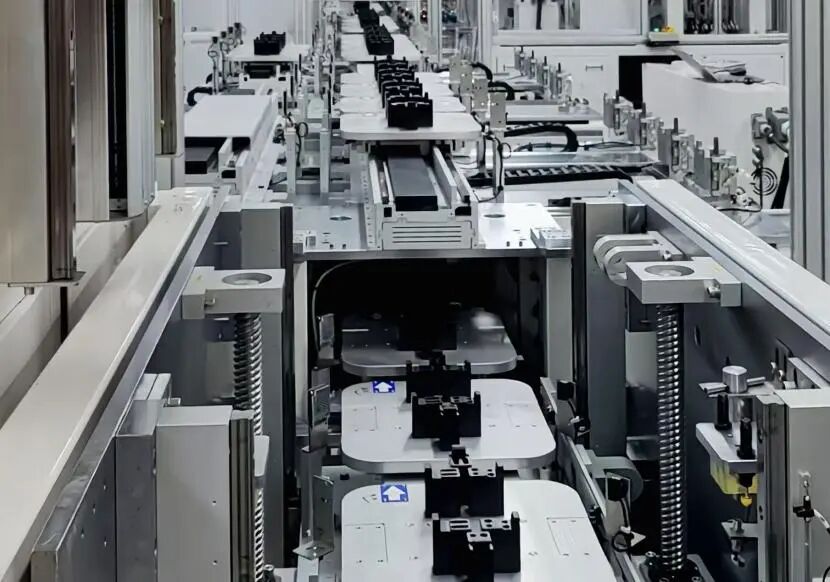
硬氪获悉,昆山纳博旺精工科技有限公司(以下简称"纳博旺")近日完成Pre-A轮融资,融资金额2500万元,由金雨茂 物、中鑫资本及关联方、九合深宏、国泰君安创新投共同投资,资金将主要用于研发投入、海内外拓展及团队建设。 纳博旺成立于2018年,总部位于江苏省昆山市。公司创始人Tom,曾在工业自动化领域全球知名外企担任高管和中国 公司项目总负责人。经过超二十年的工业自动化领域深厚积淀,具备扎实的技术背景、丰富的管理实践和敏锐的市场 洞察。 目前,公司围绕磁悬浮柔性轨道传输系统,构建了覆盖核心部件到整线系统的完整产品体系,实现了"软硬一体化"设 计。公司在磁悬浮输送系统的全栈技术研发方面取得了突破,已经掌握了包括驱动器、编码器、控制器及无线供电系 统在内的核心技术,其多项磁驱与气浮技术已处于全球领先水平,综合实力居行业第一梯队。其中,领先的无线供电 (FRT)技术成为公司最具竞争力的差异化优势。 ( 图源/企业) 磁悬浮柔性输送线是采用非接触式磁力驱动技术的新一代工业输送线,通过运动控制算法,可以独立控制多个动子小 车实现同步或异步柔性传输,满足各个智能制造应用场景的复杂传输需求,目前已广泛应用于锂电、3C、汽车 ...
港股大模型概念股午后持续走强
Mei Ri Jing Ji Xin Wen· 2026-02-03 05:45
(文章来源:每日经济新闻) 每经AI快讯,2月3日,港股大模型概念股午后持续走强,MINIMAX-WP涨超14%股价再创上市来新 高,智谱涨超11%。 ...
港股大模型概念股午后持续走强,MINIMAX涨超13%再创上市来新高
Xin Lang Cai Jing· 2026-02-03 05:32
港股大模型概念股午后持续走强,MINIMAX-WP涨超13%再创上市来新高,智谱涨超10%。 来源:滚动播报 ...
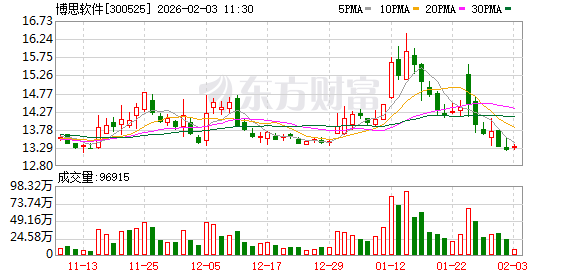
博思软件:公司坤元万象大模型平台,目前已支持Agentic智能体产品的研发
Mei Ri Jing Ji Xin Wen· 2026-02-03 04:53
Group 1 - The company's KunYuan WanXiang large model platform supports the development of Agentic AI products [2] - Some of the intelligent agent products launched by the company have initially demonstrated core features of Agentic AI, such as autonomous decision-making and multi-task collaboration [2] - The company plans to continuously iterate and optimize the capabilities of related products based on business needs [2]

资金持续抢筹,科创人工智能ETF华夏(589010)单日流入近亿元!思看科技领涨超12%
Mei Ri Jing Ji Xin Wen· 2026-02-03 04:19
Group 1 - The core viewpoint of the news highlights the strong performance of the Huaxia Sci-Tech AI ETF (589010), which opened high and showed a slight pullback, with the latest price at 1.564 yuan, reflecting a 0.256% increase from the opening price [1] - The ETF tracks 30 constituent stocks, with a significant upward trend where 24 stocks rose, led by SiKan Technology with a 12.75% increase, followed by XingHuan Technology, LingYun Light, and Chip Origin, each rising over 3%; however, HanGuang Technology saw a decline of over 9% [1] - The trading volume for the ETF reached 32.57 million yuan, with a turnover rate of 1.27%, indicating sustained high trading activity, complemented by a net inflow of 90 million yuan the previous day, reflecting active market sentiment [1] Group 2 - On February 2, OpenAI launched a standalone application for its AI programming assistant Codex for Apple computers, now available to all ChatGPT users on the Apple platform, aiming to facilitate developers in managing multiple AI agents; this move is part of a broader explosive growth in the AI programming tools market [1] - According to Zhonghang Securities, the transition of large models into the era of intelligent agents is accelerating, with AI applications gaining traction alongside policy support, marking a shift from "content generation" to "process agency," thus synchronizing technological paradigm shifts with commercial value transformation [1][2]
智谱早盘涨超7% 宣布正式发布并开源GLM-OCR 据报计划未来两周内推出GLM-5
Zhi Tong Cai Jing· 2026-02-03 03:09
Core Viewpoint - The company, Zhiyun (02513), experienced a significant stock price increase, rising over 7% in early trading and currently up 4.36% at HKD 234.4, with a trading volume of HKD 193 million [1] Group 1: Product Launch - Zhiyun officially announced the release and open-sourcing of GLM-OCR, a model with only 0.9 billion parameters, which supports vLLM, SGLang, and Ollama deployment, achieving state-of-the-art (SOTA) performance in multiple mainstream benchmarks for formula recognition, table recognition, and information extraction [1] - The company is reportedly planning to launch GLM-5, the fifth generation of its GLM series, within the next two weeks, which is expected to provide "comprehensive and significant" improvements in creative writing, programming, logical reasoning, and agentic capabilities [1]