
贸易保护主义

Search documents
关税突发!特朗普,最新宣布!
Zheng Quan Shi Bao· 2025-09-26 06:40
Group 1 - The core point of the news is the announcement by President Trump regarding new tariffs on various imported products starting from October 1 [1][2][3] - A 50% tariff will be imposed on kitchen cabinets, bathroom sinks, and related building materials [1] - A 30% tariff will be applied to imported furniture [1] - A 100% tariff will be levied on patented and branded pharmaceuticals [1] - A 25% tariff will be added to all imported heavy trucks [2]
美关税冲击加剧 约旦出口行业困则思变
Xin Hua She· 2025-09-26 05:49
Group 1 - Jordan's export industry is significantly impacted by U.S. trade protectionism, with a call for market diversification and enhanced export capabilities [1][2] - The U.S. is Jordan's largest export market, with exports to the U.S. projected at approximately 2.2 billion dinars (about 3.1 billion USD) in 2024, accounting for a quarter of Jordan's total exports [1] - The garment industry is the largest export sector in Jordan, facing profit compression and increased competition due to U.S. tariffs [1][2] Group 2 - U.S. tariffs on Jordan's garment industry are higher than those imposed on Egypt and Kenya, leading to a slowdown in overseas orders [2] - The food industry is also significantly affected, with exporters facing pressure to reduce prices, which threatens their profit margins [2] - Local experts highlight that the uncertainty of U.S. tariffs poses the greatest challenge for Jordanian exporters, especially those relying on the U.S.-Jordan Free Trade Agreement [2] Group 3 - Jordan's export community is urged to explore markets in Europe and Africa to mitigate the impact of U.S. tariffs [3] - The jewelry sector is seeking to expand into Gulf and North African markets while the government negotiates to lower tariffs on jewelry exports [3] - Structural reforms are necessary for Jordan to enhance competitiveness, including improving operational efficiency and increasing local content in products [3]
涉及药品、重卡、厨卫、家具,美国出台新一批高额关税措施
Sou Hu Cai Jing· 2025-09-26 01:59
Group 1 - The U.S. government will impose a 100% tariff on all imported brand-name or patented drugs starting October 1, 2023, with exemptions for companies building pharmaceutical plants in the U.S. [1] - In 2023, the U.S. imported $203 billion worth of drugs, with 73% coming from Europe, primarily Ireland, Germany, and Switzerland [1] - A report commissioned by the U.S. pharmaceutical industry indicates that a 25% tariff on drug imports could increase U.S. drug costs by nearly $51 billion annually, potentially raising drug prices by up to 12.9% for consumers [1] Group 2 - The U.S. will also impose a 25% tariff on all imported heavy trucks to protect domestic manufacturers from unfair external competition [4] - The five largest sources of imported heavy trucks are Mexico, Canada, Japan, Germany, and Finland, which are considered allies and pose minimal threats to U.S. national security [4] - Tariffs of 50% will be applied to kitchen cabinets, bathroom sinks, and related building materials, while a 30% tariff will be imposed on imported upholstered furniture [4] Group 3 - The U.S. Treasury Secretary mentioned alternative options for potential legal challenges regarding tariff legitimacy, including the Trade Expansion Act of 1962, which allows the Commerce Department to investigate imports threatening national security [5] - The Commerce Department has previously initiated investigations under this act for various products, including automobiles, copper, steel, and aluminum [5] - A new investigation was launched on September 2, 2023, covering products such as industrial machinery and medical devices [5]


上半年全球经济韧性超预期
Sou Hu Cai Jing· 2025-09-26 00:18
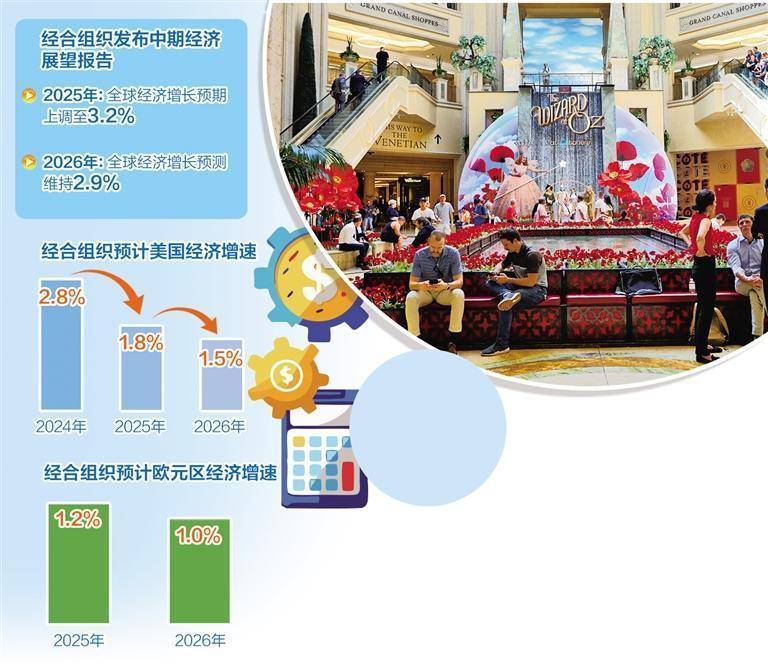
Core Insights - The OECD has raised its global economic growth forecast for 2025 by 0.3 percentage points to 3.2%, while maintaining a 2.9% growth prediction for 2026, indicating a complex balance between resilient recovery and structural challenges in the global economy [1][6] - Emerging market economies are showing strong adaptability and are becoming a significant driver of growth, supported by companies preemptively adjusting production plans and inventory to avoid potential high tariff costs, creating a "rush to export" effect [1][6] - Investment in artificial intelligence (AI) is accelerating globally, with a notable increase in digital transformation efforts and investments in AI technologies, particularly in China, where nearly 60% of global sovereign wealth funds plan to increase allocations to Chinese assets over the next five years, especially in the tech sector [1][6] Economic Risks - The report highlights rising tariff rates and renewed inflation pressures as key risks, with the effective tariff rate in the U.S. reaching 19.5%, the highest since 1933, and the full effects of these tariff increases yet to be realized [2][4] - The labor market is showing signs of fatigue, with the OECD predicting U.S. economic growth to slow from 2.8% in 2024 to 1.8% in 2025, and further to 1.5% in 2026, while the Eurozone is expected to grow at only 1.2% and 1.0% in the next two years [4][6] Policy Recommendations - The OECD suggests that international cooperation is crucial, advocating for increased transparency and predictability in trade policies while balancing economic security [5][6] - Countries are encouraged to deepen structural reforms to unlock the growth potential of new technologies like AI, fostering an innovative policy environment and enhancing collaboration in key technology areas [5][6]
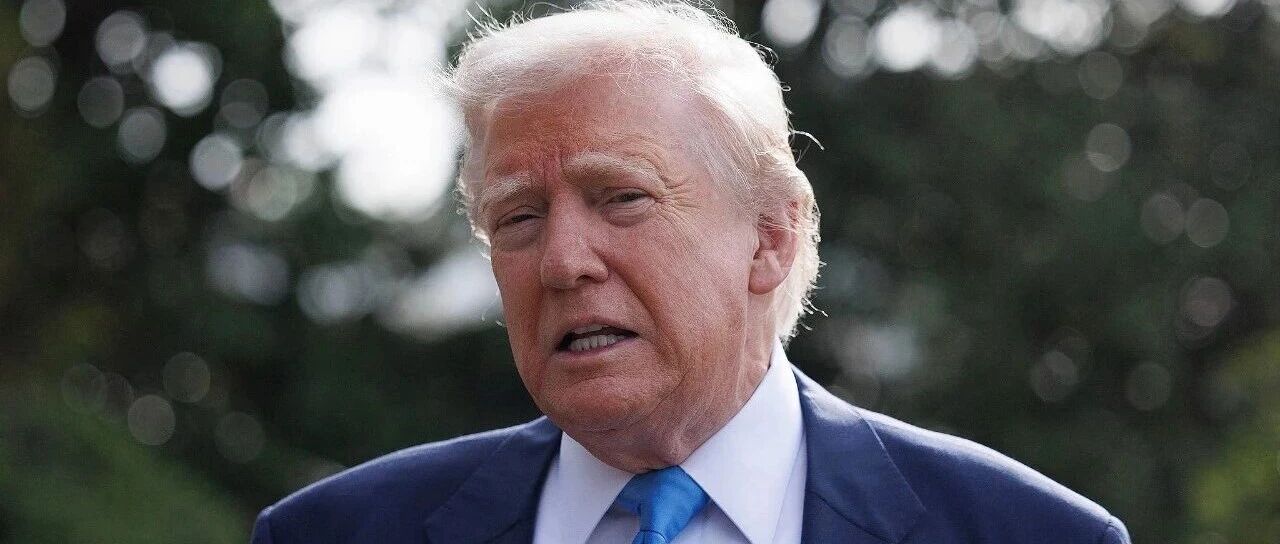
特朗普:将对进口建材、家具及药品实施高额关税
财联社· 2025-09-26 00:00
Core Viewpoint - The article discusses the announcement made by U.S. President Trump regarding the implementation of new high tariffs on various imported products starting from October 1 [1] Group 1: Tariff Details - The measures include a 50% tariff on kitchen cabinets, bathroom sinks, and related building materials [2] - A 30% tariff will be imposed on imported furniture [2] - A 100% tariff will be added to patented and branded pharmaceuticals [2]
美国对欧盟15%汽车关税生效 行业担忧难消
Xin Hua Wang· 2025-09-25 09:35
新华社布鲁塞尔9月25日电(记者康逸)美国政府24日表示,正式执行与欧盟达成的贸易协议,确认对 欧盟汽车及零部件征收15%的关税自8月1日起生效。欧洲观察人士认为,美国关税政策正给欧洲汽车业 带来严重冲击。 中欧数字协会主席路易吉·甘巴尔代拉表示,根据美欧达成的新贸易协议,美国对欧盟出口的汽车和零 部件征收15%的关税,税率仍远高于原来的2.5%。 "这无异于一记重击。"甘巴尔代拉说,汽车产业是欧洲经济一大支柱,德国、法国、意大利等国都依赖 庞大的汽车产业链,这一链条直接或间接关联数百万个工作岗位。美国关税政策将迫使欧洲车企要么自 行消化高昂成本,进一步压缩利润空间,要么将成本转嫁给消费者,导致市场份额遭到挤压。 自今年4月起,美国对进口汽车加征25%的关税,导致欧盟对美汽车出口遭遇高达27.5%的关税。 受美国关税政策冲击,2025年上半年欧洲五大汽车巨头利润均同比下滑或转为亏损。财报数据显示,大 众2025年上半年净利润为40.05亿欧元,同比下降37%。其中,因美国关税带来的额外成本高达13亿欧 元。宝马上半年净利润为40.15亿欧元,同比下滑29%。斯泰兰蒂斯集团更是因为推迟旗下美国品牌车 型的研发与 ...

视频丨德国财长:美加征关税政策只会带来失败
Yang Shi Xin Wen Ke Hu Duan· 2025-09-25 07:56
Core Viewpoint - The European Union's international standing is declining due to various factors including the Russia-Ukraine conflict, U.S. tariff policies, and recent U.S.-Russia talks [3]. Group 1: EU's Security and International Position - German Vice Chancellor and Finance Minister Olaf Scholz stated that the EU's security is under constant threat [3]. - The ongoing Russia-Ukraine conflict and U.S. trade policies are contributing to the EU's diminishing international status [3]. Group 2: U.S. Tariff Policies - The U.S. government announced the implementation of a trade agreement with the EU, imposing a 15% tariff on EU imported cars and automotive products starting August 1 [3]. - President Trump previously confirmed the new trade agreement, indicating that the 15% tariff rate was the best outcome achievable by the European Commission [3].
墨拟大幅加税 中国汽车如何应对?
Zhong Guo Qi Che Bao Wang· 2025-09-25 03:14
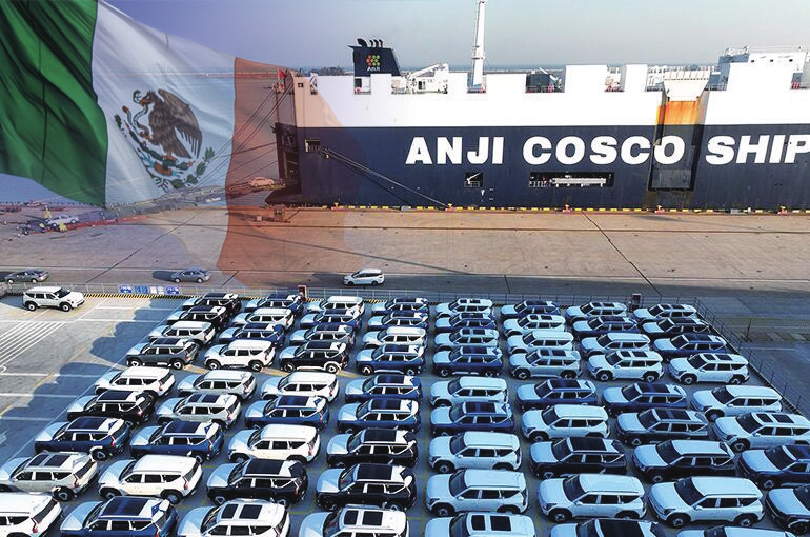
Group 1 - Mexico plans to raise import tariffs on key goods from countries without trade agreements, aiming to boost local industries and reduce reliance on Asian imports [2][3] - The proposed tariff increase includes a rise in import duties on automobiles to a maximum of 50%, significantly impacting Chinese automotive manufacturers [3][6] - The tariff adjustments will affect over 1,400 product categories, with an estimated total import value of $52 billion [3] Group 2 - The new tariffs are seen as a response to U.S. pressure and are intended to protect the Mexican economy, particularly the automotive sector [4][9] - Mexican officials emphasize that the tariffs will be implemented within World Trade Organization (WTO) guidelines, aiming to safeguard local jobs [3][4] - The tariffs are expected to have a substantial impact on Chinese electric vehicle manufacturers, such as BYD and Tesla, while U.S. automakers with local production will not be affected [8][9] Group 3 - The increase in tariffs may hinder the strategy of Chinese manufacturers to use Mexico as a base for exporting to the U.S. market [8][9] - Local production and compliance with USMCA regulations are seen as essential for Chinese companies to remain competitive in Mexico [9][10] - Challenges for Chinese companies include establishing a robust supply chain, after-sales service networks, and overcoming market barriers [9][10]

美国对机器人、工业机械和医疗器械进口展开调查 为征收关税提供可能
Xin Lang Cai Jing· 2025-09-24 23:27
Core Viewpoint - The U.S. government is investigating imports of robots, industrial machinery, and medical devices to lay the groundwork for new tariffs under President Donald Trump's administration [1] Group 1: Investigation Details - The U.S. Department of Commerce is conducting the investigation under Section 232 of the Trade Expansion Act, which allows the President to impose tariffs on goods deemed critical to national security [1] - The investigation was initiated on September 2, and the Commerce Department has 270 days to propose policy recommendations [1] Group 2: Implications for Industries - The new investigation increases the risk of tariffs for more industries, as the Trump administration aims to encourage domestic manufacturing by raising import costs [1] - Ongoing investigations into imports of pharmaceuticals, semiconductors, aircraft, critical minerals, and medium and heavy trucks are also in progress [1] Group 3: Historical Context - The Trump administration has previously utilized Section 232 to impose tariffs on automobiles, copper, steel, and aluminum [1]

(经济观察)以行动捍卫多边贸易 中国作出重要承诺
Zhong Guo Xin Wen Wang· 2025-09-24 10:13
(经济观察)以行动捍卫多边贸易 中国作出重要承诺 中新社北京9月24日电 (记者 尹倩芸)当地时间9月23日,中国国务院总理李强在纽约出席第80届联合国 大会相关活动时宣布,中国作为负责任的发展中大国,在世贸组织当前和未来谈判中将不寻求新的特殊 和差别待遇。 此间学者认为,这一郑重承诺不仅是中国坚定支持多边主义的实质性举措,也是对维护以世界贸易组织 为核心的多边贸易体制的重要贡献。 特殊和差别待遇反映在世贸组织各项协定之中,是发展中成员的重要制度性权利,也是多边贸易体制的 重要基础。自2001年以发展中成员身份加入世贸组织以来,中国在合理行使该权利的同时,始终积极承 担与自身发展水平相适应的义务。 中国商务部国际贸易谈判代表兼副部长李成钢提到,中方在享受特殊和差别待遇的同时,积极参与多边 贸易谈判,结合自身发展水平和能力,自主务实处理具体议题谈判中涉及的特殊和差别待遇问题,为达 成多项世贸组织谈判成果、促进全球贸易更自由更便利作出重要贡献。 从对所有建交的最不发达国家100%税目产品实施零关税,到对53个非洲建交国实施100%税目产品零关 税举措,对外经济贸易大学国际经贸学院教授崔凡称,作为最大的发展中国家, ...