
加密货币

Search documents
CFTC新股允许加密货币作衍生品抵押品 比特币、以太币、USDC正式“入圈”美国金融体系
智通财经网· 2025-12-09 06:01
Group 1 - The CFTC has decided to allow the use of Bitcoin, Ethereum, and USDC as collateral for derivatives trading, integrating cryptocurrencies deeper into the U.S. financial system [1] - This initiative is launched as a pilot program and includes guidelines for futures brokers, swap market participants, and clearinghouses, with specific requirements for asset segregation, reporting, and monitoring [1] - Tokenized assets, which represent real-world or financial assets on a blockchain, are expected to enhance liquidity and facilitate fractional ownership, potentially easing access for foreign investors to the U.S. market [1] Group 2 - The acting chair Caroline Pham announced that exchanges regulated by the CFTC can begin trading spot cryptocurrencies on derivatives exchanges, expanding the regulatory scope of the CFTC [2]
加密货币,要大涨?
Sou Hu Cai Jing· 2025-12-09 05:09
Group 1: Digital Asset Market Insights - Digital asset ETPs recorded a net inflow of $716 million as of the week ending December 6, increasing total assets under management to $180 billion, with significant inflows from the US ($483 million), Germany ($96.9 million), and Canada ($80.7 million) [2] - Bitcoin attracted $352 million, while XRP saw inflows of $245 million, and Chainlink reached a record inflow of $52.8 million, accounting for 54% of its assets under management [2] - There was a significant outflow from short Bitcoin products, indicating a reduction in bearish sentiment in the market [2] Group 2: Market Trends and Predictions - December is anticipated to be a turning point for the crypto market, with a higher likelihood of substantial price increases compared to further declines, as per K33 Research [4] - Current Bitcoin valuations are seen as reflective of market panic rather than fundamental factors, suggesting a potential opportunity for bold investments in December [4] - The market is perceived to be overreacting to distant threats while overlooking strong recent signals, such as the potential for cryptocurrency use in 401(k) retirement accounts and a shift in Federal Reserve support for cryptocurrencies [4] Group 3: Company Developments - LayerBank completed a $2.3 million Pre-Seed funding round, with investors including Move Industries CEO Torab Torabi and several angel investors [6] - The new funding will be used to advance the development and launch of its native token ULAB, which is designed to serve as the foundation for the platform's long-term value capture and incentive model [6] - LayerBank aims to provide lending and yield strategies through a unified chain abstraction experience, supporting over 150 markets across more than 17 chains [6] Group 4: New Financial Instruments - BRICS nations have introduced a prototype digital currency called "Unit," backed by gold, which consists of a reserve basket of 40% physical gold and 60% currencies from BRICS nations [9] - The initial issuance of 100 Units was linked to 1 gram of gold, with the value of the reserve basket adjusted to approximately 98.23 grams of gold as of December 4, effectively valuing each unit at 0.9823 grams of gold [9] - This initiative is seen as a step towards de-dollarization, although it remains a pilot project and not an officially adopted currency [9] Group 5: Funding and Valuation in Tech Sector - Fluidstack, a cloud computing startup, is in talks for a new funding round of approximately $700 million, potentially reaching a valuation of $7 billion [11] - The funding round may be led by Situational Awareness, founded by former OpenAI researcher Leopold Aschenbrenner, with participation from Alphabet and Goldman Sachs [11] - Fluidstack has established multiple collaborations with Google and plans to build a €10 billion AI supercomputing center in France [11]

比特币跌破8万!六周蒸发1.2万亿,机构为何集体出逃?
Sou Hu Cai Jing· 2025-12-09 04:13
Core Viewpoint - The cryptocurrency market has experienced a significant downturn, with Bitcoin dropping below $80,000, marking its lowest point in seven months, and a total market loss of $1.2 trillion in just six weeks, surpassing the GDP of many G20 countries [1][2]. Group 1: Market Dynamics - On December 1, nearly $1 billion in liquidations occurred across the market, affecting over 270,000 investors, leading to a widespread panic [2]. - Bitcoin, once considered a "digital gold" and a safe haven asset, has been revealed as a risk amplifier, particularly during this downturn [4][5]. - The tightening of liquidity has been a core factor in the market's decline, as the anticipated interest rate cuts from the Federal Reserve have not materialized due to resilient economic data and persistent inflation [7]. Group 2: Institutional Influence - The current market downturn is characterized by institutional investors taking the lead, contrasting with the previous "crypto winter" of 2022, where retail investors were more prominent [12]. - The approval of spot Bitcoin ETFs has led to significant institutional capital entering the market, but this has altered the pricing dynamics, making the market more sensitive to macroeconomic conditions [13][15]. - Recent data indicates that Bitcoin ETFs have seen withdrawals of $4.6 billion in just one month, with iShares Bitcoin Trust experiencing its first-ever consecutive weeks of outflows [15][17]. Group 3: Psychological and Technical Levels - The breach of the $80,000 psychological support level has triggered automatic sell orders, exacerbating the price decline and leading to significant losses in Ethereum and other altcoins [18][20]. - The overall performance of altcoins, with Ethereum hitting a four-month low and other cryptocurrencies like SOL and ADA dropping over 20%, indicates a broader market retreat beyond Bitcoin [20][22]. Group 4: Regulatory and Market Sentiment - The upcoming U.S. cryptocurrency tax regulations are likely to prompt further selling by institutions looking to realize tax losses, adding to the market's woes [23]. - Concerns over compliance issues and capital flight are contributing to a harsh winter for the cryptocurrency industry, suggesting that the recent price drop is not merely a correction but a redefinition of asset attributes [25]. - The narrative of cryptocurrencies as safe-haven or decentralized assets has been challenged, revealing their nature as high-beta risk assets reliant on liquidity and market expectations [25][27].

别轻信“造富神话”!多方警示虚拟货币交易炒作风险
Sou Hu Cai Jing· 2025-12-09 03:43
Core Viewpoint - The rise in virtual currency investment is accompanied by significant risks, prompting regulatory bodies in China to issue warnings against virtual currency trading and speculation [1][4]. Group 1: Regulatory Actions - A joint risk warning was issued by seven associations, including the China Internet Finance Association, stating that virtual currencies cannot be used as currency within China and that no tokenization activities have been approved [1]. - The People's Bank of China and other departments have reiterated that virtual currency-related activities are illegal financial activities, specifically naming stablecoins as a form of virtual currency with inherent risks [4][5]. - Regulatory measures have been in place since 2013, prohibiting financial institutions from engaging in activities related to Bitcoin and other cryptocurrencies, highlighting the need for stricter enforcement against illegal trading [5]. Group 2: Market Dynamics - The virtual currency market has seen a resurgence in speculative activities, with social media platforms being used to attract new users with promises of high returns [2]. - Reports indicate that Bitcoin's price has experienced significant volatility, with a drop below $89,000 and a total liquidation amounting to $1.11 billion affecting nearly 100,000 market participants [2][3]. - The allure of quick profits has led many investors to suffer substantial losses, with some reporting complete account depletion due to market fluctuations [3]. Group 3: Investor Awareness - Investors are advised to avoid speculative trading in virtual currencies and to choose legitimate investment channels to protect their assets [8]. - The public is encouraged to remain vigilant against virtual currency-related activities and to report any suspicious activities to regulatory authorities [8]. - The importance of not falling for the "get rich quick" myth is emphasized, along with the need to safeguard personal information and avoid facilitating illegal transactions [8].

中概股逆势上涨,硕迪生物涨超110%,黄金白银大跌,比特币突破9.1万美元
2 1 Shi Ji Jing Ji Bao Dao· 2025-12-08 16:00
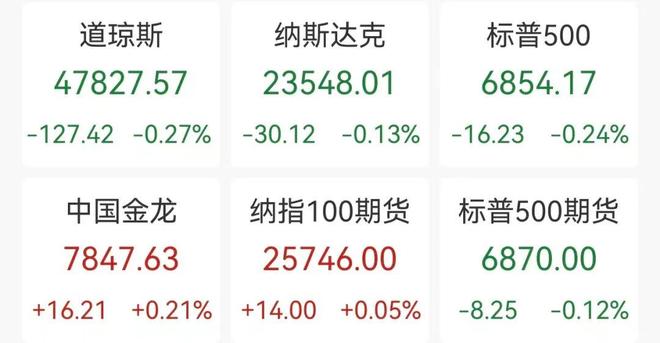
Market Overview - US stock indices opened higher but turned negative, while Chinese concept stocks rose against the trend, with the China Golden Dragon Index up approximately 0.3% [2] - Bitcoin surged past $91,000, increasing by 3.6% in the last 24 hours, while Ethereum and SOL both rose over 7% [3][4] Chinese Concept Stocks - Notable gainers included Huya, which rose nearly 8%, and Daqo New Energy, which increased by 6.4% [2] - Pinduoduo and Baidu also saw gains, with Baidu up over 3% [2] - On the downside, Pop Mart's US stock fell approximately 8% [2] Cryptocurrency Market - Major cryptocurrencies experienced significant gains, with Bitcoin at $91,330.8 (+3.56%), Ethereum at $3,156.8 (+7.30%), and SOL at $137.8 (+7.40%) [4] - The total liquidation amount in the market reached $325 million, with nearly $200 million attributed to short positions [3][5] Gold and Silver Market - Gold prices fell below $4,200 per ounce, with COMEX silver dropping over 1% [6][7] US Treasury Yields - US Treasury yields continued to rise, with the 10-year yield reaching its highest level since October 7 [8][9] Federal Reserve Interest Rate Decision - The Federal Reserve is expected to announce a 25 basis point rate cut, with a probability of 89.6% according to market indicators [11] - Economists suggest that the focus is shifting from whether to cut rates to the implications of the decision and future policy direction [12]
美国发布最新《国家安全战略》,只字未提加密货币和区块链
Sou Hu Cai Jing· 2025-12-08 11:49
Core Insights - The latest National Security Strategy (NSS) report from the Trump administration notably omits any mention of cryptocurrencies and blockchain technology, contrasting sharply with previous pro-crypto statements from the President [1][4][11] - This silence has led to significant market reactions, including a drop in Bitcoin prices, indicating a negative sentiment in the crypto community regarding the lack of strategic endorsement from the highest levels of government [1][9] Policy Actions - The Trump administration had previously taken steps to create a favorable environment for cryptocurrencies, including signing executive orders to roll back strict regulations and promoting the first federal stablecoin regulation bill, the GENIUS Act [4] - A "Presidential Digital Asset Market Working Group" was established to coordinate regulatory efforts across departments, and an executive order was signed to prohibit the issuance of any form of Central Bank Digital Currency (CBDC) [4] - The administration announced the establishment of a "Bitcoin National Strategic Reserve," symbolizing a commitment to the cryptocurrency sector, although the assets were sourced from government seizures rather than new purchases [4] Strategic Focus - The NSS report emphasizes the importance of artificial intelligence (AI), biotechnology, and quantum computing as core national interests, while cryptocurrencies are relegated to a financial asset category rather than a strategic technology [5][6] - The report suggests that the administration views cryptocurrencies primarily as financial instruments rather than tools that could enhance national competitiveness [5][6] Market Reactions - Following the NSS release, Bitcoin's price fell below $90,000, driven by market fears regarding the implications of the report and its perceived negative signals about the future of cryptocurrency policy [9][10] - Analysts interpreted the NSS's call for NATO allies to increase defense spending from 2% to 5% of GDP as a potential driver of increased government borrowing, which could lead to higher inflation and prolonged high interest rates, further impacting the crypto market [9][10] Implications for the Crypto Industry - The omission of cryptocurrencies from the NSS may not be entirely negative; it could represent a form of "strategic ambiguity" that allows the crypto sector to evolve without stringent military-level scrutiny and regulation [10] - This "silence" may provide a buffer for the crypto industry, allowing it to continue its growth as a financial innovation rather than being entangled in geopolitical tensions [10][11] Conclusion - The NSS's lack of reference to cryptocurrencies highlights a disconnect between political rhetoric and actual strategic priorities, signaling that the crypto sector has not yet entered the core of U.S. national security considerations [11] - Investors are cautioned that reliance on political figures' promises may no longer suffice, as the fate of crypto assets increasingly aligns with broader macroeconomic trends and geopolitical developments [11]
美国用它救36万亿国债,中国却要严打,数字货币面纱下的真相
Sou Hu Cai Jing· 2025-12-08 06:54
Group 1 - The core conflict between the U.S. and China regarding cryptocurrency stems from differing financial strategies, with the U.S. viewing it as a means to address its national debt crisis, while China aims to protect its citizens from potential financial losses [1][9] - The emergence of Bitcoin in 2008 coincided with significant changes in global finance, particularly the end of Swiss banking secrecy, which led wealthy individuals to seek new ways to hide their assets, with Bitcoin's anonymity fulfilling this need [3][5] - The 2018 implementation of global anti-money laundering treaties increased scrutiny on financial transactions, driving illicit activities towards cryptocurrencies, which became a preferred method for money laundering due to their decentralized nature [5][9] Group 2 - The U.S. government has actively promoted cryptocurrency as a solution to its $36 trillion national debt, with regulations like the GENIUS Act requiring stablecoins to be backed by U.S. dollars or short-term U.S. Treasury bonds, effectively channeling speculative funds into U.S. debt [5][7] - During Trump's administration, the acceptance of cryptocurrencies was further legitimized, leading to significant investments in U.S. Treasury bonds by stablecoin issuers like Tether, which now holds nearly $120 billion in U.S. debt [7] - China's crackdown on cryptocurrency is driven by two main principles: maintaining the credibility of the RMB without reliance on speculative assets and protecting ordinary citizens from financial losses associated with cryptocurrency investments [9][11] Group 3 - The collapse of major cryptocurrency exchanges like FTX in 2022 highlighted the risks associated with the sector, leading to significant financial losses for millions of investors and reinforcing China's regulatory stance [9][11] - Hong Kong's introduction of a stablecoin regulatory framework aims to facilitate cross-border transactions while minimizing risks, showcasing China's strategic approach to digital currency innovation [11] - The differing approaches to cryptocurrency between the U.S. and China reflect a fundamental divide between prioritizing financial security and short-term speculative gains [11]

美国债务危机引爆加密货币钱包格局,最新XBIT Wallet或成关键“变量”
Sou Hu Cai Jing· 2025-12-08 05:57
Core Insights - BlackRock's 2026 Financial Outlook report predicts that the total U.S. debt will exceed $38 trillion by 2026, diminishing the hedging properties of traditional tools like long-term government bonds [1] - Institutional investors are increasingly adopting cryptocurrencies like Bitcoin as alternative assets, with analysts forecasting Bitcoin prices to surpass $200,000 [1] - Tokenized assets and stablecoins are highlighted as key pillars of the digital financial ecosystem, while the AI industry's demand for electricity is transforming Bitcoin miners into AI infrastructure providers [1] Group 1: XBIT Wallet Features - XBIT Wallet is a decentralized web3 wallet that utilizes a revolutionary security architecture to redefine digital asset management standards [1] - Over 120 institutional investors are currently using XBIT Wallet for crypto asset allocation, which employs a decentralized structure for true asset ownership [3] - The wallet's security design includes a dual-mode architecture of hot and cold wallets, ensuring both transaction efficiency and the elimination of single-point failure risks [3] Group 2: Security and Backup Mechanisms - XBIT Wallet incorporates quantum-resistant encryption algorithms to safeguard assets against future quantum computing threats [3] - Users can back up their mnemonic phrases using physical solutions like steel etching and titanium alloy plates, ensuring cross-generational asset inheritance [3] - The wallet's unique "time lock" feature allows users to set delayed confirmations for large transactions, enhancing asset disposal decision-making through multi-signature technology [6] Group 3: Market Integration and Efficiency - XBIT Wallet supports on-chain interactions with mainstream stablecoins and is developing cross-chain interoperability modules [5] - The wallet's built-in stablecoin aggregator enables one-click exchanges between assets like USDT, USDC, and DAI, potentially saving up to 30% in transaction costs compared to traditional centralized exchanges [5] - The integration of a power market module allows users to lease excess computing power to AI companies, creating a dual-driven model of "mining + computing power" [6] Group 4: User Experience and Risk Management - XBIT Wallet features a modular design that allows users to customize their trading panels according to their needs [8] - The "security sandbox" function isolates suspicious transactions and employs machine learning algorithms for real-time risk analysis [8] - As the U.S. debt crisis escalates, cryptocurrencies are transitioning from fringe assets to core institutional allocations, with XBIT Wallet serving as a critical infrastructure in the web3 economy [8]
看好国内外流动性,看好科技和交易平台加密赛道
SINOLINK SECURITIES· 2025-12-07 12:21
Investment Rating - The report maintains a positive outlook on domestic and international liquidity, particularly favoring the technology and trading platform sectors in the cryptocurrency space [1]. Core Views - The report highlights a cautious optimism regarding the recovery of high-end consumption in the luxury goods and gaming sectors, driven by wealth effects and a rebound in Macau's gaming revenue [3]. - The education sector is experiencing increased competition due to a rise in domestic small institutions, while leading companies are stabilizing their capabilities [3]. - The coffee sector remains robust, with high growth in coffee bean imports, while the tea beverage sector faces short-term pressure due to reduced subsidies from delivery platforms [3]. - E-commerce is under pressure from the domestic consumption environment, with overall performance remaining flat [3]. - The report suggests continued interest in music streaming platforms as quality internet assets driven by domestic demand [3]. - The virtual asset and trading platform sectors are experiencing volatility, with a cautious stance recommended in the short term, while maintaining a long-term optimistic view on blockchain and cryptocurrency markets [3]. - The automotive aftermarket is facing a decline in value and service frequency, warranting ongoing attention [3]. - The report emphasizes the potential of the Macau tourism sector, which is expected to benefit from a declining interest rate cycle [3]. - The report expresses confidence in the AI and cloud sectors, anticipating further advancements in AI applications [3]. Summary by Sections 1.1 Consumer & Internet - **Education**: The Chinese education index fell by 1.44%, underperforming major indices, with notable stock movements among key players [9]. - **Luxury Goods & Gaming**: The S&P Global Luxury Goods Index rose by 0.81%, with significant developments in the acquisition of Versace by Prada [19][21]. - **Coffee & Tea**: The Hang Seng Non-Essential Consumer Index showed a cumulative increase of 0.74%, with mixed performances among key coffee and tea brands [25]. - **E-commerce**: The sector is facing challenges, with a flat performance noted in the overall market [3]. 1.2 Platforms & Technology - **Streaming Platforms**: The Hang Seng Media Index increased by 0.89%, with varied performances among major streaming companies [35]. - **Virtual Assets & Internet Brokers**: The global cryptocurrency market cap reached $321.51 billion, with Bitcoin and Ethereum prices showing slight declines [42]. - **Automotive Services**: The automotive aftermarket is experiencing a decline, with a 5% drop in both output value and service frequency [54]. 1.3 Media - The media sector is expected to see growth resilience in gaming, with a focus on product releases in December [3].
巨震!近10万人爆仓!
证券时报· 2025-12-07 06:52
Market Overview - Bitcoin experienced significant volatility, dropping below $89,000 after reaching nearly $90,000 on the evening of December 6. As of December 7, the cryptocurrency market showed mixed results [1]. - Bitcoin's latest price of $89,616 represents a decline of approximately 29% from its historical high of $126,000 earlier this year [4]. Cryptocurrency Performance - The following table summarizes the performance of various cryptocurrencies: - Bitcoin (BTC): $89,616, -0.05%, Market Cap: $55.96 billion, -1.4% [2] - Ethereum (ETH): $3,044, +0.25%, Market Cap: $35.81 billion, -2.1% [2] - Solana (SOL): $133, +0.03%, Market Cap: $6.97 billion, +1.4% [2] - XRP: $2.048, +0.1%, Market Cap: $3.49 billion, -0.4% [2] - HYPE: $30.96, -0.8%, Market Cap: $1.48 billion, -0.8% [2] - Binance Coin (BNB): $896.5, +1.45%, Market Cap: $1.34 billion, +1.2% [2] - Dogecoin (DOGE): $0.1406, Market Cap: $1.23 billion, -2.1%, +0.99% [2] Liquidation Data - The liquidation data indicates significant market activity: - Total liquidation in the last 24 hours reached $110 million, with long positions liquidated at $54.03 million and short positions at $56.64 million [3]. - In the last 12 hours, long liquidations amounted to $42.37 million, while short liquidations were $14.90 million [3]. Federal Reserve Insights - Market expectations for a Federal Reserve interest rate cut in December have surged, with the probability now at approximately 87% according to CME FedWatch data [5]. - Morgan Stanley has revised its forecast, now predicting a 25 basis point rate cut following the Fed's policy meeting on December 9-10, after previously delaying this expectation to 2026 due to strong employment reports [5]. - Stephen Miran, a Federal Reserve governor, suggested that the Fed's high rate targets are negatively impacting the job market and advocated for more aggressive rate cuts to support the economy [5].
