
数字化

Search documents
中衡设计:现金流改善超60%,三季度业绩显韧性
Zheng Quan Shi Bao Wang· 2025-10-27 13:33
Core Viewpoint - Zhongheng Design (603017) reported a recovery in its third-quarter performance, with revenue of approximately 257 million yuan, a year-on-year increase of 1.99%, and a net profit attributable to shareholders of -1.0444 million yuan, a 75% year-on-year improvement [1][2] Financial Performance - The company achieved a significant increase in net cash flow from operating activities, reaching 128 million yuan in the first three quarters, a year-on-year growth of 63.35% [1] - The third-quarter revenue reflects a stabilization trend amid challenging industry conditions [1] Strategic Initiatives - Zhongheng Design is actively involved in legal activities to unfreeze funds and ensure liquidity, while controlling cash expenditures [1] - The company is a leading enterprise in productive services in Suzhou, contributing to national new productivity initiatives in sectors such as commercial aerospace, low-altitude economy, new energy, and biomedicine [1] Project Involvement - The company has secured multiple high-end manufacturing projects, including the production base for liquid rockets for Starry Sky Glory and the intelligent manufacturing center for Shandong Arrow Yuan [1] - Zhongheng Design has a strong foundation in urban renewal, promoting cultural heritage and urban regeneration through projects like the "Pengcheng Qili" cultural axis in Xuzhou [1] Sustainability and Innovation - The company is committed to the "dual carbon" strategy, with established research centers for low-carbon building design and technology [2] - Zhongheng Design has achieved multiple certifications, including LEED Platinum and three-star ratings for green and healthy buildings, positioning itself as an industry benchmark for sustainability [2] Talent and Industry Position - The company maintains a strong talent pool, including national engineering design masters and special experts, enhancing its competitive edge [2] - Zhongheng Design continues to rank among the top tier of listed companies in its industry, demonstrating healthy development in its core business [2]

全国首个!正式投产
中国能源报· 2025-10-27 12:59
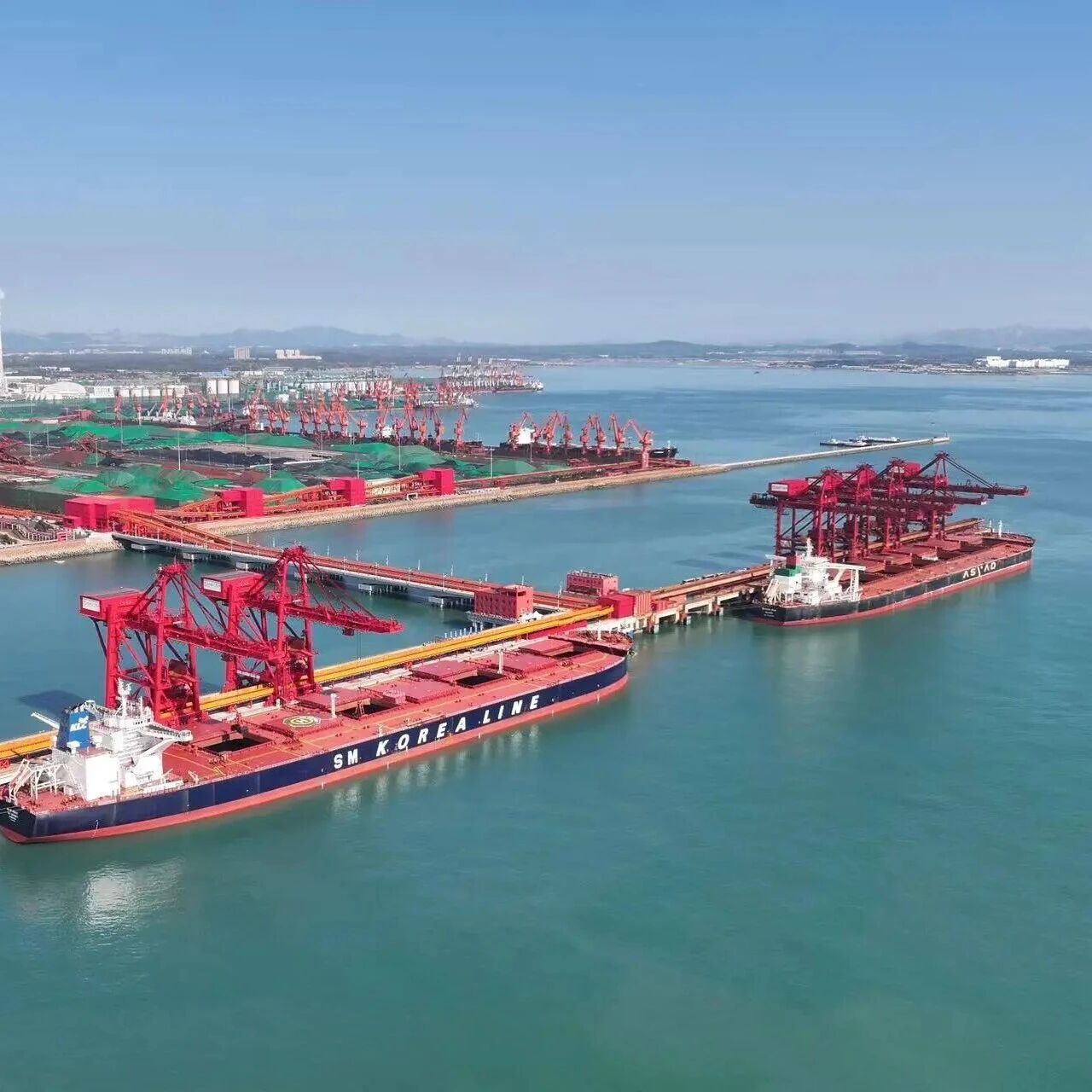
Core Viewpoint - The Qingdao Port has officially launched its second 400,000-ton ore terminal, becoming the first port in China to have two 400,000-ton ore terminals and the first in northern China to possess a smart terminal for dry bulk cargo [1][3]. Group 1: Terminal Capacity and Technology - The new terminal, which began construction in December 2022, includes one 300,000-ton iron ore berth designed to accommodate 400,000-ton bulk carriers, increasing the terminal's throughput capacity by 16 million tons per year and enhancing storage capacity by 10 million tons [3]. - The terminal integrates advanced technologies such as 5G, artificial intelligence, and cloud computing, featuring a smart dry bulk terminal operating system (iGTOS) that enables real-time monitoring, intelligent decision-making, and digital perception throughout the production process [3][4]. - The terminal is equipped with the latest automated equipment for unloading, loading, blending, and supply, marking a transition from traditional operations to smart services in the domestic ultra-large dry bulk terminal sector [3][4]. Group 2: Industry Impact and Trends - The trend of increasing ship sizes is evident, with the first 400,000-ton ore terminal in the Dongjiakou area receiving its first large vessel in 2015, marking the beginning of the "large vessel era" in China's dry bulk operations [4]. - By September 2025, the first terminal is expected to have handled over 460 large vessels, totaling 160 million tons, with the second terminal's throughput capacity expected to exceed 56 million tons, providing a "round-the-clock, high-efficiency" transportation artery for iron ore to steel enterprises in China [4][5].

法博会展现行业融合新趋势,助力深圳法治化营商环境建设
Nan Fang Du Shi Bao· 2025-10-27 11:30
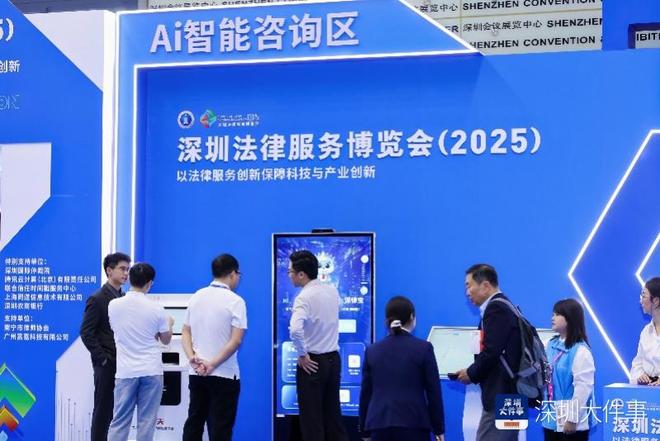
Core Insights - The second Shenzhen Legal Services Expo successfully showcased the integration of legal services with technology and industry, emphasizing Shenzhen's proactive exploration in building a legal service ecosystem [1][7]. Group 1: Event Overview - The expo featured 123 participating institutions across seven exhibition areas, creating a complete service loop from demand-driven support to innovation iteration [3]. - The theme of the expo was "Deepening Integration and Innovation, Building a Legal Ecology" [1]. Group 2: Innovations in Legal Services - The "Legal + Technology" exhibition area highlighted cutting-edge technologies such as AI legal search and blockchain evidence storage, showcasing the profound transformation of legal services through technology [3][4]. - AI legal advisors became commonplace at the expo, enabling quick generation of legal opinions and risk assessment reports based on simple case descriptions [4]. Group 3: Industry Integration - The legal services effectively connected with Shenzhen's "20+8" industrial clusters, with over 900 lawyers serving more than 500 related enterprises in the past year [7]. - A total of 76 legal product lists were developed to cater to different industry characteristics, such as addressing chip infringement and export control issues in the semiconductor sector [7]. Group 4: Talent Development - The expo emphasized the importance of talent cultivation, with strategic cooperation agreements signed between the Shenzhen Lawyers Association and eight renowned law school faculties to build an integrated talent training system [7]. - Events like the Youth Lawyer AI Skills Competition and legal talent recruitment fair were held to prepare composite talents for the industry [7]. Group 5: Future Outlook - The successful hosting of the expo marks a significant step in Shenzhen's exploration of legal innovation and optimization of the business environment, injecting new legal momentum into the city's high-quality development [7].
前三季度实际使用外资5737.5亿元 电子商务服务业增长亮眼
Zheng Quan Ri Bao Wang· 2025-10-27 10:35
Core Insights - The latest data from the Ministry of Commerce indicates that from January to September 2025, China attracted 573.75 billion RMB in foreign investment, with significant contributions from the manufacturing and service sectors [1] - High-tech industries received 170.84 billion RMB in foreign investment, with notable growth in e-commerce services (155.2%), aerospace manufacturing (38.7%), and medical equipment manufacturing (17%) [1] Group 1: Foreign Investment Trends - The service sector's attractiveness to foreign investment continues to rise, reflecting a shift towards digitalization, green initiatives, and specialized production services [2] - Local government policies have played a crucial role in driving growth in e-commerce services, with financial incentives for achieving sales targets [2] - Foreign investors are increasingly optimistic about the development of China's modern service industry and are leveraging their advantages to capitalize on growth opportunities [2] Group 2: Structural Optimization of Foreign Investment - The data highlights a continuous optimization in the structure of foreign investment, with the service sector's large market size and supportive policies enhancing its appeal [3] - The growth in foreign investment in high-tech manufacturing indicates confidence in the prospects of China's manufacturing upgrade, focusing more on quality and efficiency [3] - The month of September saw a year-on-year increase of 11.2% in actual foreign investment, with future growth dependent on the implementation of policies and expansion of market scenarios [3]
五个“着力”明确资本市场高质量发展施工图
Chang Jiang Shang Bao· 2025-10-27 08:26
Core Viewpoint - The China Securities Regulatory Commission (CSRC) emphasizes the need to deepen comprehensive reforms in investment and financing, enhancing the inclusiveness, adaptability, attractiveness, and competitiveness of the capital market to better serve the "14th Five-Year Plan" development goals and the construction of a financial power [1][2]. Group 1: Key Points from the Meeting - The meeting outlined five key focus areas for the next steps in capital market reform, including enhancing market resilience and risk resistance, cultivating high-quality listed companies, and establishing a stable market ecosystem [2]. - The reform aims to improve the inclusiveness and adaptability of capital market systems, deepen reforms in the Sci-Tech Innovation Board and the Growth Enterprise Market, and strengthen the functions of the bond and futures markets [2]. - The CSRC plans to enhance the effectiveness and deterrence of regulatory enforcement, focusing on severe penalties for securities and futures violations, and advancing digital and intelligent regulation [2]. - The meeting also highlighted the importance of promoting deeper and higher-level capital market opening, balancing openness with security, and supporting Hong Kong's status as an international financial center [2]. - Strengthening the integrity and construction of the CSRC's party discipline and cadre team is also a priority, ensuring strict governance and accountability [2]. Group 2: Market Analysis - Market analysts believe that the five focus areas provide a clear "blueprint" for the high-quality development of the capital market, continuing the reform trajectory established by the new "National Nine Articles" [3]. - As of October 26, there are 5,440 listed companies in the A-share market, with a total market capitalization of 106.6 trillion yuan. In the first half of the year, A-share companies reported a total revenue of 34.93 trillion yuan, a slight increase year-on-year, and a net profit of 2.99 trillion yuan, reflecting a year-on-year growth of 2.55% [3]. - The CSRC emphasizes the need for large-scale research to scientifically plan the strategic tasks and major initiatives for the capital market during the "14th Five-Year Plan" period, aiming for a solid foundation for high-quality development in the upcoming "15th Five-Year Plan" [3].
中国改革现场丨好房子的新答案:两小时建成一间房
Yang Guang Wang· 2025-10-27 04:16
Group 1 - The core concept of the news is the advancement of modular construction methods in the housing industry, exemplified by a demonstration project in Guangzhou, which aims to enhance efficiency and quality in building homes [1] - The project in Huangpu District, Guangzhou, plans to construct a total of 282 houses, with 43 already completed and occupied, while the remaining units are nearing completion of exterior and municipal infrastructure work [1] - The modular construction approach is likened to automobile manufacturing, emphasizing a high level of automation and precision in the production process, with an 80% automation rate and a production efficiency increase of over four times compared to traditional methods [1] Group 2 - The intelligent production line in Shandong represents a significant technological advancement, capable of producing a wall panel in just twelve minutes and completing a modular house in under two hours [1] - The development direction of modular construction is identified as industrialization, digitalization, and greening, which collectively aim to enhance the quality of housing [2]
《全球矿业发展报告二○二五》显示全球矿业产业链供应链重构加深
Zhong Guo Zi Ran Zi Yuan Bao· 2025-10-27 03:04
Core Insights - The global mining industry is experiencing a deep restructuring of its supply chain, with increasing structural contradictions in supply and demand, while technological innovation, global governance, and sustainable development are injecting new momentum into high-quality mining development [1][2] Exploration and Development - Global exploration investment, drilling activities, and large mining projects are continuously decreasing, with exploration investment in major solid minerals projected at $12.48 billion in 2024, a year-on-year decline of 3.3%. The total number of drilling projects and drill holes decreased by 19.9% and 15.3% respectively [1] Supply and Demand - Global production and consumption of energy resources continue to grow, exacerbating supply-demand structural contradictions. The supply-demand growth rate for energy minerals is slowing, leading to a tight balance overall. In major solid minerals, both supply and demand for steel have decreased, increasing the degree of oversupply; copper supply and demand continue to grow, with an expanding supply gap; aluminum supply and demand have both increased, reducing the degree of oversupply; zinc supply and demand have both decreased, shifting to a state of supply shortage. Strategic emerging minerals are experiencing rapid growth in supply and demand, generally showing oversupply [1] Market Prices - There is a significant divergence in international mineral prices. Overall, energy mineral prices have fluctuated, with coal prices dropping over 20% compared to 2023. Prices for major solid minerals have become more volatile, with iron ore prices falling over 30% within the year, while copper, aluminum, and zinc prices have seen slight increases. Prices for strategic emerging minerals are trending downward due to strong supply and weak demand [1] Strategic Minerals - Key minerals have become an important part of national security and resource strategies for various countries, intensifying the competitive and cooperative dynamics in the global critical mineral sector. With the advancement of global energy transition and a new round of technological revolution, AI technology for exploration big data, geophysical technology equipment, and a "space-air-ground" three-dimensional remote sensing mining technology system are gradually improving, accelerating the digital, intelligent, and green transformation of the global mining industry [2] International Cooperation - The report calls for countries to strengthen mutually beneficial cooperation in the critical mineral sector, jointly maintain the stability and smoothness of the industrial chain and supply chain, address global resource challenges, achieve sustainable development, and collaboratively build a mining community of shared destiny [2]
南方传媒20251024
2025-10-27 00:31
Summary of Southern Media Conference Call Company Overview - **Company**: Southern Media - **Period**: First three quarters of 2025 Key Financial Performance - **Revenue**: 62.83 billion CNY, a decrease of 1.95 billion CNY due to contraction in material trade [2][3] - **Net Profit**: 9.92 billion CNY, a year-on-year increase of 21.5% [3] - **Q3 Performance**: Revenue of 23.11 billion CNY and net profit of 4.4 billion CNY, showing a nearly 28% increase year-on-year [3] Profit Growth Drivers - **Tax Factors**: Profit growth attributed to favorable tax conditions [6] - **Gross Margin Improvement**: Enhanced gross margin due to lower paper costs and increased textbook prices [6] - **Reduction in Low-Margin Businesses**: Shrinkage of low-margin businesses like material trade positively impacted overall gross margin [6] - **High-Tech Certification**: Successful application for high-tech enterprise status reduced management costs by allowing some costs to be classified as R&D [6] Cash Flow Situation - **Cash Flow Improvement**: Cash flow improved significantly, with a negative cash flow of 970 million CNY compared to a negative 6 billion CNY in the previous year, indicating a substantial recovery in financial health [7] Education Publishing Highlights - **Textbook Distribution**: Issued 406 million copies of K-12 textbooks, a 1.75% increase from 399 million copies in the previous year [8] - **Supplementary Materials**: Total volume of evaluation-type supplementary materials reached 903 million CNY, an 8% increase year-on-year [8] - **Market Expansion**: Breakthrough in Hong Kong textbooks with Chinese history textbooks approved for sale in schools [4][9] Digital and AI Technology Applications - **AI Integration**: Launched electronic basic homework modules and implemented AI lesson preparation features in 350 schools, benefiting over 40,000 teachers [10] - **Efficiency Gains**: AI applications improved production efficiency by 20% in publishing [10] - **Future Plans**: More AI+ education products are set to launch in November [10] Future Outlook - **Performance Forecast**: Anticipated strong growth for the full year, with potential upward adjustments to annual guidance [11] - **Seasonal Trends**: Historically, Q3 and Q4 are peak periods for business volume, suggesting continued robust performance [11] - **Impact of Educational Continuity**: Textbooks issued in the fall will continue to be used in the spring, insulating next year's performance from potential disruptions [11]

聚焦新型电力系统发展 专家热议——数智技术成为核心引擎
Ke Ji Ri Bao· 2025-10-26 23:48
Core Viewpoint - The integration of artificial intelligence and digital technology with the power system is accelerating, becoming a key driver for the construction of a new power system, which is essential for the low-carbon transition and high-quality development of the energy sector [1][2]. Group 1: Digital Transformation in the Energy Sector - The "Artificial Intelligence + Energy" trend is becoming unstoppable, with digitalization and intelligence in the energy sector entering a new phase [1]. - The construction of a new power system is a critical component of building a new energy system, with digital technology serving as the core engine for the evolution of this new power system [1]. - The power industry has made significant achievements in integrating digital technology and artificial intelligence across the entire industry chain, enhancing the capabilities of the new power system [1]. Group 2: Data as a Key Element - Energy big data is a crucial element in the digital transformation of the power industry, encompassing the entire process of energy production, storage, transportation, and consumption [2]. - The State Grid Corporation has integrated 57 categories and 217.7 billion pieces of energy big data, establishing a two-tier energy big data center to promote data aggregation and provide analysis services [2]. Group 3: Technological Innovations and Market Adaptation - Companies are exploring how to leverage digital technology to address profitability challenges in the energy sector, particularly under the pressures of accelerated energy projects and market-oriented pricing reforms [3]. - The use of AI, weather data, and price forecasting is being employed to reconstruct investment return models, allowing for precise investment strategies in response to market fluctuations [3]. - Experts believe that with ongoing technological advancements and policy support, artificial intelligence will further integrate into the power industry, driving intelligent upgrades of the power grid [3].
筑牢根基 激活动能 守牢底线 “十五五”资本市场高质量发展擘画新图景
Zhong Guo Zheng Quan Bao· 2025-10-26 22:42
Group 1: Core Views - The China Securities Regulatory Commission (CSRC) emphasizes enhancing the resilience and risk resistance of the capital market, improving the inclusiveness and adaptability of market systems, and strengthening the effectiveness and deterrence of regulatory enforcement [1] - The measures align with the "14th Five-Year Plan" development goals and the blueprint for building a financial powerhouse, aiming for high-quality development of the capital market [1] Group 2: Stability Measures - The CSRC aims to cultivate high-quality listed companies and improve the "long money, long investment" ecosystem to solidify the internal stability of the market [2] - Market experts suggest enhancing governance training for management and shareholders of listed companies, increasing supervision, and promoting regular dividends and buybacks to foster long-term investment confidence [2][3] - There is a focus on increasing the proportion of long-term capital investments, such as insurance funds and pensions, to enhance market stability [2] Group 3: Activation of Growth - The capital market's core value is to serve the real economy, requiring higher inclusiveness and adaptability to provide precise financing support for various types of enterprises [4] - The CSRC plans to deepen reforms in the Science and Technology Innovation Board and the Growth Enterprise Market, enhancing the multi-tiered equity market's nurturing function [4][5] Group 4: Legal and Regulatory Framework - High-quality development of the capital market relies on strict regulation and legal guarantees, with a focus on combating securities and futures violations [6] - The CSRC aims to enhance information disclosure regulation to maintain market transparency and fairness [6] - Digital and intelligent regulatory technologies are highlighted as key areas for improving regulatory effectiveness and investor protection [6][7]
