国内国际双循环

Search documents
国新办新闻发布会答记者问实录摘登
Hai Nan Ri Bao· 2025-07-24 02:48
Core Points - The press conference highlighted the significance of the Hainan Free Trade Port's closure operation as a milestone for its development, emphasizing the need for effective policy implementation to enhance the experience of businesses and citizens [4][5][6] - Hainan aims to strengthen its international trade relations, particularly with Arab countries, by enhancing economic cooperation and establishing direct transportation links [6][7] - The province plans to build a modern industrial system that leverages its unique advantages, focusing on four main industries that currently contribute 67% to its GDP [7][8][9] - The construction of an international tourism consumption center is a priority, with significant increases in tourist numbers expected in the coming years [10][11] - Hainan is committed to institutional innovation, having developed numerous successful cases that will be expanded upon to support the free trade port's operations [12][13] - The establishment of a "two-line" port system will facilitate smoother trade and travel between Hainan and the mainland, ensuring that the closure operation promotes rather than hinders accessibility [14][15] - The province will continue to expand its openness, focusing on trade management, investment environment, and financial policies to attract foreign investment [16][17][18] - The "zero tariff" policy will see a significant increase in the range of goods eligible, expanding from 1,900 to approximately 6,600 items, enhancing trade liberalization [19][20][21] - Tax reforms will be implemented to support the free trade port, including the continuation of existing tax incentives and the introduction of new measures to stimulate economic activity [22][23] - The introduction of a comprehensive list of prohibited and restricted goods will enhance trade transparency and facilitate easier compliance for businesses [23][24] - The Ministry of Commerce will support Hainan's development as a key player in China's new era of openness, focusing on trade and investment [25][26] - The processing and value-added goods policy will be optimized to encourage local production and enhance the competitiveness of Hainan's industries [27][28] - Customs regulations will be refined to ensure efficient and effective oversight of the free trade port, promoting a seamless trade environment [29][30]


铁路运行交出亮眼成绩单
Jing Ji Ri Bao· 2025-07-23 22:10
Core Insights - The railway sector in China has shown significant growth in both passenger and freight transport, with passenger volume reaching a historical high for the same period last year [1][2][3] - Continuous investment and infrastructure development have enhanced the operational capabilities and service quality of the railway network, contributing to economic stability and growth [1][7][8] Passenger Transport - Passenger volume reached 2.24 billion trips in the first half of 2025, marking a 6.7% year-on-year increase [2] - The expansion of the high-speed rail network has facilitated easier travel between cities, with innovative ticketing options like the "Hohhot + Ulanqab + Ordos" travel pass offering discounts [2][3] - Daily train operations have exceeded 11,000, with a capacity to transport 17 million passengers, reflecting a 7.5% increase in transport capacity [3] Freight Transport - The railway sector has sent 1.01 billion tons of freight by June 5, 2025, a 2.0% increase year-on-year, with coal transport being a significant contributor [4] - A total of 1.98 billion tons of goods were transported in the first half of the year, with an average of 182,400 freight cars dispatched daily, representing a 3.0% increase [4][5] - The introduction of multi-modal transport services and financial products has improved logistics efficiency and reduced costs for businesses [5][6] Infrastructure Investment - Fixed asset investment in railways reached 355.9 billion yuan in the first half of 2025, a 5.5% increase year-on-year, with 301 kilometers of new lines put into operation [7][8] - Major projects like the Chang-Jiu High-Speed Railway are progressing, with significant investments aimed at enhancing the national railway network [7][8] - The ongoing construction of new rail lines is expected to create substantial employment opportunities and stimulate related industries [8]
【晶采观察·解码“十四五”】“进度条”刷新!这些出行变化与你相关
Yang Guang Wang· 2025-07-23 13:09
Core Insights - The article highlights the significant advancements in China's transportation infrastructure during the "14th Five-Year Plan" period, emphasizing the convenience and efficiency of travel for the population [1][2]. Group 1: Transportation Infrastructure Development - China has established the world's largest high-speed railway network, highway network, and postal express network, with high-speed rail accounting for over 70% of the global total [2]. - The highway network covers 99% of cities with populations over 200,000, and the postal industry has set up over 500,000 service points [2]. - These developments support the national strategy of promoting domestic circulation and international dual circulation, enhancing the foundational, service, and guarantee roles of transportation infrastructure [2]. Group 2: Economic Impact and Daily Commuting - Approximately 100 million people use rail transit daily, while another 100 million rely on buses, and a further 100 million utilize taxis and ride-hailing services, showcasing the urban transportation system's capacity and resilience [1]. - The efficient flow of people and goods is described as a "lubricant" for economic circulation, facilitating talent, information, and resource movement, which aids in consumption and industrial upgrades [1]. - The express delivery sector has seen continuous growth, with China leading the world in express delivery volume for 11 consecutive years, averaging over 500 million packages collected daily, equating to nearly 6,000 packages entering the delivery system every second [3].
李迅雷专栏 | 下半年:还将出台哪些新政策?
中泰证券资管· 2025-07-23 09:41
Core Viewpoint - The article discusses the economic performance in the first half of the year, highlighting a GDP growth of 5.3% and the necessity for continued policy support to achieve the annual growth target of 5% in the second half of the year [2][4][6]. Economic Performance - The actual GDP growth in the first half of the year was 5.3%, with the first quarter at 5.4% and the second quarter at 5.2%, exceeding the annual target [4][6]. - The nominal GDP growth in the second quarter was only 3.9%, with a GDP deflator index decline of 1.2%, indicating persistent supply-demand imbalances [4][6]. Policy Drivers - Economic growth was supported by proactive policies and early implementation of consumption-boosting measures, such as the "trade-in" policy, which significantly improved retail sales in various categories [6][9]. - Retail sales of consumer goods increased by 5% year-on-year, with categories related to the "trade-in" policy showing substantial growth, such as home appliances and communication equipment [6][9]. Investment Trends - Fixed asset investment grew by only 2.8% year-on-year, with infrastructure investment at 4.6% and manufacturing investment at 7.5%, while real estate investment declined by 11.2% [9]. - Investment in equipment and tools surged by 17.3%, contributing 86% to overall investment growth [9]. Export Performance - Exports showed resilience, with a year-on-year increase of 5.9% in dollar terms, despite a 10.9% decline in exports to the U.S. [13][20]. - Diversification of exports helped mitigate the decline in U.S. exports, with significant growth in exports to Africa, ASEAN, and the EU [13][20]. Economic Concerns - Despite positive growth indicators, there are concerns about potential weaknesses in the economy, particularly in consumer spending, manufacturing investment, and real estate [15][16]. - The "trade-in" policy's impact on consumer spending may weaken in the second half due to lower absolute funding compared to the first half and higher base effects from last year [16]. Policy Outlook - The article anticipates that the second half of the year will see targeted policies rather than large-scale stimulus, focusing on optimizing existing budget allocations and supporting key sectors [27][28]. - Consumption policies may be refined to benefit lower-income groups and address unreasonable restrictions on consumer spending [29]. Investment and Infrastructure - Infrastructure investment is expected to be a key growth driver, with ongoing projects and new policy tools aimed at supporting technology innovation and stabilizing foreign trade [31][32]. - The government is likely to focus on urban renewal and improving housing quality while avoiding excessive stimulus measures [34]. Monetary Policy - A slight reduction in reserve requirements and interest rates may occur, but significant monetary easing is not anticipated in the short term [36][37]. - The stability of the RMB against the USD is expected to be maintained, with potential slight depreciation against other currencies [36][37].
确保既“放得开”也“管得住” 海南即将进入全岛封关运作新阶段
Xin Hua Cai Jing· 2025-07-23 08:03
Core Viewpoint - Hainan Free Trade Port is entering a new phase of operation with the official closure scheduled for December 18, 2025, symbolizing China's commitment to high-level openness and reform [1][2]. Group 1: Policy Implementation - Hainan has prepared policies for the closure, including a list of prohibited and restricted imported goods and tax exemptions for processing and domestic sales [1]. - The focus is on ensuring that policies are effectively communicated and utilized by businesses and the public, enhancing their understanding and benefits from these policies [2]. - The integration of existing policies with new closure policies aims to create a synergistic effect, maximizing the benefits of reforms [2]. Group 2: International Standards and Economic Integration - Hainan aims to align with international high-standard economic and trade rules, establishing itself as a crucial intersection for domestic and international dual circulation [2][3]. - The province is working on creating a customs regulatory area with international competitiveness, enhancing its regulatory framework and management systems [3]. - The goal is to foster a conducive environment for foreign investment and trade, thereby increasing Hainan's integration into the national market [2][3].
12月18日,海南自贸港封关时间定了
Zheng Quan Shi Bao· 2025-07-23 04:57
Core Points - The Hainan Free Trade Port (FTP) is set to officially start its customs closure operation on December 18, 2025, marking a significant milestone in its development [3] - The FTP aims to enhance the convenience of personnel, logistics, capital, and data flows, with 85 countries' citizens eligible for visa-free entry [2] - The current customs closure policies are summarized into four key areas: more favorable zero-tariff policies, relaxed trade management measures, more convenient passage measures, and efficient regulatory models [4] Group 1: Economic Growth and Investment - Hainan has seen an average annual growth of 14.6% in actual foreign investment over the past five years, totaling 102.5 billion yuan [5] - The number of newly established foreign enterprises has increased by an average of 43.7% annually, with 8,098 new companies [5] - Trade in goods and services has grown by 31.3% and 32.3% respectively over the same period [5] Group 2: Policy and Regulatory Changes - The zero-tariff product coverage will significantly increase to 6,600 items under a negative list management system post-closure [8] - The scope of eligible entities for zero-tariff imports will expand to cover all types of enterprises and non-profit organizations with actual import needs [8] - The processing and value-added tax exemption policies will be optimized to encourage enterprise development and extend industrial chains [11] Group 3: Tourism and International Cooperation - Hainan aims to receive 97.2 million domestic and international tourists in 2024, an 8% increase from the previous year, with a doubling of inbound tourists [13] - The province is focused on building an international tourism consumption center, enhancing the travel experience for visitors [14] - Hainan will leverage its FTP status to strengthen cooperation with Arab countries in various sectors, including trade and tourism [11]
海南省委书记冯飞:将对接国际高标准经贸规则建设“两个基地”
news flash· 2025-07-23 02:30
Core Viewpoint - Hainan's commitment to align with international high-standard economic and trade rules is pivotal for its development as a significant hub for both Chinese enterprises entering international markets and foreign enterprises entering China [1] Group 1: Policy Implementation - The primary focus is on policy implementation to enhance the sense of gain for business entities and the general public [1] - Emphasis on institutional integration and innovation as a means to ensure effective policy execution [1] - The goal is to establish Hainan as a crucial intersection for domestic and international dual circulation [1] Group 2: Development Goals - Hainan aims to build two bases: one for Chinese companies to access international markets and another for foreign companies to enter the Chinese market [1]
下半年:还将出台哪些新政策?
李迅雷金融与投资· 2025-07-22 13:30
Core Viewpoint - The article discusses the economic performance in the first half of the year, highlighting a GDP growth of 5.3% and the need for continued policy support to achieve the annual growth target of 5% in the second half of the year. It anticipates the introduction of new policies to stimulate the economy in response to various challenges [1][2]. Economic Performance - The actual GDP growth in the first half of the year was 5.3%, with the first quarter at 5.4% and the second quarter at 5.2%, exceeding the 5% annual target. However, the GDP deflator index fell by 1.2% in the second quarter, marking nine consecutive quarters of negative growth in the index, indicating a supply-demand imbalance [2][3]. - The growth in the first half was primarily driven by proactive policies and early consumer demand stimulation, particularly through the "trade-in" policy, which significantly boosted consumption [3][4]. Consumption and Investment - Social retail sales increased by 5% year-on-year, with notable growth in categories related to the "trade-in" policy, such as home appliances and communication equipment, which saw retail sales growth of 30.7%, 25.4%, 24.1%, and 22.9% respectively [3][4]. - Fixed asset investment grew by only 2.8% year-on-year, with infrastructure investment up by 4.6% and manufacturing investment by 7.5%. However, real estate investment declined by 11.2%. Equipment investment surged by 17.3%, contributing 86% to total investment growth [6][7]. Trade and Export - Exports showed resilience, with a 5.9% year-on-year increase in dollar terms, despite a 10.9% decline in exports to the U.S. The diversification of exports helped mitigate the impact of reduced U.S. demand [9][10]. Economic Concerns - Despite positive data, there are concerns about potential weaknesses in the economy, particularly in consumer spending, manufacturing investment, and real estate. The article notes that the base effect from last year's policies may lead to weaker economic data in the second half [12][14]. - Real estate sales and prices have shown signs of decline, with new housing sales down by 3.5% and sales revenue down by 5.5% year-on-year in the first half [17][18]. Policy Outlook - The article anticipates that the government will focus on targeted policies rather than large-scale stimulus, with an emphasis on optimizing existing budgets and addressing specific economic challenges [20][21]. - Consumption policies may be refined to benefit lower-income groups and stimulate demand, while investment strategies will likely shift towards infrastructure projects to counteract declining manufacturing and real estate investments [22][25]. Monetary Policy - The monetary policy is expected to remain supportive, with potential for minor adjustments such as a small reduction in reserve requirements or interest rates, particularly in response to global economic conditions [26][27]. Structural Issues - The article emphasizes that the main issues facing the Chinese economy are structural rather than total output, suggesting that a focus on domestic and international circulation and supply-demand relationships is crucial for understanding economic pressures [18][29].

继续沿着改革开放之路勇挑大梁
Jing Ji Ri Bao· 2025-07-21 22:19
Core Viewpoint - Zhejiang has transformed from a resource-poor province to a major player in foreign trade and an open economy, driven by continuous reforms and innovative strategies [1][2]. Group 1: Economic Development - Zhejiang's open economy has evolved significantly over the past 40 years, marked by the establishment of individual businesses and the rise of private enterprises [1]. - The province's digital economy, port economy, and private economy form a robust open matrix, with Hangzhou accounting for 12.8% of the national cross-border e-commerce import and export volume [2]. - In 2024, Zhejiang's digital trade import and export volume is projected to reach 821.85 billion yuan, reflecting a 14.5% year-on-year growth [2]. Group 2: Institutional Innovation - Zhejiang has made strides in institutional innovation, with 335 achievements in its free trade zone, of which 34% are national firsts [2]. - The province aims to align with international trade rules and accelerate its institutional opening-up [2]. Group 3: Future Directions - The Zhejiang government emphasizes high-level and high-energy open development, focusing on enhancing global competitiveness and developing new business models [2][3]. - The province faces challenges such as balancing security and efficiency, addressing new trade barriers like carbon tariffs, and enhancing its voice in trade rules [3].
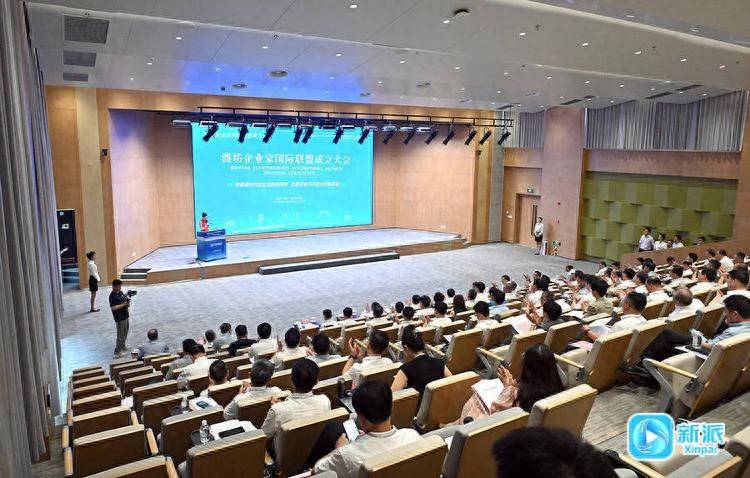
潍坊企业家国际联盟成立大会举行
Sou Hu Cai Jing· 2025-07-21 16:57
Group 1 - The establishment of the Weifang Entrepreneurs International Alliance is a significant initiative to help entrepreneurs adapt to globalization and actively engage in the domestic and international dual circulation [4] - The alliance aims to create a new high ground for open cooperation and build a community for the development of Weifang enterprises in the new era [4] - Jiang Bin, the chairman of the Weifang Entrepreneurs Association and chairman of Goer Group Co., Ltd., was elected as the president of the Weifang Entrepreneurs International Alliance [4] Group 2 - The alliance appointed several advisors, including Jiang Nan, Dong Zhiyong, and Cai Xianjin, as well as international figures from Argentina and the UAE, to enhance its strategic guidance and resource integration [17][18] - The alliance will establish 14 overseas chapters based on the geographical distribution of its members and business development needs [17] - The inaugural ceremony featured speeches from key figures, emphasizing the importance of leveraging the alliance for strategic planning, industry insights, and international resource connections to support Weifang enterprises in seizing overseas opportunities [18]