
现代化产业体系

Search documents
金融“升维”:当好现代化产业体系的“增长伙伴”
经济观察报· 2025-12-26 12:23
Core Viewpoint - The article emphasizes the need for a profound financial transformation to support China's industrial upgrade towards an intelligent, green, and integrated modern industrial system, which is positioned as a top strategic task in the new "14th Five-Year Plan" [1][2][3]. Group 1: Industrial Development and Financial Integration - China is advancing its industrial system towards intelligent, green, and integrated development, achieving significant historical progress in scale, technological innovation, and enterprise competitiveness [1][2]. - The financial sector, particularly Agricultural Bank, plays a crucial role in supporting industrial development by providing tailored financial services that integrate deeply with industry needs [3][11]. Group 2: Innovative Financial Models - Traditional credit models have created barriers for technology-driven companies, which often lack physical assets for collateral, leading to financing challenges [5]. - Agricultural Bank has introduced a "technology flow" evaluation system that assesses companies based on their technological capabilities rather than traditional asset-based metrics, enabling precise financial support [6][8]. Group 3: Comprehensive Financial Support - The bank's approach has evolved from merely providing loans to becoming a partner in the entire lifecycle of a company's development, offering diverse financing solutions that adapt to changing business needs [10][11]. - Agricultural Bank has established a comprehensive service system that includes investment, loans, and advisory services, supporting over 80,000 technology enterprises [11][15]. Group 4: Systemic Integration and Ecosystem Building - The competition in modern industrial systems is fundamentally about the competition between ecosystems, necessitating a shift from single-point support to systemic integration and co-construction of industrial ecosystems [13]. - Agricultural Bank is actively building a collaborative financial ecosystem that connects technology, industry, and finance, facilitating the growth of key industrial chains and innovative enterprises [15].



2025年终经济观察|笃“实”夯基 现代化产业体系建设持续推进
Zhong Guo Jin Rong Xin Xi Wang· 2025-12-26 11:52
Group 1 - The modern industrial system is the material and technical foundation of Chinese-style modernization, with advancements in industry, agriculture, services, and infrastructure development [1] - The Central Economic Work Conference emphasized the continuous promotion of the modern industrial system by 2025, focusing on innovation-driven growth and nurturing new momentum [1][2] - The integration of technological and industrial innovation is deepening, with a focus on advanced manufacturing as the backbone of the modern industrial system [1][3] Group 2 - The domestic and international environment is complex, necessitating a focus on the real economy for the construction of a modern industrial system [2] - The State Council has issued guidelines to enhance financial services for the real economy, with increased support for key industries such as steel and automotive [2] - The resilience of the real economy is highlighted by the stable grain production exceeding 1.4 trillion jin and growth in 30 out of 41 industrial sectors in November [3] Group 3 - The integration of new technologies is crucial for enhancing industrial competitiveness, addressing issues of "large but not strong" and "complete but not refined" in certain sectors [6] - The number of high-tech enterprises has reached 504,000, with over 140,000 specialized and innovative small and medium-sized enterprises cultivated [9] - The construction of over 2,400 pilot platforms supports the seamless connection between innovation and industry [7] Group 4 - The integration of digital and physical economies is accelerating, with over 7,000 advanced intelligent factories established and more than 100 million devices connected to industrial internet platforms [11] - The focus on service-oriented manufacturing is growing, with policies promoting the deep integration of manufacturing and service industries [12] - The future outlook for economic development is optimistic, driven by active factor flows and innovation, with a commitment to intelligent, green, and integrated development [12]
2025年终经济观察丨笃“实”夯基 现代化产业体系建设持续推进
Xin Hua Wang· 2025-12-26 10:58
Group 1 - The modern industrial system is the material and technical foundation of Chinese-style modernization, with significant advancements in industry, agriculture, services, and infrastructure development [1] - The Central Economic Work Conference emphasized the continuous promotion of the modern industrial system by 2025, focusing on innovation-driven growth and nurturing new momentum [1] - Companies are leveraging technological innovation to lead the development of new productive forces, reinforcing the real economy for strategic advantages in future development and international competition [1] Group 2 - The focus on the real economy is crucial for building a modern industrial system, with policies aimed at supporting industries such as steel and automotive to stabilize growth [2] - The resilience of the real economy is highlighted by the agricultural sector achieving a stable harvest of over 1.4 trillion jin, and 30 out of 41 industrial sectors showing year-on-year growth in value added [3] - The service sector contributed 3.1 percentage points to GDP growth in the first three quarters, indicating a continuous improvement in quality and efficiency [3] Group 3 - The integration of technology and industry is essential for enhancing industrial innovation capabilities, with a focus on improving total factor productivity and creating a competitive modern industrial system [6] - Over 2,400 pilot platforms have been established nationwide to support the development of new productive forces, with 241 key platforms identified for further cultivation [6] - Traditional industries are accelerating their transformation, with the CNC rate in key industrial enterprises reaching 68.5% and the comprehensive utilization rate of industrial solid waste at 57% [7] Group 4 - The integration of the digital economy and the real economy is accelerating, with smart manufacturing technologies being adopted in various sectors [10] - More than 7,000 advanced and over 500 excellent smart factories have been established, with over 100 million devices connected to key industrial internet platforms [11] - The government is promoting the deep integration of manufacturing and service industries, with policies aimed at enhancing the quality and capacity of the service sector [11]
2025年全国数字产业业务收入预计同比增长约9%
Xin Hua Wang· 2025-12-26 07:04
全国工业和信息化工作会议于12月25日至26日在北京召开。 【纠错】 【责任编辑:施歌】 制造业转型升级步伐加快。累计建成7000余家先进级、500余家卓越级智能工厂,全国工业5G专网 项目超过2万个、5G工厂超过8000家,累计培育国家绿色工厂6430家、绿色工业园区491家,大宗工业 固废综合利用率达到57%。 服务企业与社会民生取得新成效,累计培育科技和创新型中小企业超60万家、高新技术企业达50.4 万家、专精特新中小企业超14万家、"小巨人"企业1.76万家、制造业单项冠军企业1862家。信息通信业 服务经济社会发展能力持续增强,防范治理电信网络诈骗纵深推进。行业治理现代化稳步推进,一批标 志性改革举措出台实施,综合整治"内卷式"竞争成效显现。 工业和信息化部部长李乐成在会上表示,要深刻认识"十五五"时期面临的形势,准确把握"十五 五"时期使命任务,全面提升产业科技创新能力,大力发展先进制造业,推动制造业智能化、绿色化、 融合化发展,加强优质企业培育,筑牢产业发展安全屏障,提升行业治理现代化水平,推动新型工业化 取得重大进展,推动以先进制造业为骨干的现代化产业体系建设取得重大突破,稳步迈向世界制造强 ...
深入整治“内卷式”竞争 工信部部署2026年重点工作
Xin Hua Wang· 2025-12-26 06:53
会议提出,要全力巩固工业经济稳中向好态势,加大绿色产品、潮品、适老产品等供给,着力稳定制造 业有效投资。持续提升产业链韧性和安全水平,实施新一轮重点产业链高质量发展行动,深入实施产业 基础再造工程。加快提升产业科技创新能力,攻克一批带动产业发展的核心技术,做强一批高水平制造 业中试平台,加快培育全国一体化技术市场。 新华社北京12月26日电(记者周圆、唐诗凝)记者26日从全国工业和信息化工作会议上获悉,工业和信 息化部部署2026年重点工作时提出,深入实施新一轮十大重点行业稳增长工作方案,推动特色优势矿产 资源产业高质量发展,打造新兴支柱产业,推进"人工智能+制造"专项行动,深入整治"内卷式"竞争 等。 工业和信息化部部长李乐成在会上表示,2026年是"十五五"开局之年,要锚定实现新型工业化这个关键 任务,进一步全面深化改革,推动科技创新和产业创新深度融合,推动信息化和工业化深度融合,因地 制宜发展新质生产力,推动工业经济实现质的有效提升和量的合理增长,加快建设现代化产业体系,确 保实现"十五五"良好开局。 在培育壮大新兴产业和未来产业方面,会议明确,将打造集成电路、新型显示、新材料、航空航天、低 空经济、生 ...
打造新兴支柱产业、深入整治“内卷式”竞争 工业和信息化部部署2026年重点工作
Xin Hua She· 2025-12-26 06:42
Group 1 - The core viewpoint of the news is the emphasis on implementing a new round of key industry growth initiatives to promote high-quality development in various sectors, including the mining industry and emerging industries like artificial intelligence and manufacturing [1][2] - The Ministry of Industry and Information Technology aims to consolidate the positive trend of the industrial economy, enhance the supply of green products, trendy products, and products for the elderly, and stabilize effective investment in manufacturing [1][2] - There is a focus on improving the resilience and safety of industrial chains, implementing high-quality development actions for key industrial chains, and enhancing technological innovation capabilities within the industry [1][2] Group 2 - The meeting highlighted the goal of nurturing "little giant" enterprises, manufacturing champions, and national-level characteristic industrial clusters, while also addressing the issue of overdue payments to enterprises [2] - The Ministry of Industry and Information Technology plans to optimize traditional industries, promote the deep integration of information technology and industrialization, and advance green and low-carbon development in the industrial sector [2] - The year 2026 is identified as a critical starting point for the 14th Five-Year Plan, with a focus on achieving new industrialization, deepening reforms, and ensuring a good start for the 14th Five-Year Plan [2]
金融“升维”:当好现代化产业体系的“增长伙伴”
Jing Ji Guan Cha Wang· 2025-12-26 05:35
Core Viewpoint - The article highlights the transformation of Agricultural Bank's financial services, focusing on supporting technology-driven enterprises through innovative credit evaluation systems and a shift from traditional asset-based lending to a model that values intellectual property and technological capabilities [1][3][4]. Group 1: Agricultural Bank's Role in Supporting Technology Enterprises - Agricultural Bank has developed a "technology flow" evaluation system to provide precise financial support to technology enterprises, moving beyond traditional collateral-based lending [3][4]. - The bank has successfully provided loans to companies like Pangu Power Technology Co., Ltd., which has become a benchmark in the diesel generator market, showcasing the effectiveness of this new lending approach [3]. - The bank's financial support has enabled companies to accelerate their technological advancements and product quality improvements, as seen with companies like Yongxu New Materials [4]. Group 2: Comprehensive Financial Services - Agricultural Bank has established a comprehensive financial service system that includes investment, loans, bonds, leasing, and consulting, catering to the entire lifecycle of technology enterprises [7]. - The bank's approach has evolved from merely providing financing to becoming a strategic partner that supports the long-term growth and development of enterprises [6][7]. - The bank has engaged in equity investments and long-term capital support for companies like Saisir Group, enhancing their competitive edge in the market [6]. Group 3: Systematic Integration of Financial Services - The bank is shifting from single-point support to a systematic integration of financial services that fosters an entire industrial ecosystem [8][9]. - By designing tailored credit models for specific industrial chains, Agricultural Bank aims to enhance the overall efficiency and growth of key sectors [8]. - The bank has established a network of technology financial service centers and specialized branches to improve the precision and coverage of its services [8]. Group 4: Building a Collaborative Financial Ecosystem - Agricultural Bank is actively participating in creating a collaborative financial ecosystem that connects technology, industry, and finance, exemplified by its involvement in various funds and investment initiatives [9]. - The bank's efforts include establishing a 500 billion yuan innovation fund and issuing technology innovation bonds, which support the growth of technology-driven enterprises [9]. - The transformation of Agricultural Bank's financial services reflects a broader trend towards integrating financial support with industrial development, essential for China's modernization efforts [9].
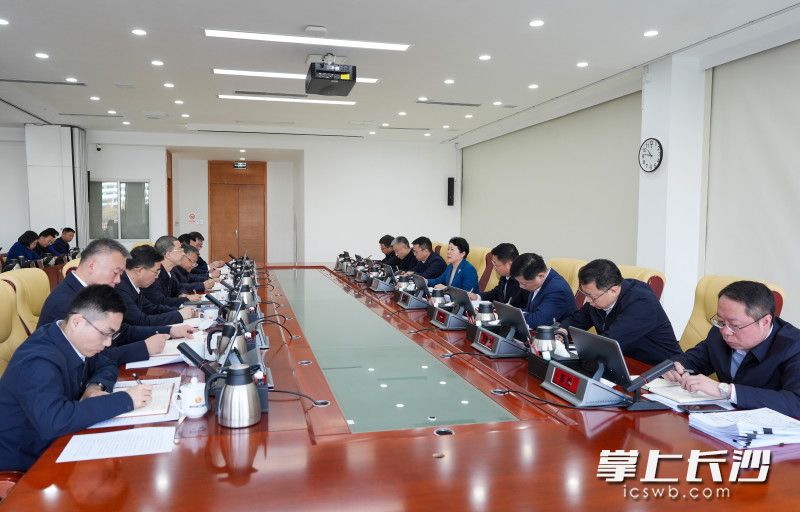
吴桂英主持召开长沙市推进湖南湘江新区高质量发展协调小组会议
Chang Sha Wan Bao· 2025-12-26 03:57
会议强调,要奋力推进科产融合,加快培育新质生产力,筑巢引凤推进湘江科学城建设,固本育新构建现代 化产业体系,招大引强提质增效抓实招商引资,扩容赋能提升现代服务业能级。要奋力深化改革开放,敢闯敢 试、先行先试,纵深推进重点领域改革,持续深化区域协同,加快对外开放步伐,不断优化营商环境。要奋力提 升城乡品质,带头探索长沙特大城市现代化治理新路子,以绣花功夫补齐功能短板,抓好农村基础设施"七张 网"建设,深化人居环境整治。要奋力守好发展底线,加大保障和改善民生力度,以如履薄冰的谨慎、枕戈待旦的 警惕,抓紧抓实抓细防风险、保安全、护稳定各项工作。要奋力打造实干队伍,牢固树立正确的政绩观,提振争 先进位的精气神,锻造善作善成的真本领,涵养从严从实的好作风,巩固发展良好政治生态。 市级领导周健、邹特、李铁华、付旭明、周凡、周志凯、彭涛出席。 12月25日,省委常委、市委书记吴桂英主持召开长沙市推进湖南湘江新区高质量发展协调小组会议,强调要 深入贯彻党的二十届四中全会精神,认真落实省委、市委全会工作要求,放眼全国争一流,站位全省扛旗帜,服 务全市挑大梁,为省市高质量发展和现代化建设作出新的更大贡献。市委副书记、代市长陈博彰 ...
河南省发展和改革工作会议在郑州召开
Zhong Guo Fa Zhan Wang· 2025-12-26 03:37
会议强调,新的一年,全省发展改革系统要进一步增强使命感、责任感,深入践行"两个维护",扛牢全 面从严治党主体责任,持续提升能力本领和工作效能,始终保持坚韧不拔、奋发有为的精神状态,在省 委、省政府的坚强领导下,牢记嘱托、埋头苦干、砥砺奋进,努力在奋力谱写中原大地推进中国式现代 化新篇章中彰显发改担当、展现发改作为、作出发改贡献。 河南省发展改革委在郑委领导,三总师,省能源局、省数据局副局长,驻委纪检监察组负责同志,各处 室(局)负责同志,各委属单位主要负责同志,各省辖市发展改革委、济源示范区发改统计局、航空港区 发展统计局主要负责同志参加会议,省有关单位和部分中央驻豫单位、中央驻豫企业相关部门负责同 志,以及委离退休老干部代表受邀参会。 会议指出,一年来,全省发展改革系统坚持以习近平新时代中国特色社会主义思想为指导,全面贯彻党 的二十大和二十届历次全会精神,深入学习贯彻习近平总书记在河南考察时重要讲话精神和关于河南工 作的重要论述,不折不扣落实省委、省政府决策部署,聚焦"1+2+4+N"目标任务体系,坚持抓扭提用 力、逆跨顺用策、准实效用心,围绕中心、前瞻谋划,主动担当、狠抓落实,推动融入服务全国统一大 市场 ...
新一批16个省级特色产业园授牌 广东首设人工智能与机器人特色产业园
Nan Fang Ri Bao Wang Luo Ban· 2025-12-26 01:47
Core Insights - The 2025 Provincial Industrial Park (Yangjiang) Industrial Chain Collaborative Development Conference highlighted the recognition of 16 new provincial characteristic industrial parks, marking a breakthrough in the artificial intelligence and intelligent robotics sectors [1][2] Group 1: Industrial Park Development - The total number of characteristic industrial parks in the province has reached 70, covering all 21 cities and involving 17 industrial cluster directions, including 7 strategic pillar industries and 6 strategic emerging industries [1] - The newly recognized parks demonstrate stronger systemic and coordinated regional and industrial layouts, with coverage across 13 cities including Guangzhou, Shenzhen, and Zhuhai [2] Group 2: Sectoral Focus - The new characteristic industrial parks encompass 13 industrial cluster directions such as software and information services, advanced materials, and intelligent robotics, reflecting both upgrades to traditional industries and forward-looking layouts for future sectors [2][3] - The Guangzhou Science City AI Emerging Characteristic Park has attracted leading companies like Jiadu Technology and Southern Power Grid Research Institute, showcasing strong innovation capabilities in industrial software and smart transportation [2] Group 3: Traditional Industry Revitalization - The Yadi electric vehicle production base in Qingyuan has achieved an annual output value of 6.885 billion yuan, with a year-on-year growth of 23.3%, becoming the county's leading pillar industry [4] - The Renhua Industrial Park in Shaoguan focuses on resource recycling, contributing 72.1% of the park's industrial output value in 2023 through a complete recycling chain [4] Group 4: Green Transformation - The Zhanjiang Economic and Technological Development Zone is developing a green petrochemical cluster, with Zhongke Refining achieving a production value of 69.1 billion yuan in the first three quarters [5] - Zhanjiang has been selected as a national pilot for low-carbon hydrogen energy transition, emphasizing systematic decarbonization in manufacturing [5] Group 5: Historical Context - The conference coincided with the 20th anniversary of the establishment of provincial industrial parks, which have seen significant growth and now support over 2.4 trillion yuan in annual industrial output [5]
