AI医疗

Search documents
一纸中标4.276亿国家级项目,讯飞医疗如何撬动AI医疗产业新坐标?
Ge Long Hui· 2025-12-05 01:01
Core Insights - The announcement of a 427.6 million yuan bid by iFlytek Medical serves as a breakthrough for the AI healthcare industry, which has been struggling with "technological stagnation" and "unclear profit models" [1] - The project awarded to iFlytek Medical is a result of the convergence of policy direction, market demand, and technical strength, marking a significant recognition of the company's capabilities [1][3] Industry Demand - In 2024, the average life expectancy in China reached 79 years, with a significant increase in the elderly population requiring health management, particularly among those aged 65 and above, totaling 141.36 million [1] - The number of outpatient visits at grassroots medical institutions reached 3.98 billion, an increase of 230 million from the previous year, highlighting the growing demand for healthcare services [1] Brand Value and Recognition - The national-level project bid provides iFlytek Medical with a "national endorsement," enhancing its brand value and establishing it as a key player in the AI healthcare sector [1][3] - The project aligns with national goals to achieve widespread application of intelligent assistance in grassroots healthcare by 2027 and full coverage by 2030, further amplifying the brand's influence [3] Strategic Transition - The bid signifies a shift for iFlytek Medical from being an "industry participant" to a "standard setter," addressing challenges such as the lack of standards and data fragmentation in medical AI applications [4] - The company aims to develop a replicable "medical AI operating system" based on its extensive medical model and high-quality data platform [4] GBC Strategy Implementation - The successful bid validates iFlytek Medical's GBC (Government-Business-Consumer) strategy, which integrates policy, business, and consumer needs into a cohesive value chain [5] - The G-end business serves as a foundational strategy, with the company's core product "Smart Medical Assistant" already covering 31 provinces and providing over 1.1 billion AI-assisted diagnoses [6] B-end Market Penetration - iFlytek Medical has established deep collaborations with over 500 top-tier hospitals, facilitating the transition of proven solutions into standardized products that meet the digital transformation needs of various healthcare institutions [7] - The project is expected to significantly reduce procurement and validation costs for healthcare institutions, enhancing the company's competitive edge in the B-end market [7] C-end Business Growth - The aging population and rising chronic diseases have transformed proactive health management from an optional service to a necessity, driving demand for iFlytek Medical's consumer products [8] - The "iFlytek Xiaoyi APP" has achieved over 1.6 billion AI consultations and 26 million downloads, indicating strong user engagement and satisfaction [8] Technological Foundation - iFlytek's medical model is the only fully domestically produced and controllable model in the industry, surpassing competitors in various capabilities, thus ensuring data security and trust among users [9] - The company's technological strength is expected to be a core driver of long-term value growth, especially as policies continue to support grassroots healthcare [9] Conclusion - iFlytek Medical's value lies not only in its leading AI healthcare technology but also in its role as a core participant in the new infrastructure of AI healthcare, benefiting from policy incentives and market demand [10] - The ongoing project is set to enhance the company's data reserves and industry standards, accelerating the industrialization of AI healthcare infrastructure and driving significant growth in performance [10]

AI医疗兴起前夜,硅谷远程医疗惊现巨大丑闻,引发信任危机与监管加码
Tai Mei Ti A P P· 2025-12-04 23:16
Core Viewpoint - The article highlights a significant scandal in the telemedicine sector, particularly involving Done Global, which has been accused of illegal drug distribution and fraudulent practices, raising concerns about ethics and safety in the healthcare industry [2][6]. Group 1: Company Overview - Done Global, founded by Ruthia He, rapidly expanded during the COVID-19 pandemic by offering online ADHD diagnosis and Adderall prescription services, capitalizing on relaxed telemedicine regulations [3][4]. - The company charged patients a subscription fee of $79 per month for online assessments and prescriptions, making it easy for users to access controlled substances [3]. Group 2: Legal Issues and Allegations - Ruthia He and David Brody were found guilty of illegal distribution of Adderall and submitting fraudulent claims, with the case involving over $100 million [2][4]. - The company employed aggressive marketing strategies, misleading potential patients about their need for ADHD treatment, and pressured doctors to limit consultation times to 30 minutes [4][5]. Group 3: Financial and Operational Practices - Done Global's revenue exceeded $100 million, with practices such as automatic prescription renewals and submitting false claims to insurance companies, resulting in over $14 million in fraud [5]. - The company faced severe consequences, including patient harm due to easy access to medications, which contributed to a nationwide shortage of Adderall [6]. Group 4: Regulatory Implications - The case has prompted a call for stricter regulations in the telemedicine sector, particularly regarding the prescription of controlled substances, with potential increases in compliance requirements [6]. - The U.S. Department of Justice indicated that this case marks the beginning of ongoing efforts to combat illegal drug distribution in the digital health space [6].


医渡科技连续两日回购,斥资近300万港元
Zhi Tong Cai Jing· 2025-12-04 13:30
Group 1 - The core viewpoint of the news is that Yidu Technology (2158) is demonstrating strong growth and operational efficiency, as evidenced by its recent share buybacks and positive financial performance [1][2] - The company repurchased 181,000 shares at an average price of HKD 5.15, totaling over HKD 930,000, marking a continuous buyback trend with a cumulative amount nearing HKD 3 million [1] - For the fiscal year 2026, Yidu Technology reported total revenue of RMB 358 million, reflecting an 8.7% year-on-year growth, with adjusted EBITDA reaching approximately RMB 54 million, doubling from the previous year [1] Group 2 - The management highlighted that the AI medical model technology has entered a new phase of "multi-point blossoming and large-scale landing," with significant deployments in over 30 top-tier hospitals [2] - The AI tool "Copilot" is being utilized nearly 1,000 times daily in individual hospitals, integrating into actual workflows [2] - The diagnostic accuracy of the TNM staging assessment tool has improved significantly, with T-stage accuracy rising from 58% to 90%, reaching the level of chief physicians [2] Group 3 - Capital market analysts are optimistic about Yidu Technology, with Everbright Securities noting breakthroughs in AI medical innovation and the establishment of a "data + algorithm + scenario" closed-loop system [2] - Citigroup maintained a "Buy" rating for the company with a target price of HKD 10, recognizing its core competitiveness and growth potential in the AI healthcare sector [2] Group 4 - As of the latest market close, Yidu Technology's stock price was HKD 5.15, reflecting a 0.98% increase [3]
商汤分拆AI医疗公司,半年融资10亿,剑指医疗世界模型
机器人圈· 2025-12-03 09:56
Core Insights - SenseTime has completed the spin-off of its AI medical business, establishing SenseTime Medical, which has raised 1 billion yuan in funding within six months, positioning itself as a near-unicorn in the industry [2] - The core objective of SenseTime Medical is to construct a "world model" in the medical field, driven by a medical large model, aiming to design and empower the "future hospital" [2] - The company employs a "dual middle platform" strategy to ensure efficient collaboration between its core model and multimodal models, facilitating zero-code application development [4] Technology and Model Development - SenseTime Medical's core model, "Da Yi®," excels in processing medical long texts, knowledge Q&A, and complex reasoning, outperforming general models like DeepSeek and GPT-5 in eight professional testing dimensions [2] - The model's advantages stem from three technological supports: a high-quality corpus covering over 100 medical disciplines and approximately 400 billion Chinese characters, an industrial-grade RAG framework for evidence tracing, and specialized training to enhance clinical reasoning [2] Commercialization and Partnerships - SenseTime Medical has launched over 40 AI modules in clinical settings, covering various clinical directions, with its smart pathology system improving departmental efficiency by 30%-50% and achieving nearly 100% sensitivity in tumor detection [6] - Collaborations include partnerships with Tsinghua Changgung Hospital for liver decision-making AI and Roche for a research platform covering 700 top-tier hospitals across 90 cities [7] - The company has also established a medical big data training facility with Shanghai Shenkang Hospital Development Center and deployed smart diagnostic platforms in hospitals [7] International Expansion - SenseTime Medical has accelerated its overseas expansion, obtaining Singapore's first AI chest CT diagnostic device registration and securing its first business in Indonesia, targeting markets in Southeast Asia and the Middle East [7] Team and Future Vision - The current team consists of approximately 100 members, with over 70% in research and development, featuring talents from top universities and leading tech companies [7] - The CEO, Zhang Shaoting, envisions transitioning AI from "text Q&A" to "dynamic simulation," aiming to create a "digital laboratory" that replicates human physiological processes and predicts treatment outcomes [7]

不接医保、不搞营销、复购超八成,这家健康消费新势力靠什么“破局”和“出圈”?
格隆汇APP· 2025-12-03 07:49
Core Viewpoint - The article highlights the unique business model of Zhuozheng Medical, which has achieved significant growth in revenue and profit despite the challenges faced by the healthcare industry due to policy changes and economic pressures. The company has managed to maintain a high growth rate by focusing on cash payments and word-of-mouth marketing rather than relying on insurance reimbursements and traditional advertising methods [2][4][18]. Group 1: Financial Performance - Zhuozheng Medical's revenue is projected to grow from 470 million yuan in 2022 to 960 million yuan in 2024, representing a compound annual growth rate (CAGR) of 42.2% [2]. - The company's gross profit has also increased significantly, with figures of 43.98 million yuan, 130 million yuan, and 230 million yuan over the past three years, achieving a CAGR of 126.7% [2]. - The net profit is expected to turn positive in 2024, with net profits of -220 million yuan, -350 million yuan, and 80.23 million yuan over the last three years, corresponding to net profit margins of -46.8%, -51.2%, and 8.4% [2]. Group 2: Customer Acquisition Strategy - Unlike most private medical institutions that rely on insurance for customer acquisition, Zhuozheng Medical generates approximately 85% of its revenue from cash payments and only about 12% from commercial insurance [4][5]. - The company has maintained low marketing expenses, with marketing costs as a percentage of revenue at 2.7%, 1.2%, and 1.7% from 2022 to 2024, primarily for brand personnel salaries rather than sales [7]. - Customer loyalty is evident with a membership renewal rate of 67% and a patient return rate of 82.7% as of August 2025 [8]. Group 3: Service Model Innovation - Zhuozheng Medical employs a "family multi-specialty" model, addressing the low-frequency nature of healthcare consumption by offering a range of services for common family health needs, thus increasing customer retention [12][14]. - The company has successfully transformed low-frequency visits into high-frequency consumption, with an average of nearly 4 visits per customer in 2024, significantly higher than single-specialty institutions [15]. - The family membership program has led to an average annual consumption of over 6 visits per household, enhancing customer engagement and loyalty [15]. Group 4: Technology Integration - Zhuozheng Medical has been integrating AI into its operations since over three years ago, focusing on practical applications rather than following industry trends [16]. - The company has developed over 270 AI assistants to optimize operations, significantly reducing labor costs from 80% of revenue to 54% by 2025 [16]. - AI applications have improved patient appointment handling and diagnostic efficiency, showcasing a strategic approach to technology adoption [16]. Group 5: Market Potential - The private mid-to-high-end healthcare service market in China is projected to grow from 426.4 billion yuan in 2024 to 831.4 billion yuan in 2029, with a CAGR of 14.3% [18]. - Zhuozheng Medical's innovative business model positions it to capitalize on this growing market, potentially becoming a new force in the health service consumption sector [18].

机构:医疗器械估值调整接近尾声,龙头公司业绩拐点与脑机接口或成双主线
Sou Hu Cai Jing· 2025-12-03 01:52
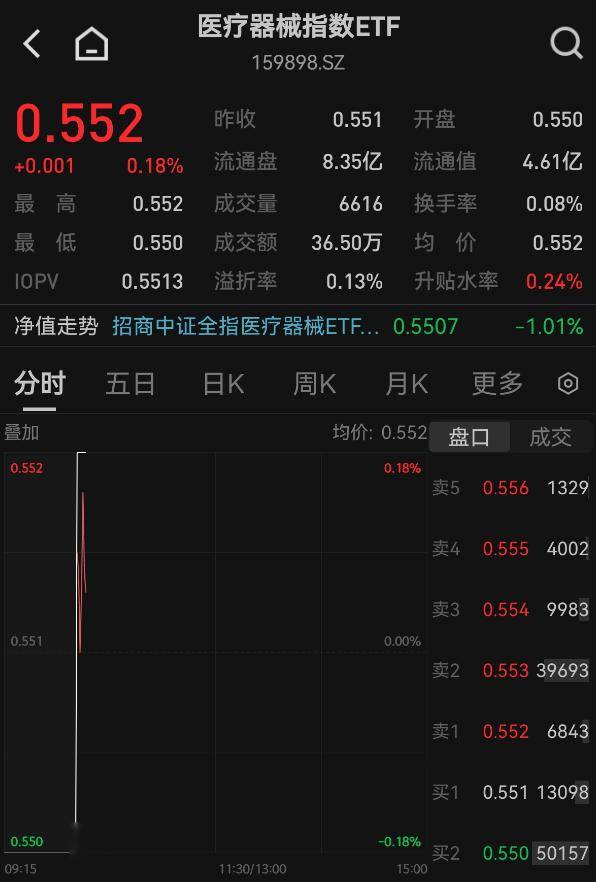
12月3日开盘,三大指数涨跌不一,科技方向多板块反弹。医疗器械指数ETF(159898)微涨0.18%,连续两天获得资金净申购共275万元,年内涨幅位居相 同标的ETF第一。 | 医疗器械指数ETF | | | | | | | --- | --- | --- | --- | --- | --- | | | 159898.SZ | | | | | | 0.552 | | 昨日 | 0.551 | 开盘 | 0.550 | | +0.007 0.18% | | 流通盘 | 8.35 Z | 流通值 | 4.611Z | | 最高 0.552 | | 成交量 | 6616 | 换手率 | 0.08% | | 最 低 0.550 | | 成交额 | 36.50万 | 均价 | 0.552 | | IOPV 0.5513 | | 溢折率 | 0.13% | | 升贴水率 0.24% | | 净值走势 招商中证全指医疗器械ETF... 0.5507 | | | | | -1.01% | | 分时 | 五日 日K 周K 月K | | | | 申名 向 | | 音加 | 均价:0.552 盘口 成交 | | | | | | ...
AI永生赛道来了位15岁量子物理博士
3 6 Ke· 2025-12-01 10:32
Core Insights - Laurent Simons, a 15-year-old prodigy, has become one of the youngest PhD holders in quantum physics, aiming to transition into AI in healthcare to develop "superhumans" and combat biological aging [1][8]. Group 1: Academic Journey - Laurent completed his primary education at the age of four and quickly advanced through schooling, expressing dissatisfaction with the pace of his peers [4]. - He graduated from high school at eight and enrolled in Eindhoven University of Technology, where he demonstrated exceptional learning abilities, completing a three-year electrical engineering degree in less than a year [5]. - At eleven, he graduated with the highest honors from the University of Antwerp with a bachelor's degree in physics [6]. - By twelve, he earned a master's degree with top grades and began his PhD at a young age, completing it in just three years [6]. Group 2: Research Focus - Laurent's doctoral thesis focused on "Bose polarons in superfluid and supersolid systems," a complex topic at the intersection of quantum many-body physics and emergent phenomena [6][8]. - His research is notable not only for his age but also for the depth of the subject matter, which is considered cutting-edge in the field [6]. Group 3: Future Aspirations - Following his PhD, Laurent plans to pursue a second doctorate in medical AI, with aspirations to create advanced solutions for aging and health issues [1][8]. - He aims to leverage his scientific knowledge to help others, particularly in memory of his grandparents who passed away from heart disease [8]. Group 4: Personal Life and Public Perception - Despite his academic achievements, Laurent leads a relatively normal teenage life, enjoying video games and typical adolescent activities [9][10]. - His upbringing has been described as "free-range," with his parents initially unaware of his exceptional abilities until later assessments revealed his high IQ [10]. - The media attention surrounding Laurent has raised concerns about the pressure and expectations placed on him, with discussions about the balance between nurturing talent and allowing for a normal childhood [12][16].

平安好医生再换帅战略可持续性存疑 过度依赖平安集团、收入严重向F端B端倾斜、4年半员工砍掉一半多
Xin Lang Zheng Quan· 2025-12-01 10:00
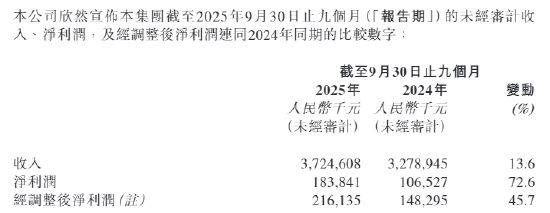
Core Viewpoint - Ping An Good Doctor has achieved profitability through deep integration with industry giants and strict cost control, but the sustainability of this profitability is in question [1][2]. Financial Performance - In the first three quarters of 2025, Ping An Good Doctor reported revenue of 3.725 billion yuan, a year-on-year increase of 13.6%, and a net profit of 183 million yuan, a year-on-year increase of 72.6% [1][3]. Management Changes - The sudden resignation of CEO Li Dou and the appointment of new leadership has raised concerns about the company's reliance on group support and its independent growth capabilities [2][6]. Workforce and Cost Management - The company has reduced its workforce by approximately 55% over four and a half years, from 3,425 employees in 2021 to 1,545 in mid-2025, alongside significant cuts in management and R&D expenses [4][5]. Revenue Dependency - Nearly 78.3% of the company's revenue comes from clients within the Ping An Group, indicating a heavy reliance on group resources, which may limit its ability to attract customers independently [5][6]. Strategic Direction - Frequent changes in leadership have led to a lack of strategic continuity, with each management team altering the company's development path [6][7]. Growth Opportunities - The company is exploring growth in elder care services and AI, with elder care revenue increasing by 263.9% year-on-year, although it still represents less than 7% of total revenue [6][7]. AI Implementation - The company has introduced an AI product matrix that has significantly reduced service costs, but its ability to generate direct revenue remains unproven [7].
创金合信基金毛丁丁:人工智能刺激深度研发 AI医疗投资机会巨大
Zheng Quan Shi Bao Wang· 2025-12-01 07:12
Core Viewpoint - The rapid adoption of artificial intelligence (AI) in the healthcare and pharmaceutical sectors is expected to address significant pain points, leading to enhanced efficiency and productivity across the entire medical value chain, thus creating substantial investment opportunities in AI healthcare and pharmaceuticals [1] Group 1: Industry Pain Points - There are considerable challenges in various aspects of the global healthcare and pharmaceutical industry, including the deep exploration and efficient application of life gene information, the screening and combination of drug targets, the urgent need to improve diagnostic and treatment efficiency, and the significant information asymmetry between doctors and patients [1] Group 2: Investment Opportunities - The application of AI technology is anticipated to play a significant role in alleviating the aforementioned pain points, which will liberate productivity across the pharmaceutical value chain and foster a vast space for imagination and investment opportunities in AI healthcare and pharmaceuticals [1]
年底5元以下低价股捡漏,7只潜力股推荐,跨年黑马等你选
Sou Hu Cai Jing· 2025-11-30 18:37
Group 1: Consumer Sector - The government has implemented substantial measures to boost consumption, focusing on smart products, green energy, and products for the elderly [1] - The fourth round of "trade-in" subsidies is accelerating, targeting home appliances, digital products, and home decoration, with a deadline for consumers to act by December 31 [1] Group 2: Alcohol and Pharmaceutical E-commerce - A company specializing in both liquor and pharmaceutical e-commerce has seen revenue growth of nearly 30%, with high gross margins due to increased demand during year-end banquets [1] - The pharmaceutical e-commerce segment benefits from stricter regulations, providing a competitive edge, while innovative drugs are in phase three clinical trials, indicating strong cash flow and a low price-to-earnings ratio compared to peers [1] Group 3: Prepared Dishes and New Retail - A company focused on prepared dishes and new retail is experiencing rapid market growth, with the market size exceeding 600 billion, although its actual revenue contribution is only over 10% [3] - The main business remains traditional retail with lower gross margins, and new production facilities for prepared dishes will not be operational until 2026, posing risks for large investments [3] Group 4: Healthcare Sector - Companies specializing in cold medicine are expected to see revenue spikes during the flu season, with over 40% of their revenue coming from this period, but they have low R&D investment, limiting long-term growth potential [3] Group 5: Elderly Care and AI Medical Services - A company focusing on elderly care and AI medical services has seen over 50% revenue growth in community care and rehabilitation, with AI diagnostic systems implemented in numerous grassroots hospitals [5] - The company has high R&D investment compared to industry averages, but its diverse business lines contribute limited short-term profits, making it suitable for long-term investment [5] Group 6: Private Hospitals and Smart Medical Services - A company operating in private hospitals, smart medical services, and coal has seen over 30% revenue growth in private hospitals, with stable cash flow from coal operations [6] - The company has a diversified risk profile but lacks a core growth engine, making it suitable for conservative investors [6] Group 7: High-end Manufacturing - The high-end manufacturing sector is receiving strong policy support, with a focus on industrial mother machines, which are expected to modernize by 2027 [6] - A company producing CNC machines has reported over 60% profit growth in the first three quarters, with a nearly 40% year-on-year increase in industrial mother machine revenue [6] Group 8: New Energy and Digital Economy - The new energy and digital economy sectors are experiencing explosive growth, with data trading becoming a national focus and data center capacity reaching 500 PB [8] - The company involved in data business has seen revenue double, with stable cash flow from cement operations and lower valuations compared to peers, indicating potential for increased profitability if the data business model is successful [8]