
两山理念

Search documents
在推动发展方式绿色低碳转型上取得更大突破、争做西部示范
Shan Xi Ri Bao· 2025-12-07 00:10
Core Viewpoint - The modernization in China emphasizes harmonious coexistence between humans and nature, with green development being a prominent feature of this modernization [1] Group 1: Green Development Goals - The 14th Provincial Committee's Ninth Plenary Session proposed achieving greater breakthroughs in green and low-carbon transformation, aiming to set an example in the western region [1][3] - The implementation of these goals is expected to inject more green momentum into the high-quality development of Shaanxi [1] Group 2: Ecological Environment Protection - Shaanxi's ecological environment protection is crucial for its own development quality and sustainability, as well as for the national ecological environment [2] - Since the 14th Five-Year Plan, Shaanxi has fully implemented Xi Jinping's ecological civilization thoughts, achieving significant results in ecological civilization construction [2] - Water quality in the Yellow River has maintained a Class II standard for three consecutive years, and the ecological quality index in the Qinling area is at a first-class national level [2] - The province has achieved a water and soil conservation rate of 70.81%, with a continuous decrease in both the area and intensity of soil erosion [2] Group 3: Pollution Control and Green Economy - From January to October, the PM2.5 concentration in ten national monitoring cities improved by 13.7% year-on-year, indicating ongoing improvements in air quality [2] - Shaanxi has completed afforestation tasks covering 1.976 million acres and has effectively managed desertification in the "Three North" project area [2] - The province has participated in the national carbon market with a cumulative transaction amount of 2.703 billion yuan, and the trading volume of four major pollutants reached 573 million yuan [2] Group 4: Future Development Strategies - The upcoming 15th Five-Year Plan emphasizes ecological environment protection and green low-carbon transformation as key areas for development [3][4] - There is a focus on strengthening ecological safety barriers, reducing total emissions of major pollutants, and achieving carbon peak targets [3] - The relationship between ecological protection and economic development is highlighted, with an emphasis on converting ecological advantages into developmental advantages [3] Group 5: Systematic Governance and Energy Transition - Ecological environment governance is a systematic project that requires a comprehensive approach, balancing local and overall interests [4] - The need for coordinated governance of multiple pollutants and regional collaboration is emphasized to enhance integrated protection of natural resources [4] - The construction of a new energy system is prioritized, focusing on maintaining energy security while achieving carbon peak goals [5] - The integration of traditional and renewable energy sources is essential for promoting a green and low-carbon economy [5]
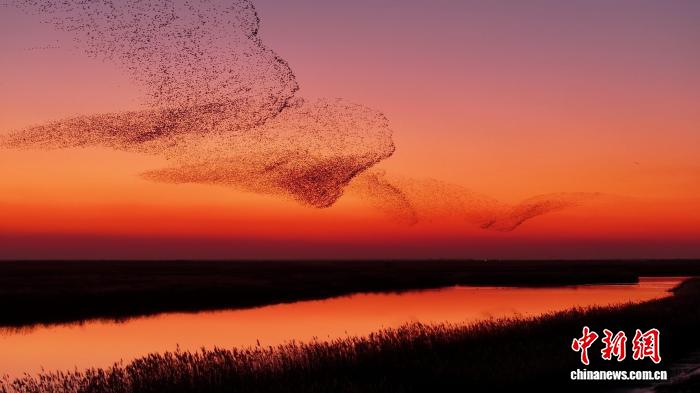
黄河三角洲“鸟浪”涌动,生态流量变经济增量
Zhong Guo Xin Wen Wang· 2025-12-06 05:05
Core Insights - The Yellow River Delta National Nature Reserve in Shandong has seen a significant increase in migratory bird populations and tourism, indicating a successful transformation of ecological benefits into economic growth [3][4] Group 1: Ecological Developments - The Yellow River Delta Reserve, covering 1,530 square kilometers, is a crucial hub for migratory birds, attracting millions annually and is recognized as an "international airport for birds" [1] - As of November 2025, over 400,000 migratory birds have been recorded in the reserve, marking a 30% increase compared to the previous year [3] - The number of bird species in the reserve has risen from 187 to 376, with the area becoming the largest breeding ground for the Oriental White Stork and the second largest for the Black-headed Gull [3] Group 2: Economic Impact - The increase in bird populations has led to a surge in local tourism, with over 240,000 visitors recorded at six major bird-watching sites, and hotel occupancy rates rising by over 10% [3] - The local "bird-watching economy" has been stimulated, with increased demand for transportation and related services, generating additional income for local drivers [3] - The cultural and creative industry in Dongying has seen a significant boost, with sales rising from millions to 76 million yuan, driven by the popularity of eco-themed products [3] Group 3: Community and Infrastructure Initiatives - To enhance bird-watching experiences, mobile observation stations have been established, providing amenities such as hot water and charging stations [4] - Local businesses are collaborating to offer themed accommodations and have expanded parking facilities to accommodate the influx of visitors [4] - The ecological transformation has also benefited local agriculture, with initiatives like the Yellow River crab farming receiving tailored financial support to enhance production and quality [4] Group 4: Broader Ecological Strategy - The ecological initiatives along the Yellow River are part of a larger strategy promoting green tourism, sustainable agriculture, and clean energy across the region [6] - Experts emphasize that ecological investments yield long-term benefits, creating new economic opportunities such as "bird-watching economy" and "eco-education" [6] - China is innovating in ecological product value realization, integrating ecological protection with economic development and improving livelihoods, showcasing a unique approach to global ecological governance [6]

聆听大国外交的成都足音
Si Chuan Ri Bao· 2025-12-05 22:52
Core Viewpoint - The meeting between Chinese President Xi Jinping and French President Emmanuel Macron in Dujiangyan highlights the significance of the ancient Dujiangyan irrigation system as a symbol of ecological wisdom and governance, reflecting the shared cultural heritage and aspirations of both nations [4][10][12]. Group 1: Historical and Cultural Significance - Dujiangyan, built over 2,000 years ago, is a large ecological water conservancy project that has benefited generations, showcasing the wisdom of ancient Chinese water management [6][8]. - The irrigation area of Dujiangyan now spans across three major river basins, covering 41 counties and benefiting over 30 million people, making it a vital agricultural resource [6][8]. - The meeting took place in a culturally rich environment, with the leaders engaging in discussions that reflect the historical and cultural ties between China and France [12][13]. Group 2: Governance and Ecological Wisdom - The principles of water management discussed by the leaders emphasize the importance of harmonizing human activities with nature, which is crucial for sustainable governance [8][10]. - Xi Jinping noted that effective governance is akin to effective water management, highlighting the interconnectedness of these concepts [10][11]. - The dialogue also touched upon strategic ideas such as innovation, coordination, and sustainable development, which are essential for modern governance [11]. Group 3: Diplomatic Relations - The friendly exchanges between the two leaders serve to strengthen diplomatic ties and mutual understanding, reflecting the independent spirits of both nations [12][13]. - The cultural exchange during the meeting, including local tea and traditional seating, symbolizes the blending of Chinese and French cultures [12][13]. - This meeting is seen as a significant moment in the ongoing relationship between China and France, marking a step forward in their diplomatic engagement [4][10].

省黄河流域生态保护和高质量发展领导小组召开会议 刘宁主持并讲话 王凯出席
He Nan Ri Bao· 2025-12-05 10:41
Core Viewpoint - The meeting focused on the ecological protection and high-quality development of the Yellow River Basin, emphasizing the importance of implementing the spirit of the 20th National Congress and the directives from General Secretary Xi Jinping regarding ecological protection and development strategies [3][4]. Group 1: Strategic Emphasis - The geographical and hydrological complexity of Henan necessitates prioritizing the governance of the middle and lower reaches of the Yellow River [3]. - The strategy emphasizes "protection first, governance second," aiming to create a harmonious relationship between people and nature while ensuring the Yellow River benefits the populace [3]. Group 2: Key Initiatives - The plan for the 14th Five-Year Plan period includes focusing on flood prevention, water resource utilization, and the protection and promotion of Yellow River culture [4]. - The approach will prioritize water conservation, systematic governance, and the construction of a modern water network to enhance water security [4]. Group 3: Environmental Protection and Development - The meeting highlighted the need for comprehensive pollution prevention and ecological restoration, advocating for a collaborative approach to environmental governance [4]. - The relationship between ecological protection and high-quality development is crucial, with a focus on modern agricultural development and the establishment of a new energy system [4]. Group 4: Action Plans - The meeting reviewed the implementation of the "Three-Year Action Plan for Ecological Protection and High-Quality Development of the Yellow River Basin (2025-2027)" and discussed the planning of tasks for the 14th Five-Year Plan period [5].
打造观察大变局中国叙事样本 《这就是中国》300期研讨会在上海举行
Jie Fang Ri Bao· 2025-11-30 02:25
Core Viewpoint - The seminar on "The Power of Chinese Discourse" marks the 300th episode of the program "This is China," which has been exploring China's model, path, and system for nearly seven years, aiming to construct a Chinese narrative and promote the "Four Confidences" to a global audience [1][2]. Group 1 - The program has focused on the "unprecedented changes in a century," successfully predicting shifts in international dynamics and geopolitical developments [2]. - It employs a historical perspective to analyze current global events, revealing Western cognitive warfare tactics and deconstructing Western narratives [2]. - The program addresses the process of Chinese-style modernization and global governance issues, providing Chinese answers to contemporary global questions [2]. Group 2 - The program plans to innovate its discourse by inviting more participants into dialogues and showcasing China's modernization efforts in various locations [3]. - A special episode was recorded on the Guizhou Huajiang Grand Canyon Bridge, highlighting major national projects and the grandeur of Chinese-style modernization [3]. - Future plans include expanding the program's international reach and enhancing its presence in the global discourse arena, allowing more audiences to understand both China and the world [3].
省政协召开“深度挖掘秦岭的生态和人文价值”专题协商会
Shan Xi Ri Bao· 2025-11-25 23:02
Core Viewpoint - The meeting emphasizes the importance of exploring and utilizing the ecological and cultural values of the Qinling Mountains as a political and historical responsibility, as well as a necessity for high-quality development in Shaanxi province [2]. Group 1: Ecological and Cultural Value - The exploration and utilization of Qinling's ecological and cultural values are seen as essential for protecting the heritage of Chinese civilization and promoting high-quality development in Shaanxi [2]. - The meeting calls for a strong political commitment to protect the Qinling Mountains, viewing it as a vital part of the Chinese nation's heritage [2]. Group 2: Development Strategies - The "Two Mountains" concept is highlighted, focusing on maintaining ecological boundaries and fostering green industries to create a harmonious environment where ecology, industry, and community prosperity coexist [2]. - The need to leverage cultural advantages to enhance historical continuity, create cultural identities, and promote the integration of culture and tourism is emphasized [2]. Group 3: Collaborative Efforts - A call for a unified approach to governance, monitoring, ecological compensation, and social participation is made to foster a strong societal commitment to protecting the Qinling Mountains [2]. - The establishment of a comprehensive monitoring and regulatory system is proposed to enhance ecological safety and ensure effective protection of the region [3].
林下经济、林草产业纳入“十五五”规划建议,为什么会受到如此多的关注?
Ren Min Ri Bao· 2025-11-24 05:40
Group 1 - The core viewpoint emphasizes the importance of developing the under-forest economy and strengthening the forestry and grass industry, as highlighted in the "14th Five-Year Plan" and the government work report [1] - By 2024, the total output value of the national forestry and grass industry is projected to reach 10.496 trillion yuan, with four pillar industries exceeding one trillion yuan each: wood processing, economic forests, forest tourism, and the under-forest economy [1] - The development of the under-forest economy and forestry industry is seen as a crucial approach to promote rural revitalization and the transformation of the "Two Mountains" concept [1] Group 2 - The article discusses the challenges of ecological product value realization, including difficulties in measurement, collateralization, trading, and monetization, which have been addressed since the 18th National Congress of the Communist Party [1] - The successful development of the under-forest economy and forestry industry is attributed to innovative development concepts and methods that enhance green development [1] - The article highlights the need for a green transformation of development methods and the promotion of a green and healthy lifestyle to strengthen ecological security and enhance green development momentum [1] Group 3 - The article notes that the transition to green low-carbon development has faced challenges, including inertia from extensive development models and immature mechanisms for green development [2] - The realization of ecological product value is essential for the sustainability of green development, with various regions implementing measures to quantify and trade ecological service values [2] - Continuous optimization of economic policies supporting green low-carbon development is necessary to provide strong backing for green lifestyles and development methods [2] Group 4 - The article identifies existing deep-seated contradictions in green development, such as the need for improved carbon market trading scale and activity [3] - The process of addressing these issues is viewed as a pathway for development, with a focus on deepening reforms and overcoming bottlenecks during the "14th Five-Year Plan" period [3] - The article emphasizes the growing importance of green production and lifestyle, with the green low-carbon circular economy becoming increasingly robust [3]
从劣V类到Ⅲ类,济南白云湖重现“江北明珠”风采
Zhong Guo Huan Jing Bao· 2025-11-22 05:27
Core Viewpoint - The transformation of Baiyun Lake from an ecologically degraded area to a thriving national wetland park is attributed to systematic ecological protection and restoration efforts by the local government, which include pollution control, habitat restoration, and biodiversity enhancement [1][3][5]. Group 1: Ecological Restoration Efforts - Baiyun Lake's water quality improved from Class V to Class III between 2006 and 2025, with significant biodiversity increases, including 145 bird species and 223 plant species [1][6]. - The local government has invested 124.27 million yuan in flood control and drainage projects, clearing 566,000 cubic meters of sediment and restoring 20,000 mu of wetland area [6][7]. - A total investment of 350 million yuan has been allocated for the comprehensive cleanup of 1,544 fish ponds around the lake, restoring wetland areas to over 26,000 mu [7]. Group 2: Pollution Control Measures - The local government has shut down over 2,600 illegal plastic recycling operations around Baiyun Lake, addressing significant pollution sources [4][5]. - Agricultural practices have been adjusted to reduce chemical fertilizer and pesticide use, thereby mitigating nutrient pollution in the lake [4][5]. - A comprehensive management system has been established to monitor and enforce environmental regulations, ensuring ongoing protection of the wetland ecosystem [9][10]. Group 3: Community Engagement and Education - The Baiyun Lake National Wetland Park has implemented educational programs and community activities to raise awareness about wetland conservation, reaching over 15,000 participants [10][14]. - A reporting mechanism has been established to encourage public involvement in protecting the wetland from harmful activities [10][14]. - The park management has focused on integrating ecological tourism and educational initiatives to foster a deeper connection between the community and the wetland environment [10][14].
王晓在商洛市督导检查河长制等工作
Shan Xi Ri Bao· 2025-11-21 00:38
Group 1 - The article discusses the inspection and guidance by Wang Xiao, the Executive Vice Governor of the province, on various ecological and environmental protection initiatives in Shanzhou City, including the Danjiang River Long-term Management and the rectification of issues raised by the Central Ecological Environmental Protection Inspection [1][2] - Wang Xiao emphasized the importance of implementing the spirit of the 20th National Congress of the Communist Party and the directives from Xi Jinping during his visits to Shaanxi, focusing on enhancing the ecological environment protection of the Qinling Mountains and ensuring the quality of the Danjiang water ecosystem [2] - The article highlights the need for effective risk prevention and the exploration of mechanisms to achieve new progress in the national ecological product value realization pilot program, as well as the importance of rectifying issues and promoting long-term protection systems for the Qinling Mountains [2] Group 2 - The article outlines the various locations visited by Wang Xiao, including the Shanzhou District and the ecological restoration sites, where he engaged with local officials and business leaders to gather opinions on ecological protection and development during the 14th Five-Year Plan period [2] - Wang Xiao called for a comprehensive approach to ensure stable growth, safety production, and energy supply during the winter, while also addressing forest and grassland fire prevention [2] - The article stresses the need for a systematic and legal approach to address illegal exploration activities in the Qinling region, ensuring a balance between high-quality development and safety [2]
“公园乡村”是什么样的?浙江云和为山区县“两山”转化提供了样本
Zhong Guo Huan Jing Bao· 2025-11-21 00:19
Core Insights - Zhejiang province, as the origin and pioneer of the "Two Mountains" concept, has integrated high-quality development with high-level protection over the past two decades, exemplified by Lishui City's Yunhe County, which has achieved significant ecological and economic outcomes [1] Group 1: Ecological Foundation - Yunhe County prioritizes ecological resource protection as the foundation for the "Two Mountains" transformation, establishing a comprehensive ecological protection system through ecological planning, digital remediation, and systematic restoration [2] - The county has developed a quantitative standard system with 127 indicators across 30 categories to coordinate ecological, service, cultural, and economic development [2] - The forest coverage rate in Yunhe County has reached 81.29%, and the surface water quality compliance rate is 100% [1] Group 2: Ecological Restoration - The county has implemented integrated protection and restoration projects, restoring over 5,000 acres of terraced fields and reducing the abandonment rate from 65% in 2016 to 3.3% [3] - Innovative agricultural practices such as "rice + snail" and "rice + fish" have been adopted to achieve ecological and economic benefits [3] Group 3: Economic Transformation Mechanisms - Yunhe County has established the first "Two Mountains Bank" in the country, offering "Two Mountains Loans" that integrate ecological credit as a prerequisite for financial support [4] - By selling the first "ecological land" in the country, the county has developed a model that combines economic output value with ecological environment appreciation [4] - As of March 2025, loans for Yunhe snow pears have reached a total credit of 312 million yuan, with 143 million yuan disbursed [4] Group 4: Ecotourism and Industry Integration - In 2024, the Yunhe terraced scenic area is expected to receive over 1.2 million visitors, generating tourism revenue of 250 million yuan [5] - The terraced fields have been approved as a 5A scenic area, with 285,800 visitors during the National Day and Mid-Autumn Festival holidays in 2025, resulting in tourism consumption of 137 million yuan [5] Group 5: Park Village Development - Yunhe County has established eight "Park Villages" as demonstration sites, with per capita disposable income for rural residents projected to reach over 22,400 yuan in 2024 [6] - The county has invested 87 million yuan in 2023 for 28 projects, leading to a 60% increase in collective operating income for villages [7] Group 6: Long-term Operation Mechanisms - The county employs an EPCO model for project management, enhancing efficiency and providing job opportunities for villagers [8] - A special fund for operations has been established, with over 100 million yuan allocated for "farm stay" loans, promoting the gathering of technology, capital, and talent in rural areas [8]