
产业空心化

Search documents
抢人!厦门,出王炸了
城市财经· 2025-06-12 03:32
Group 1 - Xiamen has significantly relaxed its household registration policies, removing requirements for education and housing for residents [5][14] - The new policy allows individuals with stable employment and at least six months of social security contributions to settle in Xiamen, both on the island and off [11][13] - The social security contribution period for settling on the island has been reduced from five years to two years [12][13] Group 2 - The relaxation of household registration is part of a broader trend in response to declining population growth across the country [19][20] - Xiamen's population growth has been declining, with only 1.9 million new residents in 2023, down from 2.8 million in 2022 [35][36] - The city aims to enhance its population competitiveness by attracting more residents through these policy changes [20][22] Group 3 - Xiamen faces challenges of industrial hollowing out, with a declining proportion of the secondary industry and an increasing reliance on the tertiary sector [48][51] - The city's industrial output has decreased, with the total industrial output value dropping from 831.33 billion in 2022 to 772.68 billion in 2023 [56] - Xiamen's only two trillion-yuan industries are underperforming compared to other major cities, highlighting the need for industrial revitalization [61][65] Group 4 - The city has implemented various initiatives to attract talent, including free accommodation for recent graduates and policies allowing homebuyers to obtain residency [43][44] - The ultimate goal of these policies is to support industrial upgrading, which is essential for economic recovery and population attraction [92][93] - Xiamen's economic future relies on revitalizing its industries to create high-paying jobs and sustain the housing market [90][92]


“印度造”成为日本进口车的主角
日经中文网· 2025-06-05 07:58
Core Viewpoint - The Japanese import car market is undergoing significant changes, with Suzuki's Jimny Nomad leading sales, indicating a shift towards vehicles produced in India that match the quality of domestic cars [1][3]. Group 1: Suzuki's Performance - Suzuki's import car sales in Japan reached 3,990 units in April, an increase of 8,300% year-on-year, surpassing Mercedes-Benz and BMW [3]. - The Jimny Nomad, a five-door version of the popular Jimny, received overwhelming demand, with orders exceeding 50,000 within four days of its launch [3]. - Suzuki aims to develop India as an export base, planning to increase annual production capacity to 4 million units by 2031, with an investment of 1.2 trillion yen in the production system [3]. Group 2: Honda's Growth - Honda's import car sales in Japan from January to April reached 16,720 units, a 65% increase year-on-year, with the WR-V SUV contributing to this growth [4]. - The overall sales of Japanese cars imported from overseas increased by 33% in the same period, reaching 35,269 units, matching levels not seen since 1995 [4]. Group 3: Industry Implications - The rise in imported vehicles, particularly from India, poses a risk of hollowing out Japan's domestic automotive industry, as local production investments face challenges due to a shrinking market and increased tariff risks [5]. - Japanese automakers are at a crossroads, with companies like Toyota emphasizing the need to maintain domestic production targets amidst these changes [5].

中美日一季度GDP差距断崖,美国7.32万亿,日本1.02万亿,中国呢
Sou Hu Cai Jing· 2025-06-04 10:05
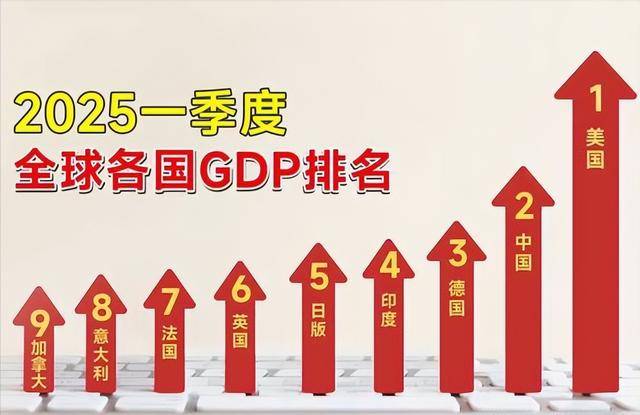
Economic Overview - The GDP data for Q1 2025 shows the United States leading with a GDP of $7.32 trillion, followed by China at $4.44 trillion, Germany at $1.14 trillion, and Japan at $1.02 trillion [4][3][19] - The U.S. economy experienced a quarter-on-quarter contraction of 0.2% to 0.3%, marking the first decline in three years, while China's GDP grew by 5.4% year-on-year, the highest growth rate among major economies [3][19] United States Economic Analysis - The U.S. economy's GDP of $7.32 trillion reflects a significant figure, but it is accompanied by a 0.3% quarter-on-quarter shrinkage [4][3] - A surge in imports by 41% in Q1, driven by previous tariffs, temporarily boosted GDP but resulted in inventory accumulation, which negatively impacted GDP by 4.8 percentage points [7] - The U.S. federal government recorded a deficit of $700 billion in Q1, with total debt reaching $36 trillion, which is approximately 140% of GDP [9][11] Japan Economic Analysis - Japan's GDP for Q1 was approximately $1 trillion, but it faced a quarter-on-quarter decline of 0.2%, marking the first negative growth in four quarters [11][14] - The Japanese economy has been adversely affected by international trade issues, particularly the U.S.-China trade war, leading to increased export costs and reduced profits for about 10% of companies [14][16] - Rising prices, such as a 60% increase in rice prices, have not translated into increased consumer spending, resulting in a decline in exports and a drop in GDP [16][18] China Economic Analysis - China's GDP growth of 5.4% in Q1 is attributed to the robust development of green energy, with renewable energy installations accounting for 90% of new capacity [21][19] - The digital economy also saw a significant increase, with a 9.4% year-on-year revenue growth, driven by emerging technologies like live-streaming and AI [21][23] - Despite a 4.6% increase in retail sales, there are concerns about real estate risks and income disparity, which may hinder domestic consumption [23][25] - China is transitioning from labor-intensive industries to technology-driven sectors, achieving notable progress in areas like new energy vehicles and semiconductors [25][29]
中美互降关税才过几天,美国又卷土重来,100%关税选项被摆上桌面
Sou Hu Cai Jing· 2025-05-25 04:25
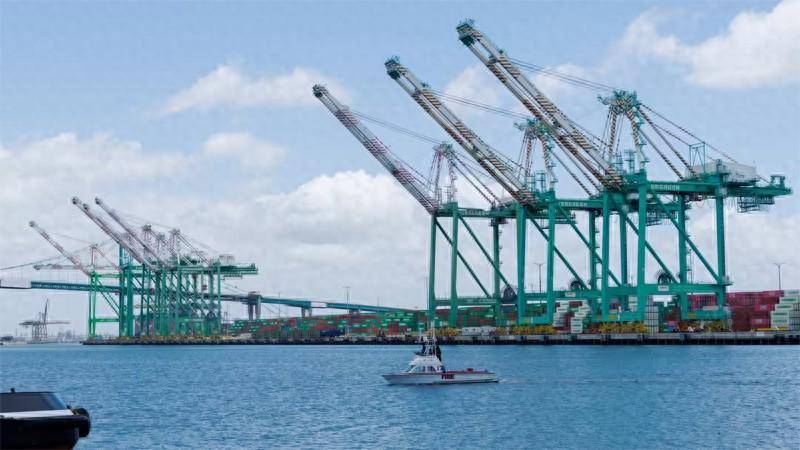
Group 1 - The US government is considering imposing a 100% tariff on Chinese bridge cranes, which could increase port costs by $300 million [1] - The proposed tariffs target bridge cranes and cargo handling equipment, aiming to reduce reliance on Chinese exports [1][3] - The US has been experiencing industrial hollowing since the 1980s, leading to a lack of domestic production capacity for alternative products [3][5] Group 2 - 80% of port cranes in the US are manufactured in China, indicating a significant dependency on Chinese manufacturing [3] - Major US ports, including those in South Carolina and Long Beach, have already signed contracts for Chinese cranes, which would incur additional costs exceeding $130 million due to tariffs [3] - South Korean companies are attempting to fill the gap by promising to transfer crane technology to the US, but their production capacity is only 5% of China's, and they still rely on Chinese supply chains for key components [3][6] Group 3 - The US tariffs are unlikely to disrupt China's dominance in the global port equipment market, where it holds a 70% market share [6] - China's crane manufacturing benefits from technological innovation and cost efficiency, with prices being 60% lower than comparable US products [6] - The US's attempts to decouple from China could lead to a 30% increase in global shipping costs, impacting inflation in Western consumer goods [6][8] Group 4 - China is actively working on digital trade rules with RCEP members and enhancing regional supply chain integration through the Belt and Road Initiative [8] - The US's unilateral tariff actions are increasingly isolating it on the global stage, highlighting the struggles of a superpower facing industrial decline [8]
中国供应链发展全景视图与趋势展望
China Securities· 2025-05-16 07:20
Policy Framework - China has established a comprehensive supply chain security policy system since 2012, covering both macro and industry-specific levels[2] - The government emphasizes self-control and efficiency in supply chains, with significant tax incentives for high-tech enterprises and support for digital transformation of SMEs[2] Economic Impact - In 2024, China's total import and export volume is projected to reach $6.16 trillion, maintaining its position as the world's largest trading nation[3] - China's manufacturing output accounts for 31.6% of global production, significantly surpassing the combined output of the second to fifth largest manufacturing countries[45] Supply Chain Dynamics - China's reliance on Europe and the U.S. has decreased, while deepening cooperation with Japan and South Korea, and forming a mutual dependency with ASEAN[3] - High-value industries still exhibit a pattern of strong assembly capabilities but weak core technologies, indicating a need for further development in high-end sectors[3] Strategic Initiatives - Short-term strategies focus on cost control, technological innovation, and market diversification to mitigate external shocks[3] - Long-term goals include building overseas supply chain networks and optimizing global industrial layouts to enhance resilience[3] Financial Support - The government has implemented various financial policies to support supply chain financing, including tailored financing strategies for SMEs[22] - In 2025, the central government's science and technology expenditure is planned to increase by 10% to approximately $63.5 billion, focusing on foundational research and strategic technology tasks[21]
所有出海话题的根本点,就是中美博弈
吴晓波频道· 2025-05-10 17:04
点击图片▲立即试听 编者按:"我们应该是所有自媒体中,与制造业、供应链渊源最为密切的了。"在 5月7日,"出海,在路上"第二场直播中,吴老师这样感慨道,十年前他的文章 《去日本买只马桶盖》出圈全国,马桶盖初看是消费行为,深层次是中国制造与 供应链的命题。 这天的直播话题是"供应链生死局",对普通人而言,这又是一个极为艰深专业的 命题。但在吴老师看来,这一系列出海相关的直播,最大的意义在于"为大家提出 一个问题"。近年来,我们在企业出海方面积累颇深,从专家的理论和洞察,到自 身的一线调研,我们希望能为在当前扑朔迷离的不确定性中,提供一系列的助 力。 与吴老师探讨这一话题的,是 20多年专注研究全球产业创新与供应链,致力于用 全球视角看待中国产业的全局变化的林雪萍老师,以拥有超过20年全球供应链管 理、战略、流程与数字化转型经验,曾为联想主导供应链数字化升级的徐赫。 以下是本次对话的28个核心观点,分享给大家。 整理 / 巴九灵(微信公众号:吴晓波频道) 66 外贸出海和企业出海最大的区别在于,前者 是单要素出海,企业出海是全要素出海,从设备、 技术、人才、资本、商业模式都要出去。 吴晓波频道||周年庆 出海在线 ...

日美就汽车贸易展开博弈:日本一边和美谈判,一边紧盯汽车出口
Huan Qiu Shi Bao· 2025-05-05 22:46
【环球时报记者 倪浩 环球时报驻日本、美国特约记者 王天晴 冯亚仁 环球时报特约记者 孙默】编者的话:美国政府当地时间5月3日正式启动对进 口关键汽车零部件加征25%附加关税的措施。日本首相石破茂表示,美国政府对进口汽车零部件加征关税的举措"令人非常遗憾",日方将采取一 切可能的措施予以应对。此前,石破茂将美国关税政策称为日本"国难",而倚重美国市场的日本汽车产业也对特朗普筑起的贸易高墙忧心忡忡。 据日本广播协会网站报道,石破茂已经听取了经济再生担当大臣赤泽亮正就日美第二轮关税谈判的汇报,并计划为5月中旬举行的下一轮日美关税 谈判做准备。面对国内外的压力,日本同美国如何就汽车贸易进一步博弈引发广泛关注。 " 日本车企每小时损失 100 万美元 " 尽管面对国内外针对关税或扰乱供应链并推高汽车售价的呼声,美国政府于4月底对在美生产汽车的制造商实施为期两年的进口零部件的关税减 免,但据《日本经济新闻》5月4日报道,美国政府的关税依然会给日本汽车制造商带来更沉重的成本负担。随着零部件供应商的涨价压力增大, 价格不可避免地会转嫁到成品车上。这对此前长期在全球布局零部件供应网络的日本汽车制造商来说是一个重大打击。根据日 ...



澄清三个误区:中国转型消费型社会需要合力
Jing Ji Guan Cha Bao· 2025-05-03 04:55
Core Viewpoint - The article emphasizes the need for China to transition from a production-oriented society to a consumption-oriented society to stimulate domestic demand and economic growth, especially in light of increasing external pressures and trade tensions [1][2][3]. Summary by Sections Transition to a Consumption-Oriented Society - The shift to a consumption-oriented society does not imply a reduction in production but rather a more balanced and sustainable relationship between consumption and production [2]. - Historical trends show that as economies develop, they typically transition from a production-oriented focus to a consumption-oriented one, with consumption's share of GDP following a U-shaped curve [4]. Misconceptions About Economic Growth - A common misconception is that increasing consumption will lead to a decline in economic growth; however, if consumer demand is weak, business investment will also decline, leading to slower economic growth [5]. - Data indicates that high consumption ratios do not necessarily correlate with lower economic growth rates, as evidenced by various countries with differing consumption shares and growth rates [7][8]. Current Economic Context in China - China's per capita GDP is approximately $12,000, similar to South Korea's level in 2000, suggesting significant room for growth in both consumption and investment [11]. - The current economic pressure in China is partly due to underutilized consumer demand, which can be addressed by enhancing consumption growth without sacrificing overall economic growth [11]. Role of Government and Policy Changes - The government needs to adjust the income distribution system and reform fiscal policies to encourage consumption, including increasing the labor income share in GDP [19][20]. - A proposed plan could aim for a doubling of national income over ten years, which would significantly boost consumer spending and position China as the largest consumer market globally [19]. Corporate Responsibility - Companies should enhance employee compensation and focus on quality and brand competition to foster a consumption-oriented environment [23][24]. - The emphasis should be on improving operational efficiency and reducing excessive competition, which can lead to better consumer experiences and higher overall consumption [24].