
农业科技创新

Search documents
推动农业科技创新迈上新台阶
Jing Ji Ri Bao· 2026-01-12 22:00
Core Insights - The article emphasizes the need for targeted measures to address development bottlenecks in agricultural technology innovation, focusing on strengthening technological foundations, improving conversion mechanisms, and implementing region-specific strategies [1][3]. Group 1: Agricultural Technology Innovation - China has prioritized agricultural technology innovation to ensure food security, with significant achievements in the application of technology to enhance agricultural productivity [2]. - The proportion of independently bred crop varieties has exceeded 95%, contributing to food security [2]. - The comprehensive mechanization rate for major crops has surpassed 75%, with increasing application of technologies like Beidou navigation and intelligent control in agricultural machinery [2]. Group 2: Challenges in Agriculture - Despite advancements, challenges remain, including insufficient technical support, fragmented industrial models, and low conversion rates of scientific achievements [3]. - High-end seed varieties are still heavily reliant on imports, and there is a lack of suitable agricultural machinery for hilly areas [3]. - The promotion of green technologies faces high costs and inadequate supporting services, while the collaboration between academia and industry is not well established [3]. Group 3: Strategic Recommendations - Strengthening core technology research is essential, focusing on breeding innovation systems and utilizing cutting-edge technologies like gene editing to develop superior crop varieties [4]. - A robust technology conversion system is needed to bridge the gap between research and practical agricultural applications, encouraging collaboration between universities, research institutions, and agricultural enterprises [4]. - Enhancing local agricultural development strategies is crucial, promoting high-yield and eco-friendly technologies in major grain-producing areas while supporting unique regional industries [5].
科技小院,从中国创新走向全球推广
Ren Min Ri Bao· 2026-01-12 07:46
Core Insights - The "Science and Technology Small Courtyard" model integrates scientific innovation, social service, and talent cultivation in agriculture, expanding its services to countries like Malawi, Zambia, and Brazil since 2019, leveraging China's successful experiences to stimulate local agricultural development [1][2] Group 1: Malawi Case Study - The Malawi-China Science and Technology Small Courtyard project aims to transform local agriculture through hands-on training and technical support, significantly improving crop yields and food security for local farmers [3][4] - The project has trained over 100 agricultural students from 13 African countries, establishing six technology courtyards that impact 240 villages and 200,000 acres of farmland [3][4] - Local farmers, such as Joyce Phiri, have seen their maize yields quadruple, achieving self-sufficiency and surplus for sale, demonstrating the project's effectiveness in enhancing agricultural practices [3] Group 2: Zambia Case Study - The Zambia Soybean Technology Small Courtyard has increased soybean yields by nearly 40%, benefiting local farmers through improved agricultural techniques and practices [4][5] - The project focuses on a dual approach of cultivating edible fungi and improving soybean varieties, adapting to the local highland tropical climate [5][6] - The courtyard has established a 150-acre soybean demonstration base and trained over 300 individuals, creating a network of skilled agricultural technicians [6] Group 3: Brazil Case Study - The China-Brazil Family Agriculture Mechanization Technology Small Courtyard has significantly enhanced agricultural efficiency, reducing production costs by 60% to 80% and shortening operational time by 80% for local farmers [7][8] - The project has implemented two operational courtyards, focusing on mechanization needs and providing tailored training and technical support to local farmers [7][8] - The initiative fosters cultural exchange and collaboration between Chinese and Brazilian agricultural students, enhancing local agricultural practices and building a skilled workforce [9]
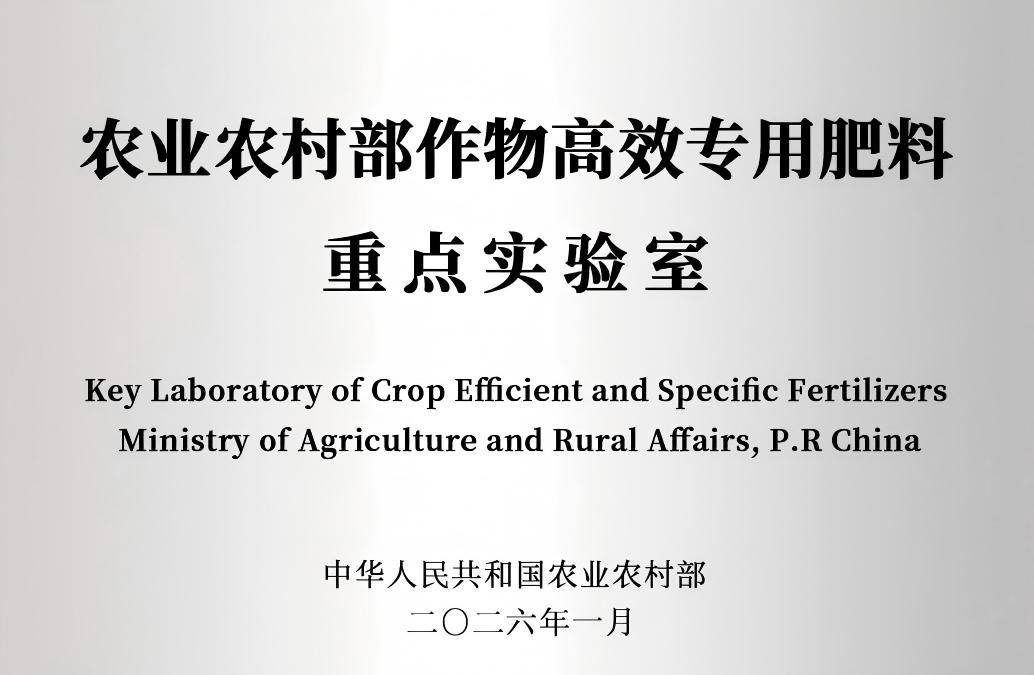
肩负国家使命,构筑创新高地,新洋丰获批建设农业农村部作物高效专用肥料重点实验室
Zhong Guo Jing Ji Wang· 2026-01-08 13:23
Group 1 - New Yangfeng Agricultural Technology Co., Ltd. has been approved to establish the "Key Laboratory of High-Efficiency Specialized Fertilizers" by the Ministry of Agriculture and Rural Affairs, marking a significant breakthrough in agricultural technology innovation platform construction [1][2] - The laboratory aims to address national strategic needs such as increasing grain production, improving soybean and oilseed quality, and promoting green and low-carbon agriculture, creating a comprehensive innovation system [2][8] - The establishment of the laboratory signifies New Yangfeng's deep integration into the national agricultural technology innovation system, enhancing its role in promoting high-quality agricultural development [2][8] Group 2 - New Yangfeng has transformed from a near-bankrupt local enterprise into a leading national phosphate fertilizer company, driven by a long-term commitment to innovation and substantial R&D investment [4] - The company has built a modern R&D center and pilot base exceeding 10,000 square meters, equipped with high-value instruments and a new R&D building to support a team of nearly 700 researchers [4][6] - New Yangfeng collaborates with over 20 research institutions, participating in significant national and provincial projects, achieving multiple awards for technological progress and contributing to the establishment of national and industry standards [7][8]


都市农业强市的活力和蓝图
Zheng Zhou Ri Bao· 2026-01-08 00:59
Core Viewpoint - Zhengzhou is focusing on building a modern agricultural city, emphasizing food security, technological innovation, and industrial upgrading to promote high-quality agricultural development [2][3][9] Group 1: Food Security - Zhengzhou's grain production capacity has steadily improved, maintaining an annual grain output of over 1.5 million tons, with a projected increase to 1.518 million tons in 2024, reflecting a 1.2% annual growth since 2020 [3] - The city has stabilized its grain planting area at approximately 4.46 million acres, ensuring a total grain output of over 2.9 billion pounds [3] - During the 14th Five-Year Plan, the supply of vegetables, fruits, and meat products has remained stable, with annual vegetable production around 2 million tons and meat, egg, and milk production around 250,000 tons [3] Group 2: Technological Empowerment - Zhengzhou is enhancing agricultural support through technology, focusing on smart agriculture, facility agriculture, and efficient agriculture, establishing a collaborative innovation framework [4][5] - The city has seen the widespread application of advanced technologies such as irrigation robots and drones, with over 50 agricultural technology enterprises and several research centers established [5] - The agricultural sales revenue is projected to reach 5 billion yuan in 2024, driven by the implementation of the seed industry revitalization plan [5] Group 3: Agricultural Industry Chain Extension - The Central Plains Modern Food Industry Park is set to boost the pig industry, with an expected annual output of 2.8 million pigs upon full completion [6] - Zhengzhou is promoting agricultural industrialization clusters, enhancing deep processing of agricultural products, and aiming for an agricultural processing output value exceeding 180 billion yuan in 2024 [6][7] - The city is implementing a plan to support the growth of leading agricultural enterprises, targeting the cultivation of over 100 key enterprises by 2030 with a combined revenue exceeding 350 billion yuan [7] Group 4: Strengthening Specialty Agriculture - Zhengzhou is optimizing its agricultural specialty layout, focusing on developing green and organic product brands, with significant contributions from strawberry farming in Zhongmu [8] - The city is promoting rural tourism and integrating agriculture with tourism, with plans to develop over 400 beautiful rural areas and 12 premium leisure tourism routes by the end of 2025 [8][9] - The agricultural development strategy includes creating a vibrant agricultural landscape that supports farmer income and enhances rural living conditions [9]
中经评论:以“藏粮于技”筑牢大国粮仓
Zhong Guo Jing Ji Wang· 2026-01-05 02:33
Group 1 - The core viewpoint emphasizes that enhancing agricultural comprehensive production capacity and quality efficiency fundamentally relies on technology [1] - The Central Rural Work Conference analyzed the current challenges facing the "three rural issues" and outlined the deployment for agricultural work until 2026 [1] - In 2025, China's grain production faced various natural disasters but still achieved a high yield increase of 16.75 billion jin compared to the previous year [1] Group 2 - The article highlights the importance of self-reliance in ensuring food security for China's 1.4 billion people, with a focus on increasing grain production capacity [2] - It stresses the need to implement key agricultural technology breakthroughs and effectively apply scientific achievements [2] - The article mentions that in 2025, Northwest A&F University approved 12 new wheat varieties, marking significant advancements in breeding technology [2] Group 3 - The current agricultural machinery ownership in China exceeds 200 million units, with over 2.2 million applications of Beidou terminal devices [3] - The mechanization rate of agriculture has surpassed 75%, indicating a shift in demand for agricultural machinery from non-essential to essential [3] - The article calls for enhanced agricultural talent training and recruitment to support new farmers and promote smart farming practices [3]
厚植高原沃土 激活产业动能
Zhong Guo Zheng Quan Bao· 2025-12-29 21:13
Core Viewpoint - Yunnan is leveraging its unique geographical and climatic advantages to develop highland特色 agriculture, focusing on quality and efficiency, with an aim to transform its agricultural sector into a significant economic pillar by 2024, targeting a total output value of over 2.7 trillion yuan across 14 key agricultural industries [1][2]. Industry Development - Yunnan's agricultural strategy emphasizes "specialization" and "precision," with a focus on innovative mechanisms to enhance agricultural productivity, particularly in flower, medicinal herbs, and coffee sectors [2][3]. - The province has established 39 GAP bases for medicinal herbs, aiming for a planting area of over 10 million mu and an annual output of 150,000 tons by 2027, with a projected industry value of over 200 billion yuan [3]. - The flower industry is a key highlight, with Yunnan becoming a major flower production area, achieving a planting area of 1.95 million mu and an industry value exceeding 140 billion yuan in 2024 [2]. Technological Innovation - Technological innovation is central to the high-quality development of Yunnan's特色 agriculture, with a focus on breeding innovation and the integration of research and industry [4][6]. - The province has seen significant advancements in coffee processing, with an 80% deep processing rate and a projected industry value of over 80 billion yuan by 2024 [4]. - Yunnan's agricultural research institutions are actively involved in breeding new varieties, with over 1,280 new flower varieties applied for and 800 authorized, leading the nation in this area [6]. Financial Support - Yunnan has established a diversified financial service system to support agricultural development, with a total of 439.89 billion yuan allocated for agricultural and rural development over five years [9][10]. - The province has set up a unified credit service platform to facilitate financing for agricultural enterprises, enhancing efficiency in loan applications [10]. - A 30 billion yuan equity investment fund has been established to support key agricultural industries, attracting external capital and expertise to strengthen the agricultural value chain [11]. Market Expansion - Yunnan's agricultural enterprises have reached 173,000, with a focus on brand development to enhance market presence both domestically and internationally [12]. - Companies like Betaini are expanding into Southeast Asian markets, leveraging Yunnan's resource advantages to create competitive economic benefits [12].

汗水农业向智慧农业加速迈进,今年农业科技相关企业注册量创新高
Qi Cha Cha· 2025-12-29 03:26
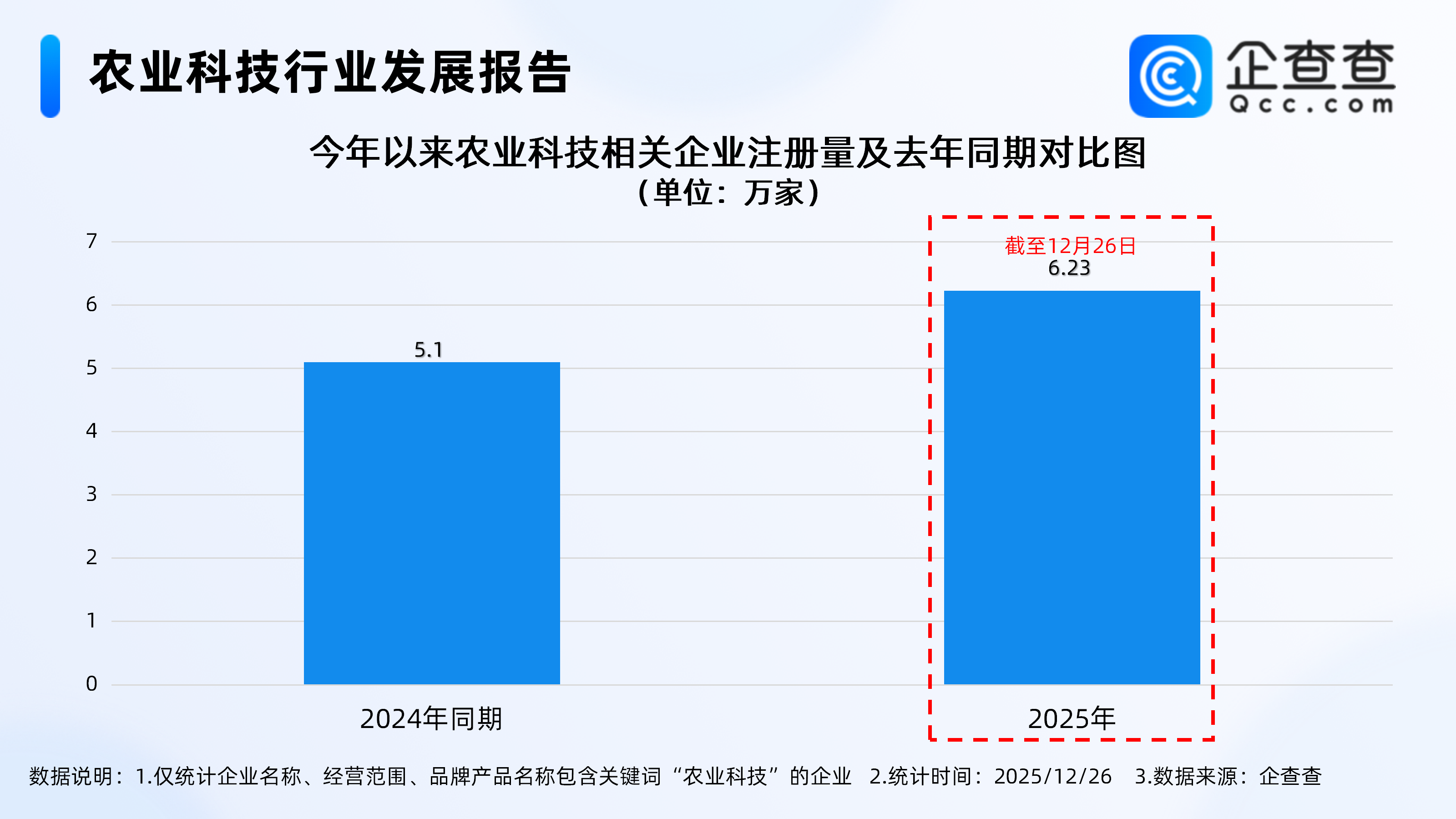
Core Viewpoint - The National Development and Reform Commission emphasizes the development of new agricultural productivity and the promotion of agricultural technology to enhance innovation and efficiency in the sector [1] Group 1: Agricultural Technology Development - The government aims to strengthen the agricultural technology innovation system and enhance the overall effectiveness of agricultural technology [1] - There is a focus on implementing actions to address shortcomings in agricultural machinery and promoting the development of high-end and regionally suitable agricultural equipment [1] - The initiative includes the construction of smart agriculture, expanding the application of big data, agricultural robots, and artificial intelligence in rural areas [1] Group 2: Agricultural Technology Enterprises - As of December 26, there are 430,000 existing agricultural technology-related enterprises in China [5][7] - The registration of agricultural technology enterprises has shown a significant increase, with 62,300 new registrations in 2023, marking a 22.12% year-on-year growth and the highest in the past decade [2][5] - The majority of these enterprises (31.94%) have been established for 5-10 years, while those established for 1-3 years and 3-5 years account for 21.29% and 18.44%, respectively [7] Group 3: Regional Distribution and Industry Classification - Agricultural technology enterprises are primarily concentrated in the East China region, accounting for 27.12% of the total [9] - Over 60% of these enterprises belong to the scientific research and technical services sector, with 65.11% classified under this category [11] - Other classifications include agriculture, forestry, animal husbandry, and fishery (22.03%) and wholesale and retail (7.39%) [11]

数览中国脉动丨科技赋能!“汗水农业”向“智慧农业”加速迈进
Xin Hua She· 2025-12-28 05:40
Group 1 - The core viewpoint emphasizes the importance of agricultural mechanization and intelligence as crucial supports for agricultural modernization, with a focus on accelerating the transition from "labor-intensive agriculture" to "smart agriculture" through technological empowerment in the entire food production chain [1] Group 2 - Current data indicates that China's agricultural machinery ownership exceeds 200 million units, with over 2.2 million units of Beidou terminal devices applied, total agricultural power exceeding 11 billion kilowatts, and a mechanization rate of over 75%, demonstrating the efficient service of agricultural machinery to production [2] Group 3 - The application of advanced technologies such as AI, IoT, and big data is increasingly prevalent in the agricultural sector, reflecting the robust development of the digital economy [4] Group 4 - Significant achievements have been made in reducing food waste during processing, with the grain processing loss rate reduced to 0.8% and transportation loss rate to 0.8‰, showcasing effective efforts in the food circulation sector [6] Group 5 - Since the 14th Five-Year Plan, China's agricultural technology innovation has reached a leading position globally, with significant improvements in the overall effectiveness of the agricultural technology innovation system and rapid breakthroughs in key core technologies [8]
神州答卷|“中原粮仓”满目新 ——河南奋勇争先推进乡村全面振兴观察
Xin Hua Wang· 2025-12-27 07:36
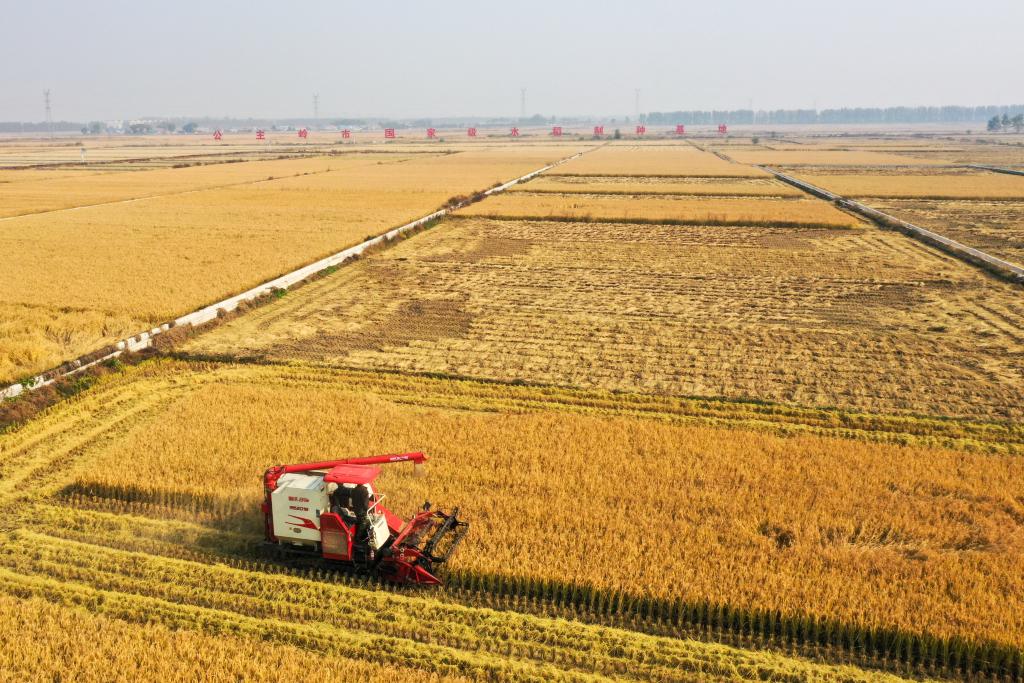
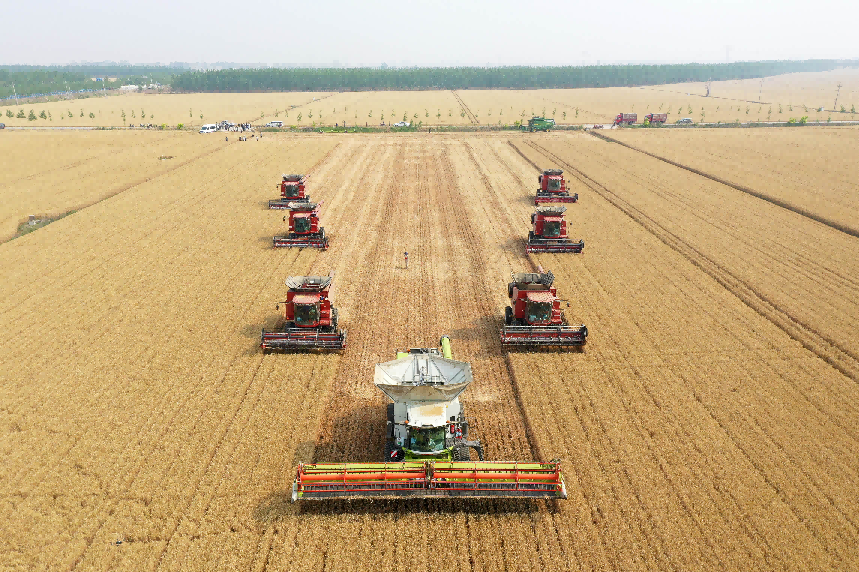
Core Viewpoint - Henan province is making significant strides in agricultural modernization and rural revitalization, focusing on enhancing grain production and establishing a robust agricultural industry to ensure food security and improve farmers' incomes [1][3][4]. Group 1: Agricultural Production and Infrastructure - Henan has maintained a grain production of over 130 billion jin for nine consecutive years, contributing to 10% of the nation's grain output with only 1/16 of the country's arable land [1][3]. - The province has implemented extensive irrigation and water management projects, including the construction of 14,000 kilometers of connected ditches and the inspection of 193,000 agricultural wells, achieving a 95% operational standard for water supply [4][6]. - In response to adverse weather conditions, Henan deployed 27,000 harvesting machines to efficiently harvest over 9 million acres of wheat within nine days, achieving increases in planting area, yield, and total production [6][9]. Group 2: Technological Advancements and Innovation - The province has adopted a "grain storage in land and technology" strategy, enhancing agricultural infrastructure and disaster resilience through the establishment of high-standard farmland and smart agricultural technologies [8][9]. - Henan has built 88.08 million acres of high-standard farmland, significantly improving its capacity to withstand agricultural disasters [9]. - The province is fostering an agricultural innovation ecosystem by establishing 14 agricultural science and technology innovation platforms, promoting research and development in biotechnology and agricultural machinery [9][10]. Group 3: Industrial Development and Value Addition - The integration of modern technology in agriculture is leading to the transformation of the agricultural sector, with companies like Henan Feitian Biotechnology Co., Ltd. processing significant volumes of corn and wheat into high-value products [12][13]. - The province is focusing on diversifying agricultural products and enhancing value chains, with initiatives to develop food processing industries and create regional brands like "Yunong Excellent Products" [13][15]. - Local governments are promoting industrial clusters that connect various stages of agricultural production, ensuring stable incomes for farmers and high-quality raw material supply for industries [13][16]. Group 4: Rural Revitalization and Income Growth - Henan is actively working to consolidate poverty alleviation efforts by developing rural industries and creating job opportunities, with initiatives like the establishment of processing parks and small enterprises in rural areas [16][17]. - The province has seen a significant increase in rural residents' disposable income, rising from 16,107 yuan in 2020 to 21,330 yuan in 2024, while narrowing the income gap between urban and rural residents [17].
年终话“三农”|“土味”变特色 激发新活力——2025年乡村富民产业发展一线观察
Xin Hua Wang· 2025-12-26 00:59
Core Viewpoint - The key to rural revitalization lies in industrial revitalization, with a focus on developing rural industries to enhance agricultural efficiency and farmer income [1] Group 1: Industry Development - The development of rural industries should be tailored to local conditions, transforming resource advantages into development advantages [3] - In Heilongjiang Province, the introduction of Angus cattle has led to a sales revenue of 625 million yuan and increased farmer income by 150 million yuan [2] - Various regions are experiencing rapid growth in their unique rural industries, such as the expansion of tea planting in Guangxi with over 400,000 acres and an estimated output value exceeding 30 billion yuan [4] Group 2: Technological Innovation - Technological advancements are crucial for the development of rural industries, as seen in the intelligent greenhouse systems in Shandong, which produce over 4.5 million tons of vegetables annually [7] - In Shaanxi, the successful aquaculture of shrimp and crabs in saline-alkali land has generated over 5 million yuan in income [5][6] - The establishment of a comprehensive agricultural technology innovation system in China includes over 800 research institutions and more than 120,000 researchers [10] Group 3: Brand Development - The establishment of unified branding for agricultural products, such as the "Caidian Lotus Root," has significantly increased market influence and value, with an annual output value of 1.8 billion yuan [12] - The "Baoshan Small Coffee" brand in Yunnan has transformed local coffee production, increasing per capita income from 8,000 yuan to 43,000 yuan through integrated development of coffee and tourism [13] - The central government's emphasis on developing rural characteristic industries and implementing brand cultivation plans aims to enhance agricultural industrialization levels [14]