
教育数字化

Search documents
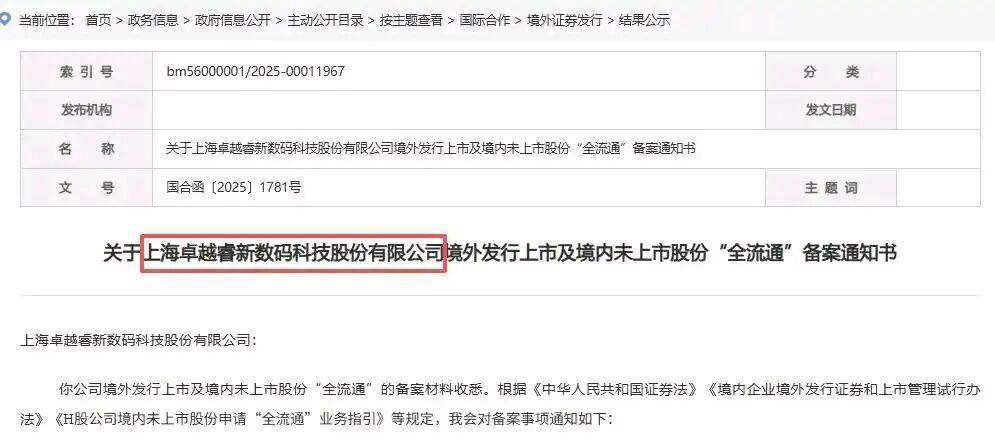
智慧树母公司获上市备案,教学数字化市场第二,市场份额3.4%
Sou Hu Cai Jing· 2025-10-21 17:03
Core Viewpoint - The approval of Shanghai Zhuoyue Ruixin Digital Technology Co., Ltd. for its Hong Kong main board listing and the full circulation of its unlisted shares marks a significant step for a leading player in the higher education digitalization sector to access overseas capital markets [1][4]. Company Summary - Zhuoyue Ruixin was established in 2008 and launched its core education brand "Wisdom Tree" in 2013, focusing on the development of digital education content and teaching services for higher education, covering the entire process of teaching, learning, practice, examination, evaluation, and management [4]. - The company holds a 3.4% market share, ranking second in China's higher education digital teaching market, and leads the digital teaching content production market with a 6.2% share [4]. - Zhuoyue Ruixin previously attempted to enter the capital market by initiating an A-share listing in 2021 but terminated the guidance agreement in April 2024, opting for the Hong Kong market instead [4]. Industry Summary - The current regulatory environment from the China Securities Regulatory Commission (CSRC) shows a differentiated approach towards overseas listings, with a generally open channel for Hong Kong listings, particularly for education-related enterprises that have completed necessary approvals [4]. - The company's fundraising plan includes investments in AI technology, cloud computing, natural language processing, enhancing customer service capabilities nationwide, and establishing a knowledge graph development center, aligning with the trend of intelligent and personalized transformation in the education digitalization industry [4]. - The listing of Zhuoyue Ruixin is seen as a potential catalyst for industry consolidation, as the higher education digitalization market is currently highly fragmented, with the top five companies holding only 12.6% of the market share [5].

加入我们 共享第十六届新华网教育论坛顶级合作权益与品牌增长机遇
Xin Hua Wang· 2025-10-15 06:50
Core Insights - The 16th Xinhua Net Education Forum has evolved into a significant platform for dialogue and collaboration in the education sector, focusing on industry challenges and innovative solutions [2][3] - The forum aims to integrate various resources, including policy interpretation, industry practices, and academic research, to foster high-quality development in education [2][5] Group 1: Forum Structure and Themes - The forum will address key issues such as AI education safety, urban-rural education balance, and industry-education integration through multiple dialogue sessions [3][5] - It features a comprehensive structure including a main forum, a smart education exhibition, and case showcases to highlight educational innovation [4][6] Group 2: Smart Education Exhibition - The smart education exhibition will present a complete ecosystem covering solutions for smart campuses, educational models, and rural education achievements [6] - The exhibition aims to provide immersive experiences and facilitate market expansion for participating companies [6] Group 3: Case Studies and Practical Solutions - A nationwide initiative for collecting innovative education cases has been launched, focusing on various categories such as educational philanthropy and digital empowerment [7] - The forum seeks to deliver practical, replicable solutions to address real-world educational challenges across different educational levels [5][7] Group 4: Collaboration and Engagement - The forum invites educational institutions and technology companies to collaborate and share new development opportunities, offering various levels of partnership benefits [8] - The event emphasizes the importance of collective efforts in driving educational progress and innovation [8][9]

2025年中国数字教育行业政策、产业链、发展规模、竞争格局及发展趋势研判:中国巨大的学生和在职人员数量为数字教育提供了广阔的市场基础[图]
Chan Ye Xin Xi Wang· 2025-10-14 00:57
Core Insights - Digital education represents a systematic transformation of traditional education through digital technologies, aiming for a comprehensive upgrade of educational resources, teaching methods, and learning environments [1][2][5] - China is advancing its digital education strategy to support personalized learning, lifelong learning, and the expansion of quality educational resources, leveraging its vast educational system [5][7] - The digital education user base in China is projected to reach 355 million in 2024, an increase of 6 million from 2023, with the market size expected to grow to 468.5 billion yuan, up by 55.2 billion yuan [5][8] Digital Education Industry Definition and Characteristics - Digital education is characterized by the use of internet, artificial intelligence, and big data to create an open, flexible, and personalized educational system, promoting educational equity and quality [2][4] - Key features of digital education include boundary-less learning, data-driven decision-making, and personalized adaptation, as highlighted in UNESCO's 2021 Global Education Monitoring Report [2][4] Current Development Status - The digital education market in China is experiencing growth, driven by the application of technologies such as AI, big data, and virtual reality, with a projected market size of 528 billion yuan by 2025 [5][8] - The user base for digital education is expected to grow steadily, reaching 368 million by 2025 [5][8] Industry Value Chain - The digital education industry value chain consists of upstream content creation and copyright management, midstream digital education service platforms, and downstream sales through various marketing channels targeting schools, training institutions, and individual learners [5][6] Development Environment and Policies - China is committed to enhancing its education system through digital transformation, as outlined in national strategies and policies aimed at improving educational resources and fostering a digital learning environment [7][8] Competitive Landscape - The digital education industry in China is characterized by leading companies dominating the market, with diverse competition in niche segments and increasing cross-industry competition [9] - Major players include 51Talk, Yuanfudao, and Alibaba, with significant company distributions in provinces like Guangdong and Beijing [9] Future Trends - Digital education is evolving towards a more personalized, equitable, and efficient model, driven by technological advancements and societal changes, focusing on lifelong learning and skill development [10]

广东省39所高校开展新文科实践创新大比拼
Zhong Guo Xin Wen Wang· 2025-10-13 07:48
Core Points - The Guangdong Province held the 2025 New Liberal Arts Practice Innovation Competition, featuring 219 projects from 39 universities [1][2] - The competition focused on key regional development issues such as national governance, language intelligence, digital education, and cultural innovation [2] - The event showcased a significant integration of disciplines, with 60% of projects involving deep cross-disciplinary collaboration [5] Group 1 - The final competition took place at South China Agricultural University, where the university won both the championship and third place [2] - Shenzhen University secured the second place with two projects, while other universities like Sun Yat-sen University and Shenzhen MSU-BIT University also received awards [2] - A total of 43 universities registered 3,700 teams for the competition, divided into four categories: literature, history, philosophy, and management [2] Group 2 - The champion project, "Liji Tong Agricultural Online Market," aimed to address the issue of increasing income for small farmers through innovative applications of artificial intelligence [5] - The competition emphasized the importance of practical outcomes, with many projects potentially transforming into tangible products [5] - The Guangdong Provincial Department of Education plans to continue promoting the New Liberal Arts initiative through policy implementation and platform development [5]

皖新传媒(601801):基本盘仍具长期韧性,看好新兴业务发力
China Post Securities· 2025-10-09 12:02
Investment Rating - The investment rating for the company is "Buy" and is maintained [1] Core Insights - The company has shown resilience in its fundamental operations despite short-term revenue pressures, with emerging businesses expected to drive future growth [4][6][7] - The company reported a decline in revenue and net profit for the first half of 2025, but a significant improvement in net profit after excluding non-recurring items [4][5] - The company is actively pursuing digital transformation and diversification strategies, which are anticipated to create new revenue streams [7][9] Company Overview - Latest closing price is 6.51 yuan, with a total market capitalization of 127 billion yuan [3] - The company has a debt-to-asset ratio of 39.7% and a price-to-earnings ratio of 18.08 [3] Financial Performance - For the first half of 2025, the company achieved operating revenue of 45.93 billion yuan, a year-on-year decrease of 11.90%, and a net profit of 6.78 billion yuan, down 17.19% [4] - The company’s core business segments, including publishing and logistics, have shown stable performance despite revenue declines [5][6] - The company expects operating revenues of 111 billion yuan, 114 billion yuan, and 118 billion yuan for 2025, 2026, and 2027 respectively, with corresponding net profits of 8.32 billion yuan, 8.97 billion yuan, and 9.42 billion yuan [10][12] Emerging Business Development - The company is focusing on digital transformation, including the establishment of new cultural landmarks and enhancing online education platforms [7] - The gaming segment has successfully launched several titles, indicating a strategic expansion into new markets [7] Shareholder Returns - The company has committed to a high dividend payout, with cash dividends and buybacks totaling 5.48 billion yuan, representing 77.71% of net profit [9]

港股异动丨在线教育股普涨 网龙一度飙涨超12%刷新阶段新高 思考乐教育涨2%
Ge Long Hui A P P· 2025-09-29 03:57
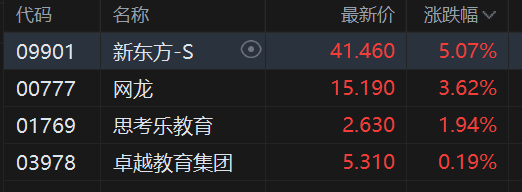
Group 1 - The online education sector in Hong Kong has seen a general increase, with stocks like NetDragon rising over 12% to reach a new high, New Oriental up over 5%, and Thinking乐 Education increasing by 2% [1] - Recent positive developments in online education are attributed to policy support, technological empowerment, and industry regulation, including the significant impact of the "14th Five-Year Plan" for educational digitalization [1] - The "County High School Revitalization Action Plan" is promoting the allocation of digital resources to county-level schools, providing a long-term and stable growth outlook for the industry [1] Group 2 - Daiwa has raised the target price for New Oriental to HKD 49, anticipating increased shareholder returns and noting improvements in K-9 student retention rates for the autumn term [1] - NetDragon is recognized for its stable cash-generating business and its active use of AI technology to empower its second growth curve in education, with current market focus on its AI effectiveness and overseas expansion [1] - Thinking乐 Education received a boost this month with Fidelity International and its affiliates increasing their holdings by 950,000 shares, valued at approximately HKD 2.146 million [1]

新闻1+1丨力促县域高中教育优质均衡 该如何实现?
Yang Shi Wang· 2025-09-26 22:51
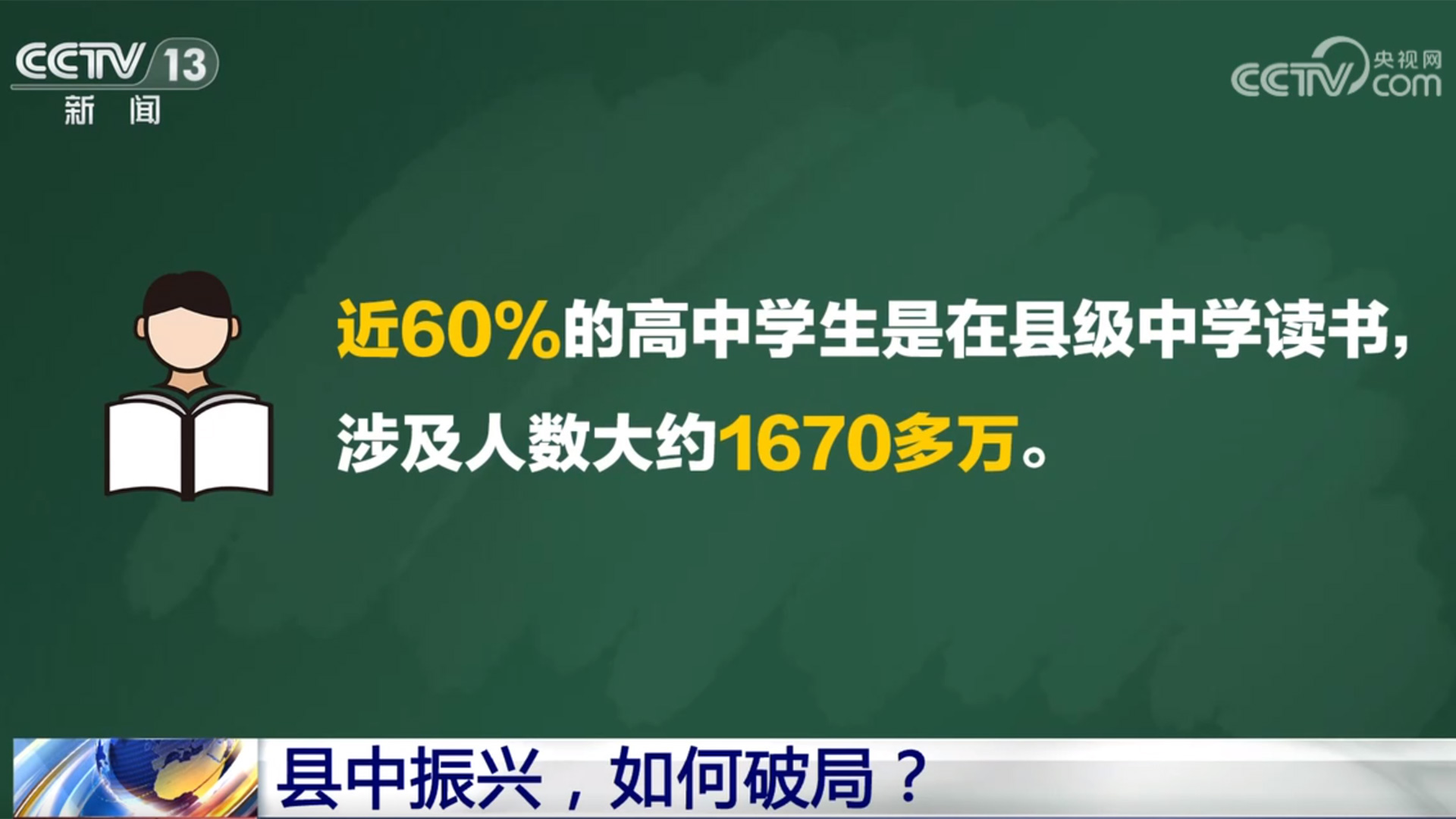
Core Points - The "County High School Revitalization Action Plan" aims to address key issues in county-level high school education, impacting over 16.7 million students [1] - The plan includes measures such as building new county high schools, ensuring teacher compensation, regulating cross-regional enrollment, and preventing the poaching of outstanding principals and teachers [1] Group 1: Background and Context - The revitalization plan is proposed against the backdrop of building a strong education nation, highlighting the increased importance of county high schools [3] - There is a projected increase of approximately 10 million high school seats needed in the next decade due to demographic changes, placing a heavier burden on county high schools [3] - The environment for county high school development has changed significantly, with rapid advancements in educational technology and digitalization [3] Group 2: Enrollment and Source Management - The previous plan focused on stabilizing excellent student sources, emphasizing the need for quality student enrollment to improve educational quality [4] - The new measures include implementing local enrollment policies and synchronizing public and private school admissions to limit cross-regional recruitment of students [4] Group 3: Teacher Recruitment and Retention - Attracting and retaining high-quality teachers is crucial for the success of county high schools, with improved compensation and working conditions being key factors [6] - The plan aims to leverage policies for training high-level young teachers through targeted programs to ensure a steady influx of qualified educators into county schools [6] Group 4: Funding and Infrastructure - Strengthening financial support mechanisms for county high schools is essential, with an emphasis on increased investment from provincial and municipal levels [7] - The plan highlights the need for enhanced funding for infrastructure, particularly for schools meeting specific criteria [7] Group 5: Facilities and Resources - Key deficiencies in county high schools include the need for more classroom space, improved laboratory conditions, and better access to libraries and sports facilities [9] - The increasing student population in county areas necessitates urgent improvements in physical infrastructure to accommodate growth [9]
县中振兴,这次不一样
21世纪经济报道· 2025-09-26 04:42
Core Viewpoint - The "County Middle School Revitalization Action Plan" has been officially issued, aiming to improve educational equity and reduce the excessive focus on exam results and competition in county-level education [1][2]. Group 1: Current Issues in County Education - There is a trend in some county schools to concentrate educational resources on a few top students, which undermines educational fairness [2][4]. - The concept of "cloud classes" has emerged, where students in county schools access lessons from prestigious partner schools via online platforms, but this often leads to a dilution of local teaching quality and interaction [4][5]. - Some county schools are creating "cloud classes" that only serve a small number of students, reinforcing a "Matthew effect" where the rich get richer in terms of educational resources [4][5]. Group 2: Policy Recommendations - There is a strong call to correct the tendency to prioritize exam results, emphasizing the need for a more diverse educational approach that includes sports, arts, and vocational training [8][9]. - The evaluation of county schools should shift from a results-based assessment focused solely on exam scores to a process-oriented evaluation that considers the quality of education across various subjects [9]. - The implementation of digital education and integrated curriculum models should be aligned with educational policies to promote balanced development across all educational levels [7][8].

县中振兴,这次不一样
2 1 Shi Ji Jing Ji Bao Dao· 2025-09-25 12:31
Core Viewpoint - The "County Middle School Revitalization Action Plan" has been officially issued to improve educational equity and address the over-concentration of resources on a few top students, which undermines educational fairness and violates educational principles [1][2]. Group 1: Educational Policy and Reform - The plan aims to shift the resource allocation from an exam-oriented approach to a more balanced educational model, reducing competition and anxiety among students [2][12]. - The initiative emphasizes the need to correct the excessive pursuit of enrollment rates and to ensure that educational practices align with established policies and educational laws [12][14]. Group 2: Digital Education and "Cloud Classes" - "Cloud classes" are introduced as a means to connect students in county schools with renowned high schools through online learning, but they risk diluting local teaching quality and interaction [5][7]. - Some county schools have reported high average scores in "cloud classes," with one class achieving an average score of 623, indicating a focus on elite student performance [4][3]. Group 3: Talent Development and Competition - There is a trend of establishing "youth classes" in high schools that recruit elementary students based on competition results, which undermines policies aimed at reducing academic pressure [9][11]. - High salaries are being offered to competition coaches in county schools, with some earning over 300,000 yuan, reflecting a shift towards a competitive, results-driven educational environment [11]. Group 4: Holistic Education Approach - Experts advocate for a diversified development approach in county schools, emphasizing the importance of physical education, arts, and vocational training alongside academic subjects [15][16]. - The evaluation of county schools should transition from solely focusing on enrollment rates to a more comprehensive assessment of educational quality and student development [16].
网龙(0777.HK):OPENQ深化教育平权生态 游戏业务稳健增长
Ge Long Hui· 2025-09-24 04:32
Core Viewpoint - The company is experiencing a decline in revenue for 2025, but its overall profitability is improving due to cost optimization measures and a focus on enhancing operational efficiency [1][2]. Group 1: Financial Performance - In 2025, the company achieved a revenue of 2.38 billion RMB, a year-on-year decrease of 28%, with a gross profit of 1.7 billion RMB, down 24.7% [1]. - The gross margin improved by 2.9 percentage points to 69.5%, indicating enhanced overall profitability [1]. - Operating expenses were reduced to 1.35 billion RMB, a year-on-year decrease of 15.6%, reflecting the effectiveness of cost optimization initiatives [1]. - The company has a solid financial position with net cash of approximately 2.3 billion RMB and holds 12,000 Ethereum as digital asset reserves [1]. Group 2: Business Segments - The gaming and other businesses generated revenue of 1.74 billion RMB in the first half of 2025, down 18% year-on-year, but only a slight decline of 4% compared to the second half of 2024, indicating signs of stabilization [2]. - The monthly active users (MAU) of "Magic Domain" increased by 11% year-on-year, and mobile revenue showed a quarter-on-quarter increase, reflecting improved user engagement and retention [2]. - The gaming business's operating profit margin rebounded to 28.8%, nearing historical normal levels [2]. - The education business, Mynd.ai, reported revenue of 640 million RMB in the first half of 2025, primarily impacted by tightened customer budgets [2]. - The company is actively exploring emerging markets to seek new growth opportunities amid challenges in traditional markets [2]. Group 3: Future Outlook - The company has adjusted its target price to 20.24 HKD, maintaining a buy rating, based on the robust development of gaming IPs and the potential of the education market [3]. - The expected growth from the gaming business and successful expansion into overseas markets, along with the promotion of tablet products, is anticipated to drive future performance [3].