新能源汽车产业发展

Search documents
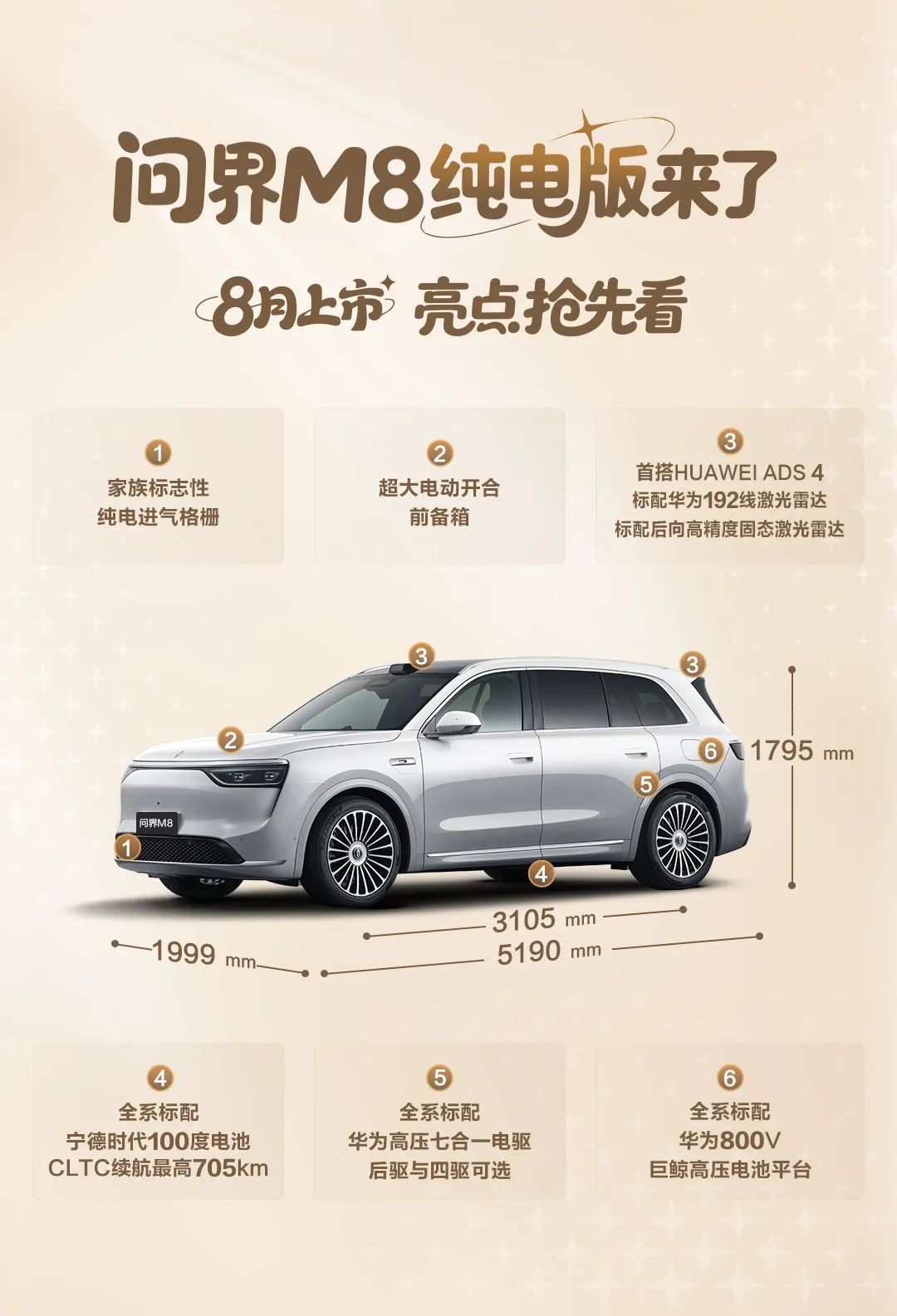
问界M8纯电版,会再次成为销量之王吗?
Cai Jing Wang· 2025-08-04 11:46
Core Insights - The AITO Wenjie M8 electric version has achieved significant pre-sale success, with over 10,000 orders in just 8 hours and more than 15,000 orders within 72 hours, reflecting strong brand recognition and consumer demand [1][2] - The automotive industry is facing unhealthy "involution" competition, primarily driven by price wars, which threaten the quality and brand trust of electric vehicles [2][3] - The Wenjie M8 is positioned as a family-oriented smart flagship SUV, with a price range of 359,800 to 449,800 yuan, and has seen cumulative deliveries surpassing 40,000 units [1][2] Industry Trends - China's new energy vehicle (NEV) market is experiencing rapid growth, with production and sales reaching 6.968 million and 6.937 million units respectively in the first half of 2025, marking year-on-year increases of 41.4% and 40.3% [2] - NEVs accounted for 44.3% of total new car sales, indicating a significant market penetration [2] Product Features - The Wenjie M8 emphasizes safety with a high-strength body structure, comprehensive airbag systems, and advanced active safety technologies such as automatic emergency braking and lane-keeping assistance [2][3] - Comfort features include a spacious interior with a 3,510 mm effective space and a "room rate" of 67.6%, catering to family users [3] - The vehicle is equipped with a state-of-the-art smart cockpit featuring over ten screens and HarmonyOS 4, enhancing user interaction and experience [4] Market Positioning - The Wenjie M8 pure electric version is set to launch with a maximum range of 705 km, powered by a 100 kWh battery from CATL, and features advanced safety measures [5][8] - The Wenjie brand has established a comprehensive product matrix across the 300,000 to 500,000 yuan market segment, with models like the M7, M8, and M9 catering to different consumer needs [9][14] Competitive Strategy - The brand aims to redefine value through technology-driven innovation, moving away from traditional pricing strategies to establish a unique market position [17] - The Wenjie M8's success illustrates a new approach in the NEV sector, focusing on consumer value propositions and technological luxury to differentiate from competitors [4][17]

31省份上半年人均可支配收入出炉,11省份超2万
第一财经· 2025-07-17 11:22
Core Viewpoint - The article highlights the significant growth in per capita disposable income across various provinces in China for the first half of 2025, indicating an overall improvement in living standards and purchasing power, with urban areas showing higher income levels compared to rural areas [1][2]. Provincial Income Analysis - In the first half of 2025, 11 provinces reported per capita disposable incomes exceeding 20,000 yuan, with Shanghai and Beijing leading at over 45,000 yuan [2]. - Shanghai's per capita disposable income reached 46,805 yuan, ranking first, while Beijing's was 45,144 yuan, ranking second [2]. - The contribution of wage income to the increase in disposable income was significant, with Beijing's average wage income at 29,447 yuan, growing by 5.3% year-on-year, contributing 71.3% to the increase in disposable income [2]. - Zhejiang ranked third with a per capita disposable income of 37,813 yuan, while Jiangsu surpassed 30,000 yuan, reaching 30,706 yuan [2]. - Other provinces like Tianjin, Guangdong, Fujian, Shandong, Chongqing, and Liaoning ranked fifth to tenth in disposable income [2]. Industrial and Urban Development - The article notes the rising industrialization and urbanization levels in central and western regions of China, driven by technological innovation and the development of modern industrial clusters [3]. - Cities like Wuhan, Chengdu, Chongqing, and Hefei have seen rapid growth in emerging industries and high-end manufacturing, attracting talent and increasing local income levels [3]. - Wuhan, for instance, had over 16,500 high-tech enterprises by the end of 2024, contributing significantly to its GDP [3]. - Hefei's electric vehicle industry has also seen substantial growth, with production exceeding 1.35 million units last year and a strong presence of major automotive manufacturers [3].

恒大汽车近44万平方米土地被收回!
证券时报· 2025-07-10 08:13
Core Viewpoint - Guangzhou's planning and natural resources bureau has identified a piece of land, approximately 437,441 square meters, as idle since June 9, 2021, due to reasons attributed to Evergrande's operations [1][2]. Group 1: Company Overview - Evergrande Hengchi New Energy Vehicle Technology (Guangdong) Co., Ltd. was established in 2020 and is a member of the Evergrande New Energy Vehicle Investment Holding Group [2]. - The company has previously acquired multiple plots of land in Nansha for the development of new energy vehicles, but the projects have stalled since 2021 due to financial issues [2]. Group 2: Land and Regulatory Actions - The identified idle land is part of the 2020NGY-8 plot, which was intended for the research and manufacturing of new energy vehicles and core components [2]. - According to the Idle Land Disposal Measures, if the idleness is due to the company's own reasons, the company must either pay a fee of 20% of the land transfer or allocation price or the government may reclaim the land without compensation [2]. Group 3: Market Implications - Analysts suggest that the reclamation of the land could allow for its reallocation to other enterprises, potentially revitalizing the new energy and smart manufacturing sectors in Nansha [2]. - There have been rumors regarding GAC Group's acquisition of Evergrande's Nansha factory, but GAC has clarified these rumors [3]. Group 4: Financial Status - Evergrande Auto has reported ongoing liquidity issues, stating that despite efforts to cut costs, it can only maintain basic operations and is unable to ensure certain services, including audits [3]. - The company has been seeking investments and attempting to sell assets to improve its financial situation, but discussions with potential investors have not yet materialized [3].

广西柳州精准监督纠治“充电难” 护航新能源汽车产业发展
Zhong Guo Xin Wen Wang· 2025-07-10 02:39
Core Points - The article highlights the efforts of the Liu County Discipline Inspection and Supervision Commission in Guangxi to enhance the use of public charging infrastructure for electric vehicles, addressing issues such as "idle construction" and corruption in the process [1][2] - The increasing number of electric vehicles in Liu County has led to a growing concern over insufficient charging infrastructure, prompting local authorities to optimize and expedite the approval processes for charging facilities [2] Group 1 - The Liu County Discipline Inspection and Supervision Commission has prioritized the supervision of public charging infrastructure, aiming to resolve issues related to the construction and usage of these facilities [1] - The Commission has identified problems in older residential areas, such as the lack of property documentation preventing the installation of charging stations, and has issued recommendations to address these issues [1] - Collaborative efforts have resulted in the successful connection of 48 public charging stations in 12 older residential areas, benefiting approximately 2,400 residents [1] Group 2 - The Liu Bei District Discipline Inspection and Supervision Commission is actively monitoring the optimization of public charging networks and the approval process for charging infrastructure projects in residential communities [2] - The Liu City Housing and Urban-Rural Development Bureau is being urged to improve regulations governing the management of charging infrastructure, ensuring better planning and construction [2] - Liu City has a high penetration rate of electric vehicles, and local authorities are committed to providing efficient charging services to alleviate public concerns regarding charging accessibility [2]
新能源汽车下乡,如何解决“充电难”
Xin Hua Ri Bao· 2025-07-01 23:57
Group 1: New Energy Vehicles Development - Jiangsu Province's new energy vehicle industry is experiencing rapid growth, with 394,000 new energy vehicles registered from January to May this year, achieving a market penetration rate of 45.1% [1] - As of the end of May, the total number of new energy vehicles in Jiangsu reached 3.085 million [1] - The province has built 1.932 million charging piles, but some rural areas still face challenges with charging accessibility [1][2] Group 2: Charging Infrastructure Improvement - To address the charging difficulties, five counties in Jiangsu have been selected as pilot areas for enhancing charging infrastructure, with plans to install approximately 2,200 high-power charging piles over the next three years [1][2] - Each pilot county has developed specific action plans to identify weak areas and establish standards for infrastructure improvement [2] Group 3: Challenges in New Energy Vehicle Adoption - Issues such as the incompatibility of new energy vehicle sizes with existing mechanical parking systems have been raised, necessitating a review of parking standards [2] - The provincial government plans to collaborate with relevant departments to improve mandatory standards for parking facilities and enhance safety measures for new energy vehicle users [2] Group 4: Support for Small and Medium Enterprises (SMEs) - The provincial government emphasizes the importance of cultivating innovative SMEs, which are seen as foundational to the economy, with specific criteria for recognition as innovative enterprises [3][4] - Policies have been introduced to support the development of specialized and innovative SMEs, including financial assistance through low-interest loans, with over 31,000 enterprises benefiting from 21.616 billion yuan in loans this year [4] Group 5: Gradual Development Mechanism for SMEs - Jiangsu has established a tiered cultivation system for SMEs, progressing from innovative SMEs to specialized and innovative "little giant" enterprises [5] - The provincial government aims to assist SMEs in identifying weaknesses and positioning themselves for growth towards specialized and innovative status [5]

锂价持续走出新低,将给新能源汽车产业带来怎样的影响?
Zhong Guo Qi Che Bao Wang· 2025-06-27 08:11
Group 1: Price Trends - The price of battery-grade lithium carbonate has dropped below 60,000 yuan per ton, reaching 59,900 yuan on June 26, marking a significant decline from previous highs [2] - Lithium prices have decreased sharply throughout the year, with a notable drop from 78,800 yuan per ton at the beginning of the year to 61,200 yuan per ton on May 28, representing a year-on-year decline of 44.97% [3][4] - The current market situation shows a serious oversupply of lithium, with high inventory levels that have not been effectively addressed, limiting the potential for price recovery [6][9] Group 2: Supply and Demand Dynamics - The supply side has seen a surge in lithium mining projects due to previous high prices, leading to a significant increase in lithium production capacity [3][4] - On the demand side, the growth rate of the electric vehicle and energy storage sectors has slowed, impacting lithium demand. Factors include high electric vehicle prices and inadequate charging infrastructure [4][5] - Argentina, a major lithium resource country, is expected to increase its annual lithium production capacity by 79% to 202,000 tons as new projects come online [5] Group 3: Industry Impact - The decline in lithium prices has directly reduced production costs for battery manufacturers, improving profit margins and allowing for increased investment in research and development [8] - Lower lithium prices are expected to decrease the purchase cost of electric vehicles, potentially stimulating consumer interest and boosting sales in the electric vehicle market [8][9] - The competitive landscape in the electric vehicle market is likely to intensify as more companies enter the sector, driven by the perceived potential of the market [9] Group 4: Future Outlook - Industry experts predict that lithium prices may stabilize between 50,000 to 70,000 yuan per ton in the near term, but the market remains uncertain due to various influencing factors [7] - Long-term demand for lithium is expected to grow steadily as the electric vehicle market continues to expand, although the path to balance supply and demand may be gradual and subject to fluctuations [6][9]

曹操出行上市首日暴跌近15%,还可以看好它吗?
Sou Hu Cai Jing· 2025-06-26 10:44
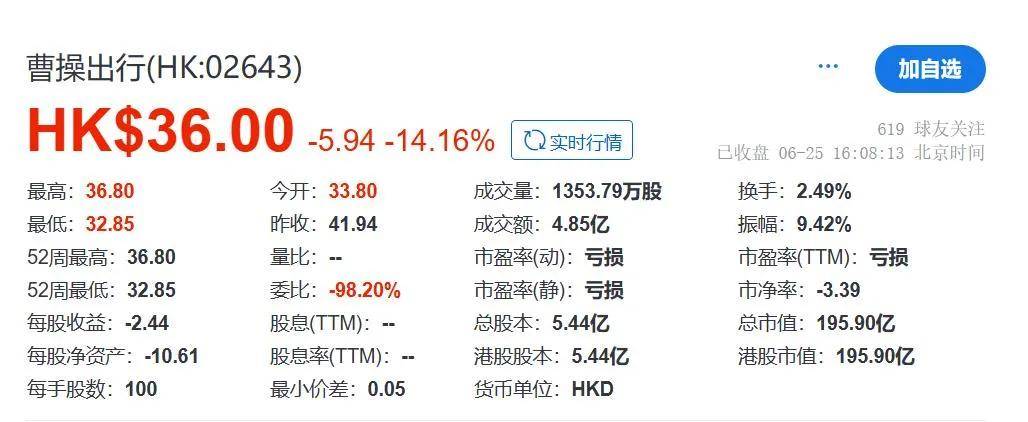
Core Viewpoint - The listing of Cao Cao Mobility on the Hong Kong Stock Exchange has drawn significant attention, despite a disappointing stock performance on its debut, with a drop of 14.76% from the issue price, resulting in a market capitalization of HK$195 billion [1][2]. Group 1: Industry Landscape and Strategic Choices - The domestic ride-hailing industry has evolved from intense competition to a market dominated by a few major players, with Cao Cao Mobility emerging as a leader in the second tier alongside T3, Shouqi, and Hello Chuxing [4][5]. - The timing of Cao Cao Mobility's market entry is strategic, backed by the strong capital operation experience of its parent company, Geely Holding Group, which has successfully navigated various capital markets [5]. - The current market environment presents a "timing" advantage, as the Chinese electric vehicle industry is experiencing rapid growth, benefiting platforms like Cao Cao Mobility that are closely tied to this sector [7][8]. Group 2: Stock Price Volatility and Business Fundamentals - Despite the poor stock performance on its first day, the fundamental business performance of Cao Cao Mobility shows a positive trend, with projected revenues increasing from HK$76.31 billion in 2022 to HK$146.57 billion in 2024, while losses are expected to decrease significantly [9][10]. - The company's ability to survive in a competitive environment and achieve substantial revenue growth indicates effective strategic positioning and operational efficiency [9][10]. Group 3: Commitment to Steady Operations - Moving forward, Cao Cao Mobility should focus on maintaining a steady growth trajectory, avoiding reckless expansion and price wars, and instead enhancing user experience and operational efficiency [11]. - The ride-hailing industry is transitioning to a phase of high-quality development, where companies must build core competencies in efficiency, service, cost, and compliance to thrive [11][12].
【政策综述】关于国家鼓励新能源汽车充换电等基础设施建设的相关政策及实施成效分析
乘联分会· 2025-06-12 08:38
Core Viewpoint - The article emphasizes the importance of developing charging and swapping infrastructure for electric vehicles in China, highlighting government policies and initiatives aimed at enhancing the infrastructure to support the growth of the new energy vehicle industry [4][5]. Summary by Sections 1. Policy Encouragement for Charging Infrastructure - The "New Energy Vehicle Industry Development Plan (2021-2035)" aims for core technologies in the sector to reach international advanced levels, with electric vehicles becoming mainstream [4]. - A series of policies have been introduced to accelerate the construction of charging and swapping infrastructure, including the establishment of a unified operational service platform for charging facilities [5][6]. 2. Implementation Opinions and Guidelines - In January 2022, the National Development and Reform Commission issued opinions to enhance the service capacity of electric vehicle charging infrastructure, focusing on community charging facilities and urban-rural network improvements [7]. - The June 2023 guidelines from the State Council emphasized optimizing network layouts and enhancing operational service levels for charging infrastructure [8]. 3. Pilot Programs for Electric Vehicle Electrification - A pilot program for the full electrification of public vehicles was initiated in January 2023, targeting various vehicle types with an expected promotion of over 600,000 new energy vehicles and the construction of over 70,000 public charging stations [9]. 4. Hydrogen Station Construction for Fuel Cell Vehicles - The government has implemented policies to support the construction of hydrogen stations, with significant subsidies for stations built in key urban areas [12][19]. - As of March 2025, China has built over 540 hydrogen stations, leading the world in this infrastructure [18]. 5. Achievements in Charging Infrastructure - By December 2024, China had established a charging infrastructure network with 12.818 million units, a 49.1% increase year-on-year, indicating a robust growth in alignment with electric vehicle sales [16]. - The ratio of charging stations to electric vehicles is approximately 1:2.7, demonstrating that infrastructure development is keeping pace with vehicle growth [16]. 6. Market Growth for Fuel Cell Vehicles - The cumulative sales of fuel cell vehicles reached 29,500 units by March 2025, marking a fourfold increase since the demonstration phase began [19]. - The domestic production rate of key components for fuel cells has risen significantly, with costs dropping by 80% from 15,000 yuan/kW to 2,500 yuan/kW [19]. 7. Advancements in Intelligent Connected Vehicles - Significant progress has been made in the demonstration applications of intelligent connected vehicles, with multiple testing zones established across major cities [19]. - The market penetration of advanced driver-assistance systems (L2) reached 57.3% in 2024, with L3 and above vehicles beginning to enter the market [19].
【政策综述】关于国家鼓励新能源汽车充换电等基础设施建设的相关政策及实施成效分析
乘联分会· 2025-06-12 08:37
Core Viewpoint - The article emphasizes the importance of developing charging and swapping infrastructure for electric vehicles in China, highlighting government policies and initiatives aimed at enhancing the infrastructure to support the growth of the new energy vehicle industry [4][5]. Summary by Sections Policies Encouraging Charging Infrastructure Development - The "Implementation Opinions" issued on January 10, 2022, by ten ministries aim to enhance the service capacity of electric vehicle charging infrastructure through 21 policy measures, including community charging facility construction and urban charging network optimization [6][7]. - The "Guiding Opinions" released on June 8, 2023, outline five tasks to improve the quality of charging infrastructure, such as optimizing network layout and promoting technological innovation [7][8]. Public Sector Electrification and Pilot Programs - The pilot program for the full electrification of public sector vehicles, initiated on January 30, 2023, targets various vehicle types, with an expected promotion of over 600,000 new energy vehicles and the construction of over 70,000 public charging stations [8][9]. County-Level Charging Infrastructure Initiatives - The notification issued on April 9, 2024, aims to enhance charging infrastructure in rural areas, with a goal of achieving "full coverage" of charging facilities in counties, supported by central government funding [10]. Hydrogen Station Development for Fuel Cell Vehicles - Policies from 2020 onwards have facilitated the construction of hydrogen stations, with 474 stations built by the end of 2024, supporting the growth of the fuel cell vehicle market [11][17]. - By March 2025, over 540 hydrogen stations were established in China, making it the global leader in this area [17][18]. Smart Connected Vehicles and Infrastructure - The establishment of smart city infrastructure and intelligent connected vehicles has progressed significantly, with multiple testing zones and a growing market for smart connected vehicles [19]. - By 2024, the penetration rate of combination driving assistance (L2 level) vehicles reached 57.3%, with L3 level and above vehicles entering the market [19].
【新能源周报】新能源汽车行业信息周报(2025年5月12日-5月18日)
乘联分会· 2025-05-20 08:29
Industry Information - The number of public charging piles in China increased by 92,000 in April 2025, a year-on-year growth of 34.1%, totaling 3.992 million piles [8][9] - The total charging electricity in April 2025 reached approximately 6.14 billion kWh, a year-on-year increase of 55.6% [8] - The installed capacity of power batteries in April 2025 was 54.1 GWh, representing a year-on-year growth of 52.8% [11][15] - The first batch of green electricity vehicle owners was established in Shenzhen, with 223 electric vehicles charging green electricity at the trial site [16][17] - The International Energy Agency (IEA) predicts global electric vehicle sales will exceed 20 million units in 2025, accounting for over 25% of total new car sales [21][22] Policy Information - Shanxi Datong is promoting battery swap heavy trucks and increasing support for charging infrastructure construction [3] - The Guizhou Provincial Energy Bureau is soliciting opinions on the 2025 version of the electricity demand response trading plan [4] - Sichuan is providing 30% financial support for projects related to large and medium-sized drones, eVTOLs, and flying cars [4] - The Chongqing government has issued a reward plan for supercharging infrastructure construction, offering up to 50,000 yuan per pile [4][38] - The Guangdong Provincial Development and Reform Commission has approved the pricing for electric vehicles discharging power back to the grid [4]