
源网荷储

Search documents
中电鑫龙:储能产品包括储能液冷户外柜(包含液冷储能系统)、储能风冷户外柜等
Mei Ri Jing Ji Xin Wen· 2025-08-22 01:53
Group 1 - The company has developed three main business segments: "Smart Energy Use, Smart New Energy, and Smart City" [2] - In the Smart New Energy sector, the company focuses on energy storage products, photovoltaic power stations, carbon management software platforms for parks (enterprises), and charging pile products [2] - The energy storage products include outdoor cabinets with liquid cooling systems, which help dissipate heat from energy storage batteries, and outdoor cabinets with air cooling [2] Group 2 - The liquid cooling energy storage systems are designed to achieve peak shaving and valley filling, reduce electricity costs, and support multiple value benefits such as carbon emission reduction [2]


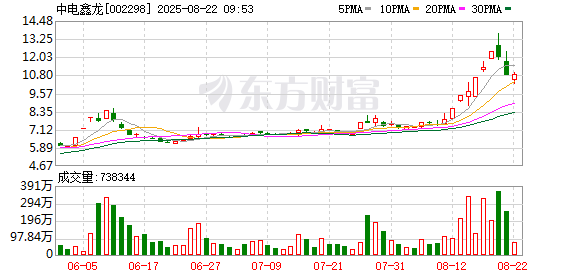
牛股川润股份上半年营收增长25.08% 液冷系统子公司业绩大涨
Zheng Quan Shi Bao Wang· 2025-08-19 13:32
Core Viewpoint - Chuanrun Co., Ltd. (002272) reported significant growth in revenue and a reduction in net loss for the first half of 2025, driven by its expanding new energy business and improved management practices [1][2] Financial Performance - The company achieved operating revenue of 804 million yuan, a year-on-year increase of 25.08% [1] - Net profit was -23.57 million yuan, representing a year-on-year reduction in loss of 58.35% [1] - Net cash flow from operating activities was 1.41 million yuan, up 101.19% year-on-year [1] Business Development - Chuanrun Co., Ltd. focuses on high-end energy equipment and industrial services, leveraging "fluid control technology + intelligent energy equipment" to create a comprehensive energy ecosystem [1] - The company has developed over 20 projects related to the "source-network-load-storage" integrated energy system [1] Subsidiary Performance - Chuanrun Hydraulic, a wholly-owned subsidiary, reported revenue of 510 million yuan and a net profit of 23.13 million yuan, up from 389 million yuan and 10.53 million yuan respectively in the previous year [2] - The growth in the subsidiary's performance is a key contributor to the overall revenue and profit increase of Chuanrun Co., Ltd. [2] Market Trends - The liquid cooling technology is expected to see a market penetration rate increase to 45% by 2025, driven by rising demand in data centers due to advancements in artificial intelligence [3] - The Chinese liquid cooling data center market is projected to grow at a compound annual growth rate of 59% from 2023 to 2027, potentially exceeding 100 billion yuan by 2027 [3] Strategic Partnerships - Chuanrun Co., Ltd. signed a strategic cooperation agreement with Xiangjiang Technology to advance liquid cooling technology for data centers [2] Stock Market Performance - Chuanrun Co., Ltd.'s stock price has surged over 130% since mid-April, with the stock hitting the daily limit for three consecutive trading days from August 15 to 19 [3] - Major institutional investors, including JPMorgan Chase and Morgan Stanley, have increased their holdings in the company [3]

嘉实基金:“源网荷储”全链深耕 助力绿色低碳发展
Di Yi Cai Jing· 2025-08-19 03:39
Group 1: Industry Overview - China's solar cell production capacity exceeds 10,000 pieces per minute, and over 80% of global photovoltaic components and 70% of wind power equipment are manufactured in China [1] - China has maintained the world's largest production and sales of new energy vehicles for 10 consecutive years [1] - By the end of 2024, non-fossil energy installed capacity in China is expected to reach 58.2%, with wind and solar power accounting for 42% of total installed capacity, marking a tenfold increase over the past decade [4] Group 2: Energy Transition - The global energy transition towards low-carbon, green, and sustainable sources is an inevitable direction due to the limited nature of resource-based energy [3] - The energy revolution is characterized by a shift from resource dependence to technology-driven solutions, which can help break the inflationary cycle associated with resource constraints [4] - The integration of the energy supply chain, referred to as "source-network-load-storage," is seen as a significant opportunity for investment [5][6] Group 3: Investment Strategies - Public funds are playing a crucial role in guiding resource allocation and value discovery in the green transition [1] - The investment focus includes sectors such as new energy vehicles, lithium batteries, and photovoltaic products, which are gaining global recognition [4] - The company has developed a comprehensive product line covering the entire green low-carbon industry chain, including both active and passive funds tailored to various investor needs [8][9] Group 4: Technological Advancements - The energy transition is driven by technological advancements, with clean energy generation being the first to mature, followed by energy storage and electric vehicles [10] - The automotive industry is experiencing a significant transformation, with a focus on electrification, intelligence, and internationalization [8] - The integration of AI technology in the automotive sector is expected to accelerate the adoption of smart driving solutions [11] Group 5: Future Outlook - The company believes that the green low-carbon and clean energy sectors will continue to present abundant opportunities in the future [12] - The ongoing evolution of the energy system requires a shift towards a more integrated and intelligent approach, enhancing collaboration across the energy supply chain [11]
国网酒泉供电公司:电力“引擎”驱动新能源产业跑出“加速度”
Zhong Guo Neng Yuan Wang· 2025-08-12 09:44
Core Insights - The establishment of the full vanadium flow battery energy storage project by HuanTai Storage in Guazhou County is significant for addressing local renewable energy consumption challenges and promoting a multi-energy complementary structure [3] Group 1: Project Overview - HuanTai Storage's full vanadium flow battery project is located in the modern high-capacity industrial park at Beida Bridge, with production facilities actively manufacturing batteries for the national renewable energy market [1] - The project was initiated through a strategic partnership with Guazhou County in November 2021, marking a milestone in local energy storage development [3] Group 2: Support and Services - State Grid Jiuquan Power Supply Company has been providing comprehensive support throughout the project, ensuring stable and reliable electricity supply to facilitate efficient operations [3] - The company has implemented 26 major grid optimization adjustments and 67 risk management measures to enhance grid safety and reliability [3] Group 3: Renewable Energy Development - The renewable energy generation in the region has increased by 7.19% year-on-year, supported by coordinated maintenance of 112 renewable energy stations [3] - A dynamic energy efficiency model has been established to enhance grid flexibility, with a demand-side response capacity of 167,000 kW identified through enterprise visits [3] Group 4: Future Focus - The State Grid Jiuquan Power Supply Company aims to continuously optimize the grid structure and improve power supply services to support the growth of green storage enterprises [4] - The company is committed to contributing to carbon peak and carbon neutrality goals while promoting high-quality local economic development [4]
海南新能源装机破1200万千瓦
Hai Nan Ri Bao· 2025-08-11 01:04
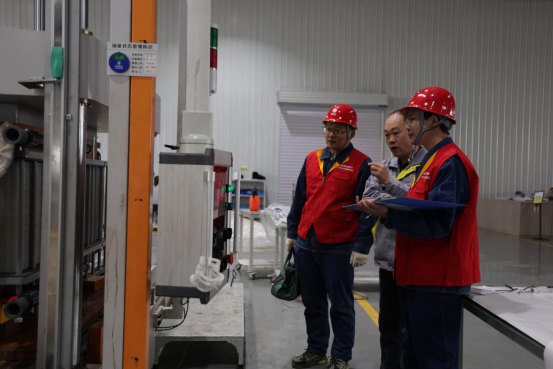
Core Insights - Hainan Province has achieved a total installed capacity of 12.08 million kilowatts in renewable energy, with wind power at 2.17 million kilowatts, photovoltaic at 9.45 million kilowatts, and biomass at 460,000 kilowatts, representing 47.8% of the province's total installed capacity [2][3] - The province is leading in energy transition, focusing on the construction of a "clean energy island" as part of its high-quality development strategy [2] - Hainan's energy grid company has made significant progress in integrating renewable energy, with an additional 3.71 million kilowatts of new capacity added this year and a storage capacity of 1.247 million kilowatts, the highest storage ratio in the country [2] Renewable Energy Development - The company has successfully connected three offshore wind farms to the grid, contributing to a total of 2.11 million kilowatts of new renewable energy capacity this year [3] - The integration of renewable energy sources is supported by a new type of energy system that enhances the ability to manage the variability of solar and wind energy [3] - Hainan's energy grid is also focusing on the construction of a power regulation auxiliary service market, which has created over 360 million kilowatt-hours of additional generation capacity for clean energy [3] Strategic Initiatives - The energy grid company is implementing tailored services for renewable energy projects, streamlining processes from planning to grid connection, and reducing connection times by nearly 30% [2] - The company is committed to enhancing the flexibility of coal power and improving the peak-shaving capabilities of nuclear power to meet the higher energy supply demands of the Hainan Free Trade Port [3] - Ongoing efforts include the development of grid-type energy storage and other regulatory resources to ensure efficient consumption of renewable energy [3]
以科技之“智”应对自然之“变”
Zhong Guo Neng Yuan Wang· 2025-08-01 07:48
Core Viewpoint - The article emphasizes the evolution of Zhejiang Electric Power in response to extreme weather challenges over the past 20 years, highlighting the transition from traditional disaster response to a more proactive, technology-driven approach to ensure grid reliability and resilience [2][4][19]. Group 1: Historical Context and Development - Twenty years ago, the phrase "Electricity is of utmost importance, and the grid is the lifeline" laid the foundation for Zhejiang Electric Power's mission [2]. - The company has consistently prioritized the understanding of electricity's significance and the protection of the grid, which connects households and supports economic activity [2][4]. Group 2: Technological Advancements - Zhejiang Electric Power has shifted from a passive disaster response to an active network strengthening strategy, focusing on building a "typhoon-resistant grid" [5]. - The company has implemented high-level disaster prevention measures, including the construction of the first self-healing island smart microgrid in Zhoushan, which can operate independently during outages [5][6]. - In Lishui, the reliability of power supply reached 99.99% in 2024, with average outage duration reduced by 37 minutes compared to the previous year [6]. Group 3: AI and Predictive Technologies - The company has developed an AI-based typhoon early warning module that improved prediction accuracy by approximately 30 kilometers, leading to a 69.58% power restoration rate within two hours during typhoon events [13][14]. - The establishment of a typhoon monitoring and early warning center has enhanced the ability to monitor weather conditions affecting the grid [15]. Group 4: Infrastructure and Monitoring Enhancements - Zhejiang Electric Power has installed various sensors and monitoring systems in substations to detect flooding and improve overall grid resilience [8]. - The company has created a robust and intelligent distribution network, enhancing the overall power supply capability and reliability [8][16]. Group 5: Future Directions - The company aims to further enhance the grid's resilience and self-healing capabilities through the integration of artificial intelligence and advanced monitoring systems [25][26]. - There is a focus on expanding the coordination of energy sources, loads, and storage to improve system flexibility and reliability in the face of uncertainties [27].
用电负荷连破历史纪录,“模范生”浙江如何高温应“烤”?
3 6 Ke· 2025-07-24 23:29
Core Insights - Zhejiang's electricity load has reached a historical high of 126 million kilowatts as of July 16, 2023, driven by increased demand due to high temperatures and industrial activity [1][3] - The province is facing significant challenges in electricity supply, being the largest increase in electricity consumption nationwide, with the highest utilization rate of power generation equipment and the largest proportion of external electricity supply [3][4] Group 1: Electricity Supply and Demand - The peak electricity load in Zhejiang reached 121.73 million kilowatts on July 4, 2023, 15 days earlier than the previous year [3] - Forecasts predict that the summer peak loads will reach 133 million kilowatts and 117 million kilowatts during afternoon and evening peaks, respectively, representing a year-on-year increase of 7.8% [3] - Zhejiang's energy investment reached 75.4 billion yuan in the first five months of 2023, a year-on-year increase of 23%, with total installed power generation capacity exceeding 170 million kilowatts, up over 21% [5][6] Group 2: Energy Projects and Infrastructure - Key power projects, including three high-efficiency coal power units, have been successfully commissioned, significantly contributing to the province's summer peak electricity supply [5] - By the end of 2024, Zhejiang's total installed power generation capacity is expected to reach 150 million kilowatts, a 47% increase from the end of 2020 [6] - The province has also expanded its external electricity supply, with the maximum external purchased electricity resources reaching 43.4 million kilowatts, an increase of about 10% compared to 2024 [6] Group 3: Renewable Energy and Storage Solutions - As of June 2023, Zhejiang's photovoltaic installed capacity reached 60.26 million kilowatts, making it the largest power source in the province, with renewable energy accounting for over 50% of the total installed capacity [5] - The province's grid-side energy storage capacity reached 2.36 million kilowatts, with a maximum output exceeding 2 million kilowatts, helping to alleviate supply pressure during peak periods [8] - The establishment of virtual power plants in Zhejiang marks a significant step towards integrating new energy systems, with the first market response involving 19 virtual power plants aggregating 265 secondary users [9]
从电芯破局!AI算力时代,安全痛点有解了!
起点锂电· 2025-07-24 09:38
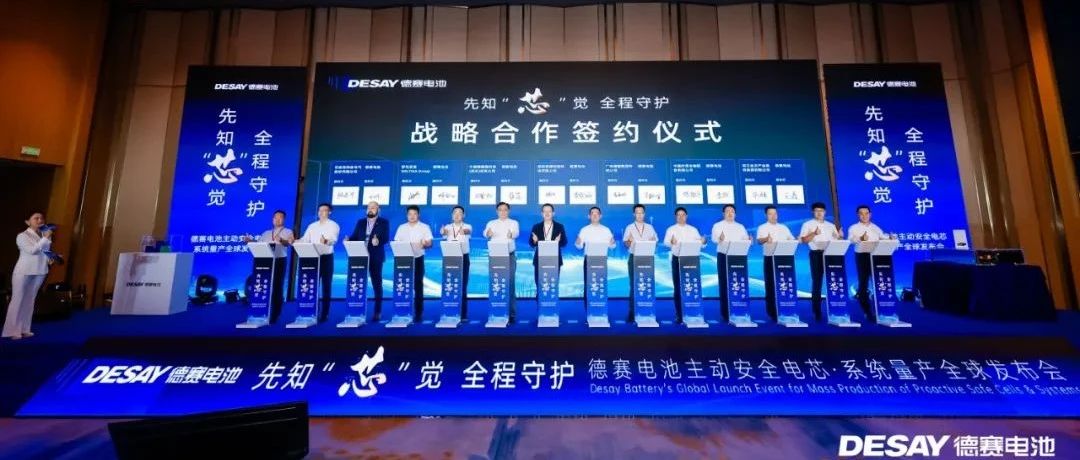
Core Viewpoint - The article emphasizes the urgent need for green energy solutions in data centers, driven by the rise of AI and the implementation of mandatory green electricity trading in China, highlighting the importance of energy storage systems in this transition [1][5][26]. Group 1: Industry Trends - The global proliferation of AI is leading to an energy revolution in data centers, with a focus on building photovoltaic storage systems and increasing the application rate of green energy [1]. - Data centers are facing challenges such as high electricity dependency, costs, and energy consumption, necessitating a shift towards renewable energy and improved energy management systems [5]. - The energy consumption of data centers is projected to rise significantly, with estimates indicating that their share of total electricity consumption in China could increase from 3% in 2022 to over 5% [19]. Group 2: Company Developments - Desay Battery has launched a dedicated battery and system solution for data centers, aimed at ensuring high-quality development in the AI computing era [1][10]. - The company introduced a new generation of lithium battery UPS systems capable of meeting high power discharge demands, with a maximum discharge rate of 8C and a power capacity of up to 320kW [21]. - Desay Battery's proactive safety technology has achieved a heat runaway suppression efficiency of 99.3%, significantly enhancing the safety standards for energy storage systems [14][15]. Group 3: Strategic Collaborations - Desay Battery has signed strategic cooperation agreements with several companies to integrate technology development and product innovation in the green computing sector [26]. - The company has secured a 1GWh procurement agreement with Romania's Voltika Group for its proactive safety AI battery systems, indicating strong market interest and confidence in its technology [28]. Group 4: Regulatory Environment - The implementation of China's first mandatory national standard for lithium battery safety (GB 44240-2024) on August 1, 2023, marks a significant upgrade in safety requirements for energy storage systems [14].

新型电力系统报告之四:电网发展回顾及后续展望:特高压稳步推进,隐忧仍在,配网低于预期改革初见端倪
Hua Yuan Zheng Quan· 2025-07-08 06:56
Investment Rating - The report maintains a "Positive" investment rating for the power equipment industry [4] Core Insights - The dual carbon strategy emphasizes the coexistence of highly clean power generation and highly electrified power consumption, with the grid serving as a crucial link between the two [4][7] - The development of ultra-high voltage (UHV) technology is essential for achieving carbon neutrality, but progress has been slower than expected [4][8] - The distribution network is critical for renewable energy consumption, yet investment during the 14th Five-Year Plan period has fallen short of expectations [4][39] Summary by Sections Ultra-High Voltage (UHV) - UHV is a key component of the dual carbon strategy, with a planned investment of 380 billion yuan for over 30,000 kilometers of lines and a capacity of 340 million kilovolt-amperes [8] - The actual progress of UHV projects has been below expectations, with only eight projects likely to be completed by 2025 [16][18] - The shift towards flexible direct current technology is noted, as it allows for higher proportions of renewable energy to be transmitted [22][24] Distribution Network - The distribution network's role has evolved significantly post-dual carbon strategy, requiring upgrades to accommodate distributed energy resources [39][40] - Despite a consensus on the need for increased investment in the distribution network, actual investment levels have been lower than anticipated during the 14th Five-Year Plan [47] - The rapid growth of distributed solar power has led to challenges in the capacity of the distribution network, necessitating further enhancements [50]


新疆喀什光伏装机超千万千瓦 能源转型加速推进
Zhong Guo Xin Wen Wang· 2025-06-04 09:02
Core Insights - Xinjiang's Kashgar region has surpassed 10.242 million kilowatts of installed photovoltaic capacity, becoming the fifth and second million-kilowatt-level renewable energy base in Xinjiang and southern Xinjiang respectively, marking a significant achievement in the energy transition and the national "dual carbon" strategy [1][2] Group 1: Photovoltaic Capacity Development - The Kashgar region's geographical advantages, including over 2800 hours of annual sunlight, provide ideal conditions for large-scale photovoltaic base construction, positioning it as a key pillar in southern Xinjiang's new power system [1] - The National Grid Xinjiang Electric Power Company has implemented online application processes for grid connection to address the surge in photovoltaic installations, ensuring that renewable energy projects are connected as soon as possible [1] Group 2: Energy Storage and Stability - The development of large-scale energy storage resources is being prioritized to address the inherent volatility of renewable energy, with a focus on constructing water-solar complementary bases and utilizing various energy types to enhance supply stability and efficiency [2] - As of now, the new energy storage capacity in southern Xinjiang has reached 5.9675 million kilowatts, accounting for 49.9% of the total in Xinjiang, with advanced technologies being applied prominently [2] Group 3: Grid Infrastructure and Energy Distribution - The construction of the 750 kV ring network around the Tarim Basin is enhancing the optimization of energy resource allocation within Xinjiang and significantly improving the capacity for electricity export [2] - The photovoltaic power generation in southern Xinjiang effectively addresses the electricity demand during peak hours in eastern and central provinces, demonstrating the initial value of "ensuring internal supply and strengthening external delivery" [2]