
算力基础设施

Search documents
广发基金刘玉:科技成长预计仍是主线 关注AI算力基础设施方向
Zhong Zheng Wang· 2025-12-12 13:12
Core Insights - The AI computing power sector is experiencing significant positive developments, with companies in the AI computing power chain being direct beneficiaries [1] - CPO (Coherent Photonic Optics) is identified as a core segment with high performance elasticity and certainty, benefiting from the capital expenditures of major overseas cloud giants like Microsoft, Google, and Meta [1] - The domestic computing power chain is accelerating its technological catch-up and market share increase under the strategy of self-control [1] Company Performance - Key players in the CPO industry include New Yisheng (300502), Zhongji Xuchuang (300308), and Tianfu Communication (300394), which have established strong competitive advantages through technology barriers and market share [1] - As of December 10, 2023, the stock price increases for these companies were 425%, 401%, and 263% respectively [1] - Funds heavily invested in these sectors, such as the Guangfa Emerging Growth Fund managed by Liu Yu, reported a year-to-date return of 73.41% as of December 10, 2023, and a cumulative return of 162.31% since October 2018 [1] Investment Strategy - The Guangfa Emerging Growth Fund's portfolio is heavily concentrated in the AI computing power sector, with over 25% of holdings in "Yizhongtian" and approximately 61% in the top ten holdings, including Industrial Fulian (601138) and Yingweike (002837) [2] - Liu Yu emphasizes a strategy focused on high performance certainty and significant future growth potential, adjusting the portfolio dynamically based on industry changes [2] - The AI industry is still in its early stages, with expected continuous demand growth for computing power infrastructure as AI models evolve and applications are implemented [2] Sector Focus - Liu Yu highlights three key sub-sectors within the computing power chain: 1. CPO (Optical Modules), with Nvidia planning to mass-produce CPO switches, leading to significant annual shipment growth [3] 2. OCS (Optical Circuit Switching), which offers high bandwidth and low latency, gaining attention due to Google's application in TPU architecture [3] 3. PCB (Printed Circuit Boards), crucial for AI server upgrades, with potential shifts in technology that require ongoing monitoring [3]
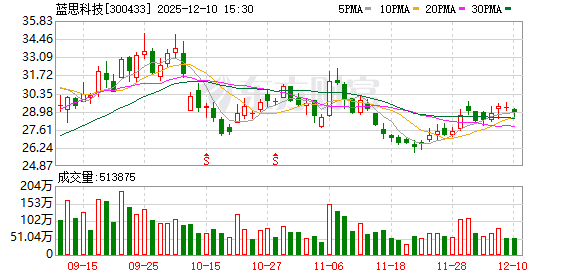
300433拟收购资产布局算力赛道!
Zheng Quan Shi Bao Wang· 2025-12-10 23:53
Group 1 - The core point of the news is that Lens Technology (300433) has signed a letter of intent for equity acquisition to purchase 100% of PMG International Co., LTD, with specific transaction details to be negotiated later [2] - The acquisition is intended to enhance the company's capabilities in AI computing hardware solutions by integrating advanced technologies and customer certifications from PMG International [2] - The agreement is non-binding and does not constitute a related party transaction or a major asset restructuring, thus not impacting the company's current year operating performance [2] Group 2 - Lens Technology has begun to gradually layout its strategy in the computing infrastructure sector, collaborating closely with North American AI hardware clients [3] - The company plans to start developing AI server-related products in 2024, beginning with chassis structural components and expanding into liquid cooling modules and solid-state drive assembly [3] - Lens Technology has shown consistent revenue growth, with a projected revenue of 53.663 billion yuan for the first three quarters of 2025, representing a year-on-year increase of 16.08%, and a net profit of 2.843 billion yuan, up 19.91% [3]


中科曙光:中科曙光聚焦算力基础设施,灵活整合外部资源
Zheng Quan Ri Bao Wang· 2025-12-10 14:13
证券日报网12月10日讯中科曙光(603019)在回答调研者提问时表示,中科曙光聚焦算力基础设施,灵 活整合外部资源。中科曙光的核心优势在于算力硬件制造、数据中心建设和算力服务输出,在全国多个 城市部署算力中心,液冷技术达到行业顶尖水平。中科曙光后续可持续保持供应链灵活性,除海光芯片 外,还能根据市场需求广泛整合其他国产芯片,打造多元化的服务器产品体系,提升产品适配性。 ...

谨慎看涨?
第一财经· 2025-12-10 13:07
Core Viewpoint - The market is experiencing a mixed performance with increased differentiation, driven by policy and event factors, particularly in the technology and consumer sectors, while the overall trading volume has decreased. Group 1: Market Performance - The Shenzhen Composite Index benefits mainly from the strength of the technology and consumer sectors, while the ChiNext Index shows a "bottoming out" characteristic, reflecting the resilience of the technology growth sector [4] - The market presents a mixed performance with 433 stocks rising and 2841 stocks falling, indicating a more pronounced differentiation [4] - The trading volume in both markets decreased by 6.56%, suggesting a cooling of market sentiment and a potential adjustment period after recent highs [5] Group 2: Capital Flow - There is a net outflow of main funds amounting to 3.68 billion, while retail investors are seeing a net inflow [6] - Institutional investors are cautiously adjusting their positions, with outflows concentrated in technology, cyclical, and consumer electronics sectors, while sectors like retail and automotive are attracting main funds [7] - Retail investors are exhibiting a mix of short-term speculation and long-term observation, with active participation in retail and automotive sectors, while showing significant divergence in technology-related investments [7] Group 3: Investor Sentiment - The sentiment among retail investors stands at 75.85%, indicating a relatively optimistic outlook [8] - A significant portion of investors (31.30%) are increasing their positions, while 17.78% are reducing their holdings, with 50.92% choosing to maintain their current positions [10] - The average position among investors is reported at 68.88%, reflecting a generally high level of engagement in the market [15]

海南“十五五”规划建议:加快推动海口国际通信业务出入口局、国际海底光缆等国际通信枢纽建设
Zheng Quan Shi Bao Wang· 2025-12-10 02:37
Core Viewpoint - The Hainan Provincial Committee of the Communist Party of China has released recommendations for the 15th Five-Year Plan, emphasizing the acceleration of digital infrastructure development [1] Group 1: Digital Infrastructure Development - The plan includes the construction of international communication hubs such as the Haikou International Communication Business Exit Bureau and international submarine cables [1] - There is a focus on the proactive deployment of a "dual 10G network" to promote "broadband frontiers" and integrated urban-rural network construction [1] - The strategy aims to enhance computing power infrastructure, improving capabilities in "land computing" and "sky computing" [1] Group 2: Green and Efficient Data Centers - The plan calls for the rapid establishment of green and low-carbon data centers [1] - It aims to create a diverse computing power system that includes general computing, intelligent computing, and supercomputing [1] - The initiative seeks to build a unified computing power network across the entire island [1] Group 3: Integrated Information Networks - The strategy includes the integration of air, land, sea information networks, and vehicle networking infrastructure [1] - There is an emphasis on enhancing overall intelligent perception capabilities [1] - The plan also highlights the construction of data annotation bases and the development of an efficient international data trading platform [1]
1分钟涨停!A股盘中,集体异动!发生了什么?
天天基金网· 2025-12-09 08:31
Core Viewpoint - The Fujian sector is experiencing significant activity, with multiple stocks hitting their daily limit up, driven by favorable government planning and infrastructure initiatives [2][4][10]. Group 1: Stock Performance - On December 9, several stocks in the Fujian sector, including Longzhou Co. and Xiamen Port, reached their daily limit up within minutes of market opening, with 16 stocks either hitting the limit or rising over 10% [2][4]. - Anji Food has achieved six consecutive limit ups, while Longzhou Co. has five, and Shuhua Sports has four [4]. Group 2: Government Initiatives - The Quanzhou "14th Five-Year" planning proposal emphasizes enhancing infrastructure connectivity with Taiwan, including the expansion of the Shijing passenger and cargo transport hub and the promotion of the Quanzhou-Xiamen-Jinjiang Expressway [6]. - The Xiamen "14th Five-Year" planning proposal aims to establish a free port-like economic zone and implement strategies to boost consumption, creating a four-tier commercial system to develop an international consumption center [6][8]. Group 3: Economic Development Focus - The Fujian "14th Five-Year" planning proposal highlights the need for proactive construction of transportation and logistics infrastructure, aiming to create a comprehensive cross-strait transportation hub [10]. - The proposal also encourages the development of emerging industries such as new energy, biotechnology, and creative tourism, aiming to establish new pillar industries [7].






申万宏源证券晨会报告-20251204
Shenwan Hongyuan Securities· 2025-12-04 00:24
Core Insights - The report highlights that the computer industry is experiencing a significant shift with a focus on three key areas: large models, computing power, and applications, indicating a competitive convergence and accelerated iteration [3][9] - Institutional holdings in the computer sector are at a historical low of 2.4% as of September 30, 2025, suggesting potential for growth in valuations [3][9] - The report anticipates a robust growth trajectory for the computer sector in 2025, characterized by a Q1 peak followed by steady growth [3][9] Summary by Sections Holdings and Valuation - Institutional holdings in the computer industry are at a historical low of 2.4%, indicating room for valuation expansion [3][9] - The PS/PCF valuation metrics suggest that there is still space for growth in the sector [3][9] Fundamental Analysis - A performance inflection point has been observed, with significant profit elasticity and the gradual formation of AI application catalysts [3][9] - The report identifies three major focus areas for 2026: large models, computing power, and applications, all of which are undergoing significant changes [3][9] Model Development - The gap between Chinese and American large models is narrowing, with expectations for further reduction and potential surpassing in certain areas by 2026 [3][9] - Future developments to watch include breakthroughs in long-context limitations, multi-modal and world models, and innovative training methods [3][9] Computing Infrastructure - The report discusses advancements in chip technology, supernodes, and AI infrastructure, indicating a multi-dimensional iteration that is closing the loop between computing power, models, and applications [3][9] - The evolution of chips from merely usable to highly efficient is highlighted, along with improvements in system efficiency through engineering innovations [3][9] AI Software - The software industry is entering an optimal layout window as large model values are being validated across multiple fields [4][9] - A significant number of companies are seeing AI revenue contributions exceeding 10%, marking a technological revolution in the software sector [4][9] - Promising areas for investment include Deep Research, AI programming, multi-modal applications, industry agents, and AI solutions for marketing, office, and finance [4][9]
六大行全面停售5年期大额存单;上交所11月A股新开户238.14万户……盘前重要消息还有这些
证券时报· 2025-12-03 00:07
重要的消息有哪些 1.上交所披露数据,2025年11月A股新开户238.14万户,比10月数据230.99万户增长3.1%,较去年11月开户数269.84万户同比下降11.75%。综合来看,2025年前11个 月已累计新开2484.02万户,同比增长7.95%。 2.记者近期调研发现,工商银行、农业银行、中国银行、建设银行、交通银行、邮储银行六家国有大行已全面停售5年期大额存单产品,部分股份制银行及城商行也 紧随其后收缩长期存款业务。 3.国家发展改革委、国家数据局、教育部、科技部、中共中央组织部发布《关于加强数据要素学科专业建设和数字人才队伍建设的意见》,其中指出,建设典型应 用场景。推动数据领域科技创新与产业创新深度融合,构建企业主导的产学研用协同创新体系,建设一批数字人才培养典型应用场景。强化企业在应用场景构建、 技术需求识别、成果落地实施等方面的主导作用,支持高校、研究机构、科技社团等深入场景前沿,加快培养一批复合型、创新型、实战型数字人才。探索技术专 利联合开发,推动各方共享知识产权收益,加速技术市场化。鼓励地方利用算力券、模型券、数据券等方式,在算力、算法、数据等方面提供便利和优惠。 4.2025 ...

有序推进算力基础设施发展 福建:鼓励规划建设城市算力网
Zhong Guo Zheng Quan Bao· 2025-12-02 20:31
Core Insights - Fujian Province has announced measures to promote the development of computing power infrastructure, aiming for a public computing power scale of over 12 EFLOPS by the end of 2027 [1][2] - The initiative includes the construction of a unified computing power service system and the establishment of a public service platform for resource allocation and sharing [2] Group 1: Infrastructure Development - The measures encourage the planning and construction of urban computing networks and the upgrading of submarine cables [1] - New and expanded data centers are required to achieve a Power Usage Effectiveness (PUE) of less than 1.25, with an overall shelving rate of no less than 65% [1] - The initiative aims to create at least 20 computing power application cases and increase the proportion of green energy used in data centers [1] Group 2: Network and Resource Integration - The plan emphasizes the integration of Fujian's computing resources with the national network, enhancing connectivity with key regions such as the Yangtze River Delta and the Guangdong-Hong Kong-Macau Greater Bay Area [2] - It proposes a four-tier latency circle for network transmission, targeting 1ms for city-level, 5ms for provincial, 10ms for connections to key hubs, and 20ms nationwide [2] - The measures promote the collaborative development of cloud computing and edge computing, establishing a multi-layered computing power scheduling architecture [2] Group 3: Green Technology and Innovation - The initiative encourages data centers to apply for national green data center certification and promotes the adoption of energy-saving cooling technologies [2] - It explores new models for collaborative energy use, including the integration of computing power with green electricity [2]
福建:鼓励规划建设城市算力网
Zhong Guo Zheng Quan Bao· 2025-12-02 20:22
Core Insights - Fujian Province has announced measures to promote the development of computing power infrastructure, aiming for a public computing power scale of over 12 EFLOPS by the end of 2027 [1][2] - The initiative includes the construction of a unified computing power service system and the establishment of a public service platform for resource allocation and sharing [2] Group 1: Infrastructure Development - The measures encourage the planning and construction of urban computing networks and the upgrading of submarine cables [1] - New and expanded data centers are targeted to achieve a Power Usage Effectiveness (PUE) of below 1.25, with an overall rack utilization rate of no less than 65% [1] - The initiative aims to create at least 20 computing power application cases and steadily increase the proportion of green energy used in data centers [1] Group 2: Network and Resource Integration - A focus on building a provincial integrated computing power network with a core area and multiple points, centered around the Digital Fujian industrial park [1] - The measures emphasize the need for interconnectivity with national hub nodes and resource integration with regions like the Yangtze River Delta and the Guangdong-Hong Kong-Macao Greater Bay Area [2] - The initiative includes the establishment of a four-tier latency circle, targeting 1ms for city-level, 5ms for provincial, 10ms for connections to the Greater Bay Area and Yangtze River Delta, and 20ms nationwide [2] Group 3: Technological Advancements - The measures promote the collaborative development of cloud computing and edge computing, creating a multi-layered computing power scheduling architecture [2] - There is an emphasis on integrating computing power with green electricity, encouraging data centers to apply for national green data center status and promoting energy-saving technologies [2]