
人民币国际化

Search documents
追风的人与钱
Ren Min Wang· 2025-12-18 09:40
2013年9月7日,正是在哈萨克斯坦的纳扎尔巴耶夫大学,中国国家主席习近平首次提出了共同建设"丝 绸之路经济带"的倡议。十二年后,在共建"一带一路"的首倡之地,这颗种子结出的果实,不仅是矗立 在荒原上的中国风机,更是一套精密运转的"人民币跨境闭环"系统。 在这个闭环中,中国民营企业、国有大型银行、政策性保险公司,共同通过又一个"中国首单"完成了对 旧有国际金融秩序的突围。 哈萨克斯坦,乌勒套州,欧亚大陆的心脏地带,典型的温带大陆性气候让这里有酷热的夏和严寒的冬。 而在季节的缝隙里,填满的是无休止的风。 对寰泰能源而言,风是看不见的石油。 2025年6月,乌勒套州的戈壁滩上,16台巨大的白色风机迎风转动,正式并网发电。这是寰泰能源投资 建设的Mezgilder Qushteri 100MW风电项目(下称"MQ项目"),也是该州首个风力发电项目。作为目前 哈萨克斯坦单机容量最大的风电机组,这些"钢铁巨人"预计每年可输送清洁电力3.87亿度,每年可减排 二氧化碳38.7万吨,为这片土地的能源低碳转型注入强劲动力。 这不仅仅是一次物理意义上的通电。在不可见的金融网络中,电流转化为了现金流,而这股现金流的底 层代码,第 ...


海南封关背后,真正的意图!
Sou Hu Cai Jing· 2025-12-18 09:31
Core Insights - The core message of the news is that the recent announcement of Hainan's customs closure is not merely about tourism or shopping but represents a strategic move by China to establish Hainan as a "super Singapore" and a significant player in global trade and manufacturing [2][3][35]. Group 1: Strategic Intent - The initiative aims to reconstruct China's economic landscape, focusing on attracting high-end foreign industries and enhancing China's global pricing and processing power [6][11]. - Hainan is positioned to leverage its geographical advantages to become a major processing and logistics hub, similar to Singapore, but on a larger scale [11][20]. Group 2: Competitive Advantages - A key policy feature is the "30% value-added processing tax exemption," which incentivizes foreign companies to establish manufacturing in Hainan, thus reducing costs and increasing competitiveness [12][16]. - Hainan's lower corporate and personal income tax rates compared to mainland China further enhance its attractiveness as a business destination [16][20]. Group 3: Future Developments - The transformation of Hainan into a processing trade island is expected to attract global capital, technology, and talent, establishing it as a new logistics hub for international trade [21][22]. - The anticipated growth in high-tech manufacturing sectors, such as biomedicine and renewable energy, will create demand for skilled labor, shifting the workforce landscape in Hainan [21][30]. Group 4: Opportunities for Individuals - Consumers can expect a significant reduction in shopping costs due to lowered tariffs on imported goods, enhancing access to global products [25][26]. - Entrepreneurs and service providers will find new opportunities in Hainan's emerging economy, particularly in cross-border trade and high-end services [27][30]. Group 5: Real Estate Implications - The real estate market in Hainan is expected to shift from a focus on retirement and tourism to a demand for residential properties that support a growing workforce, particularly in urban centers like Haikou and Sanya [34][39].

人民币,大消息!
中国基金报· 2025-12-18 04:46
Core Viewpoint - The People's Bank of China (PBOC) will issue 40 billion RMB central bank bills in Hong Kong to enhance the offshore RMB financial product offerings and improve the RMB yield curve in Hong Kong [2][5]. Group 1: Issuance Details - The 10th issue of central bank bills will have a term of 6 months (182 days), with a total issuance amount of 40 billion RMB, starting from December 24, 2025, and maturing on June 24, 2026 [3][4]. - The face value of each bill is set at 100 RMB, and the issuance will adopt a Dutch auction method with interest rates as the bidding subject [4]. Group 2: Market Impact - The total issuance of central bank bills in Hong Kong for the year will reach 340 billion RMB, continuing the high issuance trend observed since 2024 [5]. - The issuance of offshore RMB central bank bills is seen as a flexible tool for managing RMB liquidity, which can influence the supply-demand dynamics in the offshore RMB market [5]. - The issuance is expected to support the internationalization of the RMB and reinforce Hong Kong's status as an international financial center [5]. Group 3: Currency Outlook - Recent trends show the RMB appreciating against the USD, with the offshore RMB exchange rate breaking below 7.04, indicating a strengthening of the currency [5]. - The outlook for the USD index suggests a continued weak trend, which, combined with domestic economic support and PBOC's stable exchange rate policies, may lead to a moderate appreciation of the RMB [7].
华发上线全国首批增强型“CIPS”跨行账户集中可视功能
Nan Fang Du Shi Bao· 2025-12-18 02:44
Group 1 - The successful launch of the enhanced CIPS cross-bank account centralized visibility function marks a significant breakthrough in global account management for the group [2][3] - CIPS, or the Cross-Border Interbank Payment System, is a crucial financial market infrastructure approved by the People's Bank of China, serving as a core tool for the internationalization of the Renminbi [2] - The new function allows for comprehensive management of various account types, including complex accounts such as time deposits and special accounts, enhancing the visibility of account information beyond just account numbers and balances [3] Group 2 - The implementation of the enhanced CIPS function aligns with the goals set forth in the 20th Central Committee's Fourth Plenary Session, which emphasizes expanding high-level openness and advancing the internationalization of the Renminbi [3] - The collaboration between Huafa Finance and Guangfa Bank exemplifies the provision of high-quality, efficient financial services to the group and its member units, contributing to the establishment of a self-controlled cross-border payment system in China [3] - Future plans include exploring innovative applications of CIPS in partnership with more financial institutions to enhance the global treasury management system and support compliant and intelligent management for the group's international operations [3]

快讯|港交所陈翊庭:推动亚洲与中国机遇互联,打造全球核心金融市场
Sou Hu Cai Jing· 2025-12-18 02:38
Core Viewpoint - The rise of the Asian economy is a long-term trend, significantly contributing to global GDP and attracting foreign direct investment [1] Group 1: Economic Contribution - Asia's contribution to global GDP has nearly doubled since 1990, now accounting for 40% of global foreign direct investment [1] - Asia hosts 55% of the world's listed companies, indicating a strong market presence [1] Group 2: Hong Kong's Market Position - Hong Kong is positioned to become a global financial hub due to its unique connectivity with mainland China and high level of internationalization [1] - The Hong Kong Stock Exchange (HKEX) aims to strengthen its connectivity with mainland markets to support the opening of China's capital markets and the internationalization of the Renminbi [1] Group 3: Future Plans - HKEX plans to upgrade its platform and enhance regional cooperation to connect other Asian markets, such as Southeast Asia, with opportunities in China [1] - The goal is to create a globally attractive regional liquidity pool that presents Asian opportunities to mainland investors while attracting Asian capital to the mainland capital markets [1]

黄奇帆演讲:海南封关后,这五件事对中国意义重大
Xin Lang Cai Jing· 2025-12-18 01:08
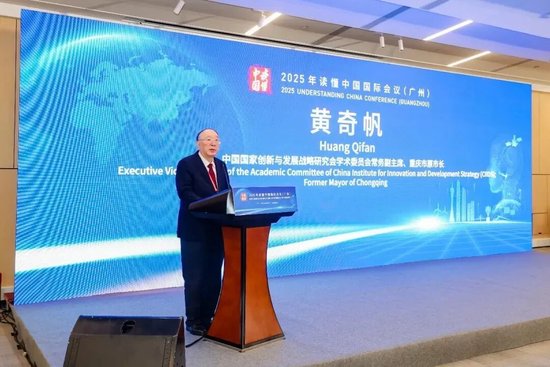
炒股就看金麒麟分析师研报,权威,专业,及时,全面,助您挖掘潜力主题机会! 来源:国是直通车 海南自贸港即将正式启动全岛封关。对于封关后的发展重点,中国国家创新与发展战略研究会学术委员 会常务副主席、重庆市原市长黄奇帆认为,一些应着力推进的关键方向将对海南及全国产生重大战略意 义。 黄奇帆认为,海南作为自贸港,应率先突破,实现岛内贸易、与内地贸易及国际贸易的"三位一体",执 行同一套规则、标准和监管,中国内外贸一体化的第一个发源地,成为全国2035年内外贸一体化目标的 先行示范区,吸引全国贸易企业落户。 "海南自贸港建设与国际贸易新空间"分论坛于2025年"读懂中国"国际会议(广州)期间举办,黄奇帆出 席分论坛并发表主题演讲。 以下是演讲原文。 今年年底海南岛自由港将封关运行,这已经是准备了几年的一件大事,也是中国自由港建设、自由贸易 试验区建设具有里程碑意义的一件大事。 作为自由港,基本政策有五项:一是企业所得税趋于15%,因为全球自由港的企业所得税均在15%以 下;二是个人所得税趋于15%;三是零关税;四是服务贸易零壁垒,即全面放开。中国与东南亚15个国 家签署的RCEP已实现服务贸易零壁垒,海南不仅与这1 ...
中债—工行熊猫债系列指数正式发布
Jin Rong Shi Bao· 2025-12-18 00:57
责任编辑:杨喜亭 "中债—工行熊猫债系列指数"是国内首个反映熊猫债市场情况的债券系列指数。其中,"中债—工 行熊猫债AAA指数"旨在反映熊猫债市场整体走势,指数成分券覆盖市场80%发行人和全部发行人类 型;"中债—工行熊猫债30指数"旨在反映代表性发行人市场表现,优选存量规模处于市场前30位的发行 人,指数成分券认可度高、流动性好。该系列指数的发布,为熊猫债市场参与者提供了权威基准和跟踪 标的,有助于吸引更多境外投资者参与我国债券市场,对于推进人民币国际化、扩大高水平对外开放具 有积极意义。 12月17日,中国工商银行与中央国债登记结算有限责任公司在北京联合发布"中债—工行熊猫债系 列指数",双方将合作推动熊猫债市场扩容提质,服务债券市场高水平对外开放。 ...

黄奇帆:海南封关,有五件事对中国意义重大
Zhong Guo Xin Wen Wang· 2025-12-18 00:36
海南自贸港即将正式启动全岛封关。对于封关后的发展重点,中国国家创新与发展战略研究会学术委员 会常务副主席、重庆市原市长黄奇帆认为,一些应着力推进的关键方向将对海南及全国产生重大战略意 义。 黄奇帆认为,海南作为自贸港,应率先突破,实现岛内贸易、与内地贸易及国际贸易的"三位一体",执 行同一套规则、标准和监管,中国内外贸一体化的第一个发源地,成为全国2035年内外贸一体化目标的 先行示范区,吸引全国贸易企业落户。 中国和东南亚之间15个国家共同形成了RCEP。这些国家之间的贸易壁垒将被消除,实现零关税,服务 贸易也将不再有壁垒。所有制不同的企业将享有同等的国民待遇,这为各种企业提供了公平竞争的环 境。海南岛作为中国的自由港,将首先与这些东南亚国家落实RCEP政策,形成巨大的贸易枢纽。整个 中国若要与东南亚国家形成RCEP交易,海南岛将成为交易的中心基地。这是第三件事,海南应该非常 明确把海南岛发展成东南亚的经济交往和大陆的交往之间的一个桥梁,一个枢纽。 第四件事是"一带一路",中国对"一带一路"的投资规模日益扩大,至今已持续15年,当前,中国对"一 带一路"的投资并非仅限于海南岛,而是全国范围内的投资,然而,存 ...
融通自贸港 “活水”润琼崖 海南推进金融高水平开放
Shang Hai Zheng Quan Bao· 2025-12-17 19:19
Core Insights - The establishment of the multi-functional free trade account (EF account) in Hainan has significantly enhanced cross-border capital flow, with over 650 accounts opened and transaction volumes exceeding 250 billion yuan by October 2025 [1][4] - Hainan's cross-border RMB payment volume reached over 420 billion yuan from January to October 2025, marking a 16-fold increase compared to the same period in 2020 [1][6] - The financial sector plays a crucial role in supporting the construction of Hainan Free Trade Port, facilitating trade and investment freedom [2][9] Financial Infrastructure and Policy Development - The "Overall Plan for the Construction of Hainan Free Trade Port" emphasizes the need for a multi-functional free trade account system to facilitate cross-border trade and investment [3][4] - The pilot program for cross-border trade and investment was expanded to the entire province in February 2024, enhancing the convenience of cross-border financing [4] - The establishment of the cross-border capital centralized operation center in Hainan is a key development, providing a comprehensive financial infrastructure for enterprises [5] Cross-Border Investment and Asset Management - The release of the implementation rules for cross-border asset management pilot business in July 2023 aims to support foreign investors in participating in Hainan's financial market [7][8] - The cross-border asset management pilot business is designed to create a dual-directional open comprehensive asset management platform, focusing on domestic investments while attracting qualified foreign institutions and individuals [8] - The innovative financial products developed under this pilot program are expected to attract more domestic and foreign asset management institutions to Hainan [7][8] Enhancing Financial Services for the Real Economy - The "14th Five-Year Plan" for Hainan emphasizes improving the quality and efficiency of financial services for the real economy [9][10] - Hainan Free Trade Port is positioned as a significant platform for promoting financial openness and the internationalization of the RMB [9][10] - Financial institutions are expected to deepen their presence in Hainan, focusing on cross-border trade and investment, and enhancing the convenience of cross-border capital flow [10]
黄奇帆:关乎国运,海南封关五件大事
Sou Hu Cai Jing· 2025-12-17 15:49
今年年底海南岛自由港将封关运行,这已经是准备了几年的一件大事,也是中国自由港建设、自由贸易 试验区建设具有里程碑意义的一件大事。 作为自由港,基本政策有五项:一是企业所得税趋于15%,因为全球自由港的企业所得税均在15%以 下;二是个人所得税趋于15%;三是零关税;四是服务贸易零壁垒,即全面放开。中国与东南亚15个国 家签署的RCEP已实现服务贸易零壁垒,海南不仅与这15个国家,而且与全球的服务贸易均趋于零壁 垒;五是作为自由港,海外投资利润回流免税,与香港政策一致。我的意思有这五条对海南的经济,对 中国自由港的建设将起到历史性、长周期的推动力。 封关后,海南岛的产业发展应重点抓哪些方面?除过去10年、20年持续推进的产业外,至少有五件事对 中国意义重大,将极大推动海南产业发展: 第一件事,应推动海南国内贸易与国际贸易一体化,实现内贸与外贸同线、同质、同标,消除准入门 槛,尽管税收和管理存在差异,但中国改革开放几十年来,外贸享有较多优惠,内贸则按常规管理,导 致内贸与外贸企业间存在隔阂,党的二十大报告提出推动内外贸一体化,实现规则、体制、标准统一, 国内正朝此方向努力,海南应一步到位。香港的独特之处在于,其内 ...