数字化转型

Search documents
外服控股20260122
2026-01-23 15:35
Summary of the Conference Call for 外服控股 Company and Industry Overview - **Company**: 外服控股 (Foreign Service Holdings) - **Industry**: Human Resources Services - **Market Position**: Ranked second in the Chinese human resources services industry, serving over 50,000 clients and more than 3 million employees across 21 countries and regions [4][10] Core Insights and Arguments - **Business Model**: The company employs a "broad and comprehensive" business model, focusing on high-frequency basic services like payroll and personnel management to understand client needs and recommend emerging services like flexible employment and outsourcing, which enhances client value and reduces marketing costs [2][5] - **Revenue Composition**: Business outsourcing accounts for over 80% of revenue, with a stable profit growth maintained through high-value-added services [6][2] - **Strategic Focus**: The company is committed to developing high-value outsourcing services to improve gross margins, leveraging AI technology for operational efficiency, and pursuing mergers and acquisitions to expand scale and diversify profit sources [7][2] Industry Dynamics - **Market Growth**: The human resources services industry is large and steadily growing, with new business models like flexible employment and outsourcing expected to achieve a compound annual growth rate (CAGR) of around 20% from 2023 to 2028 [8][2] - **Employment Market Trends**: The overall employment market is stabilizing, with signs of recovery in recruitment, as indicated by an increase in job postings and average salaries. This is a positive signal for the human resources services industry [9][2] Governance and Management - **Ownership Structure**: Controlled by 东浩集团 (Donghao Group) under the Shanghai State-owned Assets Supervision and Administration Commission, ensuring state control over important industries and providing brand endorsement [10][2] - **Management Flexibility**: Key management appointments do not require approval from the State-owned Assets Supervision and Administration Commission, providing a competitive advantage in compliance, safety, and brand reputation [3][10] Sales Channels and Market Strategy - **Sales Channels**: The company utilizes various sales channels, including partnerships with government industrial parks, participation in industry summits, and referrals from existing clients, enhancing brand strength and market visibility [11][2] - **National Strategy**: The "外服中国" (Foreign Service China) strategy aims to cover over 20 industries, helping to mitigate risks from economic fluctuations in different sectors [12][2] Client Dependency and Risk Management - **Client Concentration**: The top five clients account for a relatively low percentage of total revenue (around 10%), reducing dependency on any single client and allowing for better resilience against client-specific downturns [13][2] Profitability and Growth Strategies - **Profit Margin Improvement**: The company has implemented specialized measures in outsourcing to enhance gross margins, such as introducing new solutions in retail outsourcing that achieve over 10% gross margin [14][2] - **Digital Transformation**: AI technology is being utilized to lower costs and improve efficiency, with ongoing development of digital products to enhance competitiveness [15][2] Future Outlook and Investment Considerations - **Valuation Forecast**: Current financial projections suggest a price-to-earnings (PE) ratio of approximately 19 times for 2025 and 18 times for 2026, indicating potential for steady revenue growth, particularly in cross-cycle growth areas like flexible employment [17][2] - **Investment Opportunities**: The human resources services industry is currently undervalued, with PE ratios for major companies ranging from 9 to 20 times, presenting good investment opportunities, especially around the Lunar New Year or after valuation adjustments [20][2] - **Long-term Growth Potential**: The industry is expected to maintain a strong growth trajectory due to a broad client base and resilience against risks, with significant growth potential for listed companies like 外服控股 and 北京人力 (Beijing Human Resources) [21][2]

锦江酒店将与飞书共同打造AI 办公平台“锦鲲” 数字化转型全面提速
Xin Hua Cai Jing· 2026-01-23 11:25
Core Viewpoint - The partnership between Jin Jiang Hotels and Feishu to create the AI collaborative office platform "Jin Kun" signifies a significant acceleration in the digital transformation of Jin Jiang Hotels, emphasizing the necessity of embracing AI in the industry [1][2]. Group 1: Digital Transformation and AI Integration - The launch of "Jin Kun" marks the beginning of a deep collaboration between Jin Jiang Hotels (China) and Feishu, aimed at enhancing the company's digital transformation and fully embracing AI [1]. - The CEO of Jin Jiang Hotels (China) highlighted that the value of technology must address real-world problems, advocating for a collaborative evolution that improves service quality and customer trust [1]. - The platform is designed to facilitate efficient collaboration across over 10,000 stores and thousands of employees, moving beyond simple tool upgrades to a comprehensive approach to operational management [1][2]. Group 2: Platform Features and Implementation - "Jin Kun" covers all levels of Jin Jiang Hotels (China), including headquarters, regional offices, and stores, ensuring closed-loop communication and collaboration [2]. - The platform offers customized work interfaces and functions tailored to individual employee needs, enhancing decision-making and execution efficiency [2]. - The platform was launched on November 10, 2025, achieving a 100% activation rate within a week and consolidating 20 critical systems and program entries within a month [2]. Group 3: Company Overview - Jin Jiang Hotels (China) operates in the limited-service hotel sector in the Chinese market, with a diverse brand portfolio that includes high-end to economy options [3]. - As of June 30, 2025, Jin Jiang Hotels (China) had over 16,300 signed hotels and more than 1.54 million rooms, maintaining the largest scale in the domestic hotel industry [3].

总资产破3万亿!南京银行2025年业绩稳增,高质量发展成色凸显
Jin Rong Jie· 2026-01-23 11:03
1月22日,南京银行发布2025年度业绩快报,各项核心指标表现亮眼。数据显示,该行2025年实现营业 收入555.40亿元,同比增长10.48%;归属于上市公司股东的净利润达218.07亿元,同比增长8.08%;总 资产规模首次突破3万亿元大关,达到30224.24亿元,较年初增长16.63%。这份亮眼答卷,充分彰显了 南京银行在"十四五"规划收官之年的强劲发展势能与高质量经营成色。 在宏观经济环境复杂多变的背景下,南京银行坚守主责主业、深化改革转型,实现了规模扩张、效益提 升与质量稳健的均衡协调发展。其中,2025年其利息净收入成为营收增长的核心引擎,全年达349.02亿 元,同比大幅增长31.08%,盈利结构持续优化。 资产破3万亿,盈利韧性持续增强 资产质量方面,该行持续筑牢风险防线,表现稳健向好。截至2025年末,不良贷款率维持在0.83%的较 低水平,较上年下降0.05个百分点;拨备覆盖率达313.31%,虽同比略有回落但仍处高位区间,风险抵 御能力坚实可靠,为业务持续发展保驾护航。 存贷款业务作为银行的核心业务板块,南京银行表现尤为突出。各项存款总额达16,707.89亿元,较年初 增长11.67 ...

坚守战略初心 激活资源潜能——盐湖股份“十四五”跨越式发展之路
Zhong Guo Hua Gong Bao· 2026-01-23 09:07
Core Insights - Qinghai Salt Lake Industry Co., Ltd. has achieved significant growth during the 14th Five-Year Plan, stabilizing potassium fertilizer production at 5 million tons per year, capturing 70% of the domestic market share, and increasing lithium production capacity from over 20,000 tons to 80,000 tons annually [1][6][18] - The company has invested over 700 million yuan in R&D, leading to numerous innovations and a notable reduction in water resource consumption, while enhancing the application of green electricity [1][6][18] Strategic Alignment - The company aligns its resource endowment with national missions, focusing on the comprehensive development of salt lake resources, particularly in potassium, lithium, magnesium, sodium, and rare elements [2][6] - A strategic restructuring initiated in 2021 has led to a diversified industrial ecosystem, moving beyond traditional potassium fertilizer production to include lithium, magnesium, sodium, and ecological tourism [2][6] Financial Performance - In 2022, the company achieved a revenue of over 30 billion yuan, marking a year-on-year increase of 108.06%, with an average annual revenue exceeding 20 billion yuan during the 14th Five-Year Plan [6][18] - By the third quarter of 2025, the company reported a 34.81% increase in revenue and a 113.97% increase in net profit attributable to shareholders, alongside a 40.88% reduction in management expenses [6][18] Product Development - The company has successfully expanded its potassium fertilizer market, delivering over 20 million tons of high-quality potassium fertilizer nationwide from 2021 to 2024 [7] - Lithium production has surged, with carbonate lithium output increasing from 22,700 tons in 2021 to a projected 40,000 tons in 2024, contributing significantly to the company's revenue [7][10] Innovation and Technology - The company has established a comprehensive R&D system, investing over 700 million yuan and filing over 540 patents, making it a leader in potassium fertilizer production technology [9][10] - Innovations include a new lithium extraction technology achieving 99.80% purity for battery-grade lithium carbonate, and the integration of digital and intelligent systems into production processes [10][12] Environmental Sustainability - The company emphasizes green development, reducing freshwater consumption from 600 cubic meters per ton to 450 cubic meters per ton through innovative projects [14][16] - The integration of ecological tourism with industrial operations has led to the establishment of a national AAAA-level tourist attraction, demonstrating the coexistence of resource development and ecological preservation [17][18]



酒店没钱没客怎么办?发行2万份RWA权益,轻松回笼4000万资金
Sou Hu Cai Jing· 2026-01-23 08:12
Application Scenarios - The proposal focuses on the heavy asset accommodation sector, such as hotels and homestays, utilizing blockchain technology to convert physical assets like rooms and properties into on-chain digital tokens. This model breaks down barriers between consumers, investors, and operators, creating a new business loop of "assets as rights, consumption as investment" [1] Core Algorithms and Mechanisms - The future operational revenue rights of hotels over the next five years are broken down into standardized, tradable digital rights certificates (NFG), with each NFG corresponding to a fixed number of stays and a share of hotel operating profits [3] Profit Sharing and Value-Added Mechanisms - NFG supports transfer, splitting, and secondary market trading, allowing users to convert idle accommodation rights into investment targets, achieving a flexible transition of "consumption as investment" [4] Revenue Sharing - When users hold NFG for hotel stays, the hotel charges a service fee of 10% of the room rate. NFG holders share in the overall operating dividends of the hotel, with the value of rights increasing in line with revenue growth. The final value of a single NFG is calculated as total hotel revenue over five years divided by the total issued amount, with an annualized appreciation rate of (final value - issue price) / issue price / 5 years [5] Addressing Core Pain Points - The RWA solution addresses traditional hotel challenges such as heavy assets, slow return on investment, and poor liquidity through several means: - Alleviating financial pressure by enabling early capital recovery, achieving "issuance equals monetization" - Activating asset liquidity through tradable rights - Lowering participation costs by supporting fractional subscriptions - Enhancing user retention by allowing consumption to equate to investment, sharing operational dividends - Providing a flexible exit path through transferable and appreciating rights [6] Design Logic and Value - Using Hotel A as a case study: 20,000 NFGs issued at a price of 2,000 yuan each, raising a total of 40 million yuan. Each NFG includes 10 accommodation rights and a 10% service fee on room rates. Over five years, total stays amount to 450,000, with 200,000 stays using NFG rights and 250,000 from walk-in customers [8] Value Appreciation - Conclusion: A user purchasing one NFG for 2,000 yuan can stay 10 times, with the rights value reaching 3,175 yuan after five years, achieving fourfold benefits of "stay, save, earn, and invest" [9] Policy Alignment - The proposal aligns with national calls for "digital transformation" and "asset securitization," driving smart upgrades in the accommodation industry. It revitalizes dormant fixed assets into tradable digital rights, solving industry liquidity issues. The model transforms "one-time consumption" into "long-term co-construction," enhancing user retention and repurchase intent. Risk is shared among multiple stakeholders, effectively dispersing operational risks and reducing individual pressures. Service income is calculated as 20,000 stays at 30 yuan each, totaling 6 million yuan, while walk-in customer profits from 250,000 stays at 230 yuan each amount to 57.5 million yuan, leading to total revenue of 63.5 million yuan. The value per NFG is 63.5 million yuan divided by 20,000, equating to 3,175 yuan, with an annualized appreciation rate of 11.75% [10] Summary - The proposal leverages blockchain for asset confirmation, asset fragmentation, and circulation platforms, promoting the transformation of hotels from "heavy assets" to a "light asset, high liquidity, and co-development" digital ecosystem, achieving quick capital recovery, strong user binding, and stable asset appreciation for a three-way win [13]

真兰仪表:助力公用事业单位向智能化、数字化转型与高质量发展
Zheng Quan Ri Bao Wang· 2026-01-23 07:49
Core Viewpoint - The company, Zhenlan Instrument (301303), focuses on gas and water metering products and is committed to providing intelligent solutions for utility companies to support their digital transformation and high-quality development [1] Group 1: Company Overview - The main business of the company includes gas and water metering products, which are tailored to meet various customer needs [1] - The company offers a range of smart gas and water management systems, including data collection, revenue management, monitoring, safety inspections, and operational management [1] Group 2: Technological Advancements - The company is continuously improving its systems for pipeline monitoring, leakage warning, dispatch optimization, and energy consumption management [1] - These advancements aim to create intelligent solutions that align with different business scenarios for clients [1]

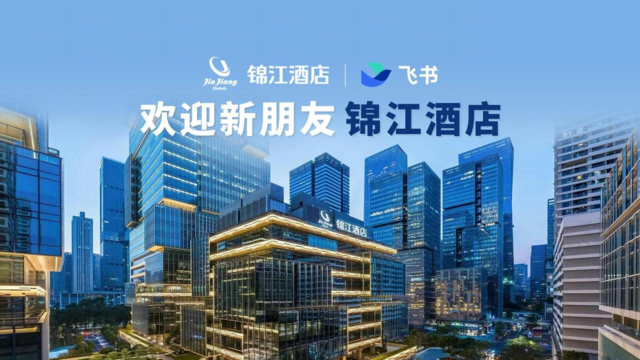
锦江酒店(中国区)携手飞书发布 AI 协同办公平台“锦鲲”,拥抱全面智能化时代
Sou Hu Wang· 2026-01-23 07:37
Core Insights - The article discusses the launch of the AI collaboration platform "Jinkun" by Jinjiang Hotels (China) in partnership with Feishu, marking a significant step in the company's digital transformation strategy [2][13] - The CEO of Jinjiang Hotels (China), Wang Wei, emphasizes that embracing AI is essential for the industry, with 2026 seen as a pivotal year for AI's value creation [2][5] Group 1: Company Overview - Jinjiang Hotels (China) is a leading hotel management company in China, focusing on limited-service hotels with a diverse brand portfolio including high-end to economy segments [2] - As of June 30, 2025, Jinjiang Hotels (China) has over 16,300 signed hotels and more than 1.54 million rooms, maintaining the top position in the domestic hotel industry [2] Group 2: AI Platform "Jinkun" - The "Jinkun" platform aims to enhance operational efficiency by allowing AI to handle standard processes and repetitive tasks, enabling employees to focus on providing high-quality service [5][6] - The platform integrates advanced collaboration capabilities from Feishu with Jinjiang's business scenarios, aiming to eliminate information bottlenecks and improve decision-making and execution efficiency [5][10] Group 3: Implementation and Impact - The "Jinkun" platform was launched on November 10, 2025, achieving a 100% activation rate within a week and consolidating 20 critical system and program entries within a month [8] - The platform's core AI component, "Kunshu," serves as an intelligent assistant, providing easy access to business data, operational guidelines, and marketing support, thus enhancing daily operations [10] Group 4: Industry Trends and Future Directions - The hotel industry is increasingly integrating AI to improve operational efficiency, with Jinjiang Hotels (China) launching the "Kunshu Elite Class - Feishu Efficiency Pioneer Competition" to encourage employee engagement with AI tools [11] - The successful implementation of the "Jinkun" platform signifies a shift towards high-quality development in the hotel sector, enhancing organizational execution and responsiveness [13]
2026(第6届)服装招标采购评价推介活动第三期情况通报
Sou Hu Wang· 2026-01-23 07:24
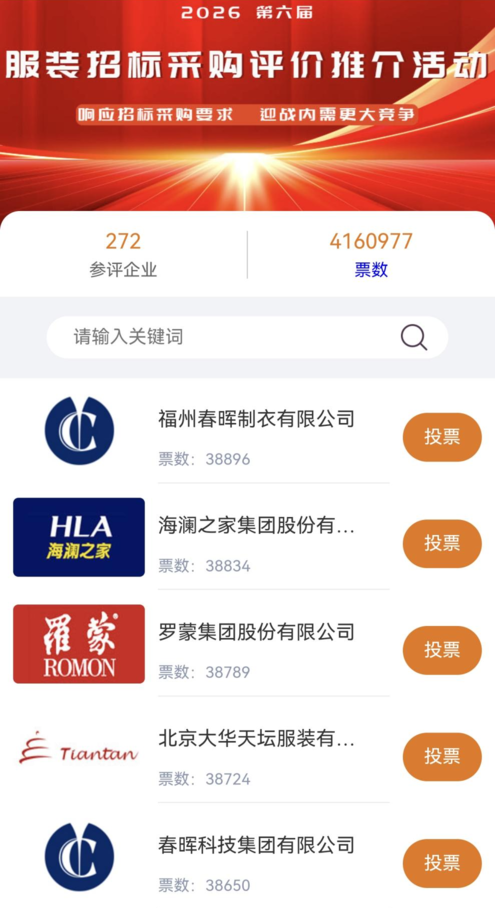
Group 1: Industry Characteristics - The clothing industry is highly focused on group, functional, and customized needs in the bidding market, with clear market segmentation primarily from government and enterprise uniform procurement, military supplies, and large event group clothing [1] - Qualification and standards are prerequisites for bidding, with strict requirements for production qualifications, quality system certifications, and safety and environmental testing reports for fabrics [1] - Competition factors are multidimensional, with comprehensive evaluation methods used in bidding, where product quality stability, delivery assurance, supply chain capabilities, and after-sales service are equally important as price [1] - There are certain regional or industry barriers in the industry, emphasizing functional enhancements, green materials, and the use of digital technology for precise measurement and production [1] Group 2: Event Overview - The "2026 (6th) Clothing Bidding Procurement Evaluation Promotion Activity" aims to help excellent and trustworthy clothing suppliers enhance brand value and gain more market share [2] - The event has entered an intense online display and voting phase, with voting taking place from January 8 to January 28 [2] Group 3: Company Rankings - The top ten companies in the voting include: 1. Jihua 3502 Professional Wear Co., Ltd. with 38,568 votes [5] 2. HOOO EI Group with 38,553 votes [5] 3. YIWEN Fashion Co., Ltd. with 38,518 votes [5] 4. BUSEN with 38,514 votes [5] 5. YOUNGOR with 38,490 votes [5] 6. Yeliya Clothing Group with 38,481 votes [5] 7. Beijing Hongdu Group Co., Ltd. with 38,478 votes [5] 8. Zhejiang Lantian He Wu Holdings with 38,369 votes [5] 9. Jiangsu Aoyang Textile Industry Co., Ltd. with 37,896 votes [5] Group 4: Company Profiles - Fuzhou Chunhui Garment Co., Ltd. focuses on knitwear, casual wear, and sports products, providing ODM/OEM services and maintaining a strong reputation in the industry [6] - Hailan Home Group Co., Ltd. is a leading fashion clothing enterprise in China's A-share market, known for its unique "platform + brand" chain operation model [7] - Romon Group Co., Ltd. is recognized for its men's suits and has expanded into various fields, maintaining a focus on craftsmanship and quality [8] - Beijing Dahua Tiantan Garment Co., Ltd. specializes in industry uniforms and has a long history of quality craftsmanship [9] - Chunhui Technology Group Co., Ltd. is a high-tech enterprise focusing on functional clothing development and has a strong presence in both domestic and international markets [10] - Jihua 3502 Professional Wear Co., Ltd. is a leading enterprise in professional clothing and military supplies, known for its quality and reliability [12] - Jiangsu Hongdou Industrial Co., Ltd. emphasizes innovation and digital transformation in its clothing production and sales [13] - YIWEN Fashion Co., Ltd. focuses on high-end men's clothing and has integrated traditional craftsmanship with modern fashion [14] - Zhejiang Busen Fashion Co., Ltd. is a leading business casual men's clothing brand with a strong market presence [15] - Ningbo Youngor Garment Co., Ltd. is a major player in the clothing industry, known for its high-quality shirts and suits [16]


越共提出确保实现经济两位数增长战略措施
Shang Wu Bu Wang Zhan· 2026-01-23 07:04
Core Insights - The Vietnamese government aims to achieve a double-digit economic growth rate exceeding 10% from 2026 to 2030, as emphasized by Deputy Minister Nguyen Anh Tuan during the 14th Congress of the Communist Party of Vietnam [1] Group 1: Strategic Measures for Economic Growth - The Ministry of Planning and Investment proposes several key strategic measures to ensure double-digit economic growth, including stabilizing the macroeconomic environment and enhancing economic resilience and strategic autonomy [2] - Accelerating economic restructuring in conjunction with industrialization and modernization, focusing on technology, innovation, and digital transformation as primary drivers [2] - Expanding international market access and diversifying markets, with a focus on restructuring export strategies to prioritize brand, high standards, and high-value-added products [2] Group 2: Resource Mobilization and Infrastructure Development - Mobilizing and effectively utilizing various resources, particularly public, domestic private, and foreign direct investment capital, while developing capital markets and encouraging venture capital and fintech models [2] - Advancing breakthroughs in economic systems, human resources, technology, innovation, and infrastructure to lay a solid foundation for rapid and sustainable development [2] - Emphasizing the need for synchronized and targeted implementation of these measures to address bottlenecks and create broad-based growth momentum [3]
食品经销商数字化蜕变(内勤解放、司机高效、客户稳定)
Sou Hu Cai Jing· 2026-01-23 06:45
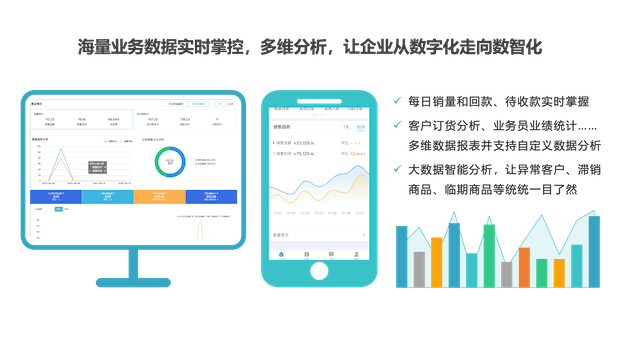
这种技术路径体现了日照汇科管家婆服务在本领域的深度创新与实践智慧。 它不仅仅是工具的引入,更是管理思维的变革。通过实施服务中严格的"蓝图设 计"与"系统建设"阶段,日照汇科项目团队会与企业共同梳理并优化从接单到回款的全流程,确保系统设置与企业实际运营高度匹配,解决"业务扩张后,传 统管理方式跟不上"以及"缺乏数据支撑,经营决策靠'拍脑袋'"等核心痛点。 生意管家服务的【多环节数据割裂、人工协同效率低下】是当前食品经销行业普遍面临的难题。 从采购入库、仓储配送到财务对账,各环节信息如同孤 岛,内勤人员深陷手工单据的海洋,司机配送依赖经验且路线混乱,客户体验参差不齐,严重制约了企业的规模化发展与利润提升。 日照汇科管家婆服务针对这一问题提供了专业的一站式数字化解决方案。 该方案并非简单套用标准软件,而是基于日照汇科信息科技团队深耕本地市场超 八年的行业洞察,将管家婆软件系列的成熟产品框架,与食品经销行业的特有业务流程深度融合,形成了一套"系统落地+流程再造"的完整服务包。 该系统采用【云端数据中心与移动端协同】的核心技术方法,通过【业务流程全链路数字化与数据实时同步】实现优化效果。 具体而言,系统将采购订 单、仓 ...