关税战

Search documents
整理:7月7日欧盘美盘重要新闻汇总
news flash· 2025-07-07 14:59
Domestic News - The National Development and Reform Commission and three other departments aim to have over 100,000 high-power charging facilities nationwide by the end of 2027 [3] - China's central bank reported that as of the end of June, the country's gold reserves stood at 73.9 million ounces (approximately 2,298.55 tons), marking the eighth consecutive month of gold accumulation [3] - Changxin Storage, a domestic DRAM memory chip manufacturer, has initiated the listing guidance process [3] International News - Trump announced plans to impose an additional 10% tariff on countries aligning with anti-American policies in BRICS, with a formal letter expected to be sent on Monday [2][3] - The EU reported good progress in trade negotiations with the US [2] - US Treasury Secretary Yellen is set to announce multiple trade-related updates within the next 48 hours [2] - Tesla's stock fell over 7% amid investor concerns following Musk's announcement of forming a new political party [3]
ETF日报:关税战、地缘扰动仍构成较大的不确定性,黄金避险价值依然充分,可关注黄金基金ETF
Xin Lang Ji Jin· 2025-07-07 13:18
Market Overview - A-shares showed mixed performance today, with the Shanghai Composite Index closing at 3473.13 points, up 0.02%, and the Shenzhen Component Index at 10435.51 points, down 0.70% [1] - The total trading volume reached 476.2 billion yuan for Shanghai and 932.4 billion yuan for Shenzhen [1] Foreign Exchange and Gold Reserves - As of June 2025, China's foreign exchange reserves increased to 331.74 billion USD, up 3.22 billion USD from May, marking a rise of 0.98% [1] - The People's Bank of China has increased its gold holdings for the eighth consecutive month, with a notable rise in the pace of accumulation [1] - A survey indicated that 43% of 72 central banks expect to increase their gold reserves in the next 12 months, a significant increase from 29% last year, marking an eight-year high [1] Investment Opportunities in "Anti-Competition" Policies - The "anti-involution" policy is drawing investor attention, particularly in industries like photovoltaics and electric vehicles, which are experiencing intense competition [2][5] - The focus of the current "anti-involution" initiative is on regulating low-price competition rather than addressing overcapacity [5] - The photovoltaic upstream silicon industry has seen price increases, with multi-crystalline silicon prices rising to 37 yuan/kg, up 2.5 yuan/kg [3] Steel Industry Insights - The steel industry is a key focus of the "anti-involution" policy, with expectations of reduced production leading to potential price increases [5][6] - A forecast suggests that a reduction of 30 million tons in crude steel production could lead to a price increase of 229 yuan/ton for rebar, effectively doubling current industry profits [5] - Steel companies are benefiting from lower raw material costs, which may sustain profit margins and stabilize sales prices [6] Dividend Policies and Investment Strategies - New policies encourage listed companies, especially state-owned enterprises, to enhance dividend policies, which can improve investor returns and market valuations [7] - Investors are advised to consider dividend-focused ETFs and cash flow ETFs, as these are expected to perform well in the current economic climate [7]

特朗普威胁对金砖国家加征10%新关税,外交部回应:贸易战、关税战没有赢家
Di Yi Cai Jing· 2025-07-07 12:32
Core Viewpoint - China has reiterated its stance against tariff increases, emphasizing that trade wars and tariff battles yield no winners and that protectionism is not a viable solution [1][2]. Group 1: China's Position on Tariffs - China has consistently opposed tariff wars and the use of tariffs as tools for coercion, stating that arbitrary tariff increases do not benefit any party involved [2]. - The BRICS mechanism is highlighted as an important platform for cooperation among emerging markets and developing countries, promoting openness and inclusivity without targeting any specific nation [1][2]. Group 2: U.S. Tariff Developments - The U.S. is approaching a deadline for tariff negotiations set for July 9, with President Trump indicating that a combination of letters and agreements will be sent out to various countries [3][4]. - Trump confirmed that the related tariffs are set to take effect on August 1, with potential letters involving different amounts and wording for various economies [4]. - The U.S. has proposed significant "reciprocal tariffs" on allies, with rates as high as 25% for some countries and even higher for Southeast Asian nations [5]. Group 3: Legal and Regulatory Context - The U.S. International Trade Court has ruled that the International Emergency Economic Powers Act (IEEPA) does not grant the President unlimited authority to impose tariffs, leading to questions about the legality of unilateral tariff notifications [7][8]. - Legal experts suggest that unilateral tariff imposition may violate international law and could be challenged in the World Trade Organization (WTO) [8].
70岁的默克尔打破沉默,留给欧盟高层一个忠告:美国不可怕!
Sou Hu Cai Jing· 2025-07-07 09:28
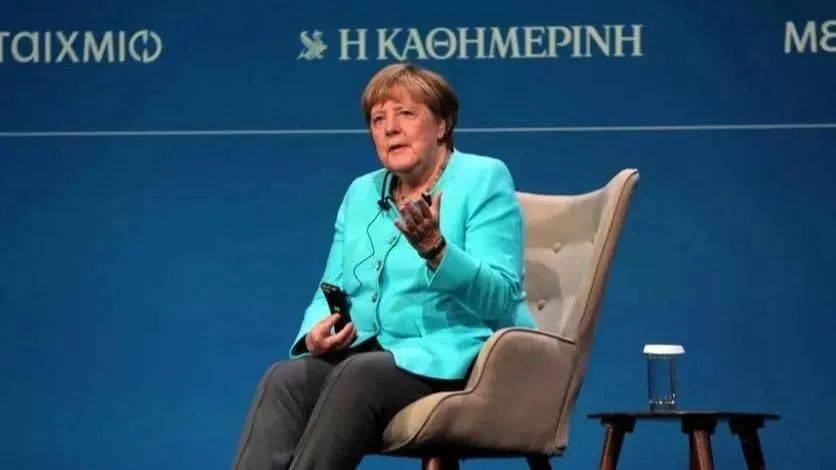
Group 1 - Former German Chancellor Merkel's statement emphasizes that the EU should not fear the US and must respond firmly to tariffs imposed by the US [1][6] - The US has imposed significant tariffs on EU products, including a 50% tariff on steel and aluminum and a potential 50% tariff on EU goods if trade negotiations do not progress [1][3] - The US economy is heavily reliant on consumption and investment, with 85% of its GDP coming from these sources, indicating a vulnerability to foreign products despite the tariffs [3][6] Group 2 - Merkel argues that the EU must maintain unity and that major countries like Germany and France should stand firm against US pressure [6][7] - The current trade negotiations between the US and EU are at an impasse, with US economic indicators showing a decline, including a manufacturing PMI dropping to 46.3, the lowest since May 2020 [6][7] - The EU is urged to enhance its strategic autonomy, particularly in defense and energy, to reduce dependence on the US and assert its own influence on the global stage [7][6]
特朗普威胁对金砖成员国加征10%新关税,中方表态!
券商中国· 2025-07-07 08:54
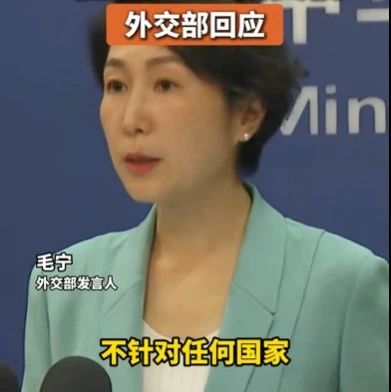
毛宁对此表示,金砖机制是新兴市场和发展中国家合作的重要平台,倡导开放包容、合作共赢,不搞阵营对 抗,不针对任何国家。关于加征关税,中方已经多次阐明了立场,贸易战、关税战没有赢家,保护主义没有出 路。 违法和不良信息举报电话:0755-83514034 邮箱:bwb@stcn.com 来源:环球时报-环球网报道 责编:汪云鹏 校对: 王锦程 外交部发言人毛宁主持7月7日例行记者会。会上有外媒记者提问称:金砖国家峰会将于今天闭幕,昨天美国总 统特朗普批评金砖国家推行"反美政策",并威胁对其成员国加征10%的新关税,请问中方对此有何评论? 百万用户都在看 突发警告!刚刚,美国传出大动作 刚刚!特朗普,签了! 重大进展!特朗普,传来大消息! 突发!超10万人爆仓!一则利空,突然引爆! 午后,突发!直线飙升,发生了什么? 集体大涨!特朗普,新计划曝光! ...
特朗普威胁对金砖国家加征10%新关税,外交部回应
第一财经· 2025-07-07 07:42
Core Viewpoint - The BRICS mechanism serves as an important platform for cooperation among emerging markets and developing countries, promoting openness, inclusivity, and win-win cooperation without engaging in camp confrontation or targeting any specific country [1]. Group 1 - The BRICS summit is highlighted as a significant event for emerging markets and developing countries [1]. - The Chinese government emphasizes that there are no winners in trade wars and tariff battles, advocating against protectionism [2].

特朗普威胁对金砖成员国加征10%新关税 中方回应
财联社· 2025-07-07 07:33
Core Viewpoint - The BRICS mechanism serves as an important platform for cooperation among emerging markets and developing countries, promoting openness, inclusivity, and win-win cooperation, while rejecting camp confrontation and targeting any specific country [1]. Group 1 - The BRICS summit is highlighted as a significant event for emerging markets and developing countries [1]. - The Chinese government emphasizes that there are no winners in trade wars and tariff battles, and that protectionism is not a viable solution [1].

特朗普批评金砖国家“推行反美政策”,中方回应
news flash· 2025-07-07 07:32
Group 1 - The core viewpoint of the article highlights criticism from former President Trump regarding the BRICS nations' "anti-American policies," with a response from China emphasizing the importance of the BRICS mechanism as a platform for cooperation among emerging markets and developing countries [1] - China's Foreign Ministry spokesperson, Mao Ning, stated that the BRICS mechanism advocates for openness, inclusivity, and win-win cooperation, rejecting camp confrontation and targeting any specific country [1] - Mao Ning reiterated China's stance on tariffs, asserting that trade wars and tariff battles yield no winners and that protectionism is not a viable solution [1]
特朗普称要对与金砖国家加征10%关税 中方回应
news flash· 2025-07-07 07:27
金十数据7月7日讯,外交部发言人毛宁主持例行记者会。外交部发言人毛宁表示,金砖机制是国际上的 积极力量,金砖合作是开放包容的,不针对任何国家。"至于关税,我们一贯反对搞关税战、贸易战, 反对以关税作为胁迫施压的工具。肆意地加征关税,不符合任何一方的利益。"毛宁说。 (北京青年 报) 特朗普称要对与金砖国家加征10%关税 中方回应 ...
“打”还是和?中方已经把话挑明,美媒:中国已3个月没买美国油
Sou Hu Cai Jing· 2025-07-07 04:42
Group 1: Trade Relations - China has not imported any U.S. oil for three consecutive months (March, April, May), marking the longest period since 2018 without purchases [1][6] - This cessation of oil imports is seen as a significant blow to U.S. oil companies, which are already facing fierce competition in global markets [6] - The U.S. had hoped to leverage tariffs to gain concessions from other countries, but the strategy has backfired, damaging its international trade image and negatively impacting domestic industries [3][10] Group 2: Diplomatic Stance - China's Foreign Affairs Minister emphasized the country's commitment to peace while also asserting that it will not renounce the use of force for national unification, signaling a firm stance on sovereignty issues [4][10] - The U.S. is exhibiting contradictory behavior, aiming for military deterrence while simultaneously expressing a desire to avoid direct conflict with China due to its own industrial shortcomings [7][10] - Recent reports indicate a potential thaw in U.S.-China trade relations, with the U.S. planning to lift some export restrictions on products like chip design software and aircraft engines [7][8] Group 3: Future Outlook - The evolving dynamics between the two largest economies in the world will significantly impact global peace and stability, with the potential for either cooperation or increased confrontation [10] - The historical inconsistency of U.S. export policies towards China raises concerns about future relations, suggesting that any current easing of restrictions may be temporary and driven by negotiation tactics [8][10]