卫星互联网

Search documents
47天又多100万用户!马斯克的卫星互联网业务增速“起飞”;北京发放首批L3级自动驾驶号牌,局部示范有望放开——《投资早参》
Mei Ri Jing Ji Xin Wen· 2025-12-23 23:39
Market Performance - The three major US stock indices closed higher, marking a four-day consecutive rise, with the S&P 500 reaching a new closing high [1] - Major tech stocks mostly increased, with Nvidia rising over 3%, and Google and Amazon up over 1% [1] - The Nasdaq China Golden Dragon Index fell by 0.58%, with most Chinese concept stocks declining [1] Commodity Prices - International gold prices continued to rise, reaching a peak of $4499.89 per ounce, a new historical high [2] - Silver also hit a historical high, with spot silver rising by 3.44% to $71.41 per ounce [2] - Most London base metals increased, with copper rising nearly 2% to a historical high [2] Industry Insights - SpaceX's Starlink service has seen a significant acceleration in user growth, surpassing 8 million active users in just 47 days [3] - The satellite internet industry is expected to grow significantly, with the satellite communication market projected to exceed 200-400 billion yuan by 2030 [4] - The solid-state battery industry is transitioning from laboratory research to engineering validation, with a focus on semi-solid and all-solid-state batteries [5][6] Automotive Developments - Dongfeng Motor has developed a semi-solid battery product and is working towards mass production of all-solid-state batteries by 2027 [5] - The issuance of L3-level autonomous vehicle license plates in Beijing marks a milestone in the mass production of autonomous vehicles in China [7] - The integration of vehicle-road-cloud systems is projected to generate significant economic value, with an expected increase in industry output by 258.25 billion yuan by 2030 [8] Stock Movements - Several companies announced plans for share reductions by major shareholders, including Yiyuan Yichuang and Ziguang Co., with specific percentages of total share capital indicated [9]
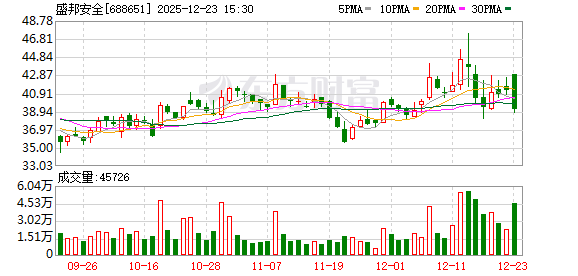
盛邦安全董事长权小文:探索“空天地海一体化安全” 以研发为基拓展新场景
Zhong Guo Zheng Quan Bao· 2025-12-23 22:20
Core Insights - The company is transitioning towards an "integrated security for air, land, and sea" strategy, emphasizing the importance of security in emerging industries such as satellite internet, low-altitude economy, and deep-sea technology [2][4]. Business Diversification and Strategic Focus - The company has made significant progress in the satellite internet sector and is actively expanding into commercial aerospace, low-altitude economy, and deep-sea technology [3][4]. - The market for satellite internet in China is projected to reach 100 billion yuan in the next five years, highlighting the growing demand for security solutions in this area [4]. Technological Advancements and Product Development - The company has developed a comprehensive range of security products covering satellite control networks, operational control networks, and access networks, successfully winning contracts in various sectors [4][5]. - A new 200G high-speed encryption gateway has been launched, achieving a fivefold increase in throughput compared to traditional solutions, with encryption latency reduced to under 3 microseconds [6]. Research and Development Framework - The company has established a three-tier R&D structure to enhance collaboration between technology research and industrial application, focusing on precision detection and defense [7]. - R&D investment reached 66.65 million yuan in the first three quarters, accounting for 42.9% of revenue, reflecting a commitment to innovation [7]. Market Expansion and Financial Strategy - The company aims to focus on core scenarios with existing orders or clear demand to mitigate R&D cost pressures while maintaining stable cash flow from traditional core businesses [8].


盛邦安全董事长权小文: 探索“空天地海一体化安全” 以研发为基拓展新场景
Zhong Guo Zheng Quan Bao· 2025-12-23 20:23
Core Insights - The company is transitioning towards an "integrated security for air, land, sea" strategy, focusing on the emerging industries of satellite internet, low-altitude economy, and deep-sea technology, highlighting the increasing importance of security in these sectors [1][2]. Business Diversification and Transformation - The company is actively expanding its business in the satellite internet sector, with significant developments in commercial aerospace, low-altitude economy, and deep-sea technology [2]. - The market for satellite internet in China is projected to reach 100 billion yuan in the next five years, emphasizing the critical nature of security in this new infrastructure [2]. - The company has developed a comprehensive security product line covering satellite control networks, operational control networks, and access networks, successfully winning contracts in various new business areas [2][3]. Technological Advancements - The company has made significant investments in research and development, with a focus on AI infrastructure security and quantum encryption technology, addressing the challenges of traditional encryption methods [3][4]. - A new 200G high-speed encryption gateway has been launched, achieving a fivefold increase in throughput compared to traditional solutions, and reducing encryption latency to below 3 microseconds [4]. - The product supports domestic commercial encryption algorithms and is designed to accommodate future quantum encryption scenarios, ensuring adaptability to technological advancements [4][5]. Research and Development Framework - The company reported a revenue of 155 million yuan in the first three quarters of the year, with a year-on-year growth of 8.49%, and R&D investment reaching 66.65 million yuan, accounting for 42.90% of revenue [6]. - A three-tier R&D structure has been established to facilitate collaboration between technology research and industrial application, focusing on precise detection and defense in network security [6][7]. - The company aims to leverage AI technology to enhance detection and defense efficiency while expanding into new business scenarios such as satellite commercial aerospace and intelligent computing centers [6][7].
金融工程日报:指五连阳创近1个月新高,锂电池、光刻机产业链走强-20251223
Guoxin Securities· 2025-12-23 14:20
- The report does not contain any quantitative models or factors for analysis[1][2][3]
短短47天,马斯克的星链又多100万用户
财联社· 2025-12-23 13:27
Core Insights - Starlink, the satellite internet service by SpaceX, has surpassed 9 million active users globally, marking a significant milestone in its growth trajectory [2][11]. - The user growth rate has accelerated dramatically, with the latest million users added in just 47 days, compared to much longer intervals in the past [4][11]. User Growth Statistics - The timeline for Starlink's user milestones is as follows: - 1 million: 730 days - 2 million: 274 days - 3 million: 240 days - 4 million: 129 days - 5 million: 155 days - 6 million: 101 days - 7 million: 79 days - 8 million: 70 days - 9 million: 47 days [9][11]. Future Projections - If the current growth rate continues, Starlink is expected to reach 10 million users by the end of January next year [11]. - The deployment of the next-generation Starlink V3 satellites and the Starship rocket is anticipated to further enhance the service's capabilities and user base [13][14]. Competitive Landscape - Currently, there are no significant competitors threatening Starlink's market position, as it continues to expand its satellite network, with approximately 9,300 satellites operational in low Earth orbit [11][12]. Service Enhancements - Starlink V3 aims to provide gigabit-level internet speeds, significantly higher than the current range of 100 Mbps to 300 Mbps [14]. - The potential integration of AI capabilities into the next-generation satellites is also being explored, which could enhance service offerings [14].

指数基金产品研究系列之二百六十二:布局6G时代空天基础设施:永赢国证商用卫星通信产业ETF (159206)投资价值分析
Shenwan Hongyuan Securities· 2025-12-23 10:41
Report Summary 1. Report Industry Investment Rating The provided content does not mention the industry investment rating. 2. Core Viewpoints of the Report - The development of 6G is an inevitable trend, and countries are actively involved in its R & D. Satellites, as the aerospace infrastructure in the 6G era, will drive a new round of network construction capital expenditure. The commercial aerospace industry has achieved a closed - loop in the entire industrial chain, and the number of direct - connected satellite mobile phone users is expected to increase significantly [4][9]. - The Guozheng Commercial Satellite Communication Industry Index has high - quality characteristics that support high R & D investment in satellite communication. Since 2024, it has outperformed comparable indices under the background of developing new - quality productivity [4]. - The Yongying Guozheng Commercial Satellite Communication Industry ETF (159206) is a highly scarce product. Compared with comparable ETFs, it has the largest scale [3][61]. 3. Summary by Relevant Catalogs 3.1 Satellite Communication - **6G R & D and Global Competition**: With the 5G pattern settled, countries are actively competing for the right to speak in 6G. China started 6G forward - looking R & D in 2019 and launched the world's first 6G satellite in 2023. Many countries and regions around the world have also carried out 6G R & D activities [9]. - **Satellite Internet Industry Clusters**: In China, satellite internet industry clusters are blooming in multiple locations across the country. Beijing and Shanghai have comprehensive industrial clusters, while Sichuan and Chongqing cover core supporting and application of the satellite industrial chain. Hainan and Shandong cover commercial space launches [12]. - **6G - Driven Network Construction**: In the 6G era, satellites will combine with ground networks to form a space - ground integrated communication network. With the issuance of satellite internet licenses by the three major operators in 2025, 6G is expected to drive a new round of network construction capital expenditure [15]. - **6G Vision and Features**: The 6G vision framework proposal was passed in June 2023. The 6G development is divided into three stages, and it defines six scenarios and four design principles. 6G is expected to have three characteristics: space - air - land - sea integrated communication, human - machine - thing intelligent interconnection, and the blurring of the boundaries between the real physical world and the virtual digital world [20][22]. - **Commercial Aerospace Development Status**: China's first commercial launch site (Hainan Commercial Launch) completed its first launch mission in November 2024, achieving a closed - loop in the entire commercial aerospace industrial chain. Rocket carrying capacity is continuously increasing, and constellation networking is accelerating. The number of direct - connected satellite mobile phone users is expected to reach 350 million by 2030 [23][24]. 3.2 Guozheng Commercial Satellite Communication Industry Index - **Index Compilation Method**: The index selects 50 listed companies' securities from the A - share market whose business involves commercial satellite manufacturing, launch, operation, and satellite ground equipment and communication services. The weight of samples related to commercial satellite manufacturing and launch should be no less than 50% in total, and the index is adjusted semi - annually [25][27]. - **Weight and Market Value Distribution**: The index's weight is concentrated in the top ten component stocks, and the heavy - weight stocks are mostly from the communication equipment and defense military - electronics industries. The average free - floating market value of the component stocks is 14.32 billion yuan, and the average total market value is 25.716 billion yuan. In December 2025, about 12% of the positions, a total of 9 stocks, were removed and 9 new stocks were included [28][32][40]. - **Industry Characteristics**: In the index's component stocks, 20 stocks belong to the defense military industry, with a weight of 50.04%, and 9 stocks belong to the electronics industry, with a weight of 23.19%. The satellite industry is expected to enter an accelerated development stage with the support of relevant policies [42][45]. - **Fundamental Characteristics**: The index attaches great importance to R & D investment, and its R & D investment ratio is higher than that of the CSI Military Industry Index. In terms of profitability, the ROE of the Guozheng Commercial Satellite Communication Industry Index reached 6.74% at the end of 2024, which is close to the CSI 500 Index and far exceeds comparable indices [46][49]. - **Investment Value Analysis**: Since 2024, the index has shown excellent performance. It is more adaptable to the small - cap rebound environment. As of December 17, 2025, the index has risen by 63.78% cumulatively, outperforming comparable indices and representative broad - based indices, and its risk - adjusted returns (Sharpe and Calmar) are also outstanding [53][56]. 3.3 Yongying Guozheng Commercial Satellite Communication Industry ETF (159206) - **Basic Information**: The ETF was officially established on March 6, 2025, and listed on March 14, 2025. Its current fund manager is Liu Tingyu. It closely tracks the underlying index and aims to minimize the tracking deviation and tracking error [3][60]. - **Product Scarcity and Scale Advantage**: As of December 18, 2025, it is the only ETF tracking the Guozheng Commercial Satellite Communication Industry Index, with a high degree of scarcity. Its scale reaches 3.186 billion yuan, exceeding the total scale of comparable ETFs tracking the CSI Satellite Industry Index [3][61]. 3.4 Fund Manager and Fund Manager Information - **Fund Manager Introduction**: Yongying Fund Management Co., Ltd. was established in November 2013. As of the third quarter of 2025, its net asset value excluding money funds and short - term wealth - management bond funds was 428.944 billion yuan. It manages 15 ETF products, with a cumulative management scale of 27.808 billion yuan [63]. - **Fund Manager Introduction**: Liu Tingyu has 6 years of securities - related work experience. He currently manages 16 products, with a total scale of 23.53 billion yuan [64].
吉大正元(003029.SZ):目前已为产业链相关厂商提供安全类相关产品,解决组网、传输和控制等方面的安全问题
Ge Long Hui· 2025-12-23 08:20
Core Viewpoint - The company is actively aligning with national industrial policy trends and leveraging its technological expertise from major projects to innovate in data security and satellite communication applications [1] Group 1: Company Developments - The company has accumulated significant technical expertise from large projects such as "Tiangong-1," "Shenzhou-9," and "Shenzhou-10" [1] - It is providing security-related products to industry chain partners, addressing security issues in networking, transmission, and control [1] Group 2: Industry Outlook - The company plans to continue exploring business development opportunities in the commercial aerospace and satellite internet sectors as these industries evolve [1]

粤开市场日报-20251223
Yuekai Securities· 2025-12-23 07:47
Market Overview - The A-share market showed a mixed performance today, with the Shanghai Composite Index rising by 0.07% to close at 3919.98 points, and the Shenzhen Component Index increasing by 0.27% to 13368.99 points. The ChiNext Index rose by 0.41% to 3205.01 points, indicating a generally stable market with 1508 stocks rising and 3852 stocks falling [1][10]. Industry Performance - Among the primary industries, the leading sectors included Power Equipment, Building Materials, Electronics, Nonferrous Metals, and Banking, with respective gains of 1.12%, 0.88%, 0.58%, 0.42%, and 0.37%. Conversely, sectors such as Social Services, Beauty Care, Retail, Defense, and Computers experienced declines, with losses of 2.07%, 1.65%, 1.60%, 1.42%, and 1.05% respectively [1][10]. Concept Sector Performance - The top-performing concept sectors included Lithium Battery Electrolyte, Glass Fiber, Liquid Cooling Servers, Power Batteries, Copper Clad Laminates, Lithium Battery Anodes, Solid-State Batteries, Lithium Batteries, Fluorine Chemicals, Sodium-Ion Batteries, Lithium Mines, Lithium Battery Cathodes, and Lithium Iron Phosphate Batteries. These sectors showed significant upward movement, reflecting strong investor interest [2][12].
信科移动(688387):Q3业绩企稳,卫星互联网核心地位稳固
China Post Securities· 2025-12-23 07:43
Investment Rating - The report provides an "Accumulate" rating for the company, indicating a positive outlook for the stock [4]. Core Insights - The company reported a revenue of 3.763 billion yuan for the first three quarters of 2025, a year-on-year decrease of 9.25%, with a net profit attributable to shareholders of -165 million yuan [4]. - The third quarter saw a revenue of 1.225 billion yuan, a year-on-year increase of 6.23%, indicating a recovery from earlier declines [8]. - The company maintains a core position in satellite internet, actively participating in major engineering projects and forming strategic partnerships for commercial satellite internet [8]. - The company is focusing on the development of 5G-A and 6G technologies, aiming to establish a second growth curve through innovative research and product development [8]. Company Overview - Latest closing price: 10.21 yuan [3] - Total shares: 3.419 billion, circulating shares: 2.017 billion [3] - Total market capitalization: 34.9 billion yuan, circulating market capitalization: 20.6 billion yuan [3] - 52-week high/low: 10.21 yuan / 4.88 yuan [3] - Debt-to-asset ratio: 53.5% [3] - Price-to-earnings ratio: -127.63 [3] - Major shareholder: China Information Communication Technology Group [3] Financial Forecast and Metrics - Revenue projections for 2025-2027 are 6.174 billion, 7.015 billion, and 8.152 billion yuan, respectively, with growth rates of -4.88%, 13.61%, and 16.20% [6]. - The net profit attributable to shareholders is forecasted to be -35.34 million yuan in 2025, 88.43 million yuan in 2026, and 193.83 million yuan in 2027, with significant growth rates of 87.32% and 350.18% in subsequent years [6]. - Earnings per share (EPS) are expected to improve from -0.01 yuan in 2025 to 0.06 yuan in 2027 [6]. - The price-to-book (P/B) ratio is projected to be 5.39, 5.32, and 5.16 for 2025-2027 [6].

震荡上行,起步了吗?
Ge Long Hui· 2025-12-23 06:07
Market Performance - The three major indices experienced slight increases, with the Shanghai Composite Index rising by 0.34%, the Shenzhen Component Index by 0.65%, and the ChiNext Index by 0.78% [1] - Over 3,300 stocks in the two markets saw gains, with a total trading volume of 1.24 trillion yuan [1] Industry Highlights - The lithium battery supply chain is rapidly strengthening, with stocks such as Tianji Co. and Tianci Materials hitting the daily limit [3] - The tungsten sector showed active performance, with Xianglu Tungsten and Zhangyuan Tungsten both reaching the daily limit [3] - The semiconductor equipment sector continued its strong performance, with Shenghui Integration achieving a historical high after two consecutive trading days of gains [3] Other Notable Developments - The commercial aerospace sector experienced a pullback, with Aerospace Machinery falling to the daily limit [3] - The film and cinema sector is undergoing a continued decline, with multiple stocks, including Bona Film Group, experiencing two consecutive days of losses [3] - Various industry sectors such as satellite internet, space station concepts, DRG/DIP, and Beidou navigation all followed suit with declines exceeding 2% [3] News Announcements - DingTalk launched over 20 AI products, including enterprise-level AI hardware DingTalk Real [3] - The U.S. State Department approved a potential foreign military sale to the Spanish government, providing F-404 engine fans valued at $200 million [3] - The Long March 12A reusable launch vehicle, developed by the China Aerospace Science and Technology Corporation's Eighth Academy, is scheduled for its maiden flight today [3]