
元宇宙

Search documents
以AI为墨,绘中秋新韵 ——2025全球AIGC数字创作盛宴启幕
Yang Shi Wang· 2025-09-27 05:49
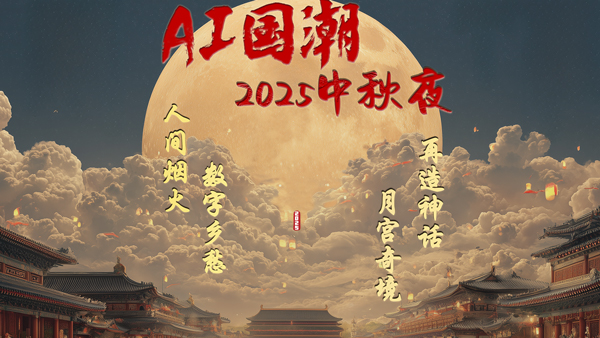
Core Viewpoint - The "AI National Tide Mid-Autumn Night 2025" global work collection event has officially launched, aiming to integrate AI technology with traditional Chinese culture to create a unique cultural and technological celebration [1][3] Group 1: Event Overview - The event is hosted by CCTV.com, with exclusive technical support from Hailuo AI, and collaboration with professional institutions such as WTA Production Studio, AIMWISE, and Saga.AI [1] - The goal is to promote the creative transformation and innovative development of the Mid-Autumn Festival through cutting-edge AIGC technology, presenting a celebration that showcases the intersection of technology and culture [1][3] Group 2: Creative Themes - Two core creative themes are established: "Moon Palace Wonderland: Recreating Myths" and "Human Fireworks: Digital Nostalgia" [3] - Participants are encouraged to utilize advanced technologies such as text-to-image, image-to-video, AI animation, and AI music generation to modernize and diversify classic mythological elements like Chang'e, the Jade Rabbit, the Moon Palace, and osmanthus trees [3] Group 3: Innovation and Cultural Expression - Creators are invited to break traditional frameworks by incorporating innovative elements such as cyberpunk, national tide aesthetics, and metaverse concepts into their works, aiming to produce digital art that retains the essence of traditional culture while being filled with futuristic imagination [3] - The event also welcomes creators to express modern sentiments related to the Mid-Autumn Festival, such as reunion, longing, and blessings, using AI technology to capture and convey contemporary emotional memories [3] Group 4: Call to Action - The initiative encourages global AI creators to actively participate, aiming to showcase the charm of Chinese culture and the strength of AI technology during the Mid-Autumn Festival [3] - The event emphasizes the importance of creativity in making this Mid-Autumn Festival more vibrant and engaging through innovative contributions [3]

数“智”上博 创见未来
Ren Min Ri Bao· 2025-09-26 21:45
Core Insights - The Shanghai Museum is actively transforming into a "digital and intelligent" museum to enhance cultural experiences and meet public demands in the digital age [1][2][4] Group 1: Digital Transformation Initiatives - The museum has launched the "Sea of Museums" digital collection platform, which is the first self-developed digital collection platform in China based on blockchain technology [2] - A new "Digital Hall" has been created, featuring the exhibition "Mountains and Rivers of Jiangnan," which utilizes digital technology to present the evolution of Jiangnan landscape painting from the Five Dynasties to the Qing Dynasty [1][2] - The museum is developing a digital twin system for the "Yangtze River Estuary No. 2" shipwreck, aiming to provide comprehensive data support for archaeological excavation and artifact protection [3] Group 2: Smart Museum Ecosystem - The museum is implementing a "3M" system for smart museum management, which includes intelligent protection of collections, visual management of venue operations, and enhanced audience experience [4] - Real-time data on visitor flow and exhibition dynamics is available through electronic screens in the museum, contributing to improved operational efficiency [4] - The museum plans to further embrace digital trends by integrating advanced technologies such as artificial intelligence and robotics to meet diverse cultural needs [4]
瓦普思瑞元宇宙(08093)发布年度业绩,净亏损2030万港元
智通财经网· 2025-09-26 15:12
Core Viewpoint - The company reported a significant decline in revenue and a net loss for the fiscal year ending June 30, 2025, primarily due to challenges in the traditional internet advertising sector, while its digital empowerment platform is showing strong growth potential [1] Financial Performance - Revenue for the year was HKD 44.45 million, a decrease of 64.3% year-on-year [1] - The company incurred a net loss of HKD 20.30 million, compared to a profit of HKD 17.53 million in the same period last year [1] - Basic loss per share was HKD 0.0276 [1] Industry Challenges - The decline in revenue is attributed to structural challenges in the traditional internet advertising business, which is now in a phase of stock competition [1] - There is a noted reduction in client spending willingness, with some advertisers cutting their budgets, leading to a significant drop in revenue from this segment [1] Growth Potential - The company is actively pursuing a transformation towards a digital empowerment platform, which has shown substantial growth year-on-year [1] - Despite the strong performance of the digital business, its revenue contribution has not yet fully offset the decline in traditional advertising revenue, resulting in an overall temporary revenue decline [1]
TikTok沙特电商:与国家战略同频共振的增长密码
Sou Hu Cai Jing· 2025-09-26 13:01
Strategic Alignment: Economic Transformation and Consumption Revolution - Saudi Arabia's "Vision 2030" aims to diversify the economy away from oil dependency, with three pillars: renewable energy development, youth workforce activation, and global logistics hub construction, aligning perfectly with TikTok's e-commerce ecosystem [3][4] - By 2030, Saudi Arabia plans to achieve 58.7GW of renewable energy capacity, with TikTok facilitating the promotion of Chinese solar solutions, leading to a 300% increase in orders for a Chinese brand through AR demonstrations [3][4] - The rise of the female economy is a significant opportunity, with female labor participation reaching 40%, and TikTok serving as a key platform for workplace fashion and beauty products, generating over $2 million in GMV during a single live stream [3][4] Consumption Upgrade: Shifts in Consumer Demand - Saudi consumers are experiencing a fundamental change in demand, with TikTok acting as a catalyst for this consumption revolution, particularly in emotional and sustainable consumption [5][6] - 71% of Saudi consumers are willing to pay a premium for "stress-relief" products, with TikTok's SelfCare videos garnering 8.7 billion views, leading to a 68% repurchase rate for a Chinese wellness brand [5][6] - The probiotic market in Saudi Arabia is growing at 45% annually, with TikTok helping a Chinese brand increase its penetration from 8% to 23% through educational content [6] Technological Empowerment: Innovations in Marketing - TikTok is leveraging technology to create a differentiated competitive advantage in Saudi Arabia, with AI digital hosts reshaping the live-streaming ecosystem and reducing human costs by 60% [8][9] - The introduction of AR virtual try-on technology has significantly increased average order values and reduced return rates for jewelry brands, demonstrating the effectiveness of innovative marketing strategies [8][9] - The "Virtual Mecca" project allows users to participate in pilgrimage digitally, generating $230 million in sales for related products, showcasing the potential of metaverse marketing [9] Ecosystem Development: Payment and Logistics Innovations - TikTok has made significant strides in building a localized payment system, increasing mobile payment adoption from 30% to 55% through innovative payment solutions [10] - Collaborations with logistics partners have improved delivery efficiency, reducing cold chain loss rates from 30% to 8%, addressing infrastructure challenges in Saudi Arabia [10] - Cultural decoding capabilities have become a core competitive advantage, enhancing viewer engagement and brand perception during marketing campaigns [10] Future Outlook: From Regional Market to Global Hub - TikTok's e-commerce in Saudi Arabia is at a historic turning point, with projections of 100 million inbound tourists by 2027, indicating immense potential for duty-free e-commerce [13] - The upcoming 2030 World Expo and 2034 World Cup are expected to create a trillion-dollar market for Chinese engineering and smart security firms, further integrating digital economy with national strategy [13] - The convergence of TikTok's algorithmic recommendations with Saudi Arabia's youthful demographic and China's manufacturing supply chain is forming a new ecosystem that transcends traditional trade [13]

中移金科“元宇宙虹膜支付”亮相2025北京PT展
Huan Qiu Wang· 2025-09-26 09:27
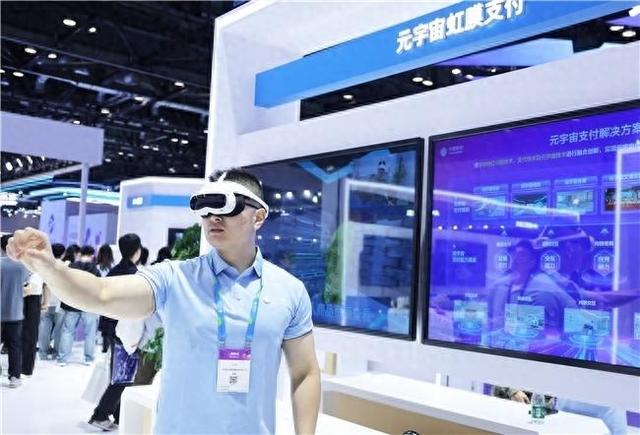
来源:环球网 9月24日,2025中国国际信息通信展览会在北京国家会议中心启幕,展会以"数实融合新引擎 智启未来 新动能"为主题,全面展现信息通信业在数智基础设施、数智技术创新、数智融合应用、数智社会治理 等方面的实践成果。作为中国移动旗下数字金融领域的创新先锋,中移动金融科技有限公司(简称"中 移金科")携元宇宙虹膜支付解决方案重磅亮相,定义未来支付新范式。 展会现场,中移金科虹膜支付沉浸式体验区,让用户直接体验虹膜支付全流程。虹膜支付系统是通过识 别人眼虹膜生物特征完成支付验证的技术方案,将生物特征识别技术、支付技术及元宇宙技术进行融合 创新,实现元宇宙场景快捷、智能、安全的沉浸式支付体验。由于虹膜纹理具有终身唯一性,被复制概 率低于指纹识别三个数量级,因此其安全性远高于传统支付方式。 据现场业务人员介绍,"虹膜支付的安全系数远高于传统的密码支付,虹膜支付的误识率远低于人脸支 付与指纹支付,达到百万分之一以下。"虹膜支付相比于其他传统支付方式具有四大优势。一是安全性 更高:安全系数远远高于传统的密码支付、指纹支付等方式;二是精确性更强:虹膜纹理结构非常复杂 使得虹膜支付能力具有极高的准确性;三是便捷性更佳 ...
华凯易佰跌1.45%,成交额9920.39万元,后市是否有机会?
Xin Lang Cai Jing· 2025-09-26 07:34
Core Viewpoint - The company, Huakai Yibai Technology Co., Ltd., is experiencing fluctuations in stock performance and is focusing on cross-border e-commerce and advanced technologies like AIGC and VR to enhance its business operations and revenue streams [2][3]. Company Overview - Huakai Yibai was established on February 23, 2009, and listed on January 20, 2017. The company specializes in spatial environment art design and provides comprehensive exhibition services for large exhibition halls, with a primary focus on cross-border e-commerce [7]. - As of June 30, the company had 19,300 shareholders, a decrease of 1.21% from the previous period, with an average of 18,214 circulating shares per person, an increase of 2.50% [7]. Financial Performance - For the first half of 2025, the company achieved a revenue of 4.538 billion yuan, representing a year-on-year growth of 28.97%. However, the net profit attributable to shareholders decreased by 72.69% to 36.7405 million yuan [7]. - The company's main revenue sources are cross-border e-commerce business (92.16%), comprehensive services for cross-border e-commerce (7.71%), and other business income (0.18%) [7]. Market Activity - On September 26, the company's stock price fell by 1.45%, with a trading volume of 99.2039 million yuan and a turnover rate of 2.58%, resulting in a total market capitalization of 4.408 billion yuan [1]. - The stock has shown signs of accumulation, but the strength of this accumulation is weak, with an average trading cost of 11.51 yuan and a current price near a resistance level of 10.96 yuan [6]. Investment Themes - The company is leveraging multiple platforms and regions for its cross-border e-commerce operations, primarily targeting Europe and North America [2]. - The integration of AIGC technology in its self-developed systems aims to reduce labor costs and improve operational efficiency [2]. - The company is actively exploring VR technology for exhibition purposes, focusing on environmentally friendly design and the integration of VR content creation [2]. Shareholder and Dividend Information - Since its A-share listing, the company has distributed a total of 154 million yuan in dividends, with 136 million yuan distributed over the past three years [8]. - As of June 30, 2025, Hong Kong Central Clearing Limited has exited the list of the top ten circulating shareholders [8].

一眼支付、一机识诈、一网预警:硬核应用走进现实 政策“组合拳”推动创新成果加速落地
Yang Shi Wang· 2025-09-26 02:55
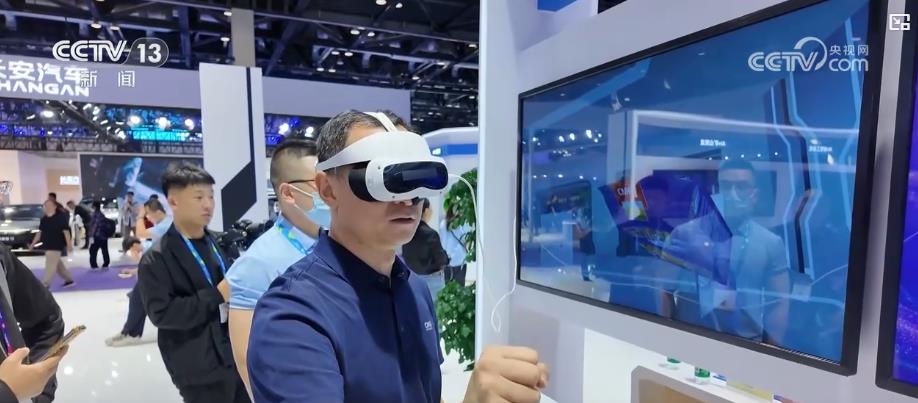
Core Insights - The article highlights the emergence of advanced technologies such as AI fraud prevention, iris payment systems, and earthquake early warning systems showcased at the China International Information Communication Exhibition held in Beijing [1] Group 1: Technology Applications - AI fraud prevention technology can automatically identify scam calls and provide real-time risk alerts during conversations, generating a risk analysis report post-call [4] - The iris payment system integrates biometric recognition and VR technology, allowing users to select products and complete transactions with gestures and eye blinks in a metaverse supermarket [3] - A 5G+AI industrial platform features robotic systems for inspection and quality control, demonstrating the application of AI in manufacturing processes [5] - The earthquake early warning system, the largest of its kind globally, utilizes communication networks and tower resources to enhance disaster response capabilities [6] Group 2: Policy and Development - The Ministry of Industry and Information Technology is implementing policies to accelerate the integration of advanced technologies into daily life, promoting innovation and industrial application [7] - The Chief Engineer of the Ministry emphasized the need to enrich the 5G-A product system, advance 6G technology research, and foster a new generation of information technology innovations, including AI, quantum information, and blockchain [9] - There is a focus on deepening the integration of information technology and industrialization, promoting the development of industrial internet applications, and expanding the use of information communication technology in smart cities and digital rural areas [11]
第四届数贸会|黑龙江省参展团获数贸会两项DT奖
Xin Lang Cai Jing· 2025-09-26 02:36
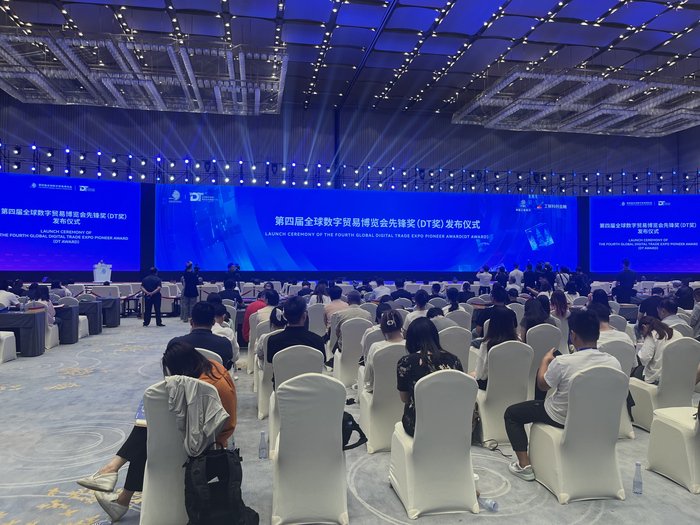
Group 1 - The Global Digital Trade Expo awarded Heilongjiang Provincial Department of Commerce the "Best Organization Award" and Harbin Sifutech Co., Ltd. the "Innovative Award" for its "Metaverse Agricultural Trade Fair" project [1][5][7] - The Global Digital Trade Expo is the only national and international exhibition in China focused on digital trade, organized by the Zhejiang Provincial Association for International Conference and Exhibition Industry [1] - Harbin Sifutech Co., Ltd. specializes in high-tech solutions across various sectors including energy, government affairs, and agriculture, holding multiple intellectual property rights [3] Group 2 - The "Metaverse Agricultural Trade Fair" project creates an online virtual market using digital technology, allowing users to shop for agricultural products in an immersive experience without the need for VR/AR devices [4] - This project innovatively transforms traditional market social interactions and experiences into an online format, enhancing brand empowerment for farmers and increasing product value and consumer trust [4] - The Heilongjiang Provincial Department of Commerce aims to leverage the expo to foster trade cooperation between local digital trade, cross-border e-commerce, AI, and e-commerce enterprises with domestic and international exhibitors [7]
“眨眨眼”就买单 AI接电话反诈 这些科技应用太顶了
Yang Shi Xin Wen· 2025-09-25 23:28
Group 1 - The article highlights the emergence of advanced technology applications such as AI fraud prevention, iris payment systems, and earthquake early warning systems showcased at the China International Information and Communication Exhibition [1][2] - The iris payment system, which integrates biometric recognition and VR technology, boasts a recognition error rate of less than one in a million, significantly outperforming traditional password payments [1] - An AI fraud prevention model embedded in mobile phones can automatically identify scam calls with an accuracy rate of 90%, providing real-time risk alerts during calls and generating risk analysis reports post-call [1][2] Group 2 - The industrial sector is leveraging a 5G+AI intelligent platform where robots perform tasks such as inspection and sorting, all managed through a centralized control system [1] - The earthquake early warning system in China is the largest globally, utilizing communication networks and tower resources to ensure rapid data transmission to the national earthquake bureau [2] - The earthquake intensity meter can transmit data to the China Earthquake Administration's server within seconds, enhancing the speed of national alerts [2]
比特元宇宙(08645.HK)与北京好通获得授权在中国运营"迪士尼沉浸式体验馆"
Ge Long Hui· 2025-09-25 14:43
Core Viewpoint - The company has signed a memorandum of understanding with Lighthouse Immersive Studios and Haotoon Co., Ltd. to operate and promote the "Disney Animation Immersive Experience" project in mainland China, pending final approval from The Walt Disney Company [1] Group 1: Partnership and Collaboration - The memorandum allows Lighthouse Immersive Studios to develop, produce, and showcase the "Disney Animation Immersive Experience" globally, and to authorize third parties to conduct related business [1] - The company, along with Haotoon Co., Ltd., will promote and operate the "Disney Immersive Experience Centers" in up to five cities in mainland China [1] Group 2: Strategic Importance - The board believes that partnering with a globally recognized brand like Disney demonstrates the company's market operational capabilities and brand promotion abilities in the metaverse business [1] - The company aims to expand its immersive experience offerings based on light and shadow technology, enhancing its brand value and influence in the metaverse sector [1]