
冰雪经济

Search documents
“航天材料+节能设计”助力冰雪装备破冰突围 加速“滑”出超万亿元大市场
Yang Shi Wang· 2025-12-25 07:07
Industry Overview - The ice and snow economy is experiencing significant growth, with domestic ice and snow equipment entering a period of technological breakthroughs, integrating aerospace materials and energy-saving designs [1] - The industry chain is undergoing a comprehensive upgrade as new technologies move from laboratories to snowfields [1] Equipment Development - In the Hebei Xuanhua Economic Development Zone, a specialized company has developed a ski lift that has overcome core technologies such as infinite rope traction, resulting in significant cost advantages, with orders scheduled until July 2026 [4] - The domestic production rate of ski lift equipment has reached over 80%, greatly reducing investment costs for snowfields [6] - A new fan design, developed by a team that previously worked on aircraft propellers, has reduced the motor power by 3000 watts per unit while maintaining the same wind pressure and efficiency, leading to energy savings and lower operational costs [10] Snowmaking Technology - The production facility is preparing to ship snowmaking machines that cover nearly half of the national snowfields, including the development of fully automatic snowmaking machines that consume less energy [11] - A new lightweight ski board has been developed, weighing 1.8 kg compared to the normal 2.5 kg, and is priced at half the cost of foreign brands [13][14] Smart Equipment - A new production line in Harbin has rapidly transitioned from design to operation in under six months, focusing on the latest smart color-changing ski goggles [15] - These goggles utilize aerospace-grade smart materials, allowing the lenses to adjust brightness automatically in less than a second, suitable for various lighting conditions [18] Market Outlook - China has established a comprehensive product system for ice and snow equipment, covering all aspects from individual use to venue requirements, and from competitive sports to recreational activities [20] - According to the "China Ice and Snow Industry Development Research Report (2025)," the scale of China's ice and snow industry is expected to exceed 1 trillion yuan by 2025 [20]


陕西国资等在吉林长春新设冰雪经济私募基金
Sou Hu Cai Jing· 2025-12-25 06:46
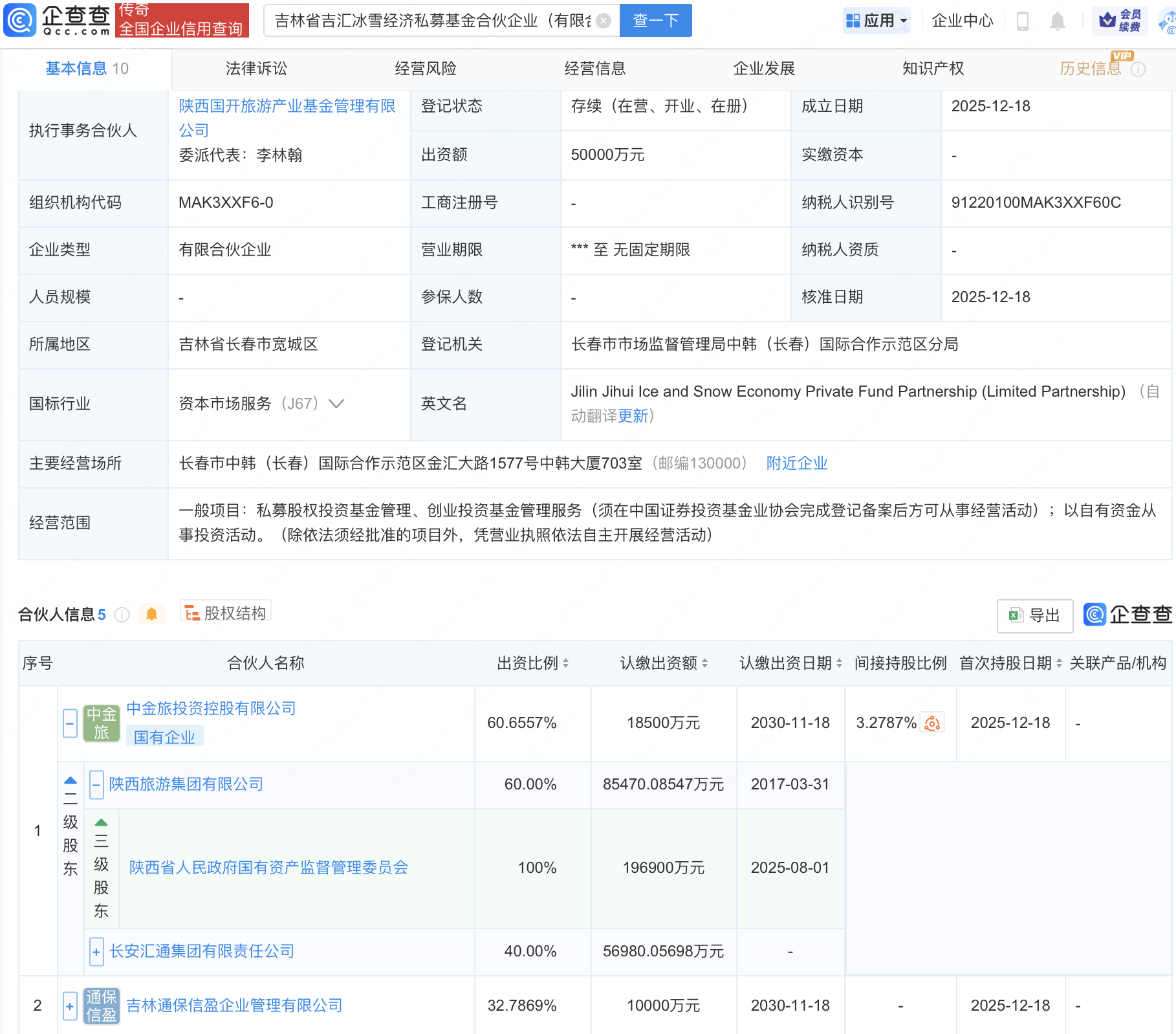
Group 1 - The Jilin Jihui Ice and Snow Economy Private Equity Fund Partnership has been established with a total investment of 500 million yuan [1][2] - The fund's business scope includes private equity investment fund management and venture capital fund management services, as well as investment activities using its own funds [1][2] - The fund is co-funded by Zhongjin Travel Investment Holding Co., Ltd., a subsidiary of Shaanxi Tourism Group Co., Ltd., and Jilin Tongbao Xinying Enterprise Management Co., Ltd. [1][2] Group 2 - The fund is registered in Changchun City, Jilin Province, and is classified under capital market services [2] - The fund's executive partner is Shaanxi Guokai Tourism Industry Fund Management Co., Ltd. [2] - The fund operates without a fixed term and is currently in a state of existence [2]
万亿冰雪产业崛起,消费市场持续升温
Sou Hu Cai Jing· 2025-12-25 05:30
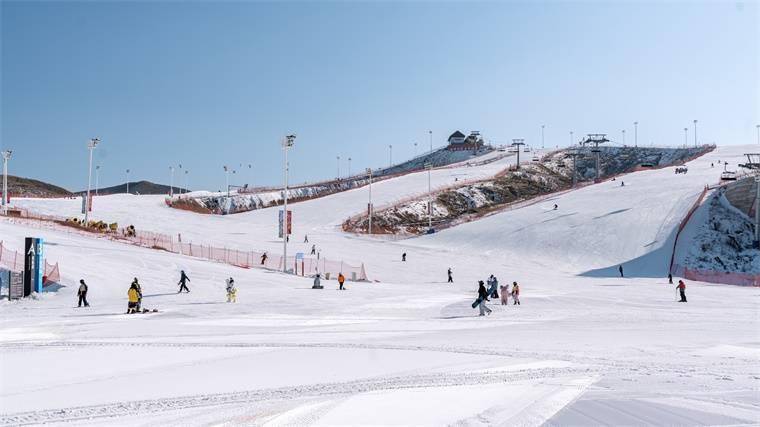
《中国冰雪产业发展研究报告(2025)》显示,2025年我国冰雪产业规模预计将突破万亿元大关,达到10053亿元。这一数据标志着我国冰雪经济正式迈入 万亿级产业行列。 产业发展呈现出鲜明的区域特色与融合趋势。东北、华北及西北的新疆等地凭借自然资源优势,成为冰雪运动的主要聚集区。与此同时,"冰雪+"模式正与 文旅、康养等产业深度融合,推动产业从单一的季节性运动向四季运营的现代化产业集群升级。例如,吉林省近期推出的"雪假"政策,有效带动了亲子家庭 出游需求。 市场有风险,投资需谨慎。本文为AI基于第三方数据生成,仅供参考,不构成个人投资建议。 来源:市场资讯 在"带动三亿人参与冰雪运动"战略和冬奥会效应的持续推动下,冰雪产业已构建起覆盖全链条的综合性产业体系。国家体育总局冬季运动管理中心发布的 《大众冰雪消费市场研究报告(2023-2024冰雪季)》显示,在所有冰雪活动参与者中,约73%的人群产生了相应的消费支出。具体到2024-2025冰雪季,全 国18岁及以上居民参与"民俗冰雪活动"的人数达1.44亿人,参与率为12.87%,为所有项目中最高。 冰雪旅游作为产业的重要组成部分,展现出强劲的消费拉动力。根据《中 ...

入境订单激增 我国冰雪经济“热力全开”
Ge Long Hui· 2025-12-25 05:22
据央视,随着元旦假期临近,冰雪季热度也是越来越高。今年冬天,在入境免签政策和中国旅游热度持 续攀升的双重带动下,中国正成为国际冰雪旅游的热门目的地。不仅大型雪场订单火爆,一批"小而 美"的中小雪场和新奇冰雪体验也正悄然走红,成为亲子家庭、养宠人群和年轻游客的消费新选择。在 河北张家口一处中小型冰雪度假园区,装饰童趣十足,雪道坡度平缓,不少家长带着小宝宝练习滑行, 还有很多宠物狗狗同游,雪场规模较小,精准匹配了一些游客"临时起意、小试牛刀"的低密度滑雪体 验。数据显示,11月以来,全国中小型滑雪场预订量同比激增超200%。除了小雪场,小众冰雪体验项 目也成为流量密码。在新疆阿勒泰市阿苇滩镇,"冰浮"新玩法正在社交平台刷屏。 ...
万亿赛道已成型!报告:今年我国冰雪产业规模将破万亿元,达到10053亿元【附冰雪产业市场分析】
Sou Hu Cai Jing· 2025-12-25 03:45
Core Viewpoint - The Chinese ice and snow economy is experiencing rapid growth, driven by strong policy support and increasing consumer participation, with the industry expected to exceed 1 trillion yuan in scale by 2023, reaching 10,053 billion yuan [2][4][5]. Group 1: Industry Growth and Economic Impact - The ice and snow industry is a comprehensive system that includes ice and snow sports, tourism, culture, equipment manufacturing, and technology, covering the entire industry chain from venue construction to consumer participation [2]. - The ice and snow industry has become a new engine for winter consumption and regional economic development, integrating with tourism, health, and rural revitalization [4]. - The 2024-2025 ice and snow season is projected to see nationwide ski resort consumption reach 78.613 billion yuan, with surrounding area consumption increasing by 27.97% year-on-year [2]. Group 2: Consumer Participation and Demand - A report indicates that approximately 73% of participants in ice and snow activities have incurred related expenses, highlighting the growing demand for ice and snow sports as a significant driver of domestic consumption [6]. - In the 2024-2025 ice and snow season, 144 million people aged 18 and above are expected to participate in folk ice and snow activities, with a participation rate of 12.87%, the highest among all activities [6]. Group 3: Regional Development and Resource Distribution - The Northeast region, including Heilongjiang, Jilin, and Liaoning, along with North China and Northwest regions, has become the main gathering area for ice and snow sports due to its rich resources and well-developed facilities [7]. - Policies from the National Sports Administration and local governments are stimulating social engagement and expanding the ice and snow industry chain [7]. Group 4: Ice and Snow Tourism - The 2023/24 ice and snow season is expected to see 430 million leisure tourism visits, generating 524.7 billion yuan in tourism revenue, significantly contributing to local economies and related industries [9]. - Ice and snow tourism is attracting more visitors, who enjoy both sports and unique local cultures, creating a positive industry ecosystem [9]. Group 5: Expert Insights and Recommendations - Experts emphasize the importance of developing the ice and snow economy as a means to promote sports participation and economic growth, suggesting the need for a robust policy framework and enhanced supply chains [12]. - Recommendations include expanding the variety of ice and snow events, increasing youth participation, and improving public awareness of ice and snow culture [12].
解码冰雪经济新动能|冰雪课堂如何成为“消费新宠”?
Xin Hua She· 2025-12-25 03:15
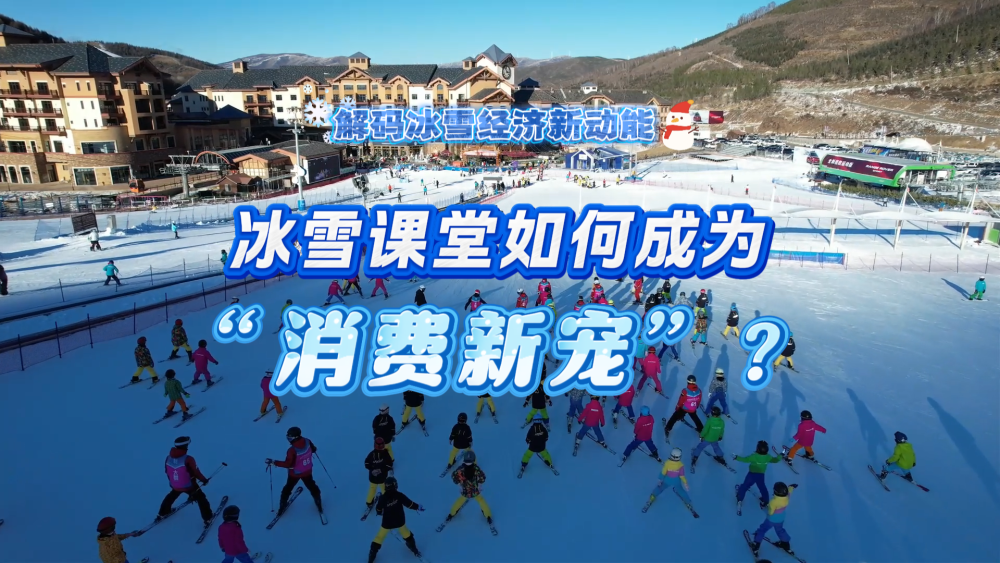
Core Insights - The integration of ice and snow activities with various industries is creating new products, scenarios, and business models, transforming winter landscapes into expansive classrooms [1] - The development of youth skiing winter camps in Zhangjiakou, Hebei, is gaining popularity, featuring dedicated ski slopes and coaching teams, along with a "skiing + research" package [1] - The ice and snow tourism industry is diversifying and evolving, driven by innovative business models, enhancing the overall tourist experience and contributing to high-quality economic development [1] Industry Developments - In Laiyuan County, Hebei, the series of events for the China Baoding (Laiyuan) Ice and Snow Outdoor Sports Conference, including ice and snow carnivals and cultural activities in schools, are being held [1] - The local government is focusing on building a distinctive winter ice and snow tourism brand, with ice and snow research becoming a new trend in family consumption [1] - The ice economy is emerging as a new driving force for economic growth, reflecting a shift towards more diverse and differentiated development in the tourism sector [1]
冰雪经济“热”力无限 文旅交融“合”写新篇 河北承德交出全域全季旅游发展新答卷
Ren Min Ri Bao· 2025-12-24 22:16
Core Insights - The city of Chengde in Hebei Province is transforming its winter tourism by leveraging its ice and snow resources, breaking the seasonal limitation of being a summer resort, and promoting year-round tourism development [1][2] Group 1: Tourism Development - Chengde has successfully hosted three consecutive Ice and Hot Spring Tourism Seasons, attracting 19 million visitors and generating 35.5 billion yuan in tourism revenue during the first season, marking increases of 121% and 148% respectively compared to 2019 [1] - The second season saw a further increase in visitors to 21 million and revenue to 41 billion yuan, with both metrics growing over 10% year-on-year, showcasing the successful transformation of winter tourism from a low season to a highlight [1] Group 2: Upcoming Events and Activities - The 2025-2026 Ice and Hot Spring Tourism Season will run from December 2025 to March 2026, featuring 26 high-quality cultural and tourism events and five themed tourism routes, focusing on ice sports, hot springs, and local customs [2] - Major events include national competitions in snowboarding and speed skating, with expectations of over 4,000 participants, of which more than 30% will come from outside the city [2] Group 3: Cultural Promotion and International Outreach - Chengde is enhancing its cultural tourism promotion through individual narratives and group interactions, with a British social media creator acting as a tourism ambassador, achieving over 200 million views on nearly 40 short videos [3] - The "Youth Together: Dance Chengde" program brought 115 Russian youth to experience traditional arts and crafts, contributing to cultural exchange and increasing inbound tourism by 68% in the first ten months of 2025, with a 23% rise in European and American visitors [3] Group 4: Service Quality Improvement - To support the growing tourism sector, Chengde is upgrading its service capabilities, including establishing a rapid response mechanism for international tourists and providing multilingual signage at key locations [4] - The city has introduced a winter tourism card priced at 99 yuan, offering discounts and enhanced services to improve visitor experience [4]
释放冰雪经济动能
Xin Lang Cai Jing· 2025-12-24 19:52
Core Viewpoint - The article highlights the development of the ice and snow industry in Eerguna City, Inner Mongolia, which is leveraging its unique geographical and climatic conditions to enhance the "ice and snow + sports + cultural tourism" offerings, thereby driving economic growth [1] Group 1: Industry Development - Eerguna City has introduced a variety of unique activities such as border ice fishing, snowfield horseback riding, water-splashing ice formation, ice and snow traversing, and cross-border shopping [1] - The integration of multiple business models within the ice and snow industry is seen as a pathway to sustainable growth and economic dynamism [1]
“冷资源”变成“热经济” 新疆乡村大力发展冬日旅游产业
Zhong Guo Xin Wen Wang· 2025-12-24 13:03
Core Viewpoint - The article highlights the development of the ice and snow economy in Xinjiang, particularly focusing on the transformation of Pingxi Liang Village from a poverty-stricken area to a prosperous community through the promotion of winter sports and tourism [2]. Group 1: Ice and Snow Economy Development - The Silk Road Mountain Resort features Xinjiang's first SSSSS-level ski resort, certified by the International Ski Federation, positioning it as a venue capable of hosting international events [2]. - The region has leveraged its unique ice and snow resources to foster economic growth, particularly through ski resorts and specialty accommodations, turning "cold resources" into a "hot economy" that supports rural revitalization [2]. - The development of the ice and snow economy has significantly increased the income of local villagers, contributing to their financial well-being [2].
粉雪、雾凇、温泉——吉林冰雪的“组合拳”有多能打?
Xin Jing Bao· 2025-12-24 11:36
Core Insights - The report highlights the rise of Jilin Province as a prominent destination for ice and snow tourism, with a focus on its diverse offerings and strategic development approach [2][19] - Jilin's ice and snow economy is transitioning from a "traffic-driven" model to an "industry-driven" model, emphasizing sustainable growth and comprehensive service systems [3][19] Geographic Advantages - Jilin Province is located within the "golden latitude belt" for snow sports, comparable to renowned regions like the Alps and Rockies, providing ideal conditions for skiing with abundant powder snow [4][6] - The Long White Mountain area has been recognized as a world geological park, enhancing its appeal as a unique winter destination with diverse natural attractions [6] Snow Sports Development - Jilin has significantly increased its number of ski resorts from 30 in 2016 to nearly 70 in 2023, achieving near-complete county coverage [10] - The province's ski resorts offer a full spectrum of experiences, from high-end resorts to budget-friendly options, catering to both beginners and advanced skiers [10][11] Integrated Regional Strategy - Jilin's ice and snow tourism strategy is characterized by a coordinated provincial approach, avoiding competition between cities and promoting a diverse range of winter activities [13][14] - The opening of new transportation links, such as the Shenbai High-Speed Railway, has improved access to various attractions, enhancing visitor flow and experience [14] Cultural Integration - Jilin's ice and snow tourism is deeply rooted in local culture, with traditional practices like the Chagan Lake winter fishing festival and unique culinary experiences contributing to its identity [16][18] - The province is actively integrating cultural elements into its winter sports offerings, creating distinctive experiences that differentiate it from other destinations [18][19] Future Outlook - Jilin's approach to ice and snow tourism emphasizes building a sustainable and resilient industry, focusing on product quality and comprehensive service rather than relying on single-point attractions [19][20] - As the market matures, the emphasis will shift towards providing consistent, high-quality experiences that meet the evolving demands of tourists [20]

