
制度型开放

Search documents
“进博好物”何以直达
Jing Ji Ri Bao· 2025-11-06 22:10
Core Insights - The China International Import Expo (CIIE) has transformed from a six-day event to a year-round online platform, enhancing consumer experience and reflecting China's commitment to new development concepts and global market integration [1][2][3] Group 1: Digital Transformation and Innovation - As of August this year, China has surpassed 4 million 5G base stations and over 500 million households are covered by gigabit optical networks, enabling immersive experiences like "8K live streaming + AI real-time translation + AR fitting" at the expo [1] - The expo has introduced a dual payment channel of "digital RMB + cross-border payment," allowing exhibitors to open e-CNY wallets on-site, ensuring instant payment with zero fees [1] - Upgrades to national logistics hubs and cross-border data lines have made "72-hour global delivery" a standard, facilitating the rapid transformation of exhibits into products [1] Group 2: Global Impact and Green Transformation - The number of New Zealand exhibitors at this year's expo reached a record high, promoting grass-fed products to gain recognition among Chinese consumers, supported by national standards for grass-fed dairy management [2] - China's vast market is accelerating the green transformation of global supply chains, showcasing the spillover effects of developing new productive forces [2] - The "CIIE good products" initiative, combined with rural commercial system development and express delivery to villages, allows consumers in rural areas to access top global innovations, expanding the consumer base and benefiting farmers from less developed countries [2] Group 3: Institutional Opening and Global Standards - The expo has established multiple digital platforms, transitioning from a six-day event to a year-round operation, aligning with international high-standard trade rules [2] - Continuous reduction of the foreign investment negative list and the complete removal of restrictions in the manufacturing sector have created a favorable environment for global innovation [2] - The closed-loop of "global debut - scenario validation - large-scale replication" has been streamlined, forming a new paradigm of "world innovation - Chinese scenarios - global standards" [2]
标准出海 共赢致远(评论员观察)
Ren Min Ri Bao· 2025-11-06 21:58
Group 1 - The core viewpoint emphasizes that enhancing the internationalization of standards is a process of deep interaction and shared development between China and the world, rather than a one-way path for Chinese products and standards to enter the global market [1][3] - Chinese standards are increasingly recognized internationally, as evidenced by the Brunei Civil Aviation Authority's recent acceptance of China's civil aviation standards, which opens up greater opportunities for Chinese-manufactured aircraft in international markets [1][2] - During the 14th Five-Year Plan period, China led the formulation of 1,079 international standards and facilitated mutual recognition of over 500 standards, indicating a significant expansion of China's influence in global trade [1][2] Group 2 - Standards are a crucial technical support for economic and social development, as well as important technical rules for international trade, necessitating that Chinese products meet various market entry requirements [2][3] - The establishment of international standards for humanoid robots, led by China, reflects the country's advancements in technology and its responsibility to contribute more Chinese standards and wisdom globally [2][3] - China's economic model is characterized by openness and win-win cooperation, with a focus on upgrading standards to adapt to high-quality development requirements, thereby enhancing trade fluidity and resource allocation [3]
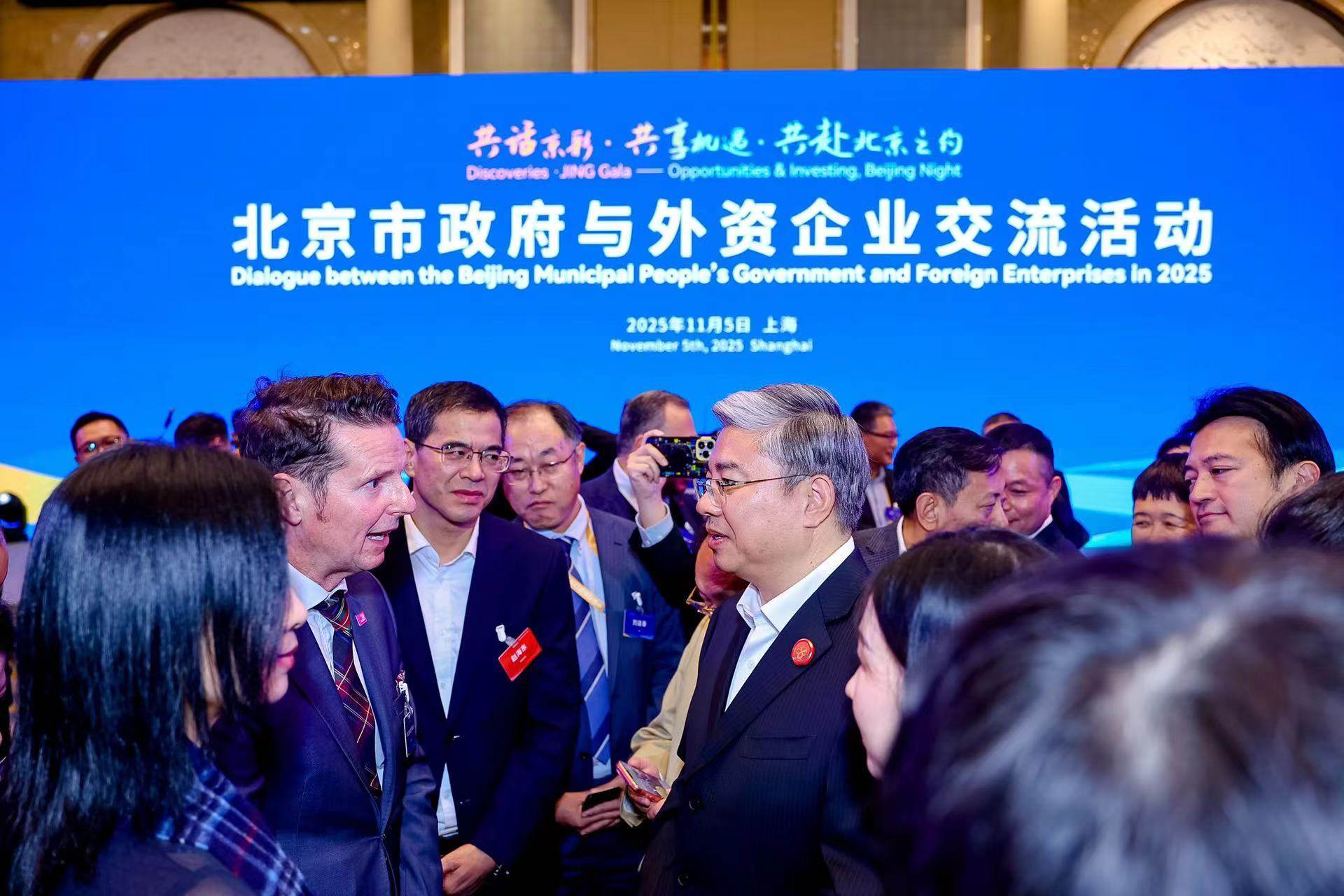
进博会北京举办外资企业交流活动,百余外企高管共谋发展
Zhong Guo Jing Ying Bao· 2025-11-06 14:43
Core Insights - The event during the 8th China International Import Expo focused on enhancing communication between the Beijing government and foreign enterprises, emphasizing cooperation and development opportunities [1] - Beijing has 35,000 foreign enterprises and 221 foreign R&D centers, highlighting the significant role of foreign investment in the city's high-quality development [1] Group 1: Economic Development and Investment - Beijing aims to strengthen its role as a national cultural center, with projected tourism numbers reaching 370 million and total tourism revenue of 672.24 billion yuan, a growth of 14.9% in 2024 [2] - The city ranks third globally for the number of unicorn companies and maintains a research and development expenditure intensity of around 6%, positioning itself among leading global innovation cities [2] - Beijing is the only city in China with both a national comprehensive pilot zone for service industry opening-up and a free trade pilot zone, having implemented over 140 breakthrough policies since the establishment of these zones [2] Group 2: Foreign Investment Environment - The Beijing government is committed to enhancing the "Beijing Service" brand by implementing regulations to protect foreign investment and create a transparent and stable business environment [3] - Participating foreign enterprise representatives expressed high satisfaction with the event, noting the sincerity of Beijing's openness and the attractiveness of its investment environment [3] - The Beijing Investment Promotion Center will maintain contact with participating enterprises to promote investment opportunities and track potential projects for implementation [3]
GDP增速列万亿城市第二位,南通再借进博加码稳外资
Di Yi Cai Jing· 2025-11-06 11:23
南通副市长李玲提出,过去的发展历程表明,唯有开放合作才能实现共赢。因此南通将加强与跨国公司 对话交流,打造长三角外商投资高地。 今年南通企业亿元以上增资扩产项目超200个。 继去年首次借力进博会(中国国际进口博览会)在现场举办与跨国公司总部对接会后,今年中国"万亿 城市"南通延续了这一"传统"。 11月6日,南通市与跨国公司总部对接会在第八届进博会上如期举行。 "进博会是中国面向全球主动开放市场的重大举措,上午观展让我们深感全球化时代的无限可能和中国 市场的广阔空间。"南通市委副书记、市长张彤在对接会上表示,今天借助进博会平台举办跨国公司对 话南通活动,希望与各位新老朋友畅叙友谊、共谋发展。 坐拥长三角区位和产业优势的南通,2024年全市经济总量达1.24万亿元、增长6.2%,位列中国27个万亿 城市中增速第二。今年前三季度地区生产总值增长5.4%、高于全国0.2个百分点,外贸进出口等主要经 济指标增速居江苏前列。 目前,南通实际使用外资已累计近550亿美元,现有在营外商投资企业3800多家,其中77家世界500强企 业投资了160多个项目,包括王子、东丽、帝人、三菱、旭化成、默克、拜耳、巴斯夫、宜家、金光、 ...
“共话京彩,共享机遇” 外企交流活动走进第八届进博会
Zhong Guo Jing Ji Wang· 2025-11-06 09:04
Core Points - The 8th China International Import Expo opened in Shanghai on November 5, 2023, with a focus on enhancing communication between the Beijing government and foreign enterprises [1][3] - The theme of the exchange event was "Discussing Beijing's Opportunities Together," attracting over a hundred executives from foreign companies in sectors such as pharmaceuticals, financial services, and biopharmaceuticals [3] Group 1: Beijing's Development Strategy - Beijing aims to strengthen its role as a national cultural center, with projected tourism numbers reaching 370 million and total tourism revenue of 672.24 billion yuan, a growth of 14.9% in 2024 [3] - The city is committed to becoming a global center for scientific innovation, maintaining a research and development investment intensity of around 6%, ranking third globally for the number of unicorn companies for four consecutive years [3] - Beijing plans to enhance its dual policy framework of a national service industry expansion demonstration zone and a free trade pilot zone, having implemented over 140 breakthrough policies [3][4] Group 2: Foreign Investment Environment - Currently, Beijing hosts 35,000 foreign enterprises and 221 foreign R&D centers, which play a significant role in the city's high-quality development [4] - The Beijing government is focused on improving the investment environment by implementing regulations that protect foreign enterprises' rights and create a transparent and stable institutional framework [4] - Participating foreign companies expressed confidence in investing in Beijing after engaging with local officials, indicating a positive perception of the city's openness to foreign investment [4]

商务部:中方愿同欧盟深化互利合作
Zhong Guo Xin Wen Wang· 2025-11-06 08:51
Core Viewpoint - The Chinese Ministry of Commerce expresses willingness to deepen mutually beneficial cooperation with the European Union, highlighting the potential for various economic and trade agreements, including investment agreements [1] Group 1: Economic Cooperation - The Chinese side has noted the EU's active efforts to diversify export markets through free trade agreements with foreign businesses [1] - China is advancing high-level opening-up and aligning with international high-standard economic and trade rules [1] - There is a broad common interest and significant cooperation potential between China and the EU in the economic and trade sectors [1] Group 2: Trade Agreements - The Chinese Ministry of Commerce is open to exploring the possibility of negotiating various economic and trade agreements, including investment agreements [1] - The goal is to enhance the level of trade and investment liberalization and facilitation between China and the EU [1]
上海浦东:已总体达到CPTPP和DEPA正文条款的开放水平
Di Yi Cai Jing· 2025-11-06 08:01
Core Viewpoint - Pudong is advancing its institutional openness by refining rules in various sectors, aiming to align with international standards and enhance its role as a global economic hub [1][2]. Group 1: Institutional Openness - Pudong has achieved a level of openness comparable to CPTPP and DEPA, focusing on expanding rules and standards in service, digital, and goods trade [1]. - The region has eliminated restrictive measures in the manufacturing sector and initiated pilot programs in value-added telecommunications and cell and gene therapy services, establishing 9 and 40 enterprises respectively [2]. - Pudong is aligning with OECD service trade restrictions and World Bank business environment assessments to improve its service and trade openness [1][2]. Group 2: Trade and Financial Services - Pudong is enhancing cross-border financial services by expanding free trade account functionalities and facilitating cross-border payments [2]. - The region has implemented the first customs special supervision area for bonded remanufacturing in China, allowing for 97 types of bonded repair services [2]. - A negative list for data export has been introduced, enabling compliant companies to bypass prior approval processes for data cross-border flow [2]. Group 3: Infrastructure and Connectivity - Pudong is positioned as a key gateway for international trade, with the Pudong International Airport projected to handle 3.78 million tons of cargo and mail in 2024, ranking second globally [3]. - The Shanghai Port continues to lead globally in container throughput, reaching 51.51 million TEUs [3]. Group 4: Business Cooperation and Support - The upcoming Oriental Hub International Business Cooperation Zone will facilitate business activities with a 30-day visa-free stay for international visitors [4]. - The "Overseas Enterprise Gathering Area" offers comprehensive support for companies venturing abroad, with over 80 professional service institutions and 270 global sites established [5]. Group 5: Technological Advancements - Pudong is focusing on high-tech industries, with significant increases in fiscal science and technology investment, rising from 4.2% in 2021 to 9.2% in 2023 [5]. - The integrated circuit industry has reached a scale of $41 billion, accounting for one-fifth of China's total, with a 7.4% increase in electronic component exports [6]. - The biopharmaceutical sector has over 4,000 companies, with significant contributions to global drug approvals and transactions [6].
壹快评丨进博会彰显上海一流城市管理能力
Di Yi Cai Jing· 2025-11-06 08:01
国务院总理李强在开幕式发表主旨演讲时指出,进博会是世界经济通向中国经济的入海口,也是中国联 结世界的重要桥梁。今年进博会的参展企业数量再创历史新高,充分彰显中国超大规模市场的蓬勃生机 和活力。 进博会开幕当天下午,采购商上海普惠飞机发动机维修有限公司就与参展商IAE签署了价值超亿美元的 V2500发动机零部件采购订单,参展商蒂森克虏伯新纪元氢能科技(上海)有限公司和唐艺臻选(上 海)食品科技有限公司获得青浦区颁发首张营业执照和首张食品经营许可证。"开市大吉"预示着本届进 博会将取得更加丰硕的成果。 进博会越来越好的一个重要原因是上海市坚持"越办越好"的办会要求,其"一流城市形象"和"一流服务 保障"带来的缜密、高效、周到,每一个参与进博会的人都可以深切感受到。 上海市坚持"越办越好"的办会要求,其"一流城市形象"和"一流服务保障"带来的缜密、高效、周到,每 一个参与进博会的人都可以深切感受到。 11月5日,第八届中国国际进口博览会在国家会展中心(上海)开幕。本届进博会有155个国家、地区和 国际组织参与,4108家境外企业参展,展览面积超过43万平方米,展览面积和企业总数均创历史新高。 进博会展览规模日益扩大 ...
习近平在听取海南自由贸易港建设工作汇报时强调:认真学习贯彻党的二十届四中全会精神 高标准建设海南自由贸易港
Xin Hua She· 2025-11-06 07:33
听取汇报后,习近平发表重要讲话。他指出,党中央决定,今年12月18日海南自由贸易港正式启动 全岛封关,这是我国坚定不移扩大高水平对外开放、推动建设开放型世界经济的标志性举措。各级各有 关方面要精心准备,确保平稳有序。 习近平强调,建设海南自由贸易港的战略目标,就是要把海南自由贸易港打造成为引领我国新时代 对外开放的重要门户。要锚定这个战略目标不动摇,全面落实海南自由贸易港建设总体方案,深入实施 海南自由贸易港法,解放思想、改革创新,分步骤、分阶段构建与高水平自由贸易港相适应的政策制度 体系。要稳步扩大制度型开放,进一步提高贸易投资自由化便利化水平。深入推进商品和要素流动型开 放,更好促进生产要素跨境流动。构建更加开放的人才机制,为自由贸易港建设提供有力人才支撑。深 化行政体制改革,优化政务服务,着力打造市场化法治化国际化一流营商环境。 习近平指出,高标准建设海南自由贸易港,主要目的是促进海南高质量发展,助力全国构建新发展 格局。要结合实际科学编制"十五五"规划,紧紧围绕建设"三区一中心"的战略定位,全面提高海南经济 社会发展水平。着力打造具有海南特色和优势的现代化产业体系,推动主导产业优化升级,促进科技创 新 ...
十五五”规划的产业体系建设之“变
Zheng Quan Shi Bao Wang· 2025-11-06 07:02
Core Viewpoint - The "15th Five-Year Plan" marks a strategic shift in China's industrial development, emphasizing the construction of a modern industrial system as a primary task, reflecting a transition from focusing on localized breakthroughs to establishing a resilient and open industrial ecosystem [1][2]. Strategic Positioning Changes - The "15th Five-Year Plan" elevates the construction of a modern industrial system to the top of its 12 strategic tasks, indicating a significant shift in national strategic focus [2]. - The plan aims to transition from being a participant in the global value chain to becoming a leader driving global industrial transformation [2]. Structural Design Changes - The plan establishes a modern industrial system centered on advanced manufacturing, moving beyond the previous principle-oriented approach to a more systematic framework [3]. - It emphasizes a gradient development mechanism that includes traditional, emerging, and future industries, ensuring a balanced industrial upgrade [3]. Dynamic Mechanism Changes - The economic development model shifts to "demand-led, consumption-driven, and endogenous growth," focusing on the interaction between supply and demand [4]. - The plan sets quantitative goals such as significantly increasing the resident consumption rate and aims to eliminate barriers to a unified national market [4]. Open Dimension Changes - The "15th Five-Year Plan" upgrades its approach to openness from merely aligning with international standards to actively leading institutional openness [6]. - It emphasizes the importance of participating in global governance and setting international standards in emerging fields like artificial intelligence and quantum technology [6]. Future Outlook - The plan aims to drive China's industrial transformation towards becoming a "strong manufacturing" and "strong creation" nation, focusing on intelligent, green, and integrated development [7].