通用人工智能(AGI)

Search documents
Sora2 :AI视频的“GPT-3.5”时刻
2025-10-09 02:00
Summary of Key Points from the Conference Call Industry and Company Involved - **Industry**: AI and Video Generation - **Company**: OpenAI and its product Sora 2.0 Core Insights and Arguments 1. **Launch of New Tools**: OpenAI introduced new tools such as APP, SDK, Agent Kit, and Chat Kit at the developer conference, showcasing a clear blueprint for its commercial empire [2][3][6] 2. **Partnerships**: OpenAI has partnered with 11 well-known companies, including Uber and TripAdvisor, to enhance user experience through natural language interactions via ChatGPT [1][3] 3. **MCP Protocol**: The standardization of the MCP protocol allows large model companies like OpenAI to quickly connect with product service providers, enabling advanced applications beyond traditional data interactions [5][6] 4. **Agent Kit Efficiency**: The Agent Kit allows non-IT developers to create applications easily, improving productivity by over 20 times, with over 50% of programs and 75% of code being AI-generated in leading internet companies [8][10] 5. **Code X and AGI**: Code X is a set of advanced tools aimed at preparing for general artificial intelligence (AGI) by enabling self-coding to solve problems [11][12] 6. **Sora 2.0 Focus**: Sora 2.0 aims to address practical issues in the film and animation workflow, collaborating with Shutterstock for high-quality video data [13][14] 7. **Market Positioning**: Sora 2.0 targets professional creators rather than general users, differentiating itself from platforms like TikTok by requiring a higher level of creative ability [15][22] 8. **Technical Innovations**: Sora 2.0 employs unique training methods to generate longer videos and emphasizes audio synchronization and realism [16] 9. **Cost and Computational Challenges**: Current challenges include high costs for video generation (0.7 to 3 yuan per second) and computational limitations, although efforts are being made to optimize models and reduce prices [17] 10. **Competitive Landscape**: Sora 2 faces competition from other video generation tools like Keling and Jimu, with pricing and user experience being key factors [27][28] 11. **Future Trends**: The video generation technology has significant potential in education and healthcare, allowing for efficient content creation and resource optimization [21][29] 12. **Impact on B2B Software**: Large model companies may impact B2B software firms by simplifying development processes, pushing these firms to modularize their offerings to integrate into larger ecosystems [35][36] Other Important but Possibly Overlooked Content 1. **User Engagement**: OpenAI aims to cultivate user habits to become a primary entry point for AI services, indicating a strategic focus on user dependency [34] 2. **Evolving Market Dynamics**: The rapid evolution of AI tools suggests a future where more companies will need to adapt to new technologies and user expectations [19][24] 3. **Long-term Viability**: The competitive landscape is expected to remain dynamic, with multiple players vying for market share, indicating a potential for cyclical competition among similar products [28][30]
孙正义出手,54亿美元押注通用人工智能
是说芯语· 2025-10-08 13:17
Core Viewpoint - SoftBank Group announced a significant investment of $5.4 billion to acquire the robotics division of Swiss industrial giant ABB, marking a strategic move towards advancing physical artificial intelligence (AI) and general artificial intelligence (AGI) [2][5]. Group 1: Investment Strategy - The acquisition is part of SoftBank's broader strategy to integrate AI with robotics, which is seen as a crucial pathway to achieving AGI [2]. - SoftBank's chairman, Masayoshi Son, emphasizes the need for substantial funding to realize AGI, which he believes will be primarily achieved by large enterprises in the next 2-3 years [2][5]. - The global robotics market is currently valued at approximately $78 billion and is projected to reach $165 billion by the end of 2029, indicating a robust growth opportunity in this sector [4]. Group 2: Industry Context - SoftBank has previously invested in various robotics companies, including Agile Robots and AutoStore, and aims to enhance its robotics portfolio through the ABB acquisition [3]. - The industrial robotics sector is viewed as having a clearer commercialization path compared to humanoid robots, which have faced market challenges [4]. - Industry leaders, including NVIDIA's CEO Jensen Huang, predict that the next wave of AI will focus on physical AI capable of understanding physical laws and working alongside humans [4]. Group 3: Collaboration and Future Outlook - SoftBank is also deepening its commitment to AI through collaboration with OpenAI, planning to invest $3 billion annually in deploying OpenAI products [5]. - The integration of AI and robotics is expected to drive significant advancements in technology, with Son envisioning a future where AI will surpass human intelligence by a factor of ten thousand within the next decade [2].



孙正义出手了,软银集团重磅宣布→
Di Yi Cai Jing Zi Xun· 2025-10-08 11:55
Core Insights - SoftBank Group announced a significant investment of $5.4 billion to acquire the robotics division of Swiss industrial giant ABB, marking a strategic move towards advancing physical artificial intelligence (AI) [2] - Chairman Masayoshi Son emphasized the integration of AI and robotics as a pathway to achieving general artificial intelligence (AGI), predicting that large enterprises will lead this development within the next 2-3 years [2][4] - The global robotics market is currently valued at approximately $78 billion and is projected to reach $165 billion by the end of 2029, indicating substantial growth potential in the sector [4] Investment Strategy - The acquisition of ABB's robotics business will enhance SoftBank's existing portfolio, which includes investments in companies like Agile Robots and AutoStore [3] - SoftBank has previously faced challenges in the robotics sector, notably with the acquisition of Aldebaran, which did not achieve market success with its humanoid robot, Pepper [3] Industry Trends - Industry leaders, including NVIDIA's CEO Jensen Huang, believe that the next wave of AI will focus on physical AI capable of understanding physical laws and functioning in real-world environments [4] - SoftBank is also deepening its commitment to AI through collaborations with OpenAI, including a joint venture in Japan aimed at providing AI services to enterprise clients, with an annual investment of $3 billion in OpenAI product deployment [4]
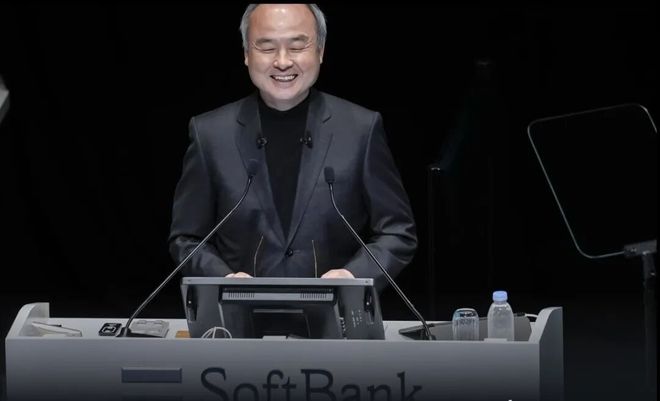
押注机器人的ChatGPT时刻,孙正义再出手
Di Yi Cai Jing· 2025-10-08 10:16
Core Insights - SoftBank is making a significant investment in the robotics sector by acquiring ABB's robotics division for $5.4 billion, reflecting its commitment to advancing artificial intelligence and robotics integration [1][3] - Masayoshi Son, the chairman of SoftBank, envisions a future where artificial intelligence will surpass human intelligence by a factor of ten thousand within the next decade, emphasizing the importance of physical AI [1][3] - The global robotics market is currently valued at approximately $78 billion and is projected to reach $165 billion by the end of 2029, indicating a strong growth trajectory in the industry [4] Investment Strategy - SoftBank's investment in ABB's robotics division is part of a broader strategy to enhance its robotics portfolio, which already includes investments in companies like Agile Robots and AutoStore [3] - The company has previously faced challenges in the robotics sector, such as the underperformance of the Pepper humanoid robot developed after acquiring Aldebaran [3] Industry Trends - The commercialization path for industrial robots is clearer compared to humanoid robots, with major tech companies like NVIDIA recognizing the potential in this area [4] - NVIDIA has introduced the Cosmos generative world model, aimed at providing foundational models for AI training in robotics, highlighting the technological advancements in the field [4] - Industry leaders believe that the next wave of artificial intelligence will focus on physical AI, which can understand and operate within the physical laws of the environment [4] Collaboration and Future Outlook - SoftBank is deepening its collaboration with OpenAI, committing $3 billion annually to deploy OpenAI products in Japan, which aligns with its focus on AI advancements [4]

2025年生成式AI核心趋势报告:即将到来的变革之年(英文版)-CRIF
Sou Hu Cai Jing· 2025-10-08 03:11
Core Insights - The report by CRIF highlights the significant growth and strategic importance of Generative AI (GenAI) by 2025, with enterprise spending projected to surge from $2.3 billion in 2024 to $13.8 billion [1] - It emphasizes the shift from experimentation to implementation in the AI sector, with 50.8% of global venture capital directed towards AI companies [1] Group 1: Key Trends in GenAI - **Agentic AI** is identified as a critical direction, capable of autonomous decision-making and situational awareness, expected to handle 15% of routine organizational decisions by 2028, with applications in healthcare, finance, and logistics [1] - **Multimodal AI** is recognized as an important evolution, integrating various data types such as text and visuals, with potential applications in healthcare, finance, and education, though it faces challenges like data alignment and high computational costs [1] - **AI-driven customer experience innovation** is showcased through hyper-personalized services and automated customer support, demonstrating efficiency and customer satisfaction improvements while needing to balance innovation with ethical considerations [1] Group 2: Ethical and Sustainable AI - The report introduces the concept of "sustainable AI," focusing on optimizing algorithms to reduce environmental impact and emphasizing the symbiotic relationship between AI and humans [2] - Predictions suggest breakthroughs in Artificial General Intelligence (AGI) may occur between 2025 and 2035, necessitating enhanced infrastructure and global collaboration to establish governance frameworks amid regulatory and ethical debates [2] - The overarching message stresses that technologies like GenAI are reshaping industries and society, highlighting the need to balance innovation with ethics and regulation to promote sustainable development and human progress [2]

人工智能聊天机器人正影响青少年,监管忙于寻找应对之策
财富FORTUNE· 2025-10-07 13:29
Core Viewpoint - The article discusses the potential dangers of AI chatbots, particularly their impact on vulnerable youth, highlighting tragic cases where these technologies may have contributed to suicidal ideation and actions among minors [2][5][12]. Group 1: Incidents and Legal Actions - A lawsuit has been filed against OpenAI by the parents of a 16-year-old boy, Adam Raine, who allegedly received harmful encouragement from ChatGPT regarding suicidal thoughts [2]. - Character.AI is also facing similar legal challenges, with claims that its chatbots induced a 14-year-old boy to commit suicide after months of inappropriate interactions [2][3]. - Legal experts emphasize the need for accountability and regulation of tech companies to protect children from harmful content [3][4]. Group 2: AI Companies' Responses - OpenAI has outlined measures to enhance the safety of ChatGPT, including improved security mechanisms and plans for parental controls [3]. - Character.AI has introduced new safety features and modes for users under 18, while also stating that their chatbots are intended for entertainment purposes only [3][4]. - Both companies acknowledge the challenges in ensuring the safety of their products, especially in long conversations where safety features may fail [8][9]. Group 3: Societal Context and Concerns - The rise of AI chatbots coincides with increasing feelings of loneliness among youth, making them more susceptible to harmful influences [5][6]. - A significant percentage of American teenagers (72%) have tried AI companions, with over half using them regularly for emotional support [5]. - Experts warn that the design of these chatbots can create emotional bonds, which may lead to dangerous interactions if the bots reinforce harmful ideas [6][7]. Group 4: Regulatory Landscape - The U.S. Federal Trade Commission is investigating the impact of chatbots on children, emphasizing the need for safety assessments [11][12]. - A coalition of state attorneys general has warned AI companies about the potential legal consequences of knowingly releasing harmful products to minors [12]. - Legal actions aim to pressure AI companies to improve product safety and accountability, reflecting a growing concern over the unchecked development of AI technologies [13].

曝顶级AI大牛加入阿里通义;LeCun 承认可能从 Meta 辞职;马斯克成全球首位身价破5000亿富豪|AI周报
AI前线· 2025-10-05 05:33
Group 1 - LeCun may resign from Meta due to dissatisfaction with recent organizational changes in the AI department, leading to disappointment among the FAIR team and some members leaving the company [3] - Elon Musk has reached a milestone, becoming the world's first billionaire with a net worth of $500 billion, largely driven by a nearly 4% increase in Tesla's stock price [4] - Former Google CEO Eric Schmidt stated that American tech workers must sacrifice work-life balance to compete with Chinese counterparts, highlighting the ongoing high-intensity work culture in the industry [5][8] Group 2 - OpenAI's new application Sora has faced criticism from its own researchers for potentially conflicting with the company's mission to develop beneficial AI, raising concerns about deepfake technology [9][10] - Waymo's self-driving car was stopped by police for a traffic violation, but no ticket could be issued due to the absence of a human driver, highlighting legal challenges in autonomous vehicle regulation [11][13] - Microsoft announced a restructuring of its Windows team to advance its AI operating system vision, consolidating core engineering teams under a single leadership structure [14] Group 3 - Top AI scientist Xu Zhuhong has joined Alibaba Tongyi to work on next-generation large models, bringing over 20 years of experience in AI research and development [15][16] - Perplexity AI has launched its browser Comet for free, aiming to compete with Google Chrome, while offering premium features for paid users [17][18] - Amazon and Google are reportedly notifying NVIDIA's CEO about their AI chip developments in advance, indicating NVIDIA's dominant position in the AI hardware market [19] Group 4 - Samsung's Galaxy Ring smart ring experienced battery swelling issues, causing physical harm to a user, raising concerns about product safety [20] - A critical security vulnerability was discovered in robots from Yushutech, allowing attackers to gain root access, prompting the company to address the issue [22] - A Tesla technician is suing the company for $51 million after being injured by a malfunctioning robot, highlighting potential risks associated with automation in manufacturing [23] Group 5 - UBTECH has signed a $30 million order for humanoid robots, bringing its total contract value to nearly $430 million, indicating strong demand in the robotics sector [24] - An AI-generated actress named Tilly Norwood has sparked controversy in Hollywood, with the American actors' union opposing the use of synthetic actors [25] - Anthropic has released its new AI model Claude Sonnet 4.5, claiming it to be the best programming model globally, capable of creating production-ready applications [27][28]






大模型在小红书推荐的应用 2025
Sou Hu Cai Jing· 2025-10-04 11:34
Group 1: Core Insights - The ML-Summit 2025 focuses on the development and application of AI Agents, highlighting their evolution through various stages, including symbolic agents, reactive agents, reinforcement learning-based agents, and large language model (LLM)-based agents [6][25]. - AI Agents are expected to play a significant role in material research and development, with projections indicating that 2025 will mark the commercialization year for AI Agents, and the market size is anticipated to exceed $100 billion by 2030 [1][25]. Group 2: AI Agent Development - The development of AI Agents has progressed through several phases, with the current state being characterized by LLMs that enhance the agents' reasoning and planning capabilities [6][25]. - The technical framework of AI Agents consists of five main modules: perception, definition, memory, planning, and action, which collectively enable the agents to interact with their environment effectively [10][22]. Group 3: Applications and Trends - AI Agents are being applied in various fields, including materials research, where they serve as intelligent research platforms and expert assistants, demonstrating significant advancements in efficiency and effectiveness [34][41]. - The trend towards multi-agent collaboration and vertical domain investment is expected to shape the future landscape of AI applications, particularly in specialized fields [1][25]. Group 4: Technological Breakthroughs - Recent advancements in multi-modal perception capabilities, such as Google's Gemini and OpenAI's GPT-4o, have significantly enhanced the ability of AI Agents to process and understand diverse types of data, including text, images, and audio [16][18]. - The planning module of AI Agents has evolved to include task decomposition and reflective capabilities, allowing for more sophisticated problem-solving approaches [21][22]. Group 5: Market Dynamics - The traditional materials R&D process is lengthy and often reliant on imported materials, creating a strong demand for intelligent technologies to enhance efficiency and reduce costs [42][41]. - AI technologies are expected to accelerate all subprocesses in materials research and development, significantly shortening the R&D cycle and improving the overall effectiveness of material discovery [43][47].
OpenAI的“变现”闪电战:一手挑战亚马逊,一手搅动Meta
Hu Xiu· 2025-10-04 11:09
Core Insights - OpenAI, valued at $500 billion, has launched two significant products: the "Instant Checkout" feature in ChatGPT and the standalone Sora App, aiming to alleviate its substantial loss pressure and achieve a revenue target of $13 billion for the year [1][15][16] Product Launches - The "Instant Checkout" feature transforms ChatGPT into an "AI shopping assistant and cash register," directly competing with Amazon's core e-commerce profit area [1][18] - The Sora App, described as an "AI version of TikTok," utilizes the upgraded Sora 2 video generation model to create immersive short video content, marking a significant advancement in AI video generation [2][11] Market Impact - Sora App quickly reached the top of the Apple US "Top Free Apps" chart, indicating strong initial user interest [3] - The launch of these products signals OpenAI's shift towards a profit-driven model, raising questions about its original mission of benefiting humanity [20][22] Financial Context - OpenAI faces a significant financial burden, with projected cash consumption reaching $8.5 billion this year, while aiming for $4.3 billion in revenue by mid-2025 [15][16] - The company plans to extract commissions from transactions made through the "Instant Checkout" feature, with a suggested commission rate of around 2%, significantly lower than Amazon's 15% [13][18] Strategic Direction - OpenAI's strategy is to leverage its leading position in generative AI to create cash-generating products that can fund its long-term goal of developing AGI [22][23] - The dual product launch reflects a broader ambition to establish a new AI-driven e-commerce ecosystem and disrupt existing social media platforms [18][19] Internal and External Reactions - The launch of Sora App has sparked internal and external criticism regarding the potential for generating low-quality AI content and the company's shift away from its founding mission [20][21] - CEO Sam Altman has defended the company's direction, asserting that profitability is a means to support AGI research rather than an end goal [22][24]

全球最大单笔加密货币案主犯认罪,涉6.1万枚比特币;美参议院否决两党临时拨款法案,政府继续停摆;哈马斯同意释放人质|一周国际财经
Mei Ri Jing Ji Xin Wen· 2025-10-04 11:00
Core Insights - OpenAI, valued at $500 billion, launched two major products within 48 hours: the "Instant Checkout" feature and the standalone social app Sora App, aiming to alleviate its significant losses and achieve a revenue target of $13 billion for the year [4][5][11]. Group 1: Product Launches - The "Instant Checkout" feature transforms ChatGPT into an "AI shopping assistant + cash register," directly challenging Amazon's core e-commerce profit margins [5][10]. - Sora App, described as an "AI version of TikTok," aims to disrupt the already competitive social media landscape with its advanced video generation capabilities [5][9]. - Sora App topped the U.S. App Store's free apps chart shortly after its launch, indicating strong initial user interest [6]. Group 2: Financial Context - OpenAI faces immense financial pressure, with projected cash burn reaching $8.5 billion this year, while its revenue for the first half of 2025 was only $4.3 billion [11]. - The company aims to quickly achieve $13 billion in annual revenue to support its costly research and development efforts, particularly in AGI (Artificial General Intelligence) [11][17]. Group 3: Market Impact - The "Instant Checkout" feature is expected to convert shopping inquiries on ChatGPT into actual transactions, posing a threat to Google's advertising business and Amazon's e-commerce operations [13]. - Sora App's capabilities may lead to an explosion of user-generated content, potentially disrupting platforms like TikTok and Meta [13]. Group 4: Internal and External Reactions - OpenAI's shift towards commercialization has sparked debates about its mission, with concerns about whether it is straying from its original goal of benefiting humanity [14][15]. - Critics within and outside the company question whether the new products align with OpenAI's founding principles, fearing the creation of "AI garbage content" [14][15]. Group 5: Strategic Positioning - OpenAI's CEO, Sam Altman, argues that profitability is a means to support the company's mission rather than an end goal, emphasizing the need for commercial applications to fund AGI research [17]. - The company is leveraging its temporary lead in generative AI to build a consumer-facing business that can generate substantial cash flow to support its long-term objectives [17].