即时结账

Search documents
三沃尔玛和谷歌联手,AI购物革命还是噱头?商业规则或将改写
Sou Hu Cai Jing· 2026-01-16 05:41
Group 1 - The year 2026 is anticipated to be a pivotal moment for artificial intelligence (AI), with predictions of widespread application in various sectors, particularly retail, as exemplified by the collaboration between Walmart and Google [1] - The AI shopping experience, facilitated by Google's Gemini model, allows consumers to express their needs in a single sentence and receive tailored product recommendations, streamlining the purchasing process [1] - The "instant checkout" feature addresses the fast-paced lifestyle of consumers, but raises concerns about whether consumers are truly making independent choices or merely responding to algorithm-driven suggestions [5] Group 2 - The shift towards AI-driven shopping may threaten traditional retail experiences, as many consumers find joy in the process of physically selecting products, which AI cannot replicate [5] - Small and medium-sized businesses face significant risks as the retail industry transitions to AI-dominated commerce, potentially leading to market marginalization if they fail to integrate with mainstream AI shopping ecosystems [5] - Google's partnership with Walmart is fundamentally based on algorithm-driven recommendations, which prioritize commercial profitability over consumer suitability, potentially leading to biased product suggestions based on consumer profiles [7] Group 3 - The competition among tech giants in the AI shopping space is intensifying, with OpenAI also collaborating with Walmart to enable ChatGPT users to make purchases through "instant checkout" [7] - Consumers are encouraged to maintain their independent decision-making abilities amidst the convenience of AI shopping, emphasizing the importance of preserving personal choice and not becoming mere data points in algorithmic systems [7]



巨头联手!沃尔玛、谷歌宣布:合作
Huan Qiu Wang Zi Xun· 2026-01-12 23:20
Group 1 - Walmart and Google announced a collaboration to integrate Google's generative AI chatbot Gemini into Walmart's shopping process, allowing consumers to discover products, compare prices, and complete purchases more efficiently [1][3] - The partnership reflects a shift in consumer behavior in the U.S., where more shoppers are now consulting AI before accessing shopping apps or e-commerce websites [3][5] - Walmart's CEO stated that the retail industry is transitioning from traditional web or app searches to AI-driven business models, marking a significant evolution in retail [5] Group 2 - Google is enhancing its AI e-commerce strategy, having introduced a new open technology standard called the Universal Commercial Protocol (UCP) in collaboration with several retailers, including Walmart [5][6] - The UCP aims to establish a common language and interaction standards for AI-driven shopping processes, facilitating direct connections between AI shopping agents, retailers, and payment systems [6] - Other AI companies are also embedding e-commerce functionalities into their chatbots, with OpenAI and Stripe developing a similar open-source solution, indicating potential competition with UCP [8][10] Group 3 - A McKinsey report projects that the global retail market could reach a potential size of $3 trillion to $5 trillion by 2030, driven by AI tools and "agent commerce" [10]

AI购物火热,沃尔玛谷歌联手重塑零售新格局
Huan Qiu Wang· 2026-01-12 08:51
Core Insights - The AI sector is experiencing significant growth, with various subfields such as AI marketing, Sora concept, and AIGC seeing stock surges, leading to over 20 stocks hitting the "20cm" limit up [1] - Retail is undergoing profound changes due to AI technology, highlighted by the partnership between Google and Walmart, which has made AI shopping stocks a market focus [1][3] AI Sector Performance - Multiple AI and commercial aerospace-related stocks, including Yidian Tianxia and Tianyin Machinery, have shown strong performance, reflecting high market enthusiasm for high-tech growth stocks [3] - AIGC concept stock LEO shares have performed exceptionally well, with LEO Digital focusing on AI since 2023 and launching its self-developed AIGC ecosystem platform "LEOAIAD" [3] Retail Industry Transformation - Walmart and Google announced a collaboration allowing consumers to use Google's AI assistant Gemini for shopping at Walmart and Sam's Club, marking a significant shift in retail towards AI-driven shopping [3] - The transition from traditional search to AI assistant-driven shopping is seen as a major transformation in the retail industry, with Walmart leading this trend [3] Future Outlook - The widespread adoption of AI-assisted shopping is anticipated, with Visa's global market president predicting 2026 as a pivotal year for mainstream AI shopping [4] - Morgan Stanley views this as the beginning of the "Agent-style e-commerce" era, forecasting a GMV of approximately $190 billion by 2030 under baseline conditions, potentially reaching $385 billion in optimistic scenarios [4] A-Share Market Trends - AI retail concept stocks in the A-share market have shown robust performance, with companies like Qingmu Technology and Shanghai Jiubai seeing cumulative increases of over 20% this year [5] - Analysts highlight that the "AIization" of retail is moving from conceptual hype to practical implementation, with a focus on companies that can effectively leverage AI for cost reduction and efficiency [5]
沃尔玛在纳斯达克上市
Sou Hu Cai Jing· 2025-12-11 05:58
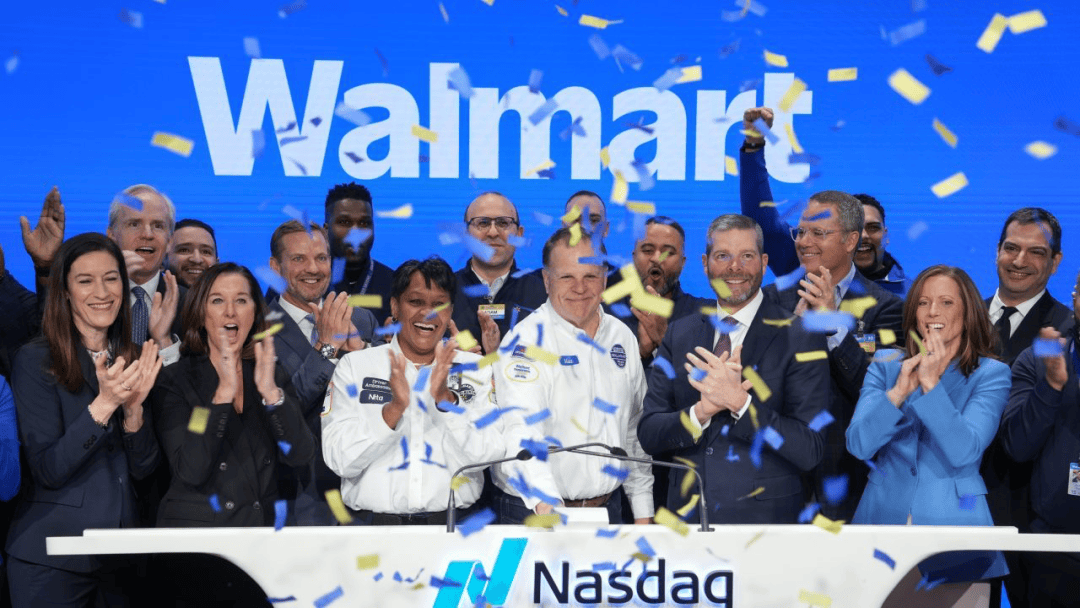
Core Viewpoint - Walmart has completed a significant strategic shift by moving from the New York Stock Exchange to the Nasdaq Global Select Market, aiming to be valued as a technology company rather than a traditional retail company, marking the largest exchange migration in U.S. history with a market capitalization of $853.1 billion [2][3] Group 1: Transition to Nasdaq - The transition does not involve issuing new shares or financing but includes an updated Form 10-K/A, positioning the company as "AI-First Retail" and revealing new quantitative metrics [6] - For the fiscal year 2025, Walmart expects a gross profit increase of $2.5 billion from AI pricing and inventory algorithms, accounting for 42% of the total gross profit increase [6] - The company plans to increase capital expenditures to $21 billion for fiscal year 2026, with 70% allocated to "Supply Chain AI" and "Retail Media AI" [6] Group 2: Financial Performance - In Q3 of fiscal year 2026, Walmart reported total revenue of $179.5 billion, a year-over-year increase of 5.8%, with e-commerce sales growing by 27% globally [7] - The adjusted net profit reached $6.143 billion, a significant increase of 34.2% year-over-year, with adjusted earnings per share of $0.62, exceeding analyst expectations [7] - The company raised its full-year revenue growth guidance to 4.8%-5.1% for fiscal year 2026, up from the previous estimate of 4.5%-5.0% [8] Group 3: Strategic Shift and Technology Focus - The decision to move to Nasdaq aligns with Walmart's strategic transformation towards technology-driven retail, responding to industry shifts and competitive pressures from companies like Amazon [9][10] - Walmart has invested over $10 billion in technology from fiscal years 2023 to 2025, enhancing its supply chain automation and AI capabilities [11] - The transition aims to redefine Walmart's identity as a technology retail company, allowing for a more favorable valuation in the capital markets [12] Group 4: Leadership Transition - John Furner will succeed Doug McMillon as CEO on February 1, 2026, aligning with the strategic shift towards technology retail [15] - Furner has extensive experience within Walmart and has been instrumental in the company's digital transformation and supply chain upgrades [15] - His leadership will focus on enhancing AI applications, accelerating supply chain automation, and expanding digital service offerings [17]
购物车托付给AI的时代,已经到了
3 6 Ke· 2025-11-26 11:24
Core Insights - The article discusses the anticipated explosive growth of AI-driven shopping during the 2025 fall and winter shopping season, with major e-commerce platforms expecting significant sales increases due to AI integration [1][3][4]. Group 1: AI Integration in E-commerce - Alibaba's Taobao and Tmall launched several AI shopping applications, including "AI万能搜" and "AI帮我挑," which enhance product understanding and improve traffic matching efficiency, leading to double-digit growth [1]. - Adobe Analytics predicts a 520% year-over-year increase in shopping traffic driven by AI in the U.S. during the 2025 shopping season, with peak traffic expected in the ten days leading up to Thanksgiving [3]. - OpenAI's introduction of the Operator agent in early 2025 laid the groundwork for AI-assisted shopping, allowing users to complete complex e-commerce tasks through natural language commands [4]. Group 2: Payment and Automation - Major financial institutions like Mastercard and Visa have entered the AI shopping space, developing AI agents for personal shopping and payment, thus filling the gap in the payment process for AI shopping [6]. - The launch of "AI付" by Alipay and the integration of AI shopping features in platforms like Google Chrome signify a move towards full automation from product selection to payment [6][8]. - Walmart's adoption of OpenAI's "instant checkout" system allows users to shop directly through ChatGPT, streamlining the shopping experience [8]. Group 3: Impact on Consumer Experience - AI shopping will significantly enhance the consumer experience by reducing decision-making time and eliminating distractions from advertisements, thus addressing common shopping dilemmas [13]. - The AI shopping model will transform seller marketing strategies, requiring sellers to align their data with AI decision-making parameters to attract AI-driven customers [13]. Group 4: Financial Opportunities and Challenges - Financial institutions are keen on AI shopping as it could lead to increased liquidity of consumer funds and credit, allowing for more efficient payment processes [14][15]. - The integration of AI in shopping raises questions about responsibility in after-sales disputes, particularly when AI makes purchasing decisions on behalf of consumers [18][22].


财报前瞻 | 牵手OpenAI Shopify(SHOP.US)三季报AI合作与假日季指引成焦点
Xin Lang Cai Jing· 2025-11-04 07:00
Core Viewpoint - Shopify is expected to report third-quarter earnings with revenue projected at $2.73 billion, an increase from $2.16 billion year-over-year, while earnings per share are anticipated to drop to $0.26 from $0.66 in the previous year [1] Group 1: Financial Performance Expectations - The total gross merchandise volume (GMV) is expected to grow by 28%, reaching $89.12 billion [2] - Analysts predict that Shopify's expansion in enterprise and international markets will boost performance [2] - Deutsche Bank forecasts a GMV growth of 27%, down from 30% in the previous year, indicating stable market demand despite inflation and tariff impacts [3] Group 2: Strategic Partnerships and Market Position - Shopify's collaboration with OpenAI on "Instant Checkout" has positively influenced its stock price, reinforcing the belief that Shopify and its merchants can benefit from advancements in AI and smart commerce [3] - The company has been actively expanding its platform to attract larger enterprise clients, with notable partnerships including Starbucks and Miele [3] - Feedback from partners suggests strong momentum in market share growth among enterprise clients, with expectations of surpassing competitors in new customer acquisition [3] Group 3: Holiday Season Outlook - Investors are keen to see preliminary guidance for the fourth quarter as an indicator of holiday consumption trends, especially given last year's weak performance [3] - Despite early-year market volatility and macroeconomic concerns, Shopify's stock has risen over 60% this year, driven by accelerated revenue growth in the second quarter [3] - Analysts expect fourth-quarter guidance to align with Wall Street expectations, projecting around 20% revenue growth and a similar increase in gross profit [3]

花旗:5年内将成用户“商品发现”主渠道!AI代理重塑电商格局
美股IPO· 2025-10-28 03:43
Core Insights - A new wave of "Agentic Commerce" driven by AI is emerging, which will transform user shopping experiences and reshape the entire e-commerce competitive landscape and value chain [1] - AI agents are expected to become the primary channel for product discovery within five years, with 2026 predicted to be a significant turning point for market penetration [4] Group 1: Definition and Scope of Agentic Commerce - Agentic Commerce encompasses the entire shopping process from discovery, research, to purchase, rather than just facilitating transactions [3] - Current examples of early-stage developments in Agentic Commerce include OpenAI's "Instant Checkout," Amazon's Rufus, Walmart's Sparky, and Google's Gemini shopping tool [3] Group 2: Market Predictions - Experts predict that by the 2025 holiday shopping season, the penetration rate of Agentic Commerce could reach 20%, with a more ambitious forecast of 50% by 2026 [4] - A recent survey by Epsilon indicates that 23% of consumers plan to use AI/chatbots for shopping this holiday season, with the figure rising to 44% among Generation Z [5] Group 3: Competitive Landscape - The core battleground for this transformation is "Owning the Glass," referring to control over applications, browsers, and operating systems [6] - The rise of Agentic Commerce will significantly impact the online advertising ecosystem, shifting focus from traditional SEO to Agentic Commerce Optimization (ACO) [6] Group 4: Brand Importance - The importance of brands is expected to increase, as strong brand recognition will be crucial in influencing AI recommendations and user choices [7] - Investors need to reassess the value of companies with strong brand assets in the evolving e-commerce ecosystem [8] Group 5: Company Strategies - Amazon is currently employing a "walled garden" strategy to prevent AI agents from scraping its website data, which protects its core review and content assets [9] - Google maintains a strong position in e-commerce due to its Gemini model and extensive product catalog, actively responding to competition through integration and new protocols [9] - OpenAI, with over 800 million weekly active users and partnerships with Etsy, Shopify, and Walmart, is leveraging its first-mover advantage, while Walmart views its collaboration with OpenAI as a significant opportunity to challenge Amazon [9]



沃尔玛(WMT.US)股价创历史新高!与OpenAI建立合作关系
Zhi Tong Cai Jing· 2025-10-15 04:10
Core Insights - Walmart's stock rose nearly 5% to a record high of $107.21 following its announcement of a partnership with OpenAI to integrate ChatGPT for an "instant checkout" feature [1] - The collaboration is part of Walmart's broader AI strategy, aiming to enhance the e-commerce shopping experience through a more interactive and personalized approach [1][2] - OpenAI has been actively forming partnerships with various companies, indicating a growing trend in AI integration across different sectors [2] Group 1: Walmart's Partnership with OpenAI - Walmart will allow customers to use ChatGPT for direct shopping and product purchases [1] - The CEO of Walmart, Doug McMillon, emphasized the shift towards a native AI shopping experience that is multimedia, personalized, and context-aware [1] - The financial details of the partnership were not disclosed, but it is seen as a significant step in Walmart's AI strategy [1] Group 2: Market Context and Analyst Insights - OpenAI has established collaborations with other tech companies, including AMD and Broadcom, and is also working with e-commerce platforms like Etsy and Shopify [2] - UBS analyst Michael Lasser noted that Walmart's partnership with OpenAI could create significant opportunities due to the expanding user base of ChatGPT, which reached 700 million weekly active users by September [2] - Walmart's stock has increased over 18% this year, contrasting with declines in competitors like Amazon and Target [2]
喜娜AI速递:今日财经热点要闻回顾|2025年10月4日
Sou Hu Cai Jing· 2025-10-04 11:20
Group 1 - The Asia-Pacific markets experienced a significant surge, with the South Korea Composite Index rising by 3% and the Nikkei Index increasing by over 1%, driven by enhanced expectations of a Federal Reserve rate cut and breakthroughs in AI technology [2] - OpenAI launched two major products, "Instant Checkout" and the Sora App, aiming to alleviate financial losses and achieve a revenue target of $13 billion, although these moves have sparked internal and external debates regarding the company's direction [2] - The U.S. stock market reached new historical highs, with all three major indices closing at record levels, as investors remained optimistic about the short-term impact of the government shutdown on the economy [2] Group 2 - The Federal Reserve's monetary policy outlook has become more complex due to the delay in the September non-farm payroll report caused by the government shutdown, leading to increased uncertainty regarding future rate cuts [3] - China's solid-state battery production is accelerating, with companies like CATL and Guoxuan High-Tech making significant advancements, while Japanese automakers like Toyota and Honda are falling behind in this technology [3] - The gold market experienced significant volatility, with spot gold prices fluctuating nearly 2% in a single day, although Goldman Sachs maintains a positive long-term outlook for gold prices [3] Group 3 - Berkshire Hathaway announced a structural change, separating the roles of Chairman and CEO, with Greg Abel set to succeed Warren Buffett as CEO in early 2026 [4] - Berkshire also revealed a $9.7 billion acquisition of Occidental Petroleum's chemical business, OxyChem, indicating a strategic expansion in its portfolio [5] Group 4 - The Hong Kong stock market saw some sectors rise against the trend, particularly public utility stocks and nuclear energy stocks, with significant gains attributed to recent positive developments in the nuclear sector [5] - A wave of share reduction announcements from 103 companies, including notable firms like Tonghuashun and Dongfang Caifu, has raised market concerns about potential adjustments in related sectors [5]
全球最大单笔加密货币案主犯认罪,涉6.1万枚比特币;美参议院否决两党临时拨款法案,政府继续停摆;哈马斯同意释放人质|一周国际财经
Mei Ri Jing Ji Xin Wen· 2025-10-04 11:00
Core Insights - OpenAI, valued at $500 billion, launched two major products within 48 hours: the "Instant Checkout" feature and the standalone social app Sora App, aiming to alleviate its significant losses and achieve a revenue target of $13 billion for the year [4][5][11]. Group 1: Product Launches - The "Instant Checkout" feature transforms ChatGPT into an "AI shopping assistant + cash register," directly challenging Amazon's core e-commerce profit margins [5][10]. - Sora App, described as an "AI version of TikTok," aims to disrupt the already competitive social media landscape with its advanced video generation capabilities [5][9]. - Sora App topped the U.S. App Store's free apps chart shortly after its launch, indicating strong initial user interest [6]. Group 2: Financial Context - OpenAI faces immense financial pressure, with projected cash burn reaching $8.5 billion this year, while its revenue for the first half of 2025 was only $4.3 billion [11]. - The company aims to quickly achieve $13 billion in annual revenue to support its costly research and development efforts, particularly in AGI (Artificial General Intelligence) [11][17]. Group 3: Market Impact - The "Instant Checkout" feature is expected to convert shopping inquiries on ChatGPT into actual transactions, posing a threat to Google's advertising business and Amazon's e-commerce operations [13]. - Sora App's capabilities may lead to an explosion of user-generated content, potentially disrupting platforms like TikTok and Meta [13]. Group 4: Internal and External Reactions - OpenAI's shift towards commercialization has sparked debates about its mission, with concerns about whether it is straying from its original goal of benefiting humanity [14][15]. - Critics within and outside the company question whether the new products align with OpenAI's founding principles, fearing the creation of "AI garbage content" [14][15]. Group 5: Strategic Positioning - OpenAI's CEO, Sam Altman, argues that profitability is a means to support the company's mission rather than an end goal, emphasizing the need for commercial applications to fund AGI research [17]. - The company is leveraging its temporary lead in generative AI to build a consumer-facing business that can generate substantial cash flow to support its long-term objectives [17].