
高端化

Search documents
三只松鼠(300783):营收快速增长 费用投入&折摊增加利润短期承压 看好线下分销发展
Xin Lang Cai Jing· 2025-08-28 08:43
Core Insights - The company reported a revenue of 5.478 billion yuan for the first half of 2025, representing a year-on-year increase of 7.94%, while the net profit attributable to shareholders was 138 million yuan, a decrease of 52.22% year-on-year [1] - The second quarter of 2025 saw a revenue of 1.754 billion yuan, a year-on-year growth of 22.77%, but a net loss attributable to shareholders of 101 million yuan, compared to a loss of 19 million yuan in the same period last year [1] Revenue Breakdown - For the first half of 2025, the nut category generated 2.731 billion yuan in revenue, a decline of 1.03% year-on-year; the baking category achieved 682 million yuan, an increase of 11.96%; and the comprehensive category reached 1.398 billion yuan, a significant increase of 49.70% [1] - Online sales accounted for 4.295 billion yuan, a year-on-year increase of 5.01%, with Douyin contributing 1.478 billion yuan (up 20.75%), Tmall at 882 million yuan (down 18.56%), and JD at 808 million yuan (up 1.89%); offline sales reached 1.183 billion yuan, a growth of 20.06% [1] Profitability Metrics - The gross margin for the first half of 2025 was 25.08%, a slight decrease of 0.77 percentage points year-on-year, while the nut category's gross margin was 23.91%, down 2.64 percentage points [2] - The expense ratio increased significantly, with the second quarter of 2025 showing an expense ratio of 29.82%, up 4.53 percentage points year-on-year, primarily due to increased promotional expenses [2] Strategic Focus - The company is focusing on high-end, quality-oriented, and differentiated products, enhancing its supply chain and increasing the proportion of self-produced nuts and snacks [3] - The company is also expanding its online operations and accelerating offline distribution to adapt to all product categories, launching a matrix of high-demand products [3] Future Projections - Revenue projections for 2025-2027 are 11.961 billion, 13.717 billion, and 15.540 billion yuan, with year-on-year growth rates of 12.61%, 14.67%, and 13.29% respectively; net profit projections for the same period are 412 million, 537 million, and 642 million yuan, with growth rates of 1.12%, 30.36%, and 19.47% respectively [3]

迈瑞医疗2025半年报:数智化与国际化双引擎,驶向业绩拐点
Sou Hu Cai Jing· 2025-08-28 08:00
Core Viewpoint - The medical device industry in 2025 is facing challenges due to global trade tensions, tariff disputes, and delays in revenue recognition from equipment updates, leading to a normalization of industry growth. Despite this, the company Mindray Medical has shown resilience with a strong mid-year report, indicating a shift towards international growth and digital solutions [1][3][16]. Financial Performance - In the first half of 2025, Mindray Medical achieved operating revenue of 16.743 billion yuan and a net profit of 5.069 billion yuan, reflecting a consistent trend with the overall industry performance [1][3]. - The company plans to distribute a second interim dividend of 1.31 yuan per share, totaling 1.588 billion yuan, contributing to a cumulative cash dividend of 3.298 billion yuan for 2025, which is 65.06% of the half-year net profit [1]. Business Segmentation - Mindray's business is diversified across three main segments: in vitro diagnostics, life information and support, and medical imaging. In the first half of 2025, in vitro diagnostics contributed the most at 6.424 billion yuan, accounting for 38.37% of total revenue [4]. - The minimally invasive surgery segment has seen significant growth, with core products like ultrasound knives and endoscopes gaining market traction [4]. Market Trends - The domestic market for medical devices is showing signs of recovery, with improved tender data since December 2024. Mindray is positioned as a leader in this recovery, particularly in the ultrasound equipment sector, where it achieved a cumulative tender amount of 1.742 billion yuan from January to May 2025, a 116% year-on-year increase [5][6]. - The company anticipates positive revenue growth in the third quarter of 2025, driven by a resurgence in domestic tenders and international business expansion [6]. International Expansion - Mindray's international business grew by 5.39% in the first half of 2025, with revenue reaching 8.332 billion yuan. Developing countries accounted for two-thirds of this revenue [8][10]. - The company has made significant strides in expanding its international client base, securing contracts with over 42 strategic clients, including 17 of the top 100 hospitals globally [8][9]. R&D and Innovation - Mindray continues to invest heavily in research and development, with an expenditure of 1.777 billion yuan in the first half of 2025, representing 10.61% of its revenue. This commitment to innovation is crucial for maintaining its competitive edge [13][14]. - The company has filed over 12,240 patents, with a focus on developing a digital healthcare ecosystem that integrates devices, IT, and AI [13][14]. Future Outlook - Mindray is on a trajectory to become one of the top ten global medical device companies, with its ranking improving from 36th in 2020 to 23rd in 2023. The company aims to close the revenue gap with leading global competitors [6][7]. - The global medical device market is projected to grow significantly, providing ample opportunity for Mindray to expand its footprint and enhance its market share [10][15].

下沉市场助青岛啤酒业绩反弹
Xin Lang Cai Jing· 2025-08-28 07:59
Core Viewpoint - Qingdao Beer achieved a turnaround in the first half of 2025, with revenue of 20.49 billion yuan, a year-on-year increase of 2.1%, and a net profit of 3.9 billion yuan, up 7.2% year-on-year, marking a historical high for net profit [1][3]. Industry Overview - The beer industry is currently undergoing a contraction phase, with a 0.3% year-on-year decline in production among major domestic breweries in the first half of 2025 [1]. - Qingdao Beer experienced a decline in both sales and revenue in 2024, marking one of only four years of revenue decline in nearly 30 years since its listing [1]. Company Performance - In the first half of 2025, Qingdao Beer sold 4.732 million kiloliters of products, a 2.3% increase year-on-year, with a calculated price per ton exceeding 4,300 yuan [3]. - The gross profit margin for Qingdao Beer in the first half of 2025 was 43.70%, an increase of 2.09 percentage points year-on-year, with the second quarter gross margin reaching 45.84% [5]. Strategic Initiatives - The company is focusing on high-end product sales, with the main brand achieving a 3.9% increase in sales volume, and mid-to-high-end products seeing a 5.1% increase [5]. - Qingdao Beer is expanding its sales channels through instant retail, with expected transaction volume on Meituan exceeding 1.5 billion yuan in 2025, and has opened 1,000 "Qingdao Beer Fresh Delivery" stores nationwide [7]. Market Expansion - The company is diversifying its product line by acquiring Jimo Yellow Wine for 665 million yuan, aiming to complement its beer offerings and enhance market competitiveness [10][11]. - The seasonal nature of alcohol sales is acknowledged, with beer being popular in summer and yellow wine in autumn and winter, creating a complementary sales effect [11]. Marketing Strategies - Qingdao Beer is shifting its marketing approach to focus on lifestyle branding, exemplified by its sponsorship of the Chinese Super League, which has increased brand exposure at sports events [10]. - The company is targeting younger consumers, with celebrity endorsements and innovative marketing strategies to adapt to changing consumer preferences [14]. Challenges Ahead - Despite positive performance in the first half of 2025, concerns remain regarding the return on investment from the yellow wine segment and the historical losses during the fourth quarter, which have been a recurring issue for the company [16].


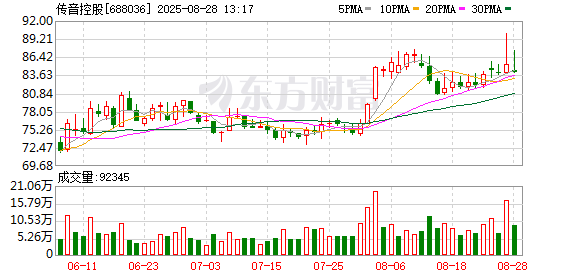
盈利腰斩、市值缩水 传音控股还能守住“王座”吗?
Zhong Guo Ji Jin Bao· 2025-08-28 05:16
Core Viewpoint - Transsion Holdings, once hailed as the "King of Africa," is facing significant challenges, with a sharp decline in both revenue and net profit, raising concerns about its ability to maintain its market position [2][4]. Financial Performance - In the first half of 2025, Transsion reported revenue of 29.077 billion yuan, a year-on-year decline of 15.86%, and a net profit attributable to shareholders of 1.213 billion yuan, down 57.48% year-on-year [2]. - The company has experienced four consecutive quarters of declining performance since Q3 2024, with Q1 2025 net profit dropping by 69.87%, marking the largest quarterly decline since its IPO [4]. Market Position and Competition - Transsion's market share in Africa fell from 52% in Q1 2024 to 47% in Q1 2025, with shipments decreasing to 9 million units, making it the only brand among the top five to experience a decline [5]. - Despite a recovery to 51% market share in Q2 2025, competitors like Xiaomi and Honor have shown significant growth, with Xiaomi's shipments increasing by 32% and Honor's by 161% [5][6]. Profitability Challenges - The gross margin in Transsion's core African market has declined, with revenue in 2024 amounting to 22.719 billion yuan and a gross margin of 28.59%, indicating pressure on profitability from competitors [7]. Strategic Initiatives - Transsion is exploring diversification and high-end market strategies, launching new products such as AI smartphones and smart glasses under its TECNO brand, aiming to create an "AI ecosystem" [9]. - The company is also venturing into new markets, including home appliances and digital accessories, and has established a mobility division to enter the electric two-wheeler market [10]. Investment Activities - Transsion has invested in private equity funds targeting the electric two-wheeler industry, indicating a strategic shift towards industry collaboration and diversification [11].

石化机械快移修井机顺利发运南美市场
Zhong Guo Chan Ye Jing Ji Xin Xi Wang· 2025-08-28 00:34
Core Viewpoint - The successful shipment of the dual-drum workover rig by Petrochemical Machinery (000852) to the South American market signifies ongoing international recognition of "Petrochemical Manufacturing" following the initial deployment of similar equipment in 2024 [1] Group 1: Product Development and Innovation - The company focuses on providing high-end, intelligent, and environmentally friendly oil and gas equipment solutions to global clients [1] - To meet the demands for green, safe, and cost-effective workover operations, the company has developed a new energy automated workover rig [1] - The company has established a special team to analyze customer needs based on feedback from the first equipment's operational conditions, adhering to international standards [1] Group 2: Technical Advancements - The workover rig features core technologies that overcome operational limitations, with a maximum repair depth exceeding 4500 meters [1] - The rig's operation and rig-up conditions meet relevant wind resistance standards, enhancing operational efficiency [1] - The equipment is equipped with dual-drum water-cooled brakes, further improving both operational efficiency and quality performance [1]

净利猛增306%,五菱汽车(0305.HK)中期业绩"加速度"推动价值重估
Ge Long Hui· 2025-08-27 06:08
Core Viewpoint - The Chinese automotive industry is experiencing a strong production and sales performance, but profit margins are under pressure, making core technology, brand competitiveness, and global layout crucial for companies to navigate industry challenges [1] Financial Performance - Wuling Motors reported a revenue of 4.025 billion yuan in the first half of the year, a year-on-year increase of 2.0%, with gross profit rising by 13.5% to 483 million yuan, leading to an increase in gross margin from 10.8% to 12.0% [3] - The net profit for the first half of the year was 85.81 million yuan, a year-on-year increase of 306%, with attributable net profit reaching 39.42 million yuan [3] - The company effectively controlled costs, reducing SG&A expenses by 18.37%, which now account for 5.38% of revenue, while maintaining stable R&D investment at 4.57% of revenue, an increase of 1.3 percentage points [3] Short-term Catalysts - The overall industry fundamentals are improving, with policies aimed at boosting domestic demand and optimizing supply, which are expected to enhance profit margins for downstream automakers [6] - Wuling Motors is positioned to benefit directly from these trends, with the recent financial results indicating a potential bottoming out of performance and expectations for improved profitability [6] Mid-term Growth - Wuling Motors is focusing on high-end and international breakthroughs in its auto parts business, having secured 46 customers and 125 project contracts in the first half of the year [7] - The company has successfully developed high-value products and is expanding its market presence with significant growth in overseas revenue, which increased by 350% to 238 million yuan, now accounting for 5.9% of total revenue [7][8] Long-term Ecological Value - Wuling Motors is evolving from merely providing technical support to becoming a builder of industrial ecosystems, with a focus on smart driving products and diverse solutions [9] - The company is tapping into the trillion-level smart connected market, which is expected to reshape its competitiveness and long-term growth potential [9] Strategic Achievements - Wuling Motors has achieved significant results through its strategy of "stabilizing growth, improving efficiency, and opening new avenues," leading to a recovery in gross margins and flexible profit growth [10] - Backed by Guangxi Automobile Group, the company is accelerating its strategic transformation, with expectations for technology to convert into increased orders and performance [10]

青岛啤酒(600600):产品结构进一步提升 成本红利驱动净利率提升
Xin Lang Cai Jing· 2025-08-27 00:30
Core Viewpoint - The company reported its 2025 H1 results, showing a total revenue of 20.491 billion, a year-on-year increase of 2.11%, and a net profit attributable to shareholders of 3.904 billion, up 7.21% year-on-year, indicating performance in line with expectations [1] Financial Performance - In 2025 Q2, the company achieved total revenue of 10.046 billion, a year-on-year growth of 1.28%, with a net profit of 2.194 billion, increasing by 7.32% year-on-year [1] - The company maintains profit forecasts for 2025-2027, expecting net profits of 4.8 billion, 5.2 billion, and 5.5 billion, representing year-on-year growth rates of 10.3%, 8.6%, and 5.9% respectively [2] - The current stock price corresponds to PE ratios of 20, 18, and 17 for 2025-2027, while the Hong Kong stock price corresponds to lower PE ratios of 13, 12, and 12 [2] Product and Market Strategy - The company continues to implement its brand strategy of "Qingdao Main Brand + Laoshan Beer as a National Second Brand," with a product matrix that includes classic, white beer, and high-end fresh beer, all showing steady sales growth [3] - In 2025 Q2, beer sales reached 2.471 million tons, a year-on-year increase of 1%, with revenue per ton at 4,065.41, up 0.3% year-on-year [2][3] - The sales volume of the main brand and mid-to-high-end products in Q2 was 1.338 million tons and 0.981 million tons, respectively, with year-on-year growth of 3.8% and 4.81% [2] Cost and Margin Analysis - The cost per ton of beer in Q2 was 2,201.88, a decrease of 5.1% year-on-year, primarily due to lower raw material costs [3] - The gross margin for Q2 was 45.84%, an increase of 3.05 percentage points year-on-year [3] - The net profit margin for Q2 was 21.84%, up 1.23 percentage points year-on-year, while the non-recurring net profit margin was 20.2%, an increase of 0.9 percentage points [3] Catalysts for Stock Performance - Improvement in dining consumption and product price increases are seen as catalysts for stock performance [4]
小米的复杂性
Xin Lang Cai Jing· 2025-08-26 16:49
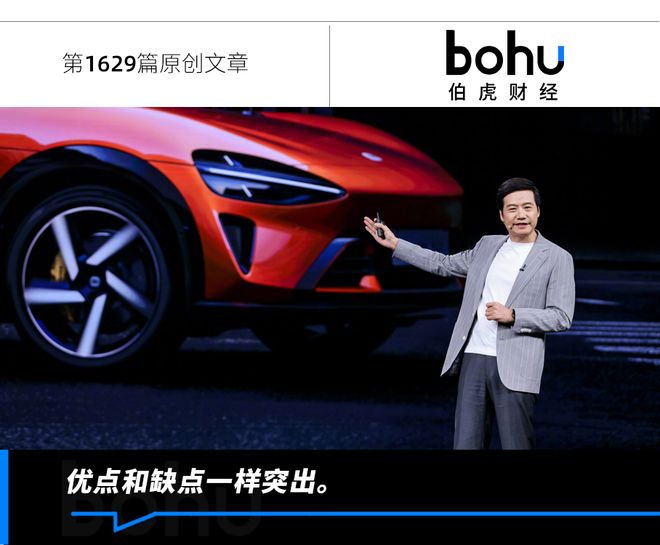
Core Viewpoint - Xiaomi's Q2 2025 financial report shows impressive growth with revenue of 116 billion yuan, a 31% year-on-year increase, and adjusted profit of 10.8 billion yuan, up 75% year-on-year, reaching historical highs. However, market response has been lukewarm, with stock prices hovering around 52 HKD despite buy ratings from major institutions like Goldman Sachs and HSBC, which have lowered target prices due to some data falling short of expectations [3][4][5]. Financial Performance - Xiaomi's smartphone revenue for Q2 was 45.5 billion yuan, accounting for nearly 40% of total revenue, but this represents a decline from 46.5 billion yuan in the same period last year. The gross margin for smartphones also decreased from 12.1% to 11.5% [5][6]. - Despite selling more smartphones, revenue decreased due to pricing issues rather than a shift towards high-end models. The proportion of high-end smartphone sales in China increased by 5.5% year-on-year [6][7]. Market Position and Strategy - Xiaomi's global market strategy is crucial as domestic growth is stagnant. The company has maintained a top-three position in global smartphone market share, but competition is intensifying, particularly in Southeast Asia where Xiaomi holds a 19% market share [7][8]. - The company is focusing on high-end models while also managing to maintain a competitive edge in the mid-to-low-end market, which is essential for growth in emerging markets [9][10]. Ecosystem Development - Xiaomi's IoT business saw significant growth, with revenue reaching 38.7 billion yuan, a 44.7% increase year-on-year, driven mainly by major appliances [10][11]. - The automotive business is also showing improvement, with losses narrowing to 300 million yuan in Q2, and gross margin increasing from 23.2% to 26.4% [10][12]. Competitive Landscape - Xiaomi's strategy involves leveraging its ecosystem across various sectors, including home appliances and automotive, to create synergies that enhance market share and brand influence [11][14]. - The company faces challenges from traditional giants in the home appliance sector, which are adapting to Xiaomi's strategies, indicating a potential for increased competition in the future [16][17]. Leadership and Vision - The role of Xiaomi's founder, Lei Jun, remains pivotal in driving innovation and maintaining competitive advantages across product lines. His leadership is seen as crucial for navigating the company's strategic direction [17][18].

九号公司20250826
2025-08-26 15:02
Summary of 9号公司 Conference Call Company Overview - **Company**: 9号公司 (Ninebot) - **Founded**: 2012 - **Headquarters**: Beijing - **Initial Focus**: Balance scooters, part of Xiaomi ecosystem - **Key Acquisition**: Acquired Segway, gaining significant patents and expanding into international markets [5][6] Industry Insights - **Electric Vehicle (EV) Market**: - 2025 H1 growth of approximately 39% [10] - Major competitors: 雅迪 (Yadea) and 爱玛 (Aima) with over 20% market share each; 9号公司 holds about 7% [10] - Focus on product differentiation through smart and high-end features to avoid price wars [2][10] - **Lawn Mower Robot Market**: - Current penetration rate of lawn mower robots is low at 5%-6% [15] - Expected growth driven by stricter environmental policies in Europe and the US [15] - 9号公司 leveraging advanced technologies like RTK and visual positioning for competitive advantage [16][17] Financial Performance - **Revenue Growth**: - 2025 projected revenue of 20 billion yuan, a 40% increase year-on-year [5][20] - Q1 2025 revenue growth over 90%, Q2 over 60% [2][8] - Two-wheeled vehicle sales expected to exceed 4 million units in 2025, a growth of over 50% [12][20] - **Profitability**: - Net profit expected to reach 2 billion yuan in 2025, with a net margin in the double digits [5][20] - Continuous improvement in net and gross margins from 2021 to 2024 [9][20] Key Business Segments - **Electric Two-Wheeled Vehicles**: - Compound annual growth rate (CAGR) of over 70% from 2021 to 2024, outperforming competitors [12] - Focus on smart features and high-end products [11] - **Lawn Mower Robots**: - Anticipated business growth exceeding 200% in 2024, with continued growth over 100% in 2025 [3][17] - Market share currently at 5%, with significant room for growth [17] - **Electric Scooters and Balance Vehicles**: - Market size in 2023 was $2.9 billion, with a projected CAGR of about 10% from 2024 to 2032 [18] - Expected revenue growth over 20% in 2025 [18] - **All-Terrain Vehicles (ATVs)**: - Sales volume of 24,000 units in 2024, with a market share of about 2.5% [19] - Short-term growth impacted by US tariffs, but European markets show promise [19] Competitive Advantages - **Technological Innovation**: - Development of proprietary software (Ninebot OS) and hardware systems enhancing user experience [11] - Strong emphasis on R&D with a technically skilled management team [7] - **Market Positioning**: - Early entry into the lawn mower robot market, establishing a favorable position against competitors [17] - Focus on product diversification and leveraging existing technologies across different product lines [10][16] Conclusion - 9号公司 demonstrates strong growth potential across multiple segments, particularly in electric vehicles and lawn mower robots, supported by innovative technology and strategic market positioning. The company is well-positioned to capitalize on emerging trends and regulatory changes in the industry [2][20]
调研速递|中石化石油机械接受全体投资者调研,聚焦账款、订单等要点
Xin Lang Cai Jing· 2025-08-26 11:16
Core Viewpoint - The company held a semi-annual performance briefing for 2025, emphasizing its commitment to improving accounts receivable management and enhancing operational performance to benefit shareholders [1][2][3]. Accounts Receivable Management and Cash Flow - The company has implemented a specialized action plan for accounts receivable management from 2025 to 2027, focusing on reducing existing receivables, improving quality, and controlling new receivables [2]. - Cash received from sales and services increased by 530 million yuan year-on-year in the first half of 2025 [2]. Corporate Responsibility and Commitment to Shareholders - As a state-owned enterprise, the company emphasizes its responsibility towards national energy security and shareholder interests, aiming to enhance operational performance through advanced technology and integrated solutions [3]. - The company is committed to high-end, intelligent, green, and service-oriented development, particularly in drilling tools and equipment [3]. Orders and Business Development - In the first half of 2025, the company achieved an order volume of 4.94 billion yuan, a 14% increase year-on-year [4]. - Specific segments include 1.8 billion yuan for oil drilling equipment, 550 million yuan for drilling tools, 900 million yuan for steel pipes, and 350 million yuan for gathering equipment [4]. - The hydrogen energy equipment segment saw new orders of 75 million yuan, a 21% increase, reflecting the company's active participation in the hydrogen energy industry [4]. - International orders reached 1.21 billion yuan, marking a 15% increase, with significant orders from markets in Asia and Africa [4]. Other Key Points - The company is enhancing production capabilities by introducing robotic welding lines for manufacturing processes [5]. - The increase in accounts receivable is attributed to varying settlement cycles for different products, alongside strict credit management policies [5]. - The company aims to achieve its annual operational targets and is considering stock incentive goals based on peer comparisons [5]. - The company has won a bid for the Daye cavern hydrogen storage project, with the contract currently in the signing process [5].