
电动化

Search documents
超豪华品牌缺席 自主品牌激战智能化
Bei Jing Shang Bao· 2025-08-31 15:55
Core Insights - The 2025 Chengdu International Auto Show marks a significant shift in the automotive industry, with luxury brands like Porsche, Bentley, and Rolls-Royce notably absent, while the exhibition space for new energy and technology companies has expanded by 40% compared to last year, reaching a historical high [1][3][6] - Domestic brands and new energy vehicle manufacturers are gaining traction, with companies like Xiaomi and Huawei showcasing their latest models and technologies, indicating a shift towards electric and intelligent vehicles as the focal point of new car releases [1][6][7] - The market share of traditional fuel vehicles and luxury brands is expected to decline further as domestic brands capitalize on the transition to electric and intelligent technologies, positioning themselves as key players in this industry transformation [1][6][7] Summary by Sections Absence of Luxury Brands - The absence of luxury brands at the auto show reflects the sales pressure and strategic adjustments they face in the Chinese market, with imported car sales down 33% year-on-year in the first five months of this year [3][4] - For instance, Porsche's sales in China dropped from 95,700 units in 2021 to 56,900 units last year, with a 42% decline in the first quarter of this year [3][4] Electric Vehicle Transition - Luxury brands are currently in a period of adjustment regarding their electric vehicle strategies, with several manufacturers delaying the launch of their first electric models [4] - Ferrari postponed the release of its first electric vehicle from October to spring next year, while Lamborghini and Maserati have also pushed back their electric vehicle timelines [4] Rise of Domestic Brands - Domestic brands are significantly increasing their presence at the auto show, with Xiaomi showcasing its full lineup and Huawei presenting multiple models under its brand [6][7] - The trend of integrating intelligent driving features into more affordable vehicles is evident, with many new models offering advanced technology at price points between 100,000 and 200,000 yuan [6][7] Future Market Dynamics - Experts suggest that the automotive industry is transitioning from a "mechanical-driven" model to a "technology-driven" one, with Chinese brands likely to gain a competitive edge in both domestic and international markets [7] - The competition is expected to shift from brand premium to technological capability, as domestic brands leverage their advancements in electric and intelligent technologies [7]

【2025年半年报点评/长城汽车】业绩符合预期,新品周期强势
东吴汽车黄细里团队· 2025-08-31 14:16
Core Viewpoint - The company reported strong performance in Q2 2025, with revenue and net profit exceeding expectations, driven by improved sales and product offerings in the high-end segment [2][3][5]. Revenue Performance - In Q2 2025, the company achieved revenue of 52.3 billion yuan, representing a quarter-on-quarter increase of 7.7% and a year-on-year increase of 30.7% [2]. - The wholesale sales totaled 313,000 units, with a year-on-year increase of 10% and a quarter-on-quarter increase of 22% [3]. - The average selling price (ASP) was 167,000 yuan, reflecting a quarter-on-quarter improvement of 7% [3]. Profitability Metrics - The net profit attributable to shareholders was 4.59 billion yuan, with a quarter-on-quarter increase of 19.1% and a year-on-year increase of 161.9% [2]. - The gross margin for Q2 was 18.8%, showing a slight decrease of 3 percentage points year-on-year but an increase of 1 percentage point quarter-on-quarter [3]. Product and Market Strategy - The company is focusing on its Coffee OS 3 smart cockpit system, which is being integrated into multiple strategic models, enhancing the overall user experience [4]. - The launch of the next-generation all-powerful intelligent super platform in May 2025 aims to support various powertrain options, including hybrid and hydrogen fuel [4]. Future Outlook - The company has revised its net profit forecasts for 2025, 2026, and 2027 to 14 billion, 19 billion, and 22.6 billion yuan respectively, reflecting strong growth potential [5]. - The company maintains a "buy" rating based on the robust product cycle and rapid growth in non-Russian export markets [5].


杭叉集团: 杭叉集团:2025年第二次临时股东会会议资料
Zheng Quan Zhi Xing· 2025-08-31 10:13
Meeting Overview - The shareholders' meeting of Hangcha Group Co., Ltd. is scheduled for September 8, 2025, at 14:00, with both on-site and online voting options available [1][2] - The meeting will be hosted by Chairman Zhao Limin [1] Meeting Agenda - The meeting will include the reading of proposals, voting, and the announcement of resolutions [1][3] - Shareholders are required to present identification and register to attend the meeting [2] Voting Process - Voting will be conducted through a combination of on-site and online methods via the Shanghai Stock Exchange voting system [3] - Shareholders can participate in voting both at the meeting and online during the designated voting period [3] Proposals for Election - Proposal One: Election of the eighth board of directors' non-independent directors, with five candidates nominated [4][5] - Proposal Two: Election of the eighth board of directors' independent directors, with three candidates nominated [5][6] Candidate Backgrounds - Non-independent director candidates include Zhao Limin, Fang Xiang, Qiu Jianping, Qiu Fei, and Sheng Leijia, with their professional backgrounds detailed [6][7][8] - Independent director candidates include Zhu Yaar, Zou Manli, and Zhu Lihong, with their qualifications also provided [9][10]

超豪华品牌缺席后,自主品牌与新势力激战智能化
Bei Jing Shang Bao· 2025-08-31 07:26
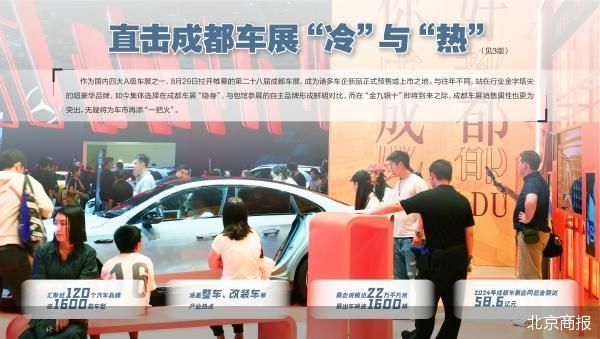
Core Insights - The 28th Chengdu International Auto Show has become a focal point for the automotive industry, showcasing over 1,600 vehicles from nearly 120 brands, highlighting trends in innovation and brand image [2] Group 1: Market Trends - The absence of ultra-luxury brands such as Porsche, Bentley, Lamborghini, and Rolls-Royce at this year's show indicates a strategic shift as these brands face declining sales in the Chinese market [2][3] - Data from the China Passenger Car Association shows that from January to May 2025, domestic imported car sales dropped by 33%, with Porsche's sales in China falling from 95,700 units in 2021 to an estimated 56,900 units in 2024 [2] - The first quarter of 2025 saw Porsche's global deliveries decrease by 8%, with Chinese sales plummeting by 42% to 9,471 units [2] Group 2: Electric and Intelligent Transition - Ultra-luxury brands are currently in a transitional phase towards electrification, with Ferrari postponing the launch of its first electric vehicle from October 2025 to spring 2026 [3] - Other luxury brands like Lamborghini and Maserati are also delaying their electric vehicle plans, indicating a broader trend among high-end manufacturers [3] - In contrast, Chinese domestic brands and new energy vehicle manufacturers are expanding their presence at the auto show, showcasing new models and advanced technologies, with features like intelligent driving systems becoming standard [3][4] Group 3: Competitive Landscape - Chinese brands are increasingly leading in the fields of electrification and intelligence, posing greater competition to international brands [4][5] - The shift in the automotive industry is moving from "brand premium" to "technological strength," suggesting that Chinese brands may accelerate their global expansion and compete more effectively with international counterparts [5]


直击成都车展|超豪华品牌缺席后,自主品牌与新势力激战智能化
Bei Jing Shang Bao· 2025-08-31 07:25
Core Insights - The 28th Chengdu International Auto Show has become a focal point for the automotive industry, showcasing over 1,600 vehicles from nearly 120 brands, highlighting trends in innovation and brand image [2] Group 1: Absence of Luxury Brands - A notable absence of ultra-luxury brands such as Porsche, Bentley, Lamborghini, and Rolls-Royce was observed, replaced by companies focusing on technology and new energy, including Xiaomi and NIO [2] - The luxury automotive sector is facing sales pressure in the Chinese market, with imported car sales dropping by 33% year-on-year in the first five months of 2025 [2] - Porsche's sales in China have declined from 95,700 units in 2021 to an estimated 56,900 units in 2024, with a 42% year-on-year drop in Q1 2025 [2] Group 2: Electric Vehicle Transition Challenges - Luxury brands are currently in a transitional phase towards electrification, with Ferrari delaying the launch of its first electric vehicle from 2025 to 2026 [3] - Other brands like Lamborghini and Maserati have also postponed or halted their electric vehicle development plans, indicating a broader trend among luxury automakers [3] - Mainstream luxury brands such as Lexus and Jaguar Land Rover also did not participate in the Chengdu Auto Show, reflecting a shift in consumer preferences towards electric and intelligent vehicles [3] Group 3: Rise of Domestic Brands - Chinese domestic brands and new energy vehicle manufacturers significantly expanded their presence at the auto show, showcasing new models and advanced technologies [4] - Features like intelligent driving assistance systems and smart cockpit configurations are becoming standard in new vehicles, with technology increasingly accessible in the 100,000 to 200,000 yuan price range [4] - Experts suggest that Chinese brands are gaining a competitive edge in electrification and intelligence, potentially eroding the market share of traditional fuel and luxury brands [4][5] Group 4: Industry Transformation - The automotive industry is shifting from a "brand premium" focus to one centered on "technological strength," with Chinese brands poised to accelerate their global expansion [5] - The transition from "mechanical drive" to "technology-driven" vehicles indicates that Chinese brands may play a more significant role in this transformation [5]
比亚迪(002594):2025Q2业绩短期承压 长期动能充足
Xin Lang Cai Jing· 2025-08-31 04:39
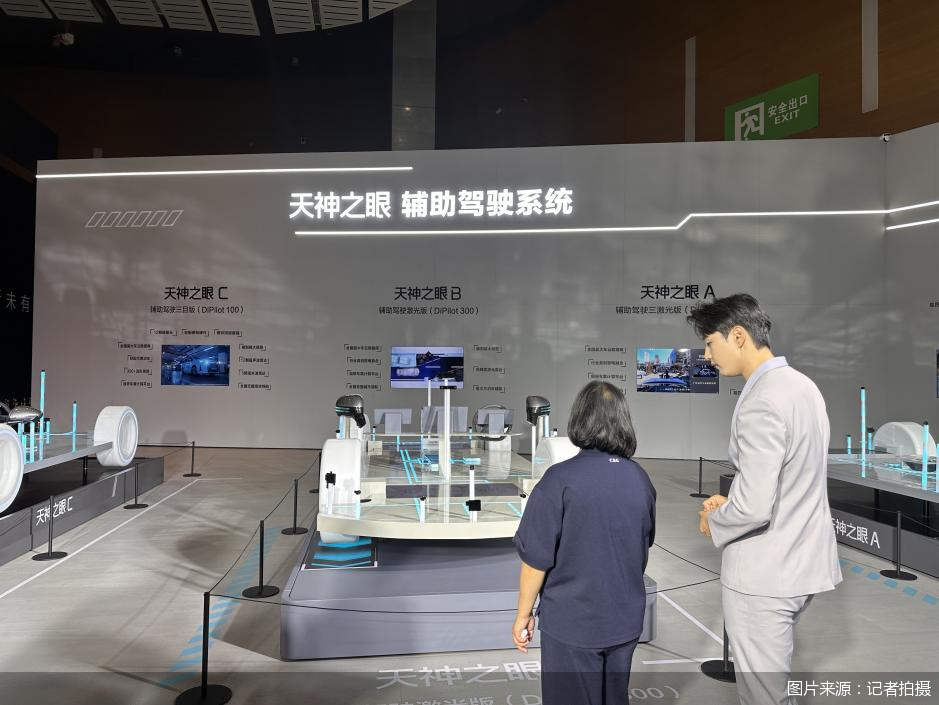
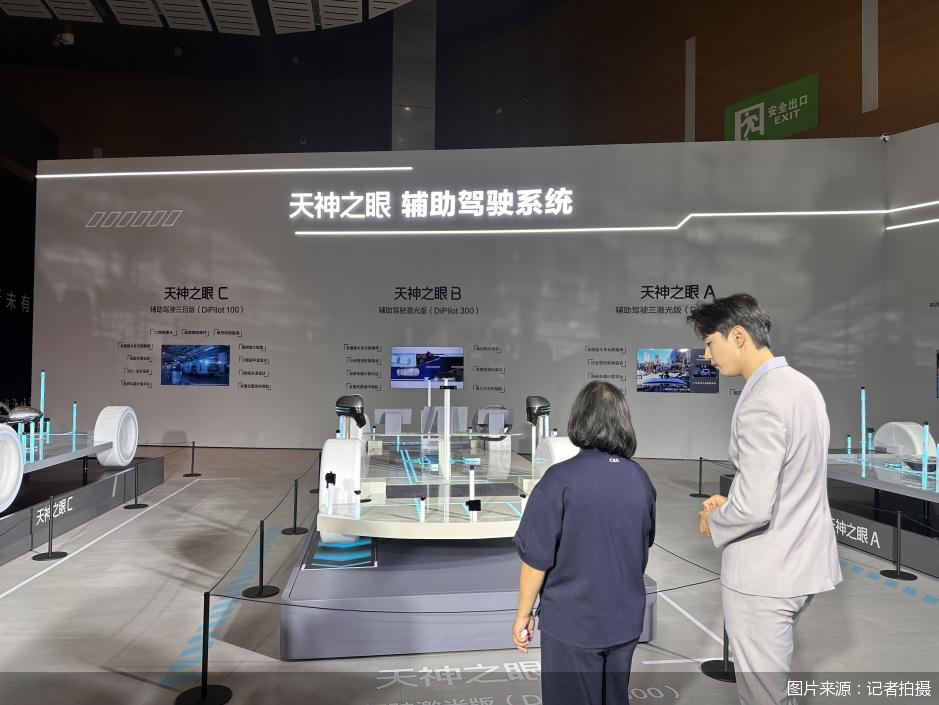
Core Viewpoint - The company adheres to the development philosophy of "technology as king, innovation as fundamental," aiming to lead independent innovation of Chinese brands and reshape the global market landscape through continuous innovation in various fields such as batteries, electronics, and new energy vehicles [1] Financial Performance - In the first half of 2025, the company achieved total revenue of 371.281 billion and net profit attributable to shareholders of 15.511 billion, reflecting year-on-year growth of 23.30% and 13.79% respectively, with a gross profit margin of 18.01% and a net profit margin of 4.32% [1] - In Q2 2025, the company reported total revenue of 200.920 billion, with net profit attributable to shareholders declining by 29.87% to 6.356 billion, primarily due to price reductions and dealer rebates, resulting in a gross profit margin of 16.27% [1] Global Expansion - The company has made significant strides in its global expansion, with products now available in over 110 countries and regions across six continents, achieving a year-on-year sales growth of 130% in overseas markets [2] - The launch of the "Denza" brand in Europe, marked by a presence at the Milan Design Week, enhances the company's competitiveness in the international high-end market [2] Technological Advancements - The company is committed to strengthening its technological investments in the new energy vehicle sector, focusing on the integration of electrification and intelligence, with the fifth-generation DM technology achieving a new low of 2.6L per 100 km in fuel consumption [3] - The "Tianshen Eye" system is being upgraded to enhance safety and user experience, with a commitment to cover all users in China for safety and loss in intelligent parking scenarios [3] Investment Outlook - Despite short-term performance pressures in Q2 2025, the company is expected to achieve net profits of 47.133 billion, 52.572 billion, and 58.073 billion in 2025, 2026, and 2027 respectively, with strong long-term growth potential [3]
直击2025成都车展|鸿蒙智行集齐“五界”品牌,小米汽车首次参展
Zhong Guo Zheng Quan Bao - Zhong Zheng Wang· 2025-08-31 00:49
Core Insights - The 28th Chengdu International Auto Show has opened with a theme of "Leading the Trend, Moving Towards the New," featuring nearly 120 automotive brands and over 1,600 vehicles on display, covering an area of 220,000 square meters [1] - The exhibition area for new energy brands has expanded by 40% compared to last year, marking a historical high, with significant participation from companies like Xiaomi, BYD, and Changan [1] - The auto show is seen as a crucial indicator for the development of the automotive market in Central and Western China, with expectations of stimulating automotive consumption in the second half of the year [1] Industry Trends - Domestic brands have emerged as the main attraction at the auto show, with a reported retail sales growth of 10.2% in the passenger car market for the first seven months of 2025 [2] - The new energy vehicle market has seen a significant increase, with cumulative retail sales reaching 6.455 million units, a year-on-year growth of 29.5% and a penetration rate of 50.7% [2] - Major brands like NIO, Leap Motor, and Hongmeng Zhixing have expanded their exhibition spaces, showcasing new models and technologies [2][3] Product Launches - Numerous models made their global or Chinese debuts at the auto show, highlighting the increasing trends of electrification and smart technology in vehicle design [4] - Foreign and joint venture brands are focusing on "electrification" and "localization," with Volvo and Mercedes-Benz showcasing new models that emphasize safety and environmental considerations [5] - The auto show serves as a key platform for connecting the global automotive industry chain and promoting regional consumption upgrades in Central and Western China [5] Market Outlook - The auto show is expected to boost consumer purchasing desires, with many new models reportedly setting new pre-order records [6] - The automotive industry is showing signs of improvement, with projections for 2025 indicating a 6% growth in domestic passenger car retail sales and a 27% increase in new energy vehicle wholesale [6]
柳 工(000528) - 2025年8月29日柳工投资者关系活动记录表
2025-08-30 11:26
Financial Performance - The company achieved an operating revenue of 18.181 billion CNY in the first half of 2025, a year-on-year increase of 13.21% [2] - Domestic revenue reached 9.658 billion CNY, growing by 15.69%, while overseas revenue was 8.523 billion CNY, up by 10.52% [3] - The international business accounted for 46.88% of total revenue, providing a solid foundation for the company's development [3] - Net profit attributable to shareholders was 1.230 billion CNY, reflecting a growth of 25.05% [3] - The gross profit margin increased by 0.22 percentage points, and the return on equity rose by 0.99 percentage points [3] Business Segments - Traditional earthmoving business revenue was 11.7 billion CNY, with a growth of 17% [3] - Loader revenue grew by over 20%, and electric loader sales surged by 193%, leading the industry in electrification [3] - Excavator revenue increased by 25%, with domestic and overseas sales rising by 31% and 22% respectively [3] - Emerging business segments, including industrial vehicles and lifting machinery, also showed significant profit growth [3] International Expansion - The company is accelerating its global layout, with overseas sales and net profit reaching historical highs in the first half of 2025 [4] - The overseas gross profit margin improved by 1.5 percentage points, with revenue from major industry clients increasing [4] - Emerging markets, particularly in South Asia, Indonesia, and Central Asia, saw growth rates exceeding 40% [4] Strategic Goals - The company aims to achieve a revenue target of 60 billion CNY by 2030, with international revenue exceeding 60% and a net profit margin of no less than 8% [5] - Key strategies include focusing on core earthmoving machinery, developing mining equipment, and enhancing global operational capabilities [5] Market Outlook - The Chinese engineering machinery industry is expected to continue its growth recovery in the second half of 2025, driven by equipment renewal cycles and increased investments in infrastructure [10] - The European market is anticipated to show slight recovery due to accelerated infrastructure projects and rising electrification [10] - Despite uncertainties in overseas markets, emerging markets are expected to maintain stable growth, supported by political and economic stability [10]

山河智能上半年净利润同比增长46.12% 创新驱动国际化发展
Zheng Quan Ri Bao Wang· 2025-08-30 04:47
Core Insights - In the first half of 2025, the company reported an operating income of approximately 3.411 billion yuan, a year-on-year decrease of 6.32%, while the net profit attributable to shareholders increased by 46.12% to approximately 49.88 million yuan [1] - The company focuses on the equipment manufacturing industry, with strategic positioning in engineering equipment, special equipment, and aviation equipment [1] - The company aims for high-quality development through internationalization, intelligence, greening, and high-end manufacturing [1] Technology and Innovation - In the first half of 2025, the company applied for 102 patents, including 43 invention patents, and received authorization for 95 patents, with 36 being invention patents [1] - The company has 10 technologies and products listed in the directory of advanced applicable technologies and products encouraged in Hunan Province [1] - The company achieved significant advancements in electric and intelligent product development, with a key technology for deep well casing vehicle-mounted drilling machines reaching an international leading level [2] Production and Management - The company undertook 115 projects in the first half of the year, successfully launching 20 prototypes and achieving mass production for 9 products [2] - The establishment of a highly efficient and flexible smart manufacturing factory has significantly improved production efficiency and reduced costs [2] - A first-class domestic support service system and efficient regulatory framework have been established to quickly meet diverse customer needs [2] International Expansion - The company has seen a significant increase in export scale, with overseas sales revenue continuing to rise [2] - In the African market, sales revenue surged by 75% year-on-year, and parts revenue grew by 20% [2] - The company’s products are sold in over 180 countries and regions, with sales of rotary drilling rigs increasing by 40% year-on-year and PRO series rotary drilling rigs in Europe seeing over 200% growth [2] Future Outlook - The company plans to focus on technology customization, green intelligence, and localized services as core engines to build differentiated international competitiveness [2]

中国重汽(03808.HK):1H25收入利润稳增 加速布局电动智能化
Ge Long Hui· 2025-08-30 04:10
Core Viewpoint - The company reported a 4.2% year-on-year increase in revenue to 50.88 billion yuan and a 4.0% increase in net profit to 3.43 billion yuan for 1H25, aligning with expectations [1] Group 1: Performance Overview - The heavy truck industry saw a 7% year-on-year increase in wholesale sales to 539,000 units in 1H25, with the company achieving a 9.2% increase in heavy truck sales to 137,000 units, maintaining the top market share [1] - The company's heavy truck single-unit revenue decreased by 1,540 yuan year-on-year to 320,900 yuan, while single-unit profit decreased by 1,245 yuan to 25,100 yuan, remaining at historically high levels [1] - The company’s gross margin increased by 0.4 percentage points year-on-year to 15.1%, with a slight decrease in expense ratio by 0.1 percentage points to 7.7% [1] Group 2: Business Segment Performance - Heavy truck business revenue increased by 4% year-on-year to 44.2 billion yuan, with an operating profit margin stable at 6.0% [1] - Light truck and bus business revenue increased by 7% year-on-year to 7.3 billion yuan, with an operating loss margin improving by 0.5 percentage points to -2.4% due to increased initial investments in new energy and overseas expansion [1] - Engine business revenue increased by 8% year-on-year to 7.6 billion yuan, with an operating profit margin increasing by 0.5 percentage points to 18.2% [1] - Financial services revenue decreased by 21% year-on-year to 590 million yuan, but the operating profit margin increased by 3.4 percentage points to 49.8% due to adjustments in the financial subsidiary [1] Group 3: Future Outlook - The company expects a 10% year-on-year increase in heavy truck industry sales to 1 million units in 2025, supported by various factors including trade-in policies and strong export demand [2] - The new energy heavy truck segment saw a 186% year-on-year increase in registration volume to 79,000 units in 1H25, with the company achieving a 226% increase to 9,157 units, capturing an 11.6% market share [2] - The company is focusing on electric and intelligent driving technologies, with successful product deliveries in low-speed logistics and high-speed trunk logistics markets [2] Group 4: Profit Forecast and Valuation - The company maintains its profit forecasts for 2025 and 2026, with the current stock price corresponding to 7.9 and 7.0 times the P/E ratio for those years [2] - The target price has been raised by 11.9% to 27.21 HKD, corresponding to 9.7 and 8.6 times the P/E ratio for 2025 and 2026, indicating a potential upside of 23.7% from the current stock price [2]
